 Write to the booksellers
-
Type
Any type (1)
Art prints (7)
Autographs (1)
Books (31999)
Drawings (265)
Engravings (10)
Magazines (125)
Old papers (1)
Photographs (15)
Posters (1)
Records (1)
-
Latest
Last 24h (8)
Last 3 days (762)
Last month (471)
Last week (125)
-
Language
Dutch (78)
English (56)
French (32248)
German (6)
Italian (18)
Portuguese (9)
Spanish (11)
-
Century
16th (10)
17th (45)
18th (197)
19th (1514)
20th (9508)
21st (1686)
-
Countries
Belgium (10907)
Brazil (6)
Canada (115)
China (1)
Côte d'Ivoire (139)
Denmark (207)
France (17947)
Germany (1)
Greece (1)
Switzerland (3102)
-
Syndicate
ALAC (106)
CLAM (145)
CLAQ (101)
CNE (3)
ILAB (10556)
NVVA (1145)
SLACES (1145)
SLAM (7956)
SNCAO (10)
Origin and Nature of Language and Logic. Perspectives in Medieval Islamic, Jewish, and Christian Thought
, Brepols, 2020 Hardback, xiv + 422 pages, Size:156 x 234 mm, Languages: English, French. ISBN 9782503588926.
Summary The annual colloquium of the SIEPM in Freiburg, Germany, was groundbreaking in that it featured a more or less equal number of talks on all three medieval cultures that contributed to the formation of Western philosophical thought, the Islamic, Jewish, and Christian traditions. Indeed, the subject of the colloquium, 'The Origin and Nature of Language and Logic in Medieval Islamic, Jewish, and Christian Thought', lent itself to such a cross-cultural approach. In all these traditions, partially inspired by ancient Greek philosophy, partially by other sources, language and thought, semantics and logic occupied a central place. As a result, the chapters of the present volume effortlessly traverse philosophical, religious, cultural, and linguistic boundaries and thus in many respects open up new perspectives. It should not be surprising if readers delight in chapters of a philosophical tradition outside of their own as much as they do in those in their area of expertise. Among the topics discussed are the significance of language for logic; the origin of language: inspiration or convention; imposition or coinage; the existence of an original language; the correctness of language; divine discourse; animal language; the meaningfulness of animal sounds; music as communication; the scope of dialectical disputation; the relation between rhetoric and demonstration; the place of logic and rhetoric in theology; the limits of human knowledge; the meaning of categories; the problem of metaphysical entailment; the need to disentangle the metaphysical implications of language; the quantification of predicates; and the significance of linguistic custom for judging logical propositions. TABLE OF CONTENTS Nadja Germann and Steven Harvey, Introduction 1. The Origin and Nature of Human Language Pierre Larcher, Et Allah apprit Adam tous les noms? (Cor., 2, 31) : L'Origine du langage dans la pens e islamique Warren Zev Harvey, Three Medieval Jewish Philosophers on the Hebrew Language Aviram Ravitsky, Maimonides' Linguistic Thought and Its Greek, Islamic and Jewish Background Beata Sheyhatovitch, The Notion of Wa?? in Shar? al-K??ya by Ra?? al-D?n al-Astar?b?dh? Josef Stern, Profayt Duran's Ma?aseh Efod: The Philosophical Grammar of a Converso 2. Non-Human and Non-Verbal Communication Ziad Bou Akl, Dieu comme locuteur : le bay?n et son report dans les u??l al-?qh Luis Xavier L pez-Farjeat, The 'Language' of Non-Human Animals in al-F?r?b? and Avicenna Th r se-Anne Druart, What Does Music Have To Do With Language, Logic, and Rulership? Al-F?r?b?'s Answer 3. The Nature, Kinds, and Limits of Logic Laurent Cesalli, De quibus est logica ? La position de Gauthier Burley dans le d bat m di val Fouad Ben Ahmed, Ibn ?uml?s on Dialectical Reasoning: The Extent of His Reliance on al-F?r?b? and Averroes Catherine K nig-Pralong, Roger Bacon. Rh torique et sens litt ral Peter S. Eardley, Rhetoric and the Epistemic Status of Theology in the Late-Thirteenth Century Yehuda Halper, Abraham Bibago on the Logic of Divine Science: Metaphysics ? and the Legend of the Pardes 4. The Signi?cance of Language for Logic Pasquale Porro, Keeping Language under Control: Late-Antique and Medieval Interpretations of the First Chapter of Aristotle's Categories Margaret Cameron, The Constraints of Nature(s): Abelard on Modality, Understanding and Linguistic Meaning Charles H. Manekin, Logic, Linguistic Custom, and the Quanti?cation of the Predicate in Gersonides
Tome I) Château de Chillon. 3 conférences - Tome 2) A. Naef & O. Schmid: communications. En 2 volumes.
Lausanne, Impr. Vaudoise, 1929-1939, in-8°, 117 p. / 224 p., qqs ill. in-texte, brochure originale.
1) La Chapelle. Le Donjon. Le batiment du trésor. / Tome 2, en coll. de O. Schmid. Le grand sous-sol. La salle de justice. La grosse tour de l'entrée. Une inspection. Au Chateau de Chillon en 1498. La tour du Duc.

(SLACES, NVVA)
Phone number : 41 (0)26 3223808
Château de Chillon - Album du Visiteur
Association pour la restauration du Château de Chillon, 1904, brochure in-8 (17 x 25), non paginé (16 p.), 7 dessins pleine page, 2 petits manques angulaires sur la couverture sup., bon état.


Les illustrations sont précédées d'une étude de 6 pages de A. Naef, architecte de Chillon, sur l'histoire du château.
Notice sur la cathédrale de Lausanne.
Lausanne, Georges Bridel 1873, 185x120mm, 44pages, broché. Nom de possesseur. Bon état.

Pour un paiement via PayPal, veuillez nous en faire la demande et nous vous enverrons une facture PayPal. Envoi groupé : les frais de port sont calculés sur le poids total de la commande ; chaque livre supplémentaire coûte donc beaucoup moins cher à expédier. Commandez plusieurs livres et économisez sur le port ! Combined shipping: postage is charged on the total weight of your order, so each additional book ships at a reduced rate. Order several books from us and save on postage ! Envois Europe : Droits et taxes inclus - aucun frais à la livraison Shipments to Europe: Duties and taxes included - no delivery charges.
Le château et la ville de Gruyères. L'ancienne Chartreuse la Part-Dieu et la Tour-de-Trême. Etude sur l'architecture militaire du Moyen-Age avec 1 planche et 6 dessins d'après nature.
Lausanne, Corbaz, 1886, in-8°, 36 p.+ 1 gr. planche dépl. lithogr. ‘Le Château de Gruyère, La Part Dieu et la Tour de Treme 1886’ Etudes archeol. par J. Naeher, Ing. brochure originale.
Image disp.
(SLACES, NVVA)
Phone number : 41 (0)26 3223808
Die Schlösser, Burgen und Klöster der romanischen Schweiz. Ein Beitrag zur Landeskunde. (Vorwort J. Naeher , Lausanne Oktober 1885).
Selbsverlag des Autors. Druck Friedrich Gutsch Karlsruhe, o.J. (1886), in-4to, VIII + 14 S. + 1 Bl. leer + 9 Doppelt-Tafeln mit 70 autographierte Aufnahmen des Verfassers kleiner Stempel auf Umschlag ‘B.Benda, libraire éditeur, (Lausanne), illustrierte Original-Broschüre.


Planches 1: Les anciens Châteaux de la Suisse romande 1885- 1) Château des Eveques à Lausanne, Morges, Allaman, Vufflens, / 2) aux environs de Lausanne: Bloney, Chillon, Châtelard, Tour Bertholo / 3) Les anciens Château de la Suisse romande: Rue, Oron, Tour de Marsens, Carouge / 4) Romont, Gruyère, Bulle, La l’ancien couvent La Part-Dieu / 5) Lucens, Avenches, Payerne / 6) La Sarraz, Orbe, Glées, Romainmotier / 7) Yverdon, Colombier, Grandson, Neuchâtel / 8) Aigle, St. Maurice, Tourbillon et Valère à Sion / 9) Nyon, Echallens, Gingins, Aubonne, St. Sulpice Image disp.
(SLACES, NVVA)
Phone number : 41 (0)26 3223808
Angkor Vat description graphique du temple. Avec la collaboration de Alex Turletti, Mey Than Dy Proeung, Vong Von.
Paris, Ecole Française d'Extrême-Orient, Maisonneuve, 1969 ; fort in-folio, deux parties en feuilles sous portefeuille à rabats, dos demi toile bleu foncé ; Première partie : Planches de I à LXVI, fascicule de 32 pp. sous couverture avec l'explication des planches I à CXIII, planches dépliantes.

Edition originale de cet extraordinaire travail d'architecture orientale, exemplaire quasi neuf.

La Chartreuse de Valbonne. Bauforschung im grossen Kreuzgang - Archéologie des batiments du grand cloître [Analecta Cartusiana, 270]
Salzburg, Universität Salzburg 2011 151pp., with numerous illustrations in bl/w, in the series "Analecta Cartusiana" volume 270, 30cm., original softcover (with a small spot of removed label), with texts in German and French, 2 stamps (at verso of cover and of titlepage), text clean and bright, good condition, R104515
Le DIABLE ET LES SORCIèRES CHEZ LES VOSGIENS
sn 1970 In-8 broché. 181 pages. Très bon état d’occasion. Poids sans emballage : 300 grammes.
Très bon état d’occasion
Nus japonais Photographies de Masaya Nakamura. Préface de Robert Guillain.
Paris, Les éditions Prisma, 1959. 8°. (12) S. Mit 19 meist ausklappbaren gef. Seitentafeln. Illustr. Orig.-Broschur.

Broschurumschlag etwas berieben und der Rücken verblichen.
Hans Hollein.
Architecture and Urbanism, 1985. 29,5 x 22 cm, 260 pp. Broché, bon exemplaire abondamment illustré.


MARVELOUS MENAGERIE : Animals in Ukiyo-e Masterpieces
, Pie Books, 2024 PB, 228 x 182 mm, 224 p, throughout colored illustrations ; ENG./ JAP., edition, NEW. ISBN 9784756258021.
A large collection of animals that appear in ukiyo-e prints from the Edo Period, from pets to rare animals! Following the global hits Something Wicked from Japan and Once more unto the breach comes the third title in the Ukiyo-e Masterpieces Series! This time, read and understand the world of ukiyo-e from the perspective of animals. In ukiyo-e, many animals that interact with humans are depicted. Beginning with cats, dogs, and rabbits, we move on to ferocious tigers and elephants, imported camels, peacocks, and parrots, and even to fantastical beasts. This book introduces numerous charming works through interesting chapters such as "Pets of the Edo Period," "Working Animals," "Rare Animals" and more. Featuring 140 gorgeous works by famous ukiyo-artists including Utamaro, Hiroshige, Hokusai, Kunisada, Kuniyoshi, Yoshitoshi and others, depicting cute, funny, and at times suspicious animals. Those who like Japanese culture will love this book! And of course it's also great for animal lovers, too. The customs of the Edo Period, when humans and animals lived side-by-side, are now vividly brought back to life.
LES PLACES DE TOSCANE. Fonctions et Architecture de l'espace public.
Citadelles & Mazenod Paris 2006 In-4 ( 330 X 260 mm ) de 339 pages, pleine toile sous jaquette illustrée en couleurs. Superbe et abondante iconographie en couleurs et en noir dans et hors-texte. Très bel exemplaire en superbe état.

Magnificence of Marble: Bartolom Ord ez and Diego de Sil e
, Imhof verlag, 2019 Hardcover with dusjacket, 328 pages Illustrated. fine . ISBN 9783777423296.
During the period between 1513 and 1518, Bartolome Ordonez and Diego de Siloe from Burgos in Castile made the southern Italian city blossom into one of the most important European centres of marble sculpture. This book presents information about two Spanish sculptors of the sixteenth century and their work in Naples.
La basilique de S.-Willibrord a Echternach (Grand-Duché de Luxembourg)
Anvers, Van Mol-Van Loy 1866 21pp. avec illustrations dans le texte, 23cm., brochure originale, extrait des Annales de l'Académie d'archéologie de Belgique, texte frais, bon état, R92127
NANCY ], André, Bentz, Biet, Bourgon, César, Gutton, Hermant, Hornecker, Lanternier, Sauvage, Vallin, Weissenburger
Reference : 028826
Nouvelles constructions de Nancy. Recueil de façades de style moderne édifiées à Nancy.
Paris, DUCHER FILS, Libraire-Éditeur, vers 1930 0 un volume in-folio, [4] pp. (titre, table)+ 34 planches. Chemise à lacets de l'éditeur, demi-percaline verte, premier plat titré. (2 cernes claires et quelques tâches sur le premier plat, coupes frottées, il manque 2 lacets, pâles rousseurs, 5 planches légèrement effrangées). Ouvrage présentant 34 planches photographiques de façades de maisons réalisées à Nancy.
Edition originale
Chinese Traditional Architecture
New York 1984 China Institute in America Soft cover 1st Edition

Broché, état reliure: Très bon, 28 x 22 cm, 168 pp., anglais, 1ère édition, illustrations, état du livre: Très bon [Cette description peut avoir été traduite par une IA.]
Folk Songs and Material Culture in Medieval Central Europe. Old Stones and New Music
, Brepols, 2019 Hardback, xiv + 282 pages, Size:156 x 234 mm, Illustrations:23 b/w, Languages: English, Latin, German. ISBN 9782503541327.
Summary This book takes a unique approach to the study of folk music in Central Europe. Through an analysis of this cultural tradition, and of how words and ideas that were first introduced in Latin Antiquity became increasingly cultivated, refined, and established in the centuries that followed, the volume also questions present-day studies of sound and its organization into the field of so-called 'folk music'. In so doing, it breaks down boundaries that separate historical studies from ethnomusicology, and sheds light on what music continues to mean in daily life. While the focus is primarily on Central European folk music, and in particular on material found in the Hungarian archives, the approach taken here also points to a fruitful comparative methodology that could be employed on a larger scale, enabling scholars to consider broader chronological and geographical contexts. TABLE OF CONTENTS Table of Contents Acknowledgements List of Illustrations Chapter 1: Introduction: Scenes from Life in Budapest Chapter 2: Herder and His Influence: A Background for Conceptualization Chapter 3: Historiography of Ideology: Conceptual Bases for the Collection of Folksong Chapter 4: Understanding Herder: Plato's Timaeus, and the Medieval Conceptualization of Sound as Material Chapter 5: Aggregation: Cultural Properties Exemplified Chapter 6: Old Stones, Useful Chunks: Working with Material Chapter 7: Methodology, and the Question of 'Types' Chapter 8: A Passion for Collection: Folk Music and the Sequence Chapter 9: Transcription, Translation, Transmutation Chapter 10: Nationalism and Folk Music Chapter 11: Conclusions Appendices Glossary Bibliography Index
Chinese ceramiek
, De Tijdstroom, 1970 Linnen band met stofomslag, 166 pag. NL, 245 x 175 mm, in goede staat, ill. in kleur / z/w.
Handboek geschreven aan de hand van de verzamelingen in het Gemeentelijk Museum Het Princessehof te Leeuwarden. Ge llustreerd met foto's in kleur en zwart-wit. Met zeer uitgebreide lit.opgave en register.
A travers la Saintonge romane
Nicolas, NIORT 1960 In-4, broché, 30pp., dessins en noir. Avec lithographies
Bon état d’occasion
NANTEUIL (Jacques) - BESNARD GIRAUDIAS (Hélène, lithographies de).
Reference : 32682
(1960)
A travers la Saintonge romane.
Niort, Editions Nicolas, (1960). Un vol. au format pt in-4 étroit (283 x 193 mm) de 28 pp. + planches lithographiées n.fol., broché.
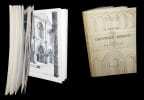
Un des exemplaires du tirage sur vélin ; agrémenté de nombreuses planches d'après les lithographies d'Hélène Besnard Giraudias. L'ouvrage invite à la découverte ''de cette prolifération de belles oeuvres sur un territoire aussi exigu et dans un espace de temps aussi limité''. Table : Surgères - Genouillé - Saint-Mard - Aulnay-de-Saintonge - Varaize - Fenioux - Geay - Saint-Porchaire - Pont-l'Abbé-d'Arnoux - Corme-Royal - Ecoyeux - La Chapelle des Pots - Saint-Bris-des-Bois - Saint-Césaire - Matha - Macqueville - Cognac - Chastres - Bourg-Charente - Bassac - Gensac - Juillac-le-Coq - Arthenac - Chadenac Echebrune - Pons - Rioux - Retaud - Thézac - Saint-Roamin-de-Benet - Vaux-sur-Mer - Corme-l'Ecluse - Talmont. Dos légèrement ridé. Piqûres sur les plats. Du reste, belle condition.
Works of Kurt Weill Transformations and Reconfigurations in 20th-Century Music
, Brepols - Harvey Miller, 2023 hardback, Pages: 278 pages, Size:220 x 280 mm, Illustrations:11 b/w, 7 tables b/w., 21 musical examples Language:English. ISBN 9782503606743.
The Works of Kurt Weill: Transformations and Reconfigurations in 20th-Century Music brings together an international group of scholars to explore one of the most important and intriguing composers of the twentieth century. The collection approaches Kurt Weill?s career from new angles. Shedding new light on perennial issues such as the apparent split between his German and US careers, while pushing into new scholarly territory, including Weill?s engagement with technology and film, and his lasting legacy on Broadway and beyond. The volume consists of two parts: the first, ?Transformations?, explores the composer?s poetics, dramaturgy and expressive techniques through a number of case studies spanning Weill?s entire output (theater, film, radio); in the second, ?Reconfigurations?, the composer?s transnational career and reception are investigated through his compositional, poetic, and aesthetic choices. TABLE OF CONTENTS Transformations STEPHEN HINTON, Weill?s Cinematic Imagination: Reality and Fantasy FRANCESCO FINOCCHIARO, Kurt Weill and the Principle of ?Concertante Music? WILLIAM EVERETT, Kurt Weill and the American Operetta Tradition: The Firebrand of Florence and Where Do We Go from Here? NAOMI GRABER, Steel Veins : Railroads on Parade and the Industrial Folk MARIDA RIZZUTI, Shared Authorship and Compositional Process in 1940s Hollywook: One Touch of Venus by Kurt Weill and Ann Ronell ARIANNE JOHNSON QUINN, Musical Language, Censorship, and Theatrical Identity in Kurt Weill?s London Works (1930-1935) TIM CARTER, Kurt Weill ?Song of the Free? (1942): A United Nations Anthem ? Reconfigurations NILS GROSCH, How many Weills? Negotiating a Musician?s Identity LEO IZZO, Changes in Kurt Weill?s Music: Cross Cultural Reception between Jazz and Avant-garde MISAKO OHTA, Die Dreigroschenoper in Japan: The ?Threepenny Fever? in Its Early Days TOBIAS FASSHAUER, Hard to Distinguish from Cole Porter : On the Deeper Truth of an Invective by Adorno REBECCA SCHMID, Street Scenes KIM KOWALKE, Whats Makes Weill Weill?
Vogel - Karel Appels mythe van het maken
Antwerp, Phoebus Focus XIV, 2020 Paperback, 78 pages, 21,1 x 14,1 x 1,1 cm. Illustrated. Text in NL. ISBN 9789463883344.
Phoebus Focus 14 - Vogel - Karel Appels mythe van het maken
Naoto Kawahara
, Zeno X Books , 2007 Hardcover, 64 pages, 125 x 170 mm, English text. *NEW .
Naoto Kawahara, b. 1971 in Tokyo (JP), lives and works in Tokyo (JP). Naoto Kawahara?s painted women seduce us with their beautiful, soft-skinned young bodies and absent-minded faces. His highly sophisticated formal language goes beyond its many hidden references to art history to reveal a rich fantasy full of strong but subtle erotic undertones. His Japanese models refer to the classical works of Degas, Balthus, D rer, Magritte, Van Gogh, Munch and other masters of historical Western art. Kawahara reinterprets the masterworks by mentally reimagining and repicturing. The paintings emerge from photographs Kawahara took himself as a sort of diary. He photographs his models in a specific setting and then starts the process of painting. The combination of Japanese and Western imagery can be misleading for viewers who look at the images within the context of their own culture. The works created by Kawahara play with our cultural imprints, our misunderstandings and false interpretations, and with our culture-specific concepts of beauty.
La maison au moyen Age dans le midi de la France. 2. Actes du colloque de Cahors, 6, 7 et 8 juillet 2006
MSAMF Msamf, 2008. In-4 broché, couverture à rabats de 370 pages ornées de photos et cartes, dans et hors texte, en noir et en couleurs. Très bon état

Toutes les expéditions sont faites en suivi au-dessus de 25 euros. Expédition quotidienne pour les envois simples, suivis, recommandés ou Colissimo.

