 Write to the booksellers
-
Type
Any type (1)
Art print (7)
Autograph (1)
Book (32230)
Disk (1)
Drawings (264)
Engraving (11)
Magazine (125)
Old papers (1)
Photographs (15)
Posters (1)
-
Latest
Last 24h (6)
Last 3 days (9)
Last month (447)
Last week (21)
-
Language
Dutch (79)
English (56)
French (32478)
German (6)
Italian (18)
Portuguese (9)
Spanish (11)
-
Century
16th (15)
17th (48)
18th (204)
19th (1542)
20th (9447)
21st (1684)
-
Countries
Belgium (10934)
Brazil (6)
Canada (116)
China (1)
Côte d'Ivoire (139)
Denmark (209)
France (18156)
Germany (1)
Greece (1)
Switzerland (3094)
-
Syndicate
ALAC (107)
CLAM (144)
CLAQ (102)
CNE (3)
ILAB (10473)
NVVA (1145)
SLACES (1145)
SLAM (7868)
SNCAO (10)
Studies in Byzantine Sigillography. Volume 13
, Brepols, 2019 Paperback, xiv + 208 pages, Size:156 x 234 mm, Illustrations:100 b/w, Languages: English, French, German. ISBN 9782503583730.
Summary This volume contains primarily papers of the 11th International Symposium of Byzantine Sigillography held in Istanbul (May 2014) and of the last Congress of Byzantine Studies in Belgrade (August 2016). There are papers about the seals as historical source and archaeological finding presenting their role in the Byzantine prosopography, administration, historical geography and art history. TABLE OF CONTENTS Foreword Abbreviations New Finds and Seal Collections Gert Boersema, A Dutch Collection of Late Antique and Early Christian Lead Seals Vera Bulgurlu, The Byzantine Lead Seals in the Bal?kesir Kuva-yi Milliye Museum Collection Jean-Claude Cheynet, Sceaux du xie si cle trouv s en Palestine Prosopography Ioannes?G. Leontiades, The Seal of Theodoros Styppeiotes Protonobellisimos and Megas Sakellarios (1150s). A?Contribution to Prosopography of the Comnenian Period Werner Seibt, The Theodorokanoi. Members of the Byzantine Military Aristocracy with an Armeno-Iberian Origin Alexandra-Kyriaki Wassiliou-Seibt, Leon Gabras Kaisar. Ein Beitrag Zur Prosopographie Der Fr hen Palaiologenzeit Administration, Historical Geography, Profession Andreas Gkoutzioukostas, The Theme of Drougoubiteia Werner Seibt, ?????o??? ??? ??????. Residierte Der Bischof von Atel in Chazaria (Am Unterem Don)? Christos Stavrakos - Christos Tsatsoulis, A Rare Lead Seal of a Goldsmith (????????????) from the Unpublished Collection of Zafeiris Syrras (London) Piety John Cotsonis, An Image of Saint Nicholas with the "Tongues of Fire" on a Byzantine Lead Seal Ioanna Koltsida-Makre, The Collection of Byzantine Bread Stamps in the Loulis Museum (Aghiou Georgiou Mills), Piraeus, Greece Indexes Index of Proper Names and Terms Index of Iconography Index of Metrical Inscriptions
Studies in Byzantine Sigillography. Volume 14
, Brepols, 2023 Paperback, xiv + 188 pages, Size:156 x 234 mm, Illustrations:80 col., 1 maps b/w, Language(s):English, French, German. ISBN 9782503601274.
Summary The present volume contains the papers from the 12th International Symposium of Byzantine Sigillography, held at the State Ermitage Museum in St. Petersburg, May 27-30, 2019. The papers discuss seals as historical sources and archaeological findings, presenting their role in the Byzantine prosopography, administration, historical geography and art history. TABLE OF CONTENTS Collections and Finds Vera Bulgurlu, Seals from the Basilica of St. John the Theologian in Ayasuluk Ioanna Koltsida-Makre - Yorka Nikolaou, Unpublished Byzantine Lead Seals from the Acquisitions of the Athens Numismatic Museum Collections Nikolaos Mastrochristos, Lead Seal of John VIII Palaiologos from Rhodes Christos Stavrakos - Zafeiris Syrras, A Selection of Important Seals from the Private Collection of Zafeiris Syrras History, Prosopography and Administration Andreas Gkoutzioukostas, The Office of oikistikos: A Re-examination of the Sigillary Material and an Unpublished Lead Seal from Konstantinos Kalantzes' Collection Werner Seibt, The Byzantine Eastern Frontier in the 1070s Werner Seibt, Auch der georgische Aristokrat Va??e Lip'arit? emigrierte in der zweiten H lfte des 11. Jahrhunderts in das Byzantinische Reich Byzantium and Beyond Michael N. Boutyrski, The bulla of Joseph, Metropolitan of Rosia Jean-Claude Cheynet, Les sceaux du bureau du g nikon hors des fronti res de l'Empire Elena Stepanova - Piotr Gaydukov - Oleg Oleynikov, A Collection of Byzantine Seals from Velikij Novgorod Alexandra-Kyriaki Wassiliou-Seibt - Volker Hilberg, Byzantium and Beyond: Siegel aus Skandinavien Piety Gert Boersema, Sigillographic Evidence for Early Byzantine Jerusalem Pilgrimage Technology and Management Maria Teresa Catalano, Nutzen und Grenzen der RTI-Fotografie am Beispiel von zwei stark besch digten byzantinischen Bleisiegeln George Kakavas - Niki Katsikosta - Eleni Kontou, Integrated Management of Lead Seals: The Case of the Numismatic Museum, Athens-Greece Index of Proper Names and Terms Index of Iconography Index of Metrical Inscriptions
Book of Colour Concepts : 1686-1963 :
, Taschen, 2024 Hardcover, two vols. in slipcase, 24.3 x 30.4 cm, 846 pages, Multilingual (English, French, German, Spanish). ISBN 9783836595650.
The human history of color, in two sweeping volumes The earliest forms of human creativity ? in carvings, markings, and cave paintings ? bear witness to humanity?s engagement with color. Almost as old as these examples is the desire to assign structure, order, and meaning to this universal yet elusive concept, and it is this fascination that unites the works compiled in this expansive edition. Gathering over 65 rare books and manuscripts from a wealth of institutions, including the most distinguished color collections worldwide, The Book of Colour Concepts takes the reader on a chromatic odyssey across four centuries and over 1,000 images of luscious wheels and globes, painstakingly collated charts, and meticulous diagrams, many of them newly photographed exclusively for this edition. Some of these concepts provide exhaustive taxonomies of color, while others reflect upon the relationship of color and music, or the affinities between color and human emotions. Seminal works of color theory, such as Isaac Newton?s Opticks and Johann Wolfgang von Goethe?s hugely significant Zur Farbenlehre, are shown alongside rare and unfamiliar contributions, including the theosophical color systems of Charles Webster Leadbeater and Annie Besant, the comprehensive color ?dictionary? of Aloys John Maerz and Morris Rea Paul, and the patchwork combinations of the Japanese costume designer and artist Sanz? Wada. The two volumes also bring many intriguing and often overlooked works by women into the spotlight, including the radically inventive color ?blots? of the English flower painter Mary Gartside and a botanical notebook by the pionieering spiritualist Hilma af Klint. The color systems that make up this edition are contextualized by introductory essays from editor Alexandra Loske and co-author Sarah Lowengard, while authoritative texts from the editor on the works reproduced set out each concept in further detail. Illuminating the history of color in all its shapes and forms, The Book of Colour Concepts offers a chromatic chronology unparalleled in scope.
Book of Colour Concepts. 45th Ed.
, Taschen, 2024 Hardcover, 512 pages, 15.6 x 21.7 cm, Multilingual (English, French, German).The Book of Colour Concepts. 45th Ed. ISBN 9783754401248.
The human history of color, The earliest forms of human creativity in carvings, markings, and cave paintings bear witness to humanity's engagement with color. Almost as old as these examples is the desire to assign structure, order, and meaning to this universal yet elusive concept, and it is this fascination that unites the works compiled in this expansive edition. Gathering over 65 rare books and manuscripts from a wealth of institutions, including the most distinguished color collections worldwide, The Book of Colour Concepts takes the reader on a chromatic odyssey across four centuries and over 1,000 images of luscious wheels and globes, painstakingly collated charts, and meticulous diagrams, many of them newly photographed exclusively for this edition. Some of these concepts provide exhaustive taxonomies of color, while others reflect upon the relationship of color and music, or the affinities between color and human emotions. Seminal works of color theory, such as Isaac Newton's Opticks and Johann Wolfgang von Goethe?s hugely significant Zur Farbenlehre, are shown alongside rare and unfamiliar contributions, including the theosophical color systems of Charles Webster Leadbeater and Annie Besant, the comprehensive color dictionary of Aloys John Maerz and Morris Rea Paul, and the patchwork combinations of the Japanese costume designer and artist Sanz Wada. also bring many intriguing and often overlooked works by women into the spotlight, including the radically inventive color ?blots? of the English flower painter Mary Gartside and a botanical notebook by the pionieering spiritualist Hilma af Klint. The color systems that make up this edition are contextualized by introductory essays from editor Alexandra Loske and co-author Sarah Lowengard, while authoritative texts from the editor on the works reproduced set out each concept in further detail. Illuminating the history of color in all its shapes and forms, The Book of Colour Concepts offers a chromatic chronology unparalleled in scope.
Les châteaux : Versailles, Maison de Saint-Cyr, Compiègne, Chantilly [4 volumes en 1]
Paris, Librairie A. Pigoreau 1911 4 volumes en 1. In-folio 41,5 x 36,5 cm. Cartonnage éditeur pleine percaline rouge, dos muet, titre doré sur le premier plat encadré d’une frise noir & or, premiers plats de couverture en couleurs conservés, 24-[26]-24-24 pp., abondamment illustré en noir & blanc de reproductions et de documents d’époque, 9 planches en couleurs hors texte sous serpentes. Exemplaire en bon état.
Contient : Versailles par Pierre de Nolhac - Les fastes de Saint-Cyr (1808-1908) - Le palais de Compiègne, par Arsène Alexandre - Chantilly, par Gustave Macon. Bon état d’occasion
lithographies de : La Guienne Historique et Monumentale
, Les Editions de l'Entre-deux-Mers, 2000 Paperback, 262 pages, Francais, 310 x 225 mm, etat bon!. Illustrations en n/b. ISBN 9782913568082.
Pr sente la reproduction des 280 lithographies r alis es par A. Ducourneau, autour des monuments les plus remarquables de l'ancienne Guyenne
Nancy et l'Europe urbaine au siècle des Lumières 1720-1770 De l'esprit des villes
Editions Artlys, Versailles, 2005. In-4, broché sous couverture rempliée et illustrée en couleur, 398 pp. Avant-propos, par Pierre Rosenberg - De Nancy à Lisbonne et de Paris à Dresde : promenade au cœur des villes européennes, par Blandine Chavanne - Un âge d'or des villes? - Les pouvoirs en représentation - La ville en mouvement ...
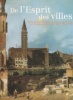
Nombreuses illustrations en noir et blanc et planches couleur en hors texte. --- Plus d'informations sur le site archivesdunord.com
6 - Paraboles - Publication éditée dans le cadre du séminaire expérimental " Art, Architecture, Institution ", Lyon - L'embarcadère - 1990
1990 Editions séminaire expérimental " Art, Architecture, Institution ", Lyon - L'embarcadère - 1990 - 1 vol in-24 - broché - 1990 - sans pagination -
Très bon état -
Abrégé de la vie des peintres des écoles allemande, flamande, hollandaise, française, romaine, florentine, vénitienne, lombarde, génoise, napolitaine, espagnole et les anciens ; mis en ordre alphabétique, avec une explication de leur manière et genre de peindre
Bruxelles : Et se vend chez l'Auteur, rue de la Colline, Section 8, n.° 349., 1807. PLUS DE 1000 NOTICES SUR LA VIE DES PEINTRES
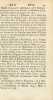
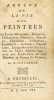
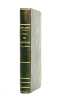
In-12° (186 x 121 mm), 306 pp., demi-veau vert, dos lisse, coins renforcés de parchemin (reliure de l'époque). Vraisemblable édition originale(chose pour le moins curieuse, les exemplaires portant la mention « Nouvelle édition »sont datés 1806) de ce recueil comprenant plus de 1000 notices biographiques organisées alphabétiquement. Pour chaque peintre, l'auteur indique ses lieux et dates de naissance et de mort avec éventuellement de brèves informations biographiques, ses sujets de prédilection, quelques indications sur sa manière de peindre et la place qu'il occupe dans l'histoire de l'art. Alexandre estime ainsi de Adrien van den Velde: « [S]es ciels pétillants brillent à travers les arbres, sa touche est franche et termine les formes avec finesse; son feuillé est pointu et d'un grand travail, il règne un flou et une chaleur dans ses tableaux, ses figures sont bien dessinées, ses animaux sont bien coloriés avec beaucoup de vérité, de correction et de finesse, il fut choisi par Ruysdael, Wynants, Guillaume van den Velde le jeune, et de Van der Heyden pour orner leurs tableaux des petits figures qui rendent leurs tableaux intéressants. » Deux exemplaires en bibliothèques françaises: INHA, BnF. Quelques notes marginales (encre et crayon), notes au crayon sur la dernière garde blanche (liste de peintres inclus ou non dans l'ouvrage). Frottements, coiffes supérieures arasées, un petit manque à celle inférieure. Premières et dernières pages légèrement roussies.


Alexandre Noel. Noel Alexandre, Paul Alexandre, Amedeo Modigliani, Nelleke Van Maaren, Irene Smets
Reference : 2566
MODIGLIANI onuitgegeven tekeningen, documenten en getuigenissen uit de voormalige verzameling van Paul Alexandre
, Antwerpen, Mercatorfonds, 1993., Gebonden zonder stofomslag, 463pp. in prima staat, in slipcase ISBN 9789061532958.
onuitgegeven tekeningen, documenten en getuigenissen uit de voormalige verzameling van Paul Alexandre
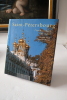
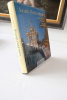
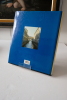
Saint-Pétersbourg - L’architecture des tsars
Saint-Pétersbourg a fêté en 2003 le tricentenaire de sa fondation par le tsar Pierre le Grand. Sa création, qui correspond à l'émergence du Siècle des Lumières, est un défi lancé à la Nature. Née d'un marécage glacé, la construction de la ville apparaît comme une prouesse humaine. Saint-Pétersbourg, la ville de la culture impériale, possède le plus grand nombre de palais de toute la Russie. Cet ouvrage propose une étude rigoureuse de ce patrimoine architectural unique. Les constructions de chaque tsar ou impératrice (Pierre le Grand, Anna Ire, Elisabeth Ire, Catherine la Grande, Paul Ier, Alexandre Ier et Nicolas Ier, Alexandre II, Alexandre III, Nicolas II) sont analysées, décrites, révélées à travers le beau regard photographique d'Alexandre Orloff. Sont enfin plus spécialement étudiés les palais de Tsarskoie Selo, Oranienbaum, Gatchina, Pavlovsk et Peterhoff.
Comme neuf
Le Mihrab : Dans L'Architecture Et LA Religion Musulmanes : Actes Du Colloque International Tenu a Paris En Mai 1980 Publies Et Pourvus D'Une Etude D introduction générale
Brill E J 1988
Très bon état Ouvrage toilé avec jaquette . 180 pages de texte avec dessins et 120 planches photographiques . architecture religion musulmane islam - largeur/hauteur : 21,5x28 cm - poids : 1020 g - nombre de pages : 180 & 120 p. - langue : Français
Martin Margiela The Women's Collections 1989-2009
, Paris Mus es, 2018 hardcover, 160 pages 31 x 25 x 2,2 cm ENGLISH *NEW ISBN 9780847864256.
Timed to coincide with a major exhibition, this volume revisits the years during which celebrated designer Martin Margiela achieved the status as one of the most important designers at work today. One of the Antwerp group of six who changed the face of contemporary fashion, Margiela created 41 runway shows between 1989 and 2009 which promoted a unique vision of understated luxury -- monochromes, oversize volumes, and his signature constructed-deconstructed cuts - whose credo is comfort, timelessness, sensuality, and authenticity. Famously reclusive, Margiela never showed his face even at his own shows in order that the work could stand purely on its own, free from any link to celebrity or self-promotion. This volume chronicles these amazing fashion shows in careful detail: the extraordinary spaces, the music, the designer's intentions, the iconic pieces. Over the years, recurring motifs and inspirations become more apparent including anonymity, whiteness, past and anteriority, diversion. The book reveals the sensitive, poetic and incredibly innovative universe of this most influential contemporary fashion designer.
L HABITAT SOLAIRE - COMMENT ?
L EQUERRE EDITEUR. 1979. In-4. Broché. Bon état, Couv. convenable, Dos satisfaisant, Intérieur frais. 111 pages augmentées de nombreuses illustrations en noir et blanc dans le texte. Couverture contre-pliée.. . . . Classification Dewey : 720-Architecture
Classification Dewey : 720-Architecture
Anthropology of St Gregory Palamas. The Image of God, the Spiritual Senses, and the Human Body
, Brepols, 2020 Paperback, xvi + 243 pages, Size:156 x 234 mm, Language: English. ISBN 9782503589411.
Summary How are we to regard our body? As a prison, an enemy, or, maybe, an ally? Is it something bad that needs to be humiliated and extinguished, or should one see it as a huge blessing, that deserves attention and care? Is the body an impediment to human experience of God? Or, rather, does the body have a crucial role in this very experience??Alexandros Chouliaras' book The Anthropology of St Gregory Palamas: the Image of God, the Spiritual Senses, and the Human Body argues that the fourteenth-century monk, theologian, and bishop Gregory Palamas has interesting and persuasive answers to offer to all these questions, and that his anthropology has a great deal to offer to Christian life and theology today. Amongst this book's contributions are these: for Palamas, the human is superior to the angels concerning the image of God for specific reasons, all linked to his corporeality. Secondly, the spiritual senses refer not only to the soul, but also to the body. However, in Paradise the body will be absorbed by the spirit, and acquire a totally spiritual aspect. But this does not at all entail a devaluing of the body. On the contrary, St Gregory ascribes a high value to the human body. Finally, central to Palamas' theology is a strong emphasis on the human potentiality for union with God, theosis: that is, the passage from?image to likeness. And herein lies, perhaps, his most important gift to the anthropological concerns of our epoch.
Art Nouveau Architectuur Antwerpen
Antwerpen, privaat uitgave Elaut., 2023 Softcover, 136 pages, rijkelijk ge llustreerd in kleur, 24x22cm ISBN 9789464782462.
Brussel viert dit jaar 130 jaar art-nouveau-architectuur. In Antwerpen mogen we schrijven over 125 jaar. In 1897-98 zijn de eerste art-nouveauwoningen ontworpen. Toonaangevende architecten zoals Alexis Van Mechelen, Jos Bascourt, Emile Thielens, Jules Hofman en Ernest Stordiau bijten de spits af. Antwerpen heeft meer dan 100 art-nouveaugebouwen waarvan er heel wat beschermd zijn als monument. In het Antwerpse straatbeeld zijn de ontwerpen van de architecten Frans Smet-Verhas en Emiel Van Averbeke niet meer weg te denken. Zoals het 'Volkshuis Help U Zelve' en de huizengroep 'De Vijf Werelddelen' beter bekend als 'Het Bootje'. Dit boek brengt eindelijk het gebouwde art-nouveau-erfgoed in de stad Antwerpen in woord n beeld in kaart, degelijk en voor een breed publiek. Het steunt op heel veel archiefonderzoek en plaatsbezoeken en brengt daarom ook veel nieuwe gegevens aan het licht, zeker over diverse bijzondere priv -interieurs die tot nu gesloten bleven. Het verruimt ook de kennis over de Antwerpse art nouveau, die tot nog toe vaak al te veel beperkt bleef tot de Cogels-Osybuurt. De bijdragen van de beide gastauteurs (Dr Mario Baeck en Tom Peeters) vestigen de aandacht op drie belangrijke sierende elementen in de Antwerpse art nouveau: moza eken, tegeltableaus en sgraffiti. De beroemde Brusselse kunstenaar Paul Cauchie heeft in Groot-Antwerpen meer dan 200 gevels met sgraffito gedecoreerd.
Jacques De Weerdt, de mysterieuze architect van begin 20ste eeuw
Antwerpen, privaat uitgave, , 2022 Gebonden; 120 pages, rijkelijk ge llustreerd in kleur, 24x22cm ISBN 9789464663754.
Binnenkijken in de prachtpanden van Jacques De Weerdt, de mysterieuze architect van begin 20ste eeuw. Alex Elaut, stadsgids en erfgoedkenner in de stad Antwerpen schrijft een boek over architect Jacques De Weerdt. Het is 80 jaar geleden dat hij overleed. Prachtige artnouveau huizen in zowel Antwerpen, Berchem als Borgerhout zijn van zijn hand, maar over de man zelf is weinig geweten. Elaut toont vier pareltjes in de stad die De Weerdt gebouwd heeft, in de hoop om meer informatie over hem te vinden. Honderd huizen in tien jaar; Maar wat weten we dan wel over hem? Wel Jacques De Weerdt, geboren in 1867, is eigenlijk een Mechelaar. Daar woonde zijn familie en ging hij ook naar school. Na tien jaar aan de academie gaat hij aan de slag als tekenaar bij de Belgische spoorwegen, wat hem naar stad Antwerpen leidt. Op tien jaar tijd zou hij wel honderd huizen in de stad hebben gebouwd, zegt Elaut. Over zijn eigen stijl zijn er al studies verschenen, maar informatie over zijn opdrachtgevers en medewerkers zijn er niet. Tijdens de Eerste Wereldoorlog vluchtte hij naar Rotterdam, maar wanneer hij terugkeert, bouwt hij nog weinig. Was zijn inspiratie op? Was hij ziek? We weten het niet, zegt Elaut. Het enige wat ik nog kan zeggen is dat hij in een psychiatrie verbleef en in 1942 in Boechout is gestorven. In Antwerpen had hij twee broers en een dochter, die trouwens ook in een psychatrisch centrum terechtkwam, en ook in Mechelen had hij nog familie.? Familieweetjes Zelf stopte Elaut al briefjes in de bussen bij de huizen waarvan hij weet dat ze door De Weerdt gebouwd zijn. Hij kreeg al veel positieve reacties om foto's te komen nemen voor het herdenkingsboek. Ik kreeg ook al veel hulp van Marcel Windey, een heemkundige uit Deurne die al veel opzoekwerk heeft gedaan. Maar er kan altijd info bij. Daarom zoek ik mensen die eventueel een foto of portret hebben van de familie De Weerdt, Zenner, Verellen, Wauters en Bocken.
ABCdaire des Bruegel
, Flammarion, 1999 Softcover, 119 pages, 22 x 12 cm, Fran ais. *En bon tat. ISBN 9782080126498.
Pr sente l'art des Bruegel dans le contexte anversois, travers leurs oeuvres, leur entourage et les courants esth tiques de leur poque.
passion d'un amateur. La collection Alexis Joffroy, de Luca Giordano Alfred Stevens
, Somogy ditions d'art, 2001 Hardcover, 107 pages, Francais, 280 x 220 mm, Illustrations, . ISBN 9782850564673.
La Passion d'un amateur : La collection Alexis Joffroy, de Luca Giordano Alfred Stevens. Ouvrage publi l'occasion de l'exposition organis e au Mus e des Beaux-Arts de Dunkerque du 16 juin 2001 au 16 juin 2002 ; Nombreuses illustrations en couleurs et en noir et blanc
AMBER Treasures from the Baltic Sea, 16th to 18th century
Paris, Editions Monelle Hayot, 2023 Illustrated hardcover, 367 pages full color illustr, 31 x 21 cm, English. *new. . ISBN 9791096561445.
This richly illustrated catalogue, published on the occasion of the exhibition Amber: Treasures from the Baltic Sea,? traces the history of artworks made from this mysterious material through the centuries. In addition to the fifty works assembled and showcased by Galerie Kugel, this book focuses on the geographical and political context of the region from which Baltic amber originates, as well as the extensive typology of amber objects known in international museums.
Ambiguum 10 of Maximus the Confessor in Modern Study. Papers collected on the Occasion of the Budapest Colloquium on Saint Maximus, 3-4 February 2021
, Brepols, 2025 Hardback, Pages: 386, Size:156 x 234 mm, Illustrations:3 b/w, Languages: English, Greek, French. ISBN 9782503611266.
Summary Ambiguum 10 is an important sample of Maximus the Confessor's philosophical exegesis, which has not received concentrated scholarly attention so far. This volume includes a new critical text edition by Prof. Carl Laga and a new English translation by Dr. Joshua Lollar. It also offers a unique insight into the universe of the great Christian thinker, showcasing his extensive knowledge of Aristotelian, Platonic and Neoplatonic philosophy and offering possible parallels with the Corpus Hermeticum and Ps-Dionysius the Areopagite. The present volume is the first attempt to bring together scholars from different traditions to understand the message and the reception of this seminal work. TABLE OF CONTENTS I. Introduction Alex L onas & Vladimir Cvetkovi?, Ambiguum 10 in context II. The text of Ambiguum 10 Critical edition by Carl Laga with an English translation by Joshua Lollar III. Studies Maximus and his intellectual context Pascal Mueller-Jourdan, De la production simultan e de la nature et du temps. L'Ambiguum 10 de Maxime la lumi re du Tim e de Platon. Torstein Tollefsen, Aristotelian Categories in Ambiguum 10 (1177B-1181A) Lyubomira Stefanova, Maximus the Confessor on symbols of manifestation of God the Word in the world Aleksandar Djakovac, St. Maximus the Confessor and the Hermeticism: Possible Inspiration? St. Maximus the Christian Philosopher Daniel Heide, Maximos Confessor's Threefold Doctrine of Creation ex nihilo Mikl s Vass nyi, Maximus the Confessor on the Infinity of God: Ambiguum 10, Sections 40-41. A Critical Reading Vuka?in Mili?evi?, Christ before Christ. Some Observations on Ambiguum 10 Vladimir Cvetkovi? & Ivan Ni?avi?, Wisdom in Maximus the Confessor's Ambiguum 10.19 Dionisios Skliris, The divinization of man according to the Tenth Ambiguum of Saint Maximus the Confessor
Studies in Maximus the Confessor's Opuscula Theologica et Polemica. Papers Collected on the Occasion of the Belgrade Colloquium on Saint Maximus, 3-4 February 2020
, Brepols, 2023 Hardback, 255 pages, Size:156 x 234 mm, Language: English. ISBN 9782503600833.
Summary Opuscula theologica et polemica is a collection of minor works of Maximus the Confessor that has not received much scholarly attention so far. Nevertheless, it offers A unique insight into the Christological and personological universe of the Christian thinker. The present volume is the first attempt to bring together scholars of different traditions and to apply different approaches - theological, philosophical, philological and historical - to this seminal work. TABLE OF CONTENTS Alex L onas & Vladimir Cvetkovi?, Introduction Christian Boudignon, What are the Opuscula theologica and polemica? A Philological Question Bram Roosen, Maximian ??????? against the Monothelites Bronwen Neil & Ryan Strickler, Letters of Maximus in the Collectanea of Anastasius Bibliothecarius Aleksandar Djakovac, Maximus' Relational Ontology Kevin M. Clarke, Maximus the Confessor's Anti-Severan Polemics in the Opuscula Sebastian Mateiescu, Arguing with the Properties of Christ Romilo Aleksandar Kne?evi?, Maximus' Opuscula and the Concept of the Hypostatic Union Mikl s Vass nyi, A Problem of Identity in St Maximus' Opusculum 14 Dionisios Skliris, The Ambiguity of the Gnomic Will as Basis for a Theory of Human Individuality in the Thought of Saint Maximus the Confessor Index of Maximus Citations Index of Names Index of Theological and Philosophical Terms List of Contributors
Atlas de G ographie Physique, Politique et Historique.
, H. Dessain, 1905 Hardcover, 140 pages, 23,0 x 32,0 cm, FR. En bon tat.
Atlas de G ographie Physique, Politique et Historique.
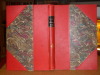
La France Pittoresque du Midi. Histoire et géographie des provinces d’ Auvergne, Gascogne, Béarn, Foix, Languedoc, Roussillon, Comtat, Nice, Provence Corse et des départements qu’ elles ont formés.
Alfred Mame & Fils Tours 1898 In-8 ( 275 X 185 mm ) de 368 pages, demi-percaline fraise à coins, dos lisse orné d'un fleuron doré, tête dorée. Carte en noir et blanc en frontispice. Illustré de nombreuses cartes et gravures en noir et blanc dans le texte. Agréable exemplaire.
Franks and Crusades in Medieval Eastern Christian Historiography
, Brepols, 2021 Hardback, 351 pages, Size:156 x 234 mm, Illustrations:1 b/w, Language: English. ISBN 9782503565811.
Summary This volume is an introduction to eleven of the main medieval Eastern Christian historians used by modern scholars to reconstruct the events and personalities of the crusading period in the Levant. Each of the chapters examines one historian and their work(s), and first contains an introductory examination of their life, background and influences. This is then followed by a study of their work(s) relevant to the Crusades, including the reasons for writing, themes, and methodology. Such an approach will allow modern researchers to better understand the background and contexts to these texts, and thus to reconstruct the past in a more nuanced and detailed way. Written by eleven eminent scholars in their fields, and examining chronicles written in Armenian, Greek, Syriac, and Arabic, this book will be essential reading for anybody engaged in research on the Crusades, as well as Eastern Christian and Islamic history, and medieval historiography. TABLE OF CONTENTS Introduction - Alex Mallett Greek Texts: Anna Comnena - Jonathan Shepard John Kinnamos - Chris Hobbs Niketas Choniates - Alicia Simpson George Akropolites - Ruth Macrides and Jeff Brubaker Armenian Texts: Matthew of Edessa - Tara Andrews Smbat - Sergio La Porta Syriac Texts: Michael the Syrian - Dorothea Weltecke Anonymous Chronicle to 1234 - Herman Teule Bar Hebraeus - Marianna Mazzola Copto-Arabic Texts: Al-Makin Ibn al-Amid - Anne-Marie Edd History of the Patriarchs of the Egyptian Church - Alex Mallett and Johannes Den Heijer Index

