 Write to the booksellers
-
Type
Any type (1)
Art print (7)
Autograph (1)
Book (32311)
Disk (1)
Drawings (264)
Engraving (11)
Magazine (125)
Old papers (1)
Photographs (15)
Posters (1)
-
Latest
Last 24h (10)
Last 3 days (2)
Last month (273)
Last week (245)
-
Language
Dutch (78)
English (56)
French (32560)
German (6)
Italian (18)
Portuguese (9)
Spanish (11)
-
Century
16th (14)
17th (47)
18th (189)
19th (1507)
20th (9479)
21st (1684)
-
Countries
Belgium (10932)
Brazil (6)
Canada (116)
China (1)
Côte d'Ivoire (139)
Denmark (209)
France (18237)
Germany (1)
Greece (1)
Switzerland (3096)
-
Syndicate
ALAC (107)
CLAM (143)
CLAQ (102)
CNE (3)
ILAB (10566)
NVVA (1145)
SLACES (1145)
SLAM (7962)
SNCAO (10)
Venise. Histoire, Art, Industrie, La Ville, La Vie [ Edition originale ]
Ouvrage orné de 525 gravures dont 50 tirées hors texte et plusieurs en couleurs, 1 vol. in-folio reliure demi-chagrin bleu nuit, J. Rothschild, Paris, 1878
![Venise. Histoire, Art, Industrie, La Ville, La Vie [ Edition originale ]. YRIARTE, Charles](https://static.livre-rare-book.com/pictures/CDL/69593_thumb.jpg)
![Venise. Histoire, Art, Industrie, La Ville, La Vie [ Edition originale ]. YRIARTE, Charles](https://static.livre-rare-book.com/pictures/CDL/69593_2_thumb.jpg)
![Venise. Histoire, Art, Industrie, La Ville, La Vie [ Edition originale ]. YRIARTE, Charles](https://static.livre-rare-book.com/pictures/CDL/69593_3_thumb.jpg)
Etat très satisfaisant (rouss., reliure un peu frottée) pour cet exemplaire très solidement relié.
Ysbrant. Prenten van een schilder / Ysbrant. Prenten van een schilder
Antwerpen , DE REEDE, 2025 softcover, 171 pages Illustrated. text in NL/ENG.
Het oeuvre van Ysbrant (1937- 2021) straalt levenslust en sensualiteit uit. Hij was geen orthodoxe graficus, maar bracht zijn emotionele wereld tot leven via een combinatie van zijn schilderkundig kunnen en grafische technieken. Zijn prenten zijn vaak in kleur gedrukt of handgekleurd met aquarel en zilver- of goudblad. De composities zijn meestal vurig en soms ook intiem en teder. Expressieve vrouwenfiguren, met vlechten en in rijkelijk geplooide jurken zijn dominant aanwezig in Ysbrants onstuimig oeuvre. Naast zijn schilderijen en zijn werken voor het theater, maakte Ysbrant etsen, steendrukken en linografie n. Samen met zijn dierbare vriend, de dichter Remco Campert realiseerde hij verschillende bibliofiele uitgaven.
Ysbrant, Prenten van een schilder - Prints by a painter
Antwerpen , Museum De Reede, 2025 Oorpronkelijk uitgeversomslag, 168 pagina's, 21 x 15 cm, Nederlandstalige tekst/English text. *Nieuw.
Het oeuvre van Ysbrant (1937- 2021) straalt levenslust en sensualiteit uit. Hij was geen orthodoxe graficus, maar bracht zijn emotionele wereld tot leven via een combinatie van zijn schilderkundig kunnen en grafische technieken. Zijn prenten zijn vaak in meerdere kleuren gedrukt of opgehoogd met aquarel en zilver- of goudblad. De composities zijn meestal vurig en soms ook intiem en teder. Expressieve vrouwenfiguren, met vlechten en in rijkelijk geplooide jurken zijn dominant aanwezig in Ysbrants onstuimig oeuvre. Naast zijn schilderijen en zijn werken voor het theater, maakte Ysbrant etsen, steendrukken en linografie n.
Bohemian Visual Culture in fin-de-si cle Norway. Scenes from Christian Krohg's Studio
, Brepols, 2024 Hardback, 212 pages, Size:216 x 280 mm, Illustrations:13 b/w, 109 col., Language: English. ISBN 9782503606187.
Summary The Norwegian painter, author, and journalist Christian Krohg (1852-1925) is known for his naturalist paintings about the sick and the poor and prostitution. Lesser known are his many studio paintings, portraits of artist friends, and late self-portraits from his studio. This book shows the importance of Krohg's studio as a space not only for art making but also as a place where some of the most pioneering and radical artists, authors, playwrights, and actors met. The circle of friends and colleagues meeting in Krohg's studio were part of the scandalous artist group known as the Kristiania Bohemians. In this study the reader will meet not only Krohg, but also his painter wife, the mythical Oda Krohg, the young Edvard Munch, the anarchist Hans J ger, playwright Gunnar Heiberg, and the forgotten muse Constance Bruun - one of Henrik Ibsen's favorite actresses. The close and complex relationship between Krohg and Munch will surprise many readers. This book will be a necessary read for anyone interested in Scandinavian nineteenth-century art and culture. TABLE OF CONTENTS Foreword Introduction. Setting the Scene: Bohemianism in Kristiania Chapter 1. Kristiania as a City of Free Love Chapter 2. A Corner in My Studio as an Allegory of Norwegian Modernism Chapter 3. The Image of Oda Krohg as une vraie princesse de la Boh me Chapter 4. Free Love On and Off the Stage Chapter 5. Back to the Studio, 1912-25 Afterword. Krohg and Munch Bibliography Index
HAGIA SOPHIA
Anatolia Tourism Pub.. Non daté. In-8. Broché. Bon état, Couv. convenable, Dos satisfaisant, Intérieur frais. Env. 40 pages. Illustré de nombreuses photos en couleur.. . . . Classification Dewey : 720-Architecture
Guide fançais. Classification Dewey : 720-Architecture


GA ARCHITECT 8 Tadao Ando
Tokyo A.D.A Edita Tokyo 1990 Grand In-4 text english-japanese , 244 pp
Bon Broché à Rabats
Frank Gehry : Recent Project
, A.D.A. EDITA, Tokyo, 2011 Softcover, 172 pages, ENG / JAP, 300 x 260 x 16 mm, NEW, illustrated in colour / b/w. ISBN 9784871406734.
Recent works by the office of Frank Gehry include a.o. the Kunsthalle in Sonderborg, the Eisenhower Memorial in Washington, the Foundation Louis Vuitton in Paris, the LUMA Foundation/Parc des Ateliers in Arles, the Camerimage Lodz Center in Lodz, the Andorra Pau-Identitat and National Archive Building in La Massana (Andorra), the National Art Museum in Andorra, the Guggenheim in Abu Dhabi, a master plan for the Brooklyn Atlantic Yards in New York, the Puente de Vida Museo in Panama City, the New World Symphony in Miami Beach, and the RED/Temporary Pavilion in New York.
peintures murales de Saint-Bonnet-le-Ch teau. Le programme d votionnel et dynastique (fin XIVe - d but XVe s.)
, Brepols, 2023 Hardback, 360 pages, Size:225 x 300 mm, Illustrations:750 col., 1 maps b/w, Language: French. ISBN 9782503593074.
Summary Les peintures murales de la chapelle basse de la coll giale de Saint-Bonnet-le-Ch teau pr sentent un riche programme iconographique, supposant la succession de commanditaires distincts au d but du XVe s. La premi re phase fut d votionnelle ; la seconde affecta le d cor de la vo te, l'initiative d'Anne Dauphine, et proposa avec les Anges musiciens une iconographie labor e, inspir e mais adapt e des exemples du Mans, en hommage son poux d funt, Louis II, duc de Bourbon. Le talent de l'artiste, Louis Vobis, fut de lier les parties les unes aux autres. L' tude iconographie et stylistique d finit les mod les et l'esth tique du ma tre pass par Avignon et Paris, inform des exp riences des enlumineurs du duc de Berry et de l'art savoyard. TABLE OF CONTENTS Preface d'Albert Chatelet Avant-propos I - PR SENTATION Introduction Description de la collegiale de Saint-Bonnet-le-Chateau Restauration et conservation II - HISTOIRE DE LA CONSTRUCTION ET COMMANDE PRINCI RE Histoire de la construction Commande princiere III - MOTIFS ET PROGRAMME ICONOGRAPHIQUE Introduction de l'etude iconographique Les Quatre vang listes L'Annonciation L'Annonce aux Bergers La Nativit et l'Adoration des Mages La Crucifixion Les Anges pleurants La Mise au tombeau Ponce Pilate, les Pharisiens et les soldats L'Apparition du Christ Marie-Madeleine Les Anges musiciens (l'Assomption) Le Couronnement de la Vierge L'Enfer Decor architectural en trompe-l'oeil Decor d'acanthes Conclusion de l'etude iconographique IV - TUDE STYLISTIQUE Introduction de l'etude stylistique Etude comparative avec l'art franco-flamand et du Maitre des Initiales de Bruxelles Etude comparative avec des peintures du courant avignonnais de la Savoie Etude comparative avec des peintures regionales V - CONCLUSION Entre Paris et la Savoie : les peintures murales de Saint-Bonnet et la peinture du debut du xve s. Un concept operatoire : ? la projection inversee ? Des dramaturgies differentes : la Crucifixion d'Altichiero et celle de Saint-Bonnet L'itineraire hypothetique de Louis Vobis, peintre de Saint-Bonnet La commande de Saint-Bonnet : la derniere etape d'une ambition dynastique plus vaste Bibliographie Index Credits Notes Soutiens - Remerciements
Pékin, cité impériale, sept siècles d'histoire. Collection : Cités d'Art.
Paris, Albin Michel, 1961. 20 x 28, 227 pp., 22 planches en couleurs, 67 illustrations en N/B, cartonnage d'édition pleine toile + jaquette en couleurs, très bon état.
"Traduction : Catherine Grégoire; avec un essai sur l'art chinois par Peter Swann."
Cathédrales de France préface de Daniel-Rops , collection Trésors de pierre , nouvelle édition revue et augmentée
1952 Paris édition des deux mondes 1952, in4, cartonnage éditeur sous jaquette illustrée, 136 pages, très nombreuses photographies noir et blanc pleine page en héliogravures) et quelques couleurs contrecollées
bon état, qqs petits défauts sur jaquette
Eglises de Paris
Editions des Deux Mondes, 1956. Format 24x33 cm, cartonnage editeur, 54+171 pages.Bon etat, petites traces d'usage sur un livre d'occasion.
Yvan Christ. Ionel Schein. Notes et légendes par Jacques Ohayon
Reference : 36278
(1971)
L'oeuvre et les rêves de Claude-Nicolas Ledoux. Ledoux et son temps. Ledoux et notre temps.
Paris, Chêne, 1971, in-4, cartonnage éditeur, 201 pages. Bibliographie. Nbrs photographies, reproductions. Cartonnage présentant qq. marques d'usage sinon bel exemplaire, frais. Nbr. dessins, plans. Bibliographie
NB. La librairie est fermée jusqu'à fin septembre. Les questions et commandes seront traitées début octobre.
Yvan Christ - Jacques Silvestre de Sacy - Philippe Sigur - Aline Elmayan - Photographies de Jacques Sadoul - Préface de Pierre Gaxotte
Reference : 4478
Le Marais, ses hotels, ses églises.
PARIS, Henri Veyrier - Grand In-4 . 326 pages + Table - Reliure Editeur illustrée - Riche iconographie N/B et couleurs, certaines photographies PP - Très bon état, à l'état de neuf.
Cnformément à nos conditions générales de vente :Les frais de port sont affichés à titre indicatif. Il se peut que nous devions vous contacter pour vous informer du coût de laffranchissement supplémentaire en fonction du poids et du nombre de livres, surtout pour les envois internationaux Cependant vu l'augmentation des tarifs postaux à l'internationale, nous pouvons expédier les ouvrages en point relais MONDIAL RELAY pour les pays suivants : Allemagne, Autriche, Belgique, Espagne, Italie, Luxembourg, Pays-Bas, Pologne, et Portugal. Merci de nous indiquer en retour le point relais choisi ainsi que votre numéro de téléphone mobile & adresse Courriel pour assurer le suivi du colis.N'hésitez pas à nous interroger.In accordance with our general terms and conditions of sale:Shipping costs are displayed for informational purposes only. We may need to contact you to inform you of the additional postage costs depending on the weight and number of books, especially for international shipments.However, given the increase in international postal rates, we can ship books via Mondial Relay to the following countries: Germany, Austria, Belgium, Spain, Italy, Luxembourg, Netherlands, Poland, and Portugal. Please provide us with your chosen Mondial Relay point, as well as your mobile phone number and email address to ensure package tracking.Please feel free to contact us with any questions
Promenades dans le Marais
Editions André Balland 1967 360 pages PARIS. in8. 1967. Cartonné éditeur + jaquette. 360 pages.
Très bon état
Alberto Giacometti
Paris, Flammarion, 2018 Softcover, 407 pages, 170 mm x 240 mm. ISBN 9782081446120.
Cette monographie sur la vie et l'oeuvre d'Alberto Giacometti (1901-1966) s'appuie sur l'analyse de plus de 500 de ses sculptures, peintures, dessins, gravures et lithographies, ainsi que sur ses crits th oriques et sur ses d clarations. Elle pr sente galement le contexte historique, artistique et culturel de sa vie.
art baroque.
Paris, Mazenod, 1986 Relie, toile sous jaquette d'editeur, 635pp., 31.5x25cm., ills. en coul. et n/b., bon etat. ISBN 9782850880162.
Arquitetura contemporanea no Brasil 0
, Editora Perspectiva, 1997 Paperback (Portuguese Edition) 398 PAGES Illustrated. FINE.
L'abbaye du Thoronet
Editions Ouest-France 1985 1985. Cet ouvrage présente pour la première fois des propositions de reconstitution de l'ensemble des bâtiments de l'abbaye romane du Thoronet conservés et disparus en détaillant leurs dimensions et fonctionnalités. Il s'agit d'une étude approfondie de ce monument emblématique de l'architecture cistercienne destinée à un public intéressé par l'histoire et l'architecture médiévales


Bom estado
LES ECHAFAUDAGES L'OUTILLAGE DE CHANTIER
289 PAGES-16 CM X 24,5 CM-TRAITE DU BATIMENT SOUS LA DIRECTION DE G. DUBOIS D'AUBERVILLE-PREFACE PAR PAUL PEIRANI-QUELQUES TRACES D'HUMIDITE EN PAGES DE GARDE, SINON INTERIEUR FRAIS-OUVRAGE RICHEMENT ILLUSTRE ET DETAILLE (10E)
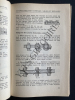
EYROLLES COUVERTURE RIGIDE ETAT BON
Yves Gevaert Libraire, Catalogues N 2, 3 & 4.
, Yves Gevaert Libraire, 1980 3 Volumes, Softcover, pages not numbered, 20 x 13 cm, FR. *fine condition.
Acteur majeur de la sc ne artistique bruxelloise et internationale, Yves Gevaert organise d s le milieu des ann es 1970 au Palais des Beaux-arts de Bruxelles une s rie d'expositions majeures, pr sentant le travail de Carl Andre, Daniel Buren, Gerhard Richter ou encore Sol LeWitt. En 1982, il fonde la maison d' dition qui porte son nom. En 2022, son riche fonds d'archives a rejoint les collections de la Biblioth que Kandinsky. En troite collaboration avec Yves Gevaert, un premier travail scientifique vient d' tre conduit par Kaat Obbels, boursi re de la Mission Recherche des Amis du Centre Pompidou.
Yves Laloy 1920-1999
ÉDITIONS APOGÉE 2004 158 pages in4. 2004. Broché. 158 pages. Cet ouvrage présente le travail de l'artiste Yves Laloy (1920-1999) architecte et peintre surréaliste français en conjonction avec l'œuvre de Jean Grard agriculteur-sculpteur. Il propose une interrogation esthétique de Patricia Allio et Juliette Dieudonné sur la réception et la conservation de l'art brut dans le cadre d'une exposition au Musée des beaux-arts de Rennes en 2004
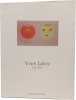
Très Bon Etat intérieur frais
Savoir/Pouvoir. Les biblioth ques, de l'Antiquit la modernit
, Brepols, 2019 Paperback, viii + 306 pages, Size:156 x 234 mm, Illustrations:2 b/w, Languages: French, Spanish, Italian. ISBN 9782503583808.
Summary This volume collects the texts of fifteen papers presented on the occasion of a colloquium held both in Strasbourg and Mulhouse, and dedicated to studying the roles of the library in the city and the requirements for the transmission of knowledge to a wider audience. Contrasting opinions from experienced librarians, teachers and researchers, and from highly qualified scholars - both from France and abroad, but all specialized in religious rhetoric - underscore the political, intellectual, or moral reasons which govern the configuration, conservation, and dissemination of knowledge not only in the profane but also in the sacred domain.The result of an international colloquium organized by the National and Academic Library of Strasbourg, by the LabEx Hastec of the cole Pratique des Hautes tudes (Paris), by the officials in charge of the IdEx "TRANSLATIO" programme at the University of Strasbourg and by the research laboratory ILLE/EA 4363 at the University of Mulhouse, the volume entitled Learning / Ruling. The Libraries, from Antiquity to Modernity is an ordered approach originating from varied investigations of a major phenomenon of culture and civilization: the expansion of libraries in the Orient as well as in the Occident, from the beginning up to the present day. Ce volume d'actes r unit les textes de seize communications prononc es l'occasion d'un colloque strasbourgeois et mulhousien consacr l' tude des fonctions de la biblioth que dans la cit et des conditions de transmission du savoir aupr s d'un large public. C'est ainsi que les regards crois s de biblioth caires exp riment s, d'enseignants-chercheurs chevronn s et de savants de haute r putation - fran ais et trangers, mais tous sp cialistes des rh toriques religieuses - ont mis en vidence les raisons politiques, intellectuelles ou morales qui ont pr sid l' laboration, la conservation et la diffusion des connaissances humaines aussi bien profanes que sacr es. TABLE OF CONTENTS Pr face Avant-propos Introduction PREMI RE PARTIE. B TIMENT-SYMBOLE, B TIMENT-REP RE : LA BIBLIOTH QUE DANS LA CIT , SON ENVIRONNEMENT URBAIN, SON D COR, SON AM NAGEMENT Christophe Didier, M tamorphoses d'un lieu de savoir : l'exemple de la Biblioth que nationale et universitaire de Strasbourg Mar a Luisa E. L pez-Vidriero Abell , Las bibliotecas palaciegas de la monarqu a hisp nica : de los Reyes Cat licos a Alfonso XIII Andrea De Pasquale, La Biblioteca nazionale centrale di Roma a quarant'anni dall'inaugurazione della sede al Castro Pretorio: dalla scelta del sito ai progetti attuali DEUXI ME PARTIE. LE POUVOIR INTELLECTUEL DES BIBLIOTH QUES, L' VOLUTION DU LECTORAT ET DES PRATIQUES, LES USAGES DU LIEU Dominique Charpin, Les biblioth ques en M sopotamie : des fonds de manuscrits priv s aux biblioth ques royales Yves Lehmann, Encyclop disme documentaire et imp rialisme plan taire dans l'Antiquit gr co-romaine Robert Bedon, Les biblioth ques priv es dans la Gaule du IVe et du Ve si cle de notre re Stavros Lazaris, Manuels d'enseignement dans une biblioth que monastique du nord de la Gr ce : le cas d'un livre illustr d'histoire naturelle et de morale chr tienne Gilbert Fournier, Une biblioth que en temps de crise. Lecteurs trangers et d sencha nements de manuscrits au coll ge de Sorbonne dans le second quart du XVe si cle TROISI ME PARTIE. LA BIBLIOTH QUE PER UE COMME FONDEMENT D'UN POUVOIR OU D'UN CONTRE-POUVOIR : ASPECTS JURIDIQUES OU RELIGIEUX, PATRIMOINE ET COLLECTIONS, HOMMES DE SAVOIR/POUVOIR? Aude Lehmann, Autour du de bibliothecis de Varron : politique et culture dans la Rome c sarienne Marilina Gianico, D'une biblioth que l'autre : r flexions sur l'histoire de la Biblioth que Universitaire Estense de Mod ne Istv n Monok, conomie et politique de biblioth que : la Hongrie et la Transylvanie d'Ancien R gime Doina Hendre Biro, Biblioth que, confession et identit collective : le Batthyaneum de Karlsburg/Alba Iulia Fr d ric Barbier, La foi, le talent, le service : l' thique protestante et l'esth tique des biblioth ques (XVe-XVIIe si cle) Pierre Casselle, La Biblioth que de l'H tel de Ville de Paris Yann Sordet, Information, politique et biblioth conomie dans l'Europe du XVIIe si cle : aux origines de la Biblioth que Mazarine
historiographie romaine. Morphologie, th matiques et post rit d'un genre litt raire Hommages Martine Chassignet
, Brepols, 2020 Hardback, vi + 394 pages, Size:156 x 234 mm, Languages: French, English. ISBN 9782503590547.
Summary This multidisciplinary volume features a targeted study of the main questions relating to Roman historiography. It envisages successively the morphology, the themes and the survival of that major literary form. In point of fact historiography appears etymologically less as a science than as an art aiming to express through writing the significance of the human messages conveyed by the past. In this respect we must never lose sight of the fact that knowledge of history proves to be essential for the education as well of the citizens as of the high rulers, whose public services have to be put in perspective. Ce volume pluridisciplinaire propose une tude cibl e des principales questions aff rentes l'historiographie romaine. Il envisage successivement la morphologie, les th matiques et la post rit d'un genre litt raire majeur. Tant il est vrai que, tymologiquement, l'historiographie se pr sente moins comme une science que comme un art visant exprimer par l' criture la signification des messages humains que contient le pass . A cet gard, on ne perdra jamais de vue que les connaissances historiques chez les Romains s'av rent indispensables aussi bien la formation des citoyens qu' celle des hauts dirigeants, dont il s'agit de mettre en perspective les actions au service de l'Etat. TABLE OF CONTENTS Pr face Avant-propos Premi re partie. Formes et significations de l'historiographie Rome David Engels, Historical Praefationes between Individual Programme and Literary Genre. The prooemium to Polybius' Histories Yves Lehmann, Aude Lehmann, Rencontre de l'histoire et de la religion dans le Logistoricus Calenus de Varron G rard Freyburger, Les annalistes dans l'enqu te de Censorinus sur les Jeux S culaires Robert Bedon, Aspects de l'historiographie dans le chapitre I des Collectanea rerum memorabilium et du Polyhistor du grammaticus Solin Alban Baudou, ?aius matris deum (Serv., Ad Aen. VII, 188) : petite enqu te sur la Grande M re Marie-Laure Freyburger-Galland, Dion Cassius, le dernier des Annalistes romains Pascale Fleury, Le fonctionnement de certains exempla historiques dans la correspondance de Fronton Jeanne Dion, Un exemple d'historiographie parodique : Sabinus le muletier John Marincola, Musing on the Past: Historical Epic and Epic History at Rome John Rich, Speech in the Early Roman Historians Federico Santangelo, Sallust and the Annalists from Manuzio to Peter Kaj Sandberg, On Future Fragmenta and Testimonia Notes on the Extra-Literary Evidence for Roman Republican Historiography Deuxi me partie. Les questionnements de l'historiographie romaine antique Jacques Poucet, La figure de Romulus, fondateur de Rome, chez Jean d'Outremeuse, chroniqueur li geois du XIVe si cle Dominique Briquel, L'image des Samnites chez Tite-Live. La vision des Italiens ennemis de Rome chez un auteur provincial Mouna Essaidi, L'image des G tes aux Ier et IIe si cles ap. J.-C. : tradition g ographique et historiographique vs vision ovidienne Yasmina Benferhat, Rois, roitelets et aspirants la royaut Ella Hermon, La loi agraire de Nerva entre la tradition litt raire et gromatique : d'un mythe un paradigme de gestion Christopher Smith, The Lives of Augustus Troisi me partie. Permanence et r manence de l'historiographie romaine aux temps modernes Fran ois-Xavier Cuche, Justin, source ou ressource de Corneille Index
zaak - Van Gogh : identiteitskwesties
, Mercatorfonds 2020, 2020 Softcover, 160 pagina's, NL, 245 x 190 mm, Nieuwstaat, met ill. in kleur en z/w, . ISBN 9789462302624.
Tijdens een persconferentie in het Van Gogh Museum in Amsterdam in november 2018 onthulde de auteur van dit boek dat een van de twee enige bekende foto's van de schilder Vincent van Gogh eigenlijk een foto van diens broer Theo is. Het onderzoek dat tot die onverwachte ontdekking geleid heeft, bracht ook volkomen nieuwe anekdotes, boeiende ontmoetingen en plotwendingen met zich mee, die niet zouden misstaan in een thriller. Na die eerste vondst kwam Yves Vasseur in contact met de nakomelingen van Samuel Delsaut. Die had in 1958 op zijn zolder in de buurt van Mons twee tekeningen ontdekt, die later aan Van Gogh werden toegeschreven en vandaag in de National Gallery of Art in Washington bewaard worden. De archieven van de familie Delsaut ontsluierden een hele plot, waardoor er twijfel ontstond over de authenticiteit van die tekeningen. Ze bevatten ook een uitgebreide briefwisseling tussen Carlo Delsaut, de zoon van Samuel, en Paul Gachet, de zoon van dokter Gachet, de behandelende arts van Van Gogh in Auvers-sur-Oise. Op basis van die correspondentie kon de auteur dan weer de geschiedenis achterhalen van zowel een onbestaand schilderij van Van Gogh, als van een verdwenen schilderij van Paul Gachet? Dit boek is een onderhoudende les in historische kritiek. In deze tijden van fake news wil het een basis vormen voor de uitwisseling van gedachten, zodat een onderscheid kan gemaakt worden tussen informatie en geruchten, tussen het werk van een journalist en een reclamestrategie, tussen de vervalsing van wat waar is en de passieve aanvaarding van wat onwaar is.
Wim Delvoye, Labour of Love
, WBooks, 2022 Softcover, 96 pagina's, 27 x 22.5 cm, . ISBN 9789462585218.
Gasflessen in Delfts blauw, getatoe erde varkens en verwrongen kruisbeelden. Design ontmoet kunst in het werk van Wim DelvoyeKritisch maar met een knipoog kijkt Wim Delvoye (Wervik, Belgi , 1965) naar de huidige samenleving. Dit resulteert in kunstwerken die grenzen doen vervagen. In zijn kunst komen het verleden en het heden samen. Er is aandacht voor het vakmanschap maar ook voor de ready-made en alledaagse populaire objecten. Wim Delvoyes kunst is conceptueel. Als kunstenaar draagt hij verschillende petten: de ontwerper-ondernemer. Heraldische strijkplanken, gasflessen beschilderd in Delfts blauw, cementtrucks, de Cloaca-machine, getatoe erde varkens, bewerkte motorbanden en verwrongen kruisbeelden; het zijn maar enkele van zijn verrassende en uiterst originele werken. Alle toveren ze een glimlach op het gelaat van de bezoekers die ernaar kijken. De internationaal gelauwerde kunstenaar Wim Delvoye heeft over de hele wereld ge xposeerd en zijn werk is opgenomen in de belangrijkste museumcollecties. In Het Noordbrabants Museum ?s-Hertogenbosch is vanaf oktober 2022 een groot overzicht van zijn werk te zien. Het is de eerste solotentoonstelling in Nederland.

