 Write to the booksellers
-
Type
Any type (1)
Art print (7)
Autograph (1)
Book (32276)
Disk (1)
Drawings (265)
Engraving (11)
Magazine (125)
Old papers (1)
Photographs (15)
Posters (1)
-
Latest
Last 24h (1)
Last 3 days (13)
Last month (269)
Last week (149)
-
Language
Dutch (79)
English (56)
French (32525)
German (6)
Italian (18)
Portuguese (9)
Spanish (11)
-
Century
16th (14)
17th (47)
18th (189)
19th (1507)
20th (9432)
21st (1679)
-
Countries
Belgium (10920)
Brazil (6)
Canada (116)
China (1)
Côte d'Ivoire (139)
Denmark (209)
France (18214)
Germany (1)
Greece (1)
Switzerland (3097)
-
Syndicate
ALAC (107)
CLAM (143)
CLAQ (102)
CNE (3)
ILAB (10583)
NVVA (1145)
SLACES (1145)
SLAM (7978)
SNCAO (10)
Architecture des églises romanes du Vivarais.
P., Guénégaud, 1966. In-12 br., 85-(2)pp., illustréde 31 gravures dont 10 h.-t.
Très bonne condition. - Frais de port : -France 4,9 € -U.E. 7 € -Monde (z B : 11 €) (z C : 21 €)


L'architecture des églises romanes du Vivarais
Avallon, F.E.R.N. / Guénégaud, 1967, in-8 br. (13,5 x 21,5),85 p., préface de Maître Louis Bouvier, ill. 31 gravures dont 10 h.-t., couverture à rabats, bon état.
L'auteur a voulu présenter toutes les églises romanes du département, notamment celles situées à l'ouest du sillon rhodanien, qui échappent généralement à l'attention des archéologues. In fine une nomenclature des églises romanes du Vivarais. Voir le sommaire sur photos jointes.
LE CORBUSIER A PARIS.
Paris, La Manufacture, 1987, in-4 cartonné, jaquette, étui, 266 pp. Illustrations. TRES BON ETAT
GUSTAVE COURBET l' cole de la nature - The School of Nature
, Silvana Editoriale, 2021 HARDCOVER 280 x 220 mm, 168 pages, 120 illustraties, ENG/ Texte en Francais edition. ISBN 9788836645923.
Courbet revendiquait n'appartenir aucune cole, se positionnant comme un artiste libre, ind pendant et menant sa carri re avec l'objectif affirm de cr er une mani re de peindre le r el qui lui serait propre. Cette cole de la nature s'affirma d s sa prime jeunesse, alors qu'il s'initiait au dessin et la peinture de plein air , r alis s sur le motif . Cet ouvrage illustre le naturalisme chez Courbet, travers, principalement, ses paysages, et la transmission de sa vision du r el aupr s d'autres artistes qui ont form une cole comtoise du paysage. La figure de George Besson (Saint-Claude, 1882 - Paris, 1971), collectionneur et critique d'art, ardent d fenseur de Courbet et du r alisme, est abord e sous l'angle de l'histoire de la cr ation du mus e Courbet Ornans, mais galement partir du lien qui l'unissait sa ville natale, Saint-Claude. En effet, dans la capitale haut-jurassienne, l'inauguration du mus e de l'Abbaye - dont le projet a t port par les deux artistes peintres, devenus donateurs, Guy Bardone et Ren Genis - a t rendue possible alors que Besson en avait pos les jalons quarante ans auparavant. Autour de Courbet, se m lent ainsi diff rentes personnalit s franc-comtoises ayant particip , titres divers, la connaissance, la diffusion et la continuit du rayonnement de son ouvre et de l'art. Saint-Claude, Mus e de l'Abbaye, janvier - avril 2021 En pr sentant un ensemble d'oeuvres d'importance de Gustave Courbet (principalement issues des collections de l'Institut Gustave et du Mus e Courbet d'Ornans) et d'autres artistes du XIXe - collaborateurs ou amis de Courbet - ayant abord pleinement la nature et le paysage au coeur de leurs d marches, ce livre traite la th matique du paysage de mani re transversale. Entre autre, sera r v l e l'implication du sanclaudien George Besson (1882-1971), qui oeuvra pour l'acquisition de la maison natale de Courbet h bergeant plus tard le mus e, puis celle de Guy Bardone (1927- 2015) donateur de la collection constitutive du mus e de l'abbaye qui sera ensuite secr taire g n ral de l'Institut Courbet pendant pr s de quinze ans. A noter, le Pays Courbet, pays d'artiste sera l'invit prestigieux de cet automne dans le Haut-Jura.
Architecture moderne ou l' Art de bien bâtir pour toutes sortes de personnes.
Tome 2 et dernier. Paris. Chez l' Auteur. 1764. Fort in-4 (29x21). 180 pages et 131 planches. Pleine basane racinée de l'époque, dos à nerfs richement orné, tranches rouges.
Tome 2 et dernier contenant : De la coutume de Paris concernant les bâtimens -De la distribution ou l'art de répartir avec goût le terrein sur lequel on se propose de constrruire et des pièces qui en dépendent. Frontispice, 2 vignettes et 131 planches d'architecture dont 102 sur double page, quelques unes par Alex. Le Blond. Très bel exemplaire, sans rousseur et à grandes marges.
EMPTY BILLBOARDS (Skate world photos)
Antwerp, Jonas Camps / Drukkerij Dirix, 2024 Softcover with blind printing, 277 x 210 mm, 144 PAGES, fullpages photo's z/w. Edition of 300 ex.
A self published Photography book that documents the build of the first concrete skateparks in Mozambique, Zambia and Eswatini. The process was documented from 2019 through 2023. The projects were organised by Skateworldbetter and Wonders Around The World.
Facies e culture nell'et del Bronzo italiana?
, Brepols, 2020 Paperback, 321 pages, Size:190 x 255 mm, Illustrations:40 b/w, 25 col., Languages: Italian, English. ISBN 9789492771353.
Summary Questo volume dedicato alla definizione, l'uso e l'interpretazione delle facies e culture dell'et del Bronzo in Italia. In molte sintesi sul lungo secondo millennio a. C. questi concetti appaiono come unit di analisi e sono direttamente o indirettamente presentati come veri e propri attori storici. Sebbene il loro utilizzo sia frequente e influenzi le interpretazioni, troppo frequentemente facies e culture sono usati come termini di comodo, perci si ritiene necessario aprire un dibattito sul loro significato. In questo volume, archeologi di tutta Italia discutono esplicitamente che cosa intendono con questi concetti, illustrandoli dal punto di vista teorico, storiografico e attraverso casi di studio dell'et del Bronzo italiana. Le questioni principali si possono cos riassumere: si possono in questo periodo individuare culture monolitiche ben delineate o consideriamo superata l'idea di entit con confini netti? Perch vogliamo combinare le distribuzioni di indicatori archeologici in entit regionali? Qual il legame con il concetto di tipo? Pu la condivisione di un tipo indicare identit radicate o suggerisce invece contatti superficiali? Riflettendo criticamente su queste e altre domande in merito all'et del Bronzo in Italia, si pu capire meglio in questo volume qual lo stato dell'arte sul concetto di facies - cultura e scoprire nuove strade di indagine per il futuro. Dopo l'introduzione, una sezione 'Storia, teoria e metodo' presenta un'analisi storiografica ed approcci innovativi al problema. Nella parte 'Facies e culture: stato dell'arte' specialisti italiani valutano per le varie regioni e le isole l'uso attuale dei concetti di facies e cultura. Nelle conclusioni si guarda al futuro. Gli articoli sono scritti in italiano ma hanno un abstract esteso in inglese.
VLAAMSE EN BELGISCHE SCHILDERKUNST in het Museo Nacional de Bellas Artes de Cuba / La Pintura Flamenca y Belga en el Museo Nacional de Bellas Artes de Cuba
BE - , Stockmans - Devos , 2016 Hardcover , 315 x 240 mm, 400 pages , throughout Kleurenillustraties; NL/ SP edition. ISBN 9789077207314.
Deze catalogus is het resultaat van meer dan een jaar doorgedreven wetenschappelijk onderzoek en van de kruisbestuiving tussen een Vlaamse kunsthistoricus, Jonas Slegers, en een Cubaanse conservator, Oscar Antu a Ben tez. De catalogus schetst een mooi overzicht van de Vlaamse en Belgische meesters die in het Museo Nacional de Bellas Artes in Havana te zien zijn en het is de allereerste catalogus van n deelaspect binnen de collectie 'Arte Universal', namelijk deze van de Vlaamse schilderkunst. Het finale doel is een venster op de wereld, dat onderzoekers en liefhebbers van over heel de wereld kennis kunnen maken met de tot heden onbekende Vlaamse schatten in het museum. Het niet alledaagse verhaal van het ontstaan van de collectie is geschreven door Oscar Julio Antu a Ben tez: schilderijen die samengebracht zijn door de revolutie en geconsolideerd werden tot op vandaag. De effectieve catalogusnota's met het onderzoeksluik heb ik voor mijn rekening genomen: dit heeft geleid tot een eerste 'status quaestionis', waarbij zekere toeschrijvingen zijn gemaakt en andere werken dan weer aan andere of anonieme meesters zijn toegeschreven. In deze catalogus is geen onderscheid gemaakt tussen de verschillende schilderijen. De topstukken uit de collectie krijgen evenveel aandacht dan kopie n of onbekende meesters. Museo Nacional de Bellas Artes de Cuba The final goal is a window on the world that allows researchers and enthusiasts from all over the world to discover the hitherto unknown Flemish treasures in the museum. The unusual story of the creation of the collection was written by Oscar Julio Antu a Ben tez: paintings that have been brought together by the revolution and consolidated until today. I took care of the effective catalog notes with the research part: this has led to a first 'status quaestionis', in which certain attributions have been made and other works have been attributed to other or anonymous masters. In this catalog no distinction is made between the different paintings. The masterpieces from the collection receive just as much attention than copies or unknown masters
Cy Twombly.
, Ed. Du Centre Pompidou 2016, 2016 Hardcover, 320 pages, Texte en Francais, 290 x 290 mm, nouveau ex. ISBN 9782844267580.
Cy Twombly, crit Nicola Del Roscio, proche collaborateur de l'artiste, eut la chance de vivre sur les deux rives de l'Atlantique, et encore plus au bord de la M diterran e. Cela lui permit non seulement d' tre un artiste am ricain et europ en mais aussi de recevoir un don tr s rare : la capacit de constamment renouveler son art de mani re cr ative jusqu' la fin de sa vie. En outre, il avait acquis travers ses p r grinations entre pays et cultures, et par ses lectures incessantes, une rare richesse d'exp riences qu'il synth tisa dans son oeuvre. Le Centre Pompidou offre cette figure majeure du XXe si cle une exposition r trospective d'envergure. Le catalogue qui l'accompagne retrace toutes les facettes de son oeuvre. Avec ses quelque trois cents illustrations dont certaines in dites, des essais de sp cialistes, des r flexions d'artistes, et une chronologie maill e de t moignages de Nicola Del Roscio, cet ouvrage aux voix polyphoniques permet d'approcher non seulement l'artiste mais aussi l'homme.
High Society levensgroot, staand en ten voeten uit
, nai010 , Softcover 125 pag. 30x22cm Illustrated. ISBN 9789462084254.
Het Rijksmuseum viert de voltooide restauratie van Rembrandts schitterende portretten van de rijk geklede Marten Soolmans en Oopjen Coppit met een overzichtstentoonstelling gewijd aan het levensgrote, staande portret ten voeten uit. Door de eeuwen heen hebben machtige vorsten, excentrieke aristocraten en puissant rijke burgers de beste kunstenaars ter wereld opdracht gegeven tot het schilderen van hun portret. Zij lieten zich in al hun rijkdom afbeelden, bij voorkeur op levensgroot formaat. Dit boek presenteert uitzonderlijke staande portretten ten voeten uit door enkele van de grootste meesters in de kunstgeschiedenis, waaronder Lucas Cranach de Oude, Anthony van Dyck, Frans Hals, Claude Monet, Edvard Munch, Rembrandt en Diego Vel zquez. Rijksmuseumconservator Jonathan Bikker beschrijft de geschiedenis, de vorm en de functie van deze portretten en vertelt op meesterlijke wijze wie de afgebeelde personen zijn, waarbij sappige details niet worden geschuwd. Het boek bevat de schitterende portretten van Marten Soolmans en Oopjen Coppit
Rock Covers. 40th Ed.
, TASCHEN , 2020 Hardcover, 15.6 x 21.7 cm, 1.11 kg, 512 pages, Edition: English, French, German. ISBN 9783836576437.
Dig into the 750 album covers that made rock history. Fact sheets, insider interviews, and lists from leading collectors take you on a musical memory tour. Covering everyone from Elvis to Bowie to The Sex Pistols, this complete volume includes bonus info on 250 records that became turning points for a band, an artist, or a genre.
Nineteenth-Century Programme Music. Creation, Negotiations, Reception
, Brepols, 2019 Hardback, xiii + 489 pages, Size:210 x 260 mm, Illustrations:16 b/w, 87 tables b/w., Languages: English, German, Italian. ISBN 9782503583464.
Summary The history of programme music stretches back centuries, but only in the nineteenth century did it enter into widespread use. Indeed, seminal compositions by Ludwig van Beethoven and Fr d ric Chopin to Arnold Schoenberg and Jean Sibelius have helped programme music to secure a position within the artistic pantheon, albeit not without bringing a significant amount of controversy in tow. Yet despite its ubiquitous presence in the nineteenth century, scholarship has not adequately articulated the full extent of programme music's range and impact. This volume explores the diverse ways in which programme music was defined, historicized, practiced, disseminated, and judged. It considers how biography, tradition, and function informed the compositional approaches taken by Beethoven, Joseph Joachim, Ethel Smyth, and Zygmunt Noskowski, among others. It draws on extra-musical elements-novels, poems, lithographs, and other forms of creative expression-to determine the ontological profile of works by Chopin, Franz Liszt, Antonio Pasculli, Piotr Tchaikovsky, and Leo? Jan ?ek. It situates compositions by Johannes Brahms, Gustav Mahler, Sibelius, and Schoenberg within the ongoing discourse around Hanslickian absolute and Lisztian programme music. And it visits major European cities to highlight the critical streams of reception toward the end of the century. Throughout, it repeatedly engages with questions of generic identity (with special attention given to the symphonic poem), issues of narrativity and topicality, and considerations of form and structure.
aventures de monsieur Artono - Au pays de l?art nouveau
, Editions du Mus e Horta, Couverture reliee 44 PAGES 17,4 cm 25,0 cm 1,0 cm. ISBN 9782491871086.
Monsieur Artono a 130 ans et toutes ses dents ! c?est Art nouveau. Il est n Bruxelles en 1893 avec une id e un peu folle derri re la t te : r volutionner l?architecture et les arts d coratifs. Rien que a ! Gr ce ses deux cerveaux, l?un rectiligne et l?autre courbe, monsieur Artono peut prendre toutes les formes, dont celles qui sont n es de l?imagination de Victor Horta et aussi Paul Hankar, les inventaires de l?Art nouveau en Belgique. La plupart du temps, monsieur Artono travaille tr s s rieusement, mais il aime aussi faire rire les enfants ! Ce sacr blagueur et un peu comme toi et moi : unique en son genre et riche de ses racines europ ennes, africaines, orientales, asiatiques?
Jonathan Mangelinckx, lise Dubreuil, Alexandra Van Puyvelde, Benjamin Zurstrassen et Jane Block
Reference : 66478
Art Nouveau Belge: Vers l'id al (tome 3) FR / GUSTAVE SERRURIER / SERRURIER & CIE / SERRURIER BOVY /Benjamin Zurstrassen /GISBERT COMBAZ / Jane Block /
, Bruxelles, Les Editions du Mus e Horta, 2025 Hardcover, cartonnage illustre de l'editeur, 336 pages, Texte en Francais, Illustrations en couleurs en noir & blanc nombreuses illustrations dans et hors texte. ***TOME 3.*** 33cm *NEUF/NEW. ISBN 9782491871109.
R alis sous la coordination de Borys Delobbe (CERTA-UCLouvain) et Jonathan Mangelinckx, en collaboration avec une quipe de chercheurs issus de diff rents horizons, le troisi me tome de cette s rie propose de partir la red couverte de l??uvre de deux figures marquantes de l?Art nouveau en Belgique : Gustave Serrurier Bovy et Gisbert Combaz / Book content GUSTAVE SERRURIER / SERRURIER & CIE / SERRURIER BOVY /Benjamin Zurstrassen /GISBERT COMBAZ / Jane Block /
Jonathan Mangelinckx, lise Dubreuil, Alexandra Van Puyvelde, Benjamin Zurstrassen et Jane Block
Reference : 66942
Art Nouveau Belge: Vers l'id al (tome 4 ) FR / Henry van de Velde- Alfred William Finch - Omer Coppens- Arthur Craco - Charles Maes - Th o van Rysselberghe - Max Elskamp - Fran oise Aubry
, Bruxelles, Les Editions du Mus e Horta, 2025 Hardcover, cartonnage illustre de l'editeur, 336 pages, Texte en Francais, Illustrations en couleurs en noir & blanc nombreuses illustrations dans et hors texte. ***TOME 4 .*** 33cm *NEUF/NEW.
volume, consacr la figure embl matique de Henry van de Velde, s?inscrit dans une volont d? largir la compr hension de l?Art nouveau belge, en explorant tant le travail d coratif que l?art du livre, domaines troitement li s au renouveau artistique de la fin du XIX? si cle. travers une approche transversale, l?ouvrage met en lumi re l?apport essentiel de Georges Lemmen et de Th o van Rysselberghe, non seulement dans les arts d coratifs mais galement dans la conception graphique et la mise en page des ouvrages illustr s. Il rend hommage au r le majeur jou par les artistes dans la synth se entre l?image, le texte et l?objet imprim . L??uvre c ramique de Alfred William Finch est galement examin e en d tail, tant dans sa p riode belge que finlandaise, illustrant le dialogue entre arts appliqu s et culture mat rielle europ enne. Le volume accorde aussi une place importante aux cr ations de Omer Coppens, Arthur Craco et, pour la premi re fois de mani re approfondie, celles du Gantois Charles Maes, figure discr te mais singuli re du mouvement. Une tude in dite sur Max Elskamp, po te et ornemaniste anversois, met en lumi re son r le dans le d veloppement de l?art du livre symboliste, tandis que Fran oise Aubry propose une analyse fine et originale de la couleur dans l?Art nouveau, abordant ses fonctions symboliques, expressives et d coratives. R alis sous la coordination de Borys Delobbe (CERTA-UCLouvain) et Jonathan Mangelinckx, en collaboration avec une quipe de chercheurs issus de diff rents horizons, le troisi me tome de cette s rie propose de partir la red couverte de l'oeuvre de deux figures marquantes de l?Art nouveau en Belgique :
Dragonbaby Johnny
, Tim Van Laere Books 2012, 2012 Hardcover, EN / D, unnumbered pages, illustrated in colour and b/w, fine condition, .
Dragonbaby "Johnny" 6 September - 20 October 2012
Jonathan Meese DR.50/50 FITTYMEESE (Pump Away Reality)
Antwerpen , Tim Van Laere Books 2020, 2020 Bound, 136 pages, English. 25,5 x 20,5 cm, hardcover, Engels ISBN 9789464004014.
fourth solo exhibition of Jonathan Meese. The title DR. 50/50FITTYMEESE (Pump Away Reality) refers to the celebration of Meese?s 50th birthday on the day of the opening. The German artist Jonathan Meese (b. 1970, Tokyo, lives and works in Berlin and Hamburg) is presenting a new series of paintings and drawings Women this theme seems unusual for Meese at first sight, whose work is mainly identified with rather masculine dominated subjects like world history, original myths and heroic legends. On closer examination one discovers, though, that from the beginning women play an important role in Meese?s painterly and also sculptural work. His early paintings from 2000, show an almost classical approach of act painting, following the tradition of the femme fatale. Although his artistic expression has changed to a more and more abstract expressionist style, his women still often appear in the role of an enchantress, seductress, vampire or witch. But Meese was never really concerned with the destructive power of the female sex inherent in this theme. Nor was he intent upon gender-specific questions. He even queries them in his performances, playing the role of a woman (Zarathustra ? Die Gestalten sind unterwegs with Martin Wuttke in 2006), and in paintings showing figures with genitals of both sexes. To Meese the femme fatale is only interesting as an archetype of art, as a symbol of power. That applies to the image of the mother, too. Meese depicted his own mother, Brigitte, in many portraits and installations (MOR with TAL R in 2005)?as an animal, a general, a vampire and the goddess Isis and many more. Following Nietzsche, the mother in the artist?s eyes is ?the industry of nature.? Known for the deconstruction of pictorial codes, Meese renews in his latest work the persistent power of often clich d symbols which relate to the women as much as to love, the origin and nature: the heart, the spiral and the strawberry.
Jonathan Meese: Kunst ist Chef.
, Tim Van Laere Books, 2017 hardcover, 54 pages, kleurenillustraties, 25,5 21,5 cm, English. Fine! ISBN X.
Jonathan Meese ( 1970 Tokyo, lives and and works in Berlin and Hamburg) is renowned for his multi-faceted work, including wildly exuberant paintings, installations, ecstatic performances and a powerful body of sculptures in a variety of media. For this exhibition Jonathan Meese is presenting a new series of works focusing on science fiction. His works are starring Mr. Spock, ufologist Robert Dean, Darth Vader, Stanley Kubrick, UFO?s, John Boorman?s Zardoz, Edgar Wallace and extraterrestrial lifeforms. Science fiction has grown as a genre not only concerned with science, but by the 70?s also with consequences. It asked ?What if?? ?What if the world in which we live is not the reality?? ?What if there was an alternative universe with different laws and institutions As Rod Serling defines: fantasy is the impossible made probable. Science fiction is the improbable made possible.? This statement can also be made about Art. In contrary to culture, Art has no boundaries. ?E.T? VS. ?DR. IDEOLOGY?, Art vs. culture. As Jonathan Meese states in his manifest: ?In the exhibition ?E.T.? VS. ?DR. IDEOLOGY? (JOHNNY FUZZY M. SINCLAIR) there will be many paintings, a round table, sculptures, photos, manifests and maybe a video. All this material is FUTURE. All this material has no Ideology. All this material is LOVE. All this material is Dictatorship of Art. Johnny Meese builds a Space-Ship of Total Art. The Gallery-Space is the Commander?s Headquarters of Total Art. Art is Total Love. The ?Round Table? is the wheel of Total Animalism. Johnny M. is the 1. Soldier of Total Art.?
Jonathan Meese: Spitzenmeesige Women (Schniddeldiddelson)
Antwerpen , Tim Van Laere Books 2015, 2015 Bound, 106 pages, illustr. English. *new.
In his second solo exhibition at the Tim Van Laere Gallery, the German artist Jonathan Meese (b. 1970, Tokyo, lives and works in Berlin and Hamburg) is presenting a new series of paintings and drawings focusing on women. They are starring his mother, Barbarella, Lolita, Fr ulein K.U.N.S.T., Scarlett Johansson, Mumina, Nofretete and Cara Delevingne, who currently is not only Britain?s favourite Topmodel but also Topgurner?making fun of herself by playing with her face, showing what a useful mask it is: a subversive, humorous and playful performative act Meese deeply relates to in his art. Women?this theme seems unusual for Meese at first sight, whose work is mainly identified with rather masculine dominated subjects like world history, original myths and heroic legends. On closer examination one discovers, though, that from the beginning women play an important role in Meese?s painterly and also sculptural work. His early paintings from 2000, show an almost classical approach of act painting, following the tradition of the femme fatale. Although his artistic expression has changed to a more and more abstract expressionist style, his women still often appear in the role of an enchantress, seductress, vampire or witch. But Meese was never really concerned with the destructive power of the female sex inherent in this theme. Nor was he intent upon gender-specific questions. He even queries them in his performances, playing the role of a woman (Zarathustra ? Die Gestalten sind unterwegs with Martin Wuttke in 2006), and in paintings showing figures with genitals of both sexes. To Meese the femme fatale is only interesting as an archetype of art, as a symbol of power. That applies to the image of the mother, too. Meese depicted his own mother, Brigitte, in many portraits and installations (MOR with TAL R in 2005)?as an animal, a general, a vampire and the goddess Isis and many more. Following Nietzsche, the mother in the artist?s eyes is ?the industry of nature.? Known for the deconstruction of pictorial codes, Meese renews in his latest work the persistent power of often clich d symbols which relate to the women as much as to love, the origin and nature: the heart, the spiral and the strawberry.
Pavel Buchler (Honest) Work
, ludion / Ikon Gallery Ltd, 2015 Softcover, 128 pages, . ISBN 9781904864974.
Ikon Gallery Ltd, United Kingdom, 2015. Paperback. Condition: New. Language: English
Charles Rennie Mackintosh
, Studio Editions, 1994 191pp., ENG, gebonden in gekartonneerde band met stofomslag, conditie: zeer goed, 310 x 275 mm, illustrated in colour / b/w. ISBN 9781851704125.
Charles Rennie Mackintosh (7 June 1868 ? 10 December 1928) was a Scottish architect, designer, water colourist and artist. His artistic approach had much in common with European Symbolism. His work, alongside that of his wife Margaret Macdonald, was influential on European design movements such as Art Nouveau and Secessionism and praised by great modernists such as Josef Hoffmann. Mackintosh was born in Glasgow and died in London. He is among the most important figures of Modern Style (British Art Nouveau style).
Marcel Breuer réalisations et projets 1921-1962
Paris, Editions Vincent, Fréal et Cie, 1963 petit in 4 à l'italienne, jaquette toile de l'éditeur sous jaquette illustrée, 264 pages
Edition originale française, traduit de l'américain par Jeanine Flitz. Plans et photographies en noir des réalisations, quelques unes en couleurs. Bel exemplaire. PRIX PORT ENVOI EN COLISSIMO INCLUS POUR LA FRANCE MÉTROPOLITAINE (Forfait de 5 euros déductible pour une remise en main propre. Nous consulter pour un envoi vers une autre destination).
Englischer Architekt, Maler und Zeichner.
London, John Boydell, O.J. (um 1780). Schabkunstkupfer von Valentine Green. Bildgrösse: 15 x 12,5 cm. Blattgrösse: 18 x 13,5 cm.
Farington, George (1752-1788): Engl. Maler. Green, Valentine (1739-1813): Engl. Graphiker.
Bruno et Alexandre Lafourcade (restaurations, constructions, créations)
Carpentras, Éditions Terres du Sud, 2006. In-8, format à l'italienne. Cartonnage éditeur toile bleue illustrée. Absence de pagination (120 pages environ). Belles illustrations en couleurs. Plans dont certains sur calque et sur double page. Texte en anglais et en français. Très bon état.
Livre sur les réalisations des architectes Lafourcade
Vieilles maisons hollandaises
Editions du "Studio", 1913, VIII-152 p., in-4 br. (20,5 x 29), n° spécial du Studio printemps 1913, publié par Charles Holmes, texte et illustrations par Sidney R. Jones avec planches en coul. d'après d'autres artistes, texte en français et en anglais, couverture et dos passés, intérieur très propre, bon état
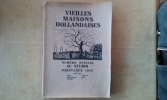
"The Studio Magazine was een geïllustreerd tijdschrift over beeldende kunsten en kunstnijverheid, opgericht door Charles Holme en Gleeson White in Groot-Brittannië in 1893, dat veel invloed uitoefende op de ontwikkeling van Art Nouveau en de Arts and Crafts-beweging. The Studio bevorderde het werk van de Nieuwe Kunst-kunstenaars, ontwerpers en architecten en speelde een belangrijke rol bij het bekendmaken van het werk van Charles Rennie Mackintosh en Charles Voysey". Voir le sommaire sur photos jointes

