 Write to the booksellers
-
Type
Book (1721)
Magazine (37)
Music sheets (1)
New book (1)
-
Latest
Last 3 days (5)
Last month (33)
Last week (4)
-
Language
Dutch (4)
French (1455)
German (3)
Russian (298)
-
Century
19th (53)
20th (750)
21st (80)
-
Countries
Belgium (86)
Canada (12)
Denmark (45)
France (1230)
Germany (6)
Netherlands (2)
Switzerland (75)
United Kingdom (2)
United States of America (302)
-
Syndicate
ALAC (10)
CLAM (5)
ILAB (649)
NVVA (17)
SLACES (17)
SLAM (567)
SNCAO (1)
Plumards, De Cheval
Seuil POCHE BON AJ8000D
Merci de nous contacter à l'avance si vous souhaitez consulter une référence dans notre boutique à Authon-du-Perche.
Plumards, de cheval... Marx, Groucho and Duneton, Claude
Seuil PHOTOS SUR DEMANDE
Merci de nous contacter à l'avance si vous souhaitez consulter une référence dans notre boutique à Authon-du-Perche.
The Groucho Letters.
Warner Books 1992 1 vol. broché in-8, broché, couverture illustrée, 251 pp. Texte en anglais. Très bon état. Exemplaire provenant de la bibliothèque d'Alain Resnais.

ÜBER DIE WORTSTELLUNG BEI JOINVILLE, I. THEIL, STELLUNG EINZELNER REDETHEILE (ABHANDLUNG)
Stephan Geibel & Co., Altenburg. 1881. In-8. Broché. Etat d'usage, Livré sans Couverture, Dos abîmé, Intérieur acceptable. Plaquette de 26 pages. Etiquette de code et tampons de bibliothèque en page de titre. Petits manques sur les bords de la page de titre et de la dernière page.. . . . Classification Dewey : 430-Langues germaniques. Allemand
Abhandlung zur Erlangung der Doctorwürde bei der Philosophischen Facultät der Kaiser-Wilhelms-Univ. Straßburg. Classification Dewey : 430-Langues germaniques. Allemand
BELLA INAMORATA
Colombier. XIXème. In-8. En feuillets. Bon état, Couv. légèrement passée, Dos satisfaisant, Quelques rousseurs. Non paginé. 3 pages environ. Quelques mouillures. Perforations.. . . . Classification Dewey : 780.26-Partitions
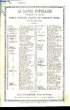
"C. 2111. Collection ""La danse populaire"" n°57. Partitions pour violon. Classification Dewey : 780.26-Partitions"
KOSIKI
Magasin des Demoiselles. XIXème. In-4. En feuillets. Bon état, Couv. légèrement passée, Dos satisfaisant, Quelques rousseurs. 4 pages. Quelques petites déchirures.. . . A l'italienne. Classification Dewey : 780.26-Partitions
32ème année, n°13. Quadrille sur l'opéra de Charles Lecocq. Partitions pour piano. Classification Dewey : 780.26-Partitions
LA JOLIE PERSANE
Magasin des Demoiselles. 1880. In-8. En feuillets. Bon état, Couv. convenable, Dos satisfaisant, Intérieur frais. 4 pages. Pliure.. . . A l'italienne. Classification Dewey : 780.26-Partitions
3ème année. N°1. Partitions pour piano. Classification Dewey : 780.26-Partitions
ROLAND A RONCEVAUX - POUR VIOLON - SUITE 1 + SUITE 2.
CHOUDENS. NON DATE. In-8. En feuillets. A relier, Livré sans Couverture, Dos satisfaisant, Quelques rousseurs. 11 pages de partitions pour la 1ère suite + 11 pages de partitions pour la 2ème suite. Opéra de A. Mermet.. . . . Classification Dewey : 780.26-Partitions
A.C. 123232 (1) + A.C. 123232 (2) Classification Dewey : 780.26-Partitions
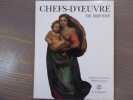
Chefs-d'Oeuvre de DRESDE - Galerie de peintures "Maîtres anciens".
E.A. Seemann Leipzig Leipzig 1993 In-4 ( 305 X 245 mm ) de 63 pages, cartonnage illustrée en couleurs. Illustrations en couleurs dans et hors-texte. Bel exemplaire.
Die GemÀlde des Louis de Silvestre
Marx, Harald: Die GemÀlde des Louis de Silvestre : Katalog FranzÃsische Malerei. ErgÀnzungsband. aus Anlass der 300. Wiederkehr des Geburtstages von Louis de Silvestre 1675-1975. Dresden: Staatliche Kunstsammlungen Dresden, 1975. 195 pages numerous illustrations some in colour. Cloth. Text in German.
Text in German
GemÀldegalerie Alte Meister. Dresden. 2 Vols
Marx, Harald and Hipp, Elisabeth: GemÀldegalerie Alte Meister. Dresden. 2 Vols. Cologne: 2005. Vol. 1: Exhibited Pictures: 728pp, with 805 colour and 13 monochrome illustrations. Vol.2: Illustrated Catalogue (including works destroyed and lost during World War II): 872pp, with 2850 monochrome illustrations. Flexibound in slipcase. 21.2x15cms. To commemorate the 150th anniversary of Gottfried Semper's picture gallery in the Zwinger, this set catalogues all the paintings, pastels, miniatures and works in storage, and lists all the works lost or destroyed during the Second World War. The first volume gives readable commentaries on all the exhibited pictures, and both comprise the first comprehensive catalogue for 75 years. Text in German.
To commemorate the 150th anniversary of Gottfried Semper's picture gallery in the Zwinger, this set catalogues all the paintings, pastels, miniatures and works in storage, and lists all the works lost or destroyed during the Second World War. The first volume gives readable commentaries on all the exhibited pictures, and both comprise the first comprehensive catalogue for 75 years. Text in German
THE OLD MASTERS PICTURE GALLERY
DEUTSCHER KUNSTVERLAG MUNICH BERLIN. 2001. In-8. Broché. Bon état, Couv. convenable, Dos satisfaisant, Intérieur frais. 132 pages augmentées de nombreuses photos de tableaux en couleur dans et hors texte . Frontispice en couleur. Couvertures contrepliées. . . . Classification Dewey : 750-La peinture et les peintres
OUVRAGE EN ANGLAIS Classification Dewey : 750-La peinture et les peintres
Galerie de peintures maitres anciens, Chefs-d'oeuvre de Dresde
Leipzig, Seemann, 2006 Hardcover, 72 pages, 31 x 25 cm, Fran ais. *En bon tat. ISBN 9783865020178.
Galerie de peintures maitres anciens, Chefs-d'oeuvre de Dresde
Harpo Marx.
Éditions Charles Mandel, 1963. In-8 br. Couverture à rabats illustrés. Harpo Marx avec Rowland Barber. Traduit par J. Paradis. E.O.
Notre sauveur l'amant - Roman.
Ernest Flammarion. 1928. In-12. Broché. Etat passable, Plats abîmés, Dos abîmé, Mouillures. 249 pages - déchirures, manque, tâches, mouillures sur les plats - dos tâché - coiffe en tête absente - coiffe en pied abîmée - papier jauni - fortes mouillures, moisissures, et déchirures à l'intérieur de l'ouvrage sans réelle conséquence sur la lecture.. . . . Classification Dewey : 840.091-XX ème siècle
vendu en l'état. Classification Dewey : 840.091-XX ème siècle
René Alexandre. Collection : Les célébrités dramatiques et lyriques de la scène française.
Paris, Editions Sansot, R. Chiberre, Editeur, 1924. 12 x 19, 29 pp., broché, bon état.
En frontispice portrait de De Max.
Kurzes Handbuch der Ohrenheilkunde.
Jena, Gustav Fischer, 1938, in-4°, VIII + 848 S., ill. mit 465 zum Teil farbigen Abbildungen, Original-Leinenband.
Dr. Hermann Marx war o. ö. Professor und Vorstand der universitätsklinik für Ohren-, Nasen-, und Kehlkopfkranke in Würzburg.

(SLACES, NVVA)
Phone number : 41 (0)26 3223808
L'encyclopédie par Le Timbre n° 10 - Les Drapeaux
Paris Cocorico 1954 In Quarto Collection " Un Livre D'Or " . Ces livres destinés à la jeunesse , instruisaient tout en étant ludiques . On devait détacher et coller les vignettes puis on s'inspirait des couleurs du timbre pour colorier les dessins de la page . Incomplet . Enfantina / Images collées . - 48 p. , 550 gr.

Couverture rigide Très Bon État . 1° Édition En Français
Karl Marx, sa vie et son oeuvre
Progrès 1983 In-4 reliure éditeur, 416 pp. Illustrations en noir
Très bon état d’occasion
LEHRBUCH DER KIRCHENGESCHICHTE
Paulinus-Druckerei, Trier. 1903. In-8. Relié cuir dos-coins. Etat d'usage, Coins frottés, Dos frotté, Intérieur frais. 785 pages. Auteur, titre, fleurons, et bandeaux dorés sur le dos. Tranche marbrée. Etiquette de code sur le dos. Tampons et annotation de bibliothèque en page de titre.. . . . Classification Dewey : 430-Langues germaniques. Allemand
Das Christliche Altertum. Das Mittelalter. Die Neuzeit... Classification Dewey : 430-Langues germaniques. Allemand
Lehrbuch der Kirchengeschichte. 8 verb. Aufl.
Trier, Paulinus, 1922.
XVI,941 p. H.cl. 23 cm (Cover worn at extremities; paper browning; name on title)
MACONNERIE MACONNERIES
UNIV BRUXELLES 1996 205 pages 16x1x24cm. 1996. broché. 205 pages.
Bon Etat
Nos Cols bleus,Préface de P. Loti.
P. Ollendorff, 1898,grand in-12,Broché 183 pages., photographies en noir et blanc hors et dans le texte. EDITION ORIGINALE,couverture illustrée en couleur,dos fendu avec petit manque,
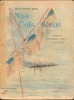
sinon bon etat Remise de 20% pour toutes commandes supérieures à 200 €
Nos Cols bleus,Préface de P. Loti.
1898 P. Ollendorff, 1898,grand in-12,reliure demi toile,183 pages., photographies en noir et blanc hors et dans le texte. EDITION ORIGINALE,bon état.
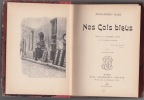
Remise de 20% pour toutes commandes supérieures à 200 €
(SLACES, NVVA)
Phone number : 41 (0)26 3223808

