 Write to the booksellers
-
Type
Book (517)
Magazine (1)
-
Century
16th (1)
17th (7)
18th (11)
19th (9)
20th (24)
21st (10)
-
Countries
Belgium (95)
Canada (3)
France (417)
Switzerland (3)
-
Syndicate
ALAC (3)
ILAB (145)
NVVA (3)
SLACES (3)
SLAM (139)
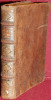
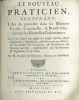
LE NOUVEAU PRATICIEN contenant l’Art de Procéder dans les Matières Civiles, Criminelles et Bénéficiales suivant les Nouvelles Ordonnances. Avec un Traité très ample des Saisies Réelles, Baux judiciaires, Oppositions, Adjudications par Décret, & des Ordres des Créanciers, & Distribution des Deniers entr’eux, conformément aux Ordonnances & Règlements de la Cour
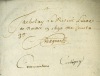
, Paris, Denys Thierry et Jean Cochart 1681, in-4, pl. veau noisette, tit. sur dos à 4 nerfs orné de fleurons et filets soulignants dorés, tr. mouchetées rouge, plusieurs Ex-Libris manuscrits, bandeaux et lettrines, (fortes épidermures surtout au second plat, ors lég. passés, coiffe de tête accidentée, coiffe de queue absente avec ptt. mq. de cuir au bas du dos, coupes et coins émoussés avec mq. à 3 coins), intérieur frais, [8ff.]-563p.-[17ff.].


Phone number : 01 43 29 46 77
Interpretation of Scripture: Theory A Selection of Works of Hugh, Andrew, Godfrey and Richard of St Victor, and Robert of Melun.
, Brepols - Harvey Miller, 2012 Hardcover. 557 p., 1 colour ill., 152 x 229 mm, Languages: English. Fine copy. Including an index. ISBN 9782503534602.
Starting from the theory of scriptural interpretation elaborated by Hugh of St Victor, the Augustinian Canons of twelfth-century St Victor in Paris were leading theorists and practitioners of scriptural exegesis. This volume contains translations of the exegetical theories elaborated in Hugh of St Victor's (d. 1141) Didascalicon, On Sacred Scripture and its Authors, The Diligent Examiner, and On the Sacraments (prologues); Andrew of St Victor's (d. 1175) prologues to select commentaries; Richard of St Victor's (d. 1173) Book of Notes and Apocalypse commentary; Godfrey of St Victor's Fountain of Philosophy; Robert of Melun's Sentences; and the anonymous Speculum on the Mysteries of the Church.<br>
Life at Saint Victor. The Liber Ordinis, the Life of William of Æbelholt, and a selection of works of Hugh, Richard, and Odo of Saint Victor, and other authors
, Brepols, 2021 Hardback, 488 pages, Size:152 x 229 mm, Illustrations:1 b/w, Language: English. ISBN 9782503580661.
Summary This volume brings together a number of texts that shed light on life in the Abbey of Saint Victor in Paris, from its ideals to its daily routine. The Liber ordinis builds a framework and ideal vision for life at the Abbey of Saint Victor. Richard's De quaestionibus, Hugh's De institutione novitiorum, the letters of Odo, William of Æbelholt's Vita, and the other documents translated here reflect the spirit of Victorine reform. Its central theme was the vita apostolica, with its emphasis on sharing resources and living in a community. By incorporating prayer, pastoral care, moral discipline, and education, the Victorines believed their lifestyle would help to reform the greater Christian world that was so in need of restoration to the image in which God had created it. Many of the texts gathered here are translated into English for the first time, and are an invaluable resource for the study of the Abbey of Saint Victor, twelfth-century church reform, and medieval spirituality. TABLE OF CONTENTS Preface Acknowledgements Abbreviations General Introduction THE BOOK OF THE ORDER OF SAINT VICTOR IN PARIS HUGH OF SAINT VICTOR, ON THE FORMATION OF NOVICES RICHARD OF ST VICTOR, ANSWERS TO QUESTIONS REGARDING THE RULE OF ST AUGUSTINE ODO OF SAINT VICTOR, SEVEN LETTERS ON THE RIGHT OBSERVANCE OF THE CANONICAL PROFESSION THE LIFE OF WILLIAM OF ÆBELHOLT THREE TEXTS ON LIFE AT SAINT VICTOR Robert of Torigny, Description of the Founding of Saint Victor Hildebert of Lavardin, Letter to Master William of Champeaux Osbert of Saint-Victor, Letter to John, on the Last Illness and Death of Hugh Bibliography
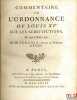
COMMENTAIRE DE L’ORDONNANCE DE LOUIS XV SUR LES SUBSTITUTIONS, DU MOIS D’AOÛT 1747
, Paris, Herissant Fils 1767, in-4, plein veau fauve, tit. doré sur pc. havane, dos à 5 nerfs orné de fleurons et doubles filets encadrants dorés, roulettes soulignant les nerfs, tr. rouges, (mors fendus, coiffe sup. accidentée, coins émoussés avec des mq. plats et dos frottés avec qq. petites épidermures, qq. piqûres), XXVIII-496p.

Phone number : 01 43 29 46 77
COMMENTAIRE DE L’ORDONNANCE DE LOUIS XV SUR LES SUBSTITUTIONS, DU MOIS D’AOÛT 1747; TRAITÉ DE LA SEIGNEURIE FÉODALE UNIVERSELLE, ET DU FRANC-ALLEU NATUREL, NOUVELLE ÉDITION, Revue, Corrigée & considérablement augmentée.; TRAITÉ DES CURÉS PRIMITIFS; OÙ L’ON EXAMINE LEUR ORIGINE, LES DIFFÉRENTES CAUSES qui y ont donné lieu, leurs droits, prérogatives& charges; les différents moyens Canoniques pour établir leurs droits, la manière de les exercer, &les autres questions sur le même matière. SUIVANT LES DÉCRETS DES CONCILES, les Constitutions des Papes, les Chartes anciennes, les Ordonnances& Déclarations des Rois, & la Jurisprudence des Arrêts.
, Paris, Cellot 1775, 3t. en 1 vol. in-4, plein veau fauve raciné, tit. doré sur pc. de maroquin bordeaux, dos à 5 nerfs richement orné de dentelles, fleurons et doubles filets encadrants dorés, roulettes dorées sur les coupes, tr. rouges, lettrines ornées, vignettes, culs-de-lampe, bandeaux, (mors légt fendillés, coupes légt frottées et coins émoussés, rares et très légères épidermures, rares soulignures au crayon, rares piqûres), int. frais, XXVIII-676p.
Phone number : 01 43 29 46 77
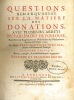
ORDONNANCE DE LOUIS XV, Roi de France et de Navarre, POUR FIXER LA JURISPRUDENCE sur la nature, la forme, les charges & les conditions des Donations, donnée à Versailles au mois de Février 1731, avec des OBSERVATIONS, autorisées par les Ordonnances, le Droit Romain, & les Arrêts des Parlemens, suivi des QUESTIONS REMARQUABLES SUR LA MATIÈRE DES DONATIONS AVEC PLUSIEURS ARRÊTS DU PARLEMENT DE TOULOUSE, pour servir de Supplément aux Observations su l’Ordonnance du mois de février 1731, 2ndeéd. revue, corrigée, & considérablement augmentée
, Toulouse, Birosse 1761, 2 vol. in-4, pleine basane brune, tit. doré sur pc. de maroquin bordeaux, dos lisse richement orné de fleurons, roulettes et filets dorés, filet doré soulignant les coupes, (coiffes et coins accidentés, dos, coupes et plats frottés avec de fortes épidermures au plats, des rousseurs), XII-400/ XV-X-512p.

Phone number : 01 43 29 46 77
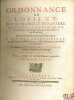
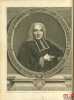
ORDONNANCE DE LOUIS XV, Roi de France et de Navarre, POUR FIXER LA JURISPRUDENCE SUR LA NATURE, LA FORME, LES CHARGES & LES CONDITIONS DES DONATIONS, Donnée à Versailles au mois de Février 1731; Avec des observations, Autorisées par les Ordonnances, le Droit Romain, & les Arrêts des Parlemens, Seconde éd., revue, corrigée, & considérablement augmentée
, Toulouse, Antoine Brosse 1761, 2 vol. in-4, plein veau burn, tit. & tom. dorés sur dos à 5 nerfs, décor de fleurons, frises et doubles filets dorés, filets soulignants les coupes, tr. rouges, bien complet du portrait en frontispice de l’auteur, (coiffes accidentées avec des mq., plats lé. frottés avec de rares épidermures, coupes et coins émoussés avec de petits mq., qq. rousseurs), XII-399 / X-512 p.

Phone number : 01 43 29 46 77
[GAJA], LONG (Marceau), WEIL (Prosper), BRAIBANT (Guy), DELVOLVÉ (Pierre) et GENEVOIS (Bruno)
Reference : 32137
LES GRANDS ARRÊTS DE LA JURISPRUDENCE ADMINISTRATIVE, 9eéd., Coll. de droit public fondée par R. Cassin et M.Waline
, Paris, Sirey 1990, in-8, br., neuf, 809p.
![LES GRANDS ARRÊTS DE LA JURISPRUDENCE ADMINISTRATIVE, 9eéd., Coll. de droit public fondée par R. Cassin et M.Waline. [GAJA], LONG (Marceau), WEIL ...](https://static.livre-rare-book.com/pictures/DRM/32137_1_thumb.jpg)
Phone number : 01 43 29 46 77
[GAJA], LONG (Marceau), WEIL (Prosper), BRAIBANT (Guy), DELVOLVÉ (P.) et GENEVOIS (Bruno)
Reference : 36760
LES GRANDS ARRÊTS DE LA JURISPRUDENCE ADMINISTRATIVE, coll. Grands Arrêts, 14èmeéd.
, Paris, Dalloz 2003, in-8, rel. éd., très bon état, XV-962p.
![LES GRANDS ARRÊTS DE LA JURISPRUDENCE ADMINISTRATIVE, coll. Grands Arrêts, 14èmeéd.. [GAJA], LONG (Marceau), WEIL (Prosper), BRAIBANT (Guy), DELVOLVÉ ...](https://static.livre-rare-book.com/pictures/DRM/36760_1_thumb.jpg)
Phone number : 01 43 29 46 77
[GAJA], LONG (Marceau), WEIL (Prosper), BRAIBANT (Guy), DELVOLVÉ (P.) et GENEVOIS (Bruno)
Reference : 36761
LES GRANDS ARRÊTS DE LA JURISPRUDENCE ADMINISTRATIVE, coll. Grands Arrêts, 15eéd.
, Paris, Dalloz 2005, in-8, br., très bon état, XV-974p.
![LES GRANDS ARRÊTS DE LA JURISPRUDENCE ADMINISTRATIVE, coll. Grands Arrêts, 15eéd.. [GAJA], LONG (Marceau), WEIL (Prosper), BRAIBANT (Guy), DELVOLVÉ ...](https://static.livre-rare-book.com/pictures/DRM/36761_1_thumb.jpg)
Phone number : 01 43 29 46 77
LES GRANDS ARRÊTS DE LA JURISPRUDENCE ADMINISTRATIVE, 6eéd., coll. Sirey Droit public
, Paris, Sirey 1974, in-8, br., bon état hormis qq. soulignures de couleur, 612p.
![LES GRANDS ARRÊTS DE LA JURISPRUDENCE ADMINISTRATIVE, 6eéd., coll. Sirey Droit public. [GAJA], LONG (Marceau), WEIL (Prosper) et BRAIBANT (Guy)](https://static.livre-rare-book.com/pictures/DRM/27065_1_thumb.jpg)
Phone number : 01 43 29 46 77
LES GRANDS ARRÊTS DE LA JURISPRUDENCE ADMINISTRATIVE, 6èmeéd., coll. Sirey Droit public
, Paris, Sirey 1974, in-8, br., (couv. fanée), bon état, 612p.
![LES GRANDS ARRÊTS DE LA JURISPRUDENCE ADMINISTRATIVE, 6èmeéd., coll. Sirey Droit public. [GAJA], LONG (Marceau), WEIL (Prosper) et BRAIBANT (Guy)](https://static.livre-rare-book.com/pictures/DRM/28652_1_thumb.jpg)
Phone number : 01 43 29 46 77
LES GRANDS ARRÊTS DE LA JURISPRUDENCE ADMINISTRATIVE, 6èmeéd., coll. Sirey Droit public
, Paris, Sirey 1974, in-8, br., bon état, 612p.
![LES GRANDS ARRÊTS DE LA JURISPRUDENCE ADMINISTRATIVE, 6èmeéd., coll. Sirey Droit public. [GAJA], LONG (Marceau), WEIL (Prosper) et BRAIBANT (Guy)](https://static.livre-rare-book.com/pictures/DRM/29145_1_thumb.jpg)
Phone number : 01 43 29 46 77
LES GRANDS ARRÊTS DE LA JURISPRUDENCE ADMINISTRATIVE, 4eéd. revue et corrigée
, Paris, Sirey 1965, in-8, br., (couv. lég. fanée), intérieur frais, IV-514p.
![LES GRANDS ARRÊTS DE LA JURISPRUDENCE ADMINISTRATIVE, 4eéd. revue et corrigée. [GAJA], LONG (Marceau), WEIL (Prosper) et BRAIBANT (Guy)](https://static.livre-rare-book.com/pictures/DRM/39924_1_thumb.jpg)
Phone number : 01 43 29 46 77
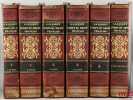
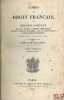
CORPS DU DROIT FRANÇAIS OU RECUEIL COMPLET DES LOIS, DÉCRETS, ARRÊTÉS, ORDONNANCES, SÉNATUS-CONSULTES, RÈGLEMENS, AVIS DU CONSEIL D’ÉTAT, INSTRUCTIONS MINISTÉRIELLES, Publié depuis 1789 jusqu’à nos jours, [t.I à III] TABLE GÉNÉRALE DU CORPS DU DROIT FRANÇAIS OU RECUEIL COMPLET DES LOIS, [...], 1789 À 1824
, Paris, Bureau du Corps du Droit français 1833/ 1833/ 1833/ 1833/ 1829/ 1833, 6 vol. in-8, demi-basane grenat, tit. et tom. sur pc. brune, dos lisse richement orné de fleurons et filets à froid et dorés, tr. marbrées, Ex-Libris tamponné, (des épidermures, coins frottés et émoussés, rares piqûres, t.I: coiffe inf. arrachée, t. I, III et IV: mors partielt fendus), int. frais.
Phone number : 01 43 29 46 77
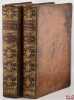
CONFÉRENCE DE L’ORDONNANCE DE LOUIS XIV DU MOIS D’AOUT 1669, SUR LE FAIT DES EAUX ET FORESTS, Avec les Édits, Déclarations, Coutumes, Arrêts, Réglemens, & autres Jugemens, rendus avant & en intérprétation de ladite Ordonnance, depuis l’an 1115 jusqu’à présent. CONTENANT LES LOIS FORESTIÈRES DE FRANCE, Nouvelle éd., augmentée des Observations de M.Simon, Avocat général, &M.Ségauld, Procureur Général à la Table de Marbre de Dijon.
, Paris, Bernard Brunet 1752, 2 vol. in-4, plein veau brun, tit. & tom. dorés sur pc. de maroquin bordeaux, dos richement ornés de fleurons, frises et dentelles dorés, roulette dorée sur les coupes, plats encadrés de filets estampés à froid, bandeaux, lettrines, vignettes, tr. marbrées, (rel. légt usée avec légères épidermures et quelques tâches, coiffes accidentées, coupes légt frottées, rares piqûres, t.I: qq. feuillets tâchés et légt déchirés), assez bon état, 928/ 860p.
Phone number : 01 43 29 46 77
Traité des chemins de toute espèce,... suivi d'un supplément contenant diverses instructions ministérielles et ordonnances,
Paris : l'éditeur, 1834 ,4e édition ,In-8 ,1/2 basane,dos lisse, défraichi,, VIII-572 p., + supplement 1839,153p.
Remise de 20% pour toutes commandes supérieures à 200 €
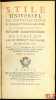
STILE UNIVERSEL DE TOUTES LES COURS ET JURIDICTIONS DU ROYAUME pour l’instruction des matières civiles, suivant l’ordonnance de Louis XIV … du mois d’avril 1667 et des matières criminelles du mois d’août 1670, tome premier
, Paris, Les associés choisis par ordre de sa Majesté… 1734, in-12, pl. veau blond moucheté, dos à nerfs orné, tr. rouge, p. de tit. rouge et noire, (dos très abîmé avec manques aux coiffes, épidermures, coins émoussés, coupes usées), 12 f.-555p. + table.

Phone number : 01 43 29 46 77
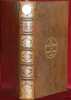
STILE UNIVERSEL DE TOUTES LES COURS ET JURIDICTIONS DU ROYAUME pour l’instruction des matières criminelles, suivant l’ordonnance de Louis XIV … du mois d’août 1670, t. II
, Paris, Chez les Associés choisis par ordre de Sa Majesté 1703, in-4, plein veau noisette, tit. sur pc. bordeaux sur dos à 5 nerfs avec fleurons, dentelles et filets encadrant dorés, roulettes dorées sur les coupes, tr. rouges, bandeaux, culs-de-lampe et lettrines, Ex-Libris, signature de l’auteur, (piqûres et acidification sur qq. ff.), [Cet ouvrage provient de la bibliothèque des Avoués près la cour d’appel de Paris, il peut être frappé aux armes de la Chambre des Avoués et revêtir des marques de bibliothèque], [46ff.]-386p.-[20ff.].
Phone number : 01 43 29 46 77
GAURET, Mr, Sécrétaire de Monsieur Le Camus, Conseiller du Roi en tous les Conseils, Maître des requêtes & Lieutenant civil
Reference : 96553
(1693)
Stile Universel de toutes les cours et jurisdictions du Royaume, pour l'instruction des matières civiles suivant l'Ordonance de Louis XIV Roi de France et de Navarre du mois d'Avril 1667. Tome II seul
1693 A Paris, chez la Associés choisis par Ordre de sa Majesté pour l'Impression des Stiles & Formules suivant les nouvelles ordonnances. 1693. 1 vol in-12 (Tome II seul). Plein veau brun de l'époque. 389 pages + table
Bon état général mais mouillure claire dans le coin inférieur droit, petites rousseurs, cuir de la reliure un peu érodé, usures aux coins assez bon
GAURET, Mr, Sécrétaire de Monsieur Le Camus, Conseiller du Roi en tous les Conseils, Maître des requêtes & Lieutenant civil
Reference : 96554
(1694)
Stile Universel de toutes les cours et jurisdictions du Royaume, pour l'instruction des matières civiles suivant l'Ordonance de Louis XIV Roi de France et de Navarre du mois d'Avril 1667. Tome III seul
1694 A Paris, chez la Associés choisis par Ordre de sa Majesté pour l'Impression des Stiles & Formules suivant les nouvelles ordonnances. 1694. 1 vol in-12 (Tome III seul). Plein veau brun de l'époque. 370 pages + table
Bon état général mais mouillure claire dans le coin supérieur droit, petites rousseurs, cuir de la reliure un peu érodé, usures aux coins assez bon
Jerusalem in the Alps. The Sacro Monte of Varallo and the Sanctuaries of North-Western Italy
, Brepols, 2019 Hardback, xii + 310 pages, Size:156 x 234 mm, Illustrations:7 b/w, 50 col., 2 maps b/w, Language: English. ISBN 9782503580579.
Summary The Sacro Monte (Holy Mountain) at Varallo is a sanctuary in the Italian Alps west of Milan. It was founded in the late fifteenth century by a Franciscan friar, with the support of the town's leading families. He designed it as a schematic replica of Jerusalem, to enable the faithful to make a virtual pilgrimage to the Holy City if they could not undertake the perilous journey to visit it physically. The Sacro Monte consists of a sequence of chapels containing tableaux of life-size painted terra-cotta figures with fresco backgrounds recounting the life and Passion of Christ. A century later, in the era of the Counter-Reformation, a 'second wave' of Sacri Monti was constructed in the north-western Alps, modelled on Varallo, but dedicated to other devotional themes, like the Rosary or the life of St Francis. All these sanctuaries, like Varallo, were the result of local initiatives, initiated by the clergy and the leaders of the communities where they were situated. Like Varallo, they were the work of artists and craftsmen from the alpine valleys, or from nearby Lombardy. Long dismissed as folk art unworthy of serious critical attention, the Sacri Monti are now recognised as monuments of unique artistic significance. In 2003 UNESCO listed nine of them in its register of World Heritage Sites. This book studies their development as the products of the religious sensibilities and the social, economic, and political conditions of the mountain communities that created them. TABLE OF CONTENTS Preface Chapter 1. Samuel Butler Encounters the Sacri Monti Butler's Intellectual Odyssey Butler Explores the Sacri Monti After Butler Chapter 2. The Val Sesia. Society and Politics Geography and History Economy and Society Varallo Chapter 3. The Foundation of the Sacro Monte of Varallo Bernardino Caimi, the Observant Franciscan Pilgrimage to Jerusalem The Act of Foundation Patronage: the Scarognini Family Caimi Takes Possession of the Sacro Monte Caimi's Project The First Guide Book to the Sacro Monte Parallels Chapter 4. The Sixteenth Century. From Gaudenzio Ferrari to Carlo Borromeo Political and Social Conflict Gaudenzio Ferrari and the Sacro Monte The Spectators' Response Conflict between the Fabbricieri and the Observant Franciscans The Libro dei Misteri The Era of Carlo Borromeo Chapter 5. The Seventeenth Century. The Era of the Counter-Reformation Patronage and Local Politics Bishop Bascapè The Expulsion of the Observant Franciscans Bascapè and the Artistic Development of the Sacro Monte Pilate's Palace The Era of the D'Enrico Brothers The Basilica of the Virgin War and Plague The Rebellion of 1678 and its Aftermath Chapter 6. The Eighteenth Century. The Val Sesia under the House of Savoy The Transfer to Savoyard Sovereignty Completing the Sacro Monte Enlightened Absolutism versus Ancient Privilege The Reformed Brothers Depart Chapter 7. Varallo as Model. The Later Sacri Monti The Sacri Monti as a System? Orta Crea Oropa Ghiffa Varese Sacro Monte Calvario Domodossola Ossuccio Belmonte Graglia and Arona Similarities and Differences Epilogue. Revolution and Restoration Appendices Bibliography
Radulph of Rivo General Ecclesiastical Calendar and On the Observance of Canons
, brepols, 2026 Paperback, Pages: 459 p. Size:156 x 234 mm, Illustrations:1 maps color, Language English. NEW. ISBN 9782503617923.
Summary When the canons of the Congregation of Windesheim set about codifying their liturgy in the final decades of the 14th century, they had to reckon with the striking variety of customs among the different dioceses, nations, and religious orders of the Roman rite. In their perplexity, they turned to Radulph of Rivo (ca. 1350?1403), dean of Our Lady of Tongres and canon law professor at Cologne. Radulph travelled to Rome to discover the sources of its ancient liturgy. There he was alarmed to discover that even in Rome authentic traditions had been displaced by novelties, and he accused the Franciscans specifically of unlawfully abbreviating or altering the offices. In his reply to the canons of Windesheim, entitled De canonum observantia (ca. 1400), Radulph charts a course of conservative liturgical reform that hews closely to Roman authority. He appeals to canon law, the approved uses of ancient churches and religious rites, the famous commentators, and old liturgical books he found in Rome to establish the authoritative form of Western worship. On the eve of the great changes that swept Europe in the next century, Radulph?s treatise stands out as a careful and competent guide to the Latin liturgical tradition and an invaluable witness to contemporary practice. His conservative intervention looks forward to the work of the Tridentine liturgical commission, whose members had access to Hittorp?s 1568 edition of his treatise. Our edition provides modern readers with the first English translation of Radulph?s work and copious notes to illuminate this fascinating period. TABLE OF CONTENTS Radulph of Rivo, the Devotio Moderna, and Liturgical Reform in the Low Countries c. 1400 Radulph?s Life and Works Radulph?s Extant Works Radulph as a Proto-Humanist and Diocesan Historian Radulph, the Brethren of the Common Life, and the Windesheim Congregation The Windesheim Liturgical Reform Canons Observing Canons Historical Theologies of the Liturgy Radulph?s Knowledge of Roman Liturgical Traditions Radulph?s Legacy: Influence or Oblivion? Radulph?s Reception in the Post-Tridentine Period Text and Translation General Ecclesiastical Calendar On the Observance of Canons Endnotes Bibliography Ancient and Medieval Authors Liturgical Books Canonical Sources Modern Authors Index Liturgical Propers Scriptural Citations Citations of Ancient and Medieval Works Canon Law Citations Subjects and Proper Names
Sisterbook of Master Geert?s House, Deventer The Lives and Spirituality of the Sisters, c. 1390?c. 1460
, Brepols - Harvey Miller, 2025 Hardcover, Pages: 352 pages,Size:156 x 234 mm, Illustrations:1 b/w, 3 col., Language(s):English. ISBN 9782503602509.
The Sisterbook of Master Geert?s House contains the lives of sixty-four Sisters of the Common Life who died between 1398 and 1456. Founded as an alms-house for destitute women in 1374, by the end of the fourteenth century Master Geert?s House had become a home for women desiring to live a life of humility and penitence, as well as in community of goods without vows. The Sisterbook was likely written sometime between 1460 and 1470, at a time when the religious fervour that had characterized the earlier Sisters had begun to wane. It was to incite the readers and hearers of the Sisterbook, which would have been read in the refectory during mealtimes, to imitate the earlier Sisters who are portrayed as outstanding examples of godliness and Sisters of the Common Life. The opening sentence of the Sisterbook succinctly sums up the author?s reason for writing it: ?Here begin some edifying points about our earlier Sisters whose lives it behoves us to have before our eyes at all times, for in their ways they were truly like a candle on a candlestick?, and who, by implication, could still illumine the way for her own generation of Sisters. The first foundation of Sisters of the Common Life, Master Geert?s House became the ?mother? house of numerous other houses in the Low Countries and Germany directly as well as indirectly and served as an inspiration for others. This book provides a study of the Sisterbook and its significance in the Devotio Moderna and late medieval female religiosity, while the accompanying translation introduces this important source to an English audience. TABLE OF CONTENTS Introduction The Sisterbook of Master Geert?s House, One of a ?Family? of Five The Sister Community in Master Geert?s House and Its Daily Routine The History of the House of Master Geert The Sisters. A Prosopographical Overview The Mistress, and Other Offices The Founding of New Sister Houses and the Reformation of Others Profectus virtutum (Progress in the Virtues), the Guiding Principle in the Sisters? Lives and Spirituality The Sisterbook of Master Geert?s House: Its Composition and Sources The Sisterbook: Genre and Resemblance to Other Sisterbooks The Bible and Christian Authors Cited in the Sisterbook Dirk de Man?s Edition of the Sisterbook and the Present Translation The Sisterbook of Master Geert?s House, Deventer. The Lives and Spirituality of the Sisters Appendix 1. List of Mothers/Mistresses and Priest?Rectors of Master Geert?s House Appendix 2. Sisters Mentioned in the Sisterbook that Do Not Have their Own Vita Bibliography Index of Biblical Texts Index of Names and Places Subject Index
The Sisterbook of Master Geert's House, Deventer. The Lives and Spirituality of the Sisters, c. 1390 - c. 1460
, Brepols, 2024 Hardback, 352 pages, Size:156 x 234 mm, Illustrations:1 b/w, 3 col., Language: English. ISBN 9782503602493.
Summary The Sisterbook of Master Geert's House contains the lives of sixty-four Sisters of the Common Life who died between 1398 and 1456. Founded as an alms-house for destitute women in 1374, by the end of the fourteenth century Master Geert's House had become a home for women desiring to live a life of humility and penitence, as well as in community of goods without vows. The Sisterbook was likely written sometime between 1460 and 1470, at a time when the religious fervour that had characterized the earlier Sisters had begun to wane. It was to incite the readers and hearers of the Sisterbook, which would have been read in the refectory during mealtimes, to imitate the earlier Sisters who are portrayed as outstanding examples of godliness and Sisters of the Common Life. The opening sentence of the Sisterbook succinctly sums up the author's reason for writing it: 'Here begin some edifying points about our earlier Sisters whose lives it behoves us to have before our eyes at all times, for in their ways they were truly like a candle on a candlestick', and who, by implication, could still illumine the way for her own generation of Sisters. The first foundation of Sisters of the Common Life, Master Geert's House became the 'mother' house of numerous other houses in the Low Countries and Germany directly as well as indirectly and served as an inspiration for others. This book provides a study of the Sisterbook and its significance in the Devotio Moderna and late medieval female religiosity, while the accompanying translation introduces this important source to an English audience. TABLE OF CONTENTS Introduction The Sisterbook of Master Geert's House, One of a 'Family' of Five The Sister Community in Master Geert's House and Its Daily Routine The History of the House of Master Geert The Sisters. A Prosopographical Overview The Mistress, and Other Offices The Founding of New Sister Houses and the Reformation of Others Profectus virtutum (Progress in the Virtues), the Guiding Principle in the Sisters' Lives and Spirituality The Sisterbook of Master Geert's House: Its Composition and Sources The Sisterbook: Genre and Resemblance to Other Sisterbooks The Bible and Christian Authors Cited in the Sisterbook Dirk de Man's Edition of the Sisterbook and the Present Translation The Sisterbook of Master Geert's House, Deventer. The Lives and Spirituality of the Sisters Appendix 1. List of Mothers/Mistresses and Priest?Rectors of Master Geert's House Appendix 2. Sisters Mentioned in the Sisterbook that Do Not Have their Own Vita Bibliography Index of Biblical Texts Index of Names and Places Subject Index

