 Write to the booksellers
-
Type
Book (517)
Magazine (1)
-
Century
16th (1)
17th (7)
18th (11)
19th (9)
20th (24)
21st (10)
-
Countries
Belgium (95)
Canada (3)
France (417)
Switzerland (3)
-
Syndicate
ALAC (3)
ILAB (145)
NVVA (3)
SLACES (3)
SLAM (139)
ORDONNANCE DU ROI.1775.1776.1777.1778.1779.
Dans un demi-vélin à coins, 5 ordonnances du Roi.Reliées sans tenir compte des dates.Etat très moyen.
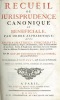
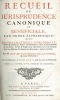
RECUEIL DE JURISPRUDENCE CANONIQUE ET BÉNÉFICIALE par ordre alphabétique: avec Les Pragmatiques, concordats Bulles & Indults des Papes; Ordonnances, Édits & Déclarations de nos Rois; Arrêts & Règlements intervenus sur cette Matière dans les différents Tribunaux du Royaume, jusqu’à présent. Sur les Mémoires de feu Me FUET, aussi Avocat au Parlement. Nouvelleéd. revue, corrigée et augmentée
, Paris, Knapen 1755, in-folio, pl. basane marbrée, dos à 5 nerfs décoré de caissons ornés de fleurons, dentelles et filets entourant dorés, fer à froid entourant les plats, roulette sur les coupes, tr. rouges, p. de tit. bicolore, cul-de-lampe, bandeaux et lettrines, impression en double colonne, (tit. sur pc. manquante avec travaux de vers traversant, lég. épidermures sur les plats, coiffe de queue fatiguée avec ptt. mq., coupes et coins émoussés avec ptt. mq., reliure fragile), intérieur frais, XXIV-310-82-312-XII-276p.



Phone number : 01 43 29 46 77
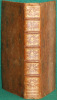
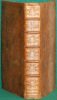
RECUEIL DE JURISPRUDENCE CIVILE DU PAYS DE DROIT ÉCRIT ET COUTUMIER par ordre alphabétique, revue et très considérablement augmentée
, Paris, Nyon fils 1785, in-4, pl. veau brun, tit. sur pc. fauve sur dos à 5 nerfs, fleurons, dentelles et filets soulignants dorés, tr. marbrées, roulette dorée sur les coupes, impression en 2 colonnes, (épidermures sur les couv., coiffe de queue manquante, coupes et coins lég. émoussés, rares piqûres et mouillures), [4ff.]-616p.-[1ff.].
Phone number : 01 43 29 46 77
RECUEIL DE JURISPRUDENCE CIVILE, DU PAÏS DE DROIT ÉCRIT ET COUTUMIER, PAR ORDRE ALPHABÉTIQUE, 4eéd., considérablement augmentée.
, Paris, Nyon fils 1762, in-4, pl. veau fauve marbré, pc. de tit. en maroquin ocre, dos à 5 nerfs richement orné de fleurons, dentelles et doubles filets encadrants dorés, tr. rouges, roulette dorée sur les coupes, bandeaux et lettrines, impression en deux colonnes, (assez nb. épidermures sur les plats, coiffes accidentées, mq. de 3x1cm au niveau du mors inf., dos légt craquelé, coupes et coins légt frottés, rares soulignures au crayon et qq. légères mouillures à l’int.), int. frais, [4]-338-302p.

Phone number : 01 43 29 46 77
Monastic Communities and Canonical Clergy in the Carolingian World (780-840). Categorizing the Church
, Brepols, 2022 Hardback, 454 pages, Size:156 x 234 mm, Illustrations:4 b/w, Language: English. ISBN 9782503579351.
Summary In the years 816-819, a series of councils was held at the imperial palace in Aachen. The goal of the meetings was to settle a number of questions about ecclesiastical organization. These issues were hotly debated throughout the Christian Roman Empire of the fourth and fifth centuries, and then reinvigorated by the renewal of empire under Charlemagne and his son Louis the Pious. At the centre of the ensuing debate stood the distinction between monks and monastic communities on the one hand, and the so-called clerici canonici and their communities on the other. Many other reforms were proposed in its wake: the position of the episcopacy needed to be renegotiated, the role of the imperial court needed to be consolidated, and the place of every Christian within the renewed Carolingian Church needed to be redefined. What started out as a seemingly straightforward reorganisation of the religious communities that dotted the Frankish ecclesiastical landscape thus quickly turned into a broad movement that necessitated an almost complete categorization of the orders of the Church. The contributions to this volume each zoom in on various aspects of these negotiations: their prehistory, their implementation, and their influence. In doing so, previously held assumptions about the scope, the goals, and the impact of the 'Carolingian Church Reforms' will also be re-assessed. TABLE OF CONTENTS Institutions, Identities, and the Realisation of Reform: An Introduction ? RUTGER KRAMER, EMILIE KURDZIEL, and GRAEME WARD The Monastic Reforms of 816-19: Ideals and Reality ? CHARLES MÉRIAUX Origins The Organization of the Clergy and the canonici in the Sixth Century ? SEBASTIAN SCHOLZ Choreography and Confession: the Memoriale qualiter and Carolingian Monasticism ? ALBRECHT DIEM Confusion and the Need to Choose? A Fresh Look at the Objectives Behind the Carolingian Reform Efforts in Capitularies and Conciliar Legislation (c. 750-813) ? BRIGITTE MEIJNS Old Norms, New Boundaries What is a canonicus? The Carolingians and the Rethinking of Ecclesiastical ordines ? EMILIE KURDZIEL Reduce, Reuse, Recycle: Episcopal Self-Reflection and the Use of Church Fathers in the Institutio canonicorum ? RUTGER KRAMER AND VERONIKA WIESER Loose Canonesses? (Non-)Gendered Aspects of the Aachen Institutiones ? MICHAEL EBER Reception and Reflection 'Superior to Canons, and remaining inferior to Monks': Monks, Canons and Alcuin's Third Order ? STEPHEN LING This is a Cleric: Hrabanus Maurus's De institutione clericorum, Clerical Monks, and the Carolingian Church ? CINZIA GRIFONI The 'Apostates' of Saint-Denis: Reforms, Dissent and Carolingian Monasticism ? INGRID REMBOLD Debating the "una regula": Reflections on Monastic Life in Ninth-Century Manuscripts from St?Gall ? JOHANNA JEBE Reform in Practice Monks Pray, Priest Teach, Canons Sing and the Laity Listens: The Regula Benedicti and Conceptual Diversity of Sacred Space in Carolingian Discourse ? MIRIAM CZOCK Cathedral and Monastic: Applying Baumstark's Categories to the Carolingian Divine Office ? RENIE CHOY Implementing Liturgical Change in Ninth-Century Lyon: Authority, Antiphoners, and Aachen 816 ? GRAEME WARD Ordering the Church in the Ordines Romani ? ARTHUR WESTWELL *** Index
L'Esprit des deux Ordonnances de Louis XV sur les donations et sur les Testamens / L'Esprit des Edits et Déclarations de Louis XV, tant en matière civile, et criminelle que beneficiale / L'Esprit des Ordonnances de Louis XV sur les substitutions et sur le faux (3 volumes).
1754 Chez Savoye/ chez Savoye, Knapen, Saugrain fils, Nyon, 1754, 3 volumes in-12 de 485, 561 et 476 pages, plein veau fauve marbré, dos à 5 nerfs portant titres et tomaisons dorés sur pièces de titre bordeaux et pièces de tomaison cognac, ornés de caissons à motifs dorés, coupes dorées, tranches rouges, gardes marbrées.
Une coiffe accidentée, coupes râpées sur le tome II, frottements sur le cuir, coins émoussés, mouillure sur le tome I.
L’ESPRIT DES ORDONNANCES ET DES PRINCIPAUX ÉDITS ET DÉCLARATIONS DE LOUIS XV, EN MATIÈRE CIVILE, CRIMINELLE ET BÉNÉFICIALE, nouvelleéd. revue, corrigée et augmentée, t. II et III (manque tome I)
, Paris, Bailly 1773/1774, 2 vol. in-12, veau fauve marbré, dos à nerfs orné, tit. doré sur pc. bordeaux et noires, tr. marbrées, filet sur les coupes, (plats lég. frottés et tachés, rognure, mouillure et manque au milieu du 2ème plat du t. III, petits manques aux coins, mors tr. lég. fendu au premier plat du t. II, accidents mineurs aux coiffes, qq. rousseurs, marque de bibliothèque), 508/ 411 (3)p.


Phone number : 01 43 29 46 77
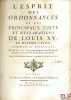
L’ESPRIT DES ORDONNANCES ET DES PRINCIPAUX ÉDITS ET DÉCLARATIONS DE LOUIS XV, EN MATIÈRE CIVILE, CRIMINELLE ET BÉNÉFICIALE, Nouvelleéd. revue, corrigée et augmentée
, Paris, Savoye 1769, in-4, plein veau blond, aut. doré sur pc. grenat, dos à 5nerfs orné de fleurons et roulettes encadrantes dorées, frises soulignants les coiffes, tr. rouges, (coiffes accidentées, mors marqués, plats frottés avec de petites épidermures, coins émoussés avec des mq., rares rousseurs), [2 ff.]-720 p.

Phone number : 01 43 29 46 77
Convent Networks in Early Modern Italy
, Brepols, 2020 Hardback, 352 pages, Size:156 x 234 mm, Illustrations:35 b/w, Language: English. ISBN 9782503586076.
Summary The walls of early modern convents suggested the existence of absolute conditions that seldom existed in reality. While the built enclosure communicated the convent's isolation from the world outside, connections between women religious and individuals or groups outside their communities extended into and from these houses, with each constituency exploiting these associations to serve its own aims.Likewise, the walls conveyed the presence of a homogeneous and unified community where, often, differences in status, power, and other interests led to the development of internal alliances and factions. Building on an upsurge of scholarly interest in convent networks that previously has not been focused in a single volume, this collection of interdisciplinary essays examines how and why such associations existed. The collection examines personal, spatial, and temporal networks that emerged in, among, and beyond convents in Italy during the early modern period. These ties were established, cultivated, or even rejected in a variety of ways that influenced nuns' devotional lives, their relationships with patrons, and their cultural engagement and production. These essays cover the time period before and after the Council of Trent, permitting an analysis of convents' responses to changing power dynamics, both inside and outside the enclosure. The book also engages a broad geographical and cultural range, with chapters focusing on the centres of Florence, Venice, and Rome, the courts of Urbino, Ferrara, and Mantua, and smaller cities across Northern Italy, offering unprecedented insights into early modern Italian convent life and its varied forms and modes of expression. TABLE OF CONTENTS List of Illustrations Acknowledgments Introduction - MARILYN DUNN and SAUNDRA WEDDLE Advising Women: Holy Women and Female Advisees in Early Modern Italy - JENNIFER CAVALLI Nuns' Networks: Letters from Suor Domenica da Paradiso at La Crocetta in Renaissance Florence - MEGHAN CALLAHAN Pursuing a Savonarolan Thread: Patrons, Painters, and Piagnoni at S. Caterina in Cafaggio - CATHERINE TURRILL LUPI Botticini's Saint Monica Altarpiece and the Augustinian Network of Florence's Oltrarno - LAURA LLEWELLYN Identity, Alliance, and Reform in Early Modern Venetian Convents - SAUNDRA WEDDLE Entrepreneurship Beyond Convent Walls: The Augustinian Nuns of S. Caterina dei Sacchi in Venice - LUDOVICA GALEAZZO Musical Networks and the Early Modern Italian Convent - KIMBERLYN MONTFORD Family Dynasties and Networks of Alliance in Post-Tridentine Convents in Rome and its Environs - MARILYN DUNN Art as a Conduit for Nuns' Networks: The Case of Suor Teresa Berenice Vitelli at S. Apollonia in Florence - SHEILA BARKER and JULIE JAMES Index
Heretics, Schismatics, or Catholics? Latin Attitudes to the Greeks in the Long Twelfth Century
, Brepols, 2019 Hardback, xvi + 291 pages, Size:152 x 229 mm, Language: English. ISBN 9780888442161.
Summary The political division of the Roman world into Western and Eastern Roman Empires at the end of the fourth century spurred the divergence of the Latinised Western and the Hellenised Eastern halves. According to a pervasive and deeply ingrained belief in modern academic, educational and popular literature, the ensuing antagonism on religious and cultural grounds between the two parts of medieval Christendom eventually led to the "schism of 1054." Less than fifty years after the schism, Greeks and Latins came into closer contact as a result of the crusades and the encounter was catastrophic, leading to the capture and sack of Constantinople in 1204 by the armies of the Fourth Crusade. This study, the first to deal exclusively with Latin perceptions of and attitudes toward the Greeks in terms of religion, aims to revisit and challenge the view that the so-called schism between the Latin and Greek Churches led to the isolation of the Byzantine Empire by the Latin states and eventually to the events of 1204. Heretics, Schismatics, or Catholics? investigates a wide range of often neglected historiographical, theological, and literary sources as well as letters, and covers the period from the last quarter of the eleventh century, when Pope Gregory VII (1073-1085) first conceived the idea of the union of Christendom under papal leadership for the liberation of Eastern Christians, to the decades that followed 1204, when the crusading enterprise went out of papal control and ended up destroying the very empire which it had initially set out to defend. It brings rigorous analysis and a fresh perspective to bear on these antagonisms and divergences: it demonstrates persuasively the persistence of a paradigm of shared unity between Latins and Greeks and their polities within an integral Christendom over the course of the long twelfth century. TABLE OF CONTENTS Abbreviations ? x A Note on Transliteration, Capitalisation, and Translation ? xiii Preface ? xiv Introduction Chapter One: From Pope Gregory VII to the Eve of the Second Crusade Chapter Two: From the Second Crusade to the End of Manuel's Reign Chapter Three: The Last Two Decades of the Twelfth Century (1180-1198) Chapter Four: From the Preaching of the Fourth Crusade to the Latin Conquest of Constantinople (1198-1204) Chapter Five: Reaction to 1204 and Attitudes toward the Conquered Greeks: The Official Latin Church Chapter Six: Reaction to 1204 and Attitudes toward the Conquered Greeks: Evidence from Latin Writers Conclusions and Epilogue Appendix Bibliography Index
LES INSTITUTIONS DU DROIT FRANCOIS SUIVANT L'ORDRE DE CELLES DE JUSTINIEN ACCOMMODEES A LA JURISPRUDENCE MODERNE, ET AUX NOUVELLES ORDONNANCES
1771 reliure plein veau (binding full calfskin) havane in-quarto, dos à nerfs (spine with raised bands) décoré or (gilt)- entre-nerfs - compartiments or à fleuron fleurette (floweret) - pièce de titre (label of title) avec filet (gilt line) or sur fond rouge brun(piece of title), coiffes supérieures et inférieures manquantes (head and tail of the spine lightly faded),- plats avec coins écornés (corners dog-eared) - toutes tranches rouges (all edges red), 548 pages avec Approbation & Privilège, 1771 Paris Jean De Nully Editeur,
"institutions dans le même goût que celles de monsieur de Boutaric mais en plus complet avec une quantité de nouveaux arrêts du parlement de toulouse.." en bon état général malgré le petit défaut signalé (good condition in spite of the small defect indicated).
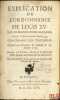
EXPLICATION DE L’ORDONNANCE DE LOUIS XV (…) DONNÉE À VERSAILLES AU MOIS D’AOÛT 173 CONCERNANT LES TESTAMENTS. REGISTRÉE AU PARLEMENT DE TOULOUSE LE 23FÉVRIER 1737. Nouvelleéd., revue, corrigée & augmentée par l’Auteur
, Avignon, François Girard 1766, in-8, plein veau blond moucheté, tit. doré sur pc. noire, dos à 5nerfs orné de fleurons et filets encadrants dorés, tr. mouchetées, (coiffes accidentées, plats et dos frottés avec des épidermures, coins et coupes émoussées avec des mq., des notes a l’encre sur les p. de garde), XII-388p.

Phone number : 01 43 29 46 77
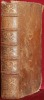
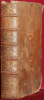
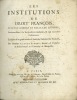
LES INSTITUTIONS DU DROIT FRANÇAIS SUIVANT L’ORDRE DE CELLES DE JUSTINIEN, accommodées à la jurisprudence moderne, & aux nouvelles Ordonnances. Enrichies d’un grand nombre d’Arrêts du Parlement de Toulouse
, Paris, Jean de Nully ss date, in-4, pl. veau fauve, tit. doré sur pc. fauve, dos à 5 nerfs orné de dentelles, fleurons et filets dorés encadrant, tr. rouges, (épidermures aux plats avec mq. en queue du 1ère plat, mq. à la coiffe de tête, coupes et coins émoussés avec mq.), bon état malgré les défauts, [4ff.]-674p.
Phone number : 01 43 29 46 77
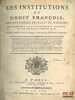
LES INSTITUTIONS DU DROIT FRANÇOIS, Suivant l’ordre de celles de Justinien, Accommodées à la Jurisprudence moderne, et aux nouvelles Ordonnances
, Paris, Jean de Nully 1771, in-12, pl. veau fauve raciné, tit. doré sur pc. de maroquin grenat, dos à 5nerfs richement orné de fleurons et motifs floraux dorés et de filets dorés encadrants, roulettes dorées sur les coupes, tr. jaspées, lettrines ornées, vignettes, (coiffes accidentées, qq. mq. de cuir au dos et sur les mors et coupes, coins émoussés, trous de vers traversants mais sans incidence sur la lecture, très nb. annotations à l’encre en marge), assez bon état, 548p.
Phone number : 01 43 29 46 77
Other Monasticisms. Studies in the History and Architecture of Religious Communities Outside the Canon, 11th - 15th Centuries
, Brepols, 2022 Hardback, iv + 370 pages, Size:220 x 280 mm, Illustrations:20 b/w, 76 col., 8 tables b/w., 10 maps b/w, Language: English. ISBN 9782503587844.
Summary Monasteries contributed to every aspect of life during the middle ages, from the structures monks built, to land management, craft production to the intellectual and spiritual life of the medieval world. There were more than 300 orders or congregations in existence during the middle ages, yet scholarship considers only a small number of them (notably Cistercians and Cluniacs), and privileges selected sites, such as Mont Saint-Michel, San Francesco in Assisi or Christ Church in Canterbury. This volume considers the history and architecture of other congregations that are essential to a more complete understanding of monasticism in the European middle ages: Augustinians, lesser known Benedictines, Carthusians, Celestines, Clarissans, and Tironensians in France, as well as the Camaldolese and Vallombrosans in Italy. TABLE OF CONTENTS 1. Introduction: Other Monasticisms and the Question of Representivity Sheila Bonde (Brown University) and Clark Maines (Wesleyan University) 2. The French Celestine "network" (ca. 1350-1450): cross-order and lay collaboration in late medieval monastic reform. Robert Shaw (Independent Scholar) 3. Sainte-Croix-sous-Offémont:?An archaeological and architectural perspective on the Celestine order. Arthur Panier (University of Paris I and Free University of Brussels) 4. The abbey of Tiron in the later middle ages: some observations Kathleen Thompson (University of Sheffield) 5. La Sainte-Trinité de Tiron in the Context of Eremitism in Western France Sheila Bonde (Brown University) and Clark Maines (Wesleyan University) 6. The Illumination of the Eye, and the Rhetoric of Sanctity and Contemplative Prayer in the Early to Central Middle Ages. Susan Wade (Keene State University) 7. The Archdiocese of Reims: Tradition, and Benedictine Reform in the Twelfth Century. Kyle Killian (Florida State University) 8. Overlapping Space and Temporal Access in the Chartreuse de Champmol. Laura Chilson-Parks (Brown University) 9. Reconstructing an Order: The Architecture of Isabelle of France's Abbey at Longchamp. Erica Kinias (Brown University) 10. Vallombrosan and Camaldolese: Architecture and Identity in Two Italian Reform Orders. Erik Gustafson, (Washington and Lee University) 11. Augustinian Architecture in France: Aesthetic Restraint within a Regional Frame. Sheila Bonde (Brown University) and Clark Maines (Wesleyan University)
Taizé, une parabole d'unité. Histoire de la communauté des origines au "concile de jeunes" [trad. française de l'italien Storia della comunità dalle origini al concilio dei giovani]
, Brepols, 2021 Paperback, 650 pages, Size:156 x 234 mm, Illustrations:43 col., Language: French. ISBN 9782503585369.
Summary Chapitre important de l'histoire du XXe siècle religieux européen, l'itinéraire de la communauté de Taizé a croisé les différents événements qui ont marqué la recherche de l'unité des chrétiens divisés et l'histoire de nombreuses églises du continent entre la Seconde Guerre mondiale et la chute du rideau de fer. Première communauté cénobitique masculine née sur terrain réformé, vite devenue point de rencontre d'une sorte d'église oecuménique en gestation, Taizé a interpellé les chrétiens et les églises en des lieux et en des temps différents. Observatoire original des événements caractéristiques de la soif d'unité qui a fait irruption parmi les chrétiens au coeur du XXe siècle, Taizé attendait encore un nécessaire effort d'historicisation. Ce volume essaie de répondre à cette exigence grâce à l'étude d'une très riche documentation inédite, conservée à Taizé et en beaucoup d'autres archives européennes. Ce travail est le fruit d'une recherche de nombreuses années, consacrée aux premières décennies de l'histoire de la communauté fondée par Roger Schutz : depuis les premiers projets communautaires partagés avec quelques amis au lendemain du déclenchement de la guerre, jusqu'à l'annonce, au printemps de 1970, d'un « état conciliaire » tout à fait inédit pour sortir de l'impasse où se trouvait l'oecuménisme après les promesses du début des années 60. Les origines, l'évolution, l'accueil et les résistances rencontrées par cette création communautaire originale constituent donc l'objet de ce volume. Cette ouvrage entend donc suivre, reconstruire et documenter l'« itinérance » de Taizé entre les différentes réalités ecclésiales ainsi que le dynamisme déployé par cette communauté au long des différentes lignes de fracture de l'histoire du XXe siècle.
De vita religiosa documenta selecta - Magisterii ecclesiastici et ordinis Carmelitarum Discalceatorum (1869-1966)
Roma, Ed.del Teresianum 1967 viii + 583pp., in the series "Bibliotheca Carmelitica" series III (Subsidia) vol.2, stamp on frontpage, VG
St Anselm and the Handmaidens of God A Study of Anselm's Correspondence with Women<br>
, Brepols - Harvey Miller, 2002 Hardcover. XII 336 p., 26 b/w ill., 6 b/w line art, 165 x 245 mm, Languages: English, Latin, Fine copy. Including an index. ISBN 9782503513379.
As abbot of Bec and archbishop of Canterbury, the renowned theologian St. Anselm spent most of his career working ?in the world?, primarily with laypersons, not in the cloister. His correspondence contains surprisingly many letters to laywomen, only a few perfunctory letters to nuns and abbesses. Anselm wrote to all estates of noble laywomen: young girls, mothers, mature wives or widows, countesses and queens. Vaughn argues that Anselm collected and edited his own letters, which addressed real women and situations, but also represented particular ideals of women, marriage, parents and children, students and teachers; that the correspondence, an artful construct, was almost an autobiography, teaching by word, deed, and his own example; and a lens through which to discern Anselm?s views of men and women in Anselm?s ideal society. Anselm accords women surprising equality and power, seeing queens as equal to both kings and archbishops, all three primarily as nurturers and teachers, and ideal married couples writ large ? social views modelled on past ideals (primarily St. Gregory), but ironically leaping toward new Twelfth Century attitudes of introspection, self-analysis, individualism, and logic and reason in theology, social issues, politics and law. Mothers and teachers emerge as the ultimate Handmaidens of God.
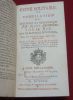
Code militaire ou Compilation des Reglemens (règlements) et Ordonnances de Louis XIV, roy de France et de Navarre, faites pour les Gens de Guerre, depuis 1652 jusqu'à présent. Par M. Le Chevalier de Sparre ; Lieutenant-Colonel, & Major du Régiment d'Infanterie Allemande de Sparre, cy-devant Ayde-Major General de l'Armée de la Mozelle.
A Paris, Chez Denys Mariette et Jean-Bapt-Delespine, 1708, 1 volume in-12 de 170x95 mm environ, 1 fb, Avertissement, 14 ff. (titre, epistre, préface, table, approbation, privilège), 601 pages, avec 2 gravures en fin de volume, 1fb, plein veau granité brun,dos à 5 nerfs portant titres dorés sur pièce de titre bordeaux, orné de caissons à riches motifs dorés, coupes dorées, tranches mouchetées de rouge. Une signature de l'auteur sur la page 1 du texte. Des épidermures sur les plats, des notes manuscrites ancienne sur la première garde, erreur de pagination (de la p. 330 à 336, même numéro sur 2 pages), sinon bon état.
Merci de nous contacter à l'avance si vous souhaitez consulter une référence au sein de notre librairie.
Ordonnances, Advertissemens, et Instructions aux Recteurs, & autres Ecclesiastiques du Diocese de Pamies.
Toulouse, Colomiez, 1630 ; in-8 de 104 pp., vélin souple de l'époque, dos lisse.
![Ordonnances, Advertissemens, et Instructions aux Recteurs, & autres Ecclesiastiques du Diocese de Pamies.. [SPONDE Henri de].](https://static.livre-rare-book.com/pictures/LAM/172_1_thumb.jpg)
![Ordonnances, Advertissemens, et Instructions aux Recteurs, & autres Ecclesiastiques du Diocese de Pamies.. [SPONDE Henri de].](https://static.livre-rare-book.com/pictures/LAM/172_2_thumb.jpg)
Rare édition originale de ce recueil d'ordonnances synodales délibérées lors de conseils tenus entre 1629 et 1630 à Pamiers ; la brochure fut ainsi distribuée aux ecclésiastiques ayant participé aux réunions, mais aussi aux absents, afin que tout le monde fût à jour… Henri de Sponde, évêque de Pamiers et frère du poète Jean de Sponde, fut l'artisan d'un renouveau de l'activité religieuse dans la région, n'hésitant pas à aller lui-même à la rencontre de ses ouailles jusqu'au tréfonds de son évêché ; filleul du roi Henri IV, il se convertit au catholicisme sous l'influence de ce dernier. Vignette en page de titre aux armes d'Henri de Sponde. L'achevé d'imprimer comporte des parties blanches pour la date et le lieu, remplies à la main dans cet exemplaire. EX-DONO MANUSCRIT d'Henri de Sponde à un destinataire non identifié (les ex-dono du XVIe siècle sont très rares). Ex-libris manuscrit Dulyon sur le titre. Ce nom est celui d'une importante famille béarnaise installée à Pamies. Gaston Dulyon participa aux guerres civiles aux côtés d'Henri de Navarre et fut absout en 1598 par celui qui était devenu Henri IV de toutes les poursuites pour assassinat entreprises contre lui. Légères rousseurs et mouillure, un coin du plat supérieur entamé par un rongeur.
Standing Orders of the Legislative Council of the Province of New Brunswick. Passed 19th April 1854
J. Simpson Softcover Fredericton 1854
Fair Octavo. 11 pages. Cover worn. Ex-libris of an historical society. Scarce.
Illuminated Manuscript Production in Medieval Iceland. Literary and Artistic Activities of the Monastery at Helgafell in the Fourteenth Century
, Brepols, 2021 Hardback, 275 pages, Size:216 x 280 mm, Illustrations:192 b/w, 22 col., 47 tables b/w., 2 maps b/w, Language: English.new! ISBN 9782503589022.
Summary This book examines a cultural revolution that took place in the Scandinavian artistic landscape during the medieval period. Within just one generation (c. 1340-1400), the Augustinian monastery of Helgafell became the most important centre of illuminated manuscript production in western Iceland. By conducting interdisciplinary research that combines methodologies and sources from the fields of Art History, Old Norse-Icelandic manuscript studies, codicology, and Scandinavian history, this book explores both the illuminated manuscripts produced at Helgafell and the cultural and historical setting of the manuscript production. Equally, the book explores the broader European contexts of manuscript production at Helgafell, comparing the similar domestic artistic monuments and relevant historical evidence of Norwich and surrounding East Anglia in England, northern France, and the region between Bergen and Trondheim in western Norway. The book proposes that most of these workshops are related to ecclesiastical networks, as well as secular trade in the North Sea, which became an important economic factor to western Icelandic society in the fourteenth century. The book thereby contributes to a new and multidisciplinary area of research that studies not only one but several European cultures in relation to similar domestic artistic monuments and relevant historical evidence. It offers a detailed account of this cultural site in relation to its scribal and artistic connections with other ecclesiastical and secular scriptoria in the broader North Atlantic region. TABLE OF CONTENTS List of Illustrations, Notes on Terminology, Abbreviations, and Images, Acknowledgements Introduction: The Helgafell Manuscripts Chapter 1: An Anaysis of Medieval Icelandic Manuscript Cultures Chapter 2: Helgafell: An Augustinian House of Canons Regular in Western Iceland Helgafell in the Thirteenth Century Personal Contacts Chapter 3: The Scriptorium Copenhagen, Den Arnamagnæanske Samling, AM 233 a fol. (ff.?1-12 and ff.?27-28) Reykjavík, Stofnun Árna Magnússonar í íslenskum fræðum, AM 350?fol. (Skarðsbók) The Network of the 'Helgafell Master' The Book Painting of AM 350?fol. (Skarðsbók) The Historiated Initials of AM 350?fol. (Skarðsbók) Copenhagen, Den Arnamagnæanske Samling, AM 226?fol. Magnús Þórhallsson, Illuminator of AM 226?fol. The Art of Magnús Þórhallsson Copenhagen, Den Arnamagnæanske Samling, AM 239?fol. The Illuminations of AM 239?fol. Stockholm, Kungliga Biblioteket, MS?Isl.?Perg. fol.?5 Copenhagen, Den Arnamagnæanske Samling, AM 325 X 4to & AM 325 VIII 3a 4to Stockholm, Kungliga Biblioteket, MS?Isl.?Perg. 4:o 34 Reykjavík, Stofnun Árna Magnússonar í íslenskum fræðum, AM 347?fol. (Belgsdalsbók) The Book Painting of AM 347?fol. (Belgsdalsbók) Reykjavík, Stofnun Árna Magnússonar í íslenskum fræðum, AM 219?fol. Copenhagen, Den Arnamagnæanske Samling, AM 73 b fol. (Bæjarbók á Rauðasandi) Reykjavík, Stofnun Árna Magnússonar í íslenskum fræðum, AM 383 IV 4to Manuscripts and Fragments Written by H Hel 2 Copenhagen, Den Arnamagnæanske Samling, AM 61?fol. Planned Images in AM 61?fol. Reykjavík, Stofnun Árna Magnússonar í íslenskum fræðum, AM 653 a 4to & JS fragm 7 Reykjavík, Stofnun Árna Magnússonar í íslenskum fræðum, AM 156 4to Planned Images in AM 156 4to Copenhagen, Den Arnamagnæanske Samling, AM 238 VII?fol. Reykjavík, Stofnun Árna Magnússonar í íslenskum fræðum, SÁM 1 (Codex Scardensis) The Book Painting of SÁM 1 (Codex Scardensis) Copenhagen, Den Arnamagnæanske Samling, AM 233 a fol. (Ff. 15-27) The Book Painting of AM 233 a fol. (ff.?15-27) Chapter 4: European Artworks The Production of GKS 1154?fol. (Codex Hardenbergianus; Copenhagen, Det Kongelige Bibliotek) Artistic East Anglian Influences on Codex Hardenbergianus East Anglian Iconography at Þingeyrar The Influence of Norwich Book Painting at Helgafell England and Western Iceland in the Fourteenth Century English Artistic Trade with Bergen (and Helgafell) Chapter 5: Back at Western Icelandic Scribal Desks Conclusion: Helgafell and the Wider North-Atlantic World Bibliography Index
Dismantling the Medieval. Early Modern Perceptions of a Female Convent's Past
, Brepols, 2021 Paperback, 247 pages, Size:156 x 234 mm, Illustrations:1 b/w, 14 col., 2 tables col., Language: English. ISBN 9782503593470.
Summary Dismantling the Medieval studies the paradoxical relationship of the early modern canonesses of Bouxières with the medieval past of their institution. While various documentary, material, spatial, and immaterial legacies of that past remained a crucial presence in the convent's narrative of self, the canonesses also used and manipulated them to pursue and justify drastic changes in their organization and lifestyle. Thanks to an unusually rich and varied body of evidence, we are able to reconstruct in unprecedented detail this elite convent's highly flexible memory culture over a period of more than two centuries. Guiding the reader back through time, the book gradually reveals how and why the canonesses' connection to the medieval past lived on throughout many crises and transformations, including even the abbey's dissolution in 1971. TABLE OF CONTENTS List of illustrations List of tables Acknowledgements Abbreviations Introduction Chapter 1: 1833 A Gift for an Emperor Chapter 2: 1801 St Gozelin's (Im)mortal Remains Chapter 3: 1784 The Death of a Medieval Convent Chapter 4: 1766 Retooling Religious Space and Identities Chapter 5: 1692 Old and New Memories of Origins Conclusions Appendices Index of people and places
Code des poids et mesures
Code des poids et mesures ou recueil complet et textuel des lois, décrets, arrêtés du gouvernement, ordonnances du Roi, arrêtes de la cour de cassation, instructions, circulaires et décisions ministérielle relatifs à l’établissement du système métrique, à la fabrication et à la vérification des poids et mesures publié sous les auspices de M. le Vicomte BLIN de BOURBON préfet du Pas de Calais. A Arras chez Edmond BOUTRY imprimeur de la préfecture 1826. Par MM STOUIDER sous chef de bureau à la préfecture du Pas de Calais et GOURICHON vérificateur principal, des poids et mesures du même département. In 8 demi-cuir marron pièce de titre marron clair, filet, roulette dorés. 130x210mm. Titre I- 646 pages. Tranches mouchetées. Edition originale, rare. Charnières fragiles



DÉCRET DU 8 JUIN 1946 PORTANT RÈGLEMENT D’ADMINISTRATION PUBLIQUE POUR L’APPLICATION DE L’ORDONNANCE DU 4 OCTOBRE 1945 RELATIVE À L’ORGANISATION DE LA SÉCURITÉ SOCIALE, suivi d’une table analytique
, Paris, Caisse rég. sécur. soc. 1946, br., (couv. salie), 118p.
Phone number : 01 43 29 46 77

