 Write to the booksellers
-
Type
Artists book (1)
Autograph (1)
Book (3413)
Magazine (7)
-
Latest
Last month (36)
Last week (20)
-
Language
English (5)
French (3406)
Italian (1)
Portuguese (3)
Spanish (7)
-
Century
16th (1)
18th (2)
19th (47)
20th (650)
21st (154)
-
Countries
Belgium (2257)
Canada (1)
China (10)
France (1051)
Switzerland (103)
-
Syndicate
ALAC (1)
ILAB (221)
SLAM (140)
New England Museums. Hartford and New Haven, Connecticut, Boston, Cambridge, Williamstown and Worcester, Massachusetts [in: Les Primitifs Flamands. I: Corpus de la peinture des anciens Pays-Bas méridionaux au quinzième siècle, 4]
Brussels, Centre National de recherches "Primitifs Flamands" 1961 116pp. + 139 plates out of text, 29cm., hardcover (editor's cloth), illustrated dustwrapper, text in English, very good condition, in the series "Les Primitifs Flamands. I: Corpus de la peinture des anciens Pays-Bas méridionaux au quinzième siècle" volume 4, S84593
LÉONARD DE VINCI. Dessins et manuscrits
Paris Réunion des Musées Nationaux 2003 in 4 (28x21,5) 1 fort volume broché, couverture illustrée à rabats, 495 pages, avec de nombreuses illustrations en noir et blanc. Ouvrage édité à l'occasion de l'exposition ''Leonard de Vinci. Dessins et manuscrits''. présentée à Paris, Musée du Louvre, du 5 mai au 14 julliet 2003. Très bel exemplaire ( Photographies sur demande / We can send pictures of this book on simple request ) poids du colis 2 kgs
Très bon Broché
LÉONARD DE VINCI. Etude psychanalytique
Paris Puf, Presses Universitaires de France 1980 in 8 (21,5x13,5) 1 volume broché, couverture illustrée à rabats, 419 pages [2], avec des illustrations hors-texte en noir et blanc. Traduit de l'américain par Sophie Mellor-Picaut. Collection ''Bibliothèque de Psychanalyse''. Exemplaire de service de presse. Bon exemplaire ( Photographies sur demande / We can send pictures of this book on simple request )
Bon Broché
GUILLAUME VOGELS (1836-1896). Catalogue retrospective.
Antwerpen, Pandora., 2000 Relie, hardcover with dusjacket, livre abri de tissu, sous jaquette originale de l'editeur en couleurs, 30.5x25 cm., 189 pp, illustrations en couleurs et en n/b, bibliografphie, index. edition Francaise. ISBN 9053252274.
Catalogue publie a l'occasion de la retrospective, Bruxelles, Musee Charlier, 3 mars - 4 jjuin 2000; Oostende, Museum voor Schone Kunsten, 24 juin - 28 aout, monographie,
GUILLAUME VOGELS (1836-1896). NL
Antwerpen, Pandora., 2000 Hardcover, met uitgeversomslag in kleur, 30,5x25 cm., 189 pp, kleur- en zwart-wit illustraties, bibliografie, index. TEKST IN NEDERLANDS ISBN 9789053251690.
Catalogus uitgegeven ter gelegenheid van de overzichtstentoonstelling, Brussel, Musée Charlier, 3 maart - 4 juni 2000; Oostende, Museum voor Schone Kunsten, 24 juni - 28 augustus, monografie, nieuw boek;
LE PONT DE L'ANGLOIS. VAN GOGH
Paris Le Musée des chefs-d'oeuvre. Vendôme 1948 in 8 (27x21) 1 volume broché, couverture rempliée, plat supérieur titré et illustée d'une vignette en couleurs contrecollée, non paginé, avec des reproductions tirées en héliogravure. Biographie sommaire, description et histoire du tableau, bibliographie sommaire. Bel exemplaire ( Photographies sur demande / We can send pictures of this book on simple request )
Très bon
Naples as Laboratory / Laboratorium Neapel. Style Options, Artistic Rivalry and Self Fashioning in Neapolitan Baroque Painting / Plurale Stilbildung, Künstlerkonkurrenz und Self Fashioning in der neapolitanischen Barockmalerei
, Brepols, 2026 Paperback, Pages: 194, Size:216 x 280 mm, Illustrations:6 b/w, 76 col., Languages: English, German. ISBN 9782503579665.
Summary Seventeenth-Century painting in Naples distinguishes itself from that of other artistic capitals for its immense variety of coexisting styles and, in turn, for the rivalry this inspired among artists living in the principal city of the Spanish viceroys. The various tendencies, in fact, might best be described as the manifestation of these rivalries among predominant artists in and around Naples, known in the annals of art history as the great reformers of painting at the turn of the seventeenth century: Caravaggio, who on his travels to and from Malta left behind a number of highly influential paintings; two pupils of Annibale Carracci, Domenichino and Giovanni Lanfranco, who left their individual marks on the city for nearly a decade; the Spaniard Jusepe de Ribera, who lived and worked in Naples and was visited by Velázquez as he journeyed through Italy. Under Spanish rule and closely tied to the Papal States, this major center of trade on the gulf presented a unique point of convergence for these heterogeneous cultural currents. This conference volume brings together contributions on painters such as Caravaggio and Jusepe de Ribera, as well as Aniello Falcone, Artemisia Gentileschi, Salvator Rosa, and Francesco Solimena. The recurring subject throughout the texts is self-promotion and self-fashioning, as well as the artists' social and intellectual situation 'in situ'. TABLE OF CONTENTS A Laboratorio of Painting: Style, Self-Fashioning and Competition in Neapolitan Baroque Elisabeth Oy-Marra & Heiko Damm Caravaggios Sieben Werke der Barmherzigkeit: Zur Frage devianter Details Rudolf Preimesberger (?) After the Fall of Osuna: Ribera's Work of the 1620s in the Context of Artistic Rivalry, Patronage and Stylistic Currents Justus Lange Riberas Self-Fashioning als Naturalista Elisabeth Oy-Marra Portents of Nature: Jusepe de Ribera and the Bearded Woman Carlo Avilio The Fame Game: A Business Analysis of Artemisia Gentileschi's Neapolitan Career Christopher R. Marshall Beyond Naples: The Self Fashioning of Salvator Rosa Helen Langdon The Clock, the Court, and the Canvas: Luca Giordano and the Virtue of Productivity Tiffany A. Racco Francesco Solimena zwischen Egologie und Eusozialität Salvatore Pisani Aniello Falcone? Der tote Soldat in der National Gallery in London. Annäherungen an ein kunsthistorisches Methodenproblem Stefan Albl Die Kunst der Macht: Die spanischen Vizekönige als Auftraggeber neapolitanischer Barockmalerei am Beispiel des Conde de Monterrey (reg. 1631-1637) Katrin Zimmermann
Radiography and Painting
, Brepols, 2023 Hardback, 2 vols, xviii + 567 pages, Size:240 x 340 mm, Illustrations:76 b/w, 272 col., 5 tables b/w., Language: English. ISBN 9782503554549.
Radiography is a technique that has been employed in the study of paintings for more than a century. The history of this method of analysis indicates that its development has been modest since the 1960s, as its use has been limited to reductive approaches that take into account no more than the immediately intelligible signs. By systematically considering the physical mechanisms involved in the creation of an image, this volume seeks to demonstrate that we can access new fields of radiological analysis by identifying two categories of 'signs': those that may be obvious but whose meaning is misleading, and those which are not immediately comprehensible. This study has been primarily based on a thorough and essential reviewing of current literature concerning the materials and processes used for the making of paintings. The semiological analysis is based on the understanding of the physical phenomena occurring in the formation of the image, and on correlations between the radiographic images of a painting and the information stemming from its observation, other scientific results, and the restoration reports. Furthermore, a number of experiments were conducted to consolidate certain assumptions regarding image-formation mechanisms. Ultimately, this book hopes to show how data resulting from radiographic analysis can be seen and set in a broader context of information on a specific work or a group of works, in order to enrich our knowledge of art history, history of technology, and conservation as well as restoration. La radiographie est une technique appliquée aux peintures depuis près d'un siècle. L'histoire de cette technique d'analyse montre que son développement s'est trouvé limité depuis les années 1960 en raison d'une approche uniquement basée sur la prise en compte de signes immédiatement suggestifs. Or ce mode d'analyse ne permet pas d'expliquer l'ensemble des images observées sur une radiographie de peinture. En considérant de manière systématique le mécanisme de formation de l'image, ce travail souhaite démontrer que l'on peut accéder à de nouveaux champs de l'analyse radiologique en identifiant deux autres catégories de signes: les signes suggestifs mais dont la signification est trompeuse et les signes non immédiatement intelligibles. Cette analyse a été possible grâce à une revue de la littérature la plus complète possible sur les matériaux constitutifs et les procédés employés pour la réalisation des peintures. L'analyse sémiologique est basée sur la compréhension des phénomènes physiques en jeu dans la formation de l'image et sur des corrélations entre les images observées et les informations provenant de l'observation, d'autres examens réalisés sur l'oeuvre ou encore de rapports de restauration. De plus une expérimentation a été conduite pour conforter certaines hypothèses de mécanisme de formation de l'image. Enfin, les données issues de la radiographie peuvent être replacées dans un contexte plus large de données ou informations connues sur une ?uvre ou groupe d'oeuvres pour enrichir nos connaissances en histoire de l'art, histoire des techniques et conservation-restauration. TABLE OF CONTENTS VOLUME ONE - TEXT Preface Acknowledgements Introduction Chapter I. A history of the radiography of paintings Chapter II. The paint layer Chapter III. The preparatory phases Chapter IV. Supports Chapter V. Damage and Restorations Chapter VI. Contribution of radiography to the history of art, the history of painting practices and conservation Conclusion Annex 1: List of the x-rays done by Alan Borroughs during his stay in Paris in 1926 Bibliography Index VOLUME TWO - ILLUSTRATIONS
Elizabeth McGrath, Bert Schepers, Nils Büttner, Gerlinde Gruber, Fiona Healy, Eveliina Juntunen, Gregory Martin, Jeremy Wood
Reference : 60700
Hercules to Olympus Part XI, 2: Mythological Subjects Hercules to Olympus / 2 volumes.
, Brepols - Harvey Miller, 2023 hardcover with dusjacket, 2 vols, 946 pages.Size:175 x 260 mm Illustrations:450 b/w. Language(s):English. ISBN 9781912554867.
One remarkable feature of European culture as it developed in the Renaissance was the accommodation it made with ancient paganism. The classical gods and their legends were allegorised, transformed into symbolic figures or emblematic scenes that might accord with Christian morality. At the same time a secular space was created in art for the depiction of the most popular myths, above all the love stories recounted by the ancient poets. These stories were not only attractive in themselves; they offered the opportunity to depict nude figures in narrative action, which the example of antiquity held forth as the highest goal for painting. Rubens was one of the greatest creators of classical allegory; he was also a supreme interpreter of the classical stories. No painter was so at home in the literature of the Greeks and Romans. When he painted for pleasure, which, increasingly in the course of his life, he felt able to do, he used pagan myth to express and celebrate themes of love, beauty and the creative forces of nature, often in wonderfully idiosyncratic ways. At the same time, as a Christian committed to the ideals of the Catholic Reformation, Rubens respected the restrictions generally placed on the depiction of pagan tales. Most of his mythological paintings were made for private settings, for display within houses (including his own) or in the galleries of princes, noblemen and prelates. It is happy accident of history that these splendid paintings are now widely visible in the great museums of the world.
Elizabeth McGrath, Gerlinde Gruber, Gregory Martin, Koenraad Jonckheere, Bert Schepers, Nils Büttner
Reference : 68179
Mythological Subjects, Paris to Venus. Corpus Rubenianum Ludwig Burchard, vol. 11.3 Corpus (2 VOLS.)
Turnhout, Brepols, 2025 2 vols, 976 pages 175 x 260 mm, Illustrations:224 b/w, 91 col. English text. NEW . ISBN 9781915487636.
One remarkable feature of European culture as it developed in the Renaissance was the accommodation it made with ancient paganism. The classical gods and their legends were allegorised, transformed into symbolic figures or emblematic scenes that might accord with Christian morality. At the same time there emerged a new, secular, genre of art devoted to the depiction of the most popular myths, above all the love stories recounted by the ancient poets. These stories were not only attractive in themselves; they offered the opportunity to depict nude figures in narrative action, which the example of antiquity held forth as the highest goal for painting. Rubens was one of the greatest creators of classical allegory; he was also a supreme interpreter of the classical stories. No painter was so at home in the literature of the Greeks and Romans. When he painted for pleasure, which, increasingly in the course of his life, he felt able to do, he used pagan myth to express and celebrate themes of love, beauty and the creative forces of nature, often in wonderfully idiosyncratic ways. Still, as a Christian committed to the ideals of the Catholic Reformation, Rubens respected the restrictions generally placed on the depiction of pagan tales. Most of his mythological paintings were made for private settings, for display within houses (including his own) or in the galleries of princes, noblemen and prelates. It is a happy accident of history that so many of these splendid paintings are now widely visible in the great museums of the world. TABLE OF CONTENTS Volume One Preface Catalogue Raisonné - Paris and his Judgement of the Goddesses: Nos 101-106 - Phaeton?s Temerity and the Consequences: Nos 107-108 - Philemon and Baucis: No.109 - Procris and Cephalus: No. 110 - Prometheus: No. 111 - Proserpina?s Abduction by Pluto: No. 112 - The Story of Psyche: Nos 113-114 - Satyr Subjects: Nos 115-120 - Silenus, with Bacchic and Rustic Companions: Nos 121-129 - Venus: Her Loves and her Worship: Nos 130-139 - Vertumnus and Pomona: No. 140 - Rejected Attributions: Nos R1-5 Volume Two List of Figures Figures Bibliography Indexes I: Collections II: Subjects III: Other Works by Rubens Mentioned in the Text IV: Names and Places Sources of Photographs
Thinking through Rubens Selected Studies by Arnout Balis.
, Brepols, 2024 Hardcover, Pages: 220 pages,90 x 255mm,Illustrations:18 b/w, 88 col. Language(s):English. ISBN 9781915487285.
Over the course of his life, Arnout Balis (d. 2021) did a lot of thinking about and around Rubens. A principal beneficiary of this was the Corpus Rubenianum, that multi-volume catalogue of the work of the artist to which he devoted so much of his scholarly endeavour ? as author, and, still more, as the most generous of editors. But he also produced wide-ranging, as well as more closely detailed, studies on the artist that were written for a variety of contexts. Arnout Balis was an artist before he was an art historian, and the question of how Rubens channelled his ideas into visual form constantly attracted and intrigued him. He was fascinated, too, by the practicalities of the artist?s method of production, given the enormous output of Rubens?s studio. Not only did he rigorously assemble and analyse every scrap of information about pupils or associates of the master, but he made himself an expert in the work of each of Rubens?s artistic contemporaries. In all his investigations, whether involving the attribution of a painting, an iconographic puzzle or the solution to a historical problem, he took nothing for granted, treating any received idea or initial intuition with due scepticism until it could be shown to stand the test of the evidence, documentary and visual. The present volume shows the Balis method in action. It includes several studies already acclaimed as exemplary, and others which deserve to be more widely known. Five of them are made available here for the first time in English translation. Preface Arnout Balis: A Personal Memoir by Elizabeth McGrath 1 Hippopotamus Rubenii: A Small Chapter in the History of Zoology (1981) 2 Image and Counterimage: On Dissident Rubens Biographies (1985) 3 Picturing Fables in Seventeenth-Century Flemish Painting (1985) 4 ?Fatto da un mio discepolo?: Rubens?s Studio Practices Reviewed (1994) 5 Working it out: Design Tools and Procedures in Sixteenth- and Seventeenth-Century Flemish Art (2000) 6 Rubens and Inventio: The Contribution of his Theoretical Notebook (2001) 7 Rubens and his Studio: Defining the Problem (2007) 8 A Painting by Willem Panneels, an Intriguing Pupil of Rubens (2020) 9 Many Hands in Rubens?s Workshop: an Exploration (2021) 10 A Sheet from Rubens?s Theoretical Notebook (2021)
Pontormo at San Lorenzo. The Making and Meaning of a Lost Renaissance Masterpiece
, Brepols - Harvey Miller, 2022 Hardback, 384 pages, Size:225 x 300 mm, Illustrations:58 b/w, 90 col., 2 tables b/w., Language(s):English, Italian. ISBN 9781909400948.
Summary Pontormo's frescoes in San Lorenzo were the most important cycle of the sixteenth century after Michelangelo's Sistine frescoes.? They had an enormous impact on artists until their destruction in the eighteenth century, and their interpretation has also had a significant bearing not only on the reception of this artist, but also of late Renaissance art in Florence. Based on archival and historical research, this book determines a new date for the inception of the fresco cycle and reconstructs the day-by-day activity in the church that had an impact on Pontormo's project. ?It reveals Pontormo's painstaking working method. The new reconstruction corrects the visual order of the frescoed scenes, and conclusively demonstrates the orthodoxy of the choir's iconography.? It sets them into the artistic and architectural context of the church of San Lorenzo, relating them to works of art by Fra Bartolomeo and Michelangelo, as well as to complex liturgical and religious functions.? This study establishes the intentions of the Medici and the canons of the church in having Pontormo paint the specific space in the church where he painted, and the specific subjects that were included.? Finally, it reveals the unsuspected impact Pontormo's paintings had on other works of art. TABLE OF CONTENTS INTRODUCTION: The introduction explains the history and historiography of both Pontormo in general and this commission in particular. CHAPTER 1: LIFE AND DEATH IN THE CHOIR Can we re-imagine the day-to-day progress of the commission? Beginning with a re-dating of the project, I shall trace the practical realities of daily painting in the choir, the comings and goings of artists and people: the ?world? of the choir will be explored. The frequent trope of Pontormo as an isolated loner and painfully slow artist will be disproved. The close supervision of the major stakeholders for the project, the Duke and the church, will be demonstrated. CHAPTER 2: REVERSALS OF FORTUNE My discovery that Pontormo reversed his preliminary sketches when they were scaled up into full-scale cartoons has demonstrated that several of the extant drawings used to reconstruct the choir must be inverted. Adjusting the reconstruction to take this into account resolves issues of visual, thematic, and iconographic coherence which have perplexed scholars. Essential elements in my new reconstruction reveal new and unexpected functions and meanings for Pontormo's paintings. These functions and iconographical connections place the lost paintings in a new light in relation to the fabric of the church of San Lorenzo. CHAPTER 3: LAWRENCE'S ACTS and CHAPTER 4: CYCLES OF SALVATION In these two sections I explain the significance of the frescoes. The first chapter focuses on the end wall, which was the public view of the choir and on which Pontormo's painting of Saint Lawrence provided a personal message of salvation to viewers. The second of these two chapters explains the entire set of images. This is the first time a seamlessly cohesive and inclusive interpretation of the cycle has been found. The new textual associations supplied in these chapters establishe that far from being of questionable orthodoxy, Pontormo's frescoes were a brilliant encapsulation of the functions of the choir. CHAPTER 5: THEN AND NOW: PONTORMO'S PLACE IN HISTORY Vasari's comments about the San Lorenzo commission in the Life of Pontormo created a negative view. This chapter corrects that, and replaces it with an appreciation of the gigantic task he confronted, the brilliance of his solutions, and the positive reception he and his paintings received.
Delights from the senses. Dutch and Flemish still-life paintings from Budapest
Wausau, Leigh Yawkey Woodson Art Museum 1989 176pp.with ills. in colour and in bl/w, 30cm., softcover, exhibition catalogue, good condition, S87260
Subjects from History (2 vols.), Corpus Rubenianum Ludwig Burchard vol. 13.1
Turnhout, Brepols, 1997 Hardback, 690 pages., 228 b/w ill., 180 x 265 mm. set in 2 volumes, fine condition. ISBN 9780905203690.
Elizabeth McGrath recreates the context in which Rubens, who was familiar enough with classical writings to interpret them with originally and wit, worked and casts new light on rarely discussed and misidentified subjects. For Ruben's age, as for the ancient Romans, history was valued for the lessons it taught. Rubens was deeply interested in history, particularly the works of the ancient writers like Ovid, Plutarch and Juvenal, which were full of exemplary figures. Yet unlike many Renaissance artists who merely sought texts they could illustrate, Rubens was familiar enough with classical writings to interpret them with originally and wit - always with an eye for the visually striking aspect. He was thus uniquely qualified to respond to the requirements of particular commissions with exemplary themes like The Continence of Scipio, The Justice of Cambyses, The Devotion of Artemisia and The Courage of Cloelia. Elizabeth McGrath recreates the context in which Rubens worked and casts new light on rarely discussed and misidentified subjects. Also included is a detailed analysis of the tapestry cartoons on the life of Romulus, now in the National Museum of Wales, relating the series to all relevant studies, paintings and tapestries. Languages: English.
DELVAUX
Paris Albin Michel 1985 in 4 (30x25,5) 1 volume reliure toilée bleue de l'éditeur, jaquette rempliée illustrée en couleurs, 279 pages, avec de nombreuses reproductions en noir et blanc et en couleurs. Paul Delvaux, 1897-1994. Bel exemplaire
Très bon Jaquette en très bon état Couverture rigide
Dürer et son temps, de la réforme à la guerre de trente ans : Dessins allemands de l'Ecole des Beaux-Arts
ENSBA, 2012. In-4°, Relié cartonnage d'édit. illustr, 575 pp. nombreuses reproductions en couleurs dans le texte et à pleine-page, bibliogr., index, table
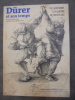
Livre comme neuf;


UNTER KLASSISCHEM BODEN. BILDER VON ITALIENS GROTTEN IM SPATEN 18. JAHRHUNDERT,
Berlin, Reimer Verlag , 2006 Gebunden, 160 x 240mm., 350 S. m. 26 Farb- u. 90 s-w-Abb., 17 x 24 cm. ISBN 9783496013488.
Der Abstieg in das Terrain unter klassischem Boden fuhrte die Reisenden des 18. Jahrhunderts zu den Ursprungen ihrer Kultur, ihrer Kunst und ihres Glaubens. Sie fanden ein zweites Rom unter der Erde, bei Neapel das Tor zum Hades, auf Sizilien Hohlenmenschen. Fur die Zeit zwischen Aufklarung und Romantik kann Emslander einen Wandel des Italienbildes ausmachen: Empirische Beobachtung, neue wissenschaftliche und asthetische Perspektiven sprengen den klassischen Besichtigungskanon. Grosse voyages pittoresques zeigen, wie die Malerei die Literatur als Wahrnehmungsparadigma auf Reisen teilweise abloste. Wahrend die aufwandigen Publikationen Italien als pittoreskes Spektakel vorfuhren, entwickeln die Maler ein Spektrum von Inszenierungen, um Grotten mit Bedeutung und Stimmungen aufzuladen. So konnte ein- und dieselbe Hohle als idyllische Hirtengrotte Naturgeborgenheit oder als finsteres Raubernest die Gefahren des Reisens suggerieren, als Lustort des italienischen Volkes oder als heroische Kulisse der Mythologie vorgestellt werden. In der Ambivalenz des Hohlenmotivs spiegelt sich die Vervielfachung des Blicks auf ein zwischen Paradies und Holle changierendes Land, bevor dieses von der fruhen Tourismusindustrie neu definiert wird. Neue.
Weltchronik. Der Stricker: Karl der Grosse.
Luzern, Faksimile-Verlag, 1982. 4°. 214 faksimil. Bl.; 76 faksimil Bl. Mit farb. Illustr. auf Goldgrund nach Miniaturen u. farb. Initialen. Dem Orig.-Einband entsprechender Lederbd. über Holzdeckeln mit 10 Metallbuckel-Beschlägen u. 2 Metall-Lederschliessen.
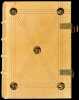
Nr. 302 v. 980 (GA 1'060) Ex. (Vergriffen. Neupreis 10'800.--). Faksimileband nach der Handschrift 302 (um 1300) der Kantonsbibliothek (Vadiana) in St. Gallen. "In seinen letzten Lebensjahren schrieb Rudolf von Ems auf Veranlassung des Stauferkönigs Konrad IV. eine Weltchronik in über 33000 paarweise gereimten Versen. Sie behandelt in mittelhochdeutscher Sprache die Geschichte von der Erschaffung der Welt bis zum Tode Salomos. (...) Das im Spätmittelalter vielgelesene Epos des "Strickers" geht in seinem Ursprung auf das altfranzösische Rolandslied zurück, das vom Regensburger "Pfaffen Konrad" um 1170 erstmals ins Deutsche übertragen worden war. Der "Stricker" erweiterte das alte Heldenlied aus dem Umkreis Karls zur in Versen erzählten Kunde ritterlicher Lebensformen. Im Mittelpunkt steht die Legenede um Karl und seinen treuesten Kampfgefährten Roland (...)" (Faksimile Verlag Luzern). Ohne den Kommentarband. - Tadellos erhalten.
Au seuil du salut : les décors peints de l'avant-nef de Farfa en Sabine [2 volumes]
Lausanne/ Poitiers, 2004 Complete en 2 volumes, I: texte: 315pp., II: CD-ROM, 30cm., Thèse de doctorat en histoire de l'art à l'Université de Lausanne et de Poitiers, br., cachet au verso de la p.d.t., texte frais, bon état, S112285
Kunstschilder Leon Engelen - Ogen die kijken
Hoeselt, Engelen Fine Arts 1997 200pp., rijkelijk geïllustreerd in kleur, 33cm., geïllustreerde omslag, goede staat, gewicht: 1.2kg., L114092
Leon Engelen en zijn streken [2 volumes]
Hoeselt, Engelen Fine Arts 2006-2007 Volledig in 2 delen : 180 + 180pp., rijkelijk geïllustreerd in kleur, 21cm., geïll. omslagen, goede staat, L114088
Leon Engelen - Verloren schoon
Hoeselt, Engelen Fine Arts 2012 996pp., met 800 in kleur afgebeelde schilderijen, gesigneerd met opdracht door de auteur, 30cm., geïll. uitgeversband, goede staat, gewicht: 5.3 kg., L114087
James Ensor retrospectieve 16 juni-15 augustus 1951 (Antwerpen, Koninklijk Museum voor Schone Kunsten)
, DNB 1951 56pp. tekst + 94pp. zw/w illustraties, 22cm., geïllustreerde omslag, enkele roestplekjes, goede staat, S45500
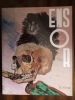
(ENSOR James) / MADELINE Laurence, SWINBOURNE Anna & al.
Reference : PEINTURE616110221
(2009)
ISBN : 9782711856046
James (art) Ensor
Paris, Editions de la Réunion des Musées Nationaux / Musée d'Orsay, 2009, 22 x 27, 272 pages cousues sous couverture souple illustrée. Iconographie noir & blanc et couleurs. Catalogue publié à l'occasion de l'exposition présentée au Museum of Modern Art du 28 juin au 21 septembre 2009 et au Musée d'Orsay du 20 octobre 2009 au 4 février 2010.
espace rituel et le sacre dans le christianisme La liturgie de l'autel portatif dans l'Antiquite et au Moyen Age,
Turnhout, Brepols, 2008 Paperback, VIII+205 pages ., 10 b/w ill., 155 x 235 mm. ISBN 9782503528342.
Aujourd'hui conserves dans des musees ou ils ont acquis le statut d'?uvre d'art, les autels portatifs chretiens ont joue un role majeur dans la definition de l'espace sacre dans l'Antiquite et au Moyen Age. Les autels portatifs constituent un objet liturgique indispensable au dispositif liturgique necessaire au deroulement de rites tels que la celebration de l'eucharistie dans le cadre de pelerinages, sur le champ de bataille en temps de guerre ou bien encore necessites par des missions d'evangelisation. A cote de ces fonctions liturgiques, les autels portatifs ont permis tout au long de l'Antiquite et du Moyen Age une reflexion theologique approfondie sur l'espace sacre chretien et la notion de ?«lieu rituel ?». Plutot qu'un ouvrage sur les objets eux-memes, ce livre propose une vaste exploration de l'espace sacre chretien a partir du discours a la fois theologique, liturgique, exegetique et iconographique sur les autels portatifs. Languages : French.

