Write to the booksellers
-
Latest
Last month (3)
Last week (1)
-
Century
16th (1)
17th (2)
18th (17)
19th (79)
20th (32)
21st (1)
-
Countries
Canada (3)
Denmark (17)
France (141)
Switzerland (5)
-
Syndicate
ALAC (3)
ILAB (134)
SLAM (2)
No. 416 Femme Fellahine. Studio Portrait of a Fellah woman
Egypt S.P. C1895 Une magnifique photographie sur papier albuminé représentant une femme fellah, vêtue d'un long voile, portant un panier de fruits. Il s'agit d'un portrait réalisé en studio vers 1895. Anonyme, mais correspondant exactement à la référence photographique RP-F-1997-28-35 du Rijksmuseum d'Amsterdam. Cela inclut le texte au bas de la photographie, qui est présent sur notre exemplaire, mais qui a été masqué par le passe-partout/montage. La photographie visible mesure 26,5 cm x 23 cm. Le montage mesure 37,5 cm x 32 cm. Tous les défauts/rayures apparents sur la photographie sont également présents sur la copie du Rijksmuseum. En excellent état.
A beautiful albumen photograph of a Fellah woman, with long veil, carrying a basket of fruit. This was a studio portrait circa 1895. Anonymous, but conforms exactly to the Rijksmuseum Amsterdam photograph reference RP-F-1997-28-35. This includes the text to the base of the photograph - which IS present on our copy, but has been hidden by the passe partout / mount. Photograph visible is 26.5cm x 23cm. Mount is 37.5cm x 32cm. All apparent flaws / scratches to the photograph are also present on the Rijksmuseum copy. In excellent condition. .

Notice, le Dr Hilaire Malewicz, ses obsèques. Monument funéraire élevé par souscription.
Orléans Imprimerie Ernest Colas 1874 Première édition. Cet ouvrage commémore la vie et la mort du docteur Malewicz, et lance une souscription publique afin de financer un mémorial en son honneur. Il comprend deux photographies sépia collées, réalisées par « Charles » d'Orléans. Bien qu'elles ne soient pas intitulées, la première représente vraisemblablement le bon docteur, et la seconde le mémorial qui lui est dédié. L'ouvrage est en bon état, propre. Quelques taches de rousseur sur la couverture. Une liste des souscripteurs figure à la fin. L'auteur, tout en écrivant avec affection sur le docteur, n'hésite pas à critiquer la nouvelle république de 1848 et le coup d'État qui a suivi peu après. Couverture en papier vert pâle avec une étiquette de bibliothèque privée sur la couverture avant.* 18 cm x 11,5 cm. Conforme à WorldCat / OCLC : 460553860, qui indique que seule la BnF en possède un exemplaire. Aucun exemplaire à vendre au moment du catalogage. Le Dr Malewicz est né à Wolkowysk, en Pologne, en 1808. Après avoir combattu dans les guerres polonaises en Lituanie, il s'est réfugié en France en 1834. Il a commencé à exercer la médecine et a continué à le faire jusqu'à sa mort, quarante ans plus tard. * Étiquette de la bibliothèque du fonds Bergevin en haut de la couverture. La collection tire son nom des deux figures de proue de la famille Bergevin, Louis-Athanase Bergevin (1753-1832) et son fils Louis-Catherine (1798-1876), magistrats à Blois et grands propriétaires terriens à Saint-Gervais-la-Forêt. La collection a été dispersée aux enchères à Vendôme en 2022.
First edition. This book commemorated the life, and death of Doctor Malewicz, and raised a public subscription to pay for a memorial to him. The work includes two sepia photographs tipped in, by "Charles" of Orléans. Although untitled, the frontis is presumably of the good doctor, and the other of the memorial to him. The work is in good, clean condition. A few foxing spots to the covers. A list of subscribers is to the rear. The author, whilst writing affectionately about the doctor, doesn't flinch in his criticisms of the new republic of 1848 and the coup that followed shortly after. Pale green paper covers with a private library shelf label to the front cover.* 18cm x 11.5cm. Conforms to WorldCat / OCLC: 460553860 which notes only the BnF holds a copy. No copies for sale at time of cataloguing. Dr Malewicz, was born in Wolkowysk, Poland, in 1808. Having fought in the Polish wars in Lithuania, he became a refugee in France in 1834. He began to practice as a doctor, and continued to do so until his death forty years later. * label for the bibliothèque du fonds Bergevin to the top of the front cover. Taking its name from the two leading figures of the Bergevin family, Louis-Athanase Bergevin (1753-1832) and his son Louis-Catherine (1798-1876), were magistrates from Blois and major landowners in Saint-Gervais-la-Forêt. The collection was dispersed at auction in Véndome in 2022.
Notice Nécrologique sur M. De La Place de Montévray Ancien Premier President
Orléans J-B. Niel 1841 Première édition telle quelle. Cette nécrologie est un extrait de « L'Orléanais ». Anonyme (L'auteur avec le pseudonyme « M »). Couverture souple bleue d'origine, portant une petite étiquette de bibliothèque privée sur le bord supérieur. Couverture en très bon état, avec une légère décoloration au niveau du dos. Reliure cousue. Intérieur propre et soigné, bien qu'un peu jauni sur l'ensemble. Petit tampon du XIXe siècle provenant de Blois sur la dernière page blanche. Un document intéressant sur l'histoire locale. Michel Augustin Thérèse de La Place de Montévray (1761-1841) occupa le poste de président de chambre à la Cour impériale d'Orléans (président d'une chambre de la cour d'appel d'Orléans). Il fut le premier président de la cour royale d'Orléans et démissionna de ce poste en 1830. 8 pages. Un ouvrage rare aucun exemplaire en vente au moment du catalogage. Conforme à WorldCat / OCLC : 466769598, qui ne mentionne qu'un seul exemplaire conservé à la BnF.
First edition thus. This obituary is an Extrait de "L'Orléanais." Anonymous (The author is identified as "M"). Original blue soft covers with a small private library shelf label to the top edge. Covers in very good condition, with a touch of fading to the spine. Sewn binding. Internally clean and tidy, if slightly darkened, throughout. Small nineteenth century stamp from Blois to the last blank page. A interesting piece of local history. Michel Augustin Thérèse de La Place de Montévray (1761-1841), served as Président de chambre at the Cour impériale d'Orléans (Presiding judge of a chamber at the Orléans appellate court). He was first président of the cour royale d'Orléans and resigned from that post in 1830. 8 pages. A scarce item - no copies for sale at the time of cataloguing. Conforms to WorldCat / OCLC: 466769598 which states only one library holding at the BnF. .
Notre-Dame de La Pierre-Qui-Vire.
Joigny Vulliez 1923 En demi cuir avec plats marbrés. Couvertures originales brochées reliées à l'intérieur. Fondation et histoire de l'église et du monastère. Nombreuses planches n/b à pleine page. 74 pages, plus le contenu. En bon état, avec juste un petit frottement aux extrémités, et une légère décoloration au soleil sur le cuir au dos. 175 x 115 mm
In half leather with marbled boards. Original softback covers bound inside. Foundation and history of the church and monastery. Many b/w full-page plates. 74 pages, plus contents. In good condition, with just a little rubbing to extremities, and light sun fading to leather on spine. 175 x 115 mm (7 x 4œ inches).
Nouveau Dictionnaire de la Peinture Moderne [Hardcover] Anon and Illustrated
RELIE SOUS JAQUETTE PAPIER.
Merci de nous contacter à l'avance si vous souhaitez consulter une référence dans notre boutique à Authon-du-Perche.
Nouveau Dictionnaire de la Peinture Moderne [Hardcover] Anon and Illustrated
RELIE SOUS JAQUETTE PAPIER
Merci de nous contacter à l'avance si vous souhaitez consulter une référence dans notre boutique à Authon-du-Perche.
Nürnberg. 10 Original Kupfertiefdrucke auf Büttenkarton
Kassel Bruno Hausmann 1934
First Edition. Ten original intaglio prints on laid paper. Original cardboard softback landscape format, with cord binding. 180 x 240 mm (7 x 9œ inches).
Observations on Various Publications which have Issued From the Press During the Last Twenty Five Years on The Coronation Oath Taken by the Kings of England
London: Joseph Booker, No. 61, New Bond Street 1825
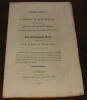
First edition. A very nice copy of this ephemeral item. A single sheet, printed and folded into eight pages - uncut. There is a little foxing to the sheet, and a fractional darkening to the page edges. Clear and clean type. An anonymous essay, looking at the "Roman Catholic Question" following the Union of Great Britain with Ireland. 8 pp. Single sheet, folded and uncut.
Original erotic drawing.
Ca. 1910-20. 10,8 x 10,5 cm. Unsigned drawing in ink. Showing a nude couple against a background of curtains.
Original Photograph of Notre-Dame de Paris
Paris S.P. C1925 Une jolie photographie de la Seine avec Notre-Dame en arrière-plan. Au centre de la photo, on aperçoit les magnifiques bâtiments de la rue du Cloître Notre-Dame et le pont Saint-Louis. À l'arrière-plan se trouve l'église Saint-Gervais. À droite, on distingue le quai d'Orléans. Il s'agit d'une photo assez grande, mesurant 19 cm x 42 cm. Dans l'ensemble, elle est en bon état et présente une légère teinte sépia. Anonyme, à l'exception du titre « Notre-Dame de Paris » en lettres blanches, la photographie date de l'époque où l'échafaudage de la flèche de Notre-Dame était en place. Celui-ci a été installé entre 1920 et 1930 environ. La surface de la photographie présente une légère décoloration, une ou deux petites marques et quelques légers plis, mais dans l'ensemble, elle est très belle. Idéale pour être encadrée. Verso vierge.
An attractive photograph of the Seine across to Notre-Dame. To the centre of the photograph are the beautiful buildings of the Rue du Cloitre Notre Dame and the bridge of Saint-Louis. To the background is the church of Saint Gervais. To the right is the Quai de Orleans. Quite a large photo, it measures 19cm x 42cm. Overall it is good condition, with a light sepia tone. Anonymous apart from the title "Notre-Dame de Paris" in white, the photograph is dated from the scaffolding to the spire of Notre Dame. This was in place from C1920 to Circa 1930. There is light discolouration to the surface layer of the photograph, one or two slight marks, and some light creasing, but overall it is very attractive. Perfect for framing. Blank to verso.
Original Water Colour of a Geisha holding a Shamisen
Japan NP 1775 Une belle grande aquarelle représentant une femme en tenue traditionnelle de geisha, tenant un shamisen * Peinte sur un papier fin de couleur moutarde, celui-ci a été posé sur une feuille de support crème (également en papier fin), elle-même posée sur une feuille plus grande de papier fin. Les trois feuilles réunies donnent beaucoup plus de solidité qu'une seule feuille mince. La peinture elle-même a été réalisée par des experts, mais elle n'est pas signée. (Nous avons fixé le prix comme étant celui d'un artiste non attribuable). La peinture présente quelques petites fissures, des plis et une minuscule perte de peinture, mais il s'agit toujours d'une belle et authentique uvre d'art Edo, dont le style est très similaire à celui des portraits de Katsushika Hokusai (jusqu'à la couleur de fond de la feuille). Elle date d'une période très similaire (entre 1775 et 1800). Le style de la peinture, y compris la représentation détaillée des motifs des vêtements et la posture gracieuse du personnage, est caractéristique des bijin-ga (peintures de belles femmes), qui étaient populaires dans l'art japonais à cette époque. L'utilisation de couleurs vives, comme le bleu profond et le rouge, et de motifs complexes suggère que cette pièce a pu être créée par un artiste influencé par l'ukiyo-e, un genre d'estampes et de peintures sur bois qui a fleuri pendant la période Edo. Des artistes comme Kitagawa Utamaro ou Suzuki Harunobu étaient réputés pour leurs représentations similaires de femmes en tenue élégante. La feuille peinte mesure 70 cm x 24 cm. La plus grande feuille de support (et donc l'ensemble de l'uvre) mesure 81,5 cm x 39 cm. *Le shamisen (???), également connu sous le nom de sangen (??) ou samisen (tous signifiant "trois cordes"), est un instrument de musique traditionnel japonais à trois cordes dérivé de l'instrument chinois sanxian. Les geishas étaient souvent d'habiles joueuses de samisen, qu'elles utilisaient pour divertir leurs clients.
A lovely large water colour, showing a woman in traditional geisha clothing, holding a Shamisen.* Painted onto thin mustard coloured paper, this has been laid onto a cream backing sheet (also thin paper), which has in turn been laid onto a larger sheet of thin paper. The three sheets together giving much more strength than a single thin sheet. The painting itself has been expertly produced, but is unsigned. (We have priced this as an un-attributable artist). The painting has some small cracks with creasing and a tiny amount of paint loss to it, but still a lovely, authentic piece of Edo art, very similar in style to the portraiture of Katsushika Hokusai (even to the background colour of the sheet). It is of a very similar period (between 1775 and 1800). The style of the painting, including the detailed depiction of clothing patterns and the graceful posture of the figure, is characteristic of bijin-ga (paintings of beautiful women), which were popular in Japanese art during this time. The use of vibrant colors, such as deep blue and red, and intricate patterns suggests that this piece may have been created by an artist influenced by ukiyo-e, a genre of woodblock prints and paintings that flourished during the Edo period. Artists like Kitagawa Utamaro or Suzuki Harunobu were renowned for similar depictions of women in elegant attire.It was possibly intended as a scroll painting. The painted sheet measures 70cm x 24cm. The largest backing sheet (and hence work overall) measures 81.5cm x 39cm. *The shamisen (???), also known as sangen (??) or samisen (all meaning "three strings"), is a three-stringed traditional Japanese musical instrument derived from the Chinese instrument sanxian. Geisha's were often skilled Shamisen players, and used them to entertain their customers. .
Original Watercolour: View from Castle at Richmond of the River Swale (North Yorkshire)
1876
Lovely original watercolour painting of the view across the River Swale in North Yorkshire, from Richmond Castle Hill - with a couple in the foreground. The painting is signed, but we cannot agree and the signature. At some point a previous owner was told it was a painting of the river at Richmond Castle, and assumed it was Richmond in Surrey, when in fact Richmond Castle is in Richmond in Yorkshire, and looks over the River Swale, not the Thames! Tipped on to white card, corners cut to resemble being in an album. Watercolour measures: 205 x 350 mm (8 x 13Ÿ inches). Whole on backing: 400 x 495 mm
Peking A Tourist Guide [Hardcover] Anon.
Relié bon état sous jaquette .Contenu propre .Jaquette abîmée . 1960.191 pages . PHOTOS SUR DEMANDE
Merci de nous contacter à l'avance si vous souhaitez consulter une référence dans notre boutique à Authon-du-Perche.
Petit tableau des arts et métiers, ou Les Questions De LEnfance; avec plusieurs sujets gravés en taille-douce, représentant divers ouvriers à leurs travaux
Paris Librairie d'éducation de Pierre Blanchard 1820 Deuxième édition. Ouvrage pédagogique visant à éveiller la curiosité des enfants de l'époque quant à la fabrication des objets qu'ils utilisent au quotidien. Illustré de six pages de gravures sur cuivre (frontispice compris). Les gravures (à l'exception du frontispice) sont présentées à raison de quatre par page et représentent des artisans au travail : imprimeur à la presse, vigneron, ouvrier, etc. Reliure d'époque en cuir pleine peau. Dos avec dorures estompées et étiquette rouge avec titre doré. Couverture légèrement frottée. Pages de garde marbrées. Intérieur très propre et frais. 238 pages avec un catalogue de quatre pages d'autres ouvrages de la Librairie de Pierre Blanchard relié avant la page de titre. 170 x 100 mm
Second edtion. Educational work, encouraging children of the time to be curious about how things they use every day are made. Illustrated with six pages of copper engravings (including frontispiece). The engravings (apart from frontis) are presented as four engravings per page, and show artisans at work - printer at a press, winegrower, labourer, etc. Contemporary full leather binding. Spine with faded gilt, and a red label with gilt title. Mildly rubbed boards. Marbled endpapers. Very clean and fresh inside. 238 pages with a four page catalogue of other works from Librairie de Pierre Blanchard bound before the title page. 170 x 100 mm (6Ÿ x 4 inches). .
Photographie sur papier albuminé de château de Chenonceau Albumen photograph of château de Chenonceau
France S.P. C1880 Première édition. Une jolie photographie originale au papier albuminé du château de Chenonceau. Bon tirage, net et attrayant. Collée sur un fond en papier gris, avec le titre en bas. Le papier gris présente quelques petites entailles et éraflures sur les bords. Le tirage est en excellent état. La photographie mesure 25 cm x 36,5 cm. La feuille mesure 30 cm x 41,5 cm. Le château de Chenonceau, souvent appelé le « château des dames », est un magnifique chef-d'uvre de la Renaissance du XVIe siècle situé dans la vallée de la Loire, en France, qui enjambe de manière unique le Cher sur une structure en forme de pont. Construit principalement entre 1514 et 1522 par Thomas Bohier et son épouse Catherine Briçonnet, il a remplacé une ancienne forteresse médiévale. Il est appelé le château des dames car ce sont des femmes qui ont façonné son héritage, notamment Diane de Poitiers, qui a ajouté le pont enjambant la rivière (1556-1559) et créé de vastes jardins, et Catherine de Médicis, qui a construit la grande galerie (1570-1576).
First edition. An attractive, original albumen photograph of the château de Chenonceau. Good, clean attractive print. Laid onto a grey paper background, with title to the bottom edge. The grey paper has a little nicking and chipping to the edges. The print is in excellent condition. The photograph is 25cm x 36.5cm. The sheet is 30cm x 41.5cm. The Château de Chenonceau, often called the "Ladies' Château," is a stunning 16th-century Renaissance masterpiece in France's Loire Valley, uniquely spanning the River Cher on a bridge-like structure. Built primarily between 1514 and 1522 by Thomas Bohier and his wife Catherine Briçonnet, it replaced an earlier medieval fortress. It is called the Ladies Château as successive women shaped its legacy, including Diane de Poitiers, who added the river-spanning bridge (15561559) and created extensive gardens, and Catherine de Médicis, who built the grand gallery (15701576). .
Photograph of Rococo style furniture
Paris NP C1880 Une belle photographie de trois meubles rococo. Numérotée à la main #385 N.D. Il n'y a pas d'indication sur ce que cela signifie, il pourrait s'agir d'une référence d'un vendeur de meubles ou d'une archive d'une photothèque. Nous pensons qu'il s'agit de la première hypothèse (il faut résister à la tentation de supposer que N.D. est sans date, car en français, il s'agirait de S.D.) La photographie présente quelques plis et marques légères. L'ensemble de meubles figurant sur l'image est de style Louis XV (rococo), caractérisé par des sculptures ornementales, des pieds cabriole et des motifs de coquilles, autant de caractéristiques des arts décoratifs français du milieu du XVIIIe siècle. 24cm x 29cm.
An attractive photograph of three pieces of Rococo furniture. Numbered by hand #385 N.D. There is no indication what this means, it could be a furniture seller's reference, or a photo library archive. We suspect the former (the temptation to assume that N.D. is no date should be resisted, as in French this would be S.D.) The photograph has some light creasing and marking to it. The furniture set in the image is in the French Louis XV (Rococo) style, characterized by its ornate carvings, cabriole legs, and shell motifs, all hallmarks of mid-18th-century French decorative arts. 24cm x 29cm. .
Photograph of the inside of the Mezquita de Córdoba
Cordoba (Spain) NA 1880
An attractive photograph of the pillars inside the Mezquita de Córdoba (The mosque). By an unknown photographer. Circa 1880-1890. Pasted onto a stiff grey mounting card, with calligraphic title beneath ("Del inre af Kathedralen i Cordova"). It bears the number 8 in the negative, so may be a tourist photograph. The photograph is in good condition with a couple of small nicks to the edges. The mounting card is in good clean condition. Dating from this period, it is difficult to distinguish between and albumen print and an early silver gelatin card mounted photograph. We lean towards the latter. Photograph size is 220mm x 280mm. The mount size is 345mm x 410mm.
Photograph of the River & Bridge at Cordoba
Cordoba (Spain) NA 1880 Jolie photographie du fleuve Guadalqivir et du pont romain de Cordoue, avec le Molino de St Antonio au premier plan. Par un photographe inconnu. Vers 1880-1890. Collée sur une carte de montage rigide de couleur grise, avec le titre calligraphié en dessous (orthographié Cordova). La photographie est en bon état, avec une légère décoloration sur le bord gauche. La carte de montage est en bon état de propreté. Datant de cette période, il est difficile de faire la distinction entre un tirage à l'albumine et une photographie montée sur carte à la gélatine argentique. Nous penchons pour cette dernière. La taille de la photographie est de 220 mm x 275 mm. Le format du montage est de 345 mm x 410 mm.
An attractive photograph of the river Guadalqivir, and the Roman Bridge in Cordoba, with the Molino de St Antonio in the foreground. By an unknown photographer. Circa 1880-1890. Pasted onto a stiff grey mounting card, with calligraphic title beneath (Spelt Cordova). The photograph is in good condition, with a slight fading to the left edge. The mounting card is in good clean condition. Dating from this period, it is difficult to distinguish between and albumen print and an early silver gelatin card mounted photograph. We lean towards the latter. Photograph size is 220mm x 275mm. The mount size is 345mm x 410mm .
Photograph of the Rock of Gibraltar
Gibraltar NA 1880
An attractive photograph of the rock of Gibraltar, by an unknown photographer. Circa 1880-1890. Pasted onto a stiff grey mounting card, with gilt border. The photograph is in good condition, with a slight marking to the top left corner of the sky. The mounting card is in good clean condition. Dating from this period, it is difficult to distinguish between and albumen print and an early silver gelatin card mounted photograph. We lean towards the latter. Photograph size is 160mm x 205mm. The mount size is 290mm x 370mm.
Photograph of two gentleman by the Rock of Gibraltar
Gibraltar NA 1880 Jolie photographie de deux hommes posant pour une photo à la base du rocher de Gibraltar (à un point au sud-est, appelé Europa Advance Road), par un photographe inconnu. Vers 1880-1890. Collée sur une carte de montage rigide de couleur grise, avec le titre écrit en calligraphie. La photographie est en bon état, avec seulement de petites imperfections. La carte de montage est en bon état de propreté. Datant de cette période, il est difficile de faire la distinction entre un tirage à l'albumine et une photographie montée sur carte à la gélatine argentique. Nous penchons pour cette dernière. Les dimensions de la photographie sont de 210 mm x 155 mm. Le format du montage est de 33 mm x 245 mm.
An attractive photograph of two gentleman posing for a photograph at the base of the rock of Gibraltar (at a point to the South East, called Europa Advance Road), by an unknown photographer. Circa 1880-1890. Pasted onto a stiff grey mounting card, with title written in calligraphy. The photograph is in good condition, with tiny imperfections only. The mounting card is in good clean condition. Dating from this period, it is difficult to distinguish between and albumen print and an early silver gelatin card mounted photograph. We lean towards the latter. Photograph size is 210mm x 155mm. The mount size is 33omm x 245mm .
Photograph, Paris, May 1968: Hitler hides behind mask of Charles de Gaulle.
Paris NP 1968 Grande photographie argentique noir et blanc (40 cm x 29,5 cm) d'un mur de Paris en mai 1968. La photographie montre une affiche d'Hitler cachée derrière un masque de Charles de Gaulle, qui porte la Croix de Lorraine en guise de brassard. Ce dernier porte la Croix de Lorraine en guise de brassard (les forces françaises libres de la Seconde Guerre mondiale, sous la direction de de Gaulle, avaient utilisé ce symbole). Le tout est épinglé sur un fond où l'on peut lire plusieurs fois « CRS SS ». Les CRS (compagnies républicaines de sécurité) étaient la force de réserve nationale chargée de gérer les grèves et les manifestations. En fait, ce slogan remonte à 1948, date de la création des CRS. Le mur montre également une pancarte écrite à la main pour une manifestation dans la soirée du 19 à St Lazare. Les manifestations publiques étaient souvent (et sont encore souvent) organisées dans l'espace devant la gare St Lazare. Il s'agit très certainement d'un grand tirage d'un reportage ou d'une photographie de presse de l'époque. Au verso, on peut lire « 68 » à l'encre rouge. L'affiche centrale a été utilisée lors des émeutes étudiantes de 1968, et bien que nous n'ayons pas été en mesure de retrouver cette photographie, il existe un « fantôme internet » de celle-ci, qui indique qu'elle a été prise en mai 1968. L'état de l'affiche est excellent, elle ne présente aucune marque ou salissure significative.
A large (40 cm x 29.5cm) black and white silver print / silver gelatin photograph of a Paris wall in May 1968. The photograph shows a poster of Hitler hiding behind a mask of Charles de Gaulle. He is wearing the Cross of Lorraine as his armband. (The Free French forces in world war 2, under de Gaulle, had used this symbol). This is pinned over a background which states "CRS SS" multiple times. The CRS (compagnies républicaines de sécurité) was the National Reserve Force to deal with strikes and demonstrations. In fact this slogan dates back to 1948 when the CRS was first formed. The wall also shows a hand written sign for a manifestation in the evening of the 19th at St Lazare. Public demonstrations were often (and are still often) held in the space in front of the St Lazare station. This is almost certainly a large print of a reportage / press photograph of the time. In red ink to the reverse is written "68." The central poster was used in the 1968 student riots, and although we have been unable to trace this photograph, there is an "internet ghost" of it, which states it was taken in May 1968. Condition is excellent, with no significant marks or dirt to it. .
Photogravure of gondolas on the Grand Canal, Venice
Paris Ch. Wittmann 1896 Bel exemple de photogravure montrant des gondoles sur le Grand Canal et l'île de San Giorgio au loin, Venise. Taille de l'image en noir et blanc : 150 x 200 mm (6 x 7Ÿ inches). Image complète, y compris la bordure : 250 x 330 mm. Très propre et frais. Parfait pour l'encadrement. Le verso est vierge.
Lovely example of a photogravure showing gondolas on the Grand Canal, and San Giorgio Island in distance, Venice. B/ w image size: 150 x 200 mm (6 x 7Ÿ inches). Full item, including border: 250 x 330 mm. Very clean and fresh. Perfect for framing. Blank to verso. .
ponts et chaussées Commune de Ports, Département d' Indre Loire Service Hydraulique
Indre-Loire Service Hydraulique 1853 Plan manuscrit dépliant de la commune de Ports et de ses environs. 8 pages pliées et collées, dessinées d'un seul côté. La première page est le texte / permissions et autorisations signées et datées (avec cachet officiel) par les personnes impliquées dans le projet. (4 personnes différentes ont écrit des commentaires et signé le plan). Ce plan semble avoir été établi pour accompagner un projet de nettoyage / réparation des routes et des ponts de la région. Joli plan de la région, colorié à la main, avec une section supplémentaire ajoutée sur papier (voir photos) montrant l'ensemble de la commune de Ports, y compris des sections de la rivière Vienne. Le plan est dessiné sur du papier calque / glassine, collé sur une carte rigide. Ce dernier est un peu assombri, mais sans défauts significatifs. Les détails et la qualité du travail sont agréables. Malgré le titre, il n'y a pas de pont dans cette commune. 290 par 1820mm
A folding manuscript map / cadastral plan of the commune of Ports and the surrounding area. 8 pages folded and pasted together, drawn to one side only. The first pate is the text / permissions and authorisations signed and dated (with official stamp) by individuals involved with the project. ( 4 different individuals have written comments and signed the plan). This seems to have been drawn up to accompany a cleaning / repair project for the roads and bridges of the area. Attractive hand coloured plan of the area, with extra section added on paper (see photos) showing the whole of the commune of Ports, including sections of the river Vienne. The plan is drawn on tracing paper / glassine, pasted to stiff card. This is a little darkened, but without significant flaws. Nice detailing and quality of work. Despite the title, there are no bridges in this commune. 290 by 1820mm (11œ by 71Ÿ inches). .