 Write to the booksellers
-
Language
French (1299)
Latin (1)
-
Century
16th (1)
17th (11)
18th (17)
19th (79)
20th (891)
21st (129)
-
Countries
Belgium (991)
Canada (1)
France (291)
Switzerland (17)
-
Syndicate
ALAC (1)
ILAB (68)
NVVA (7)
SLACES (7)
SLAM (58)
Studien zur Theologie der Logienquelle
Münster, Verlag Aschendorff 1972 viii + 357pp., hardcover (editor's cloth), 24cm., in the series "Neutestamentliche Abhandlungen. Neue Folge" vol.8, Good condition, R78508
Biographia venerabilis servi dei Bartholomaei Holzhauser vitae communis clericorum saecularium restauratoris. Accedunt ejusdem in Apocalypsim commentarii plane admirabiles
Bamberg, Goebhardt 1784 512pp.with frontispice (engraved portrait), 22cm., text in Latin, modern blind wrappers, few foxing and minor spots in text, G, [content: Pars I, complectens vitam venerabilis servi dei Bartholomaei Holzhauser. Quorum primum vitam ejus usque ad sacerdotium pertractat, secundum illam a sacerdotio usque ad obitum perducit, tertium facta quaedam memoratu digna cum illius obitu enarrat. Juxta exemplar Moguntinum typis Joannis Joachimi Franckenbergii a.d. 1737, Pars II, sistens venerabilis servi dei Bartholomaei Holzhauser instituti clericorum juxta sacros canones in Germania restauratoris interpretationem Apocalypsis usque ad capitis decimi quinti versum quintum]
Jesus and the servant. The influence of the servant concept of Deutero-Isaiah in the new testament
London, S.P.C.K. 1959 xiii + 230pp., 1st edition, 22cm., hardcover (editors black cloth, bit used, corners slightly bumped), good condition, R78454
Studien zur Markinischen Christologie. Mk 8,27 - 9,13 als Zugang zum Christusbild des zweiten Evangeliums
Münster, Aschendorff 1969 viii + 150pp., 24cm., softcover with a few stains, in the series "Neutestamentliche Abhandlungen. Neue Folge" Volume 6, text is clean and bright, good, R78737
Exodus, Volume 2 : Chapters 7:14 - 19:25 [in: Historical Commentary on the Old Testament]
Kampen, Kok 1996 xiii + 466pp., 24cm., publisher's softcover, text and interior are clean and bright, very good condition, R120192
Exodus, Volume 3 : Chapters 20-40 [in: Historical Commentary on the Old Testament]
Leuven, Peeters 2000 xiv + 737pp., 24cm., publisher's softcover, text and interior are clean and bright, very good condition, weight: 1.3kg., R120187
Moise et le retour des dieux
Safed 2003 229 pages in8. 2003. broché. 229 pages. Cet essai de Gérard Huber examine la figure de Moïse à la lumière de découvertes archéologiques égyptologiques et psychanalytiques. Il explore les origines du conflit entre polythéisme et monothéisme en analysant les textes bibliques talmudiques et midrashiques
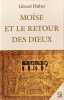
Très bon état
Das Gesetz bei Paulus. Ein Beitrag zum Werden der paulinischen Theologie
Göttingen, Vandenhoeck & Ruprecht 1978 195pp., 24cm., in the series "Forschungen zur Religion und Literatur des Alten und Neuen Testaments" vol.119, cloth, 2 stamps, else VG, R70047
L'évangile et les évangiles
Paris, Beauchesne 1940 viii + 250pp.+ frontispice, reliure cart. (dos en toile avec titre doré), 19cm., dans la série "Verbum salutis" vol.XI
Evangile selon saint Marc
Paris, Beauchesne 1927 470pp.+ frontispice & qqs.cartes, 9e éd., reliure cart. (qqs. traces d'usage), dans la série "Verbum salutis" II, bon état, R44703
Evangile selon saint Marc
Paris, Beauchesne 1929 470pp.+ frontispice & qqs.cartes, 16e édition revue, br.orig., dans la série "Verbum salutis" II
Saint Paul - Epitre aux Romains
Paris, Beauchesne 1940 vii + 528pp.+ frontispice, reliure cart. (dos en toile avec titre doré), 10e éd., 19cm., dans la série "Verbum salutis" vol.X
Demonstratio evangelica, ad serenissimum Delphinum [2 volumes]
Amstelodami [Amsterdam], apud Janssonio-Waesbergios, & Henricum & Theodorum Boom 1680 Complet work in 2 volumes:[40] + 1188pp. (continuous pagination), Volume I has a second title page engraved (by K. Decker), "Editio altera emendatior, in qua addimenta auctoris singula suis locis sunt inserta" (this is the second edition, the first dates from 1679), uniform contemporary full vellum bindings (intact and in very good condition) with author and title inscribed on spine in contemporary black ink, 21cm., text in Latin with some excerpts in Hebrew and in Greek, text clean and bright, good condition, [HUET Pierre Daniel, 1630-1721, French scholar and bishop of Soissons and afterwards of Avranches, known for his skepticism and his anti-Cartesian views. In his "Demonstratio evangelica" he also attacks Spinoza's "Tractatus theologico-politicus". Huet makes an attempt to prove that all pagan deities and pagan belief can be traced back to and originate from the source of Moses and the Old Testament], R96561
SAINT PAUL ET ROME (N.HUGEDE)
Les Belles Lettres - Desclée de Brouwer 1986 231 pages 13 4x2x20 8cm. 1986. Broché. 231 pages. Cet ouvrage de N. Hugedé publié par Desclée de Brouwer explore la vie et le message de saint Paul en lien avec Rome. Il se présente comme un guide de lecture et de voyage permettant de découvrir l'impact de l'apôtre sur la ville éternelle


Tabernacle, Table, Ark, and Text. Richard of Saint Victor on the Interpretation of Scripture
, Brepols, 2026 Paperback, Pages: 234, Size:156 x 234 mm, Languages: English, Latin. ISBN 9782503623788.
Summary Richard of Saint Victor (d. 1173) is widely recognized for his commentaries on the spiritual senses of Scripture and for his theological contributions to Trinitarian doctrine, the Christian life, and contemplation. This study highlights two additional and often overlooked dimensions of his thought: his sustained reflections on the art of biblical interpretation, both literal and spiritual, and his detailed interpretations of the Mosaic Tabernacle in the desert and its contents. It presents improved Latin texts, together with English translations, of Richard's Literal Explanation of the Tabernacle and his Allegories on the same subject. The result is a fresh appreciation of Richard's interest in the literal meaning of the Old Testament's sacred architecture, and of his theory and practice of biblical interpretation. TABLE OF CONTENTS Introduction The Scope of This Work Victorine Biblical Interpretation: Literal and Spiritual Tabernacle: Revelations and Concealment The Tabernacle in Its Biblical Setting Origen on the Tabernacle Chapter One. Richard of Saint Victor, Explanation of the Literal Meaning of the Tabernacle Introduction Text Translation Commentary Conclusions and Questions Chapter Two. Richard of Saint Victor, Allegoriae tabernaculi foederis Introduction Text Translation Allegoriae and De archa Moysis Why did Richard Write the Allegories? For Whom? Allegories on the Tabernacle and Explanation of the Literal Meaning of the Tabernacle Chapter Three. The Tabernacle, Ark, Table and Menorah in the Liber exceptionum, The Menorah in Sermones centum 81, The Table in Sermones centum 95 Introduction Liber exceptionum 2.3.2, 9, 11 Comparison of the Meanings of the Ark in the Allegories and Liber exceptionum 2.3.9. Sermones centum 81: On the Feast of St. Gregory Sermones centum 95: On the Table of Proposition from the Book of Exodus in Praise of Sacred Scripture Conclusion Chapter Four. The Table of the Scriptures Allegories, lines 258-337: The Table Liber exceptionum: Prologues to the Second Part Richard's Theology of Scriptural Interpretation Conclusion Chapter Five. Into the Promised Land: The Ark of the Covenant in De Extermianatione mali et promotione boni Introduction: Res gestae De exterminatione mali et promotione boni Commentary Summary & Conclusions Works Cited Indices The Scriptures Ancient & Medieval Authors Modern Authors
Der Mensch zwischen zwei Welten. Der Dualismus der Texte von Qumran (Höhle 1) und der Damaskusfragmente, Ein Beitrag zur Vorgeschichte des Evangeliums
Zürich, Zwingli-Verlag 1959 132pp., 22cm., softcover, in the series "Abhandlungen zur Theologie des Alten und Neuen Testament" volume 34, good condition, R78473
Dionysii bar salibi - interpretatus est I. Sedlager Fasc. I. Scriptores Syri - Corpus scriptorum christianorum orientalium Vol
Carolus Poussielgue 1906 in8. 1906. Broché.
couverture cartonnée couverture d'origine conservée (annotée sur son premier plat très rares notes au crayon à papier
Muhammad. La vie de du prophète. l'Envoyé d'Allah. Tome 2
Allbouraq Beyrouth - Paris, Éditions Albouraq, 2001. Grand In-8 relié plein cartonnage éditeur de 608 pages. Traduction française, introduction et notes par 'Abdurrahmân Badawî. Le Tome II est consacré aux campagnes militaires, à la prise de La Mecque, au pèlerinage d'adieu et à la mort du Prophète. Bon état

Toutes les expéditions sont faites en suivi au-dessus de 25 euros. Expédition quotidienne pour les envois simples, suivis, recommandés ou Colissimo.
Muhammad. La vie de du prophète. l'Envoyé d'Allah. Tome 1
Allbouraq Beyrouth - Paris, Éditions Albouraq, 2001. Grand In-8 relié plein cartonnage éditeur de 654 pages. Traduction française, introduction et notes par 'Abdurrahmân Badawî.Écrit moins d'un siècle et demi après la mort de Muhammad, le travail d'Ibn Ishâq est le texte fondateur à partir duquel toutes les biographies ultérieures ont été construites. Il compile les traditions orales familiales, les récits de batailles (maghâzî) et les généalogies tribales de Médine. Sans la recension d'Ibn Hichâm (qui a toutefois élagué certains passages théologiques ou poétiques jugés moins pertinents), ce texte capital aurait été perdu. Le Tome I traite de la généalogie, de la naissance, de la jeunesse à La Mecque et de l'Hégire (l'émigration vers Médine en 622) jusqu'à la bataille de Badr. Bel exemplaire

Toutes les expéditions sont faites en suivi au-dessus de 25 euros. Expédition quotidienne pour les envois simples, suivis, recommandés ou Colissimo.
Leitwort - Tendenz - Synthese. Programm und Praxis in der Exegese Martin Bubers
Abo, Abo Akademi 1975 308pp., 21cm., in the series "Meddelanden Fran Stiftelsens For Abo Akademi Forskningsinstitut" vol.2, softcover, few stamps, G
Give them something to eat yourselves, Mt. 14:16 : Solidarity-Inspired Intervention and Integral Human Development in the Parish
Rome, Pontificia Universitas Lateranensis 2008 vii + 213pp., 24cm., Doctoral dissertation, softcover, stamp on title page, text and interior are clean and bright (looks unread), text in English, good condition, R120331
Vies de saints, vie de famille Representation et systeme de la parente dans le royaume merovingien (481-751) d'apres les sources hagiographiques,
Turnhout, Brepols, 2001 Hardback, 533 p., 156 x 234 mm. ISBN 9782503510545.
Language : French.
l'origine des femmes martyres. La m re de 2 Maccab es 7
, Brepols, 2022 Paperback, 308 pages, Size:156 x 234 mm, Language(s):French, Greek, Hebrew. ISBN 9782503594798.
Summary Le pr sent ouvrage porte sur la premi re martyre de la litt rature monoth iste, c'est- -dire la m re anonyme du 7 me chapitre du 2 me livre des Maccab es (2 M). L'ex g se qui y est faite d montre, gr ce une critique structurelle et des analyses narratologique, comparative et philologique, que ce personnage est central, autant dans le texte deut rocanonique que pour la martyrologie, bien qu'il soit g n ralement clips dans la litt rature savante. Or, la particuli re virilit des femmes martyres d'hier et d'aujourd'hui s'y inscrit en primeur au verset 7, 21 et la nouvelle traduction propos e par l'auteure bouscule les id es re ues. En effet, les habituels sentiments f minins deviennent une pens e f minine et le m le courage fait place une col re virile ou humaine , selon que l' pith te est compar e au f minin dans le parall lisme crois du verset ou mise en parall le avec les col res inhumaines de certains personnages masculins du livre, dont le roi Antiochos IV piphane et les guerriers jud ens. D'ailleurs, les analyses compar es des l ments identitaires de la martyre avec ceux du roi s leucide permettent de constater que son trouble dans le genre s'observe sur divers plans et contribue ind niablement son unicit . C'est sans compter que les discours de la m re repr sentent la plus importante innovation du livre, et ce, tant sur le plan anthropologique que th ologique. En somme, l'ouvrage montre que la m re de 2 M 7 est belle et bien minemment admirable et digne de bonne m moire (2 M 7, 21). TABLE OF CONTENTS Remerciements Abr viations Introduction Chapitre I. Pour introduire la martyre Chapitre II. Au centre de 2 M Chapitre III. Au centre de 2 M 7 Chapitre IV. Une col re virile et humaine Chapitre V. Une col re humaine et des col res inhumaines Chapitre VI. Une femme virile et un homme f minin Conclusion Traduction Bibliographie Index
Iuliani Aeclanensis Expositio libri Iob - Tractatus prophetarum Osee, Iohel et Amos. Operum deperditorum fragmenta [Corpus Christianorum. Series latina, 88]
Turnhout, Brepols 1977 xxxiv + 431pp., 25cm., dans la série "Corpus Christianorum. Series latina" vol.88, reliure toile de l'éditeur avec titre doré, bel état, ISBN 2-503-00881-3, [introduction en français, texte en latin]
Iuliani Aeclanensis Expositio libri Iob - Tractatus prophetarum Osee, Iohel et Amos. Operum deperditorum fragmenta [in: Corpus Christianorum Series latina, 88]
Turnhout, Brepols 1977 xxxiv + 431pp., 25cm., dans la série "Corpus Christianorum Series latina" volume 88, reliure toile de l'éditeur avec titre doré, petit cachet ex-libris sur la feuille de garde blanche et au verso de la page de titre, texte frais (jamais lu), bel état, ISBN 2-503-00881-3, [introduction en français, texte en latin]

