 Write to the booksellers
-
Type
Autograph (15)
Book (51176)
Magazine (288)
Manuscript (2)
Maps (1)
New book (1)
Old papers (1)
Photographs (1)
-
Latest
Last 24h (41)
Last 3 days (31)
Last month (1187)
Last week (48)
-
Language
Dutch (6)
English (43)
Finnish (1)
French (51355)
German (19)
Greek (5)
Italian (20)
Japanese (2)
Latin (21)
Polish (1)
Portuguese (3)
Spanish (7)
Swedish (2)
-
Century
16th (61)
17th (194)
18th (1297)
19th (3630)
20th (22171)
21st (3801)
-
Countries
Belgium (6728)
Brazil (24)
Canada (6)
China (2)
Côte d'Ivoire (69)
Denmark (1046)
France (38695)
Germany (3)
Greece (3)
Netherlands (269)
Switzerland (4640)
-
Syndicate
ALAC (6)
CLAM (37)
CNE (6)
ILAB (19983)
NVVA (998)
SLACES (907)
SLAM (17650)
SNCAO (41)
L'ERE DU VERSEAU - FIN DE L'ILLUSION HUMANISTE
ROBERT LAFFONT. 1970. In-8. Broché. Etat d'usage, Couv. convenable, Dos plié, Intérieur frais. 349 Pages + Un dépliant publicitaire de l'éditeur - Quelques planches photos en noir et blanc - Couverture contre pliée. . . . Classification Dewey : 100-PHILOSOPHIE ET DISCIPLINES CONNEXES
Classification Dewey : 100-PHILOSOPHIE ET DISCIPLINES CONNEXES


LES TEMPS MESSIANIQUES
EDITIONS J'AI LU N°A381. 1980. In-12. Broché. Bon état, Couv. convenable, Dos satisfaisant, Intérieur frais. 286 pages.. . . . Classification Dewey : 100-PHILOSOPHIE ET DISCIPLINES CONNEXES
"Collection ""J'ai Lu l' Aventure mystérieuse"". Classification Dewey : 100-PHILOSOPHIE ET DISCIPLINES CONNEXES"
La dottrina morale. Passi scelti e ordinati da Concetto Marchesi. Seconda edizione.
Bari, Guis. Laterza & Filgi 1932, 205x125mm, 84pagine, in brossura.
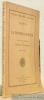
Pour un paiement via PayPal, veuillez nous en faire la demande et nous vous enverrons une facture PayPal
Werke in 5 Bänden. Herausgegeben und übersetzt von Manfred Rosenbach.
Darmstadt, Wissenschaftliche Buchgesellschaft 1995, 195x120mm, broschiert. Mit Schuber.
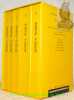
Text lateinisch - deutsch, Pour un paiement via PayPal, veuillez nous en faire la demande et nous vous enverrons une facture PayPal
Moral and political essays
Cambridge, Cambridge University Press 1998 xl + 324pp., 22cm., in the series "Cambridge texts in the history of political thought", softcover, VG, [English translation], ISBN 0-521-34818-8, F70810
Epistolae morales. Recognovit, emendavit, notisque criticis illustravit Iohannes Schweighaeuser. 2 volumes. Volumen primun: Epist. I-LXXXIX. Volumen secundum: Epist. XC-CXXIV.
Argentorati (Strassbourg), Typographia Societatis Bipotinae 1809, 225x145mm, 371 + 414pages, cartonnage. Etiquette de titre au dos manuscrite.
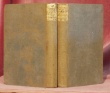
Pour un paiement via PayPal, veuillez nous en faire la demande et nous vous enverrons une facture PayPal
L. Annaei Senecae Philosophi. (Opera). 3 Volumes. I: Continens opuscula moralia. II: In quo epistolae et quaestiones naturalis. III: Rhetoris suasoriae, ac controversiae, cum declamationum excerptis.
Patavii, Ex typographia Seminarii 1728, 160x90mm, 12 ff., 555 + 740 + 594pages, demi-parchemin à coins, plats papier peint, tranches jaspées. Bel exemplaire.
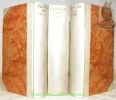
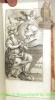
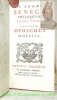
1 titre gravé, Pour un paiement via PayPal, veuillez nous en faire la demande et nous vous enverrons une facture PayPal
Par secunda sive opera declamatoria. Quae recognovit et selectis Fabri, Schotti, Schultingii aliorumque commentariis illustravit M. N. Bouillet. Volumen unicum.
Parisiis, Nicolaus Eligius Lemaire 1831, 215x140mm, 702pages, reliure demi-veau à coins de l’époque, étiquette de titre rouge, plats papier marbré. Légères rousseurs. Belle reliure de l'époque.
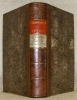
Pour un paiement via PayPal, veuillez nous en faire la demande et nous vous enverrons une facture PayPal
Libellus. De tranquillitate animi explicatus.
Lugduni Batavorum (Leyden), M. Cijfveer 1825, 220x135mm, 184Seiten, Pappband. Mute Abdeckung. Handschriftliche Titel-Tag auf der Rückseite.

Pour un paiement via PayPal, veuillez nous en faire la demande et nous vous enverrons une facture PayPal
EPISTULAE II: L. ANNAEI SENECAE AD LUCILUIM EPISTULAE MORALES
OXONII, E Typ. Clarendoniano, 1965, in-8 hardcover, stamp in title page, VIII, pp 325-554. VERY GOOD CONDITION
Nombreux titres disponibles en Philosophie.
Selecta Senecae philosophi opera. In Gallicum versa, opera et sludio P.F.X.D.
Paris, J.Barbou, 1761. In-12, 320 p.
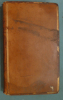

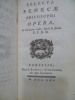
Relié plein veau brun, dos lisse orné de fleurs dorées en partie effacées- triple filet doré d'encadrement partiellement effacés sur les plats- tranches dorées- pages de gardes décollées- manque de cuir aux coiffes, coins inférieurs émoussés et celui du dos supérieur aussi. Intérieur en très bon état.
Phone number : 04 96 21 81 64
Pensées philosophiques.
Pensées philosophiques d un citoyen de Montmartre,La Haye 1756, in-12, 114 pages. Relié avec: Lettre de M. des B* avocat en parlement, à M. le chevalier de *** sur les spectacles.Paris Veuve Lottin et J. H. Butard 1756, (1)-160 pages(2). Basane marbrée époque, dos lisse orné, tranches rouges. Trois découpages marginaux sur la page de titre du premier volume pour faire disparaître un nom. 260 gr.
L'ouvrage du père Senemaud "Pensées philosophiques d'un citoyen de Montmartre" est un des nombreux ouvrages de contreverse à propos des "Pensées philosophiques" de Diderot qui furent condamnées au feu par un arrêt du Parlement de Paris du 7 juillet 1746. L'ouvrage de Charles Desprez de Boissy est une critique sévère des spectacles en général et du théâtre en particulier, accusé de corrompre la jeunesse et d’inciter les femmes à la coquetterie.
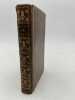
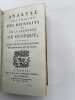
Analyse des traités des bienfaits et de la clémence de Sénèque Précédée d'une vie de ce Philosophe, plus ample que toutes celles qui ont paru
Chez Barbou A Paris, Chez Barbou, 1776. In-12 relié plein veau marbré de l'époque, dos lisse, fleurons dorés, pièce de titre de maroquin rouge, tranches dorées. Triple fliet doré sur les plats.1 ff blanc, fx-titre, Titre, VIII + 421 pages, 2ff non chiffrés et 1 ff blanc. Coiffe arasée et coins émoussés sinon Bon état
Toutes les expéditions sont faites en suivi au-dessus de 25 euros. Expédition quotidienne pour les envois simples, suivis, recommandés ou Colissimo.
Annae Senecae Philosophi Opera quae exstant omnia a justo lipsio emendata et scholiis illustrata
Folio Antverpiae, Ex officina Plantiniana Balthasaris Moreti, 1682. Editio 4a atque ab ultima Lipsii manu, aucta Liberti Fromondi scholiis ad Quaestiones naturales et Ludum de morte Claudii Caesaris, quibus in hac editione accedunt eiusdem Liberti Fomondi ad quaestiones naturales Excursus nobi. Grand in-Folio reliure postérieure demi veau. La reliure et abimée et le plat détaché. Un feuillet blanc à manque angulaire, faux titre, Frontispice, page de titre gravée. 6 feuillets non chiffrés contanant 2 belles gravures hors texte, XXXV pages + 911 pages ornées de lettrines et bandeaux. Édition augmentée des "Excursus novi" de L. Froidmont. L'intérieur est frais, grand de marge. Reliure à restaurer.
Toutes les expéditions sont faites en suivi au-dessus de 25 euros. Expédition quotidienne pour les envois simples, suivis, recommandés ou Colissimo.
Apprendre à vivre
Arléa Paris, Arléa, 1990. In-8 broché, couverture à rabats de 173 pages. Très bon état
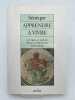
Toutes les expéditions sont faites en suivi au-dessus de 25 euros. Expédition quotidienne pour les envois simples, suivis, recommandés ou Colissimo.
DE LA BRIEVETE DE LA VIE suivis d'un COMMENTAIRE DE DENIS DIDEROT
Rivages poche / Petite Bibliothèque. 1991. In-12. Broché. Bon état, Couv. convenable, Dos satisfaisant, Intérieur frais. 90 pages.. . . . Classification Dewey : 210-Philosophie et théorie
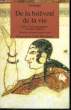
Traduit du latin par Colette Lazam. Classification Dewey : 210-Philosophie et théorie
De la clémence. Texte et traduction (en 2 vol.).
Paris Les Belles Lettres, coll. "des universités de France" 1921 2 vol. broché 2 vol. in-8, brochés, paginations diverses. Texte établi et traduit par François Préchac. Bon état général.
"De la tranquilité de l'âme; précédé d'un essai de Paul Veyne. Collection : Petite Bibliothèque Rivage."
Paris, Rivages, 1988. 12 x 17, 153 pp., broché, bon état.
traduit du latin par Colette Lazam.
Dialogues : De la clémence -
Texte établi et traduit par François Préchac - Paris : "Les Belles Lettres (Collection des Universités de France publiée sous le patronage de l'association Guillaume Budé), 1961 - deuxième édition - in-8 broché - texte et traduction en regard - bon état -
Tous nos livres sont visibles sur notre site : https://www.livrepoesie.com/
Dialogues de la colère. Tome premier: DE IRA. Texte établi et traduit par A. Bourgery.
Paris, Société d’édition “Les Belles Lettres” 1922, 205x135mm, 109pages, broché.
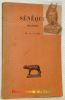
Pour un paiement via PayPal, veuillez nous en faire la demande et nous vous enverrons une facture PayPal
Dialogues. Tome II seul : De la vie heureuse - De la brièveté de la vie.
Couverture souple. Broché. 160 pages.
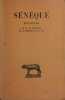
Livre. Edition bilingue, texte latin et traduction. Texte établi et traduit par A. Bourgery. Société d'Editions les Belles Lettres (Collection : des universités de France. Association Guillaume Budé), 1955.
DIALOGUES- TOME IV : DE LA PROVIDENCE - DE LA CONSTANCE DU SAGE - DE LA TRANQUIILITE DE L'AME - DE L'OISIVETE
"SOCIETE D'EDITION ""LES BELLES LETTRES"". NON DATE. In-12. Broché. Etat d'usage, Couv. convenable, Dos satisfaisant, Papier jauni. 129 pages. Quelques pliures.. . . . Classification Dewey : 100-PHILOSOPHIE ET DISCIPLINES CONNEXES"
COLLECTION DES UNIVERSITES DE FRANCE. Texte établi et traduit par René Waltz. Classification Dewey : 100-PHILOSOPHIE ET DISCIPLINES CONNEXES
Dialogues. Tome IV. De la Providence - De la constance du sage - De la tranquilité de l’âme - De l’oisiveté. Texte établi et traduit par René Waltz. Collection des Universités de France, publiée sous le patronnage de l’Association Guillaume Budé.
Paris, Société d’Edition Les Belles Lettres 1927, 200x135mm, 129pages, broché. Dos insolé. Pages non coupées.
edition bilingue français-latin, Pour un paiement via PayPal, veuillez nous en faire la demande et nous vous enverrons une facture PayPal
Dialogues. Tome IV seul : De la providence. - De la constance du sage. - De la tranquillité de l'âme. - De l'oisiveté.
Couverture souple. Broché. Environ 200 pages. Légèrement défraîchi.
Livre. Edition bilingue, texte latin et traduction. Texte établi et traduit par René Waltz. Société d'Editions les Belles Lettres (Collection : des universités de France. Association Guillaume Budé), 1927.

