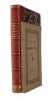
Berlin, Dietz, 1957-1968, gr. in-8°, Leinenbände.
Band: 1 , 2, 3, 4, 6, 8, 16, 17, 19, 21, 22, 23, 24, 25, Verzeichnis.
Phone number : 41 (0)26 3223808
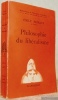
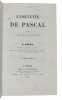
Coll. "Bibliothèque socialiste internationale", Paris, éd. Marcel Giard, 3e édition, gd. in-12, demi-chagrin brun foncé, plats papier marbré "cailloux" rouge et brun, fleurons, double filets, auteur et titre dorés sur dos lisse, couverture d'origine conservée, reliure de l'époque, XXX - 272 pp., préface de Friedrich Engels, table des matières, signature sur la première de couverture de H. Hurtel, portrait de Marx extrait d'un article de journal collé sur la page face au titre ainsi qu'une petite "vignette" reprenant un texte de H. Hurtel en 1920, "Ouvrage paru en juin 1847 à Bruxelles en son exil. Son titre constitue une reprise inversée de l'ouvrage de Proudhon, Philosophie de la misère. Le texte est écrit en français bien que la plupart des œuvres de Marx soient écrites en allemand. Il s'agit d'une critique, reprenant point par point les arguments avancés dans Philosophie de la misère et tentant de les démonter ou de montrer qu'ils enfoncent des portes ouvertes". Reliure agréable. Pas courant Très bon état de la reliure; papier uniformément jauni avec quelques très petites rousseurs éparses
Paris Éditions Sociales 1950 In-8 Broché Satisfaisant
couverture au titre blanc sur fond terre de Sienne ; 142pp ; Publié dans la collection "Les éléments du communisme"
Editions sociales internationales, 1935. In-8°, broché.
[15479]
[Slovene Littoral, Printed for Agitprop, Presumably 1944]. Small4to. In the original stapled printed grey wrappers. Previous owner's name in light pencil to front wrapper and title-page. A few brown spots to title-page, otherwise a very fine and clean copy. 52 pp.
Exceedingly rare Slovenian translation of the Communist Manifesto. This virtually unknown edition is not to be found in any bibliography nor on OCLC. The present edition of the Manifesto was printed and distributed by Agitprop, the Communist Party institution that controlled education, publishing, libraries and mass media from the end of World War II until 1952. Presumably the present publication was among the first publications made by Agitprop. Until the end of World War II Agitprop was essentially an underground movement whose goal was to pave the way for communism after the war. After the resistance in Slovenia started in summer 1941, Italian violence against the Slovene civilian population escalated and to counter the Communist-led insurgence, the Italians sponsored local anti-guerrilla units, formed mostly by the local conservative Catholic Slovene population that resented the revolutionary violence of the partisans. After the Italian armistice of September 1943, the Germans took over both the Province of Ljubljana and the Slovenian Littoral. They united the Slovene anti-Communist counter-insurgence into the Slovene Home Guard and appointed a puppet regime in the Province of Ljubljana. The anti-Nazi resistance however expanded, creating its own administrative structures as the basis for Slovene statehood within a new, federal and socialist Yugoslavia.In 1945, Yugoslavia was liberated by the underground resistance and soon became a socialist federation known as the People's Federal Republic of Yugoslavia. Slovenia joined the federation as a constituent republic, led by its own pro-Communist leadership and Agitprop became the official mass media institution.Not in OCLC
[Slovenia], Agit-Prop komisija centralnega komiteta komunistiène partije Slovenije [Agitprop Commiss Small4to (110x145 mm). In the original black/red printed stapled wrappers. With a few occassional blue underlignings. 31, (1) pp.
Rare Slovenian translation of the Communist Manifesto, printed by an undergorund partisan press. The present edition of the Manifesto was printed and distributed by Agitprop, the Communist Party institution that controlled education, publishing, libraries and mass media from the end of World War II until 1952. Presumably the present publication was, if not the very first, then among the first publications made by Agitprop. Until the end of World War II Agitprop was essentially an underground movement whose goal was to pave the way for communism after the war. After the resistance in Slovenia started in summer 1941, Italian violence against the Slovene civilian population escalated and to counter the Communist-led insurgence, the Italians sponsored local anti-guerrilla units, formed mostly by the local conservative Catholic Slovene population that resented the revolutionary violence of the partisans. After the Italian armistice of September 1943, the Germans took over both the Province of Ljubljana and the Slovenian Littoral. They united the Slovene anti-Communist counter-insurgence into the Slovene Home Guard and appointed a puppet regime in the Province of Ljubljana. The anti-Nazi resistance however expanded, creating its own administrative structures as the basis for Slovene statehood within a new, federal and socialist Yugoslavia.In 1945, Yugoslavia was liberated by the underground resistance and soon became a socialist federation known as the People's Federal Republic of Yugoslavia. Slovenia joined the federation as a constituent republic, led by its own pro-Communist leadership and Agitprop became the official mass media institution.
"MARX, KARL (+) FRIEDRICH ENGELS (+) D. B. RIAZANOV (+) HAYIM HOLMSHTOK (+) M. LEVITAN.
Reference : 53496
(1924)
Moskve [Moscow], Tsentraler Farlag Far Di Felker Fun F. S. S. R., 1924. 16mo. With the original front wrapper (lacking spine and back wrapper). With previous owner's name to front wrapper (Henoch Gelernt). Front wrapper and last leaf with a few nicks, otherwise fine and clean. 181, (3) pp.
Rare first Soviet Yiddish translation of Marx and Engel's Communist Manifesto. From the library of Jewish activist Henoch Gelernt.
Hamburg: Otto Meissner, 1885. 8vo. Very nice contemporary black half calf with gilt spine. A bit of wear to extremitoes. Inner front hinge a little weak. Title-page a littel dusty, but otherwise very nice and clean. Book-plate (Arnold Heertje) to inside of front board. XXVII, (1), 526 pp. + 1 f. With pp. 515-16 in the first state (""Consumtionsfonds"" with a C) and with the imprint-leaf at the end.
Scarce first edition of the second volume of ""The Capital"", edited from Marx's manuscripts by Friedrich Engels and with a 20 pages long preface by Engels. The second volume constitutes a work in its own right and is also known under the subtitle ""The Process of Circulation of Capital "". Although this work has often been to as referred to as ""the forgotten book"" of Capital or ""the unknown volume"", it was in fact also extremely influential and highly important - it is here that Marx introduces his ""Schemes of Reproduction"", here that he founds his particular macroeconomics, and here that he so famously distinguishes two ""departments"" of production: those producing means of production and those producing means of consumption - ""This very division, as well as the analysis of the relations between these departments, is one of the enduring achievements of Marx's work."" (Christopher J. Arthur and Geert Reuten : The Circulation of Capital. Essays on Volume Two of Marx's Capital. P. 7).The work is divided into three parts: The Metamorphoses of Capital and Their Circuits, The Turnover of Capital, The Reproduction and Circulation of the Aggregate Social Capital, and it is here that we find the main ideas behind the marketplace - how value and surplus-value are realized. Here, as opposed to volume 1 of ""The Capital"", the focus is on the money-owner and -lender, the wholesale-merchant, the trader and the entrepreneur, i.e. the ""functioning capitalist"", rather than worker and the industrialist. ""[i]t was here, in the final part of this book [i.e. vol. II of Das Kapital], that Marx introduced his ""Schemes of Reproduction"", which influenced both Marxian and orthodox economics in the first decades of the twentieth century."" (Arthur & Reuten p. 1).The first volume of ""Das Kapital"" was the only one to appear within Marx' life-time. It appeared 1867, followed by this second volume 18 years later, which Engels prepared from notes left by Karl Marx.
1965 Editions du Club des amis du livre progressiste - 1965 - In-8, cartonnage toilé rouge sous rhodoïd - 350 pages
Bon état - Frottements sur le rhodoïd avec déchirure sans manque
1948 Paris, Rivière (Bibliothèque des Sciences Politiques et Sociales), 1948, in 8° broché, LV-379 pages ; index des noms in-fine ; complet du feuillet volant d'errata.
...................... Photos sur demande ..........................
Phone number : 04 77 32 63 69
Warszawa, Bibljoteka Naukowa, 1906. Small4to. Bound in contemporary half calf with gilt lettering to spine with four raised bands. Stamp to title-pages and last leaf, otherwise fine. 277, (3), 154, (6), 51, (1) pp.
First Polish translation of Marx and Engel's articles on the events in the Prussia, Austria and other German states during 1848, describing the impact on both middle-class and working-class aspirations and on the idea of German unification. It was originally published as a series of articles in the New York Daily Tribune 1851 to 1852 under Marx's byline, the material was first published in book form under the editorship of Eleanor Marx Aveling in 1896.
[Weimar, Gustaf Uszman] for E.L. Kasprowicz, Lipsk [Leipzig], 1884-[89]. Large 4to. Bound in a very nice recent red half calf with five raised bands and gilt title to spine. Title-page with repair to inner margin and with a few closed tears. Outer margin discreetly reinforced. Verso of title-page with ""1942 D. 1513"" in pencil. Last leaf also with a couple of closed/repaired tears, with minor loss of text, and reinforced in margin. Apart from the nicely restored flaws to the first and last leaf, this is an excellent, very nice and clean copy. VII, 325, (1) pp.
Very rare first edition of the first Polish translation of Marx' revolutionizing main work, ""The Capital"", which was clandestinely printed in Germany and then smuggled into Poland. The Polish translation, which is much rarer than the first Russian edition, and thus of the utmost scarcity, was illegally printed in Germany, with the mediation of the translator Kasprowicz (who worked for Brockhaus), by G. Uszman in Weimar (far enough from Prussia for the government not to be too concerned with the socialist activities of Polish students) and was then smuggled, mostly via Leipzig and Torún, into Russian Poland. It appeared in three parts, from 1884 to 1889. The translation, which was mainly done from the French, was the work of the hugely influential Polish socialist group, the Krusinsk-ites, which counted Stanislaw Krusinski, Ludwik Krzywicki (who corresponded directly with Marx himself), Mieczyslaw Brzezinski, Kazimierz Plawinski, and Jozef Siemaszko. Ludwik Krzywicki (1859-1941) was the editor-in-chief of this great collaborative work. He is credited with being the leading Marxist of the period and one of the greatest Marxist thinkers of Poland. In 1883 he was expelled from Warsaw University, after which he went to Germany, Switzerland and France, before returning to Poland in 1893, where he continued his political activities and took part in the 1905 revolution. While in Leipzig (from 1883), working on the translation of the Capital into Polish, he began corresponding with Marx, and after Marx died (March 1883), he continued corresponding with Engels, who provided direct suggestions of improvements and corrections.The publication of the first Polish translation of Marx' Capital not only came to influence Polish politics and economics, it also marked an important divide in Polish socialism and constitutes one of the earliest printings within organized Polish Marxism. ""In 1882 Ludwig Warýnsk (1856-89) organized in the former Congress Kingdom the first Polish workers' party under the name Social-Revolutionary Party ""Proletariat"". At the same time in the Russianized Imperial University of Warsaw a circle of young Polish socialists established itself. Its main theoretician was Stanislaw Krusinski (1857-86) after whom the group were called ""Krusinski-ites"". The most important among them was later to become one of the greatest scholars in the field of the social sciences. In 1884 the Krusinski-ites published in Leipzig the Polish translation of volume one of ""Capital"".In the ideology of the first Polish Marxists two different tendencies are to be distinguished"" a social-revolutionary and a social-democratic one. The first was prevalent in Warzynski's ""Proletariat"""" after the secession of a social-democratic group named ""Solidarity"" and led by Kazimierz Puchewicz it was unanimously accepted by this party. The second tendency was dominant in Krusinski's circle. The differences dividing them were profoundly theoretical and not merely tactical. Generally speaking, the social revolutionaries emphasized the important role of the ""subjective factor"" in history while the social democrats insisted on the necessity of a gradual ""ripening"" of the economic conditions of the socialist revolution. The social revolutionaries closely collaborated with the Russian populist party, The People's Will, and, under its influence, endorsed political terrorism"" the social democrats were resolutely opposed to this. Even more important was the controversy concerning the basic theoretical assumptions of Marxism and their applicability to an economically backward country. The social democrats were convinced that the objective conditions for a socialist revolution would not be ripe until the given country had passed through all phases of capitalist development..."" (Walicki, Stanislaw Brzozowski and the Polish Beginnings of ""Western Marxism"", pp. 41-42).
Preveo M. Pijade (Belgrad), Biblioteka Marksizma-Lenjinizma, 1945. 8vo (195 x 145 mm). In the original printed wrappers. A few small nicks to wrappers and a few occassional light markings in margin. Otherwise a fine and clean copy. 64, (3) pp.
First Croatian translation of the Communist Manifesto, translated by Moša Pijade (1890 – 1957), a Yugoslav communist, politician and Tito’s close friends. Pijade also translated the introductions to previous translations to other languages, to help the reader to understand the importance of the work. Pijade, artist, art critic and author, was born in Belgrade and of Sephardic Jewish parentage. He joined the Communist party in the 1920s, in which he was active as a writer for various newspapers and magazines. After having translated ‘Das Kapital’ in 1924, Pijade was arrested and sentenced to 20 years in prison because of his ‘revolutionary activities’, a sentence, for which he served 14 years. In the prison Moša Pijade befriended Josip Bros-Tito, who was also imprisoned for his illegal communist activities, and the two men became good friends. During WWII, Pijade became one of the leaders of Tito’s partisans and after the war the President of the Yugoslavian Parliament between 1954 and 1955. In 1948, Pijade convinced Tito to allow the Yugoslav Jews to immigrate to Israel.
Paris, Perrin, 1918 ; in-12, broché ; XXXV pp., 210 pp., couverture verte.
La force psychique et le magnétisme personnel ; la vie et son postulat (origines, l'âme, développement force psychique) ; la pensée (vie intérieure, télépathie, pile magnétique) ; les fortunes découvertes.Bon exemplaire avec peu de rousseurs.
Phone number : 06 60 22 21 35
Les Editions de Minuit. 1991. In-8. Broché. Bon état, Couv. convenable, Dos satisfaisant, Intérieur frais. 92 pages.. . . . Classification Dewey : 100-PHILOSOPHIE ET DISCIPLINES CONNEXES
"Sommaire: Marx: Sur le ""Savoir absolu""- Rodrigo Pierre: Le philosophe, le trésor et la source, Marx, l'économie et le De Anima d'Aristore- Jean-Pierre Lefebvre: La langue de Marx, Catherine Colliot-Thélène: Max Waber et l'héritage de la conception matérialiste de l'histoire, etc. Classification Dewey : 100-PHILOSOPHIE ET DISCIPLINES CONNEXES"
Paris Editions de Minuit, coll. "Paradoxe" 2009 1 vol. broché in-8, broché, 238 pp., index, bibliographie. Comme neuf.
Pierre TEQUI.. 1992. In-12. Broché. Bon état, Couv. convenable, Dos satisfaisant, Intérieur frais. 119 pages. 1ère de couverture illustrée en couleurs.. . . . Classification Dewey : 100-PHILOSOPHIE ET DISCIPLINES CONNEXES
Classification Dewey : 100-PHILOSOPHIE ET DISCIPLINES CONNEXES
Oxford university press 1972 20 pages in8. 1972. Broché. 20 pages.
Bon état intérieur propre quelques taches sur la couverture
PARIS, Ed. Dervy - 1994 - In-8 - Broché - Couverture illustrée en couleurs - 410 pages - très propre
- Livraison a domicile (La Poste) ou sur simple demande en Mondial Relay.- ATTENTION: Colis recommandé uniquement sur demande (parcel recommended on request). Si vous désirez un remboursement équivalent au montant de votre achat, en cas de perte détérioration ou spoliation, demandez-nous expressément un envoi en recommandé ( if you wish a repayment equivalent to the amount of your purchase, in case of loss - deterioration or despoliation, ask us expressly for a sending recommended)- Conditions de vente : Les frais de port sont affichés à titre Indicatifs (pour un livre) Nous pouvons être amené à vous contacter pour vous signaler le surcoût du au nopmbre de livres achetés ou du poids de ceux-ci. - Conditions of sale : The shipping costs are displayed as an indication (for one book) We may need to contact you to inform you of the cost of the additional shipping depending on the weight and the number of books- Possibilité d'envoi par Mondial-Relay - Réception en boutique sur rendez-vous. Librairie G. PORCHEROT - SP.Rance - 0681233148
PLURIEL 2011 160 pages 11x1 2x17 6cm. 2011. Broché. 160 pages.
Bon état
Nancy, Imprimerie de Vve Hissette, 1836. In-4 broché de 8-8-7-(7) pp., couverture imprimée.
Édition définitive tirée à 130 exemplaires établie par Génin qui signe l'avertissement.L’Almanach des Honnêtes Gens fut brûlé sur ordre du Parlement de Paris, le 9 janvier 1788, et son auteur enfermé trois mois à Saint-Lazare pour « le projet formé depuis longtemps d'anéantir, s'il était possible, la Religion Chrétienne, par le ridicule qu'on veut répandre sur ses plus zélés défenseurs » (Arrêt de la Cour de Parlement).Une deuxième édition paraissait l'année même de l'édition originale et de sa condamnation (1788) dans les Chefs d'oeuvre littéraires et politiques du XVIIIe siècle avant que Sylvain Maréchal lui-même reproduisît l'almanach avec commentaires en 1791 dans le Dictionnaire des honnêtes gens. C'est donc la quatrième édition qui parut à Nancy en 1836 avec l’Avertissement sur cette réimpression par Génin, l’Almanach de Maréchal, l’Arrêt de la Cour de Parlement condamnant l’ouvrage et une Notice sur Sylvain Maréchal extraite de la Biographie nouvelle des Contemporains.Envoi autographe signé de l'éditeur en regard du titre « mis à la disposition de Mr le Baron René de Vincent ». La quatrième de couverture porte le monogramme couronné de la ville de Nancy. Bel exemplaire.Dommanget, p. 453.
A Jérusalem, [Paris, Louis], 1801. In-8 de XXXV-(1)-404 pp., demi-veau havane à petits coins, dos orné à 4 gros nerfs, pièce de titre en maroquin brun, entièrement non rogné (relié vers 1830).
Édition originale, complète de l'Épître au ministre de tous les cultes.Ce livre est une charge contre les prêtres, la religion, la croyance et le régime en place. « La Bible est le plus absurde, le plus inutile, le plus immoral, le plus malfaisant de tous les livres ».Sylvain Maréchal (1750-1803), sous-bibliothécaire à la Bibliothèque Mazarine, auteur du Manifeste des Égaux, fut impliqué dans la conspiration de Babeuf. Bel exemplaire, quelques rousseurs. Caillet, 7125 ; Dommanget, p. 464.
A Bruxelles, , 1789. In-8 broché de 118 pp., couverture bleue de l'époque.
Deuxième édition publiée une première fois l'année précédente sous le titre Apologues modernes, à l'usage du Dauphin (1788). Comme "Député Présomptif aux futurs Etats-Généraux" et sous le fallacieux prétexte de donner des leçons au fils aîné d'un roi, Sylvain Maréchal énonce des affirmations antimonarchiques d'une rare violence sous la forme de cent apologues, tous destinés au futur souverain. « Les Premières leçons du fils aîné d’un roi, qui sont de 1788, enseignent qu’il n’y a aucune nécessité qu’il y ait des rois, que les humains doivent s’en débarrasser « par esprit de justice », le roi « le mieux intentionné » ne valant rien. « Malheur au peuple dont le roi est généreux ! Le roi ne peut donner que ce qu’il a pu prendre à son peuple. Plus le roi donne, plus il a pris au peuple. » Maréchal entrevoyait encore dans ce petit volume, donné comme paru à Bruxelles, ce que serait une grève générale des producteurs, et il énonçait leur revendication : « Mettons la terre en commun entre tous ses habitants. » (Max Nettlau). L'ouvrage fut mis à l'index par la police. Couverture de l'époque abimée avec pertes de papier. Dommanget p. 453.
Wien Verlag von Carl Konegen 1899. 8°. XV, 600 S. Halblederband der Zeit mit Rückenvergoldung.
Stammhammer III, 225. - Erste Ausgabe. - Papierbezug am Vorderdeckel eingerissen.
P., Hachette, 1984, in 8° broché, 226 pages.
PHOTOS sur DEMANDE. ...................... Photos sur demande ..........................
Phone number : 04 77 32 63 69