 Write to the booksellers
-
Type
Autograph (15)
Book (51135)
Magazine (288)
Manuscript (2)
Maps (1)
New book (1)
Old papers (1)
Photographs (1)
-
Latest
Last 24h (21)
Last 3 days (477)
Last month (255)
Last week (498)
-
Language
Dutch (6)
English (43)
Finnish (1)
French (51315)
German (19)
Greek (5)
Italian (20)
Japanese (2)
Latin (20)
Polish (1)
Portuguese (3)
Spanish (7)
Swedish (2)
-
Century
16th (61)
17th (195)
18th (1293)
19th (3620)
20th (22050)
21st (3745)
-
Countries
Belgium (6717)
Brazil (24)
Canada (6)
China (2)
Côte d'Ivoire (69)
Denmark (1046)
France (38908)
Germany (3)
Greece (3)
Netherlands (269)
Switzerland (4397)
-
Syndicate
ALAC (6)
CLAM (37)
CNE (6)
ILAB (20060)
NVVA (998)
SLACES (907)
SLAM (17729)
SNCAO (41)
Leibniz ou le meilleur des mondes possibles - Collection les petits Platons.
Les petits Platons. 2011. In-8. Broché. Bon état, Couv. convenable, Dos satisfaisant, Intérieur frais. 63 pages - couverture contrepliée - nombreuses illustrations en couleurs dans et hors texte.. . . . Classification Dewey : 100-PHILOSOPHIE ET DISCIPLINES CONNEXES
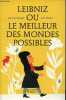
Illustrée par Julia Wauters - Collection les petits Platons. Classification Dewey : 100-PHILOSOPHIE ET DISCIPLINES CONNEXES


Le malin génie de Monsieur Descartes - Collection les petits Platons.
Les petits Platons. 2011. In-8. Broché. Bon état, Couv. convenable, Dos satisfaisant, Intérieur frais. 63 pages - couverture contrepliée - nombreuses illustrations en couleurs dans et hors texte.. . . . Classification Dewey : 100-PHILOSOPHIE ET DISCIPLINES CONNEXES
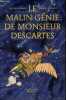
Illustrée par Schwoebel François - Collection les petits Platons. Classification Dewey : 100-PHILOSOPHIE ET DISCIPLINES CONNEXES
Face au scepticisme : les mutations du paysage intellectuel,
Hachette, Pluriel, 1998, 413 pp., poche, passages signalés au crayon, traces d'usage, état correct.
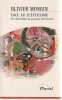
FACE AU SCEPTICISME. Les mutations du paysage intellectuel ou l'invention de l'intellectuel démocratique
Paris Editions La Découverte 1994 in 8 (22x13,5) 1 volume broché, 399 pages [1]. Collection '' Textes à l'appui / Série aventure intellectuelle du XXe siècle ''. Bel exemplaire ( Photographies sur demande / We can send pictures of this book on simple request )
Très bon
Franz Rosenzweig
Les Cahiers de la Nuit Surveillée Les Cahiers de la Nuit Surveillée, 1982. In-8 broché, couverture à rabats. 242 pages. Bon état
Toutes les expéditions sont faites en suivi au-dessus de 25 euros. Expédition quotidienne pour les envois simples, suivis, recommandés ou Colissimo.
FRANZ ROSENZWEIG
TEXTES RASSEMBLES PAR OLIVIER MONGIN, JACQUES ROLLAND ET ALEXANDRE DERCZANSKI-242 PAGES-GRAND IN 8 CARRE-COUVERTURE REMPLIEE-(12B)
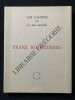
LA NUIT SURVEILLEE COUVERTURE SOUPLE ETAT NEUF
Iacobus de Altavilla, Lectura in libros Sententiarum II Questiones 7-17 ----- The first critical edition of any major theological work by a Cistercian in a university context. - Corpus Christianorum Continuatio Mediaevalis, vol. 312A About this series
, Brepols - Harvey Miller, 2025 Hardback, Pages: xxix + 500 pages, Size:155 x 245 mm, Language(s):Latin, English. *new. ISBN 9782503617367.
This is the first critical edition of a major theological work by a Cistercian from a medieval university: the questions on book I of the Sentences by James of Eltville (Jacobus de Altavilla, d. 1392), monk and later abbot of the majestic Eberbach Abbey, the filming location of many of the scenes in The Name of the Rose. The product of bachelor lectures delivered in 1369-1370 at the magnificent Bernardins in Paris just south of Notre-Dame across the Seine, James' Lectura in libros Sententiarum survives in almost two dozen manuscripts. Based on a complete collation of all the witnesses, the editio princeps provides access to a text that illuminates a relatively dark period in the history of scholasticism, portrays the status quaestionis on many issues in philosophical theology between the Black Death and the Great Schism, and illustrates the importance of later-medieval Cistercian theologians and their symbiotic relationship with the Augustinian Hermits who dominated the field from the 1330s to the 1370s. Through the exodus of German scholars from Paris after the outbreak of the Schism, James of Eltville's ideas spread to the new faculties of theology founded in Germanic lands where they exerted a profound influence. This is the second of three volumes. TABLE OF CONTENTS PREFACE INTRODUCTION I. Sigla of the Manuscripts II. Ratio edendi III. Tabula quaestionum for the Present Volume IV. Notes on the Edition BIBLIOGRAPHY Abbreviations Primary Sources Secondary Literature TEXTVS Questio 7: Questio un. distinctionum 2 et 8 libri 1 (C. Schabel) Questio 8: Questio 2 distinctionum 2-3 libri 1 (C. Schabel) Questio 9: Questio un. distinctionum 4-6 libri 1 (D. Coman) Questio 10: Questio un. distinctionis 7 libri 1 (D. Coman) Questio 11: Questio un. distinctionis 8 libri 1 (D. Coman) Questio 12: Questio un. distinctionum 9-10 libri 1 (A. Baumgarten) Questio 13: Questio un. distinctionum 11-14 libri 1 (M. Pantea) Questio 14: Questio un. distinctionum 14-16 libri 1 (A. Anisie) Questio 15: Questio 1 distinctionis 17 libri 1 (A. Marinca) Questio 16: Questio 2 distinctionis 17 libri 1 (A. Marinca) Questio 17: Questio un. distinctionum 19-20 libri 1 (I. Curu?) INDICES Index locorum S. Scripturae Index fontium
Philosophical Psychology in Late-Medieval Commentaries on Peter Lombard's Sentences. Acts of the XIVth Annual Colloquium of the Soci t Internationale pour l' tude de la Philosophie M di vale, Radboud Universiteit, 28-30 October 2009
, Brepols, 2020 Hardback, xxii + 445 pages, Size:156 x 234 mm, Language: English. ISBN 9782503589091.
Summary The proceedings of the SIEPM Colloquium at Nijmegen published in this volume bring together new evidence for how the corpus of late-medieval commentaries on the Sentences, especially from the second half of the fourteenth century, contributed to the development of philosophical psychology within the discipline of theology. The relation among the faculties of the soul, the limits of knowledge, hylomorphism and the union of soul and body, intuitive and abstractive cognition, the immortality of the soul, the experience of the beatific vision, divine foreknowledge and the knowability of species are some of the topics involving psychological issues that are examined in this volume. The wealth of new information presented in this volume results from the interpretation of previously unexplored sources. The essays in this volume demonstrate that the various parts and Books of Peter Lombard's Sentences, the standard textbook of theology in the Middle Ages, provided lecturers and commentators with a variety of loci for the discussion of philosophical topics, from the principia (Denys of Montina), the Prologue (Alfonsus Vargas of Toledo, Hugolino of Orvieto, John Regis, Francis Toti of Perugia), Book I (Gregory of Rimini, John of Mirecourt, Pierre Ceffons, Hugolino of Orvieto, Pierre d'Ailly, Peter of Candia, the Vienna Group, John Capreolus, Henry of Gorkum, Denys the Carthusian), Book II (Pierre Ceffons, Peter of Candia, Guillaume de Vaurouillon, Gabriel Biel, Denys the Carthusian), and Book III (Heymericus de Campo). This diversity, within large works on theology conceived broadly, constitutes a tradition parallel to that found in commentaries on Aristotle's De anima in the late Middle Ages. TABLE OF CONTENTS Monica BR NZEI, Introduction Christopher D. SCHABEL, Note on the Vernacular Name of Richardus de Mediavilla : of 'Menneville', Not 'Middleton' I. HUMAN COGNITION Amos CORBINI, Notitia intuitiva and complexe significabile at Paris in the 1340s: From Alphonsus Vargas Toletanus to Peter Ceffons Aur lien ROBERT, The Possibility of Cognizing Material Substances. The Evolution of a Philosophical Problem in Late-Medieval Commentaries on the Sentences Jeffrey C. WITT, Peter Plaoul and Intuitive Knowledge II. THE HUMAN SOUL Maarten J.F.M. HOENEN, Heymericus de Campo (?1460) Reads Peter Lombard: Late-Medieval Abbreviations of the Libri Sententiarum Thomas JESCHKE, Unum antiquum problema: Denys the Carthusian and John Capreolus on the Question Whether the Soul's Essence Is Distinct from Its Potencies. A Late-Medieval Starting Point William DUBA and Olivier RIBORDY, The Human Soul: Definitions and Differentiae in Late-Medieval Commentaries on the Sentences Kent EMERY, Jr., Denys the Carthusian's Sentential Teachings on the Nature and Operations of the Soul III. THEOLOGICAL ISSUES John T. SLOTEMAKER, Pierre d'Ailly and the Imago Trinitatis: The Sources of His Trinitarian Theology Severin KITANOV, Freedom in Heaven: Peter of Candia's Treatment of the Necessity or Contingency of Beatific Enjoyment Christopher D. SCHABEL, Henry of Langenstein, Henry Totting of Oyta, Nicholas of Dinkelsb hl and the Vienna Group on Reconciling Human Free Will with Divine Foreknowledge Monica BR NZEI, Epilogue: Commentaries on the Sentences in Paris around 1370 Index of Manuscripts Index of Ancient and Medieval Names Index of Modern and Contemporary Authors
Pseudo-Aristotelian Texts in Medieval Thought. Acts of the XXII Annual Colloquium of the Soci t Internationale pour l? tude de la Philosophie M di vale, Cluj-Napoca, 28?30 September 2016
, Brepols, 2023 Hardback, xxii + 360 pages, Size:156 x 234 mm, Illustrations:3 tables b/w., Language(s):English, German. ISBN 9782503606064.
Summary The Philosopher, the Master of Those Who Know, was the dominant pagan authority in all four of the main traditions of medieval philosophy: Arabic, Greek, Hebrew, and Latin. Yet we now know that a number of works attributed to Aristotle were in fact spurious, authored by others who claimed to be, or whom others claimed to be, the Stagirite, for example, the Secretum secretorum, the Liber de causis, De mundo, De proprietatibus elementorum, De pomo, and De plantis. These writings strongly impacted medieval thought in various and fascinating ways, both in the original language, be it Arabic, Greek, Hebrew or Latin, and in translation. The mechanisms of their production, dissemination, and translation are themselves worthy of attention. Many of these works spawned commentary traditions of their own, parallel to those involving the classic texts of Peripatetic philosophy. Apparent contradictions between ideas expressed in these treatises and those found in what we consider to be authentic works, for instance ideas that appeared to derive more from the Academy than from the Lyceum, provoked questions about authenticity and about the possible evolution of Aristotle's thought. Finally, these texts were employed in one way or another in many genres of philosophical literature in the Middle Ages, including metaphysics, natural and moral philosophy, theology, and even more exotic disciplines like chiromancy and alchemy. This volume aims to shed new light on various aspects of the history of Pseudo-Aristotelian texts in the Middle Ages. TABLE OF CONTENTS Introduction Pieter De Leemans (?) and Lisa Devriese, Translating and Reading Pseudo-Aristotle in the Latin West William Duba, Balancing Authority on a Column of Fire: The Secret of Secrets and the Salvation of Aristotle Ant nio Rocha Martins, The Secretum secretorum and the Idea of Political Happiness in the Latin Middle Ages Pavl na Cermanov , Greek and Arabic Inspirations for Organizing Medieval Banquets: The Pseudo-Aristotelian Secretum secretorum as a Source and a Model for Medieval Advice Literature Julie Loveland Swanstrom, Secondary Causes in the Liber de Causis and the Work of Thomas Aquinas Henryk Anzulewicz, Der Liber de causis als Quelle der Intellektlehre des Albertus Magnus Beate Ulrike La Sala, The Arabic Islamic Reception of the Arabic Plotinus and Maimonides' Theory of Emanation Marilena Panarelli, Spiritus and Plant Formation: Albert the Great's Rrestatement of the Pseudo-Aristotelian De plantis Evelina Miteva, From Pseudo-Aristotle to Pseudo-Albert: The Emancipation of Natural Philosophy Pavel Brazek, Iste liber videtur esse factus ab Aristotile: Bartholomew of Bruges and the Medieval Reception of the De Inundatione Nili Abraham Melamed, The Medieval Hebrew De pomo and the Myth of the Jewish Aristotle Ioana Curu?, The Medieval Latin Reception of Liber de Pomo in Questions De intentione Aristotelis on the Eternity of the World (Available in Open Access) Andrei Marinca, The Pseudo-Aristotelian De mundo and Fourteenth-Century Theologians (Available in Open Access) Index of Manuscripts Index of Names
Monica Brinzei, Irene Caiazzo, Christophe Grellard, Aur lien Robert (eds)
Reference : 70745
Radical Thinking in the Middle Ages: Acts of the XVth International Congress of the SIEPM, Paris, 22-26 August 2022
, Brepols, 2025 Hardback, Pages:2 vols, xxvi + 1177, Size:156 x 234 mm, Illustrations:1 b/w, 1 col., 3 tables b/w., Languages: English, French, Italian. ISBN 9782503613543.
Summary These volumes present a selection of papers delivered in Paris at the XV International Congress of the Soci t Internationale pour l' tude de la Philosophie M di vale, August 22-26, 2022. The appearance of the term radix positionis in medieval debates inspired the contributors to investigate whether there was something that could be considered radical thought in the Middle Ages and, if so, what the roots of this radical thought were in the different philosophical traditions in various geographical, cultural, religious, and linguistic contexts (Arabic, Greek, Hebrew, Latin). Medieval philosophy often engaged in a quest for origins, but it could also be radical in its methodology or in its attitude when it refused any compromise on its principles or basic concepts, be they innovative or rediscovered. Radicalism could be conceived as extremism in pushing a hypothesis, procedure, or line of inquiry to its limits, leading to extreme positions. Radical thought could mean being intellectually inflexible on principles, obstinate in embracing theses that broke from tradition, progressive but also extremist. The contributions in these volumes thus analyse case-studies of doctrinal conflict, dogmatic struggle, and condemnation by religious or academic institutions, presenting examples of both intellectual courage and philosophical intransigence. TABLE OF CONTENTS VOLUME I Monica Brinzei, Irene Caiazzo, Christophe Grellard, Aur lien Robert, Introduction Part I: Plenary Sessions Alain de Libera, Radicalit , annulation, oubli Sarah Stroumsa, The Search for Jewish Andalusian Freethinking Michele Trizio, Three Radical Philosophers in the Greek Middle Ages Emma Gannag , How Does Opium Chill? A Radical Response to Avicenna on Natural Properties Virpi M kinen, The Radicalism of Franciscan Poverty and Its Legacy to the Subsistence Rights Kantik Ghosh, Radical Certitude or Radical Perplexity? Ecclesiology, Hermeneutics, and Conscience in Later Medieval England SIEPM Lifetime Achievement Reward 2022: Sten Ebbesen, My Radicals Part II: Ordinary and Special Sessions 1. From Late Antiquity to Early Middle Ages Rosabel Ansari, La m taphysique l atique et son explication psychologique dans la philosophie d'Al-Farabi Laura Busetto, Les limites de la dialectique dans le Periphyseon d'Erig ne Luiz Marcos Da Silva Filho, Philosophy Without Subject in Augustine? Dialogue with Alain de Libera Renato de Filippis, Boethius and the Opuscula Sacra: A Radical Theological Thinking? Terence J. Kleven, Alfarabi's Several Introductions to the Organon: Sorting out the Significance of the Manuscript Traditions of Istanbul, Tehran, and Diyarbak?r Luka Kuchukhidze, Determinism, Future Contingents and Divine Foreknowledge in Boethius's II Commentary on De interpretatione 2. The Twelfth and Thirteenth Centuries David Albertson, Immanence as Exile: Hadewijch as Philosopher of Finitude Tadeusz Barto?, Person as a Relation: Thomas Aquinas' Theory of God Paola Bernardini, The Notion of Forma Hominis in Albert the Great's De quindecim problematibus Irene Caiazzo, L'h r sie amauricienne et sa post rit ou des bienfaits des condamnations Antoine Calvet, L'alchimie, image ou contre image d'une pens e radicale Rodrigo Camargo, Les racines de la pens e juridique de Thomas d'Aquin Elisa Chiti, Nunc cecidit haec anima de amore in nichilum: La radicalit dell'irruzione del nulla in Margherita Porete e Bonaventura Val rie Cordonier, Qu'est-ce qu'une lecture radicale d'Aristote? La r ception du Liber de bona fortuna (13e-16e si cles) Mateus Domingues Da Silva, Platon et l'ontologisation des intelligibles d'apr s la ?ikmat al-i?r?q de Suhraward? Francesco de Benedittis, Defining the Subject Matter of Theology: The Concept of Radicality in John Pecham's Principium to the Commentary on the Sentences Carlos Arthur R. Do Nascimento, L'arbre de la philosophie Anselmo Tadeu Ferreira, Interpretations of Thomas Aquinas's Theory on the Soul Albert D. Friedberg, Maimonides on Scriptural Anthropomorphism: It is what it is Roberto Gatti, In Search of Last, Radical Averroes. Ibn Rushd's Noetics Interpreted by His Jewish Commentator, Gersonides Ann Giletti, How Radical is Radical? Heterodoxy and the Paris Radical Aristotelians Guy Guldentops, Deradicalizing Christian Ethics: Bonaventure, Richard of Mediavilla, and Duns Scotus on the Imperative 'Love thy Enemies' Andrey Ivanov, Vis cogitativa and Ars facing Thomas Aquinas Pedro Konzen Capra, The Wall of Separation Between the Deliberative and the Scientific Part of the Soul - Thomas Aquinas on Passage 1139a11-15 of Aristotle's Nicomachean Ethics Roberto Lambertini, Bacone e il Secretum Secretorum come specchio per i principi: Alcune note Daniel J. Lasker, Were There any Karaite Radical Thinkers? Julien le Mauff, La communitas perfecta chez les lecteurs d'Aristote: aux racines de la pens e civique et de l'exclusion David Lemler, The Radicality of Religious Dogmatism: Medieval Jewish Philosophers and the Principles of Judaism Isabel L on-Sanz, La teor a bonaventuriana de la iluminaci n y el fundamento radical del conocimiento intelectual Celina A. L rtora Mendoza, Roger Bacon y el giro ling stico de la ex gesis b blica Darlan Lorenzetti, For A Genealogy of Temporal Power: The Aristotelian and Augustinian Influence on Thomas Aquinas' Theory of the State Fiorella Magnano, The Role of the Communes animae conceptiones in Boethius and Albert the Great Stephen Metzger, Aristotelian Virtue and Apostolic Poverty in the Polemical Debate: Between Thomas of York, OFM, and Gerard of Abbeville Ritva Palm n, The Wandering Mind and Curiosity in Twelfth Century Philosophical Theology Anna Rodolfi, Ma tre Albert pol miste. Acceptions de la radicalit dans la pens e d'Albert le Grand Jens Ole Schmitt, Ibn Ab? l-Ash?ath's Treatise on Sleeping and Wakefulness Napole o Schoeller de Azevedo J nior, From Intellect to Passions: An Analysis of How the Apprehension Through the Vis Cogitativa is Influenced by the Intellect Chiara Carmen Scordari, Radicalizing Prophetical Anthropology and Messianism: Maimonides under the Lens of Joseph Soloveitchik Sita Steckel, Signs of Radicalization. Conflict Escalation and the Fragmentation of Socio-Epistemic Consensus in the Polemics of William of Saint-Amour Taki Suto, The Best Life and the Radicality in John of Dinsdale's Ethics Commentary Andrew G. Traver, Nicholas of Lisieux's De perfectione et excellentia status clericorum Cody C. Warta, Departing from the Philosopher: Thomas Aquinas on the Nature of Topos VOLUME II 3. The Fourteenth Century Alexandra Baneu, Narcissus Pfister on Eternity of God and of the World and his Radical Manner of Taking Notes Charles Bolyard, Knowledge, Epistemic Regress, and the Ultima Visio in Ockham's Quodlibets Niccol Bonetti, Salvare Averro ? Il problema della conoscenza divina in John Baconthorpe Monica Brinzei, Perfectio radicalis in John Hiltalingen of Basel's Principium I (Paris 1367-1368) Nathaniel Bulthuis, Truth-Bearing and Objective Being: Walter Burley on the Consequence, 'Some Proposition is False, Therefore its Contradictory is True' Richard Cross, The Radical Franciscan Christology of William of Rubio Ernesto Dezza, OFM, The Impeded Will: The Effects of Hellfire on the Damned According to John Duns Scotus Robert J. Dobie, Meister Eckhart: A Radical Thinker? Davide Falessi, Guillaume d'Occam sur la continuit et la toute-puissance divine Francesco Fiorentino, Social Peace, Private Property, and Free Agreement According to John Duns Scotus Christophe Grellard, Ut dormientes a somno excitaret. Retour sur la condamnation de Nicolas d'Autr court Vesa Hirvonen, Was Jean Gerson's Interest in Children Radical? Vlad Ile, Worcester Cathedral Library ms. F. 73 ff. 3-21 in the Light of a Radical Catalogue Description Martin Klein, Medieval Lived Experience Roberto Limonta, Il segno radicale: la semiotica del calligramma in Opicino de Canistris Mihai Maga, Withstanding a Radical Event: Etienne Gaudet's Note Against Marsilius of Padua Andrea Nannini, Metafisica dell'univocit e dell'analogia tra Giovanni Duns Scoto e Giovanni da Ripa Madalina G. Pantea, Variation on the Same Question in John of Mirecourt's Sentences (Ms. Salamanca, BU, 1863) Ana Rieger Schmidt, Christine de Pizan on Wisdom and Kingship Marcus Paulo Rycembel Boeira, Deontic Logic in the 14th Century: Normative Operators and Conditional Modalities Between William of Ockham and Roger Roseth Amalia Salvestrini, Radicalit de la recherche. Inspirations rh toriques autour de la beaut chez Nicolas d'Autr court Marcella Serafini, La dialectique de la volont et la possibilit du mal. Duns Scot entre Augustine et Ab lard Giacomo Signore, Radical Philology. Rewriting the Transmission History of the Fifteenth-Century Codex Basel, UB, A VIII 9 Emanuele Sorichetti, Radicaliter e formaliter. Essenza e attributi divini nella teologia trinitaria di Giovanni Duns Scoto 4. Early Modern Period Claus A. Andersen, Radical Scotism: The Error Wiclefi in the Long Scotist Tradition Jean Christian Egoavil, The Philosophical Projection of Medieval Scholasticism in the American Territories Throughout the Sixteenth and Seventeenth Centuries Matteo Esu, Radix Morbi. A Short Note on Anti-Contagion Measures and Resource Allocation in John Mair Roberto Hofmeister Pich, Philosophy of Nature and the Principles of Natural Being: Characterizing (OLD) New Traditions in Latin American Scholasticism Isabelle Mandrella, Blumenberg et la pens e radicale (Urspr nglichkeit) de l'Ontologie M di vale Rog rio Tadeu Mesquita Marques, Liberdades nas Am ricas a partir do Ius gentium de Francisco de Vitoria Silvia Negri, Radical Humility? Girolamo Savonarola's Trattato dell'umilt Olaf Pluta, Pura ratione naturali dictante ponendum est: Radical Philosophical Thinking in the Late Middle Ages Aur lien Robert, Galeotto Marzio da Narni's Radical Ethics J zsef Simon, Radical Atheism and Scholastic Rational Theology in Christian Francken's Disputatio (ca. 1590) Indexes Index of Manuscripts Index of Names
filosofie van persoon en identiteit.
, vantilt uitgeverij, 2018 paperback, 13,5 x 21,5 cm, 288 pagina?s. ISBN 9789460043680.
Waar ben je als je onder narcose bent? Lig je gewoon op de operatietafel, tijdelijk buiten bewustzijn, of is de ?echte? jij daar helemaal niet bij? Om die vraag te beantwoorden, moet je weten wie je uiteindelijk bent: wie of wat is de ?echte? jij? Veel mensen vinden psychologische kenmerken belangrijker voor hun identiteit dan lichamelijke eigenschappen ? ze zijn eerder hun geest dan hun lichaam. In Waar was ik toen ik er niet was? laat Monica Meijsing zien waar zulke intuities vandaan komen, maar ook dat ze niet juist zijn. Wij zijn uiteindelijk levende organismen ? gevalsbeschrijvingen van mensen met ingrijpende neurologische beperkingen maken dat duidelijk ?, maar juist organismen kunnen bewustzijn en zelfbewustzijn hebben. Of we ook personen zijn, hebben we niet zelf in de hand. Alleen als we worden opgenomen in een bestaande menselijke gemeenschap kunnen we een persoon worden. Je bent slechts persoon in relaties met andere personen.
E. HUSSERL ET M. PROUST A la recherche du moi perdu
COLLECTION LA PHILOSOPHIE EN COMMUN-IN 8-296 PAGES-(7F)
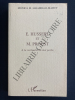
L'HARMATTAN COUVERTURE SOUPLE ETAT NEUF
Exposé populaire du positivisme.
In-12, broché., 93 p. Paris, Ed. Pelletan, 1911.
Vulgarisation de la doctrine d'Auguste Comte.
Résumé de sociologie.
Edouard Pelletan, 1904, In8, Br, 208pp.
Remise de 20% pour toutes commandes supérieures à 200 €
LES SYMBOLES VIVANTS
NATHAN / PROFILS ET SIGNES. 1989. In-8. Broché. Bon état, Couv. convenable, Dos satisfaisant, Intérieur frais. 133 pages. Premier plat illustré en couleurs. Nombreuses illustrations en noir et blanc dans et hors texte. Restes d'étiquette sur le premier plat.. . . . Classification Dewey : 100-PHILOSOPHIE ET DISCIPLINES CONNEXES
Classification Dewey : 100-PHILOSOPHIE ET DISCIPLINES CONNEXES
GYM INTELLIGENCE. EDUQUER SON INTELLIGENCE ET SA MEMOIRE POUR BIEN VIVRE.
EDITIONS DU ROCHER. 2002. In-8. Broché. Bon état, Couv. convenable, Dos satisfaisant, Intérieur frais. 254 pages. Quelques illustrations en noir et blanc, dans le texte.. . . . Classification Dewey : 100-PHILOSOPHIE ET DISCIPLINES CONNEXES
Classification Dewey : 100-PHILOSOPHIE ET DISCIPLINES CONNEXES
"Je chante pour toi - Psaumes et prières pour nos enfants(Collection ""Pomme d'api"")"
Le centurion. 1972. In-4. Cartonné. Bon état, Couv. convenable, Dos satisfaisant, Intérieur frais. 45 pages. Nombreux dessins en noir et couleurs, dans le texte. Contre-plats en noir et blanc. Jaquette correcte.. Avec Jaquette. . . Classification Dewey : 210-Philosophie et théorie
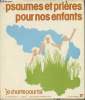
"Préface de Pierre Talec. Collection ""Pomme d'api"". Classification Dewey : 210-Philosophie et théorie"
Les Faits sociaux ne sont pas des choses.
Paris Gallimard 1946 In-12 (19 x 12 cm.) 237 pp. broché.
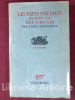
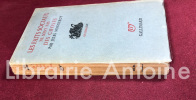
Edition originale publiée dans la collection "les Essais". Dos éclairci, papier jauni, sinon très bon état. Libraire membre du S.L.A.M. (Syndicat national de la Librairie Ancienne et Moderne) et de la L.I.L.A. (Ligue Internationale de la Librairie Ancienne). N'hésitez pas à prendre contact par mail pour des photographies et des détails supplémentaires, pour des recherches ou des estimations de livres anciens et rares.
Traité de la vitriolisation et de l’alunation, ou l’art de fabriquer les vitriols et l’alun. Avec une dissertation sur la minéralisation et sur l’état du soufre dans les mines et les métaux. Avec figures.
Amsterdam et Paris, Pierre-François Didot le Jeune, 1769 ; in-12, vélin ivoire postérieur ; [4], XXXIV, [2], 288, [2] pp., 4 planches sur [2] ff. dépliants, gravées sur cuivre. (Sign. [ ]2, a12, b6, A-M12, [ ]1, [2] pl. dépliantes gravées par Melle Fonbonne) ; fleurons au titre, bandeaux dont deux signés PH.
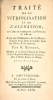
Edition originale rare. Né à Champeix dans le Puy de Dôme, autodidacte, il monte à Paris travailler chez des apothicaires tout en étudiant en parallèle la chimie et la pharmacopée. “Remarqué pour sa vivacité d’esprit et sa curiosité insatiable, il est envoyé chez Sigogne, un pharmacien réputé de Nantes” ; là le hasard lui fait analyser l’eau d’une source ferrugineuse découverte près de Paimpol et cette publication va attirer l’attention sur lui. De retour à Paris, il va faire la connaissance de Guettard, très en vue dans les milieux scientifiques, qui lui-même va le présenter à Lamoignon de Malesherbes qui va le prendre sous sa protection ; il lui confie un laboratoire et lui donne des moyens. Trudaine, intendant des finances, dirige aussi l’administration des mines, il va envoyer Monnet sur le terrain, en Belgique et en Allemagne ; il en revient avec son Traité de la vitriolisation et de l’alunation dans lequel il tente de réaliser l’adéquation entre l’art, qu’il a pu observer chez les manufacturiers étrangers, et la science, démarche tout à fait moderne. La suite de sa carrière est un véritable roman scientifique (d’après Pierre Fluck et son excellent ouvrage paru en 2012 sur Antoine Grimoald Monnet. Un voyageur des lumières dans le massif des Vosges). Bel exemplaire.
La Jalousie
L'Harmattan " Colloque de Cerisy", 1996 - In-8, broché, 232 pages-1f, bel exemplaire.
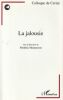
La jalousie est-elle consubstantielle à la nature humaine ou n'est-elle que le produit de structures sociales et familiales particulières ? L'amour jaloux est-il un sentiment occidental ou se retrouve-l-il selon des schèmes identiques, dans d'autres aires culturelles ? Le monde de la jalousie, tel que les psychologues le décrivent aujourd'hui, revêtait-il les mêmes formes dans les civilisations anciennes, dans les siècles passés ? La distinction entre envie et jalousie, désormais canonique, a-t-elle toujours eu une raison d'être ? Si l'on s'en tient aux sociétés contemporaines existe-t-il une différence entre la jalousie masculine et la jalousie féminine ? Qu'en est- il de la jalousie homosexuelle ? La jalousie est-elle une force qui nous déborde ou peut-elle être réduite voire étouffée ? Telles sont quelques-unes des questions. les principales, qui ont guidé le pas des conférenciers du colloque qui s'est tenu au château de Cerisy en 1989. Cet ouvrage qui est le produit des travaux menés lors de cette rencontre s'efforce d'y apporter des réponses et de dégager les principales lignes de force autour desquelles toute réflexion ultérieure sur la jalousie ne peut manquer de s'articuler. Mise à jour du Samedi 27 Juin 2026. Paiement PayPal immédiat, Mondial Relay pour : France, Allemagne, Autriche, Belgique, Espagne, Italie, Portugal, Luxembourg, Pays-Bas, Pologne (Communiquer votre point ou locker si connu). Une participation supplémentaire peut être demandée pour les colis lourds hors France où les envois compris entre 5 et 25 kg sont dégressifs : 2 à 4 kilogrammes - 7.99 / 5 à 10 kg - 15.99 / 15 -25 kg - 25.99. Certaines de nos collections ( Vian, Céline, Camus (...) peuvent être expédiées en Franco de port. Pour linternational hors Europe (Suisse, Canada, Japon, Etats-Unis, les frais dexpéditions peuvent varier selon le poids (mise à jour : 1 juin 2026).
PHILOSOPHES DES TROIS PREMIERS SIECLES DE L'EGLISE - ou portraits historiques des philosophes payens qui ayant embrassé le christianisme en sont devenus les défenseurs par leurs écrits.
GAUTHIER FRERES ET CIE. 1819. In-16. Relié plein cuir. Bon état, Plats abîmés, Dos frotté, Intérieur frais. VIII + 443 pages - 1 petite etiquette rouge de bibliotheque collée en page de titre - Plats, dos frottés - Coins émoussés - Titre, filet, fleurons et roulettes dorés au dos.. . . . Classification Dewey : 100-PHILOSOPHIE ET DISCIPLINES CONNEXES
Classification Dewey : 100-PHILOSOPHIE ET DISCIPLINES CONNEXES
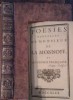
poésies nouvelles de Monsieur de la Monnoye de l'académie française.
9. Edition de 1743. IN-12. Plein Veau glacé d'époque moucheté. Dos à 5 nerfs orné de fers, étiquette titre. La coiffe est légèrement frottée, le haut de charnière est fendue. Intérieur bon, texte encadré. Critique et philologue. Excellent littérateur Bernard de la Monnoye (1641-1728)qui fut le premier qui remporta le prix de poésie à l'Académie française. Il fut ruiné par le système de Law en 1720. Photos possible
pas de frais de port, envoi en colissimo
Puissance du réel
Editions du Rocher 1990 190 pages in8. 1990. Broché. 190 pages.
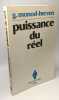
bon état de conservation couverture défraîchie intérieur propre
L'image du monde.
Couverture souple. Broché. 199 pages. Rousseurs.
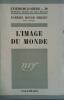
Livre. Editions Gallimard (Collection : L'avenir de la science), 1950.

