 Write to the booksellers
-
Type
Autograph (15)
Book (53726)
Magazine (288)
Manuscript (2)
Maps (1)
New book (1)
Old papers (1)
Photographs (1)
-
Latest
Last 24h (26)
Last 3 days (483)
Last month (267)
Last week (842)
-
Language
Dutch (6)
English (43)
Finnish (1)
French (53906)
German (19)
Greek (5)
Italian (20)
Japanese (2)
Latin (20)
Polish (1)
Portuguese (3)
Spanish (7)
Swedish (2)
-
Century
16th (61)
17th (197)
18th (1299)
19th (3740)
20th (24285)
21st (4117)
-
Countries
Belgium (6717)
Brazil (24)
Canada (6)
China (2)
Côte d'Ivoire (69)
Denmark (1046)
France (41499)
Germany (3)
Greece (3)
Netherlands (269)
Switzerland (4397)
-
Syndicate
ALAC (6)
CLAM (37)
CNE (6)
ILAB (20060)
NVVA (998)
SLACES (907)
SLAM (17729)
SNCAO (41)
ERACLITO [HERACLITUS] (MONDOLFO Rodolfo & TARAN Leonardo, eds.)
Reference : F105159
(1972)
Eraclito : Testimonianze e imitazioni (Introduzione, traduzione e commento)
Firenze, La Nuova Italia 1972 cxcviii + 370pp., 1st edition, in the series "Biblioteca di Studi Superiori. Filosofia antica" volume 59, 21cm., publisher's hardcover in cloth, good condition, [Introduction and notes in Italian, text edition in Greek with translation into Italian], F105159
La evolucion de la logica grieca en el aspecto especial de la analogia
Barcelona 1954 in8. 1954. Broché.
bon état de conservation couverture défraîchie intérieur propre pages non-coupées - ex-libris sur la page titre
L'Eloge de la Folie. Traduction Nouvelle [Jean-Jacques Barett].
Paris, François Louis, 1819. In-12 en demi chagrin rouge au dos à faux nerfs orné de filets dorés. Xx, 242 pp, 1 f. de table. Mouillure dans la partie supérieure des pages. Rare édition du début du XIXème siècle.
![L'Eloge de la Folie. Traduction Nouvelle [Jean-Jacques Barett].. Erasme](https://static.livre-rare-book.com/pictures/DEZ/dez-9081_1_thumb.jpg)
![L'Eloge de la Folie. Traduction Nouvelle [Jean-Jacques Barett].. Erasme](https://static.livre-rare-book.com/pictures/DEZ/dez-9081_2_thumb.jpg)
![L'Eloge de la Folie. Traduction Nouvelle [Jean-Jacques Barett].. Erasme](https://static.livre-rare-book.com/pictures/DEZ/dez-9081_3_thumb.jpg)
Der Prozess Bebel-Liebknecht und die officielle Volkswirthschaft. - [THE BEBEL-LIEBKNECHT TRIAL]
Breslau, Verlag von Maruschke & Berendt, 1872. 8vo. Bound with the original printed wrappers in contemporary half calf cloth. Paper-label to upper part of spine. Inner front hinge split. Stamp to front wrapper and verso of title-page, otherwise internally nice and clean. III, (2), 4-32 pp.
First edition of this contemporary political commentary on the famous 1872 Leipzig high-treason trial of August Bebel and Wilhelm Liebknecht. The trial, arising from their opposition to the Franco-Prussian War and expressions of sympathy with the Paris Commune, became a defining moment in the formation of the German socialist movement and preceded the Anti-Socialist legislation of the later 1870ies. Wilhelm Liebknecht, German socialist and one of the principal founders of the Social Democratic Party of Germany, used his newspaper to agitate against the Franco-Prussian War, calling on working men on both sides of the border to unite in overthrowing the ruling class. As a result, he and Bebel were arrested and charged with treason and in 1872, both Liebknecht and Bebel were convicted and sentenced to two years of Festungshaft (""imprisonment in a fortress""). “In the autumn of 1870, public opposition to the war against France was voiced in the Reichstag by August Bebel (1840–1913) and Wilhelm Liebknecht (1826–1900). Bebel would later go on to express support for the Paris Commune in a speech to the Reichstag on May 25, 1871. As a result, these two Social Democratic leaders—together with Adolf Hepner (1846–1923), an assistant at the Socialist Volksstaat—were tried before the Court of Assizes in Leipzig from March 11–26, 1872. The formal charge against the trio was that they had made “preparations for high treason.” Actually, their speeches and the fledgling party they represented threatened neither Bismarck’s policy nor public peace at that time. But their sin was to have linked opposition to Germany’s annexation of Alsace and Lorraine with support for the struggle of the Communards in Paris: that linkage greatly increased workers’ respect for these Social Democratic parliamentarians while damning them, in the eyes of most middle- and upper-class Germans, as dangerous revolutionaries who endorsed terror and the wanton destruction of property. This two-week trial was relatively long by the standards of the day, and the prosecution was forced to make its case mainly by citing allegedly treasonous phrases from the writings of the two principal defendants (the case against Hepner was abandoned along the way). Both aspects only heightened the trial’s political impact, as did the court’s decision—unwarranted on constitutional grounds—to strip Bebel of his Reichstag mandate (he later won a by-election). On March 26, 1872, Bebel and Liebknecht were each sentenced to a two-year prison term under “honorable custody” in the Hubertusburg Castle in Saxony. On July 8, 1872, Bebel entered prison, where he joined Liebknecht, who was already incarcerated. “ (Forging an Empire: Bismarckian Germany (1866-1890) Politics II: Parties and Political Mobilization Source (14/121))

Versuch einer wissenschaftlichen Darstellung der Geschichte der neuern Philosophie. Faksimile-Neudruck in sieben Banden, mit einer Einfuhrung in Johann Eduard Erdmanns Leben und Werke [7 Volumes]
Stuttgart, Fromanns Verlag 1931-1934 Complete in 7 volumes: xxiv,336 + 257,cx + 307,cxxvi + 528,clxxiv + 554 + 451 + 558 pp., hardcover (editor's brown cloth), dustwrappers (with some use, sunfaded), 22cm., [Content: Vol.1: Von Cartesius bis Kant, Vol.2: Von Cartesius bis Kant: Geulincx, Malebranche, Spinoza und die Skeptiker und Mystriker des siebzehnten Jahrhunderts, Vol.3: Von Cartesius bis Kant: Locke und die Entwicklung des Empirismus und Materialismus vor Kant, Vol.4: Von Cartesius bis Kant: Leibniz und die Entwicklung des Idealismus vor Kant, Vol.5-6-7: Die Entwicklung der deutschen Spekulation seit Kant], few foxing, good condition, F78939
Grundriss der Psychologie. Für Vorlesungen.
Leipzig, Vogel, 1840. 8°. VIII, 96 S. Pappband der Zeit.
Ziegenfuss I, 198. - Erste Ausgabe. - Der aus Lettland stammende Johann Eduard Erdamnn (1805-1892), war als Professor der Philosopie in Berlin und Halle tätig. - Einband berieben.
Vorlesungen über akademisches Leben und Studium.
In-8, demi-veau glacé de l'époque, dos à faux-nerfs orné de filets et palettes dorés, xvi, 358 p., (1) f. d'errata et (2) f. de catalogue éditeur, rouss. Leipzig, C. Geibel, 1858.
Édition originale (Erste Ausgabe). Historien de la philosophie, J.E. Erdmann devint professeur à l'université de Halle, première institution universitaire à s'être officiellement convertie à l'hégélianisme. "Spécialiste de la logique hégélienne, Erdmann tente de la situer dans le procès historique de la philosophie post-kantienne..." ('Dictionnaire des philosophes', P.U.F., p. 955). Exemplaire bien relié.

LE CREDO MACONNIQUE D'UN FRANC-MACON.
La Roche-sur-Yon Petite Imprimerie Vendéenne sans date vers 1900. In-8 3 feuillets non chiffrés (faux-titre, titre, note de l'Auteur) VI 175pp 1 feuillet non chiffré table. Demi basane verte, dos à nerfs, 1er plat de la couverture conservé, reliure de l'époque. Dos passé, quelques rousseurs par endroits, cachet du "Groupe Spirite l'Espérance du Comtat" en tête de la page de faux-titre. Exemplaire complet dans une reliure solide et en bon état (à l'exception du défaut signalé). Fesch colonne 527.
L'Auteur considérait cet ouvrage simplement comme un memento dans lequel puiser consolation et encouragement au bien. Il aborde des sujets tels que: aspect philosophique de l'Univers, le libre-arbitre, l'âme des animaux, le bonheur, la charité et la tolérance, le patriotisme, la Franc-Maçonnerie et le Clergé...
Michel Foucault (1926-1984).
Flammarion, 1989, in-8°, 402 pp, 16 pl. de photos hors texte, sources et biblio, index, broché, couv. illustrée, bon état. Première édition
A sa parution en 1989, cinq ans après la mort de Foucault, cette biographie fut internationalement saluée comme un événement. Explorant les archives inédites, Didier Eribon y restituait magistralement les mille visages, connus et inconnus, d'un philosophe dont toute l'oeuvre peut se lire comme une insurrection contre la violence des normes et de la normalité. Captant la singularité d'un homme énigmatique et d'une pensée passionnément critique, il la réinscrivait dans ses différentes époques et dans ses multiples dimensions - philosophique, politique, sexuelle... - pour proposer une vaste fresque de la vie intellectuelle française de la deuxième moitié du XXe siècle. Désormais les frais d'envoi sont de 6 € seulement pour les livres jusqu'à 1 kg (colissimo suivi), pour la France métropolitaine.
Michel Foucault.
Paris : Editions Flammarion, 1989. Un volume broché (24x15 cm), 402 pages. Avec un cahier photographique. Bibliographie et index des noms cités. Bon état.
Tous nos livres sont visibles sur notre site : https://www.livrepoesie.com/
De près et de loin
Editions Odile Jacob Bibliothèque Dos carré collé 2008 In-12 (14.5 x 22 cm), dos carré collé, couverture illustrée en couleurs, 254 pages, entretien de Claude Lévi-Strauss avec Didier Éribon ; pliures au dos, coiffes et coins légèrement frottés, des pliures au 4ème plat, assez bon état. Livraison a domicile (La Poste) ou en Mondial Relay sur simple demande.
Les temps capitaux - Tome 1 - Récits de la conquète du temps
Paris Cerf 1991 Grand In8 - broché - 343 pages
Bon
René Descartes - Discours de la méthode - Texte intégral et analyse
Hatier. 2004. In-12. Broché. Bon état, Couv. convenable, Dos satisfaisant, Intérieur frais. 128 pages.. . . . Classification Dewey : 100-PHILOSOPHIE ET DISCIPLINES CONNEXES
"Collection ""Les classiques Hatier de la philosophie"" n°1. Classification Dewey : 100-PHILOSOPHIE ET DISCIPLINES CONNEXES"
Voor wie wil weten
, , 2018 Paperback, 305 pagina's, NL, 210 x 150 mm, Nieuw, .
Voor wie wil weten Deel 3 Biografie Biografie: zie deel 1
OSCAR ET LA DAME ROSE
2006 / 115 Pages. Broché. Editions Magnard.
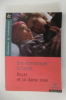
Bel état malgré d'infimes frottements.
ERIC FRANCALANZA (OUVRAGE COORDONNE PAR)
Reference : ABE-1631102233404
(2008)
ISBN : 2130571018
VOLTAIRE, PATRIARCHE MILITANT Dictionnaire philosophique (1769)
SERIE XVIIIe SIECLE FRANCAIS-202 PAGES-14,7 CM X 20,2 CM-(14B)
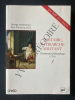
PUF (PRESSES UNIVERSITAIRES DE FRANCE) COUVERTURE SOUPLE ETAT NEUF
Psychanalyse et religion
Epi 1968 in8. 1968. Broché. Dans 'Psychanalyse et religion' Erich Fromm explore la relation entre la psychanalyse et la religion en proposant une analyse érudite qui cherche à concilier les principes psychanalytiques avec la foi et la spiritualité. L'ouvrage examine le conflit entre la religion traditionnelle et la psychanalyse en s'appuyant sur les théories de Freud Jung et Marx pour développer une perspective humaniste sur le développement religieux
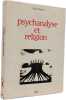
Bon état Couverture jaunie pages avec des marques de crayon pages neuves intérieur propre
Problemas de antropología cultural
Fondo de cultura economica 1957 in8. 1957. Broché. Ouvrage d'Erich Rothacker qui explore les fondements théoriques de l'anthropologie culturelle en mettant l'accent sur l'être humain comme agent de culture. L'auteur défend la nécessité d'une anthropologie de la culture au sein du cadre plus large de l'anthropologie générale en analysant des concepts comme la structure des cultures les lois de polarité et la tension entre unité et variété culturelles
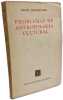
Bon état couverture défraîchie tranche ternie pages non-coupées
LE CHEMIN DES NEUF MONDES. LES INDIENS KOGIS DE COLOMBIE PEUVENT NOUS ENSEIGNER LES MYSTERES DE LA VIE.
ALBIN MICHEL / ESSAIS CLES. 2001. In-8. Broché. Etat d'usage, Couv. convenable, Dos plié, Intérieur frais. 288 pages. Premier plat illustré en couleurs.. . . . Classification Dewey : 100-PHILOSOPHIE ET DISCIPLINES CONNEXES
Classification Dewey : 100-PHILOSOPHIE ET DISCIPLINES CONNEXES
Ericson Richard V. Chan Professor Janet B. L. Baranek Patricia M
Reference : 100145477
(1987)
ISBN : 0335155146
Visualizing Deviance
Open University Press 1987 424 pages 15 2x2 8x23 2cm. 1987. Broché. 424 pages.
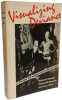
Bon état trace de colle sur le dos trace d'étiquette sur le dernier plat intérieur propre
PHILOSOPHIE POLITIQUE. 2e EDITION.
J. VRIN / LIBRAIRIE PHILOSOPHIQUE. 1966. In-8. Broché. Etat d'usage, Couv. légèrement passée, Dos plié, Quelques rousseurs. 261 pages.. . . . Classification Dewey : 100-PHILOSOPHIE ET DISCIPLINES CONNEXES
2e édition. Classification Dewey : 100-PHILOSOPHIE ET DISCIPLINES CONNEXES
Bartolome Bermejo: The Great Hispano-Flemish Master
1975, Paul Elek. In-8 relié en toile avec jaquette illustré. 159pp. Nombreuses illustrations en n&b 1975, Paul Elek. In-8 Hardcover with illustrated dust cover. 159 pages with numerous illustrations in b&w
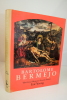
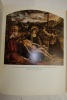
Très bon exemplaire, jaquette en bonne condition. Quelque marques de stockage très legeres et non importantes. Great exemplary overall, dustcover in good condition. Some light and unimportant marking due to storage
De divisione naturae [also known as the Periphyseon]. Libri quinque. Accedit appendix et ambiguis S. Maximi Graece & Latine. - [""WITH HIM TRUE PHILOSOPHY FIRST BEGINS"" (HEGEL)]
Oxford, E Theatro Sheldoniano, 1681. Folio. Nice contemporary full calf with five raised bands and single gilt line-decorations to spine. Gilt title-label and gilt lettering to spine. Double blindstamped borders to boards. All edges of boards gilt. A bit of wear to hinges and capitals, but overall very nice. Internally very clean and fresh with only minimal, light occasional browning. With the book-plate of Gaddesden Library to inside of front board. Engraved device to title-page. (14), 312"" (4), 88 pp.
Rare first edition of the founding work of Western medieval philosophy, the main work by ""the one important philosophical thinker to appear in Latin Christendom between Augustine... and Anselm."" (Encycl. of Phil.). This magnum opus of medieval thought is considered the ""final achievement"" of ancient philosophy (Burch: Early Medieval Philosophy, 1951) and is one of the few true defining moments of medieval philosophy. It not only marks the beginning of Western medieval philosophy, it also anticipates German idealism. Kolakowski identifies ""De divisione naturae"" as the archetype of Hegel's Phenomenology of Mind (see ""Main Currents of Marxism""), the Hegelians considered him the father of German idealism, and Hegel states that ""Scholastic philosophy is considered to begin with John Scotus Erigena who flourished about the year 860, and who must not be confused with the Duns Scotus of a later date... With him true philosophy first begins, and his philosophy in the main coincides with the idealism of the Neo-Platonists."" (From Hegel’s Lectures on the History of Philosophy: Part Two. Philosophy of the Middle Ages). As the dialectical reasoning in the “De divisione naturae” prefigures Hegel, its theory of place and time as defining structures of the mind anticipates Kant. As Gordon A. Leff also points out, Eriugena stands out as the one original thinker in the period from Boethius to Anselm. He is responsible for a revival of philosophical thought which had remained largely dormant in Western Europe after the death of Boethius and creates the only philosophical system to emerge in more than half a millenia. He is the forerunner to speculative idealism, considered a “Proclus of the West” (Hauréau, 1872) and the “Father of Speculative Philosophy” (Huber, 1861). According to The Stanford Encyclopaedia of Philosophy, Eriugena is ""the most significant Irish intellectual of the early monastic period. He is generally recognized to be both the outstanding philosopher (in terms of originality) of the Carolingian era and of the whole period of Latin philosophy stretching from Boethius to Anselm"""" Gersh praises his notion of structure, which places him amongst modern writers rather than medieval ones, stating also that ""(i)n some respects, Western medieval philosophy can be viewed as beginning with the brilliant and controversial ninth-century thinker JohnScotus Eriugena."" (Gersh, p. 125). His magnum opus ""synthesizes the philosophical accomplishments of fifteen centuries and appears as the final achievement of ancient philosophy"" (Burch). Eriugena became extremely influential throughout the later Middle Ages and directly influenced Bernard of Clairvaux, Hildegard van Bingen, and Nicolas of Cusa. He also anticipates Thomas Aquinas in saying that one cannot know and believe a thing at the same time, and exercised a direct influence on modern philosophy. After the rediscovery of his magnum opus, which was printed for the first time in 1681 (the present work), his astonishingly modern train of thought and his immensely important philosophical system came to directly influence some of the most important thinkers of the modern era, most significantly probably Hegel. Eriugena is often referred to as “the Hegel of the 9th century”, and he thus also became a primary influence upon Marx’ dialectical form. Schopenhauer stresses the importance of the rediscovery of Eriugena with the present publication and says in Parerga and Paralopomena (vol. I) “ After Scotus Erigena had been lost and forgotten for many centuries, he was again discovered at Oxford and in 1681, thus four years after Spinoza's death, his work first saw the light in print. This seems to prove that the insight of individuals cannot make itself felt so long as the spirit of the age is not ripe to receive it.” “In the later Middle Ages both Meister Eckhart of Hochheim (c.1260–c.1328) and Nicholas of Cusa (1401–64) were sympathetic to Eriugena and familiar with his “Periphyseon”. Cusanus owned a copy of the “Periphyseon”. Interest in Eriugena was revived by Thomas Gale’s first printed edition of 1687 (recte: 1681). However, soon afterwards, Thomas Gale’s first printed edition, the “Periphyseon”, was listed in the first edition of the “Index Librorum Prohibitorum”, and remained on it, until the Index itself was abolished in the 1960s. In the nineteenth century, Hegel and his followers, interested in the history of philosophy from a systematic point of view, read Eriugena rather uncritically as an absolute idealist and as the father of German idealism. The first critical editions of his major works were not produced until the twentieth century (Lutz, Jeauneau, Barbet) [...] Eriugena is an original philosopher who articulates the relation between God and creation in a manner which preserves both divine transcendence and omnipresence. His theory of human nature is rationalist and intellectualist but also apophatic. His theory of place and time as defining structures of the mind anticipates Kant, his dialectical reasoning prefigures Hegel. But above all, Eriugena is a mystic who emphasizes the ultimate unity of human nature and through it of the entire creation with God.” (SEP). Eriugena - who Bertrand Russel also considered ""the most astonishing person of the ninth century"" - had been commissioned by Charles the Bald to translate the writings that were then thought to be by Dionysius (the learned pagan converted by St. Paul). Eriugena had taught himself Greek and succeeded in an excellent translation. ""He went on to translate various other Greek Christian texts, by Gregory of Nyssa and the seventeenth-century Maximus the Confessor. All these influences along with his wide reading of the Latin fathers (especially Ambrose and Augustine) and his enthusiasm for logic.. are combined in his masterpiece ""Periphyseon (""About Nature"""" it is also sometimes known as ""De divisione naturae"", ""On the division of nature""), written in the 860s. The ""Periphyseon"" has been seen by some as continuing a tradition of Greek Neoplatonic thought, and by some as anticipating nineteenth-century German Idealist philosophy"". (Stephen Gersh, Johannes Scotus Eriugena and Anselm of Canterbury, p. 121. In: Marenbon, Medieval Philosophy, 2004). Although the beautiful Oxford-imprints from the second half of the seventeenth century are usually not rare in themselves, the present work is very scarce indeed. A reason for this might be that the book was placed on the “Index Librorum Prohibitorum” right after publication and remained on it, until the Index itself was abolished in the 1960s. This editio princeps of Eriugena’s main work also contains Eriugena’s translation of one of the works that influenced him the most, namely the “Scholia Maximi in Gregorium Theologium”, which also appears here in print for the first time. Johannes (c.800–c.877), who signed himself as “Eriugena” in one manuscript, and who was referred to by his contemporaries as “the Irishman” (scottus—in the ninth century Ireland was referred to as “Scotia Maior” and its inhabitants as “scotti”) is the most significant Irish intellectual of the early monastic period. He is generally recognized to be both the most outstanding philosopher (in terms of originality) of the Carolingian era and of the whole period of Latin philosophy stretching from Boethius to Anselm… Eriugena’s uniqueness lies in the fact that, quite remarkably for a scholar in Western Europe in the Carolingian era, he had considerable familiarity with the Greek language, affording him access to the Greek Christian theological tradition, from the Cappadocians to Gregory of Nyssa, hitherto almost entirely unknown in the Latin West… Eriugena’s thought is best understood as a sustained attempt to create a consistent, systematic, Christian Neoplatonism from diverse but primarily Christian sources. Eriugena had a unique gift for identifying the underlying intellectual framework, broadly Neoplatonic but also deeply Christian, assumed by the writers of the Christian East… Overall, Eriugena develops a Neoplatonic cosmology according to which the infinite, transcendent, and “unknown” God, who is beyond being and non-being, through a process of self-articulation, procession, or “self-creation”, proceeds from his divine “darkness” or “non-being” into the light of being, speaking the Word who is understood as Christ, and at the same timeless moment bringing forth the Primary Causes of all creation. These causes in turn proceed into their Created Effects and as such are creatures entirely dependent on, and will ultimately return to, their sources, which are the Causes or Ideas in God. These Causes, considered as diverse and infinite in themselves, are actually one single principle in the divine One. The whole of reality or nature, is involved in a dynamic process of outgoing (exitus) from and return (reditus) to the One. God is the One or the Good or the highest principle, which transcends all, and which therefore may be said to be “the non-being that transcends being”. In an original departure from traditional Neoplatonism, in his dialogue Periphyseon, this first and highest cosmic principle is called “nature” (natura) and is said to include both God and creation. Nature is defined as universitas rerum, the “totality of all things”, and includes both the things which are (ea quae sunt) as well as those which are not (ea quae non sunt). This divine nature may be divided into a set of four “species” or “divisions” (divisiones) which nevertheless retain their unity with their source. These four divisions of nature taken together are to be understood as God, presented as the “Beginning, Middle, and End of all things”.” (SEP).
Wilheim Dilthey: The Critique of Historical Reason
University of Chicago Press 1981 427 pages in8. 1981. Broché. 427 pages.
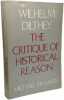
Bon état cependant couverture défraîchie tranche ternie intérieur propre
L'HOMME DEVANT SES OEUVRES
Librairie Académique Didier et Cie, Paris. 1872. In-12. Relié. Etat d'usage, Couv. convenable, Dos satisfaisant, Mouillures. 380 pages. Pièce de titre rouge sur le dos. Auteur, titre, fleuron et filets dorés sur le dos. Etiquette de code sur la couverture. Quelques rousseurs.. . . . Classification Dewey : 100-PHILOSOPHIE ET DISCIPLINES CONNEXES
Vouloir et faire. La volonté. Les actes. Pouvoir et devoir. Classification Dewey : 100-PHILOSOPHIE ET DISCIPLINES CONNEXES

