 Write to the booksellers
-
Type
Book (482)
Magazine (2)
Maps (1)
Music sheets (8)
New book (5)
-
Language
Dutch (1)
English (3)
French (482)
Italian (8)
Latin (1)
Spanish (3)
-
Century
16th (1)
17th (7)
18th (5)
19th (23)
20th (214)
21st (64)
-
Countries
Belgium (31)
Canada (12)
Côte d'Ivoire (2)
Denmark (2)
France (350)
Germany (1)
Switzerland (86)
United Kingdom (12)
United States of America (2)
-
Syndicate
ALAC (6)
CLAM (2)
CLAQ (2)
CNE (1)
ILAB (202)
NVVA (4)
SLACES (4)
SLAM (165)
Madrid
Editorial Everest Reliure Rigide Illustrée Léon 1969 239 pages en format -12 - nombreuses photos en couleurs et en N/B
Bon État
EL LIBRO DEL IDIOMA, LECTURIAS LITERARIAS
SEIX BARRAL. 1934. In-12. Cartonné. Etat d'usage, Couv. légèrement passée, Dos fané, Intérieur frais. 210 pages. Premier plat illustré en couleurs. Texte en espagnol.. . . . Classification Dewey : 860-Littératures espagnole et portugaise
Classification Dewey : 860-Littératures espagnole et portugaise


Lycophronis Alexandra edidit Lorenzo Marcialino - bibliotheca scriptorum graecorume et romanorum teybnertana
B.g. teubneri 1964 in8. 1964. Cartonné.
Très bon état intérieur frais écrit en latin et grec
21 PHOTOGRAPHES CONTEMPORAINS EN EUROPE.
1982 Paris, Contrejour, 1982, 24x30. Reliure souple illustrée de l'éditeur, avec jaquette. Très bon exemplaire de cette première édition. Envoi de photographies sur demande.
Lorenzo Miguélez Domínguez ; Sabino Alonso Moran ; Marcelino Carreros De Anta
Reference : 1710240593274
(1952)
Código de derecho canónico y legislación complementaria,
GLN-934, Biblioteca de Autores Cristianos, Madrid 1952
Assez bon
4 MORCEAUX D'ORGUE - ENTREE DE PROCESSION / OFFERTOIRE / ELEVATION ET SORTIE.
CANAUX. XIX° SIECLE. In-4. En feuillets. Etat d'usage, Livré sans Couverture, Dos satisfaisant, Quelques rousseurs. 12 pages de partitions. Tampon sur le premier plat.. . . A l'italienne. Classification Dewey : 780.26-Partitions
C.C.1143 Classification Dewey : 780.26-Partitions
Gianluigi Mattia Opere 1965 - 1990.
Tilligraf Editrice 1990, in/4 reliure éditeur, jaquette avec une déchirure, planches couleurs et noir et blanc.
Perfection: The Essence of Art and Architecture in Early Modern Europe
, Brepols, 2019 Hardback, 335 pages, Size:220 x 280 mm, Illustrations:75 b/w, 75 col., Language: English. ISBN 9782503579795.
Summary Whether a painting, a sculpture, or a building, works of art in early modern Europe must achieve the highest degree of perfection. If in the Middle Ages perfection is mostly perceived as a technical quality inherent in craftsmanship-a quality that can be judged according to often unspoken criteria agreed upon by the members of a guild-from the fifteenth century onwards perfection comes to incorporate a set of rhetorical and literary qualities originally extraneous to art making. Furthermore, perfection becomes a transcendent quality: something that cannot be measured only in terms of craftsmanship. In the Baroque period, perfection turns into obsession as a result of the emergence of historical models of artistic evolution in which perfection is already historically embodied-in the first place, Vasari's investiture of Michelangelo as a universal canon for painting, sculpture, and architecture. This book aims to define, analyze, and reassess the concept of perfection in the arts and architecture of early modern Europe. What is perfection? What makes a work of art unique, emblematic, or irreplaceable? Does perfection necessarily relate to individuality? Is the perfect work connate with or independent from its author? Can perfection be reproduced or represented? How do artists react to perfection? How do post-Vasarian models of art history come to terms with perfection? To what extent perfection in early modern Europe is the matter of rhetoric, literary theories, theology, and even scientific observation? TABLE OF CONTENTS Introduction Measure, Number and Weight: Perfection in Medieval Art and Thought Benjamin Zweig Perfection as Rhetorical Techne and Aesthetic Ideal in the Renaissance Discourse on Art Valeska von Rosen Crafting Perfection: Leon Battista Alberti, Language, and the Art of Building Dario Donetti The Palindromic Logic of D rer's Double-Sided Gift Shira Brisman Michelangelo and la cosa mirabile Victor I. Stoichita Bronzino's Beauty Stuart Lingo The Perfection of Pictorial Evidence Klaus Kr ger The Renaissance Masterpiece: Giorgio Vasari on Perfection Lorenzo Pericolo Seeking Perfection: Scamozzi in Theory, Practice, and Posterity Andrew Hopkins Metaprints in Seventeenth-Century Antwerp Caroline Fowler "Per natura capaci di ogni ornamento e perfezzione": Nicolas Poussin and Perfection Henry Keazor The Limits of Perfection: Giovan Pietro Bellori on Celerit and Facilit Elisabeth Oy-Marra Passeri's Prologue, the Paragone, and the Hardness of Sculpture Estelle Lingo
De servis et Eorum apud Veteres Ministeriis, Commentarius, In quo familia, tum erbana, tum rustica, ordine producitur & illustratur
Ad insigne pinus [ C. Daberholtzer for Marcus Welser] | Augustae Vindelicorum [Augsbourg] 1613 | 15.8 x 20.4 cm | relié
Edition originale, rare, illustrée de 6 figures à pleine page et 21 vignettes. Marque de l'imprimeur en page de titre, au pin. Les planches figurent des instruments de musique, des bijoux, des ustensiles de cuisine Reliure moderne en plein parchemin à lacets. Dos lisse muet. Etiquette sur la dernière page de garde : Restauré par Serge Valeri, Ville-Sous-Anjou, 2018. A partie de la p. 10, trace de mouillure pâle au coin haut des pages, et parfois en bas, ces auréoles s'estompant puis réapparaissant sur une papier dans l'ensemble bien frais. Bon exemplaire. Etude importante de l'esclavage et de la vie domestique familiale dans l'Antiquité. L'ouvrage contient les devoirs, les charges et le statut légal des esclaves et des servants dans la vie quotidienne, notamment les gladiateurs, musiciens, comédiens, percepteurs et artisans. Le travail de Pignoria constitue un éclairage intéressant sur l'existence laborieuse au sein des familles sous l'Antiquité. Un court essai du docteur Fabricius sur la nourriture et adressé à Marcus Walser clot l'ouvrage. C'est l'un des meilleurs traités anciens sur le sujet. - Photographies et détails sur www.Edition-Originale.com -
De servis et Eorum apud Veteres Ministeriis, Commentarius, In quo familia, tum erbana, tum rustica, ordine producitur & illustratur [Des serviteurs et de leurs fonctions chez les Anciens, Commentaire, dans lequel la famille, tant urbaine que rurale, est présentée et illustrée en ordre]
Sumptibus Andrea Frisius | Amsterdam 1674 | 7.50 x 13.30 cm | relié
Nouvelle édition, après l'édition originale de 1613, illustrée d'un titre-frontispice allégorique, de 15 planches dépliantes, de 18 figures et de 8 vignettes dans le texte. Reliure en plein veau brun d'époque marbré et glacé. Dos lisse orné de 5 fleurons caissonnés. Pièce de titre en maroquin rouge. Mors fendus en tête. 2 coins émoussés, 2 rognés. Une planche dépliante ressortant. Traces de frottement. Assez bon exemplaire. Etude importante de l'esclavage et de la vie domestique familiale dans l'Antiquité. L'ouvrage contient les devoirs, les charges et le statut légal des esclaves et des servants dans la vie quotidienne, notamment les gladiateurs, musiciens, comédiens, percepteurs et artisans. Le travail de Pignoria constitue un éclairage intéressant sur l'existence laborieuse au sein des familles sous l'Antiquité. Un court essai du docteur Fabricius sur la nourriture et adressé à Marcus Walser clot l'ouvrage. C'est l'un des meilleurs traités anciens sur le sujet. - Photographies et détails sur www.Edition-Originale.com -
Poesie Di Lorenzo Pignotti Aretino - Tomo Primo
Presso Leonardo Marchini reliure Rigide Décorative Firenze 1823 gravures hors texte - 191+112+175+158 pages en format 14.5 - 23 cm - reliure rigide en cuir au dos avec quate nervures et titre en dorure - quelques rousseurs - BE
Bon État
FIESOLE. CHARMANT VILLAGE AU-DESSUS DE FLORENCE
S. BECOCCI, FIRENZE. 1977. In-8. Broché. Bon état, Couv. convenable, Dos satisfaisant, Intérieur frais. 44 pages. Premier plat illustré en couleurs. Nombreuses photos et illustrations en couleurs dans et hors texte.. . . . Classification Dewey : 945-Italie
Classification Dewey : 945-Italie
La parlure québecoise [Paperback] Lorenzo Proteau
Proteau BROCHE
Merci de nous contacter à l'avance si vous souhaitez consulter une référence dans notre boutique à Authon-du-Perche.
La parlure québécoise
LES ÉDITIONS DES AMITIÉS FRANCO-QUÉBÉCOISES collection LE PRÉFÉRÉ DES TOURISTES. Sans date.
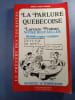
Bon état
ALLAH AALEM !... (DIEU SEUL LE SAIT)
L'IMPRIMERIE FRANCAISE / VARCIN ET PINOT. 1935. In-12. Relié demi-cuir. Etat d'usage, Couv. convenable, Dos frotté, Quelques rousseurs. 301 pages. Relié plein cuir rouge, dos à 4 nerfs, titres dorés.. . . . Classification Dewey : 840-Littératures des langues romanes. Littérature française
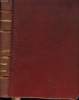
Préface de Rémy Beaurieux. Classification Dewey : 840-Littératures des langues romanes. Littérature française
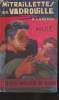
MITRAILLETTES EN VADROUILLE
DE LUTECE. 1963. In-16. Broché. Etat passable, Plats abîmés, Dos abîmé, Mouillures. environ 100 pages - 1er plat illustré en couleur. VENDU EN L'ETAT -. . . . Classification Dewey : 843.0872-Le roman policier
SERIE NOIRE & ROSE N°10. Classification Dewey : 843.0872-Le roman policier
"Mitraillettes en vadrouille - collection ""Série noire et rose"" n°10"
Les éditions de Lutèce. 1963. In-12. Broché. Etat d'usage, Coins frottés, Coiffe en tête abîmée, Papier jauni. Non paginé, environs une centaine de pages. 1 cahier désolidarisé.. . . . Classification Dewey : 843.0872-Le roman policier
Classification Dewey : 843.0872-Le roman policier
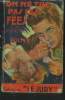
On ne tue pas les fées
Lutèce. 1962. In-12. Broché. Etat d'usage, Plats abîmés, Dos abîmé, Intérieur frais. 127 pages.. . . . Classification Dewey : 840-Littératures des langues romanes. Littérature française
Classification Dewey : 840-Littératures des langues romanes. Littérature française
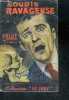
Souris ravageuse - collection le jury N°16
DE LUTECE. 1965. In-12. Broché. Etat d'usage, Couv. légèrement passée, Dos satisfaisant, Quelques rousseurs. Non paginé, environ 120 pages.. . . . Classification Dewey : 840-Littératures des langues romanes. Littérature française
Classification Dewey : 840-Littératures des langues romanes. Littérature française
"Souris ravageuse (Collection ""Le Jury"" n°16)"
Les Editions de Lutèce. 1965. In-12. Broché. Etat d'usage, Couv. légèrement passée, Dos satisfaisant, Intérieur frais. Non paginé. Environ 120 pages. . . . Classification Dewey : 843.0872-Le roman policier
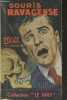
"Collection ""Le Jury"" n°16 Classification Dewey : 843.0872-Le roman policier"
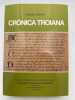
Cronica Troiana
Fundacion Pedro Barrie de la Maza Fundacion Pedro Barrie de la Maza, 1985. Fort In-8 broché, couverture à rabats de 754 pages. Très bon état
Toutes les expéditions sont faites en suivi au-dessus de 25 euros. Expédition quotidienne pour les envois simples, suivis, recommandés ou Colissimo.
"ENFER A CREDIT / COLLECTION ""LE JURY"""
DE LUTECE. 1961. In-16. Broché. Etat d'usage, Couv. convenable, Dos satisfaisant, Papier jauni. 192 pages.. . . . Classification Dewey : 840.091-XX ème siècle
Classification Dewey : 840.091-XX ème siècle
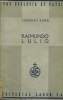
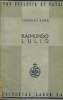
RAIMUNDO LULIO
LABOR/COLECCION PRO ECCLESIA ET PATRIA. 1935. In-12. Cartonné. Etat d'usage, Couv. légèrement passée, Dos satisfaisant, Intérieur frais. 221 pages. Jaquette illustrée en couleurs. Texte en espagnol. Ouvrage de bilbiothèque avec étiquette au dos et bandeau sur la page de titre. Jaquette légèrement passée.. Avec Jaquette. . . Classification Dewey : 860-Littératures espagnole et portugaise
Classification Dewey : 860-Littératures espagnole et portugaise

