 Write to the booksellers
-
Type
Book (3481)
Disk (1)
Magazine (40)
-
Latest
Last 3 days (1)
Last month (40)
Last week (5)
-
Language
English (1)
French (3520)
Spanish (1)
-
Century
16th (1)
17th (2)
18th (19)
19th (79)
20th (1176)
21st (1397)
-
Countries
Belgium (466)
Canada (7)
China (4)
Côte d'Ivoire (1)
Denmark (4)
France (2997)
Greece (1)
Netherlands (4)
Switzerland (38)
-
Syndicate
ALAC (7)
CLAQ (2)
ILAB (295)
NVVA (3)
SLACES (3)
SLAM (277)
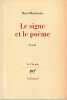
Le signe et le poème,
Gallimard, Le Chemin, 1996, 547 pp., broché, traces d'usage, dos bruni, couverture partiellement brunie, rousseurs sur la tranche latérale, état correct.
Ces gestes qui vous séduisent
Editions First 2004 318 pages 14 5x2x22 56cm. 2004. Broché. 318 pages.
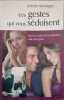
Très bon état
Cophtuesques
in 12 broché,titre,182 pages,non coupé,Cahiers de la quinzaine neuvième cahier de la 23ème série en fin de volume,exemplaire n°205(sur 1000.Très bon état
La confrerie des moines volants: Roman
Grasset and Fasquelle 2013 352 pages 13x2 6x20 2cm. 2013. Broché. 352 pages.
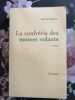
Bon état
Essais sur la signification au cinéma. Tome 1
Éditions Klincksieck In-8 Couverture souple Paris 1971
Très bon 246 pages. Tome 1 seulement.

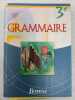
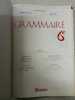
Grammaire Bordas 3e 2003 Manuel de l'élève
BORDAS 2008 335 pages 19 4x1 6x26 8cm. 2008. Broché. 335 pages.
Meunier André Paul Joëlle Bourkaïb Anne-Marie Dauge Benoît Dubois Patrick
Reference : 500098128
(2005)
ISBN : 9782047298541
Jacopo Tintoretto,
Turnhout, Brepols, 2009 Paperback, 220 pages., 20 x 25. ISBN 9788484801719.
Table of contents: I. Tintoretto and the Venetian Culture and Religious Environment Paul Hills, Tintoretto and Venetian Gothic ? Augusto Gentili, Tintoretto in contesto tra politica e religione Benjamin Paul, Archaism and Pauline Spirituality in Jacopo Tintoretto?s Crucifixion for SS. Cosma e Damiano ? Tom Nichols, False Gods: Tintoretto?s Mythologies as Anti-poesie ? Bernard Aikema, La casta Susanna II. Tintoretto and the Art of his Time Philip Cottrell, Painters in Practice: Tintoretto, Bassano and the Studio of Bonifacio de? Pitati ? Roland Krischel, Jacopo Tintoretto and Giulio Romano ? Miguel Falomir, Tintoretto y Tiziano ? David Rosand, Tintoretto and Veronese: Style, Personality, Class ? Jose Alvarez Lopera, Sobre Tintoretto y el Greco ? Stefania Mason, Domenico Tintoretto e l?eredita della bottega III. Connoisseurship Robert Echols and Frederick Ilchman, Toward a New Tintoretto Catalogue, with a Checklist of Revised Attributions and a New Chronology IV. Technique and Conservation Erasmus Weddigen, The Works of Tintoretto: Sewn, Designed, Patched and Cut. The Uncertainty of Canvas Measurements ? Ana Gonzalez Mozo, El concepto de dibujo en Jacopo Tintoretto: analisis de los recursos tecnicos utilizados en algunos cuadros del Museo Nacional del Prado ? Robert Wald, Tintoretto?s Vienna Susannah and the Elders. History, Technique and Restoration V. Theory and Collecting Maria H. Loh, Huomini della nostra eta. Tintoretto?s Preposterous Modernity ? Almuneda Perez de Tuleda, Coleccionismo de Tintoretto en Espana en torno a 1600 ? Linda Borean, Jacopo Tintoretto nelle collezioni veneziane del Sei e Settecento ? Leticia de Frutos, Tintoretto en las colecciones del marques del Carpio y del Almirante de Castilla. Languages : English.
Spoken and Written Language Relations between Latin and the Vernacular Languages in the Earlier Middle Ages<br>
, Brepols - Harvey Miller, 2013 Hardcover. XII 364 p., 8 b/w ill. 4 colour ill., 156 x 234 mm, Languages: English, German, French, Fine copy. Including an index. ISBN 9782503507705.
The linguistic situation of medieval Europe has sometimes been characterized as one of diglossia: one learned language, Latin, was used for religion, law, and documents, while the various vernaculars were used in other linguistic registers. Informing the relationship between Latin and the vernaculars was the choice of Latin as the language of the Western Roman Empire and the Roman Church. This choice entailed the possibility of a shared literary culture and heritage across Europe, but also had consequences for access to that heritage. Scholarship on the Romance languages has contested the relevance of the term diglossia, and the divergence between written or spoken Latin and Romance is a subject of energetic debate. In other linguistic areas, too, questions have been voiced. How can one characterize the interaction between Latin and the various vernaculars, and between the various vernaculars themselves? To what extent could speakers from separate linguistic worlds communicate? These questions are fundamental for anyone concerned with communication, the transmission of learning, literary history, and cultural interaction in the Middle Ages. This volume contains contributions by historians, cultural historians, and students of texts, language, and linguistics, addressing the subject from their various perspectives but at the same time trying to overcome familiar disciplinary divisions.
Space, Place and Ornament: the Function of Landscape in Medieval Manuscript Illumination,
Turnhout, Brepols, 2014 Paperback, 214 p., 85 b/w ill. + 16 colour ill., 220 x 280 mm, ISBN 9782503529776.
The present volume analyzes the functions of landscape imagery within medieval Northern European manuscript illumination, and also takes into account the ideological and the economic milieus in which they were produced. This book proposes a new methodological framework for the study of medieval landscape imagery, by analyzing the functions of landscape imagery within Northern European manuscript illumination. Taking a historicist approach, this study explores landscape imagery within a broad range of specific manuscript contexts, taking into account the ideological and the economic milieus in which they were produced. Organized into three sections, this study will look at how landscape functioned as ornament, didactic tool (space) and political tool (place). The first section looks at the role that landscape imagery had in the hierarchy of book decoration, and how it responded to late medieval mnemonic systems and devotional practices. It also addresses the emergence of landscape as a form of ornamental elaboration, sometimes as a means to appeal to specific aesthetic criteria, or as a way to create extra-textual associations to augment the message of the text. The second section is concerned with landscape within encyclopedic and allegorical manuscripts, and will analyze how artists constructed space to communicate specific lessons or ideas, for example to frame debates about the role of agricultural labor or to present the dynastic ambitions of the Burgundian court. Finally, the third section explores the visualization of the political and economic landscape of late medieval Europe, particularly focusing on how landscape was structured to respond issues of status, power and identity not only in works created for the landed nobility but within manuscripts made for urban patrons as well. Concentrating on manuscripts from Paris, Northern France and Flanders from the late thirteenth to the early sixteenth centuries, this book will offer new insights as it contextualizes the emergence of landscape painting in the late middle ages. Languages : English.
Poggio Bracciolini De l'Inde. Les voyages en Asie de Niccolo de' Conti De varietate fortunae, livre IV,
Turnhout, Brepols, 2004 Paperback, 206 p., 140 x 210 mm. ISBN 9782503513003.
Le Livre IV du "De varietate fortunae" de Poggio Bracciolini rapporte le compte rendu que Niccolo de' Conti fit de ses voyages en Inde et dans le Sud-Est asiatique entre 1414 et 1439. A ce titre, il a joui d'une vaste diffusion, independamment du reste de l'ouvrage, comme l'attestent un certain nombre de manuscrits contenant le seul livre IV ainsi que la premiere edition du texte latin du "De varietate fortunae" ("India recognita", 1492), limitee elle aussi a ce dernier livre. Le succes du livre est lie aux informations nouvelles qu'il contient sur des regions jusque la mal connues (interieur de l'Inde, Birmanie, Java, Borneo, ...), qui seront exploitees par la cartographie et par les recueils de voyage, en particulier celui de Ramusio, "Delle navigazioni et viaggi". Mais le compte rendu de Conti assume aussi un interet majeur car il se situe a une periode charniere, transition entre l'epoque ou l'Asie est "decouverte" par les missionnaires et les marchands lors de la domination mongole (XIIIe et XIVe siecles: Guillaume de Rubrouck, Marco Polo, etc. ...) et celle ou les expeditions maritimes des portugais vont leur assurer la maitrise du commerce dans ces contrees. Le texte de Conti nous interessera donc aussi bien dans son contenu que dans sa forme; l'introduction ainsi que les notes s'efforceront d'etablir des comparaisons nombreuses avec d'autres recits de voyage concernant les memes contrees, tant par ceux qui ont precede Conti (Marco Polo, Ibn Battuta ...) que par ceux qui l'ont directement suivi (Duarte Brabosa, Tome Pires ...). Languages : French, Latin.
Cosmography of Aethicus Ister Edition, Translation, and Commentary.
Turnhout, Brepols, 2011 Paperback, CXIX+360 p., 2 b/w ill., 16 x 25. ISBN 9782503535777.
One of the most skilful forgeries of the Middle Ages, the Cosmography of Aethicus Ister has puzzled scholars for over 150 years, not least because of its challenging Latinity. Written at a western centre in the first part of the eighth century, the work purports to be a heavily censored epitome made by St. Jerome of a 'cosmography' by an Istrian philosopher named Aethicus. This writer, who is otherwise unknown, describes a flat-earth universe resembling that of Cosmas Indicopleustes, then gives an eye-witness account of his travels to the 'isles of the gentiles' in the North and East. There he encounters not only savage races, but also monsters, Amazons, and other figures of mythology. Alexander the Great also figures prominently by immuring the 'unclean races,' who will escape to ravage the world at the coming of the Anti-Christ. Not all is fiction. The author's observations on volcanoes, earthquakes, and tsunamis will interest the scientific reader. The last part deals in coded fashion with contemporary events in the eastern Mediterranean and the Balkans, and may provide a clue to the author's origins. The present volume offers a new critical text, the first translation, and a detailed commentary covering every aspect of the work. Languages : English, Latin.
Cosmography of Aethicus Ister Edition, Translation, and Commentary,
Turnhout, Brepols, 2011 Paperback, CXIX+360 p., 2 b/w ill., 16 x 25.Languages : English, Latin ISBN 9782503535777.
One of the most skilful forgeries of the Middle Ages, the Cosmography of Aethicus Ister has puzzled scholars for over 150 years, not least because of its challenging Latinity. Written at a western centre in the first part of the eighth century, the work purports to be a heavily censored epitome made by St. Jerome of a ?cosmography? by an Istrian philosopher named Aethicus. This writer, who is otherwise unknown, describes a flat-earth universe resembling that of Cosmas Indicopleustes, then gives an eye-witness account of his travels to the ?isles of the gentiles? in the North and East. There he encounters not only savage races, but also monsters, Amazons, and other figures of mythology. Alexander the Great also figures prominently by immuring the ?unclean races,? who will escape to ravage the world at the coming of the Anti-Christ. Not all is fiction. The author?s observations on volcanoes, earthquakes, and tsunamis will interest the scientific reader. The last part deals in coded fashion with contemporary events in the eastern Mediterranean and the Balkans, and may provide a clue to the author?s origins. The present volume offers a new critical text, the first translation, and a detailed commentary covering every aspect of the work. Michael W. Herren is Distinguished Research Professor of Classics emer. at York University, and the editor/translator of the Hisperica Famina, Aldhelm?s prose works, and the poems of John Scottus Eriugena.
Latin Culture in the Eleventh Century Proceedings of the Third International Conference on Medieval Latin Studies Cambridge, 9-12 September 1998,
Turnhout, Brepols, 2002 Paperback, 2 vol., XXIV+1039 p., 16 x 25. ISBN 9782503512556.
Latin Culture in the Eleventh Century is a collection of approximately sixty papers presented at the Third International Conference on Medieval Latin Studies held at the University of Cambridge in September 1998. The collection embraces a wide range of fields related to Medieval Latin, including poetry, hymnology, music, theology and philosophy, historiography, and inscriptions, in addition to Latin linguistics and metrics. Contributions are drawn from leading scholars from many European countries as well as from North America and Australia. The volume should prove invaluable to all students of this period. Languages : English, Latin.
Settlements and Strongholds in Early Medieval England. Texts, Landscapes, and Material Culture
, Brepols, 2020 Hardback, 231 pages, Size:156 x 234 mm, Illustrations:13 b/w, Languages: English, Old English, Latin. ISBN 9782503583846.
Summary In recent years numerous advances in archaeological and historical studies have enhanced our understanding of the form and function of settlements and strongholds in the landscapes of early medieval England. Until now, this groundbreaking work has not been matched in studies of early English literature, where no concerted effort has been made to investigate how these findings can inform our understanding of their representation in texts - and vice versa. This study shows that literary works offer considerable insight into the ways their authors, readers, and other audiences thought and felt about the constructed places and spaces in which they lived their lives. Covering a broad range of evidence from the end of Roman rule to the Conquest, it is the first study of its kind to offer an interdisciplinary account of the relationship between the built environment as it appears in the material record, and in a range of textual productions. Settlements and Strongholds interrogates correlations and disjunctions between the stories found in the soil and in written works of various kinds, focusing on vernacular texts and Latin works that informed their development. It argues for a deeper appreciation of the relationship between imaginative works and the material contexts in which they were created, revealing the parallel development of ideas and concepts that were fundamental in shaping early medieval England. TABLE OF CONTENTS List of Illustrations Acknowledgements Abbreviations Chapter 1. Introduction: Texts and Landscapes in Early Medieval England Texts Materials Contexts Chapter 2. Ruin Mythologies The Desolation of Britain Origin Mythologies Roman Buildings in the Exeter Book Elegies Roman Buildings in Andreas Rural Settlements in Early-Saxon England Loci Amoeni in the Vernacular Tradition Conclusion Chapter 3. Settlements Before the 'Viking Age' Rebuilding Christendom in the Ruins of Rome Cosmic Halls in Beowulf and C dmon's Hymn Minster Authority: C dmon in the Historia Ecclesiastica Building the English Church in De Templo Structuring the Everyday in the Exeter Book Elegies W?cs in Old English Poetry? Burhs in Middle-Saxon England Conclusion Chapter 4. Settlements, Strongholds, and the Alfredian Reinvention Reclaiming the Urban Landscape in Andreas The Archaeology of the Burghal Hidage Society, Settlements, and the 'Alfredian' Translations Society, Settlements, and Asser's Vita Alfredi Conclusion Chapter 5. Spiritual Strongholds in Late-Saxon England Bethulia as Burh in the Old English Judith Cities of Good and Evil in Elene, Juliana, and Daniel lfric, Wulfstan, and the Building of Christendom The Anglo-Norman City in Durham Conclusion Chapter 6. Afterword Of Time and the City Earth, Wood, Stone Structures of Community Works Cited Index
Canterbury Glosses from the School of Theodore and Hadrian. The Leiden Glossary
, Brepols, 2023 Paperback, 2 vols, 824 pages, Size:178 x 254 mm, Illustrations:1 col., Language(s):English, Latin. ISBN 9782503608587.
Summary The 'Leiden Glossary' provides a record of the understanding and interpretation of the patristic and grammatical texts studied at the Canterbury School of Theodore and Hadrian, regarded by Bede as the high point of Christian culture in early medieval England. Each entry in the 'Leiden Glossary' is provided with detailed commentary on the sources consulted by the two Canterbury masters (earlier glossaries; Isidore; Eucherius) and the later uses of the glossary by compilers of the Epinal-Erfurt and Corpus glossaries. The 'Leiden Glossary' is thus a key witness to one of the greatest schools of learning in the early Middle Ages. TABLE OF CONTENTS Volume 17/1 Introduction Literary Production of the Canterbury School The 'Leiden-Family' Glossaries and the School of Canterbury Archbishop Theodore Abbot Hadrian The Leiden Manuscript Parallel Glossaries: The 'Leiden-Family' Glossaries Derivative English Glossaries Texts Studied at the Canterbury School as Represented in the 'Leiden Glossary' Sources of Interpretation of the Texts Studied at the Canterbury School The Nature of the Glossing in the 'Leiden Glossary' Mistaken Interpretations Conclusions Editorial Procedures Bibliography Indices Index of Lemmata Index of Latin Glosses Index of Greek Index of Old English Glosses Index of Old High German Glosses Volume 17/2 The 'Leiden Glossary': Text and Commentary
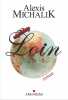
I love Paris
Talents Hauts 2011 96 pages 11 8x0 8x18 2cm. 2011. Broché. 2 volume(s). 96 pages.
Etat correct
Psychiatrie Infantile avec la collaboration de Max Beucher, D. Duché M. Dugas, H. Flavigny, M.M. Gallot, G. Koupernik, L. Moor, P. Noêl
Paris Presses Universitaires de France / Encyclopédie médico-chirurgicale 1967 in-8° petit accroc en haut du premier plat. Relié Pleine toile éditeur écrue
Assez bon Couverture rigide
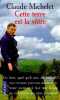
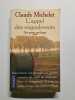
L'appel des engoulevents tome 3 : Des grives aux loups
Pocket 2000 11x1 8x17 6cm. 2000. Broché.
Bon état
Dictionnaire des expressions vicieuses
usitées dans un grand nombre de départemens et notamment dans la ci-devant Province de Lorraine.Accompagnées de leur correction.A l’usage de toutes les écoles.In 8 demi-cuir marron époque,titre, fers, roulette, filets dorés.Titre, VIII,190 pages,A Nancy chez l’auteur Paris,Metz,Commercy, Toul, Bar 1807. Une petite mouillure triangulaire angle inférieur droit,en déclinant,jusqu’à la page 63. Sinon bon exemplaire,rare.
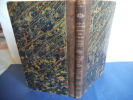
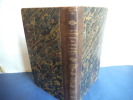
Les LANGAGES de l'HUMANITE
Un ouvrage de 444 pages, format 175 x 240 mm, relié cartonnage, publié en 1983, Seghers, bon état
Encyclopédie des 3 000 langues parlées dans le monde
Phone number : 04 74 33 45 19
Notions élémentaires de grammaire historique de la langue française.
Paris, Eugène Belin, 1900, in-12 demi-reliure toile éditeur, 146 pp. Coins inférieurs légèrement frottés, infime accroc au niveau d'une charnière, sinon bon état général.
DESTIN du FRANCAIS
Un ouvrage de 29 pages, format 150 x 220 mm, illustré d'un frontispice de Gourmelin, broché, publié en 1979, Alfred Eibel Editeur (couverture en état moyen)
Identité et langage ; Propos tétraglossiques
Phone number : 04 74 33 45 19

