 Write to the booksellers
-
Type
Book (3608)
Disk (1)
Magazine (40)
-
Latest
Last 3 days (1)
Last month (47)
Last week (5)
-
Language
English (1)
French (3647)
Spanish (1)
-
Century
16th (1)
17th (2)
18th (20)
19th (86)
20th (1267)
21st (1414)
-
Countries
Belgium (466)
Canada (7)
China (4)
Côte d'Ivoire (1)
Denmark (4)
France (3124)
Greece (1)
Netherlands (4)
Switzerland (38)
-
Syndicate
ALAC (7)
CLAQ (2)
ILAB (390)
NVVA (3)
SLACES (3)
SLAM (372)
Mettre en prose aux XIVe-XVIe siecles
, Brepols - Harvey Miller, 2010 Hardcover. 265 p., 156 x 234 mm, Languages: French, Including an index. Fine copy. ISBN 9782503533513.
Loin de concerner uniquement romans et poemes epiques ? comme le ferait penser l?etude magistrale de Georges Doutrepont (1939) ?, le phenomene ? mise en prose ? a touche aux XIVe-XVIe siecles tous les genres litteraires : vies de saints, ?uvres de derivation biblique, traites de devotion, nouvelles, pieces de theatre, voire la traduction en prose francaise de poemes anterieurs en langue etrangere. Revisites depuis une trentaine d?annees grace a de nombreuses editions critiques et a des etudes surtout litteraires, ces ? nouveaux ? textes meritaient une reflexion plus articulee : c?est ce qui a fait l?objet du IIIe Colloque de l?AIEMF (Association Internationale pour l?Etude du Moyen Francais), qui s?est tenu a Gargnano del Garda ? Universita degli Studi di Milano, du 28 au 31 mai 2008. Les contributions reunies ici analysent donc des ?uvres tres diverses, de trois points de vue : linguistique, philologique, litteraire.
vocabulaire des ecoles des Mendiants au moyen age. Actes du colloque de Porto (Portugal), 11-12 octobre 1996,
Turnhout, Brepols, 2000 Paperback, 190 p., 160 x 240 mm ISBN 9782503508023.
L.E. Boyle; The Friars and Reading in Public A. Figueiredo Frias & B. Marques Fernando da Costa; Theologia, scientia et ars dans les Sermones de frater Pelagius Parvus Colimbriensis, O.P. J. Hamesse; La terminologie dominicaine a-t-elle eu une influence sur la terminologie cistercienne dans le domaine de la transmission du savoir? A. Maieru; Figure di docenti nelle scuole domenicane dalla Penisola Iberica fra XIII e XIV secolo M. Mulchahey; Dominican Educational Vocabulary and the Order's Conceptualization of Studies before 1300. Borrowed Terminology, New Connotations A.A. Nascimento; Terminologie du livre dans les sources documentaires portugaises medievales: fragments d'un discours incomplet M.C. Monteiro Pacheco & M.I. Monteiro Pacheco; Le vocabulaire de l'enseignement dans les Sermones d'Antoine de Lisbonne/Padoue M.A. Rodrigues; Raimundus Lullus and his Book De modo naturali intelligendi B. Roest; Scientia and sapientia in Gilbert of Tournai's (E)Rudimentum Doctrinae J. Verger; Conclusions. Languages: French.
Vernacular Mysticism in the Charterhouse A Study of London, British Library, MS Additional 37790,
Turnhout, Brepols, 2006 Paperback, 373 p., 17 b/w ill., 150 x 230 mm. ISBN 9782503521329.
The first monograph to appear in The Medieval Translator series, Vernacular Mysticism in the Charterhouse presents a study of London, British Library, MS Additional 37790 (Amherst), a purpose-built anthology of major mystical texts by Richard Rolle, Julian of Norwich, Jan van Ruusbroec and Marguerite Porete, interspersed with shorter texts and compilations. Though the manuscript is famous mainly because it contains the only extant copy of Julian of Norwich's short text, it is an intriguing witness to the fifteenth-century spread of the vernacular into traditionally Latinate environments, in this case the Carthusian Order in England. In this process of transmission, translation plays a central part. Most of the texts in the anthology are translations from Latin or French into Middle English. In addition, the anthologist's selection and ordering of texts within the volume, intended to further the readers' spiritual lives, translates them anew for his intended audience. This study provides finely detailed analyses of the texts in the textual and material context of the Amherst anthology as well as in their religious and historical contexts. It also offers a first-time edition of Quedam introductiua extracta, a Latin compilation contained in the manuscript, and a discussion and listing of verbal marginal annotations reflecting early readers' reactions to the texts. By reading the texts in (one of) their medieval manuscript context(s), this book gives students and scholars of (translated) medieval religious texts a fresh view of the classics of mystical writing contained in the remarkable literary document that is the Amherst anthology. Languages : English.
Re-Membering the Present. The Medieval German Poet-Minstrel in Cultural Context,
Turnhout, Brepols, 2005 Hardback, XIV+354 p., 4 b/w ill., 160 x 240 mm. ISBN 9782503515168.
This book examines the social and cultural conditions that governed performance art in the German Middle Ages from 1170 to 1400. Poet-performers are central to understanding both literature and performance art because these entertainers, more than any other group, influenced the creation, dissemination, and interpretation of the medieval poetic oeuvre. Performance theory is used as a framework throughout. Since no social history of poet-performers exists in English, part I presents a social history that re-examines what is known about social status, cultural image and employment. Part II investigates the affective nature of performance and focuses on poet-composer-performers. This study argues that the techniques and principles of performance (body movement, gesture, voice modulation, instrumentation) and the goals of creating a memorable, even electrifying experience for audiences determine the performer's lifestyle and also the thematic and rhetorical strategies of their compositions. The itinerant poet-performer presented himself as a moral judge and critic of epoch-making political events. His performances transform time, place and people and thus become a socializing process that can change people's attitudes. Poet-minstrels were capable of re-membering the listeners' memories of the past during the intense present of the performance. Readings of several texts are offered, including romances, the political songs of well-known poet-performers (i.e. Walther von der Vogelweide) and the gnomic poets (Spruchdichter) whose songs have been neglected until now. The songs are quite intricate and multivalent as they masterfully display an aesthetic totally integrated with their performative context. Languages : English.
New Trends in Feminine Spirituality The Holy Women of Liege and their Impact.,
Turnhout, Brepols, 2009 Hardback, X+476 p., 1 b/w ill., 156 x 234 mm. ISBN 9782503528366.
Saints Edith and AEthelthryth: Princesses, Miracle Workers, and their Late Medieval Audience narrates the lives of two Anglo-Saxon princesses who were venerated as saints long after their deaths. St Edith, the daughter of King Edgar, was renowned as a patron of the arts and the church during her lifetime; her posthumous miracles included protection of Wilton Abbey and the English royal family. St AEthelthryth, who retained her virginity through not one but two royal marriages, also worked numerous miracles at her tomb at the Abbey of Ely. The poems, composed at Wilton Abbey in the early fifteenth century, allow us to see how late medieval religious women practised their devotion to early medieval women saints. The Middle English verse texts are presented here in the original and in translation with explanatory notes and glossary. A thorough introduction provides extensive contextualization and analysis of the two poems as well as description of the manuscript and its language and prosody. These primary source texts are important contributions to the study of English history, language, literature, religion, and women's studies. Languages : English, Middle English.
La nascita della categoria del politico in Grecia (Collezione di testi e di studi)
Il Mulino 1988 520 pages 14x3 8x24cm. 1988. Cartonné. 520 pages.
Très Bon Etat de conservation intérieur propre bonne tenue pages non-coupées sur la fin du livre
Meignan Amaël Driscoll Tim Crestani Rémi
Reference : 500113173
(2012)
ISBN : 9782759017140
L'anglais du marketing
STUDYRAMA 2012 501 pages 17 1x24x2 9cm. 2012. Broché. 501 pages.

Bon état
Meirieu Philippe Runtz-Christian Edmée
Reference : 500096630
(2010)
ISBN : 9782850088179
Lire à l'adolescence réalités et stratégies de lecture
CHRONIQUE SOCIA 2010 14 986x1 524x21 844cm. 2010. Broché.
Bon état
Des Mots, des métiers, des traditions. Nouvelles Questions de Folklore et de Langage.
1970 Société de presse berrichonne, Sancerre, 1970. Un volume in-8 broché, couverture blanche, 239 pages. Pliure sur la couverture, néanmoins bon état.
La librairie est ouverte du mardi au samedi de 9h30 à 12h30 et de 13h30 à 19h00. Commandes par courriel ou téléphone. Envoi rapide, emballage soigné.


MANUEL DE LA LANGUE ASSYRIENNE
1868 PARIS IMPRIMERIE NATIONALE. 1880. In-8 Broché.. 382 pages Lacouverture est muette et "bricolée" mais le texte est tres lisible et bien complet
The american language. Supplement 1. An inquiry into the development of english in the United States.
New York, Alfred A. Knopf, 1962, in-8 cartonné sous jaquette, 739 pp + 35 pp d'index. En anglais. Bon état.
El Ano Del Diluvio (Espagnol)
Editorial Seix Barral S.A 1998 11 2x1 4x18 4cm. 1998. Broché.
Très bon état
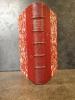
GLOSSAIRE ANGEVIN .
1812 1812 Etymologique , comparé avec différents dialectes , par Charles Ménière. 1 volume in 8 . 1/2 chagrin rouge époque . extrait du Bulletin de la Société industrielle d ' Angers . (env. 1880 ) avec un avant propos . 369 pp avec ref. bibliographique ( de la page 193 à 562. ). ref. BNF. Notice n°: FRBNF30926292 .Exemplaire très propre . L ' Eymologie des termes angevins , organisés et présentés sous forme de dictionnaire . complet.

SOLDES D'ETE : 30% de remise immédiate sur le prix marqué.
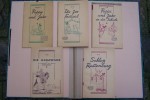
Marcel JEANJEAN: Puppy and Jako, MENTOR 101, 1956. The Zoo Festival, M. 102, 1963. Puppi and Jako in der Schule, M.201, 1963. Schlopz Rattenburg, M.211, 1963. DIE KARAWANE ou le seigneur du désert de Wilhelm Hauff, M.221, 1965.
Nogent-surMarne, Editions Mentor, 1956-1965. Ensemble de 5 livres 15x23 cm, illustrés par Marcel Jeanjean et Marie-Laure Herzog pour le volume M.221, br.
EL PRADO DE VALENCIA.édition critique avec une intro et des notes par Henri Mérimée.
1907 . Toulouse. Imp. Lib. Eduouard Privat. Toulouse. 1907. CIXpp.+238pp.in8, , broché, bon exemplaire, non coupé, dos un peu bruni (bibliotheque méridionnale )
History of the Physiologus in Early Medieval England
, Brepols, 2025 Hardback, Pages: 453, Size:156 x 234 mm, Illustrations:15 b/w, 9 col., Language: English. ISBN 9782503598406.
Summary The Physiologus is the ancestor of the bestiary, a collection of chapters describing animal qualities and behaviours, usually with an allegorical meaning, which proliferated especially in England in the late Middle Ages. While much scholarly attention has been directed to the bestiary, the history of the transmission of the Physiologus has hardly been investigated. Evidence of the circulation of this treatise in the early medieval period is certainly scanty, since only two brief versions dating from this period have been preserved, one in Old English and another one in Latin. However, this monograph shows further proof of the knowledge of the Physiologus in Anglo-Saxon England. It also reveals the relationship of the only two surviving texts and their connection to the main Continental recension of the time. This study therefore demonstrates that the popularity of bestiaries in the later Middle Ages was largely due to the prominence that its predecessor, the Physiologus, enjoyed in the preceding period. TABLE OF CONTENTS Introduction. The Scope, Aims, and Structure of this Book Part I. Knowledge of the Physiologus in the Seventh and Eighth Centuries Chapter 1. The School of Canterbury Chapter 2. The Liber monstrorum Chapter 3. Aldhelm's De virginitate Chapter 4. Aldhelm's Enigmata Chapter 5. Eusebius's Enigmata Part II. The Physiologus in the Ninth and Tenth Centuries Chapter 6. The Laud and Arras Physiologi Chapter 7. The Phoenix Chapter 8. The Physiologus in the Context of the Benedictine Reform Part III. The Two Anglo-Saxon Physiologus Versions Chapter 9. The Corpus Physiologus Chapter 10. The Exeter Book Physiologus Conclusion. Reconstructing the History of the Physiologus in Early Medieval England Appendices Appendix 1. Diachronic Chronology of the Physiologus, Related Works, and Manuscripts, with Relevant Works and Cultural Manifestations Appendix 2. Chronology of Manuscripts Containing the three Main Latin Versiones and their Related Texts Appendix 3. The Order of the Chapters of the Laud and the Arras Physiologi, as Compared to Versio Y. Appendix 4. Annotated Edition and Translation of the Corpus Physiologus Appendix 5. Further Manuscript Images of the Physiologus Works Cited Index of Manuscripts Index of Animals, Plants, and Creatures related to the Physiologus General Index
Un petit livre d'argent...: Le petit camion
Hachette 2012 13 6x0 4x19 4cm. 2012. Broché.
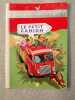
Bon état
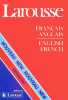
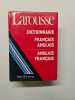
Larousse French-English/English French Dictionaries: Petit Dictionnaire Bilingue Adonis
Editions Larousse 1991 8x3x10cm. 1991. Broché.
Etat correct
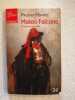
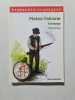
Mateo Falcone; Tamango
Editions Flammarion 2013 94 pages 12 4x0 6x17 2cm. 2013. pocket_book. 94 pages.
Bon état
Frontiers in the Middle Ages , Proceedings of the Third European Congress of the Medieval Studies (Jyvaskyla, 10-14 June 2003)
, Brepols - Harvey Miller, 2006 softcover, . XII+761 p., 20 b/w ill., 165 x 240 mm, Languages: English, French, German. ISBN 9782503524207.
More than obstacles, medieval frontiers - whether geographical, political, military, intellectual or artistic - seem to have been bridges and points of contact. This volume brings together forty-four contributions by specialists of history, history of ideas, medieval philosophy, philology, linguistics, literature as well as manuscript and archival studies. The first uses of the term frontiere in thirteenth-fourteenth-century French were military, referring to the first line of troops in a battle. In architecture it meant the front of a building, and at the end of the fourteenth century it was first used as a geographical term, in Spain specifically about the divide between the Christians and the Muslims. More than obstacles, medieval frontiers - whether geographical, political, military, intellectual or artistic - seem to have been bridges and points of contact. Frontiers was the theme of the Third European Congress of Medieval Studies organised by the FIDEM in Jyvaskyla, Finland, in 2003. True to the nature of the FIDEM, it was highly interdisciplinary, bringing together scholars from all over the world, addressing problems ranging from Byzantine administration to Icelandic vernacular scribal culture, during a week of extraordinary intellectual excitement. This volume brings together forty-four contributions by specialists of history, history of ideas, medieval philosophy, philology, linguistics, literature as well as manuscript and archival studies.
Nouveau dictionnaire de la langue verte. Le français argotique et familier au XXIe siècle
Editions Denoël 2007 In-8 broché 20,8 cm sur 15. 889 pages. Très bon état d’occasion. Poids sans emballage : 921 grammes. - Préface de Claude Duneton
Très bon état d’occasion

