 Write to the booksellers
-
Type
Book (3478)
Disk (1)
Magazine (40)
-
Latest
Last month (42)
Last week (4)
-
Language
English (1)
French (3517)
Spanish (1)
-
Century
16th (1)
17th (2)
18th (19)
19th (79)
20th (1175)
21st (1396)
-
Countries
Belgium (466)
Canada (7)
China (4)
Côte d'Ivoire (1)
Denmark (4)
France (2994)
Greece (1)
Netherlands (4)
Switzerland (38)
-
Syndicate
ALAC (7)
CLAQ (2)
ILAB (294)
NVVA (3)
SLACES (3)
SLAM (276)
Oeuvres & Themes: Le dernier jour d'un condamne
Editions Hatier 2005 192 pages 12 2x1 2x18 6cm. 2005. pocket_book. 192 pages.

Bon état
Hugo Victor Babic Laurence Jannuska Cécile
Reference : 500089397
(2019)
ISBN : 9782035979087
Les Contemplations livres 1 à 4 (Spécial Bac)
LAROUSSE 2019 160 pages 12 45x17 53x1 02cm. 2019. Broché. 160 pages.
Bon état
Cosette une enfance malheureuse: Les misérables
Cle International 2014 156 pages 14 8x1 2x14 8cm. 2014. Broché. 156 pages.
Bon état
Classique Hachette - Le dernier Jour d'un condamné Victor Hugo
HACHETTE EDUC 2006 176 pages 11x1x17 8cm. 2006. Broché. 176 pages.

Bon état
Eden Utopie
Gallimard 2015 288 pages 14x2 2x20 4cm. 2015. Broché. 288 pages. Exemplaire de bibliothèque déclassé
Bon état
Tableau des signes graphomètriques pour la recherche détaillée des dominantes graphiques - Tableau des signes graphologiques pour l'analyse sommaire des caractères
1913 A Paris, Société de graphologie - 1913 - In-4, 2 feuillets non brochées - 7 pages
Assez bon état - Couverture frottée avec trace de plis - Coins et bords légèrement émoussés - Intérieur propre Assez bon
Humeau-Sermage Laure Dumas Alexandre
Reference : 500252008
(2007)
ISBN : 9782080722331
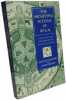
The Archetypal Actions of Ritual: A Theory of Ritual Illustrated by the Jain Rite of Worship (Oxford Studies in Social and Cultural Anthropology)
Clarendon Press 1994 312 pages 13 84x2 08x21 49cm. 1994. Broché. 312 pages.
Très Bon Etat de conservation intérieur propre bonne tenue
Husken-Ulbrich Dominique Gagnepain Emmanuel Collectif
Reference : 500188520
(2020)
ISBN : 9782011355409
Géographie 2nde - élève grand format (éd.2010): Sociétés et développement durable
Hachette Collections 2020 320 pages 22x1x28 2cm. 2020. Relié. 320 pages.
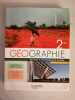
Bon état
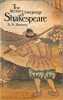
The Literary Language of Shakespeare
Addison-Wesley Educational Publishers Inc 1982 224 pages in8. 1982. broché. 224 pages.
Moeurs étranges des mollusques. Structure et développement. Comment se produisent les dessins et les couleurs des coquilles. Coquillages rares. Constructeurs de Radeaux. Perceurs de rochers. Naufrageurs. Coquillages géants. etc
1952 Editions Payot, collection "Bibliothèque scientifique" - 1952 - In-8, broché - 173 pages - avec 108 dessins de l'auteur
Bon état - Menus frottements sur la couverture et aux coiffes - Coins émoussés - Tampons de la préfecture de la Corse sur les pages de garde bon
Corps, langage, technologie
Les 400 coups Dos carré collé 2005 In-8 (13,5 x 23 cm), dos carré collé, 210 pages ; très bon état. Livraison a domicile (La Poste) ou en Mondial Relay sur simple demande.


Pathologie du langage.
Larousse/ "Langue et langage" In-8, broché, 200 pages, menus défauts, propres et sain .
Bon Etat Mise à jour du Samedi 27 Juin 2026. Paiement PayPal immédiat, Mondial Relay pour : France, Allemagne, Autriche, Belgique, Espagne, Italie, Portugal, Luxembourg, Pays-Bas, Pologne (Communiquer votre point ou locker si connu). Une participation supplémentaire peut être demandée pour les colis lourds hors France où les envois compris entre 5 et 25 kg sont dégressifs : 2 à 4 kilogrammes - 7.99 / 5 à 10 kg - 15.99 / 15 -25 kg - 25.99. Certaines de nos collections ( Vian, Céline, Camus (...) peuvent être expédiées en Franco de port. Pour linternational hors Europe (Suisse, Canada, Japon, Etats-Unis, les frais dexpéditions peuvent varier selon le poids (mise à jour : 1 juin 2026).
Les guetteurs
Librairie des Champs-Elysees 2013 452 pages 15 2x3 4x22 8cm. 2013. Broché. 452 pages.

Bon état
Les aventures d'une petite bulle rouge
Ecole des Loisirs 1968 40 pages 21 2x1x21cm. 1968. Broché. 40 pages.

Etat correct
Via col vento in Vaticano
Kaos 2005 320 pages collection I Millenari. 14x2 2x21cm. 2005. Broché. 320 pages. «È venuto il tempo che la Chiesa chieda perdono a Cristo per le tante infedeltà e tradimenti dei suoi ministri specialmente di quelli costituiti in autorità al vertice della gerarchia ecclesiastica..»



Latin in Byzantium III: Post-Byzantine Latinitas. Latin in Post-Byzantine Scholarship (15th -19th Centuries)
, Brepols, 2021 Hardback, 490 pages, Size:155 x 245 mm, Illustrations:14 b/w, 8 tables b/w., 2 maps b/w, Language(s):English, Latin, Greek. ISBN 9782503589947.
Summary This volume aims at filling a major gap in international literature concerning the knowledge of the Latin language and literature by Post-Byzantine scholars from the fifteenth to the nineteenth centuries. Most of them, immigrants to the West after the Fall of Byzantium, harmoniously integrated into their host countries, practiced and perfected their knowledge of the Latin language and literature, excelled in arts and letters and, in many cases, managed to obtain civil, political and clerical offices. They wrote original poetic and prose works in Latin, for literary, scholarly and/or political purposes. They also translated Greek texts into Latin, and vice versa. The contributors to this volume explore the multifaceted aspects of the knowledge of the Latin language and literature by these scholars. Among the many issues addressed in the volume are: the reasons that urged Post-Byzantine scholars to compose Latin works and disseminate Ancient Greek works to the West and Latin texts to the East, their audience, the fate of their projects, and their relations among them and with Western scholars. In the contents of the volume one can find well known Post-Byzantine scholars such as Bessarion or Isidore of Kiev, as well as lesser known authors like Ioannis Gemistos, Nikolaos Sekoundinos and others. Hence, hereby is provided a canon of scholars who, albeit Greek, are considered essentially as representatives of Neo-Latin literature, along with others who, through their translations, contributed to the rapprochement - literary and political - of East and West. TABLE OF CONTENTS Preface List of Contributors List of Abbreviations Introductory Note A. Introduction Dimitrios Nikitas, An Overview of Post-Byzantine Latinitas B. Greek Studies in the West and Latin Studies in the East in the Post-Byzantine Period and Early Modern Greek Period Christina Abenstein, Treason, Ambition, and Hardship on the Cultural Entanglement of George of Trebizond's Revised Draft of his Translation of Saint Basil Garyfallia Athanasiadou, Reforming a Translation: Nicholas Secundinus's Contribution to the Revised Translation of Arrian's Anabasis of Alexander Made by Bartolomeo Facio Malika Bastin-Hammou, Aemilius Portus, between Greek Scholar and Latin Humanist: Some Relexions on Aemilius Portus's Edition of Aristophanes (1607) Federica Ciccolella, When Cicero Meets Hermogenes: The Defence of Greek Studies in Quattrocento Italy Ioannis Deligiannis, The Diffusion of the Latin Translations of Greek Texts Produced by Late and Post-Byzantine Scholars and Printed from the Mid-Fifteenth to Late Sixteenth Century Michael Malone-Lee, The Latin Translations of Cardinal Bessarion Andreas ?. Michalopoulos & Charilaos ?. Michalopoulos, Modern Greek Translations of Latin Poetic Quotations in the ??????? ????????? (Theatrum Politicum) Vasileios Pappas, The Translation of Justin's Epitome of Trogus by Ioannis Makolas (1686) C. Latin Texts in the Post-Byzantine and Early Modern Greek Period: Theology and Religion, History and Literature, Politics, Ideology and National Identity Ovanes Akopyan, Latin Studies and Greek Scholars in Early Modern Russia Byard Benett, Augustine's Theology as a Resource for Reconciling the Roman Catholic and Greek Orthodox Churches in the Post-Byzantine Period: Maximus Margunius's Greek and Latin Works on the Procession of the Holy Spirit Ilias Giarenis, Leonardo Bruni and Bessarion: Two Scholars, Two Languages, and Two Versions of Liberty in the Fifteenth Century Nikolaos E. Karapidakis, Latinitas or Romanitas Nostra: Latin Culture in the Seven Islands under the Venetian Domination (XIXth-XIXth century) Han Lamers, What's in a Name? Naming the 'Post-Byzantines' in Renaissance Italy (and Beyond) Nikolaos Mavrelos, Latinitas Graecorum: Latin Language Used by Greeks and Greek Identity in Seventeenth-and-Eighteenth-Century Texts Lorenzo Miletti, Between Herodotus and the Poison Maiden. Laonikos Chalkokondyles and the Death of King Ladislaus of Durazzo Sophia Papaioannou, Exempla Virtutis and Augustinian Ethics in De Statu Hominis by Leonardus, Archbishop of Mytilene Theodosios Pylarinos & Vaios Vaiopoulos, Life and Work of a ???????????? Corfiot: Antonio Rodostamo (???????? ??????????) Konstantinos Staikos, Eugenios Voulgaris's Edition of Virgil's Aeneid Raf Van Rooy, A Latin Defence of Early Modern Greek Culture: Alexander Helladius's Status Praesens (1714) and its Linguistic Arguments Index of names Index of manuscripts
Le Roi SE Meurt
Editions Belin 2010 160 pages 12 4x17 6x0 8cm. 2010. Broché. 160 pages. L'Épopée de Gilgamesh le plus ancien texte littéraire connu raconte l'histoire du roi tyrannique d'Uruk Gilgamesh qui entreprend avec son fidèle ami Enkidu un exploit héroïque pour tuer le monstre Humbaba. Au cours de ce voyage périlleux il affronte des épreuves et tente de percer le secret de l'immortalité dans une quête qui le transforme et l'amène à réfléchir sur le sens de la vie et la valeur de l'amitié
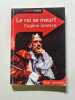
Neuf
Princely Virtues in the Middle Ages 1200-1500,
Turnhout, Brepols, 2007 Hardback, XII+318 p., 1 b/w ill., 2 b/w tables, 160 x 240 mm. ISBN 9782503516967.
The contributors to this book examine the diverse roles played by moral virtues in the political writing of the Later Middle Ages. Medieval political thought has a long tradition of scholarship, and its ethical dimension has always received sustained attention. This volume specifically concentrates on the meaning and function of virtues in a political context, a theme which has thus far been neglected. The authors deal with Latin texts (occasionally in combination with vernacular ones) from the thirteenth to fifteenth centuries that define, legitimize, or criticize secular rule by using catalogues of virtues, originating from ancient philosophy as well as Christian moral theology. The contributions discuss various aspects related to this theme, such as the relation between the virtues of rulers and general moral precepts; the tension between secular or philosophical perspectives on virtue and Christian moral thought; the use of moral virtues for political ends; the balance between praise of the prince's virtues and criticism of his vices; and so forth. The medieval texts under discussion are of French, German, English, Italian, and Spanish origin, and vary from educational treatises and historiography to moral theology and political philosophy. Languages : English, German.
Flores philosophorum et poetarum: tras la huella del Speculum doctrinale de Vicente de Beauvais
, Brepols - Fidem, 2020 Paperback, xi + 754 pages, Size:165 x 240 mm, Illustrations:2 b/w, 6 tables b/w., Languages: Spanish, Latin. ISBN 9782503590677.
Summary La transmisi n manuscrita de una obra depara, en ocasiones, sorpresas y sucesos inesperados. Este es el caso de los libros V y VI del Speculum doctrinale de Vicente de Beauvais, dedicados a la ethica monastica, que muy pronto se independizaron de la obra completa, creando una tradici n propia, de la que incluso surgi , tras diversas transformaciones, una obra nueva, los Flores philosophorum et poetarum. En el presente volumen, se aborda, en primer lugar, el estudio de los libros V y VI del Speculum doctrinale, sus caracter sticas y su transmisi n manuscrita, y, posteriormente, las modificaciones sufridas por estos dos libros, tanto en su estructura como en su contenido, que dan origen a los Flores philosophorum et poetarum y que implican una nueva fase en su transmisi n con una evoluci n de enciclopedia a florilegio. Finalmente se presentan los testimonios manuscritos del florilegio y su filiaci n con la obra enciclop dica de Vicente de Beauvais. La edici n cr tica de los Flores philosophorum et poetarum, que ocupa la segunda parte del libro, tiene en cuenta la doble condici n de esta obra, original y a la vez subordinada a los libros V y VI del Speculum doctrinale de Vicente de Beauvais, por lo que se presenta con tres aparatos (de fuentes, cr tico e intertextual), con la intenci n de reflejar su transici n entre la enciclopedia y el florilegio. TABLE OF CONTENTS Introducci n Estudio Cap tulo I. Los libros V y VI del Speculum doctrinale: la fuente de los Flores philosophorum et poetarum Vicente de Beauvais y su producci n literaria El Speculum doctrinale de Vicente de Beauvais Los libros V y VI del Speculum doctrinale de Vicente de Beauvais Cap tulo II. Los Flores philosophorum et poetarum: de enciclopedia a florilegio. De enciclopedia a florilegio Modificaciones en la estructura de la obra Modificaciones en el contenido de la obra Testimonios manuscritos Filicaci n de los testimonios Edici n Criterios de edici n - Conspectus siglorum - Conspectus abbreviationum communium - Conspectus fontium et abbreviationum Tabula capitulorum Edici n de los Flores philosophorum et poetarum Bibliograf a ndices
Les Fantômes de l'Hotel Jerome
SEUIL 2024 992 pages 15 9x24x4 7cm. 2024. Broché. 992 pages.
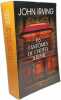

Comme neuf
Fictions of the Inner Life. Religious Literature and Formation of the Self in the Eleventh and Twelfth Centuries,
Turnhout, Brepols, 2004 Hardback, X+264 p., 160 x 240 mm. ISBN 9782503515144.
Interiorization and a trend towards a consideration of the nature of personal experience have long been recognized as important elements in the changing landscape of the religious culture of the eleventh and twelfth centuries. The homo interior is at the centre of the religious writings of that time, and the 'inner man' is a pivotal concept for making sense of the literature of religious formation. Monastic writers try to provide their readers with a 'script' to enact in themselves, in order to form their inner self, as the way to ascend to the knowledge of God. Interiority, however, is not a straightforward aspect of human existence with an unchanging meaning. The notion as it is used by medieval monastic authors gives expression to a specific understanding of what a human being was thought to be, quite different from later self-perceptions. Because of this difference, when they write 'histories of the self' historians and philosophers often pass over the Middle Ages. On the other hand, in histories of mysticism the twelfth century is often read through the lens of later mysticism. This book explores the notion of interiority via four influential authors of the eleventh and twelfth centuries, and the way in which notions about interiority function in their pedagogy. The concepts governing how the homo interior is fashioned are developed within age-old monastic and theological traditions. Medieval ideas about man as imago Dei, monastic reading culture and biblical exegesis are only a few of the elements of these traditions. The choice of authors has been guided by the wish to encompass and highlight various aspects of the eleventh- and twelfth-century notions of 'inner life': monastic and eremitical tradition in Peter Damian, theological-anthropological concepts in Hugh of Saint-Victor, the importance of exegetical procedures in Richard of Saint-Victor, and the role of experience in William of Saint-Thierry. These authors illustrate what was then conceptually possible when it came to thinking about the inner life. Their notions of the inner self are an intriguing part of a continuing history of conceptions of the self and of how it may be fashioned. Languages : English.
Le livre des marges
1984 Editions Fata Morgana - Collection "Bibli / Essais" - In-12 broché, couverture illustrée - 217 pages
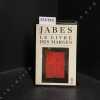

Bon état Bon

