Write to the booksellers
-
Type
Book (3514)
Disk (1)
Magazine (41)
-
Latest
Last 24h (1)
Last 3 days (8)
Last month (36)
Last week (3)
-
Language
English (1)
French (3554)
Spanish (1)
-
Century
16th (1)
17th (2)
18th (19)
19th (78)
20th (1183)
21st (1417)
-
Countries
Belgium (466)
Canada (7)
China (4)
Côte d'Ivoire (1)
Denmark (4)
France (3034)
Greece (1)
Netherlands (4)
Switzerland (35)
-
Syndicate
ALAC (7)
CLAQ (2)
ILAB (294)
NVVA (3)
SLACES (3)
SLAM (276)
Principes généraux et particuliers de la langue françoise
suivis d’un abrégé de versification.11ème édition. Augmentée,d’après les manuscrits de l’auteur.In 12 plein veau fauve raciné, pièce de titre cuir vert, fers dorés, filets à froid sur les plats,roulette dorée sur coupes. Faux-titre,titre,XII,551 pages,1 feuillet de catalogue, tranches rouges,H.Barbou 1803, un coin émoussé.
Portees Disparues: Une enquête du commissaire Jeanne Debords
GALLIMARD 2006 304 pages 10 8x1 4x17cm. 2006. pocket_book. 304 pages.
Très bon état
Histoire de la Restauration, 1814-1830 naissance de la France moderne.
Perrin, 1996 3,4 x 24,1 x 15,4 cm., 499 pp, Broché
- - VENTE PAR CORRESPONDANCE UNIQUEMENT - LIEN DE PAIEMENT, NOUS CONSULTER.


Aspects of Reason
Oxford University Press 2001 176 pages 14 4x1 6x21 6cm. 2001. Cartonné jaquette. 176 pages.
Très bon état
Les Wittgenstein. Une famille en guerre.
Perrin, 26 mai 2011. In-8, br., 16 pages de photographies en vignettes, ht, au centre. 414 pp., pagination jaunie. État convenable (propre)
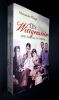
Le destin exceptionnel d'une dynastie viennoise mythique : les surdoués, excentriques et tragiques Wittgenstein.Bienvenue à Vienne, à l'aube du XXe siècle : les Habsbourg s'éteignent, mais le palais des Wittgenstein vit sous la coupe d'un patriarche tyrannique, Karl, héritier d'un empire de l'acier, dont la musique est le seul moyen de communication avec les siens. Le destin de cette fratrie, richissime et tourmentée, toujours en guerre contre elle-même, sera marqué par les pulsions de mort et l'intensité du génie. Trois des fils se suicident ; le quatrième, Paul, devenu pianiste de la seule main gauche, verra les plus grands compositeurs de son temps écrire pour lui, tandis que Ludwig, le dernier, sera l'un des plus importants philosophes du XXe siècle.Alexander Waugh retrace les triomphes et les vicissitudes d'une famille habitée par la passion de la musique et déchirée par l'argent, la folie, et le soulèvement cataclysmique des deux guerre smondiales.« Ce prodigieux récit, écrit Olivier Todd dans sa préface, est aussi poignant qu'original. Sans pudibonderie ou étalage, il décrit les suicides et les sexualités des huit enfants de Karl Wittgenstein(...), tribu d'une rare densité de talents, de génies, de névrosés, de psychoses et de suicides. » Mise à jour du Samedi 27 Juin 2026. Paiement PayPal immédiat, Mondial Relay pour : France, Allemagne, Autriche, Belgique, Espagne, Italie, Portugal, Luxembourg, Pays-Bas, Pologne (Communiquer votre point ou locker si connu). Une participation supplémentaire peut être demandée pour les colis lourds hors France où les envois compris entre 5 et 25 kg sont dégressifs : 2 à 4 kilogrammes - 7.99 / 5 à 10 kg - 15.99 / 15 -25 kg - 25.99. Certaines de nos collections ( Vian, Céline, Camus (...) peuvent être expédiées en Franco de port. Pour linternational hors Europe (Suisse, Canada, Japon, Etats-Unis, les frais dexpéditions peuvent varier selon le poids (mise à jour : 1 juin 2026).
Showing Status, Representation of Social Positions in the Late Middle Ages,
Turnhout, Brepols, 1999 Hardback, X+492 pages ., 160 x 240 mm. *new ISBN 9782503507668.
This publication brings together multi-disciplinary perspectives on representations of social difference in the Low Countries during a time of dynamic social change. How did people in the late medieval period perceive and express social status? This volume brings together multi-disciplinary perspectives on representations of social difference in the Low Countries during a time of dynamic social change. The premise of the volume is that medieval social change may only be fully understood if hierarchies of wealth and power are examined alongside literary and artistic sources. Medieval texts and material culture expressed social standing and gave meaning to the experience of social change. The aim of the study is to recognise and translate the language of symbols used to encode and display status in the late Middle Ages. Languages : English.
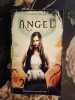
Les rois de France : Biographie et généalogie de 69 rois de France
Librio 2004 96 pages 13x0 6x20 5cm. 2004. pocket_book. 96 pages.
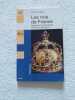
Bon état
Les rois de France : Biographie et généalogie de 69 rois de France
Editions 84 2004 96 pages 13x0 6x20 5cm. 2004. pocket_book. 96 pages.
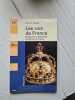
Très mauvais état
Evangelium Iohannis Aethiopicum Aeth: 109 Text (Corpus Scriptorum Christianorum Orientalium Vol. 617)
Peeters Publishers 2005 214 pages 16 002x1 524x23 622cm. 2005. Broché. 214 pages.
Très Bon Etat de conservation intérieur propre bonne tenue
Linh et son panda
Casterman 2015 12 pages 11 7x1 7x17 4cm. 2015. board_book. 12 pages.
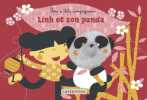
Très bon état - légères marques de lecture et/ou de stockage mais du reste en très bon état- expédié soigneusement depuis la France
York Notes on George Orwell's "Animal Farm" (Longman Literature Guides)
Longman 1991 64 pages 14x0 8x20 2cm. 1991. Broché. 64 pages.

Etat correct
Rééduquer le bégaiement
Desclée de Brouwer In-8 Couverture souple Paris 1994
Très bon 197 pages. Méthode de rééducation pour les gens touchés par ce dysfonctionnement.
Visible English. Graphic Culture, Scribal Practice, and Identity, c. 700-c. 1550
, Brepols, 2022 Hardback, xix + 408 pages, Size:156 x 234 mm, Illustrations:4 b/w, 24 col., Language: English. ISBN 9782503598420.
Summary Visible English recovers for the first time the experience of reading and writing the English language in the medieval period through the perspectives of littera pedagogy, the basis of medieval learning and teaching of literate skills in Latin. Littera is at the heart of the set of theories and practices that constitute the 'graphic culture' of the book's title. The book shows for the first time that littera pedagogy was an 'us and them' discourse that functioned as a vehicle for identity formation. Using littera pedagogy as a framework for understanding the medieval English-language corpus from the point of view of the readers and writers who produced it, Visible English offers new insights on experiences of writing and reading English in communities ranging from those first in contact with Latin literacy to those where print was an alternative to manuscript. Discussing a broad range of materials from so-called 'pen-trials' and graffiti to key literary manuscripts, Visible English provides new perspectives on the ways that the alphabet was understood, on genres such as alphabet poems, riddles, and scribal signatures, and on the different ways in which scribes copied Old and Middle English texts. It argues that the graphic culture underpinned and transmitted by littera pedagogy provided frameworks for the development and understanding of English-language literacy practices and new ways of experiencing social belonging and difference. To be literate in English, it proposes, was to inhabit identities marked by Anglophone literate practices. TABLE OF CONTENTS Introduction: Visible English Chapter One: Graphs, Alphabets, and Scripts Chapter Two: Graphic Models Chapter Three: Graphic Play Chapter Four: Graphic Display Chapter Five: Reprographics Conclusion: Medieval English Literacy Index
La voix de la terre: Troisième humanité - tome 3
Michel albin SA 2014 584 pages 15 5x22 5x4 7cm. 2014. Broché. 584 pages.
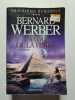
Bon état
Lorenzaccio - Musset
BREAL 2012 127 pages 11x0 8x18cm. 2012. pocket_book. 127 pages.
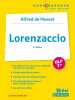
Comme neuf - livre issu de destockage - pouvant présenter d'infimes traces de stockage - Expédié soigneusement dans emballage adapté
Lorenzaccio - Musset
BREAL 2012 127 pages 11x0 8x18cm. 2012. pocket_book. 127 pages.
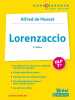
L'ouvrage qui n'a jamais été lu peut présenter de légères traces de stockage mais est du reste en très bon état. envoi rapide et soigné dans un emballage adapté depuis France
Lorenzaccio - Musset
BREAL 2012 127 pages 11x0 8x18cm. 2012. pocket_book. 127 pages.
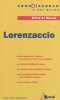
Très bon état - livre issu de destockage - pouvant présenter d'infimes traces de stockage - Expédié soigneusement dans emballage adapté
Lorenzaccio - Musset
BREAL 2012 127 pages 11x0 8x18cm. 2012. pocket_book. 127 pages.
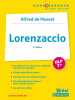
Très bon état - L'ouvrage qui n'a jamais été lu peut présenter de légères traces de stockage mais est du reste en très bon état. envoi rapide et soigné dans un emballage adapté depuis France
Lorenzaccio - Musset
BREAL 2012 127 pages 11x0 8x18cm. 2012. pocket_book. 127 pages.
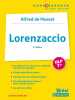
Très bon état
Lorenzaccio - Musset
BREAL 2012 127 pages 11x0 8x18cm. 2012. pocket_book. 127 pages.
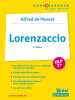
Très bon état
Lorenzaccio - Musset
BREAL 2012 127 pages 11x0 8x18cm. 2012. pocket_book. 127 pages.
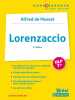
Très bon état
Lorenzaccio - Musset
BREAL 2012 127 pages 11x0 8x18cm. 2012. pocket_book. 127 pages.
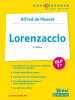
Très bon état
Lorenzaccio - Musset
BREAL 2012 127 pages 11x0 8x18cm. 2012. pocket_book. 127 pages.
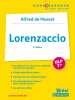
Très bon état
Lehr und Lesebuch der Siamesischen Sprache und Deutsch-Siamimesisches Worterbuch zum Selbststudium mit Phonetischer Ausprachebezeichnung Ubungsaufen und Lesebuch
Wien. Pest. Leipzig, A. Hartleben's Verlag, no date (1892). 1 volume in-12, red hard covers,182 pp., a very good copy.