 Write to the booksellers
-
Type
Book (1244)
Magazine (1)
-
Language
French (1243)
Italian (2)
-
Century
18th (2)
19th (45)
20th (117)
21st (17)
-
Countries
Belgium (266)
France (369)
Netherlands (329)
Switzerland (281)
-
Syndicate
ILAB (323)
NVVA (15)
SLACES (15)
SLAM (308)
SNCAO (1)
SOURCES ET MÉTHODES DE L'HAGIOGRAPHIE MÉDIÉVALE
CERF 1993 374 pages 14 732x2 032x23 368cm. 1993. Broché. 374 pages.
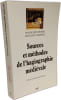
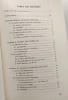
Bon état
Textes administratifs des salles 134 et 160 du palais de Mari.
P., Geuthner, 1983. Fort in-8 br., X-596 pp., index. (Archives royales de Mari, XXI).
Très bonne cond. - Frais de port : -France 7,15 € -U.E. 9 € -Monde (z B : 14 €) (z C : 24 €)
Textes administratifs des salles 134 et 160 du palais de Mari.
P., Geuthner, 1983. Fort in-8 broché, 596 pp., index. (Archives royales de Mari, XXI).
![Textes administratifs des salles 134 et 160 du palais de Mari.. DURAND (Jean-Marie) [Transcrits, traduits et commentés par]](https://static.livre-rare-book.com/pictures/TRA/496069_1_thumb.jpg)
Envoi autographe de l'auteur à Maurice Sznycer. Très bonne condition. - Frais de port : -France 7,15 € -U.E. 9 € -Monde (z B : 14 €) (z C : 24 €)
Le Cartulaire Baio-Ferrado du Monastère de Grijó (XIe-XIIIe siècles).
Paris, Centro Cultural Português, 1971. In-4, cartonnage de l'éd., LV-330 pp., 3 reprod. photogr. de manuscrit hors-t., une carte dépl., bibliogr., index, glossaire.
Couv. un peu salie, bon ex. néanmoins. - Frais de port : -France 8,4 € -U.E. 10 € -Monde (z B : 15 €) (z C : 33 €)
Les dédicaces d'ouvrages de défense dans l'Afrique byzantine.
Rome, Ecole française de Rome, Palais Farnèse, 1981. In-8 br., sous jaquette ill. en couleurs, XVII-123 pp., qq. fig., dont ill. phot. en noir in-t, carte.
Jaquette fanée, le reste en très bonne condition. -
Manuscript treasures in Edinburgh University Library. An album of illustrations compiled by J.T.D. Hall.
Edinburgh, Edinburgh University Library, (1980).
5,24 p., illustrations. Stiff wrappers 25 cm
Collecting, Collectors, and the Book Trade. Essays in Honour of Richard A. Linenthal
, Harvey Miller, 2026 Hardback, Pages: xii + 518, Size:200 x 280 mm, Illustrations:10 b/w, 159 col., Language: English. ISBN 9781915487605.
Summary Presented on the occasion of Richard A. Linenthal's seventieth birthday in June 2026, this book is a tribute to his learning, his passion, his friendship, and his capacity to enthuse and inspire others. In a 50-year career as an antiquarian bookseller, first with Bernard Quaritch Ltd., then latterly under his own name, Richard has found a home for many of the most important books to have passed through the trade. Equally happy working with institutions and private collectors, Richard's enthusiasm and friendship have been central to building collections around the world. His influence and impact can be seen in libraries across the UK and the US, but also in Japan, where he was central to the development of both academic and private libraries. Among the contributors are collectors, friends, family, colleagues, librarians, curators, and scholars and the contributions are as varied as Richard's own interests, encompassing book history, the book trade, antiquities, manuscript studies, provenance research and library history. An important and exciting collection of 45 essays which contribute much to our understanding of the collecting of the written and printed word. TABLE OF CONTENTS For Richard A. Linenthal Edward Potten & Satoko Tokunaga Introduction Nicholas Poole-Wilson 1 ILLUMINATED MANUSCRIPTS Images of the Destruction, Salvage, and Restoration of Books in the Bible moralis e Lucy Freeman Sandler Greater than the Sum of its Parts: A Previously Unstudied Sequence of Miniatures Illustrating Jean Mielot's Romul on Scot McKendrick The Powis Hours and the Daughters of Henry Percy, 4th Earl of Northumberland Michelle P. Brown The Fitton Hours at Keio University Library Takami Matsuda Iconographic Disjunction in the Ruskin Psalter/Collect-Hours: A Flemish Illuminated Manuscript of c. 1470?1480 James H. Marrow 2 MANUSCRIPTS, TEXTS, AND SCRIBES A Man of Sound Mind: The Last Will and Testament of Julius Pompeianus Gifford Combs Tracing Modifications in a Script: The Maurdramnus Script of Corbie David Ganz An Illustrated Riddle and the Teaching of Vergil in Twelfth-Century Gembloux Robert Babcock A Poet-Prince's Payment to a Scribe Henri Schiller The Benedictional of Robert de Clercq, Abbot of Les Dunes (Cambridge University Library, MS Nn.4.1) Patrick Zutshi A Newly Discovered Work by Mellin de Saint-Gelais: 'Espitre de la vertue d'amitie et de paix Au Roy mon souverain seigneur' Eugenio Maria Donadoni Philip Absalom: A Nineteenth-Century Scribe and Artist A. S. G. Edwards 3 FRAGMENTS AND BINDINGS Fragments of Virgil Christopher de Hamel An Early Eleventh-Century Musical Fragment from Christ Church, Canterbury Susan Rankin Fragments and Waste Leaves of Incunabula in Eton College Library John Goldfinch Stationery Bindings: A Law Story Paul Halliday Printed Fragments in Sixteenth- and Seventeenth-Century Cambridge Bookbindings David Pearson Thomas Hearne's Manuscript and Printed Fragments H. R. Woudhuysen 4 XYLOGRAPHY AND EARLY PRINTING Dating Single Leaf Prints: The Mount of Olives of the Mazarine Bible Edward Potten Spending Fragments of Time with Early Proof Corrections Lotte Hellinga Exemplaires disparu: In Search of Maffeo Pinelli's Mainz Bible of 1462 Eric Marshall White On Profit and Gatherings: Reading a Colophon of Nicolaus Wola and Badius Ascensius Kristian Jensen Escape from San Zanipolo Martin Davies English Xylographic Folded Almanacs Kathleen Doyle Gutenberg Portraiture in Pre-War Monuments Margaret Lane Ford 5 COLLECTING AND COLLECTORS To Found an Academic Library in the Isle of Man: The Catalogue of Lord Fairfax's Shipment of Printed Books in 1659 Nicholas Poole-Wilson The Right Honourable Thomas Grenville and the 'Perfect Book' Karen Limper-Herz The Gift of Books after the Great Kanto Earthquake Satoko Tokunaga The Acquisition and Deaccession of Two and a Half Tons of Sir Thomas Phillipps' Manuscripts Martin Schoyen Medieval, Renaissance, and Modern Manuscripts: A Handlist of the Collection of C. H. St John Hornby William P. Stoneman 6 THE BOOK TRADE An Unrecorded English Frankfurt Fair Catalogue, 1617 Giles Mandelbrote Dear Mr Harper, Dear Mr Goldschmidt Felix de Marez Oyens Bindings under the Hammer Mirjam Foot William H. Scheide's Purchase of a Forged Columbus Letter Paul Needham 7 ADVERSARIA A Medieval Seal Matrix Nicolas Barker On Origins, Memories, and Marbles Amy Linenthal Halliday Where Did it Come from? Larry Wallace Recollections of an Only Child Justin G. Schiller A Tokyo Memoir: A First Folio, but No American Football Toshiyuki Takamiya Memories of Life at Bernard Quaritch Celia Cammarota & Dinah Swayne Noel MS1: The Dring-Linenthal-Noel Staunton Land Deed of 1378 Lynn Ransom with Edward Potten The Oracle of Hastings Speaks Michael Zinman List of Contributors Indices
IN QUEST OF MEANING : A Study of the Ancient Egyptian Rites of Consecrating the Meret-Chests and Driving the Calves. I. Text, II. Tables and Plates.
Leiden, Nederlands Institut voor het Nabije Osten, 1995. 2 vol. in-4 softcover, XXXVII-514pp, Appendix 1: The occurrences of the Setjat-containers, Appendix 2. The meroïtic représentations of driving the calves, bibliogr.indices; 154 plates (fig. and B/W illustrations). First edition.
I. Consecrating the Meret-chests. II. Driving the calves. III. The context and origin of the rites. Couv. en partie insolée, bon ex. - Frais de port : -France 8,4 € -U.E. 10 € -Monde (z B : 15 €) (z C : 33 €)
Die Stadt auf dem Magdalensberg ein Grosshandelsplatz. Die ältesten Aufzeichnungen des Metallwarenhandels auf dem Boden Österreichs.
Wien, Bölhaus, 1961. In-4 broché, 50 pp., nbr. plans, autographies et ill. photogr. en noir dans le texte. (Österreichische Akademie der Wissenschaften, Denkschriften, 79. Band).
Stempeln, sehr gut Erhaltung. - Frais de port : -France 4,9 € -U.E. 7 € -Monde (z B : 11 €) (z C : 21 €)
Duas inscriptiones viales Treveris nuper repertas nunc primum edidit H.C.A. Eichstadius, eloqu. et poes. prof. p.o.
Jena, Libraria Braniana, 1824.
16 p. No wrappers 24 cm (Including a full page engraving of 2 inscriptions on milestones)
Arbeiten aus dem Marburger hilfswissenschaftlichen Institut. Elemente diplomatica 8.
Marburg an der Lahn, Institut für Historische Hilfswissenschaften, 2000, in-4to, 315 S., brochure originale.

(SLACES, NVVA)
Phone number : 41 (0)26 3223808
Alexandre le Grand et l'histoire de la Mac doine dans les chroniques universelles du nord de la France (XIIIe-XVe si cle)
, Brepols, 2026 Hardback, Pages: 576, Size:178 x 254 mm, Illustrations:2 col., Language: French. ISBN 9782503622064.
Summary La vie d'Alexandre le Grand est longuement relat e dans les chroniques universelles fran aises qui lui accordent une place majeure dans le cadre de l'histoire de l'Antiquit . Sa biographie est notamment incorpor e la Chronique dite de Baudouin d'Avesnes, compos e par un crivain anonyme entre 1278 et 1281, et la Fleur des histoires, crite par Jean Mansel, fonctionnaire la cour de Bourgogne, dans les ann es 1440, puis remani e et amplifi e par le m me auteur dans les ann es 1460. Provenant du nord de la France, tr s lus par les lecteurs nobles de la fin du Moyen ge, ces ouvrages constituent un corpus unifi in dit et restent un champ presque vierge pour la recherche. En insistant sur le r le du roi mac donien dans la translatio imperii et studii, ils d finissent une vision de l'histoire en marche vers le salut?; en mettant en valeur la figure d'Alexandre, ils transmettent aussi des mod les de comportement personnels et offrent un d but d'individualisation du personnage. Le pr sent ouvrage comprend une tude de la tradition manuscrite de ces textes, une recherche sur leurs auteurs, leurs m c nes et leurs lecteurs ainsi qu'une analyse des strat gies de r criture labor es pour recomposer le portrait d'Alexandre et int grer sa vie dans une histoire universelle. Nous retra ons l'histoire de la transmission manuscrite de nos chroniques, depuis les premiers possesseurs et destinataires jusqu'aux lecteurs de la fin du xve si cle et du d but du xvie si cle. Sont tudi s ensuite le projet historiographique des deux auteurs et le r le qu'y joue le r cit de la vie d'Alexandre. Des Historiae adversus paganos d'Orose au Speculum historiale de Vincent de Beauvais, nos crivains s'approprient l'h ritage des histoires universelles latines et font entrer l'empire d'Alexandre dans le sch ma pr tabli des quatre royaumes du livre de Daniel, en l'investissant de la mission de transf rer l'empire de l'Orient l'Occident. Nous menons enfin une analyse approfondie du r cit de la vie du souverain mac donien et de ses finalit s, afin de comprendre comment ses r critures contribuent au projet politico-didactique des chroniques et quelle image du h ros elles cherchent construire. Le volume propose galement une dition des prologues des chroniques et des trois r cits de la vie d'Alexandre. TABLE OF CONTENTS Introduction Premi re partie : Les manuscrits des chroniques universelles et leurs lecteurs Chapitre 1 : La tradition manuscrite Chapitre 2 : Les commanditaires et les possesseurs Deuxi me partie : La vision de l'histoire Chapitre 1 : Le discours des auteurs sur leur criture de l'histoire Chapitre 2 : Alexandre et son empire dans le cadre spatio-temporel de la chronique universelle Troisi me partie : Alexandre le Grand au coeur du projet didactico-politique des chroniques universelles Chapitre 1 : Les enfances d'Alexandre et le r le de l'h ritage gr co- gyptien Chapitre 2 : L' ducation et l'exemplarit politique d'Alexandre Chapitre 3 : Instrument de Dieu, victime de Fortune dition des prologues et des r cits de la vie d'Alexandre Bibliographie Annexes
Le Petit Temple d'Abou Simbel. Paléographie.
Le Caire, IFAO, 2007. In-4, br., VIII-176 pp., 27 pl. paléogr.,
Très bonne condition. -
Materiality of Sound in Chant Manuscripts in the West. Scriptor, Cantor & Notator (Volume I)
, Brepols, 2023 Paperback, 328 pages, Size:216 x 280 mm, Illustrations:107 b/w, 33 tables b/w., 2 maps b/w, Language(s):English, Italian, French. ISBN 9782503606149.
Summary Scriptor, Cantor & Notator is an innovative multi-author project dealing with the complex interconnections between learning, writing and performing chant in the Middle Ages. A number of different methodological approaches have been employed, with the aim of beginning to understand the phenomenon of chant transmission over a large geographical area, linking and contrasting modern definitions of East and West. Thus, in spite of this wide geographical spread, and the consequent variety of rites, languages and musical styles involved, the common thread of parallels and similarities between various chant repertoires arising from the need to fix oral repertories in a written form, and the challenges involved in so doing, are what bring this wide variety of repertoires and approaches together. This multi-centric multi-disciplinary approach will encourage scholars working in these areas to consider their work as part of a much larger geographical and historical picture, and thus reveal to reader and listener more, and far richer, patterns of connections and developments than might otherwise have been suspected. Scriptor, Cantor & Notator is published in two books. The first, The Materiality of Sound in Chant Manuscripts in the West, brings together articles on several different families of early music scripts in the Latin West and provides a vividly diverse picture of some of the best current scholarship on the various types of ancient and medieval musical notation. TABLE OF CONTENTS Methodology Concepts and Taxonomies of Music Scripts (Rankin, Susan) Design, and the Historiography of Early Music Scripts (Varelli, Giovanni) Appunti metodologici sullo studio del canto liturgico (Albiero, Laura) Indeterminacy. New Aspect of Meaning in Gregorian Chant (Mascare as Garza, scar) Guiding Silence. The Function of Melodic Interruptions in Medieval Chant (Lousberg, Leo) Et gloriosus in saecula . Pal ographie des notations franques nord-occidentales (970-1120) (Goudesenne, Jean-Fran ois) Manuscripts and Manuscript Fragments Reuniting Fragments and Reconsidering the Scribal History of the Beneventan Zone (Nardini, Luisa) Frammenti di un antifonario in notazione nonantolana (Roncroffi, Stefania) Notation in Transition? A Palaeographical Study of the Insular Missal EXcl 3515 (Mannion, Anne) Regional Scripts and Repertories Notazioni neumatiche dei secoli XI-XII nella Biblioteca Capitolare di Verona. Riflessioni e spunti di ricerca (Cunego, Giovanni) La notation musicale dans la Catalogne m di vale. Autour des origines et son volution (Garrigosa i Massana, Joaquim) The Scribe and the Notator as the Bearer of Identity. Bohemian Notation in Late Mediaeval Manuscripts of Central Europe (Veselovska, Eva)
Excavations at Saqqara, 1937-1938. HOR-AHA.
Le Caire, Government Press, 1939. Grand in-4, rel. demi-chagrin marine à coins, dos à 5 nerfs, titre doré, 112 pp., 51 fig. in-t., 24 pl. in fine (ill. photogr., hiéroglyphes). Texte en anglais.
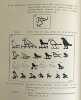
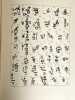
Contents : Introduction - Hor-Aha (Menes) - The discovery - Description of the tomb - Clay Sealings - Stone alettes - Flint implements - Pottery - Pottery inscriptions - The human remains. Appendix : The Naqadah Tomb - The Abydos Tomb - Classical records - A collection of hieroglyphs from the Monumens of Hor-Aha. Dos frotté, bel ex par ailleurs. - Frais de port : -France 8,4 € -U.E. 10 € -Monde (z B : 15 €) (z C : 33 €)
Paléographie des Ecritures cursives en France du XVe au XVIIe siècle -
1966 Genève - Droz - 1966 - 1 volume in8 de 60 pages et un atlas de 32 planches -
Pontifical de Pierre de la Jugie Le Miroir d?un Archeveque.
, Brepols Miller, 2017 Hardcover with dusjacket, 480 pages., 196 b/w ill. + 39 colour ill., 216 x 280 mm, Languages: French. ISBN 9782503574684.
Orne de 85 enluminures encore en place, l?ouvrage est un temoignage exceptionnel, bien documente, qui permet de comprendre les modalites de la commande des manuscrits liturgiques enlumines au XIVe siecle, et qu?il est possible de replacer dans un contexte politique, religieux et artistique bien determine. En 1350, Pierre de la Jugie, neveu du pape Clement VI, est depuis trois ans sur le siege de Narbonne, a la tete d?un des archeveches les plus riches du royaume de France, lorsqu?il decide de faire realiser un pontifical a la hauteur de ses ambitions. Orne de 85 enluminures encore en place, l?ouvrage est un temoignage exceptionnel, bien documente, qui permet de comprendre les modalites de la commande des manuscrits liturgiques enlumines au XIVe siecle, et qu?il est possible de replacer dans un contexte politique, religieux et artistique bien determine. Le livre n?est qu?en partie fidele au modele de pontifical etabli par Guillaume Durand. Outre un calendrier et des feuillets de comput, il contient aussi plusieurs textes additionnels, expressement ajoutes par Pierre de la Jugie, et accompagne d?une iconographie qui leur est propre. L?etude des textes, du calendrier au pontifical, et de l?iconographie choisie pour les illustrer, permet de mettre en valeur la forte implication du commanditaire dans la mise en place de ce livre. Les peintures qui ornent ces pages sont l??uvre de quatre artistes qui, en depit de leurs formations differentes (Catalogne, Sud de la France, Italie) ont collabore et se sont mutuellement influences. Le recensement des productions de chacun des enlumineurs permet de mettre en valeur l?existence de reseaux d?echanges entre les artistes et les commanditaires ecclesiastiques appartenant a un meme clan de prelats limousins.
Dictionnaire raisonné de Diplomatique chrétienne, contenant les notions nécessaires pour l'intelligence des anciens monuments manuscrits avec un grand nombre de fac-simile ; par QUANTIN. Suivi d'un Rapport au Roi sur les Archives Départementales ; et des Elements de critique, ou recherches des différentes causes de l'altération des textes latins, par l'Abbé MOREL.
1846 Paris, Aux Ateliers Catholiques, Migne, 1846, grand in 8° relié demi-basane marron, dos lisse ; texte sur deux colonnes, 1136 colonnes ; habituelles rousseurs ;reliure frottée, coiffe supérieure abimée.
Bon exemplaire de travail. ...................... Photos sur demande ...................

Phone number : 04 77 32 63 69
Het Grieksche boek in voor-Alexandrijnschen tijd.
Amst., Ten Have, 1926.
IX,121 p. Wrs. 24 cm (Diss.)(Foxed)
Varia Manichaica
, Brepols, 2024 Hardback, ix + 289 pages, Size:210 x 297 mm, Illustrations:4 b/w, 120 col., Language(s):English, French, German. ISBN 9782503604268.
Summary This volume brings together the works of some of the best known and most established scholars in Gnostic and Manichaean studies, Iranologists and art historians. It contains two important and indispensable catalogues of Turfan texts and also studies covering topics such as cosmogony, hymnology and manuscript illumination. A number of Turfan texts in Sogdian and Uygur are published here for the first time. TABLE OF CONTENTS Foreword Editors and contributors Sergio BASSO, Manichaean fragments related to the 'Barlaam and Ioasaph saga' Adam BENKATO, A Fragment of an Iranian Manichaean 'Oral Tradition' Fernando BERMEJO-RUBIO, Mani as a paradigm of the Manichaean Church in the Cologne Mani Codex ?ehnaz BI ER and Bet l ZBAY, The Lotus illustration in a Manichaean manuscript Iris COLDITZ, Strategies for success. Manichaeism under the early Sasanians Desmond DURKIN-MEISTERERNST, An update of Boyce's Catalogue of Manichaean Middle Persian and Parthian Eduard IRICINSCHI, How Do Wisdom, Law, and Revelation a Religion Make? Appropriation and Displacement in the 'Chapters of the Wisdom of My Lord Mani' Samuel N.C. LIEU, A catalogue of the Uygur Manichaean texts Enrico MORANO, Uygur in the Manichaean Sogdian texts in Manichaean script from the Berlin Turfan Collection Nicholas SIMS-WILLIAMS, The ?seven adversities? in a Manichaean Sogdian hymn Michel TARDIEU, La m taphore de l'auberge Peter ZIEME, ?Worte f r die Seele?. Altuigurische manich ische Fragmente with an appendix by Yutaka YOSHIDA
Sur des inscriptions d'Éphèse, fêtes, athlètes, empereurs, épigrammes.
Paris, C. Klincksieck, 1967.
78 p., Wrappers. 24 cm (Offprint 'Revue de Philologie', 3me série, Tome XLI (1967), fascicule 1) (Added are 6 other offprints on Ephesian inscriptions, from Chiron, ZPE and other periodicals, from 1971 till 1987)
Christer Bruun, Anne Helttula, Mika Kajava, Heikki Solin, Eva Margareta Stienby. A cura di Heikki Solin.
Roma, 1998.
X,170 p. Stiff wrappers. 27 cm (Acta Institui Romani Finlandiae, vol. XIX) (7 essays, of which the first, an essay of 72 pages, deals with the 'Storia degli studi epigrafici in Finlandia')
Texts on the social history of the Greek world by H.W. PLEKET.
Leiden, Brill, 1969.
58 p. Wrappers. (TM) (Greek texts)
Inscriptions de l'Ethiopie antique.
Leiden, Brill, 1962. In-8 broché, 111 pp., 24 planches dont 16 pl. photogr..
Bonne condition. - Frais de port : -France 5,7 € -U.E. 8 € -Monde (z B : 12 €) (z C : 22 €)

