 Write to the booksellers
-
Type
Book (1243)
Magazine (1)
-
Language
French (1242)
Italian (2)
-
Century
18th (2)
19th (45)
20th (117)
21st (16)
-
Countries
Belgium (266)
France (368)
Netherlands (329)
Switzerland (281)
-
Syndicate
ILAB (323)
NVVA (15)
SLACES (15)
SLAM (308)
SNCAO (1)
Abusir III : The Pyramid Complex of Khentkaus.
Praha, Univ. Carolina Pragensis, 1995 In-4, rel. pleine toile de l'éd. sous jaquette, 183 pp., 85 fig. in-t., 32 pl. en noir hors-t., index, bibliogr. Texte en anglais.
Jaquette très légèrement fanée, très bon ex. par ailleurs. - Frais de port : -France 8,4 € -U.E. 10 € -Monde (z B : 15 €) (z C : 33 €)


Saints' Lives for Medieval English Nuns, II. An Edition of the ?Lyves and Dethes' in Cambridge University Library, MS Additional 2604
, Brepols, 2024 Hardback, xvi + 502 pages, Size:156 x 234 mm, Illustrations:1 tables b/w., Language: English. ISBN 9782503607832.
Summary Cambridge University Library, MS Additional 2604 contains a unique collection of prose saints' lives evenly divided into eleven universal and eleven native saints (predominantly culted at Ely). Clearly intended for the devotional life of nuns, presumably in an East Anglian convent, the volume comprises nineteen female figures, all of whom are virgins, martyrs, or nuns, and three male saints (two apostles and a hermit). These late Middle English lives are translated from a variety of Latin sources and analogues including material by Jacobus de Voragine, John of Tynemouth, and others. The collection demonstrates an interest in showcasing native saints alongside their universal sisters. Luminaries of the English Church, such as thelthryth of Ely and her sister Seaxburh, are found in the company of notable virgin martyrs like Agatha and Cecilia. Famous saints like John the Evangelist and Hild of Whitby feature alongside others such as Columba of Sens and Eorcengota. Fully analysed and contextualised in its companion volume Saints' Lives for Medieval English Nuns, I: A Study of the ?Lyves and Dethes' in Cambridge University Library, MS Additional 2604, these texts are edited here for the first time. Alongside the edition of the twenty-two saints' lives and full textual apparatus, there are extensive overviews and commentaries providing details of the sources and analogues as well as explanatory historical and literary notes. The edition concludes with three appendices, a detailed select glossary, and a bibliography of works cited. TABLE OF CONTENTS Introduction Editorial Procedure A Study and Edition of the Saints' Lives Here begynnyth the lyfe of Seynt Iohn Baptist Here begynnyth the life of Seynt Iohn Euangeliste Here begynnyth the lyf of Seynt Columbe e virgyn [Here begynneth the martirdome of Seynt Agace the virgyn] [The life of Seynt Cecile the virgyn and martir] Here begynnyth the life of Seynt Barbara the virgyn and martir The life of Seynt Audry of Hely virgyn and martir Here begynnyth the life of Seynt Sexburge, sister to Seynt Awdre, which was the next abbes of Hely aftir hir Here begynnyth the lyfe of Seynt Ermenylde, the first doughter of seynt Sexburgh Here begynnyth the lyfe of Seynt Werburgh, the doughter of Seynt Ermenyld Here begynnyth a shorte lyfe of Seynt Erkengoode, the secunde doughter of Seynt Sexburgh and the awnte of Seynt Wereburgh, and of Seynt Alburgh at was sistir to Seynt Awdre of Hely Here begynnyth the life of Seynt Whitburge Here begynnyth the lif of Seynt Edith of Wylton Here begynnyth the holy life of Seynt Edburgh, abbes of Tenett aftir Seynt Mildrede Here begynnyth the holy life of Seynt Aswyde e nonne of Folkstone [The holy lif of Seynt Hilde abbes of Streneshall] Here begynnyth the life of Seynt Martha, abbes of many nonnes and e syster of Mary Mawdelen Here begynnyth a litill short mencion of the life of Seynt Domitille Of the Life of Seynt Iustine Abbes and Martyr [Here begynnyth the lyfe of Seynt Benett] Thus begynnyth e lyfe of Seynt Modewyne Here begynnyth the life and miracles of Seynt Leonarde Textual Apparatus Overviews and Commentaries John The Baptist John the Evangelist Columba Agatha Cecilia Barbara thelthryth Seaxburh Eormenhild W rburh Eorcengota (and thelburh) Wihtburh Edith Eadburh Eanswith Hild Martha Domitilla Justina Benedicta Modwenna Leonard Appendix A. Section Summaries Appendix B. Miracles Appendix C. Place-Names Select Glossary Select Bibliography
Le pergamene di San Gregorio Armeno III, 1267 - 1306. Prefazione di Giovanni Vitolo. Collezione: Fonti per la Storia del Mezzogiorno Medievale, 19.
Slaerno, Carlone editore 2006, 240x170mm, 298pagine, in brossura. Ottimo stato.
Pour un paiement via PayPal, veuillez nous en faire la demande et nous vous enverrons une facture PayPal
Probable Truth Editing Medieval Texts from Britain in the Twenty-First Century
, Brepols - Harvey Miller, 2013 Hardcover. XIV 549 p., 9 b/w ill., 14 b/w tables, 156 x 234 mm, Languages: English, Latin, Middle English, Including an index. Fine copy. ISBN 9782503536835.
How do the best editorial procedures of the past get transmitted to the future? In this volume a distinguished line-up of hugely experienced editors, and younger scholars actively grapple with these issues. Editing as an academic mode of work has had a variable ?press? - it is often seen as just plumbing. But without editions no historian of whatever critical persuasion could operate. Texts that are not edited are effectively invisible. The advent of electronic means of text production has also raised new possibilities and new problems that need to be openly considered rather than ignored. The papers in this volume reflect those concerns, and explore the ways forward. How do the best editorial procedures of the past get transmitted to the future? A distinguished line-up of experienced editors and younger scholars actively grappling with these issues reflect on their engagement with the challenges of textual theory and editorial practice. No single solution emerges as applicable to all texts and for all editions; the individual characteristics of each text and its transmission, together with the intended audience of each edition, emerge as primary areas for consideration.
Actas. Madrid-Toledo, 29 set.-1 oct. 1987.
Madrid, 1990.
242 p., ills. Stiff wrs. 28 cm (Articles in Spanish & French)
Viyon Yuigon Shishu. Le Testament de François Villon.
Tokyo, Chikuma Shobo 1961, 270x190mm, XXVI - 329pages, broché. Couverture à rabats. Sous emboitage rigide. Papier cristal d’origine conservé. Edition sur papier bouffant de haute qualité, numéroté n° 50 / 1000. Envoi du traducteur avec signature sur sa carte de visite. Une petite tache sur le plat supérieur de l’emboitage, autrement exemplaire neuf.
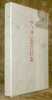
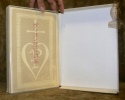
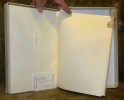
écrit en japonais avec titres originaux en vieux français, planches en n/b, Pour un paiement via PayPal, veuillez nous en faire la demande et nous vous enverrons une facture PayPal
Les noëls de France. Ouvrage orné de 164 héliogravures. Couverture et hors-texte: enluminures de Robert Lanz.
Grenoble, B. Arthaud, Succr. des Editions J. Rey 1934, 230x170mm, 221pages, reliure toile avec pièce de titre et d’auteur dorés au dos. Ex-libris et inscriptions manuscrites sur le haut de la page de faux-titre, autrement bel exemplaire.
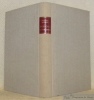
164 photos en héliogravure, enluminures en hors-texte, manque la couverture supérieure, Pour un paiement via PayPal, veuillez nous en faire la demande et nous vous enverrons une facture PayPal
Forschungen und Fortschritte der Katalogisierung der orientalischen Handschriften in Deutschland. Marburger Kolloquium 1965.
Wiesbaden, Steiner, 1966.
X,140 p. Stiff wrs. 22 cm
Une inscription gravée sur un vase cultuel mithriaque.
Amst., 1955.
14 p. Wrs. 24 cm (Med. KNAW)
Studia Palaeographica.
Leiden, Van Doesburg, 1870.
106. p. No Wrappers. 23 cm (Dissertation, Leiden) (Paper wrappers gone. Back strengthened with a strip of brown cloth tape)
Remarques sur une épitaphe latine de Philippe en Macédoine.
Bruxelles, 1949.
20 p. Wrappers. 24 cm (Including the Latin text of the epigram 'mal lisible et d'un type particulier' of 22 lines)
Zum Bonner Grabstein eines Thrakischen Soldaten.
Darmstadt, 1933.
8 p., 1 plate. Wrappers. 27 cm (Offprint 'Bonner Jahrbücher, Heft 138)
Gedenk- und Jubiläumsvorträge am Heidelberger Seminar für Alte Geschichte.
Stuttgart, Steiner, 1989.
108 p. Wrs. (Heidelberger Althistorische Beiträge und Epigraphische Studien, 6)
Abendländische Buchkunst zur Zeit der Kaiserin Theophanu. Eine Ausstellung des Schnütgen-Museums zum Gedenken an den 1000. Todestag der Kaiserin Theophanu.
Köln, 1991.
4to. 175 p., ills. Hardb. (Profusely illustrated)
De lege quadam sacra Coorum (Ditt. Syll.3, 1000).
Groningen, M. de Waal, 1953.
X,99 p. Stiff wrappers. 24 cm (Dissertation, University Utrecht)
Exercitationes palaeographicas in Bibliotheca Universitatis Lugduno-Batavae instaurandas indicit -.
Leiden, Brill, 1889.
44 p. Wrs. 24 cm
La vocalisation de la langue égyptienne. I. La phonétique.
Le Caire, Institut Français d'Archéologie Orientale, 1991. In-4 br., VIII-260 pp. (BiEtud, XVI).
Bonne condition. - Frais de port : -France 7,15 € -U.E. 9 € -Monde (z B : 14 €) (z C : 24 €)
La vocalisation de la langue égyptienne. I. La phonétique.
Le Caire, Institut Français d'Archéologie Orientale, 1991. In-4 br., VIII-260 pp., bibliogr. Notes au crayon dans les marges.
Un peu fané, bonne condition néanmoins. - Frais de port : -France 7,15 € -U.E. 9 € -Monde (z B : 14 €) (z C : 24 €)
Wiener hebräische Epitaphien.
Wien, Alfred Hölder, 1907.
33 p., 3 plates. Stiff plain wrappers. 23.5 cm (Sitzungsberichte Kais. Akademie der Wissenschaften in Wien) (On 12 monuments dating from 1540 to 1748) (Stamp on the title-page)
Les oasis d'Egypte à l'époque grecque, romaine et byzantine d'après les documents grecs (recherches de papyrologie et d'épigraphie grecques)
Le Caire, IFAO, 1987. In-4 broché, 434pp, XLIV planches en noir in fine, 5 cartes doubles dépliantes, bibliogr., indices.
Couv. un peu pouss., bon ex. néanmoins. - Frais de port : -France 8,4 € -U.E. 10 € -Monde (z B : 15 €) (z C : 33 €)
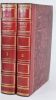
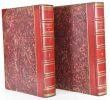
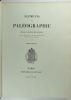
Eléments de paléographie pour servir à l'étude des documents inédits sur l'histoire de France.
Paris, Imprimerie Royale, 1838, 2 volumes fort in-4°, XII-716 et IV-452 pages, plein veau blond, filets dorés sur les plats, trois tranches dorées, charnières fragiles.
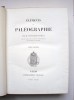
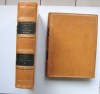
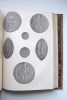
Illustré de 17 planches de fac-simile d'écritures dont 2 dépliantes et de 20 planches de sceaux représentant 127 sceaux reproduits par le procédé d'Achille Collas . Exemplaire sur vergé à grandes marges.
Éléments de paléographie.
Paris, Imprimerie Royale, 1838. 2 volumes grand in-4 (355 x 265 mm), (2) ff.- XII-716 pp. et (2) ff.- 452- IV pp., 17 pl. de reproduction d'écriture et 20 pl. de reproduction de sceaux. Reliure basane maroquinée à coins d'époque, dos orné de filets et roulettes dorés, plats du tome 1 frottés, très bel exemplaire imprimé sur un fort papier vergé.
Diplomatic studies in Latin and Greek documents from the Carolingian age.
Ithaca, Ldn., Cornell Univ. Press, 1977.
XIII,396 p. Cl. 24 cm
Le grand livre de pierre. Les textes de construction à Karnak.
Paris, Ed. Soleb & AIBL, 2009. Fort in-4 broché, couv. rempliée ill. en coul., 542 pp., textes hiéroglyphiques et traductions, plans de localisation des textes et plans bilan, index, lexiques et bibliographie.
Collection : Etudes d'égyptologie N° 9. Mémoires de l'Académie des inscriptions et belles-lettres. Tome 41. Comme neuf. - Frais de port : -France 8,4 € -U.E. 10 € -Monde (z B : 15 €) (z C : 33 €)
Anleitung zur griechischen Palaeographie. Vierte, verbesserte Auflage.
Leipzig, S. Hirzel, 1886
106 p. Cloth. 25x21 cm (Paper yellowing)

