 Write to the booksellers
3649 books for « roman j ch »Edit
-
Type
Book (3621)
Magazine (13)
Music sheets (15)
-
Latest
Last 24h (5)
Last 3 days (1)
Last month (81)
Last week (1)
-
Language
French (3328)
German (4)
Russian (316)
Spanish (1)
-
Century
18th (6)
19th (36)
20th (491)
21st (155)
-
Countries
Belgium (65)
Canada (8)
China (4)
Côte d'Ivoire (3)
Denmark (11)
France (3081)
Germany (1)
Netherlands (19)
Switzerland (141)
United States of America (316)
-
Syndicate
ALAC (7)
CLAM (2)
CLAQ (2)
ILAB (406)
NVVA (18)
SLACES (18)
SLAM (362)
SNCAO (1)
Topics
- Adam (8)
- Alps (23)
- Alsace (97)
- Anonymous (9)
- Aragon (8)
- Archaeology (22)
- Architecture (11)
- Army (8)
- Autographs (7)
- Bazin Hervé (9)
- Bibliography (7)
- Bibliophilism (5)
- Biography (13)
- Brittany (6)
- Carmen (6)
- Cathedrals (7)
- Cesbron gilbert (8)
- Chapsal madeleine (10)
- Children’s books (6)
- Cinema (38)
- Comic strip (25)
- Curiosa (7)
- Dauphiné (9)
- Detective novels (28)
- Dictionaries (12)
- Drawings (5)
- Economics (8)
- Egypt (7)
- Fajans (10)
- Fine arts (28)
- First edition (30)
- Flora (5)
- Gard (6)
- Genealogy (5)
- Geography (7)
- Germanic languages (12)
- Greek (8)
- Guide books (5)
- Guittoneau ben (5)
- Helvética (21)
- Historical novel (22)
- History (69)
- Humour anecdotes (8)
- Industrial arts & crafts - fine arts (8)
- Iran - persia (11)
- Italy (8)
- Jacob (8)
- Jakobson roman (32)
- Language (9)
- Languedoc (9)
- Lanzmann jacques (7)
- Latin (7)
- Law (7)
- Linguistics (14)
- Literature (2729)
- Middle ages (16)
- Miller (10)
- Navy (11)
- Newspapers press (7)
- Paris (18)
- Philosophy (15)
- Photography (14)
- Poetry (13)
- Poland (13)
- Policy (7)
- Posters (13)
- Protestantism (6)
- Psychology (6)
- Raphael (7)
- Regionalism (13)
- Reims (7)
- Religions (8)
- Review (20)
- Reviews (7)
- Romanic art (22)
- Russia (5)
- Sagan françoise (11)
- Sciences (7)
- Scores (20)
- Shapes & colours (7)
- Simone (6)
- Songs (15)
- Suspense (7)
- Switzerland (24)
- Tea (12)
- Theatre (15)
- Troyat henri (16)
- Ussr (6)
- Various (61)
- War (23)
- Youth (13)
LE GENIE DE PETRARQUE OU IMITATION en vers françois de ses plus belles poésies.précédé de la vie de cet homme célèbre , dont les actions et les écrits font une des plus singulières époques de l'histoire & de la littérature moderne.
1778 PARME et AVIGNON J.GUICHARD 1778. petit in-8, vj-390 pp., 1f. n. ch., , cartonné époque ,dos lisse et plats (coiffes , charniéres et coins émoussés) , édition originale; les 288 premières sont consacrées à l'intéressante biographie de Pétrarque par l'abbé Roman, né en Avignon.
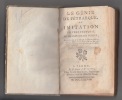
tranches rouges ,traces de mouillures claires en marge à 2 feuillets ,rare Remise de 20% pour toutes commandes supérieures à 200 €
Roman coin. Serrate silver denarius. - [MAGNIFICENT ROMAN COIN - IN NEAR MINT CONDITION - DEPICTING ODYSSEUS ]
Rome, minted in 82 BC. 18mm. A magnificent specimen, with very clear, sharp imprint and sharp edges. Near mint - the finest copy we have seen. Obverse: Draped bust of Mercury right, wearing winged petasos caduceus and control letter behind. Reverse: Ulysses standing right, holding staff in left hand and extending right hand to Argus C•MAMIL to left, LIMETAN to right. Crawford 362/1 BMCRR Rome 2725" RSC Mamilia 6.
A denarius of the Roman Republic featuring one of the very few references to Homer's Odyssey in ancient coinage. On the obverse is Mercury, a god very much propitious to Odysseus, easily recognizable by the winged petasos and the caduceus. The reverse depicts one of the most moving passages in literature, hardly matched to this day. In book XVII (290-327) Odysseus returns to Ithaca disguised as a beggar. His faithful dog, Argos, has been waiting for his return for 20 years. Ignored, abandoned by everyone, the dog is ridden with ticks and fleas, lying in a pile of manure. Odysseus is accompanied to the palace by Eumaeus the shepherd, who is unaware of the beggar's true identity. Odysseus recognizes his dog and is forced to hide a single tear that rolls down his cheek. He cannot greet the dog, as that would give away his identidy. Argos, after all those years, recognizes his master as well, but if he were to run to him it would most certainly cause his death by the suitors. Here Homer cannot do anything other than to end the life of Argos, otherwise the entire Odyssey would have been for naught. So Argos dies upon the vision of his master having fulfilled his life purpose: to await his return. It is also the moment that marks the end of the twenty year cycle since Odysseus left for the Trojan War, thus announcing the imminent closing of the Trojan Cycle itself. The denarius' reverse depicts the idealized moment of the scene where master and dog would be just about to meet and greet each other, but as we have seen, the reunion cannot happen. ""There lay the hound Argos, full of vermin"" yet even now, when he marked Odysseus standing near, he wagged his tail and dropped both his ears, but nearer to his master he had no longer strength to move. Then Odysseus looked aside and wiped away a tear. [...] But as for Argos, the fate of black death seized him straightway when he had seen Odysseus in the twentieth year."" Mamilius Limetanus is one of the three moneyers for the year 82 BC. The moneyers, selected every year, were magistrates in charge of the production of coinage, and they were at liberty to determine the design of the coins, which were often deities and characters associated with their personal family history. Like most Roman Patricians, Limetanus claimed to be a descendant of a Homeric character, in this case, Odysseus—Julius Caesar's family, for example, thought themselves to be descendants of Aeneas. A spendid specimen of this magnificent Roman denarius.
Tapis-Franc. Revue du roman populaire - Éditée par l'Association des Amis du Roman Populaire
Reference : 127355
(1996)
Tapis-Franc N° 7 : Leroux, la modernité dans les ombres : Gaston Leroux : le récit sur la langue (Charles Grivel) - Perversité de l'écriture (Jean-Claude Vareille) - Midi, minuit. La lumière au dedans (Charles Grivel) - "La Mansarde en or" ou la modernité douloureuse de Gaston Leroux (Paul Bleton) - Gaston Leroux et dissociation en matière romanesque (Benoît Denis) ...
1996 N° 7 - Automne 1996 - In-8, broché, couverture illustrée - 125 pages
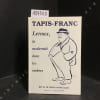
Ex-libris collé sur la deuxième de couverture - Menus frottement sur la couverture Bon
Serrate silver denarius. - [MAGNIFICENT ROMAN COIN DEPICTING ODYSSEUS ]
Rome, minted in 82 BC. 20mm. 3.74 g. About Very Fine, but still clear devices and legends. Obverse: Draped bust of Mercury right, wearing winged petasos caduceus and control letter behind. Reverse: Ulysses standing right, holding staff in left hand and extending right hand to Argus C•MAMIL to left, LIMETAN to right. Crawford 362/1 BMCRR Rome 2725" RSC Mamilia 6.
A denarius of the Roman Republic featuring one of the very few references to Homer's Odyssey in ancient coinage. On the obverse is Mercury, a god very much propitious to Odysseus, easily recognizable by the winged petasos and the caduceus. The reverse depicts one of the most moving passages in literature, hardly matched to this day. In book XVII (290-327) Odysseus returns to Ithaca disguised as a beggar. His faithful dog, Argos, has been waiting for his return for 20 years. Ignored, abandoned by everyone, the dog is ridden with ticks and fleas, lying in a pile of manure. Odysseus is accompanied to the palace by Eumaeus the shepherd, who is unaware of the beggar's true identity. Odysseus recognizes his dog and is forced to hide a single tear that rolls down his cheek. He cannot greet the dog, as that would give away his identidy. Argos, after all those years, recognizes his master as well, but if he were to run to him it would most certainly cause his death by the suitors. Here Homer cannot do anything other than to end the life of Argos, otherwise the entire Odyssey would have been for naught. So Argos dies upon the vision of his master having fulfilled his life purpose: to await his return. It is also the moment that marks the end of the twenty year cycle since Odysseus left for the Trojan War, thus announcing the imminent closing of the Trojan Cycle itself. The denarius' reverse depicts the idealized moment of the scene where master and dog would be just about to meet and greet each other, but as we have seen, the reunion cannot happen. ""There lay the hound Argos, full of vermin"" yet even now, when he marked Odysseus standing near, he wagged his tail and dropped both his ears, but nearer to his master he had no longer strength to move. Then Odysseus looked aside and wiped away a tear. [...] But as for Argos, the fate of black death seized him straightway when he had seen Odysseus in the twentieth year."" Mamilius Limetanus is one of the three moneyers for the year 82 BC. The moneyers, selected every year, were magistrates in charge of the production of coinage, and they were at liberty to determine the design of the coins, which were often deities and characters associated with their personal family history. Like most Roman Patricians, Limetanus claimed to be a descendant of a Homeric character, in this case, Odysseus—Julius Caesar's family, for example, thought themselves to be descendants of Aeneas. A wonderful specimen of this magnificent Roman denarius.
ROMAN. N° 1. (Janvier 1951).
ROMAN. N° 1. (Janvier 1951). Virginia Woolf, Joan Bennett, Rose Celli, Pierre de Lescure, Célia Bertin, William Sansom, Jacques Corbier, etc. Long article non signé (probablement de Pierre de Lescure) sur James Joyce. Bon état.
ROMAN. Saint-Paul (Alpes-Maritimes) puis Paris. Directeurs : Pierre de Lescure et Célia Bertin. Grand in-8° broché. Couverture composée par Henri Matisse. 12 numéros (dont un double, le n° 6-7) ont paru en 11 livraisons, de janvier 1951 à juillet 1955.
ROMAN. N° 3. (Juin 1951).
ROMAN. N° 3. (Juin 1951). James Joyce (fragment de Finnegans wake), Elio Vittorini, Franco Lucentini, Alan Ross, Pierre de Lescure, Claus Pack (" Analogies : Joyce, Picasso, Klee "), Maxime Chastaing (" Tentatives pour une traduction de Finnegans wake "), etc. Bon état.
ROMAN. Saint-Paul (Alpes-Maritimes) puis Paris. Directeurs : Pierre de Lescure et Célia Bertin. Grand in-8° broché. Couverture composée par Henri Matisse. 12 numéros (dont un double, le n° 6-7) ont paru en 11 livraisons, de janvier 1951 à juillet 1955.
ROMAN. N° 6-7. (Avril 1952).
ROMAN. N° 6-7. (Avril 1952). C.-G. Bjurstrom, Vilgot Sjoman, Clarisse Francillon, Claudio Varese, etc. Très bon état.
ROMAN. Saint-Paul (Alpes-Maritimes) puis Paris. Directeurs : Pierre de Lescure et Célia Bertin. Grand in-8° broché. Couverture composée par Henri Matisse. 12 numéros (dont un double, le n° 6-7) ont paru en 11 livraisons, de janvier 1951 à juillet 1955.
ROMAN. N° 12. (Juillet 1955).
ROMAN. N° 12. (Juillet 1955). Célia Bertin, Guy Vaes, Robert Guiette, Pierre Algaux, Anne Bodart, Axel Amlie, Sigurd Hoel, etc. Très bon état.
ROMAN. Saint-Paul (Alpes-Maritimes) puis Paris. Directeurs : Pierre de Lescure et Célia Bertin. Grand in-8° broché. Couverture composée par Henri Matisse. 12 numéros (dont un double, le n° 6-7) ont paru en 11 livraisons, de janvier 1951 à juillet 1955.
Daudin, Claire
cerf In-8, broché, couverture souple et ill (bas relief Abbatiale Moissac), 107 pages. Très bel exemplaire.
Tu me l'as dit un jour, sans crier gare. Je ne me souviens pas de tes mots ; on allait vers le printemps, il faisait clair dans la pièce au plafond haut. Tu me l'as dit entre deux cours, nous étions seuls dans la salle vide. Tu ne t'es pas attardé, tu me l'as dit comme en passant. Pourtant tu me l'as bien dit, à moi, dans cette salle du lycée où nous étions assis l'un près de l'autre, et je ne t'ai pas répondu. Tu m'as dit que tu étais juif. " " Mon roman juif ", ma romance, ma belle histoire. Celle de deux adolescents qui n'auraient pas dû se rencontrer. Olympe, issue de la vieille chrétienté française ; Ariel, survivant qui s'ignore d'un monde anéanti, le " shtetl " polonais. Chacun est pour l'autre une incitation au départ. Pour l'autre, chacun va quitter la maison de ses pères, " vers un pays que je te montrerai ". De la montagne Sainte-Geneviève aux faubourgs de Lublin, des versions latines aux récits hassidiques, Olympe se lance à la poursuite de l'ami énigmatique, le garçon qui marchait trop vite dans les couloirs du lycée. C'est à Moissac qu'Ariel, par un étrange détour, trouvera le secret de ses origines. Sous le regard de Jérémie, le prophète sculpté dans la pierre, les retrouvailles prévues par le Ciel seront-elles célébrées, en dépit des rendez-vous manqués de l'histoire ? Récit poétique où s'entrelacent visions oniriques et souvenirs de lectures, " Mon roman juif " traverse les générations, les frontières, les mondes, pour ouvrir un espace où ce qui était séparé se rejoint, ceux qui étaient perdus se retrouvent et s'unissent " sous le ciel tendu comme un dais ". -- "You told me one day, without any warning. I don't remember your exact words; spring was approaching, the high-ceilinged room was full of light. You told me between two classes, we were alone in the empty room. You didn't linger, you said it as though it were a casual remark. Nevertheless, you told me, me, in that schoolroom where we were seated next to each other, and I didn't answer. You told me you were Jewish.' Mon roman juif, my romance, my beautiful story. A story of two teenagers who never should have met. Olympe, from an old French Christian family; Ariel, an unknowing survivor of an annihilated world, the Polish 'shtetl'. Each represents for the other an incitement to departure. For each other, they leave the paternal home and travel 'towards a land I will show you'. From the Sainte-Geneviève mountain to the to the suburbs of Lublin, from Latin translations to Hassidic narratives, Olympe sets off in pursuit of her enigmatic friend, the boy who walked too quickly through the school corridors. It is at Moissac that Ariel, as a result of a strange coincidence, discovers the secret of his origins. Will those reunions planned in heaven finally be celebrated under the gaze of Jeremiah, the prophet sculpted in stone, in spite of the missed opportunities of history? A poetic tale where dreamlike visions and memories of books interlace, 'My Jewish Novel' moves across generations, frontiers and worlds to create a space where those who were separated come together again, and those who were lost find each other once more, united 'beneath a sky stretched out like a canopy'. Comme neuf Mise à jour du Samedi 27 Juin 2026. Paiement PayPal immédiat, Mondial Relay pour : France, Allemagne, Autriche, Belgique, Espagne, Italie, Portugal, Luxembourg, Pays-Bas, Pologne (Communiquer votre point ou locker si connu). Une participation supplémentaire peut être demandée pour les colis lourds hors France où les envois compris entre 5 et 25 kg sont dégressifs : 2 à 4 kilogrammes - 7.99 / 5 à 10 kg - 15.99 / 15 -25 kg - 25.99. Certaines de nos collections ( Vian, Céline, Camus (...) peuvent être expédiées en Franco de port. Pour linternational hors Europe (Suisse, Canada, Japon, Etats-Unis, les frais dexpéditions peuvent varier selon le poids (mise à jour : 1 juin 2026).
"Bukhta somneniya. Lovtsy chelovekov: Romany; Roman Raygorodetskiy; Khudozh. AÖ"
"In Russian. Raigorodetsky, Roman Isaakovich. The Bay of Doubt. Human Catchers: Novels; Roman Raigorodetsky; [Artist A.I. Spikov]. Moscow: Soviet writer, 1978 Bukhta somneniya. Lovtsy chelovekov: Romany; Roman Raygorodetskiy; Khudozh. A.I. Paukov/The Bay of Doubt. The Catchers of Man: Novels; Roman Raigorodetsky; Artist A.I. Spikov In Russian. All images are for identification of editions only. Several books of the same edition may be available. Please feel free to request photos of available books. SKU7667460"
Le Roman De Renart - Le Roman De La Rose / analyse et Meilleures Pages
La Renaissance Du Livre broché Couverture Illustrée Paris "collection "" tous les chefs d' oeuvre de la littérature française "" - 159 pages en format 11.5 - 17.5 cm"
Très Bon État
Église catholique , Roman Catholic Church Missale Romanum RELIURE ANIMEE plaques romantique
Reference : 24603
(1853)
Missale Romanum ex decreto sacrosancti concilii Tridentini restitutum, S. PII Quinti jussu editum, Clementis VIII. et Urbani VIII. Papae auctoritate recognitum, et novis missis ex indulto apostolico hugusque concessis auctum
1853 P. J. Hanicq, Mechliniae [Malines Mechelen, Flanders, Belgium], 1853,IN FOLIO reliure plein chagrin rouge (posterieure),plats decorés (cartonnage fers dorés,monogramme MM ,2e plat)),tranches dorées,dos à caissons dorés,signets tissus multicolores à fleurs de lys,11 planches gravées ht (bois et litho) - Title vignette; illustrated initials; printed in red and black; text in double columns.[40], 484, cxxxvj,+ [1]-[1-1bl]-2-2-2-20-[1-1bl-2] p.,pages datées posterieures : , 11 unnumbered leaves of plates : illustrations, music ; 36 x 26 cm, RELIURE ANIMEE plaques romantique, bon état .Missale Romanum is a highly important text in the Roman Catholic Church and contains within it the texts and rubrics relating to the Catholic Rite of Mass, considered an essential part of Catholic doctrine. This particular version of the Roman Missal contains the changes made by Pope Clement VIII in 1604 which include corrections to the previous standard edition created by Pope Pius V and the further corrections made by Pop Urban VIII in 1634. The work is an unusual edition of a highly important and still widely recognised part of Catholic Dogma,with last corrections.
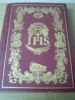
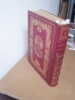
In all an impressive good copy in a fine binding.A nice typographical specimen of a 19th century missal illustrated, printed and bound with fine craftmanship by the famous Hanicq press in Mechelen.Liturgy. Remise de 20% pour toutes commandes supérieures à 200 €
L'ULL CRITIC, 4-5. Roman populaire et / ou roman historique.
Lleida, Universitat de Lleida, Departament de Filologia Francesa..., 1999, in 8° broché, 304 pages.
Textes en français et en espagnol dont Roger Bellet : Erckmann-Chatrian lu par Vallès. Mythologie et idéologie de la Révolution Française. PHOTOS sur DEMANDE. ...................... Photos sur demande ...................


Phone number : 04 77 32 63 69
Paris Moscou 1900 1930. AFFICHE
Paris Centre Georges Ponpidou - Imprimante Moderne du Lion 1979 In-4 Broché, couv. illustrée Edition originale
AFFICHE originale de cette importante exposition organisée à Beaubourg du 31 mai au 5 novembre 1979 à Paris. Belle composition en couleurs de Roman Cieslewicz. 50 x 70 cm. Bon état. Très bon 0
( Cinéma - Dossier de Presse - Roman-Photo ) - Edouard Molinaro - Jacques Brel - Claude Jade - Paul Frankeur - Rosy Varte - Bernard Blier.
Reference : 33111
(1969)
Rare dossier de presse sous forme de roman-photo pour le film franco-italien : Mon oncle Benjamin. L'homme à l'habit rouge.
Gaumont 1969. Dossier de presse de 8 pages au format 30 x 24 cm. Couvertures illustrées. Rare dossier de presse pour le le film français : franco-italien : Mon oncle Benjamin. L'homme à l'habit rouge, réalisé en 1969 par Edouard Molinaro d'après le roman éponyme de Claude Tillier publié en 1843. Synopsis sous forme de roman-photo accompagné de la fiche technique et de la présentation du metteur en scène. Musique de Jacques Brel. On trouve dans les rôles principaux : Jacques Brel, Claude Jade, Bernard Alane, Paul Frankeur, Rosy Varte, Lyne Chardonnet, Robert Dalban, Bernard Blier, etc. Superbe état de fraicheur. Tirage limité réservé aux journalistes, diffuseurs et salles de cinéma. De toute rareté.
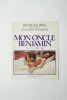
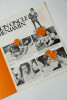
Vente exclusivement par correspondance. Le libraire ne reçoit, exceptionnellement que sur rendez-vous. Il est préférable de téléphoner avant tout déplacement.Forfait de port pour un livre 10 € sauf si épaisseur supérieure à 3 cm ou valeur supérieure ou égale à 100 €, dans ce cas expédition obligatoire au tarif Colissimo en vigueur. A partir de 2 livres envoi en colissimo obligatoire. Port à la charge de l'acheteur pour le reste du monde.Les Chèques ne sont plus acceptés.Pour destinations extra-planétaire s'adresser à la NASA.Membre du Syndicat Lusitanien Amateurs Morues
La Conqu¬te d'une belle-m¿re roman/Margaret Argles Hungerford trad. de l'anglais par Mme Dussaud-Roman
Gnrique Broch D'occasion tat correct 01/01/1903 150 pages
Dans la peau du miroir
1988 Bruxelles, La Pierre d’Alun, 1988, 224x166mm, 84pp., en feuilles sous couverture imprimée.Le texte de Marcel Mariën est illustré de 10 photomontages originaux de Roman Cieslewicz.Exemplaire 15/50 réservés aux amis de « La Pierre d’Alun » signés par les auteurs et comportant en frontispice une sérigraphie originale signée et numérotée de Roman Cieslewicz.Exemplaire unique comprenant les dix photomontages originaux, 360x265mm, portant tous au dos le cachet de la vente de l’atelier, l'ensemble contenu dans une boîte spécialement conçue et réalisée par l'Atelier Devauchelle.Roman Cieslewicz commence sa carrière cher « Elle » en 1963 ou il est rapidement nommé directeur artistique ; puis il dirige l’agence M.A.F.I.A. ou il conçoit des campagnes pour Prisunic, Woolmark, 3 Suisses ou Lancaster ; puis il crée la revue « Opus International », la revue « Kitsch » avec Topor et Sternberg, puis commence une longue collaboration avec le Centre Pompidou pour lequel il crée de nombreuses affiches et catalogues. Dans cette collaboration avec Marcel Mariën on reconnait l’influence du surréalisme belge.Provenance des photomontages : vente atelier Cieslewicz, Paris,19 mars 2006 , lot 238.(104095)
[Véronique Jordan-Roman ] - RONSARD Véronique Jordan-Roman
Reference : 44263
ISBN : 2110808284
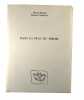
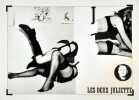
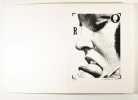
AMOURS DE MARIE. SONNETS POUR HÉLÈNE. Illustrations de Véronique Jordan-Roman
Paris Imprimerie Nationale 1985 in 8 carré (22,5x17) 1 volume reliure plein cuir rouge de l'éditeur, dos à 4 nerfs soulignés de filets dorés, tête dorée, 365 pages [4], avec de nombreuses illustrations hors-texte en couleurs de Véronique Jordan-Roman. Textes présentés et commentés par Robert Aulotte. Collection '' Lettres Françaises''. Tirage limité à 5100 exemplaires numérotés, celui-ci un des 4980 exemplaires imprimés sur papier d'édition de Rives, et reliés plein cuir. Bel exemplaire ( Photographies sur demande / We can send pictures of this book on simple request )
Très bon Reliure Ed. numérotée
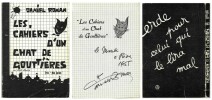
Les Cahiers d'un Chat de Gouttières, au vitriol vitaminé . Petit bréviaire d'hédonisme, d'eudémonisme et d'utilitarisme. ( Avec dédicace de Daniel Roman ).
Editions Jean Grassin 1963. In-8 broché de 200 pages au format 24 x 17 cm. Couvertures illustrées. Dos carré. Plats et intérieur frais malgré de petits frottis aux mors et aux coins. Livre composé de de boutades et d'aphorismes par le chansonnier et poète, Daniel Roman, pensionnaire des Trois Baudets et autres cabarets parisiens. Composition typographique très originale sur papier à carreeux de type " cahier d'écolier " avec illustrations de l'auteur. Edition originale en très bel état général. Exemplaire orné d'une dédicace autographe, signée et datée, de Daniel Roman, effectuée au Cabaret " Le Moulin à Poivre ". Peu courant.
Vente exclusivement par correspondance. Le libraire ne reçoit, exceptionnellement que sur rendez-vous. Il est préférable de téléphoner avant tout déplacement.Forfait de port pour un livre 10 € sauf si épaisseur supérieure à 3 cm ou valeur supérieure ou égale à 100 €, dans ce cas expédition obligatoire au tarif Colissimo en vigueur. A partir de 2 livres envoi en colissimo obligatoire. Port à la charge de l'acheteur pour le reste du monde.Les Chèques ne sont plus acceptés.Pour destinations extra-planétaire s'adresser à la NASA.Membre du Syndicat Lusitanien Amateurs Morues
LE POSTE DES NEIGES. Roman inédit orné de nombreuses illustrations obtenues par la photographie d'après nature.
Barcelone & Paris, Richardin Lam & Per Lamm, (1899). In-8 de 203pp. & 8 ff. du catalogue de la collection, ill. de nbr. photographiques en noir et blanc in-texte et hors texte. Intérieur très frais. Envoi "A Mademoiselle Souvestre" daté 1900. Demi-veau rouge, plats de papier marbré, couvertures (première restaurée). Reliure moderne.
![LE POSTE DES NEIGES. Roman inédit orné de nombreuses illustrations obtenues par la photographie d'après nature.. [ROMAN PHOTO - MONTAGNE] MARGUERITTE ...](https://static.livre-rare-book.com/pictures/BTR/img22791_1_thumb.jpg)
![LE POSTE DES NEIGES. Roman inédit orné de nombreuses illustrations obtenues par la photographie d'après nature.. [ROMAN PHOTO - MONTAGNE] MARGUERITTE ...](https://static.livre-rare-book.com/pictures/BTR/img22791_2_thumb.jpg)
![LE POSTE DES NEIGES. Roman inédit orné de nombreuses illustrations obtenues par la photographie d'après nature.. [ROMAN PHOTO - MONTAGNE] MARGUERITTE ...](https://static.livre-rare-book.com/pictures/BTR/img22791_3_thumb.jpg)
Edition originale de ce roman photo illustré de photos d'après nature. Collection "Excelsior". Roman alpin situé dans la région de Chambéry, illustré d'après les clichés "mis en scène" du capitaine A. Lonzo. Il était à la mode à cette époque d'utiliser des comédiens pour illustrer des romans. Imprimé sur papier couché.
PHOTOGRAPHIE ORIGINALE : PORTRAIT DE MANCOR - GUIDE (1870)
pau ROMAN BANDOWSKI 1870 une photographie originale "CARTE DE VISITE" albuminée en noir et aquarellée en rouge, format : 5,6 x 9 cm pour la photo, 10 x 6,1 cm avec le carton ou la photo est contrecollée, Année : Circa 1870, imprimé au verso : ROMAN BENDOWSKI ARTISTE PEINTRE PHOTOGRAPHE PAU,notée au crayon en haut du verso : Mancor guide,
OMAN BANDOWSKI PHOTOGRAPHE, Activités entre 1860 et 1875 Pau Pyrénées-Atlantiques (64) France ................ TRÉS RARE ................ en bon état (good condition). en trés bon état
( Bibliographie - Bibliophilie ) - Théâtre et Roman Populaire - Collectif.
Reference : 24461
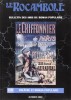
Le Rocambole. Bulletin des Amis du Roman Populaire n° 20 : Théâtre et Roman Populaire.
Bulletin des Amis du Roman Populaire / Revue Le Rocambole n° 20 de 2002. In-8 broché de 175 pages au format 14 x 20 cm. Couverture illustrée. Illustrations. Bibliographie. Livre neuf. Edition originale.
Vente exclusivement par correspondance. Le libraire ne reçoit, exceptionnellement que sur rendez-vous. Il est préférable de téléphoner avant tout déplacement.Forfait de port pour un livre 10 € sauf si épaisseur supérieure à 3 cm ou valeur supérieure ou égale à 100 €, dans ce cas expédition obligatoire au tarif Colissimo en vigueur. A partir de 2 livres envoi en colissimo obligatoire. Port à la charge de l'acheteur pour le reste du monde.Les Chèques ne sont plus acceptés.Pour destinations extra-planétaire s'adresser à la NASA.Membre du Syndicat Lusitanien Amateurs Morues
L’homme de la jungle. Roman colonial
Paris, Bibliothèque-Charpentier 1929 In-12 19,5 x 12,5 cm. Reliure demi-basane bleu-marine, dos lisse, 228 pp. Exemplaire en bon état.
Bon état d’occasion
Eau-forte originale signée représentant un personnage de la Commedia dell'arte (22 x 16 cm).
(Paris, Les Amis bibliophiles, 1981) 1981 1 vol. Broché Belle eau-forte tirée à 130 exemplaires sur Arches, justifiée et signée par l'artiste. En parfait état.
Pièce signée
[Saint-Nazaire d'Aude, Languedoc] André de Saint Roman. P.S., 4 novembre 1586, 1p in-8 oblong sur parchemin. Joli quittance pour la réception d'une somme d'argent pour paiement de soldats. Saint Roman était capitaine de la garnison de Saint-Nazaire « ayant charge d'une compagnie de soixante hommes ». Le document mentionne l'ordre d'Alphonde d'Ornano (1548-1610), le maréchal de France s'étant illustré pendant les guerres de religion. Ce document est intéressant notamment car ce petit capitainre, André de Saint Roman, ne semble pas répertorié. Au dos, des notes XIXe sur ce documents et le contexte. [294]
![Pièce signée. [Saint-Nazaire d'Aude, Languedoc] André de Saint Roman.](https://static.livre-rare-book.com/pictures/JNL/013067_1_thumb.jpg)
![Pièce signée. [Saint-Nazaire d'Aude, Languedoc] André de Saint Roman.](https://static.livre-rare-book.com/pictures/JNL/013067_2_thumb.jpg)

