 Write to the booksellers
57 books for « paterculus c velleiu... »Edit
-
Language
French (52)
Latin (5)
-
Century
16th (1)
17th (6)
18th (13)
19th (5)
20th (1)
-
Countries
Belgium (3)
France (42)
Germany (1)
Greece (1)
Netherlands (6)
Switzerland (4)
-
Syndicate
CNE (1)
ILAB (14)
NVVA (1)
SLACES (1)
SLAM (12)
Topics
- Belgium (1)
- Biography (1)
- Early printed books (2)
- Elzevier (1)
- First edition (1)
- Germany (1)
- Greece (3)
- Greek (3)
- Guide books (1)
- History (16)
- Horticulture (2)
- Julius caesar (3)
- Latin (14)
- Law (1)
- Literature (5)
- Philosophy (2)
- Policy (1)
- Roman empire (1)
- Roman history (3)
- Rome (9)
- Sciences (1)
- Translation (1)
- Vegetable garden (2)
- Wine (2)
Histoire romaine, adressée à M. Vinicius, consul. Traduite par M. Després.
In-8, cartonnage rouge illustré éditeur à la Bradel, titre doré, rouss. et bruniss. parfois soutenues, texte latin et traduction française en regard. Paris, C.L.F. Panckoucke, 1840.
Edition bilingue, publiée dans la "Bibliothèque Latine-Française" de Panckoucke. Traduction de Jean-Baptiste-Denis Desprès.L'introduction et les notes sont de Jules Pierrot, la "Notice sur Velleius Paterculus" est extraite de l'"Histoire abrégée de la littérature romaine" de F. Schoell.Quelques accrocs à la reliure, rousseurs parfois soutenues.Ex-libris gravé et manuscrit Vicomte "Colonna d'Istria".


ABRÉGÉ DE L'HISTOIRE GRECQUE ET ROMAINE. Traduit du Latin de Velleius Paterculus par M. l'Abbé Paul. Avec le texte corrigé ; des notes critiques & historiques; une table géographique; une liste des éditions; & un discours préliminaire
Paris Chez Barbou, Imprimeur-Libraire 1785 in 12 (17x10,5) 1 volume pleine basane fauve de l'époque, dos lisse orné, riches caissons dorés, pièce de titre de maroquin rouge, tranches teintées rouge, 435 pages [4]. Traduit du latin de Velleius Paterculus avec le Texte corrigé, des Notes crtiques & historiques, une Table géographique, unE Liste des Editions & un Discours préliminaire par M. l' Abbé Paul. Texte en latin et traduction française en regard. Bel exemplaire ( Photographies sur demande / We can send pictures of this book on simple request )
Très bon Couverture rigide
Caius Velleius Paterculus qualem omni parte illustratum, publicavit David Ruhnkenius cui selectas variorum interpretum notas Krausii excursus cum duobus locupletissimis indicibus et novis adnotationibus subjunxit.
Parisiis, Colligebat N.E. Lemaire, 1822. Fort in-8, rel. demi-chagrin chocolat, dos à nerfs réhaussés de filets dorés, titre doré, tête mouchetée, LXXVI-679 pp., texte en latin, index. De la bibliothèque du Duc et de la Duchesse de Doudeauville (ex-libris armorié).
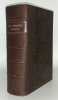
De la Collection Bibliotheca Classica Latina. Qq. pâles rousseurs, très bon ex. au demeurant. - Frais de port : -France 8,4 € -U.E. 10 € -Monde (z B : 15 €) (z C : 33 €)
ABRÉGÉ DE L'HISTOIRE GRECQUE ET ROMAINE. Traduit du Latin de Velleius Paterculus par M. l'Abbé Paul. Avec le texte corrigé ; des notes critiques & historiques; une table géographique; une liste des éditions; & un discours préliminaire
Paris Chez Barbou 1769 in 12 (17x10,5) 1 volume plein veau glacé havane, dos à nerfs orné, pièce de titre de cuir marron, tranches teintées rouge, filet à froid d'encadrement sur les plats, faux-titre, frontispice gravé, titre [5] 503 pages [6]. Texte latin et traduction française en regard. Bel exemplaire ( Photographies sur demande / We can send pictures of this book on simple request )
Très bon Reliure
Caius Velleius Paterculus qualem omni parte illustratum publicavit David Ruhnkenius, cui selectas variorum interpretum notas, Krausii excursus cum duobus locupletissimis indicibus et novis adnotationibus subjunxit N.-E. Lemaire
Paris Nicolaus Eligius Lemaire 1822 In-8 (22 x 14 cm), demi-cuir rouge, plats rouges, dos à 5 nerfs orné de filets et de fleurons dorés ou estampés à froid, auteur et collection au dos, tranches marbrées, lxxvi + 679 pp. Texte en latin. De la Bibliotheca Classica Latina.
Bel état, rares rousseurs. L'index est suivi d'une Notice des principales traductions par Barbier.
C. Velleii Paterculi Quae supersunt ex Historiae Romanae Voluminibus Duobus Cum Integris Scholiis, Notis, Variis Lectionibus...
Rotterodami Apud Joh. Danielem Beman & Filium 1756 Fort in-8, rel. ép. vélin rigide, dentelle dorée encadrant les plats, armes dorées au centre, pièce de titre bordeaux au dos. Frontispice gravé daté 1744, 748 pp., et 60 ff. n. ch. d'index. Il s'agit de la même édition que celle de P. Burmanni, Lugd.-Bat. 1744, dont on a uniquement changé le titre, ainsi que le prouvent les indications portées sur le frontispice.
Reliure en mauvais état (dentelles et armes presque entièrement effacées), fort accroc au dos. Néanmoins, mérite une restauration compte tenu des éloges portés par Brunet et Graesse, quant à la qualité de cette impression.
C. Velleii Paterculi quae supersunt. Nicolaus Heinsius Dan. F. recensuit et castigationum libellum addidit.
Amsterdam (Amstelodami), Ex officina Elzeviriana, 1678.
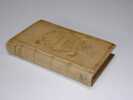
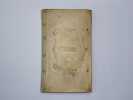
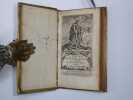
12mo. (XXIV),115,(29 index);108,(12 addenda & index) p., engraved title. Vellum 14 cm Prize copy Gouda (Ref: Willems 1550: 'Des 5 éditions de Paterculus données par les Elzevier, celle-ci est la plus estimée. Elle présente un texte nouveau revu par N. Heinsius'; Berghman 2110; Rahir 1686; Schweiger 2,1128; Brunet 4,430: 'édition préférable'; Fabricius/Ernesti 2,20; Graesse 5,162; Ebert 23478; Prize copy: Spoelder Gouda 2, p. 568) (Details: 6 thongs laced through the joints. Back ruled gilt. Boards with double fillet gilt borders. Gilt coat of arms in the centre of the boards. Engraved title, it depicts Aeneas with his father Anchises on his shoulders, and holding the hand of his son Ascanius; Anchises shows the way, he points at the motto: Fata viam invenient, a quote from Vergil's Aeneid Book X, verse 113; in the background burns Troy. The first part, 115 pages contains the text, the second part, 108 pages, the notes of Heinsius) (Condition: Without the prize. Vellum age-tanned. Gilt fading. Ownership entry on the front pastedown. Inscription on the front flyleaf. Right margin of the title slightly soiled. Occasional pencil stripes in the Latin text) (Note: The work of the Roman historian Velleius Paterculus, ca. 19 BC - after 30 AD, commonly called Historia Romana, is a valuable source for the reigns of the Roman emperors Augustus and Tiberius. It is the only history written by a witness of their time. Paterculus, who served 'under Tiberius in many of his most important campaigns, seems to have conceived an unbounded admiration for him and the whole imperial family, in whose men he could see nothing but sublime virtues, while the enemies were compact of every possible vice'. (H.J. Rose, 'A handbook of Latin literature, London, 1967, p. 355) Velleius' adulatory type of history was however condemned by the later historian Tacitus, who ignores him. The Historia Romana, consists of 2 books. The beginning of the first is lost, from the founding of Rome to the battle of Pydna in 168 BC, in which the Romans defeated the Macedonian kingdom. What remains of book one ends with the fall of Carthago in 146 B.C. Book 2 is of greater importance. 'Book 2, covering the period 146 BC to AD 30, becomes more detailed as it approaches the author's own day, doubtless because, as he tells us, he projected a fuller history from the Civil War onwards.' (OCD 2nd edition p. 1111/12). Velleius' style is less polished, but we are to remember that he was more a soldier than a rhetorician or scholar. Still, long time the work of Velleius was considered to be a kind of rhetorical patchwork produced by an opportunistic court historian. However 'erst seit kurzem arbeitet man intensiv an einer Neubewertung des Velleius, und seines Oeuvre als eines 'interpretationsfähigen und interpretationsbedürftigen Textes sui generis'. (Neue Pauly, 12/1, 1170/71) The Dutch neolatin poet and classical scholar Nicolaas Heinsius, 1620-1681, is to be ranked, in the opinion of the Dutch Latinist Petrus Burman, among the best interpreters of this historian. David Ruhnkenius however, who allowed Heinsius 'every praise as an editor of the Latin poets, thinks him greatly deficient' in his edition of Velleius. (Dibdin) The suggestions, notes and emendations of Heinsius are frequently discussed in the normative Cambridge edition of Velleius Paterculus of A.J. Woodman, who observes that Velleius was certainly not a panegyrist, but that modern historians sided with Tacitus, and have 'invariably tended to accept the criteria which Tacitus laid down for judging the early empire and its rulers. There is no reason why these should be the only valid criteria. The writing of history is an interpretation of various items of evidence: Velleius' own lifetime coincided with the period which he covers in the Tiberian narrative, and it is almost always possible to corroborate from other ancient sources the statements which he makes concerning contemporary events. What objection can there be to an historian who recognised the benefits inherent in the imperial system, and who devoted his rhetorical skill to the production of a corresponding interpretation of events'. (A.J. Woodman, 'Velleius Paterculus, the Tiberian narrative', Cambridge 1983. p. 53, Cambridge Classical Texts and Commentaries 25)) (Provenance: On the front pastedown in a modern hand: 'G. Henderson, Essex Court, Temple'. Essex Court lies in the Temple, an area of central London, in the vicinity of Temple Church. Henderson, probably a jurist, also made the inscription on the front flyleaf. On the front pastedown also an older name: 'Vad: Platii Pigotiani e dono S. fratris 1877'. A mystery)(Collation: *12, A-L12) (Photographs on request)
C. Velleii Paterculi Quae supersunt ex Historiae Romanae voluminibus duobus, cum integris animadversionibus doctorum, curante Davide Ruhnkenio.
Leiden (Lugduni Batavorum), Apud Samuel et Joann. Luchtmans, Academiae Typographos, 1779.
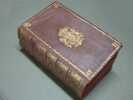
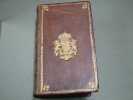
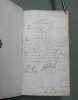
8vo. 2 volumes in 1: (II, frontispiece),(XXXII),CXXII,1262 (recte 1260),(99 index) p. Calf 21 cm (Ref: STCN ppn 241048281; Schweiger 2,1130: a long note, from which :'Sehr wichtige Ausgabe'; 'an offenbar corrupten Stellen nahm er Emendationen, fremde und eigene, auf'. 'Die Notae des Rhenanus und Burer liess er unverstümmelt unter dem Texte abdrücken und fügte ihnen seine Anmerkungen ... neue Emendationen .. hinzu'. 'Der zweite Theil enthält den vollständigen Apparat der Burmannischen Ausgabe'; Dibdin 2, 525: 'a very excellent edition'; The text is 'amended in many passages by the judgement of Ruhnkenius, and not according to the fanciful suggestions of preceeding editors'; Brunet 4,430: 'Très bonne édition'; Ebert 23482: 'Diese Ausgabe ist ein whares Muster krit. Tacts und grammat. Gelehrsamkeit, und bis jetzt die beste'. J. Bernays, 'Geschichte der klassischen Philologie, Hildesheim, 2008, p. 144: 'jetzt (ca. 1880) noch ausgezeichnet'; Spoelder p. 677, Tiel 1) (Details: Prize copy, including the manuscript prize dated 3rd july 1801 for Romboldus Brenkman Pitlo. Back gilt elaborately, and with 5 raised bands. Red morocco shield in the second compartment. Other compartments filled with gilt floral motives. Borders of the boards also ruled gilt with floral motives, and floral corner pieces. Gilt coat of arms of Tiel on both boards. Edges dyed red.The frontispiece designed by H. van der My and executed by F. v. Bleyswyk, depicting Rome, personified by an emperor, as a stronghold against chaos, under the protection of the Gods; in the middle stands the wise goddess Athena; she holds in her right hand the Palladion; Athena is the 'aquilifer' (Eagle-bearer) of Rome, for in her left hand she holds the 'Aquila', the standard of the Roman army; with a long chain she holds the destructive forces of civil war and chaos under control) (Condition: Corners slightly bumped. Head of spine very slightly damaged. All 4 ties gone) (Note: The work of the Roman historian Velleius Paterculus, ca. 19 BC - after 30 AD, is a valuable source for the reigns of the Roman emperors Augustus and Tiberius. Paterculus, who served 'under Tiberius in many of his most important campains, seems to have conceived an unbounded admiration for him and the whole imperial family, in whose men he could see nothing but sublime virtues, while the ennemies were compact of every possible vice' (H.J. Rose, 'A handbook of Latin literature, London, 1967, p. 355). Velleius' adulatory type of history was however condemned by the later historian Tacitus, who ignores him. The 'Historiae Romanae', consists of 2 books. The beginning of the first, from the founding of Rome to the battle of Pydna in 168 BC, in which the Romans defeated the Macedonian kingdom, is lost. What remains of book one ends with the fall of Carthago in 146 B.C. Book 2 is of greater importance. 'Book 2, covering the period 146 BC to AD 30, becomes more detailed as it approaches the author's own day, doubtless because, as he tells us, he projected a fuller history from the Civil War onwards.' (OCD 2nd edition p. 1111/12). His style is less polished, but we are to remember that he was more a soldier than an scholar. Velleius Paterculus was in good hands with the Dutch scholar of German origin David Ruhnken, or Ruhnkenius, 1723-1798. David Ruhnken was born in Pommern, and was sent by his parents in 1737 to the Friedrichscollegium in Königsberg, where he read Latin authors together with his friend Immanuel Kant. To finish his studies he went in 1744 to Leiden, to study Greek under Tiberius Hemsterhuis, whom he admired. He later told his biographer Wyttenbach that that he found in his teacher the combined gems of Leiden classical scholarship, Scaliger and Salmasius, in one person. Hemsterhuis wanted to create a worthy successor, and appointed him in 1757 to assist him as Reader in Greek. In 1761 Ruhnken succeeded the Latin chair vacated by Oudendorp. He became one of the leading scholars of his days. 'Die Führerstellung der Philologie erbte (...) von Hemsterhuys der Pommer David Ruhnken, der ganz zum Holländer ward und die vornehme und behäbige Würde eines Princeps criticorum zu wahren wusste. Als solchem hat ihm Fr.A. Wolf die Prolegomena gewidmet. (...) Musterhaftes Latein galt ihm soviel wie Wissenschaft. Aber als Lehrer muss er glänzend gewesen sein. (...) Alles was Ruhnken veröffentlicht hat, ist in seinen Grenzen tadellos'. (U. von Wilamowitz-Moellendorff, Geschichte der Philologie, Lpz./Bln. 1921, p. 39/40) The edition of 1779 begins with a dedication, and continues with the dedications and prefaces of previous editions, from the edition of Beatus Rhenanus of 1520 till that of Burmannus of 1719. Then follow 60 p. 'Annales Velleiani, seu vita Velleii Paterculi pro temporum ordine disposita ab H. Dodwello'. The rest of the volume is filled with the text and commentary of Ruhnkenius. Volume 2, beginning with page 500, contains the 'Variorum interpretum Notae'. (On Ruhnken: ADB 29, 615/24; and of course the dissertation of E. Hulshoff Pol, 'Studia Ruhnkeniana', Leiden 1953) (Provenance: Prize for Romboldus Brenkman Pitlo, on the occasion of his promotion to 'supremam Mediae Classis ordinem' as the best pupil of his year (primus). It is dated the 3rd of July 1801, and signed by the curators of the Gymnasium of Tiel, W. de Roo, G.J. Rink, P. Ten Bosch and J. Dijkmeester, and by 'Me Gymnasii Rectorem J. Posthuma'. A report of the prize ceremony can be found in 'Maandelijkse uittreksels, of Boekzael der geleerde waerelt', 1801, p. 353/4: 'Thiel. Na dat op den 3den July het gewoone Zomerexamen gehouden was, zyn op den eersten September eenige wakkere en veelbelovende jongelingen naar hoogere Classen bevorderd, en met aanzienlyke eerpryzen beschonken. De Rector J. Posthuma opende deze plechtigheid met eene Redenvoering 'over den staat der Letterkunde, vooral in de jongstafgelopen Eeuw in vergelyking met dezelve in de twee nog vroegere Eeuwen'. P.C. Stoltz, welke naar de hoogste Classe der Rectors School bevorderd wierd, hield hierop eene korte Redevoering over de spreuk by Vergilius 'nulla salus bello'; hierop hebben R. Brenkman Pitlo, Z.T. de Jong en F.H. Spiering, benevens J. de Roo en J. Post; als ook C.J.A. Spiering en T.G. van Lith de Jeude, hunne dankzeggingen voor de aanzienlyke eerpryzen, welke zy ontfingen, met veel bevalligheid afgelegd'. Remmet (Rombout, Romboldus) Brenkman Pitlo (1786-1861) was a prominent citizen in Tiel: he was a lawyer, a judge and a member of the city council. De Opregte Haarlemsche Courant of 30-10-1821 announces his marriage on the 25th of October with L.C. van Luttervelt in Tiel) (Collation: pi1, +2-+8, *-7*8, 8*6 (minus blank leaf 8*6); A-2H8, 2I8 (chi1, the title of the second volume, after 2I1), 2K-4Q8; between 2F and 2G the pagination jumps from 464 to 467, the catchword connect the gatherings correctly)) (Photographs on request)
Histoire romaine de Caius Velleius Paterculus adressée à M. Vinicius, Consul, traduite par M. Després.
P., Panckoucke, 1825, in-8°, xxii-382 pp, texte latin avec la traduction française en regard, reliure pleine toile verte, pièce de titre chagrin brun, qqs rousseurs, bon état (Coll. Bibliothèque latine-française). Edition originale de la traduction
Aucun auteur ancien n'a parlé de Velleius Paterculus ; tout ce que nous savons sur sa vie a été rapporté par lui-même. Sa famille était d'origine campanienne et assez fortunée. Il fit ses premières armes comme tribun militaire en Thrace et en Macédoine. Il passa ensuite, toujours comme tribun, dans l'armée de Caïus Cesar (fils d'Agrippa et petit-fils d'Auguste) avec laquelle il fit campagne contre les Parthes en Arménie. Il fut ensuite légat dans l'armée de Tibère et prit part avec lui aux guerres de Pannonie, de Dalmatie et de Germanie. Rentré glorieusement à Rome avec Tibère, il fut nommé préteur à la mort d'Auguste (14 ap. J.-C.). On ne sait ce que devint Velleius Paterculus entre cette date et celle à laquelle il dédia son ouvrage à son ami Marcus Vinicius (30 ap. J.-C.). Il trace un portrait flatteur de Séjan, on suppose donc qu'il était son ami, et comme Tacite affirme que tous les amis de Séjan ont été entraînés dans sa disgrâce, on suppose qu'il serait mort en 31 ap. J.-C. Désormais les frais d'envoi sont de 6 € seulement pour les livres jusqu'à 1 kg (colissimo suivi), pour la France métropolitaine.
HISTORIAE. Notis illustratae. Quae ex Lipsio, Vossio et aliis selectae sunt. (L'HISTOIRE (romaine) de C. Velleius Paterculus illustrée de notes, sélectionnées parmi Lipsio Vossio et autres).
Paris, Barbou, 1712, 1 pleine basane d'époque, mors et dos craquelés. in-12, titre frontispice, 3 ff.n.c., 238 pp., 9 ff.n.c., page de garde collée en partie sur la page de privilège ;
VELLEIUS PATERCULUS C. [Caius, Gaius] (THYSIUS Antonius, ed.)
Reference : K75660
(1668)
C. Velleius Paterculus cum selectis variorum notis
Lugd.BatV. et Roterod. [Leiden/Rotterdam], Ex officina Hakiana 1668 [12] + 334 + [22]pp., 19cm., vellum (title written on spine, library label removed from spine), engraved hand-coloured title page, ornamental initials, few foxing, small stain on edges, some annotations on the front endpaper, text in Latin, [contains the annotated edition by Antonius Thysius of the Historia Romana of Velleius Paterculus, c.19 BC-31 AD), K75660
CAII VELLEII PATERCULI HISTORIAE ROMANAE LIBRI DUO Accurante Steph. And. Philippe
Lutetiae Parisiorum Josephi Barbou 1754 2 livres en1 vol. in-12 (15,5 x 9,5 cm)XXIV, 238 pp. ( en latin ) Frontispice d'après de Sève gravé par Fessard. 3 vignettes-bandeaux (une au début des pièces liminaires, une au début de chacun des deux livres), dont au moins 2 gravées par Fessard et 1 d'après de Sève. Lettrines, culs-de-lampe. Nombreuses pièces liminaires: Vita Caii Velleii Paterculi; De Vellei Paterculi Vita et Sciptis ex Gerardi Joannis Vossii Opere de Historicis Latinis; Variorum de Caio Velleio Paterculo judicia; Excerpta ex Annalibus Velleianis Henrici Dodwelli per Christophorum Cellarium. Et, in fine, Index rerum geographicarum; Catalogus editionum Caii Velleii Paterculi ( de 1520 à 1746 ); Approbatio. Plein veau moucheté d'époque. Dos lisse orné de fleurons dorés, p. de titre maroquin rouge. Triple filet encadrant les plats. Roulettes sur les coupes et les chasses. Toutes tranches dorées. Gardes marbrées. Mors frottés; petit manque à un coin.
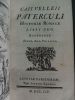
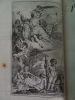
Velleius Paterculus (19 av. J.-C.-30 ap. J.-C.) historien. Préfet de la cavalerie nommé par Auguste. Légat de Tibère et préteur prit part aux campagnes en Germanie. Son abrégé de l'Histoire romaine dédiée à M. Vinicius, consul en 30, couvre la période de la destruction de Troie à l'année 30. Joël Schmidt (Encyclopaedia Universalis) affirme: "Velleius Paterculus s'abstient d' être emphatique, reste profnd, grave et parfois sévère, et fait preuve d'une érudition assez solide".Jean Bayet dans sa" Littérature latine" est moins élogieux: "Il a le souci de la précision chronlogique; il aime voir d'ensemble les grands problèmes (...) Mais l'oeuvre n'est pas équilibrée: à une première partie impartiale mais résumée à l'extrême, s'oppose un récit très circonstancié des règnes d' Auguste et surtout de Tibère." Etienne André Philippe dit Philippe de Prétot (Paris c.1710-id 1787): Professeur d'histoire, de géographie, de belles-lettres. Nommé censeur royal. Chargé de surveiller la réimpression des classiques latins (1743 à 1753) qu'il accompagna de préfaces et notes érudites. Ici, les pièces liminaires renvoient aux travaux de l'universitaire et humaniste hollandais Gerard Jean Vossius (1577-1649), du philologue et théologien irlandais Henry Dodwell (1641-1711), du philologue et érudit allemand Christophe Cellarius ou Keller (1638-1707).
VELLEIUS PATERCULUS, Caius (v. 19 av. J.-C. v. 31 ap. J.-C.) historien romain.
Reference : 5096
(1664)
M.VELLEIUS PATERCULUS CUM NOTIS GERARDI VOSSII G.F.
1664 un volume, superbe reliure janséniste d'époque en vélin ivoire (jansenist's binding full vellum) in-douze (duodecimo), dos long (spine without raised band) , titre manuscrit à l'encre brune sur le dos (handwritten title on the spine), plats muets (cover without text), tranches lisses (smooth edges), gouttière rognée (smooth fore-edge), sans illustration (no illustration) excepté un SUPERBE titre frontispice gravé sur bois (engraving wood) en noir + des bandeaux et lettrines (and illuminated of headpieces and dropped initials), 2 parties en 1 vol.([12]-116-[28]-182[i.e.128]-[1] pages, 1664 Amstelodami, Ex officina Elzeviriana (Elzevier, Officine Editeur),
Imprimé en latin......Velleius Paterculus (v. 19 av. J.-C. v. 31 ap. J.-C.) est un historien romain.Son uvre, l'Histoire Romaine, en deux livres, embrase les événements principaux du monde greco-romain depuis la prise de Troie jusqu'au consulat de Marcus Vinicius (30 ap. J.-C.) à qui il dédia son uvre. Il insiste particulièrement sur les règnes d'Auguste et de Tibère. Il y raconte ses souvenirs de campagne. Son récit n'est pas monotome mais coupé d'anecdotes et de réflexions morales. Ses portraits d'hommes célèbres sont remarquables....Autre auteur : Vossius, Gerardus (1620-1640 ). Éditeur scientifique, - Les Notae constituent la deuxième partie. - En tête, dans les pièces liminaires, "De Vellei Paterculi vita et scriptis", tiré du "De historicis latinis" de Gerardus Joannes Vossius....Réf. bibl. : Willems, 1329 , (Brunet IV-430).....rareté en parfait état (as new condition.)
C. Velleius Paterculus cum selectis Variorum Notis.
Leyde, Hackius, 1668 In-12 de (6) ff., 334 pp., (11) ff., maroquin rouge, plats ornés d'un encadrement de triple filet doré avec fleurons aux angles, dos à nerfs orné de caissons de fleurons dorés, roulette dorée sur les coupes, doublures de maroquin rouge ornées d'une riche dentelle dorée, tranches dorées (reliure de l'époque).
Édition soignée de cette Histoire romaine réputée. Titre-frontispice gravé. Le texte de cette édition de la chronique historique très vivante de Paterculus, écrivain soldat qui fut témoin des évènements qu'il décrit - en particulier en ce qui concerne le règne de Tibère -, a été établi et considérablement annoté par Antonius Thysius, grand latiniste genevois ayant enseigné à l'université de Leyde. Belle reliure de l'époque en maroquin doublé.
VELLEIUS PATERCULUS. (19 AV JC.-31 AP JC.). PAUL (ARMAND LAURENT, ABBE. 1740-1809).
Reference : 3377
(1768)
ABREGE DE L’HISTOIRE GRECQUE ET ROMAINE, TRADUIT DU LATIN DE VELLEIUS PATERCULUS, AVEC LE TEXTE CORRIGE, DES NOTES CRITIQUES & HISTORIQUES, UNE TABLE GEOGRAPHIQUE, UNE LISTE DES EDITIONS, & UN DISCOURS PRELIMINAIRE QUI CONTIENT LA VIE DE L’AUTEUR, LES JUGEMENS DES CRITIQUES SUR SON OUVRAGE, LA NOTICE RAISONNEE DES TRADUCTIONS & DES EDITIONS QU’ON EN A DONNEES, & UNE ESQUISSE DE SUPPLEMENT LATIN & FRANCOIS DE CE QUI NOUS MANQUE DE PATERCULUS. PAR M. L’ABBE PAUL.
A AVIGNON. CHEZ J. J. NIEL, IMPRIMEUR-LIBRAIRE. 1768. IN-12 (10,5 X 17,5 X 4 CENTIMETRES ENVIRON) DE (10) + 503 ET (13) PAGES, RELIURE D'EPOQUE PLEIN VEAU MARBRE, DOS A CINQ NERFS ORNE DE CAISSONS A FLEURONS DORES, TITRE DORE SUR ETIQUETTE MAROQUIN ROUGE, FILET DORE SUR COUPES, TRANCHES MARBREES, PLATS AUX ARMES DOREES FLEURDELYSEES DU «COLLEGE ROYAL DE TOULOUSE». PETITS DEFAUTS EXTERIEURS, DONT PETITS MANQUES DE CUIR, SINON BON EXEMPLAIRE.


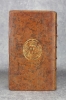
Historia romanae voluminibus duobus cum integris scholiis, notis, variis lectionibus et animadversionibus doctorum curante Petro Burmanno [Histoire romaine de Velleius Paterculus]
Apud Samuel Luchtmans | Lugduni Batavorum [Leyde] 1744 | 12.50 x 21 cm | relié
Première édition critique par Petro Burmanno. Un frontispice allégorique par Van der My gravé par Blesvyk. Reliure en plein velin doré d'époque aux armes de la ville d'Amsterdam. Dos lisse orné de 5 petits fers aux armes de la ville d'Amsterdam, roulette en place des nerfs. Plats frappés au centre des grandes armes de la ville d'Amsterdam, roulette d'encadrement et fers aux armes d'Amsterdam dans les écoinçons. Dorures presque totalement estompés sur les armes centrales. Traces de lacets. Titre à la plume noire. Dos sali. Quelques rousseurs. Ex-libris : BIbliothèque de M. A. R. Couronne. Edition critique estimée. Les nombreuses noptes et commentaires occupent les trois quarts de chaque page. In fine : Andrea Schotti notae ; annalies velleiani seu vita paterculi ab Henrico Dodwello. - Photographies et détails sur www.Edition-Originale.com -
Velleius Paterculus en de rhetoriek van zijn tijd.
Grave, Verhaak, 1954.
150 p. Wrs. (Diss.)
Salluste, Jules César, C. Velléius Paterculus et A. Florus; Oeuvres complètes avec la traduction en français, publiées sour la direction de M. Nisard. Collection des Auteurs Latins avec la traduction en français, publiée sur la direction de M. Nisard.
Paris, J. J. Dubochet, le Chevalier et Comp. 1845, 270x180mm, II - 727pages, demi-chagrin noir, dos à faux-nerfs, auteur, titre et ornementations dorés, tranches marbrées. Quelques rousseurs, autrement bon état.
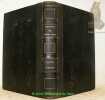
édition bilingue: français - latin, texte sur deux colonnes, Pour un paiement via PayPal, veuillez nous en faire la demande et nous vous enverrons une facture PayPal
Caius Velleius Paterculus qualem omni parte illustratum, publicavit David Ruhnkenius cui selectas variorum interpretum notas Krausii excursus [quae exstant Opera omnia]
Paris, Lemaire 1822 lxxvi + 680pp., 22cm., text bright and fresh with only few foxing, bound in modern hardcover in very good condition (spine in black cloth with gilt title), in the series "Bibliotheca classica latina sive collectio auctorum classicorum latinorum cum notis et indicibus", text in Latin, good condition, K86816
Velleius Paterculus. Cum notice Gerardi Vossii G.F.
Leyde: Elzevir, 1639. Petit in-12 (12,5x7,7 cm) plein vélin en reliure hollandaise, titre manuscrit à l'encre au dos.(4)ff. 116 pages, (14)ff. 128 pages, (1). Un mors fendu sur 2 cm - vomprend les deux livres de l'Histoire romaine suivie d'un important appareil critique par le savant et bibliophile hollandais Gerard Vossius (1577-1649). Deux réimpression chez Elvezir suivront "mais moins belles." (Brunet IV, 430). Complet du titre illustré montrant Enée portant son père fuyant Troie en flamme. Belle édition Elzevirienne dans sa reliure hollandaise de l'époque.
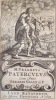
Tous nos livres sont visibles sur notre site : https://www.livrepoesie.com/
Velleius Paterculus, Després (traduction de), Florus (Annaeus), Ragon (M.) (traduction de)
Reference : 3099
Abrégé de l'histoire romaine
n.d. Garnier Frères, Paris, n.d.1 volume in-12 demi basane verte, dos lisse, XXIV, 411 pages.Bel état malgré quelques rousseurs.Edition bilingue Français - Latin.
La librairie est ouverte du mardi au samedi de 9h30 à 12h30 et de 13h30 à 19h00. Commandes par courriel ou téléphone. Envoi rapide, emballage soigné. La librairie est ouverte du mardi au samedi de 9h30 à 12h30 et de 13h30 à 19h00. Commandes par courriel ou téléphone. Envoi rapide, emballage soigné.
Salluste, Jules César, C. Velléius Paterculus et A. Florus ; Oeuvres complètes avec la traduction en français, publiées sour la direction de M. Nisard.
Paris, J. J. Dubochet, le Chevalier, Garnier 1850, 260x180mm, 727pages, reliure demi-parchemin à coins. Titre, auteur, tomaison et filets dorés au dos. Plats papier marbré. Coiffes, bords et plats frottés.
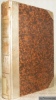
texte en deux colonnes, édition bilingue: français - latin, Pour un paiement via PayPal, veuillez nous en faire la demande et nous vous enverrons une facture PayPal
"Salluste, Jules César, C. Velleius Paterculus et A. Florus : Oeuvres complètes; avec la traduction en français."
Paris, J.J. Dubochet, Le Chevalier, Editeurs, 1845. 18 x 27, 727 pp., reliure carton, bon état (sauf couverture défraîchie).
Publié sous la direction de M. Nisard.

