 Write to the booksellers
130 books for « minor »Edit
-
Language
French (124)
Latin (1)
Russian (5)
-
Century
17th (1)
19th (1)
20th (12)
21st (11)
-
Countries
Belgium (3)
Denmark (1)
France (52)
Netherlands (65)
Switzerland (4)
United States of America (5)
-
Syndicate
ILAB (17)
NVVA (1)
SLACES (1)
SLAM (15)
Topics
- Alsace (6)
- Architecture (1)
- Biology (1)
- Brittany (1)
- Chemistry (1)
- Curiosa (1)
- Decoration (1)
- Early printed books (1)
- English (2)
- Fashion (1)
- Fine arts (1)
- Genetics (1)
- Germanic languages (3)
- Greek (57)
- History (1)
- Industrial arts & crafts - fine arts (3)
- Ireland (1)
- Italian (1)
- Italy pc (1)
- Jacob (2)
- Latin (58)
- Literature (13)
- Marie louise (1)
- Medicine (1)
- Mircéa eliade (1)
- Painting (1)
- Photography (1)
- Psychology (1)
- Review (1)
- Sciences (1)
- Scout (2)
- Sociology (1)
- Terrain (1)
- Tieck ludwig (1)
- Toscanini (1)
- Track sign (2)
- Travel (1)
- Wagner richard (1)
- Wilde oscar (1)
- Wisdom (1)
[Marie Anne Le Minor] - GOURVIL, Fanch ; MERCIER, Jean A. ; LE MINOR, Marie-Anne
Reference : 68533
(1939)
Les Poupées de Bretagne
Illustrations de Jean A. Mercier,1 vol. in-4 agrafé, s.l.n.d. [ circa 1939 ], Marie Anne Le Minor, 16 pp.
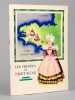
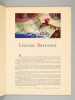
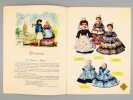
Bel exemplaire bien complet du rare prospectus de présentation en anglais. Superbe catalogue illustré par Mercier. Surnommée par Colette "le grand couturier des poupées de terroir", Marie-Anne Le Minor avait créé au coeur du Pays Bigouden un atelier d'habillage de poupées, qui emploiera jusqu'à une vingtaine de personnes. En 1937, elle sera même invitée à l'Exposition Universelle de Paris. Très bon état.
[Philippe Briet, Parallela geographiae veteris et novae] Hibernia seu Britannia minor - Irlande.
Reference : 018818
[Philippe Briet, Parallela geographiae veteris et novae] Hibernia seu Britannia minor - Irlande.
[Philippe Briet, Parallela geographiae veteris et novae] Hibernia seu Britannia minor - Irlande. Gravure originale, 1649, environ 240*170mm. Gravure tirée de l'ouvrage du savant jésuite Philippe Briet (1601-1668) publié en 1648-1649. Texte au dos. [437]
![[Philippe Briet, Parallela geographiae veteris et novae] Hibernia seu Britannia minor - Irlande. . [Philippe Briet, Parallela geographiae veteris et ...](https://static.livre-rare-book.com/pictures/JNL/018818_thumb.jpg)


Lettere di Plinio il Giovane, tradotte in lingua Italiana e dedicate all'Illustriss., ed Eccellentiss. Signore D. Alessandro Albani, nipote di nostro Signore Clemente XI, Pontefice Ottimo Massimo, dal Canonico Gio. Antonio Tedeschi e tra gli Arcadi Orticolo Eleo.
Roma, Della Stamperia di Gio. Maria Salvioni, nella Sapienza, 1717.
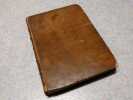
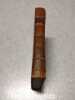
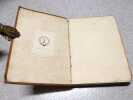
4to. (XXXV),(1 blank); 441,(1 errori),(2 blank) p. Calf 24 cm (Ref: Schweiger 2,816; Moss 2,502, quotes Nicola Francesco Haym ('Biblioteca Italiana o sia notizia de libri rari nella lingua italiana', Venice/Milan, 1741, p. 157): 'La traduzione, e l'impressione sono ambi bellissime'; Ebert 17379; Graesse 3,351) (Details: Back with 5 raised bands, and a gilt red morocco shield in the second compartment. Title printed in red and black. Woodcut initials. Excellent quality paper) (Condition: Binding scuffed. Boards scratches and spotted. Corners bumped. Foot of the spine slightly damaged. Front joint partly split. Bookplate and small label on the front pastedown. Front hinge cracking, but strong. First two leaves foxed. Faint name on the title) (Note: The Roman civilian administrator Gaius Plinius Caecilius Secundus, 61-112 A.D, published 10 books of literary letters, consisting of short essays, character sketches and sensible observations. The letters paint the high society of the young Roman empire. The ninth book contains Pliny's correspondence with the emperor Trajan. Pliny is famous for his description of the eruption of the Vesuvius on the 24th of August in 79 A.D. He was a nephew of the encyclopedist Pliny the Elder, who died, observing the eruption from afar, overcome by poisonous fumes. Pliny the Younger held under Trajanus a number of magistracies. In 111 /112 he became governor of Bithynia. From here he was in constant correspondence with the Emperor. His letters, which were conceived of as artistic productions, are more or less epistolary essays. In the late antiquity and later in the Renaissance the literary letter had a widespread influence. Not much is known about the Canon Giovanni Antonio Tedeschi, or Johannes Antonius Tedeschi, who produced this first complete Italian translation of the correspondence of Pliny Minor. He also published a translation of the letters of Symmachus (1724). He died in 1727. We found one Giovanni Antonio Tedeschi, who was dean (archiprete) of the family Borghese, in whose palace he died in 1727, and who was buried in S. Lucia della Tinta. (Claudio De Dominicis, 'Carlo De Dominicis, architetto del settecento romano', Roma 2006, p. 73) This must be our Tedeschi, for he dedicated his Symmachus translation to Marcantonio Borghese. Tedeschi was a member of the Italian literary academy/society 'Accademia degli Arcadi' or 'Accademia dell'Arcadia'. In 'Prose degli Arcadi, tomo terzo', Roma 1718, p. CV, he is described as 'Orticolo Eleo. Il Canonico Gio. Antonio Tedeschi da Pesaro'. 'Orticolo Eleo' being his 'nome arcadico', i.e. his pen name or pseudonym. So the phrase 'e tra gli Arcadi Orticolo Eleo', probably means 'and among the Arcadi his name is 'Orticolo Eleo''. Might this pen name refer to a 'olive grove'? A problem is that there is in this same period a namesake who was a sculptor/stonemason) (Provenance: On the title the name of 'Harriet Taylor'. This is Harriet Taylor Upton, 1853 - 1945, who was an American political activist and author. Taylor 'Upton is best remembered as a leading Ohio state and national figure in the struggle for women's right to vote and as the first woman to become a vice chairman of the Republican National Committee'. Harriet Taylor married in 1884 the attorney George W. Upton. She 'was a key organizer and the first president of the Suffrage Association of Warren. She was also a member of the National Woman Suffrage Association (NWSA) from 1890. In 1891, Upton hosted a conclave of women seeking equal rights with men, Ohio Women in Convention, in her home. (...) Harriet Upton was inducted into the Ohio Women's Hall of Fame in 1981, in the category of Government and Military Service. In early 2010, Upton was proposed by the Ohio Historical Society as a finalist in a statewide vote for inclusion in Statuary Hall at the United States Capitol'. She probably wrote her name before 1884. (See Harriet's lemma in Wikipedia) On the French title in pencil: 'J.W. Tellegen' On the front pastedown the bookplate of 'Thomas Conolly', depicting a round garter, with the motto: 'En Dieu Est Tout'; in the center a cubit arm, the hand is grasping an annulet. Someone wrote once in pencil beneath the plate: 'One time Speaker in the Irish House of Commons'. This is not correct. This Speaker was William Conolly, of humble descent, who was the first of his line, and in his time the wealthiest and the most powerful politician in Ireland. He died childless in 1729. Thomas Conolly, 1738-1803, was a son of his nephew William James Conolly. Thomas inherited the estate of his father William James when he was still a minor. 'Thomas Conolly was the quintessential Irish gentleman, a keen huntsman and a fine horseman, as well as a politician and landowner. Regarded as the wealthiest commoner in the kingdom: he actually spent much of his career in debt because of large debts he inherited from his father. Conolly sat in the Irish parliament for forty years where he prided himself on his often imagined independence'. (See for this interesting family: (www)castletown.ie) (Collation: pi4, b-c4, d6 (leaf d6 verso blank); A-3H4, 3I6 (leaf 3I6 blank)) (Photographs on request)
Caii Plinii Caecilii Secundi Opera quae supersunt omnia. Ad fidem optimarum editionum diligenter expressa. (Liber I-X: ex recensione Cortii et Longolii. Panegyricus Nervae Trajano Augusto dictus, ex editione T. Hearne)
Glasgow (Glasguae), In aedibus academicis excudebant Robertus et Andreas Foulis, Academiae typographi, 1751.
12mo. 3 volumes in 2: (IV),1-275,(1 blank); (IV),277-633(1 blank),(23 p. index),(1 blank) p. Vellum 13 cm (Ref: Gaskell no. 208+ (p. 163), and especially no. 208 (p. 419); ESTC Citation No. T190303; Schweiger 2,807: 'Sehr saubrer Abdruck des Textes der Briefe nach Corte und Longolius und des Panegyricus nach Th. Hearne'; Graesse 5,346; Ebert 17358; cf. Dibdin 2,331 & 332; cf. Moss 2,495) (Details: 2 thongs laced through the joints. Short title in ink on the back) (Condition: Vellum slightly soiled and scratched. Some foxing. Paper yellowing) (Note: The Roman civilian administrator Gaius Plinius Caecilius Secundus, 61-112 A.D, published 9 books of literary letters, consisting of short essays, character sketches and sensible observations. The letters paint the high society of the young Roman empire. The tenth book contains Pliny's correspondence with the emperor Trajan. Pliny is famous for his description of the eruption of the Vesuvius on the 24th of August in 79 A.D. He was a nephew of the encyclopedist Pliny the Elder, who died, observing the eruption from afar, overcome by poisonous fumes. Pliny the Younger held under Trajanus a number of magistracies. In 111 or 112 he became governor of Bithynia. From here he was in constant correspondence with the Emperor. His letters, which were conceived of as artistic productions, are more or less epistolary essays. In the late antiquity and later in the Renaissance the literary letter had a widespread influence. The Scottish printers Robert and Andrew Foulis chose for this edition of Pliny's 247 letters the best available text at the time. It was produced by the German classical scholar Gottlieb Cortius, or Kortte, 1698-1731, who made his name producing editions of Latin authors, and whose works were provided with very extensive commentaries, in the manner of the Dutch scholar Petrus Burmannus. His very critical and elaborate Plinus Minor edition was published in Amsterdam in 1734. Cortius died before he could finish the job. Most publishing work was done by a pupil of his, the young German philologist Paul Daniel Longolius, 1704-1779. He added also emendations of his own. Longolius published 3 ancient authors in an exemplary manner, these Letters of Pliny the Younger, and also Diogenes Laertius (1739), and Gellius (1741). (ADB 19,156/7) His Plinius edition is called by Ernesti the editio optima (Ernesti/Fabricius Bibliotheca Latina, 2,416) For the Panegyricus Foulis used the edition of Pliny the Younger which was produced by the English scholar Thomas Hearne, 1678-1735, and which dates from 1703 (Oxford). It is called by Dibdin a 'very respectable edition'. Thousands of panegyrics must have been delivered in antiquity. Only a few of them survive. A panegyric is an elaborate eulogy, a formal set-piece oration in praise of an emperors or a high dignitary and was an integral part of the ceremony of politics in the Roman empire. The most influential panegyric speech was delivered in 100 A.D. by Plinius Minor before Trajan and the Senate in Rome, in which he thanks the emperor for his election to the consulship. It served as a model of rhetoricians in late antiquity. 'It went on to teach many Renaissance and Baroque ceremonial orators how to address supreme political authorities in public speeches. (The Classical Tradition, Cambr. Mass. 2010, p. 745). His most famous imitator in the Renaissance was Erasmus. By the 18th century the panegyric was treated with suspicion, for it easily slid from a showpiece of praise to mindless flattery. 'For Enlightenment critics panegyrics were not to be seen as part of a vital political culture; rather, they were a sure index of the constriction of personal liberty and the inevitable bankruptcy of language under autocracy'. (The Classical Tradition, Cambr. Mass., 2010, p. 684) In the 35 years between 1742 and 1776 the learned Foulis brothers, who were University Printers to the University of Glasgow, produced ca. 590 titles. Circa 100 of them are Greek or Latin editions. The Foulises printed textbooks for the University, but also works of learning, and general literature. From their presses have come some of the finest specimens of accurate and elegant printing that was produced in the eighteenth century. They once hung up the sheets of an Horace edition (1744) which was being printed, in the college of Glasgow, and offered a reward to those who could discover an inaccuracy. It seems that this Pliny edition was originally planned in two volumes. On the verso of the titles of volume 1 and 2 one reads: 'Epistolarum libri sex priores' and 'Epistolarum libri quatuor posteriores. Panegyricus Nervae Trajano Augusto dictus'. However, at the bottom of page 503, the first page of the Panegyricus, is printed 'Vol. III'. It was probably intended later on that the Panegyricus should comprise the third volume, 'but no copy has been seen with a separately-bound vol. III, nor one with a Vol. III title page'. (Gaskell p. 164) The Panegyricus is, instead of a title, preceded by 2 leaves which only announce the Panegyricus, and donot have an imprint. The Foulises produced in this same year also a quarto edition of the Letters of Pliny. (Gaskell 207)) (Collation: Vol. 1: pi2, A-L12; M6. Vol. 2: pi2, N-X12, Y6 (minus blank leaf Y6); pi2 (leaf pi1 half-title, pi2 volume title), Z-2D12, 2E6, 2F12 (leaf 2F12 verso blank)) (Photographs on request)
Bor'ba s alkogolizmom s tochki zreniya nervnoy patologii. In Russian /Fighting
Short description: In Russian. Minor, Lazar Solomonovich. Fighting alcoholism from the point of view of neuropathology. You are welcome to reach out to us for a detailed description of the copies currently available. Delivery of this book may take longer than usual including extended processing and pre-shipping time, no expedited shipping is available. Please advise us if you have a set date or a deadline to receive your order.SKU3679521
Novye formy p'yanstva denaturatom i spirtosoderzhashchimi zhidkostyami. In Russ
Short description: In Russian. Minor, Lazar Solomonovich. New forms of drinking denaturate and alcohol-containing liquids. Moscow: type. Headquarters Moscow, military district, 1915. You are welcome to reach out to us for a detailed description of the copies currently available. Delivery of this book may take longer than usual including extended processing and pre-shipping time, no expedited shipping is available. Please advise us if you have a set date or a deadline to receive your order.SKU4206991
O lechebnitsakh dlya uvechnykh rabochikh. In Russian /On Injured Workers Hospit
Short description: In Russian. Minor, Lazar Solomonovich. On Injured Workers Hospitals. You are welcome to reach out to us for a detailed description of the copies currently available. Delivery of this book may take longer than usual including extended processing and pre-shipping time, no expedited shipping is available. Please advise us if you have a set date or a deadline to receive your order.SKU3736681
Kratkaya terapiya nervnykh bolezney. In Russian /Short Therapy for Neural Disea
Short description: In Russian. Minor, Lazar Solomonovich. Short Therapy for Neural Diseases. Moscow: Student Medical Publishing House, 1910. You are welcome to reach out to us for a detailed description of the copies currently available. Delivery of this book may take longer than usual including extended processing and pre-shipping time, no expedited shipping is available. Please advise us if you have a set date or a deadline to receive your order.SKU3770203
O znachenii nevropatologii v meditsine i v zhenskom meditsinskom obrazovanii. I
Short description: In Russian. Minor, Lazar Solomonovich. On the importance of neuropathology in medicine and women's medical education. You are welcome to reach out to us for a detailed description of the copies currently available. Delivery of this book may take longer than usual including extended processing and pre-shipping time, no expedited shipping is available. Please advise us if you have a set date or a deadline to receive your order.SKU3781474
La Partie de Dames Minor, Nata
Le Reflet PHOTOS SUR DEMANDE
Merci de nous contacter à l'avance si vous souhaitez consulter une référence dans notre boutique à Authon-du-Perche.
Le Chapeau de monsieur Freud Minor, Nata
Grasset PHOTOS SUR DEMANDE
Merci de nous contacter à l'avance si vous souhaitez consulter une référence dans notre boutique à Authon-du-Perche.
Le Chapeau de monsieur Freud Minor, Nata
Grasset PHOTOS SUR DEMANDE
Merci de nous contacter à l'avance si vous souhaitez consulter une référence dans notre boutique à Authon-du-Perche.
Histoires singulières [Paperback] Minor, Léonid
Métailié PHOTOS SUR DEMANDE
Merci de nous contacter à l'avance si vous souhaitez consulter une référence dans notre boutique à Authon-du-Perche.
Honderd jaar geestelijk leven in den Romeinschen keizertijd.
Leiden, v.Doesburgh, 1922.
555 p. Cl. (OiN 304, Plinius minor: transl. of 'nagenoeg de hele correspondentie'; a chapter on Seneca, Lucianus, Dio Chrysostomus, Sophists etc.)(Fronthinge cracking; partly foxed. Tip of the lower corner of the last half of the book-block faintly waterstained)
Le temps du cavalier ; recit [Misc. Supplies] Nata Minor
Broché bon état. Contenu propre . 1978. 115 pages . Le temps du cavalier
Merci de nous contacter à l'avance si vous souhaitez consulter une référence dans notre boutique à Authon-du-Perche.
Plinius Minor. Plini Caecili Secundi Epistolarum Libri Novem. Epistolarum ad Traianum liber. Panegyricus
Recensuit Mauritius Schuster, editionem tertiam curavit Rudolphus Hanslik, Editio stereotypa editions tertiae (MCMLVII), 1 vol. in-8 reliure demi-chagrin à coins rouges, couvertures et dos conservés, Bibliotheca scriptorum graecorum et romanorum Teubneriana, In aedibus B.G. Teubneris [ Teubner ], Stutgardiae et Lipsiae, 1992, XXX-490 pp.
![Plinius Minor. Plini Caecili Secundi Epistolarum Libri Novem. Epistolarum ad Traianum liber. Panegyricus. PLINIUS MINOR ; [PLINE LE JEUNE ]](https://static.livre-rare-book.com/pictures/CDL/68144_thumb.jpg)
![Plinius Minor. Plini Caecili Secundi Epistolarum Libri Novem. Epistolarum ad Traianum liber. Panegyricus. PLINIUS MINOR ; [PLINE LE JEUNE ]](https://static.livre-rare-book.com/pictures/CDL/68144_2_thumb.jpg)
![Plinius Minor. Plini Caecili Secundi Epistolarum Libri Novem. Epistolarum ad Traianum liber. Panegyricus. PLINIUS MINOR ; [PLINE LE JEUNE ]](https://static.livre-rare-book.com/pictures/CDL/68144_3_thumb.jpg)
Bon exemplaire bien relié (petite brunissure en dos, ex-libris en garde)
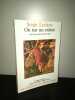
On tue un enfant- Un essai sur le narcissisme primaire et la pulsion de mort Suivi d'un texte de Nata Minor
Seuil. 1975. In-8. Broché. Etat passable, Coins frottés, Dos satisfaisant, Papier jauni. 136 pages. Quelques rousseurs. Ex-libris à l'encre en page de faux titre. Marqueur en 2ème plat.. . . . Classification Dewey : 150-Psychologie
Classification Dewey : 150-Psychologie
Asia, Oder genaue und gründliche Beschreibung der gantzen Syrien und Palestins, oder Gelobten Landes. Worinnen die Landschaften Phönicien, Celesyrien, Commagene, Pierien, Cyrestica, Seleucis, Cassiotis, Chalibonitis, Chalcis, Abilene, Apamene, Laodici...
Nürnberg Johann Hofmann, 1688-89. (The engraved allergorical title having: Amsterdam, Beÿ Jacob von Meursen nachgelassene Witve, 1681). Folio. Cont. full calf, raised bands, old repairs to top and bottom of spine. Richly gilt compartments. Crowned royal monogram on covers inside gilt frames, gilt stamps at corners. Some wears to covers, scratches. Engraved allegorical title, printed title in red/black. 200,(4) pp titlepage,400,(8) pp., 10 double-page engraved maps and plans, 29 engraved plates (of which 21 are double-page) and 29 half-page engravings in the text. The first ab. 35 leaves with a small wormtract in outer margin. A few scattered brownspots, otherwise clean.
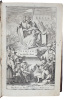
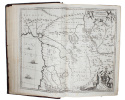
Dappers well-known work on Asia Minor (here in the second German edition) was originally issued in Dutch. This German edition was translated and edited by Jacob von Meursen, who also engraved the plates. It partly depends on the older texts by Josephus, Eusebius, Hieronymus and Adricom's work on the Holy Land from 1589.
TIECKS WERKE, ERSTER TEIL
W. Spemann. Non daté. In-8. Broché. Etat passable, Plats abîmés, Dos abîmé, Fortes mouillures. 322 pages. Illustré d'un portrait en noir et blanc en début d'ouvrage et d'un fac-similé dépliable en fin d'ouvrage. Texte en allemand et en caractères gothiques. Dos manquant. Cahiers se détachant. Premier plat taché. 2e plat manquant. Annotations au crayon dans le texte.. . . . Classification Dewey : 430-Langues germaniques. Allemand
Herausg. von Dr. J. Minor. Classification Dewey : 430-Langues germaniques. Allemand
A living ressemblance.
An Aperture book 1984 1 vol. relié in-4, cartonnage éditeur, jaquette, 78 pp., nombreuses reproductions photographies en noir de l'auteur. Texte en anglais. Jaquette très légèrement usée, sinon bon état.
Mémoire en images : le mont Sainte-Odile.
, Alan sutton, 2003 ; in-8, 127 pp., broché, couverture illustr. Très bon état.
Très bon état.
U.s. Credit Reporting System
NOVA SCIENCE PUBLISHERS INC (5/2013)
LIVRE A L’ETAT DE NEUF. EXPEDIE SOUS 3 JOURS OUVRES. NUMERO DE SUIVI COMMUNIQUE AVANT ENVOI, EMBALLAGE RENFORCE. EAN:9781626183087
La Partie De Dames
Le reflet 2002 107 pages in8. 2002. broché. 107 pages.
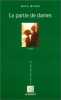
french édition - quelques marques plis de lecture et/ou de stockage mais reste en bon état. Envoi rapide et soigné dans enveloppe à bulles depuis France
SCHNITZLER, Bernadette ; LE MINOR, Jean-Marie; LUDES, Bertrand; BOES, Eric (sous la direction de)
Reference : 125153
(2005)
ISBN : 2351250001
Histoire(s) de squelettes - Archéologie, médecine et anthropologie en Alsace
2005 Editions des Musées de la Ville de Strasbourg - 2005 - In-4 broché, couverture illustré - 308 pages - Illustrations en couleurs, in et hors texte, dans l'ouvrage
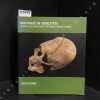
Bon état - Dos insolé avec un pli de lecture - Ouvrage légèrement "gondolé" - Coins légèrement émoussés Bon

