 Write to the booksellers
PLINIUS MINOR.
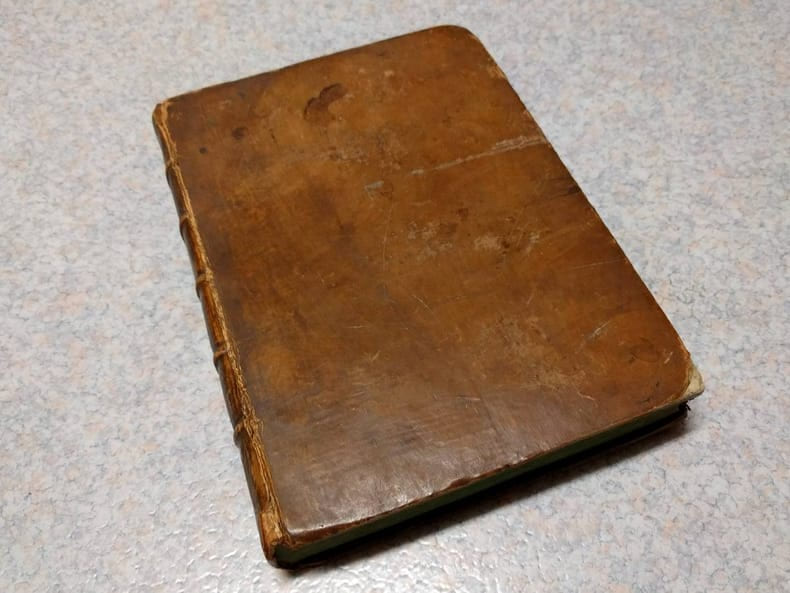
Lettere di Plinio il Giovane, tradotte in lingua Italiana e dedicate all'Illustriss., ed Eccellentiss. Signore D. Alessandro Albani, nipote di nostro Signore Clemente XI, Pontefice Ottimo Massimo, dal Canonico Gio. Antonio Tedeschi e tra gli Arcadi Orticolo Eleo.
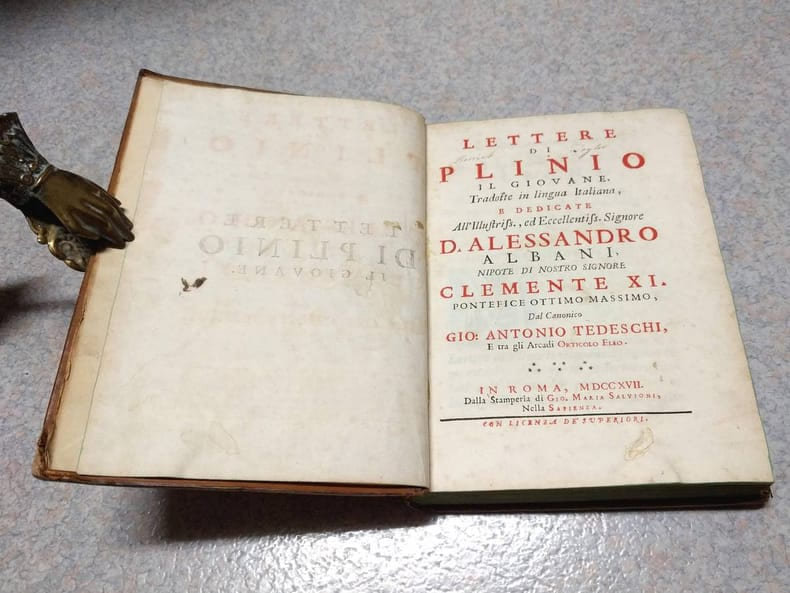
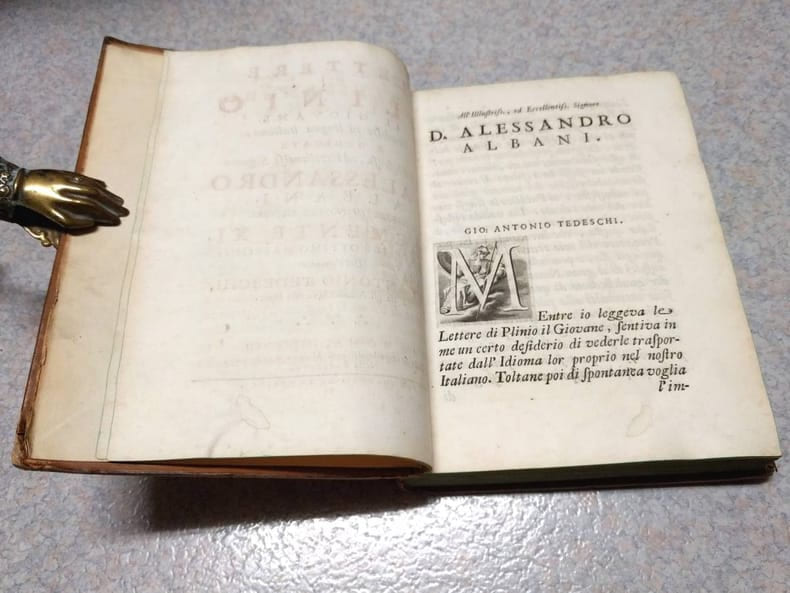
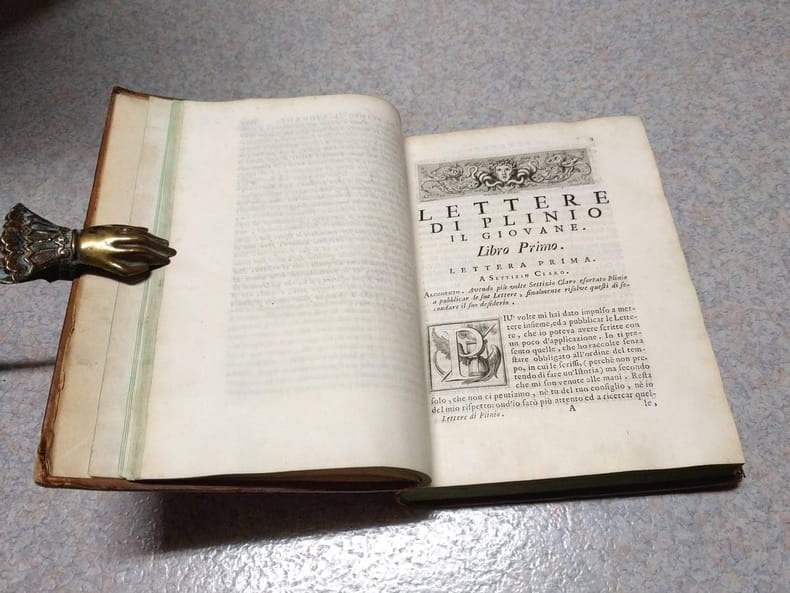
Roma, Della Stamperia di Gio. Maria Salvioni, nella Sapienza, 1717.
Reference : 153326
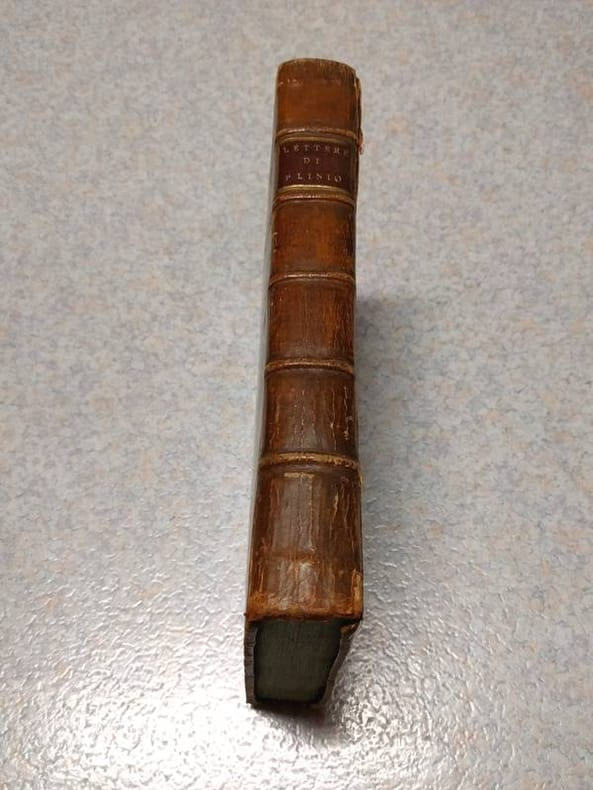
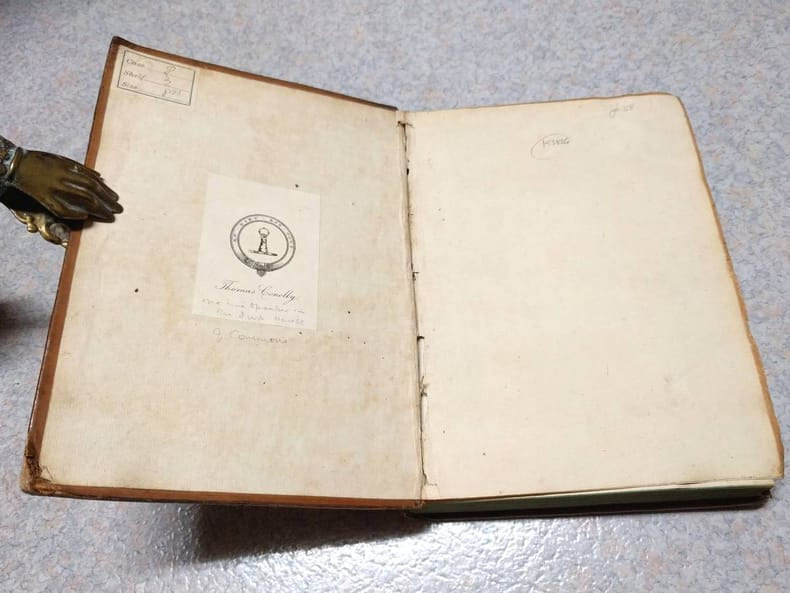
4to. (XXXV),(1 blank); 441,(1 errori),(2 blank) p. Calf 24 cm (Ref: Schweiger 2,816; Moss 2,502, quotes Nicola Francesco Haym ('Biblioteca Italiana o sia notizia de libri rari nella lingua italiana', Venice/Milan, 1741, p. 157): 'La traduzione, e l'impressione sono ambi bellissime'; Ebert 17379; Graesse 3,351) (Details: Back with 5 raised bands, and a gilt red morocco shield in the second compartment. Title printed in red and black. Woodcut initials. Excellent quality paper) (Condition: Binding scuffed. Boards scratches and spotted. Corners bumped. Foot of the spine slightly damaged. Front joint partly split. Bookplate and small label on the front pastedown. Front hinge cracking, but strong. First two leaves foxed. Faint name on the title) (Note: The Roman civilian administrator Gaius Plinius Caecilius Secundus, 61-112 A.D, published 10 books of literary letters, consisting of short essays, character sketches and sensible observations. The letters paint the high society of the young Roman empire. The ninth book contains Pliny's correspondence with the emperor Trajan. Pliny is famous for his description of the eruption of the Vesuvius on the 24th of August in 79 A.D. He was a nephew of the encyclopedist Pliny the Elder, who died, observing the eruption from afar, overcome by poisonous fumes. Pliny the Younger held under Trajanus a number of magistracies. In 111 /112 he became governor of Bithynia. From here he was in constant correspondence with the Emperor. His letters, which were conceived of as artistic productions, are more or less epistolary essays. In the late antiquity and later in the Renaissance the literary letter had a widespread influence. Not much is known about the Canon Giovanni Antonio Tedeschi, or Johannes Antonius Tedeschi, who produced this first complete Italian translation of the correspondence of Pliny Minor. He also published a translation of the letters of Symmachus (1724). He died in 1727. We found one Giovanni Antonio Tedeschi, who was dean (archiprete) of the family Borghese, in whose palace he died in 1727, and who was buried in S. Lucia della Tinta. (Claudio De Dominicis, 'Carlo De Dominicis, architetto del settecento romano', Roma 2006, p. 73) This must be our Tedeschi, for he dedicated his Symmachus translation to Marcantonio Borghese. Tedeschi was a member of the Italian literary academy/society 'Accademia degli Arcadi' or 'Accademia dell'Arcadia'. In 'Prose degli Arcadi, tomo terzo', Roma 1718, p. CV, he is described as 'Orticolo Eleo. Il Canonico Gio. Antonio Tedeschi da Pesaro'. 'Orticolo Eleo' being his 'nome arcadico', i.e. his pen name or pseudonym. So the phrase 'e tra gli Arcadi Orticolo Eleo', probably means 'and among the Arcadi his name is 'Orticolo Eleo''. Might this pen name refer to a 'olive grove'? A problem is that there is in this same period a namesake who was a sculptor/stonemason) (Provenance: On the title the name of 'Harriet Taylor'. This is Harriet Taylor Upton, 1853 - 1945, who was an American political activist and author. Taylor 'Upton is best remembered as a leading Ohio state and national figure in the struggle for women's right to vote and as the first woman to become a vice chairman of the Republican National Committee'. Harriet Taylor married in 1884 the attorney George W. Upton. She 'was a key organizer and the first president of the Suffrage Association of Warren. She was also a member of the National Woman Suffrage Association (NWSA) from 1890. In 1891, Upton hosted a conclave of women seeking equal rights with men, Ohio Women in Convention, in her home. (...) Harriet Upton was inducted into the Ohio Women's Hall of Fame in 1981, in the category of Government and Military Service. In early 2010, Upton was proposed by the Ohio Historical Society as a finalist in a statewide vote for inclusion in Statuary Hall at the United States Capitol'. She probably wrote her name before 1884. (See Harriet's lemma in Wikipedia) On the French title in pencil: 'J.W. Tellegen' On the front pastedown the bookplate of 'Thomas Conolly', depicting a round garter, with the motto: 'En Dieu Est Tout'; in the center a cubit arm, the hand is grasping an annulet. Someone wrote once in pencil beneath the plate: 'One time Speaker in the Irish House of Commons'. This is not correct. This Speaker was William Conolly, of humble descent, who was the first of his line, and in his time the wealthiest and the most powerful politician in Ireland. He died childless in 1729. Thomas Conolly, 1738-1803, was a son of his nephew William James Conolly. Thomas inherited the estate of his father William James when he was still a minor. 'Thomas Conolly was the quintessential Irish gentleman, a keen huntsman and a fine horseman, as well as a politician and landowner. Regarded as the wealthiest commoner in the kingdom: he actually spent much of his career in debt because of large debts he inherited from his father. Conolly sat in the Irish parliament for forty years where he prided himself on his often imagined independence'. (See for this interesting family: (www)castletown.ie) (Collation: pi4, b-c4, d6 (leaf d6 verso blank); A-3H4, 3I6 (leaf 3I6 blank)) (Photographs on request)
Bookseller's contact details
Antiquariaat Fragmenta Selecta
+31 20 418 55 65
Payment mode

Sale conditions
Terms of Sale All items offered are subject to prior sale. Your order will be final after you have received our confirmation, with a specification of the availability of the items and the shipping costs. All books are complete and in good antiquarian condition, unless otherwise described. Prices are in EURO. Postage and insurance are not included. Postage will be calculated at cost (no extra charges). Returns Books may be returned within 14 days of receipt, if returned in the same condition as sent, and packed, shipped and insured as received (please always notify us). We will refund the shipping costs of a return shipment only if our descriptions were not correct. How to pay Pre-payment is necessary for new customers. Our order confirmation will provide detailed information and a specification of the shipping costs. Customers who are known to us and libraries will be invoiced as usual. We accept Visa and Mastercard. You can submit your card information through our SECURE PAYMENT FORM. PayPal: we will send you a personal link to the PayPal website. Banktransfers: payment can be made into our bank account in The Netherlands.

