 Write to the booksellers
796 books for « lamy e »Edit
-
Type
Autograph (2)
Book (677)
Disk (1)
Magazine (1)
Music sheets (113)
Photographs (2)
-
Century
17th (6)
18th (8)
19th (91)
20th (348)
21st (57)
-
Countries
Belgium (37)
Brazil (1)
Canada (14)
Côte d'Ivoire (1)
Denmark (4)
France (685)
Germany (1)
Switzerland (53)
-
Syndicate
ALAC (11)
CLAQ (5)
ILAB (301)
NVVA (23)
SLACES (23)
SLAM (259)
SNCAO (1)
Topics
- Administration (3)
- Alps (6)
- Anatomy (3)
- Antwerp (4)
- Aquitaine (7)
- Architecture (5)
- Auvergne (3)
- Biography (12)
- Bourbonnais (5)
- Calvet j (12)
- Canada (3)
- Catholicism (6)
- Chemistry (3)
- Children’s books (6)
- Christ (the) (5)
- Christianity (8)
- Cinema (17)
- Circus (3)
- Colette (5)
- Comic strip (5)
- Dedication (8)
- Dictionaries (6)
- Diseases (3)
- Ecology (6)
- Economics (3)
- Education (6)
- Education - morals (3)
- Egypt (3)
- Engraving (books about) (9)
- Exhibition (3)
- Feminism (4)
- First edition (5)
- Florence (7)
- Genealogy (4)
- Genetics (5)
- Geography (9)
- Hebraic literature (3)
- Helvética (12)
- Hemard joseph (3)
- Heredity (3)
- History (32)
- Humanitarian sciences (2)
- Industrial arts & crafts - fine arts (5)
- Iron (7)
- Joan of arc (2)
- Lamy etienne (37)
- Lamy maurice (17)
- Law (4)
- Linnean society of lyons (4)
- Literature (57)
- Lyons and area (4)
- Lyons college (4)
- Lyons college pc (4)
- Lyons revue (4)
- Magazine (9)
- Marriage (3)
- Mathematics (5)
- Medicine (5)
- Middle ages (2)
- Military arts (4)
- Mountaineering climbing (10)
- Navy (4)
- Newspapers press (11)
- Normandy (5)
- Painting (4)
- Paris (13)
- Philosophy (7)
- Photography (4)
- Picardie (4)
- Poetry (3)
- Policy (9)
- Provence (3)
- Quebec (6)
- Railway (3)
- Reading vocabulary (10)
- Regionalism (9)
- Reims (2)
- Religions (16)
- Reviews (9)
- Sahara (3)
- Sciences (12)
- Scores (111)
- Sociology (3)
- Songs (105)
- Sudan (3)
- Switzerland (3)
- Tea (3)
- Teaching (7)
- Theology (5)
- Trade (4)
- Travel (5)
- Various (8)
- Waltz (9)
- War (6)
- Women (the) (7)
De l'Existence d'un nouveau Métal. le Thallium. (+) Rapport fait à l'Academie des Sciences sur un Mémoire de K. Lamy relatif au Thallium. Commisaires Pelouze, H. Sainte-Claire, Dumas rapporteur. (+ regnault:) Sur la Chaleur specifique de Thallium. ...
Paris, Victor Masson et Fils, Imprimerie Gauthier-Villars, 1863. Without wrappers. In ""Annales de Chimie et de Physique"", Troisieme Series - Tome 67, Cahier Avril. Titlepage to tome 68. Pp. 385- 512 pp. and 1 folded colour plate (Spectre solaire, Spectre Thallium, showing the green line). (The entire issue offered). The papers on Thallium: pp. 385-434. Smal, stamps on verso of titlepage. Lamy's paper: pp. 383-417.
William Crookes was the first to observe Thallium (1861) as he found a new green line in a selenium sample, but Lamy was the first to isolate it and to prove that it was a metal (1862). The paper offered is Lamy's full description of his discovery, a shorter announcement was published in ""Comptes rendus"", 23 June 1862.Claude-Auguste Lamy (1820-1878) examined some slime from a sulfuric acid plant at Loos which was using Belgian pyrite and observed the green spectral line. He extracted thallium sesquichloride and isolated the metal new by electrolysis. Only after his discovery, he found out that Crookes had earlier discovered and named the new element, and gave Crookes the honour. Crookes presumed that his Thallium was something of the order of Sulphur, Selenium or Tellurium but Lamy found it to be a metal. In April 1862 he reported to the French Académie des sciences. (Timeline of chemical elements).
Lettres de deux amies ou Le Triomphe de la douceur.
Vers 1781 In-8 (198 x 125 mm), 3 ff. n. ch., 178 pp. Demi-maroquin à rouge grain long, dos lisse orné de filets dorés, titre doré, tranches rouges (reliure moderne).
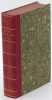
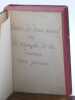
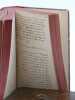
Manuscrit d’un roman épistolaire inédit composé par une jeune fille au XVIIIe siècle. "Ces lettres commencées en 1759, étoient au trois quart écrites, lorsque je me suis mariée au mois d’octobre 1760. Mes occupations de fille étoient les ouvrages d’aiguilles, et mes récréations, des livres et mon écritoire. Née avec un gout dominant pour écrire, cet amusement faisoit mes délices, et chaque année livroit aux flammes, l’ouvrage de l’année précédente […] ces lettres restèrent dans l’oubli, et y seroient encore, si mes enfans, par des instances réitérées dont la source est dans leur cœur, ne m’avoient pressées [sic] de les finir en 1781" (Discours préliminaire). Le manuscrit comprend une introduction et 178 pages d’une écriture très lisible, à l’encre brune. Il s’agit de l’histoire d’une jeune fille orpheline et sans fortune, recueillie par des personnes de sa famille, qui veulent la forcer à se marier, alors qu’elle est amoureuse d’un autre homme. Celui-ci, après de nombreuses péripéties, réussit à l’enlever et l’épouse en secret. Le titre indique "premier tome" mais ce fut sans doute le seul. L’auteure, Marie Diane Catherine Petin (Paris, 1737-Le Mans, 1817), fille de Pierre Joseph Petin (1696-1768), écuyer, secrétaire du duc d’Harcourt, et de Marie Rollin (1701-1779), avait épousé en 1760 Louis Lamy (Paris, 1729-1772), avocat au Parlement de Paris. Les feuillets liminaires du manuscrit laissent penser qu’elle eut plusieurs filles ("ce manuscrit n’existera que pour mes filles…"). L’une d’elle, Adélaïde Lamy (1763-1849), se maria avec Louis Désormeaux Charpentier (1737-1810). Nous connaissons une autre copie de ce manuscrit, reliée en modeste basane, passée en vente il y a une dizaine d’années. Une note du XIXe siècle sur la page de garde indiquait: "Ce roman en lettres, composé et écrit dans le goût du temps, est l’œuvre de madame Lamy ma bisaïeule maternelle… Cette copie doit être de la main de ma grand-mère Charpentier. H. Henry." Cette copie appartenait à Hippolyte Henry (1820-1900), petit-fils d’Adélaïde Lamy et arrière-petit-fils de l’auteure. Ce sont ses précisions qui ont permis d’identifier Madame Lamy. Exemplaire agréablement établi.

De l'existance d'un nouveau métal, le thallium.
(Paris, Mallet-Bachelier), 1862. 4to. No wrappers. In: ""Comptes rendus hebdomadaires des séances de l’Académie des sciences"", Vol. 54, No 24. Pp. (1237-) 1287. (Entire issues offered). Lamy's paper: pp. 1255-1258.
First appearance of the paper in which Lamy reported the first isolation of the new element Thallium. A large paper on the isolation was published in ""Annales de Chimie et de Physique"" a year after (1863). William Crookes was the first to observe Thallium (1861) as he found a new green line in a selenium sample, but Lamy was the first to isolate it and to prove that it was a metal.""Claude-Auguste Lamy (1820-1878) examined some slime from a sulfuric acid plant at Loos which was using Belgian pyrite and observed the green spectral line. He extracted thallium sesquichloride and isolated the metal new by electrolysis. Only after his discovery, he found out that Crookes had earlier discovered and named the new element, and gave Crookes the honour. Crookes presumed that his Thallium was something of the order of Sulphur, Selenium or Tellurium but Lamy found it to be a metal. In April 1862 he reported to the French Académie des sciences."" (Timeline of chemical elements).Parkinson ""Breakthroughs"", 1862 C - Weeks pp. 192 ff.
Fabrique de boîtes en bois. Spécialités de boîtes à fromages
Bois-d'Amont (Jura), Joseph Lamy Fils, s.d (c. 1932), in-12, 41 pp, Broché, couverture rouge illustrée en noir, Catalogue illustré en noir de modèles de boîtes en bois à fromages. C'est vers 1890, que Joseph Lamy fonde un atelier de boissellerie dans sa maison. L'usine est bâtie en 1910 avec des logements pour les ouvriers originaires du bas Jura et d'Italie, la société devient celle de Joseph Lamy Fils puis la S.A.R.L. Joseph Lamy Fils et Frères, lorsque les trois fils de Joseph reprennent l'affaire. Bon état. Couverture rigide
Bon 41 pp.
Partition de la chanson : Vous pleurez, ma jolie Poésie
Smyth 1920 approx.
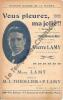
Etat moyen Petit format
Vue de l’Entrée dans la Vallée de Chamouni et du Dome du Gouté. (Mont-Blanc).
Publié pr. J. P. Lamy à Berne, Lausanne & Genève, s.d., ca. 1830, 25.2x32.6 cm la feuille (11.7x16.5 cm l’image), aquatinte coloriée à la main (gouachée), encadrement au trait noir, sur papier gris/noir / Kolorierte Aquatinta mit gouchiertem Blattrand. En bas de la feuille tampon (stamp:) ‘deposé’ & ‘Propriété de J. P. Lamy’. En bas à gauche de la feuille un num. ms. ‘162’ (stocknumber ?), 1 feuille sous passepartout.
Johann Peter Lamy was active in Geneva ca. 1791-1838 as a specialist publisher of Swiss Alpine views; little is known of Grundmann, the artist and probably Lamy’s employee. He may have been Swiss, or from Courmayeur. This aquatint is from a set of publisher’s samples of Alpine views, largely around the Chain of Mont Blanc, originally taken round the countryside by a salesman to show potential buyers, hence the colouring and finishing are exceptionally fine and of the highest quality. Image disp.

(SLACES, NVVA)
Phone number : 41 (0)26 3223808
Audrey Lamy-Dernières Avant Vegas
M6 Vidéo 2017 14x18x1cm. 2017. DVD.
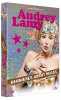
French édition - DVD présentant des marques de stockage et/ou de lecture sur la couverture et/ou les pourtours mais demeurant en bon état d'ensemble.Expédition sous blister dans une enveloppe matelassée depuis la France
Conjectures physiques sur deux colonnes de nuë qui ont paru depuis quelques années et sur les plus extraordinaires effets du tonnerre. Avec une explication de ce qui s'est dit jusques icy des trombes de mer. Et une nouvelle addition où l'on verra de quelle manière le tonnerre tombé nouvellement sur une Eglise de Lagni, a imprimé sur une nappe d'autel, une partie considérable du canon de la Messe.
Paris, Veuve Sébastien Mabre-Cramoisy, 1689.
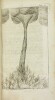
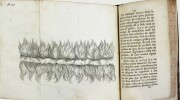
Seule édition. Diverse études sur des phénomènes météorologiques extraordinaires. François Lamy, qui était un moine bénédictin s'efforce de trouver des explications rationnelles à tous ces phénomènes, en se démarquant des superstitions populaires. Sur l'origine et la nature d'une tornade observée dans le voisinage de Reims. Elle "jeta l'alarme et l'épouvante dans le coeur de presque tous ceux qui la virent de près et un jeune homme en fut tellement saisi de frayeur, qu'il en mourut en deux fois vingt-quatre heures." Cette étude est suivie des "Conjectures sur les merveilleux effets du tonnerre tombé à Lagni sur l'église de Saint-Sauveur" en 1689. Le tonnerre a imprimé sur la nappe de l'autel des phrases en latin. Mais l'auteur, rationnellement, en voit l'origine dans un carton imprimé qui était posé sur la nappe. Camille Flammarion dans les "Les Caprices de la foudre" examine longuement cet ouvrage : "Un religieux, le R. P. Lamy, de la Congrégation de Saint-Maur, a publié un excellent opuscule, dicté par le bon sens le plus clair, sur de curieux effets de la foudre, qui étaient alors le sujet des commentaires les plus superstitieux. Voltaire n'eût pas mieux raisonné. " Illustré par 5 gavures, dont une qui est dépliante et 2 à pleine page. Bon exemplaire. /// In-12 de (4), 241, (1) pp. Basane brune, dos à nerfs orné, tranches mouchetées. (Reliure de l'époque.) //// Only edition. Various studies on unusual meteorological phenomena. François Lamy, who was a Benedictine monk, strives to find rational explanations for all these phenomena, distancing himself from popular superstition. On the origin and nature of a tornado observed in the vicinity of Reims. It threw alarm and terror into the hearts of almost all those who saw it at close quarters, and one young man was so seized with fright by it, that he died in two times twenty-four hours. This is followed by Conjectures on the marvelous effects of the thunder that fell at Lagni on the church of Saint-Sauveur in 1689. The thunder impressed Latin phrases on the altar cloth. The author, however, rationally sees the origin in a printed card that was placed on the tablecloth. Illustrated with 5 engravings, one of which is folding and 2 full-page. Good copy. All copies in Worldcat outside France seem to be on line or reprint on demand.
Global History of Techniques. (Nineteenth to Twenty-First Centuries)
, Brepols, 2024 Hardback, 781 pages, Size:178 x 254 mm, Illustrations:37 b/w, Language: English. ISBN 9782503591513.
Summary It is impossible to understand societies without looking at their technological underpinnings. Technology constitutes the very fabric of societies' political, economic, cultural, and everyday realities. Building on recent historiography, this book offers the first overview of the global history of contemporary technology. Gathering more than fifty specialists of the history of technology, the collection of essays presents an overview of technological evolutions on a global scale. The book challenges both teleological approaches on progress and eurocentric perspectives. It explores the complex socio-economic implications of ?techniques' (and not simply technology) as well as the systems of representation and power structures that led to the emergence of today's world. The purpose of the collected essays is to offer a new history of technology. In this perspective, a central question concerns the very category of the history of technology, i.e. the term ?technology' itself. Refusing both the limitations of ?technology' and of ?useful knowledge', the book stresses the necessity to study technology as embodying human activity as a whole. In that sense, history of technology, envisioned as techniques rather than purely technologies, is intrinsically linked to anthropology and ethnology. This book is divided into three sections. The first section opens with a world tour of techniques, restoring the complexity of regional historiographies and of the meanings given to technological activities in different societies. The second part focuses on sectors of activity, processes, and products with a strong emphasis on means of production and communication, the exploitation of natural resources, major technological systems, infrastructures and networks. The final section provides access to major cross-related issues. It pays particular attention to the role played by technology/techniques in the process of globalization, particularly through colonization, imperialism, and the development of large technological systems. TABLE OF CONTENTS Global History of Techniques, Globalization of the History of Techniques, by Guillaume Carnino, Liliane Hilaire-Pérez, Jérôme Lamy Part 1: Techniques Across the World Introduction, by Liliane Hilaire-Pérez From the ?Stone Age' to the Digital Era: Techniques in Oceania, a Brief Historiography (19th-21st centuries), by Marie Durand The Middle East in the 19th and 20th centuries: At the Crossroads of Technological Continuity and Sudden Western Modernity, by Elisabeth Mortier Integration Process of Science and Technology, between Dependence and the Desire to Innovate: the Case of Maghreb, by Yamina Bettahar Technology and Modernisation in East Asia: What Dragons Can Teach us about Global History, by Francesca Bray, Alexandra Kobiljski Framing the History of Technology in India: From the Colonial Era to the Digital Age, by Dhruv Raina, Om Prasad, Nayani Sarma African Technological Pasts since 1800, by Joshua Grace Central European Historical Writing on Technology, from 1945 to the Present Day: Institutional Contexts and Directions of Research, by Jawad Daheur Unpacking ?Eurocentric' Technology Discourses ?Back Home': Technology and Societal Challenges in Western Europe, by Erik van der Vleuten The Russian Empire, the Soviet Union and Post-socialist Russia, 19th century-early 21st century, by Elena Kochetkova, Julia Obertreis Technology in North America: Nation Building, Industrialization, and Technoscience, by Jérôme Baudry Latin America in the Global History of Technology, by David Pretel Part 2: Artefacts, Processes, Sectors Introduction, by Guillaume Carnino Technology and its Temporalities, a Global Perspective, by Jonas van der Straeten, Heike Waltraud Weber Mining and Extractive Industries: Prospecting, Extracting, And Post-mining Techniques in the Anthropocene Era, by Kevin Troch Heavy Industries, from Steel and Molecules to the Cloud, by Florence Hachez-Leroy Energy in the History of Technology, by Mahdi Khelfaoui, Anaël Marrec Aeronautics and Aerospace: Globalization and Technical Junctions, by Jérôme Lamy, Arnaud Saint-Martin Mobility Techniques: Objects and Supports of Transfers, by Arnaud Passalacqua Sailing and Fishing: when Technical Innovation Reshaped the Seas, by Géraldine Barron, Julia Lajus Water Harnessed by Industry: Hydraulic Technology in the Nineteenth and Twentieth Centuries, by Raphaël Morera, Elisabeth Mortier Food Technology: Food Preservation, Packaging and Transport, by Ludovic Laloux Four Examples of Transformations of Agricultural Techniques from the 19th to the Beginning of the 21st century, by Fabien Knittel Electrifying Information: Global Telecommunication Technologies 19th-21st centuries, by Vincent Kuitenbrouwer From Calculators to Datacenters: History of Industrial Computing and Quantification, by Guillaume Carnino From Banking Computerization to Fintech: The Digital Revolution in Banking (1950s-1990s), by Sabine Effosse, Laure Quennouelle-Corre Two Centuries of Technical Progress in Civil Engineering and Construction: A Few Lines of Strength, by Dominique Barjot The Factory of Desire: Textiles and Techniques (19th-21st centuries), by Audrey Millet Part 3: Cross-cutting Issues Introduction, by Jérôme Lamy Technology as a Human Science, by Liliane Hilaire-Pérez Laboratory Techniques, by Joris Mercelis Big Science and Technological Transformations, by Olof Hallonsten Technique and Law, by Alessandro Nuvolari, Caterina Sganga Training and Technological Education, by Stéphane Lembré Prometheus Unbound: War and Technology from 1800 to Globalisation, by Patrice Bret Taylorism, by Patrick Fridenson Conflicts and Controversies over Techniques, by François Jarrige Body Techniques and the Search for Human Perfection: From the Regeneration of the Social Body to the Injunction to Surpass Oneself, by Cecilia Calheiros Thinking the Co-constitution of Gender and Technology from a Feminist Perspective, by Virginie Julliard Technologies of Art and Culture: Film and Sound, by Martine Beugnet, Mathieu Duplay A Short and Reflexive History of Everyday Life Technologies, Late 18th-21st Centuries, by Gil Bartholeyns, Manuel Charpy Technology, Pollution, and Environment, by Soraya Boudia, Nathalie Jas Repair, Recycling and Waste, by Thierry Bonnot, Michel Letté
CARTE SOUVENIR DE LA TOUR EIFFEL - EXPOSITION UNIVERSELLE DE 1889
paris 1889 une carte souvenir, lithographiée en noir dans un encadrement beige avec un liséré blanc, format : 24 x 14,2 cm,trés légers plis aux angles en marge, P. LAMY DEL Déposé, 1889 Paris P. LAMY Editeur,
RARE CARTE SOUVENIR..................en bon état général (good condition). en bon état
LAMY Etienne - LETTRE AUTOGRAPHE SIGNÉE, 1918
Etienne LAMY. Lettre autographe signée et datée du 18 février 1918. Dimensions : 11.5 x 13 cm. 2 pages. Etat : Bon état de conservation.
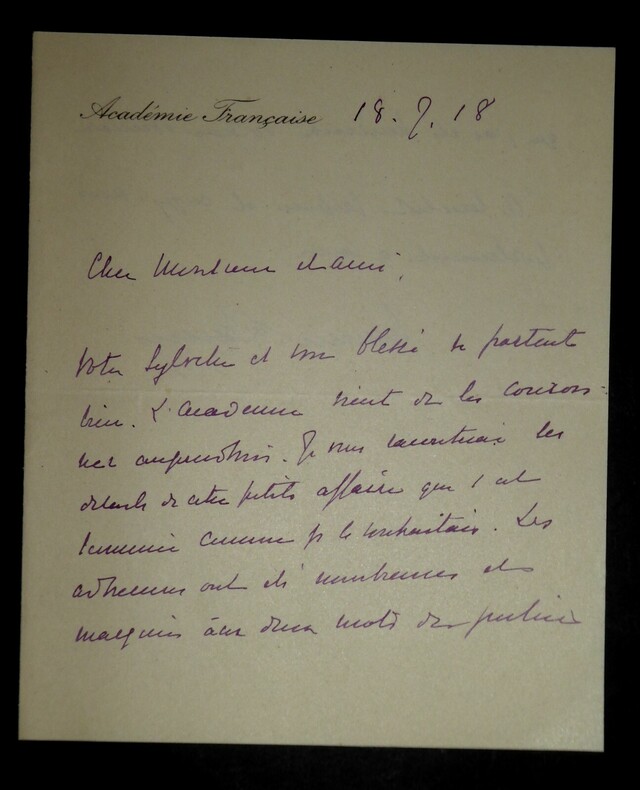
Etienne Lamy (1845-1919), avocat, homme politique, membre de l'Académie français dont il sera secrétaire perpétuel.
Reference : 020848
Lettre autographe signée
Etienne Lamy (1845-1919), avocat, homme politique, membre de l'Académie français dont il sera secrétaire perpétuel. L.A.S., sd [1915], 2p in-12. A l'écrivain et homme politique Joseph Fabre (1842-1916). « Certes oui, cher Monsieur, je connais les oeuvres de ce penseur exquis et profond. Son témoignage m'est très précieux. Par contre, je trouve stupide l'autre lettre. Quand on n'a rien de mieux pour couvrir une dérobade, on devrait se taire. Quel malheur que la guerre empêche tout. Je crois qu'il m'est presque facile de réunir la somme nécessaire pour monter l'oeuvre, et que son succès s'imposerait aux théâtres. [mot illisible] vous quelquefois seuls à cette initiative pour délivrer Jeanne, aujourd'hui captive des Français, des mauvais Français ? Veillez agréez l'expression de mes [mot illisible] sentiments. Etienne Lamy ». Pli central. Belle lettre autour de la représentation de sa pièce Jeanne d'Arc en pleine guerre (qui semble bien avoir eu lieu). [514]
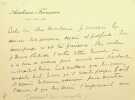
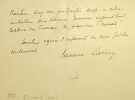
Etienne Lamy (1845-1919), avocat, homme politique, membre de l'Académie français dont il sera secrétaire perpétuel.
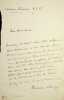
Reference : 020849
Lettre autographe signée
Etienne Lamy (1845-1919), avocat, homme politique, membre de l'Académie français dont il sera secrétaire perpétuel. L.A.S., 8 juillet 1915, 1p in-8. A l'écrivain et homme politique Joseph Fabre (1842-1916). « Cher monsieur, Vous avez enchâssé dans votre reliquaire mon hommage à votre sainte. Merci. Et merci pour l'exemple de foi [mot illisible] que vous donnez à tous. L'obstination de ceux qui nuisent nos gloires est extraordinaire, mais la vôtre l'emportera, et votre récompense sera de voir le triomphe préparé par vous, le triomphe de Jeanne sur ses bourreaux de tous les siècles. Veuillez me croire bien cordialement à vous Etienne Lamy ». Belle lettre sur l'espoir de voir une fête nationale de Jeanne d'Arc, promue par Fabre mais votée après sa mort, en 1920. [514]
Manufacture de lunettes et de pince-nez en tous genres
Morez-Du-Jura (France), 167, Rue de la République, s.d (c. 1900), in-8, 18 pp, Broché, couverture imprimée, Catalogue imprimé en noir et rouge, illustré en noir. Lunetterie fondée en 1820 dans le Jura, dirigée en 1855 par Aimé Lamy (1819-1889), la société est dissoute en 1881 et remplacée par Les Fils d'Aimé Lamy. Elle devient après la seconde Guerre mondiale la société Fidela. Couverture légèrement insolée. Couverture rigide
Bon 18 pp.
Urgences vasculaires des membres : Par Jean Lamy,... et Christian Bourde,... Préface du Pr R. Robert de Vernejoul [Unknown Binding] Lamy, Jean; Bourde, Christian and Vernejoul, Robert de
BROCHE
Merci de nous contacter à l'avance si vous souhaitez consulter une référence dans notre boutique à Authon-du-Perche.
Georges Lamy. Contes et chansons du rigaudon : Rouen, XVIIIe siècle. Cornu. Gaspard. La Saint-Gorgon. Gros-Pépère. Austreberthe. Le Camembert. Flore. Artémise. Violette. Minou. Minette. Michelot. Fine [Unknown Binding] Lamy, Georges
BROCHE
Merci de nous contacter à l'avance si vous souhaitez consulter une référence dans notre boutique à Authon-du-Perche.
Lamy Audrey Peyre Florent Langendries Charlie Lamy Audrey Quiring Frédéric
Reference : 500328850
ISBN : 5051889639749
![Ma reum [Blu-ray] (NEUF SOUS BLISTER). Lamy Audrey Peyre Florent Langendries Charlie Lamy Audrey Quiring Frédéric](https://static.livre-rare-book.com/pictures/IGE/500328850_thumb.jpg)
Apparatus Biblicus sive manuductio ad Sacram Scripturam. Tum clarius, tim facilius intelligendam. Nova Edition. Aucta, & locupletata omnibus que in Appatatus Biblio desiderari psunt.
Lyon, Joannem Certe 1696 In-12, reliure de l’époque plein veau marbré, dos à 5 nerfs, caissons ornés de motifs dorés, 11 gravures dépliantes, 11 pp. + 586 pp. + 36 pp. index. Coiffes et coins usés, mors internes fendus, rousseurs éparses. En l’état. Ouvrage assez rare.Le Révérend Père Bernard Lamy 1640-1715 était philosophe, mathématicien et musicologue. Il rejoint l'ordre des Oratoriens en 1662. En 1667, il est ordonné prêtre. En 1676, est exilé sur ordre royal pour avoir enseigné la philosophie de Descartes. Il publie en 1679, le “Traitez de Mechanique”, en 1680, le “Traité de la grandeur en général”. En 1680, il est professeur à Grenoble. En 1685, il publie “Les éléments de géométrie”. En 1686, il reçoit la permission de vivre à Paris, mais il est à nouveau relégué suite à des travaux théologiques en 1689. En 1701, il publie son “Traité de perspective”.
Le Révérend Père Bernard Lamy (1640-1715) était philosophe, mathématicien et musicologue. Il rejoint l'ordre des Oratoriens en 1662. En 1667, il est ordonné prêtre. En 1676, est exilé sur ordre royal pour avoir enseigné la philosophie de Descartes. Il publie en 1679, le “Traitez de Mechanique”, en 1680, le “Traité de la grandeur en général”. En 1680, il est professeur à Grenoble. En 1685, il publie “Les éléments de géométrie”. En 1686, il reçoit la permission de vivre à Paris, mais il est à nouveau relégué suite à des travaux théologiques en 1689. En 1701, il publie son “Traité de perspective”. Bon état d’occasion
Fenêtre ouverte sur Bougival.
Paris : Les Presses Universelles, mai 1950. Un volume 20x15cm, (20) pages, agrafées. Page de couverture en deux tons. Edition originale sur papier vergé BFK de Rives. Exemplaire à l'état neuf.
Janine et Jacques Lamy achèteront en 1954 La Maison des Amis des livres à Jean-François Chabrun, lequel a repris l'enseigne en 1951 lorsque Adrienne Monnier a cessé son activité. Le couple Lamy poursuivra le travail de librairie et de bibliothèque de prêt rue de l'Odéon jusqu'aux débuts des années 1960. Tous nos livres sont visibles sur notre site : https://www.livrepoesie.com/
Srafini J. Brillet Gaston Lamy Frdric-Edouard-Camille
Reference : 25831VPED
ISBN : B0016W5N0I
Mon Evangile : Selon saint Jean. Lettres-prfaces du... cardinal Verdier ... du... cardinal Srafini ... et de... Mgr Lamy ... Introduction de G. Brillet
Gnrique Broch D'occasion tat correct 01/01/1943 150 pages
Srafini J. Brillet Gaston Lamy Frdric-Edouard-Camille
Reference : 24030VPPG
ISBN : B0016W5N0I
Mon Evangile : Selon saint Jean. Lettres-prfaces du... cardinal Verdier ... du... cardinal Srafini ... et de... Mgr Lamy ... Introduction de G. Brillet
Gnrique Broch D'occasion tat correct 01/01/1943 150 pages
Les Applications de la gntique á la mdecine : Par Maurice Lamy
Gnrique Broch D'occasion bon tat 01/01/1943 150 pages
Marcel LAMY presente L'AUBERGE DU CHEVAL BLANC opérette à grand spectacle en 2 actes et 27 tableaux deErik CHARELL et Hans MULLER version française de Lucien BESNARD , couplets de René DORIN, musique de Ralph BENATZKY.VERSION NOUVELLE 1968 DE Jean VALMY et Marcel LAMY adaptation musicale de Paul BONNEAU direction musicale Jean Claude CASADESUS , cheh de chant : Nadine FOSSE.Avec : René DARY - Eliane VARON - Robert PIQUET - André JOBIN - Spohie BAQUET - Jean-Louis SIMON - Daniel CASTAING - Maxime FABERT - Robert VIDALIN - Luis DIAZ - ANNE sevestre 6 Robert SANDREY - Monique FARAUT - Jacky CALATAYUD - Maria LOGUEZ - J.C. HOLZEM - Gilbert LEFEVRE - Michel VERNAC - Jean DIETSCHY - Lyne CHANTAL
broché - programme13.5x21 - 36pp - pubications WERLY - photographies
ANTHROLOGIE HISTOIR PHILOSOPHIE LITTERATURE PARADES
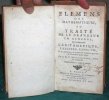
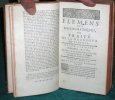
Elemens des Mathématiques ou Traité de la Grandeur en général.
Elemens des Mathématiques ou Traité de la Grandeur en général qui comprend l'arithmétique, l'Algèbre, l'Analyse, et les principes de toutes les Sciences qui ont la Grandeur pour objet. Par le R. P. Bernard Lamy, Prêtre de l'Oratoire.Divisé en 7 Livres avec le Livre VIII : Supplément des Elemens des Mathématiques. Traité de la progression des nombres naturels & des nombres impairs. Les fondemens de l'Aritmétique des Infinis.Septième Édition, revue & corrigée. A Paris, chez Jean Hourdel - 1738 - xxij et 490 pages et Table. Les pages de 481 à 490 et celle du Privilège du Roy, sont reliées en début de volume après la préface.Reliure plein veau de l'époque. Dos à nerfs orné et doré avec pièce d titre maroquin rouge. Filet à froid encadrant les plats. Roulette dorée sur les coupes. Tranches rouges. Petite galerie de ver en pied du dos. Coiffe supérieur et coins frottés. Pas de rousseur. Bon état. Format in-12°(17x10).Bernard Lamy (1640-1715), est un mathématicien, philosophe et physicien français.
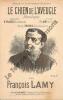
Partition de la chanson : Chien de l'aveugle (Le) Monologue comique Théâtre des Variétés,Eldorado,Théâtre des Ambassadeurs
Partitions sur les Animaux Benoit Emile 1885 approx.
Bon état Petit format

