 Write to the booksellers
2929 books for « lambert j j »Edit
-
Type
Autograph (3)
Book (2857)
Magazine (17)
Music sheets (48)
New book (1)
Old papers (1)
Photographs (3)
Posters (2)
-
Latest
Last 24h (2)
Last 3 days (1)
Last month (83)
Last week (6)
-
Language
Dutch (3)
English (2)
French (2927)
-
Century
17th (4)
18th (82)
19th (165)
20th (1255)
21st (265)
-
Countries
Belgium (213)
Brazil (1)
Canada (20)
China (1)
Côte d'Ivoire (11)
Denmark (28)
France (2447)
Germany (11)
Greece (1)
Netherlands (1)
Switzerland (197)
United Kingdom (1)
-
Syndicate
ALAC (20)
CLAM (10)
CLAQ (1)
CNE (3)
ILAB (1246)
NVVA (19)
SLACES (19)
SLAM (1162)
SNCAO (30)
Topics
- Adam (32)
- Archaeology (20)
- Architecture (29)
- Army (10)
- Autographs (43)
- Belgium (23)
- Bibliography (12)
- Biography (21)
- Brittany (20)
- Brussels (14)
- Catholicism (10)
- Children’s books (54)
- China (13)
- Christianity (16)
- Collaboration (17)
- Comic strip (17)
- Cooking (33)
- Culinary art (13)
- Dedication (26)
- Early printed books (16)
- Economics (19)
- Education (25)
- Education - morals (17)
- Egypt (10)
- Ethnology (13)
- Fine arts (40)
- First edition (29)
- Fishing (10)
- Genealogy (10)
- Geography (17)
- Geology (9)
- Hackney (10)
- Helvética (12)
- History (121)
- Lambert alain (12)
- Lambert andré (29)
- Lambert bernard (17)
- Lambert christophe (41)
- Lambert david (13)
- Lambert denis-clair (9)
- Lambert dominique (10)
- Lambert elie (31)
- Lambert fernand (19)
- Lambert gilles (30)
- Lambert gustave (10)
- Lambert jacques (12)
- Lambert jean (44)
- Lambert jean-clarence (37)
- Lambert lucien (10)
- Lambert marc (27)
- Lambert michel (11)
- Lambert paul (16)
- Languedoc (10)
- Law (23)
- Literature (196)
- Magazine (29)
- Manuscripts (15)
- Medicine (21)
- Mountaineering climbing (17)
- Music (10)
- Navy (11)
- Newspapers press (53)
- Painters (13)
- Painting (18)
- Paris (32)
- Philosophy (23)
- Photography (10)
- Poetry (55)
- Policy (13)
- Provence (27)
- Psychology (12)
- Reading vocabulary (16)
- Regionalism (22)
- Religions (33)
- Review (32)
- Reviews (33)
- Saint lambert (96)
- Sciences (17)
- Scores (59)
- Sociology (10)
- Songs (49)
- Sports (10)
- Swerts lambert (15)
- Switzerland (17)
- Tales (11)
- Tea (11)
- Teaching (12)
- Theatre (29)
- Theology (14)
- Travel (19)
- Various (18)
- Wallonia (11)
- War (26)
- Women (the) (24)
- Youth (16)
Partis et mouvements de la collaboration. Paris. 1940 - 1944
État : Très bon état - Année : 1993 - Format : in 8° - Pages : 257pp - Editeur : Jacques Grancher - Lieu d'édition : Paris - Type : Broché - Commander rapidement : https://www.bons-livres.fr/livre/pierre-philippe-lambert-et-gerard-le-marec/8598-partis-et-mouvements-de-la-collaboration-paris-1940-1944?lrb

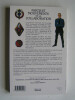
Durant quatre années, les Allemands préféreront voir se multiplier les groupements et leurs mouvements de jeunesse plutôt que d'encourager le parti unique dont rêve chacun des chefs. D'où la multiplicité d'organisations. tous portent uniformes et insignes. ˮCollaborationnistesˮ, ils ne le furent pas tous; il y eut aussi des mouvements régionalistes ou autonomistes. Dans cet ouvrage de référence, documenté avec précision et agréablement illustré de photographies en noir et en couleurs, les auteurs ont collationné tous les éléments disponibles dans les archives ou les collections privées pour reconstituer cette nébuleuse. Ils ont retenu les structures, les organisations et les signes distinctifs en laissant de coté les motivations. Avec un index, fort utile, des noms cités.
Partis et mouvements de la collaboration. Paris. 1940 - 1944
État : Très bon état - Année : 1993 - Format : in 8° - Pages : 257pp - Editeur : Jacques Grancher - Lieu d'édition : Paris - Type : Broché - Commander rapidement : https://www.bons-livres.fr/livre/pierre-philippe-lambert-et-gerard-le-marec/6286-partis-et-mouvements-de-la-collaboration-paris-1940-1944?lrb

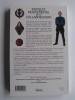
Durant quatre années, les Allemands préféreront voir se multiplier les groupements et leurs mouvements de jeunesse plutôt que d'encourager le parti unique dont rêve chacun des chefs. D'où la multiplicité d'organisations. tous portent uniformes et insignes. ˮCollaborationnistesˮ, ils ne le furent pas tous; il y eut aussi des mouvements régionalistes ou autonomistes. Dans cet ouvrage de référence, documenté avec précision et agréablement illustré de photographies en noir et en couleurs, les auteurs ont collationné tous les éléments disponibles dans les archives ou les collections privées pour reconstituer cette nébuleuse. Ils ont retenu les structures, les organisations et les signes distinctifs en laissant de coté les motivations. Avec un index, fort utile, des noms cités.
La France aliénée. Le triple crime de notre politique d'immigration et d'intégration
État : Très bon état - Année : 1996 - Format : in 8° - Pages : 176pp - Editeur : Godefroy de Bouillon - Lieu d'édition : Paris - Type : Broché - Commander rapidement : https://www.bons-livres.fr/livre/paul-lambert/4738-la-france-alienee-le-triple-crime-de-notre-politique-d-immigration-et-d-integration?lrb
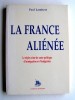

L'auteur démontre que l'immigration de masse n'est une chance pour personne et surtout pas pour les émigrés eux-même et les couches populaires de la population. Il montre comment l'emploi intensif d'émigrés dans l'industrie a rendu précaire sa compétitivité et créé un état ˮdinosaureˮ qui asphyxie la nation sans pouvoir trouver de solution. Il préconise une vraie révolution. ˮCe livre analyse ces problèmes, propose des solutions précises et concrètes, et étend la réflexion aux autres maux de la société.ˮ
Observations sur quelques dimensions du monde intellectual.
(Berlin, Haude et Spencer, 1770). 4to. No wrappers, as issued in ""Memoires de l'Academie Royale des Sciences et Belles Lettres"", tome XIX. Pp. 421-438. Very nice and clean.
The rare first printing of one of the few of Lambert's philosophical works that appeared within his life-time. This is one of the three philosophical papers that he published in ""Nova acta Eruditorum"", which are of varying philosophical content.The present work played a significant role in the rediscovery within philosophy of the concept of the ""sublime"", the foundational concept which was so famously treated by Kant in his third Critique (of Judgment). Neither the idea of the beautiful nor of the sublime was novel in the 18th century, as the distinction between the two had already been made in ancient philosophy. However, for several centuries, aesthetics had been dominated by the question of the beautiful, and it was only around Kant's and Lambert's time that the sublime had become a topic of interest again - this time primarily as the sublime in nature. When Lambert thus discusses the sublime in the present article, it is probable that his conception of it can have influenced Kant and his exposition in the ""Critique of Judgment"", which appeared a couple of decades later. ""Kant himself recognized Lambert as a philosopher of the highest qualities"" and he expected much from his critical attitude. He had drafted a dedication of the ""Critique of Pure Reason"" to Lambert, but Lambert's untimely death prevented its inclusion.Lambert's place in the history of philosophy, however, should not be seen only in its relation to Kant. The genesis of his philosophical ideas dates from a time when Kant's major works had yet to be conceived. It was the philosophical doctrines of Leibniz, Christian Wolff, and Locke that exerted the more important influence - insofar as one can speak of influence with a self-taught and wayward man such as Lambert... The two main aspects of Lambert's philosophy, the analytic and the constructive were both strongly shaped by mathematical notions"" hence logic played an important part in his philosophical writing. Following Leibnitz' ideas, Lambert early tried to create and ""ars characteristic conbinatoria"", or a logical or conceptual calculus. He investigated the conditions to which scientific knowledge must be subjected if it is to enjoy the same degree of exactness and evidence as mathematical knowledge..."" (D.S.B. VII:597).

Neues Organon oder Gedanken über die Erforschung und Bezeichnung des Wahren und dessen Unterscheidung vom Irrtum und Schein. 2 Bde. - [COINING ""PHENOMENOLOGY""]
Leipzig, Johann Wendler, 1764. 8vo. Non-uniformely bound. Vol 1: Completely uncut in the original cardboard-binding. Some wear to capitals and hinges. Internally a bit of minor occasional brownspotting. (18), 592 pp. Vol 2: 19th century marbled paper-binding with red gilt title-label to spine. Wear to extremities. Only light occasional brownspotting. (2), 435, (1).
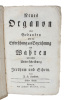
The very rare first edition of Lambert's seminal main philosophical work, the work which coined the term ""phenomenology"". ""Neues Organon"" is a work of breakthrough that came to, directly or indirectly, influence almost all later philosophy, also that of Kant.Today, Johann Heinrich Lambert arguably mostly remembered as one of the greatest mathematicians and logicians of his time. However, a true polymath, he also played a dominant role in the development of 18th century philosophy, primarily with his philosophical magnum opus ""Neues Organon"", in which he set out to provide a better methodology for philosophy, with the aid of mathematics. As such, he is considered a path-breaker of Rationalism and one of the most important predecessors of Kant, who knew him well and admired him greatly"" the two corresponded frequently. ""Kant himself recognized Lambert as a philosopher of the highest qualities"" and he expected much from his critical attitude. He had drafted a dedication of the ""Critique of Pure Reason"" to Lambert, but Lambert's untimely death prevented its inclusion.Lambert's place in the history of philosophy, however, should not be seen only in its relation to Kant. The genesis of his philosophical ideas dates from a time when Kant's major works had yet to be conceived. It was the philosophical doctrines of Leibniz, Christian Wolff, and Locke that exerted the more important influence - insofar as one can speak of influence with a self-taught and wayward man such as Lambert... The two main aspects of Lambert's philosophy, the analytic and the constructive were both strongly shaped by mathematical notions"" hence logic played an important part in his philosophical writing. Following Leibnitz' ideas, Lambert early tried to create an ""ars characteristic conbinatoria"", or a logical or conceptual calculus. He investigated the conditions to which scientific knowledge must be subjected if it is to enjoy the same degree of exactness and evidence as mathematical knowledge... In ""Neues Organon"" he next developed the idea of a characteristic language of symbols to avoid ambiguities of everyday language"" and finally, in the most original part of his work called """"Phänomenologie,"" he discussed appearance and gave rules for distinguishing false (or subjective) appearance from a true (or objective) one that is not susceptible to sensory illusions."" (D.S.B. VII:597).
Cosmologische Briefe über die Einrichtung des Weltbaues. - [PRE-ESTABLISHING THE BASIC FEATURES OF THE UNIVERSE]
Augspurg, Eberhard Kletts Wittib., 1761. Contemporary white-dyed sheepskin. Spine with a bit of surface wear, old hand-written paper-label to spine. XXVIII, 317 pp. A stamp inside front free end-paper. Light browning, scattered marginal brownspots, but in general a fine copy. A few leaves in ""Vorrede"" misbound.
The scarce first edition of Lambert's sensational ""Cosmological Letters"", his most important astronomical work, in which he to a large extent fore-shadowed the documentation of the basic features of the universe that Hershel later carried out.The work became very popular and was translated into French, Russian, and English, and it was later re-written and published as ""Systeme du Monde"" in Berlin, 1770. ""Of special interest among Lambert's astronomical writings - apart from applications of his physical doctrines - are his famous Cosmologische Briefe über die Einrichtung des Weltbaues"" (Augsburg, 1761).Not familiar with the similar ideas of Thomas Wright (1750) and with Kant's ""Allgemeine Naturgeschichte und Theorie des Himmels"" (1755), Lambert had the idea that what appears as the Milky Way might be the visual effect of a lens-shaped universe. On this basis he elaborated a theory according to which the thousand of stars surrounding the sun constituted a system. Moreover he considered the Milky Way as a large number of such systems, that is, a system of higher order…"" the ""Cosmologische Briefe was a great sensation and was translated into French, Russian, and English. Only when William Hershel systematically examined the heavens telescopically and discovered numerous nebulae and ""telescopic milky-ways"" did it become obvious that Lambert's description was not mere science fiction but to a large extent a bold vision of the basic features of the universe"" (Scriba in D.S.B. VII:598). Kant's mentor (Martin Knutzen) died in 1755, three years before the pre-critical project unfolded. But Kant still had the chance of meeting kindred spirits. One of these was the great philosopher and mathematician Johann Heinrich Lambert, whom he admired a great deal. Finally he had encountered a thinker who appreciated both the scientific and metaphysical perspective, who worried about their tensions, and who was searching for a truce. In his ""Cosmologische Briefe…"" (Cosmological Letters on the establishment of the universe), Lambert worked on the same topic as Kant had worked on in his earlier Universal Natural History. The tasks and results of both works resemble each other, in so far as they were both proposals of integrating Newtonian physics into a larger framework, and they both contained a theory of the dynamic constitution of the universe. Furthermore, as Kant's scientific works should be viewed under the perspective of his general philosophical outlook, so must Lambert's work in physics and astronomy be seen in relation to his general philosophical outlook and his perpetual quest for introducing mathematical exactness into the sciences. ""Lambert's efforts to improve communication and collaboration in astronomy were noteworthy. He promoted the publication of astronomical journals and founded ""Berliner astronomisches Jahrbuch oder Ephemeriden"". Many of the articles that he contributed to it were not published until after his death... He also favored the founding of the Berlin observatory. These suggestions, in line with Leibniz' far-reaching plans for international cooperation of scientific societies, inaugurated a new period of scientific teamwork."" (D.S.B., VII:598).
ÂME D'ENFANT
paris GEDALGE 1951 in-8 cartonnage illustré un volume, reliure bradel cartonnage monochrome grand in-octavo Editeur (18,6 x 26 cm), dos long décoré or, titre frappé or, dessin or (plaque spéciale Editeur) au centre du plat par Ray Lambert, recouvert d'une jaquette illustrée en couleurs par Ray Lambert (Jaquette renforcée au scotch au dos de la jaquette sans déchirure), orné d'un frontispice en couleur par Ray Lambert + 5 PLANCHES hors-texte EN COULEURS par Ray Lambert + 8 planches hors-texte en noir par Ray Lambert + 12 gravures in-texte en noir par Ray Lambert, 238 pages, 1951 Paris LIBRAIRIE GEDALGE Editeur,
Bel Exemplaire..... RARE.........en bon état (good condition). bon état
POUM, AVENTURES D'UN PETIT GARCON
paris GEDALGE 1950 in-8 cartonnage illustré un volume, reliure bradel cartonnage monochrome grand in-octavo Editeur (18,6 x 26 cm), dos long décoré or, titre frappé or, dessin or (plaque spéciale Editeur) au centre du plat par Ray Lambert, recouvert d'une jaquette illustrée en couleurs par Ray Lambert, orné de 4 PLANCHES hors-texte EN COULEURS par Ray Lambert + 7 planches hors-texte en noir par Ray Lambert + 14 gravures in-texte en noir par Ray Lambert, 237 pages, sans date (1950) Paris ANCIENNE LIBRAIRIE GEDALGE Editeur,
Bel Exemplaire..... RARE.........en trés bon état (very good condition). en trés bon état
CONTES DES CENT UN MATINS. Livre de Lecture destiné au cours élémentaire et au cours moyen (1er degré), illustrations de Raylambert (1936)
Paris DELAGRAVE 1936 1 in-12 demi-toile un volume, reliure demi-toile marron cartonnage illustré in-douze Editeur (hard-back editor in-12)(18,3 x 12 cm), dos long (spine without raised bands) avec étiquette de titre Editeur imprimée en bordeaux, 1er plat imprimé en bordeaux sur fond jaune et en jaune sur fond bordeaux et illustré en bordeaux par RAY-LAMBERT, toutes tranches lisses, Ex-Libris : cachet rond violet de l'Ecole Communale du 27 rue du Pré Saint-Gervais à Paris 19ème, en haut de la page de faux-titre, abondamment illustré (plentifully illustrated) de dessins in-texte en noir par RAY-LAMBERT, 271 pages, 1936 Paris Librairie DELAGRAVE Editeur,
Raylambert (ou Ray-Lambert à ses débuts) était un grand artiste normand hélas resté trop méconnu y compris par tous ceux qui l'ont tant apprécié alors qu'ils étaient sur les bancs de la petite école, ses merveilleux dessins si poétiques .....SUPERBES BOIS de Ray-Lambert. ........ RARE ............. en trés bon état (very good condition). bon état
LES YEUX CLAIRS - Livre de Lecture Courante pour le Cours Moyen (C.E.P.)
Paris DELAGRAVE 1933 1 in-12 demi-toile un volume, reliure demi-toile bleue cartonnée in-douze éditeur (hard-back editor in-12)(12 x 18,2 c cm), dos long (spine without raised bands) titre imprimé en bleu clair sur etiquette crème, 1ère de couverture illustrée en couleurs par RAY-LAMBERT, toutes tranches lisses, abondamment illustré (plentifully illustrated) de trés nombreuses illustrations in-texte en noir par RAY-LAMBERT, 277 pages, 1933 Paris Librairie DELAGRAVE Editeur,
Raylambert (ou Ray-Lambert à ses débuts) était un grand artiste normand hélas resté trop méconnu y compris par tous ceux qui ont tant apprécié alors qu'ils étaient sur les bancs de la petite école, ses merveilleux dessins si poétiques .....SUPERBES BOIS de Ray-Lambert (Raylambert) ........RARE.............en trés bon état (very good condition). en trés bon état
Les Saisons, pöeme suivi de L'Abénaki, Sara Th..., Ziméo, les Pièces fugitives et les Fables orientales.
De l'Imprimerie de P. Didot l'aîné | Paris 1796 | 23 x 31.50 cm | relié
Nouvelle édition revue par l'auteur, illustrée de 4 planches gravées sur cuivre par Morel d'après les dessins de Chaudet (Cohen, col. 927). Luxueuse publication sortie des presses de Pierre Didot l'aîné, le plus grand imprimeur de son temps. Cette édition se distingue de toutes les précédentes par son illustration entièrement renouvelée dans un esprit néoclassique, accordé à l'esthétique du Directoire. Elle est la première à avoir été revue par l'auteur lui-même. Reliure de l'époque en plein maroquin rouge, dos à cinq nerfs richement illustré de dentelles, filets et fleurons dorés, plats encadrés d'une double dentelle dorée, roulette dorée sur les coupes et les coiffes, gardes et contreplats - encadrés d'une dentelle dorée - de papier caillouté, toutes tranches dorées. * L'édition originale desSaisons, parue en 1769, avait consacré la réputation de Saint-Lambert et lui avait ouvert les portes de l'Académie française, avec le soutien de Voltaire, qui écrivait du poème : « C'est le seul ouvrage de notre siècle qui passera à la postérité. » La présente édition paraît en un moment singulier : deux ans après le décret d'abolition de l'esclavage voté par la Convention le 4 février 1794, et alors que Saint-Lambert, âgé de quatre-vingts ans, revoit lui-même son uvre pour la dernière grande édition de sa vie. Le choix de l'imprimeur Didot dont les productions incarnent alors le sommet du luxe typographique français et la date même de parution confèrent à ce volume une signification qui dépasse la simple réimpression. L'ouvrage contient, outre le long poème en quatre chants consacré aux saisons et sa préface sur la poésie bucolique et champêtre, les contes (L'Abénaki, Sara Th..., Ziméo), les Pièces fugitives et les Fables orientales. Ces dernières s'ouvrent sur une « Préface de Saadi », attribution explicite, nouvelle par rapport aux éditions de 1769 et 1775, de l'adaptation libre de la préface du Gulistan (le « Jardin des roses », XIIIe siècle) qui figure dans le recueil depuis l'édition originale. C'est dans cette édition revue par l'auteur que Saint-Lambert assume publiquement sa dette envers la littérature persane, au moment où la première traduction complète du Gulistan venait de paraître (abbé Gaudin, 1789). C'est par Ziméo, inséré dans le recueil depuis l'édition originale de 1769, que l'uvre de Saint-Lambert occupe une place singulière dans l'histoire littéraire des Lumières. L'un des rares textes de cette période à mettre en scène une insurrection d'esclaves, là où Voltaire dans Candide n'avait esquissé qu'une figure solitaire de la révolte, ce conte construit un héros africain doté d'une pleine dignité épique et précède chronologiquement la figure du révolté chez Louis-Sébastien Mercier (1771) ainsi que le célèbre passage antiesclavagiste de l'Histoire philosophique des deux Indes, attribué à Diderot, qui n'apparait que dans l'édition de 1780. On notera cependant que cette édition de 1796, contrairement aux précédentes, ne reproduit pas les « Réflexions sur les Nègres » qui suivaient Ziméo dans les éditions de 1769 et 1775, texte dans lequel Saint-Lambert affirmait que les défauts prêtés aux Africains « sont de l'esclavage » et non de nature. Cette suppression, intervenue deux ans à peine après le décret d'abolition, reste difficile à interpréter avec certitude : choix éditorial lié au format luxueux de la publication, discrétion calculée dans un contexte politique encore instable, la question coloniale étant loin d'être définitivement résolue sous le Directoire... A moins que cette absence de revendication soit justement le signe de la victoire des idées humanistes pour lesquelles l'auteur n'à plus à plaider puisqu'elles ont été pleinement reconnues par La Convention qui a voté l'abolitionde l'esclavage le 4 février 1794 (16 pluviôse an II). Très bel exemplaire en grande reliure de l'époque en plein maroquin rouge, de l'édition définitive revue par l'auteur, parue deux ans après l'abolition de l'esclavage. - Photograph

[# ILLUSTRATEUR: Maurice De Lambert] - # AUTEUR: De Lambert Maurice
Reference : 1727
(1943)
# TITRE: Sites choisis de Provence et de Languedoc
# AUTEUR: De Lambert Maurice # ILLUSTRATEUR: Maurice De Lambert # ÉDITEUR: Guilhot - Paris # ANNÉE ÉDITION: 1943 # ENVOI, BEAUX PAPIERS: Rives pur fil à la forme # COUVERTURE: En feuilles sous étui et emboitage # DÉTAILS: In 4° en feuilles sous chemise 6ff + 56 gravures sur cuivre d'après les sépias et sanguines de Maurice de Lambert accompagnées de textes extraits d'auteurs anciens et modernes sous chemises légendées. Lettre- préface de Robert de la Suzeranne. N° 367 d'un tirage total de 996 exemplaires et 69 hors commerce. Tome 1 seul paru. # PHOTOS visibles sur www.latourinfernal.com
# ÉTAT: Bon état, manque la chemise des planches LIII et LIV
Observations Trigonometriques. - [FORESHADOWING NON-EUCLIDEAN GEOMETRY]
(Berlin, Haude & Spener, 1770). 4to. No wrappers, as issued in ""Mémoires de l'Academie Royale des Sciences et Belles Lettres"", tome XXIV, pp. 327-354 and 1 engraved plates.
![Observations Trigonometriques. - [FORESHADOWING NON-EUCLIDEAN GEOMETRY]. "LAMBERT, JOHANN HEINRICH [NON-EUCLIDEAN GEOMETRY].](https://static.livre-rare-book.com/pictures/LLX/31785_1_thumb.jpg)
![Observations Trigonometriques. - [FORESHADOWING NON-EUCLIDEAN GEOMETRY]. "LAMBERT, JOHANN HEINRICH [NON-EUCLIDEAN GEOMETRY].](https://static.livre-rare-book.com/pictures/LLX/31785_2_thumb.jpg)
First edition. Lambert's work on non-Euclidean geometry is among the most important in the field. Carl Boyer writes ""No one else came so close to the truth without actually discovering non-Euclidean geomtry."" (History of Mathematics, pp. 504). Lambert wrote his famous book 'Theorie der Parallellinien' in 1766, but it was not published until 1786 (nearly a decade after his death). Lambert originally set out to prove Euclid's parallel postulate in a similar way to that which Saccheri had used in his 'Euclides Vindicatus', but in contrast he did not interpret the consequences of non-Euclidean geometry as absurd. The offered paper ('Observations Trigonometriques') is the only work by Lambert on non-Euclidean geometry which was published during his life-time. Here he made the important discovery of the duality between spherical and hyperbolic geometry, i.e., that hyperbolic trigonometries can be deduced from spherical trigonometries by using imaginary angles (and consequently he introduced the hyperbolic functions, for the first time). By illustrating this duality Lambert gave strong evidence of the consistency of non-Euclidean geometries. (See Kline's Mathematical Thought from Ancient to Modern Times, pp. 404 & 868).
Guide agréé par l'Office National de la Chasse: Manuel officiel de l'examen de chasse
Marc lambert 1981 239 pages in8. 1981. broché. 239 pages. Le 'Manuel officiel de l'examen de chasse' de Marc Lambert est le seul guide agréé par l'Office National de la Chasse. Depuis sa publication il a formé ou contribué à former environ 500 000 chasseurs représentant près de 30% des porteurs actuels de permis et est considéré comme le livre de référence pour toute une génération de jeunes chasseurs
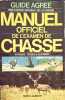
État correct intérieur propre
Histoire des Guerres de Religion en Provence (1530-1598) - tome 1er
Chantemerle éditeur 1972 479 pages in8. 1972. broché. 479 pages. Cet ouvrage de Gustave Lambert réédité par Chantemerle en 1972 retrace l'histoire des guerres de religion en Provence entre 1530 et 1598. Il s'agit d'une réimpression de l'édition originale de Toulon (1868-1870) en deux volumes qui constitue une référence pour l'étude des conflits religieux et du protestantisme dans cette région

intérieur trés propre
Christophe Lambert Christophe Lambert Oliver Cotton Götz Otto Layla Roberts Rhona Mitra Patricia Velasquez Charles Robinson Graham Baker Christophe Lambert Oliver Cotton Charles Robinson Graham Baker Götz Otto Layla Roberts Oliver Cotton Patricia Velasquez Rhona Mitra
Reference : 67574
(2000)
ISBN : 3475001000552
Beowulf
M6 Vidéo 2000 18x14x1cm. 2000. DVD.

French edition. ZONE 2 EUROPE. Le boitier présente des traces de stockage et d'usure mais le DVD reste en bon état de fonctionnement. Envoyé dans un emballage adapté depuis la France
Valérie Lemercier Valérie Lemercier Lambert Wilson Catherine Deneuve Michel Aumont Mathilde Seigner Denis Podalydès Valérie Lemercier Valérie Lemercier Lambert Wilson Mathilde Seigner Catherine Deneuve Lambert Wilson Denis Podalydès Michel Aumont
Reference : 78714
(2006)
ISBN : 3333297938518
Palais royal
Gaumont Columbia Tristar 2006 19x14x2cm. 2006. DVD.
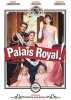
ZONE 2 EUROPE - Le dvd présente des marques d'utilisation mais reste en tres bon état d'ensemble - Expédition soignée sous blister dans une enveloppe à bulles depuis la France
Les Saisons, poëme. suivi de L'Abénaki, Sara Th..., Ziméo, les Pièces fugitives et les Fables orientales.
S. n. | Paris 1775 | - | relié
Septième édition, première à illustrer Ziméo, ornée de 7 figures hors-texte de Moreau le Jeune : un frontispice et 4 figures pour Les Saisons, gravées par Delaunay, Duclos, Prévost et Simonet, et 2 figures pour les Contes, Poésies fugitives et Fables orientales, ainsi que de 4 vignettes en-tête par Choffard. Notre exemplaire est enrichi de tirés à part du fleuron de titre et des vignettes de Choffard. Reliure XIXème en plein maroquin bleu nuit. Dos à cinq nerfs orné de fleurons champêtres (vigne, blé et serpe, gibier et cor de chasse...) ainsi que de caissons dorés. Triple filet et dentelle géométrique dorés en encadrement des plats. Large dentelle dorée en encadrement des contreplats de papier à la cuve. Mors supérieur frotté. * L'édition originale desSaisons, parue en 1769 avec des illustrations de Gravelot et Le Prince, avait consacré la réputation de Saint-Lambert et lui avait ouvert les portes de l'Académie française. La présente septième édition (Cohen/Ricci Sp. 926 ; Sander 1779), demeurée sous l'adresse fictive « Amsterdam » masquant un imprimeur parisien, est la première à comporter une illustration pour Ziméo, le conte philosophique antiesclavagiste inclus dans le volume depuis l'originale : le frontispice de Moreau, légendé "j'aimerai deux blancs, dit-il", donne pour la première fois un visage au premier héros noir insurgé de la littérature française. L'ouvrage contient, outre le long poème en quatre chants consacré aux saisons et sa préface sur la poésie bucolique et champêtre, les contes (L'Abénaki, Sara Th..., Ziméo), les Pièces fugitives et les Fables orientales. Les Fables orientales s'ouvrent sur un texte liminaire constituant une adaptation libre de la préface du Gulistan de Saadi (le « Jardin des roses », XIIIe siècle). Cette adaptation n'est pas encore attribuée à Saadi dans la table (elle le sera dans l'éditon de 1796), mais qui représente néanmoins l'une des rares versions françaises accessibles de ce texte entre les deux premières traductions partielles françaises d'André du Ryer (1634) et d'Alègre (1704) et la première traduction complète de l'abbé Gaudin (1789). C'est surtout avec le conte philosophique antiesclavagiste Ziméo inséré dans le recueil depuis l'édition originale, que cette oeuvre de Saint-Lambert occupe une place singulière dans l'histoire littéraire européenne. Ce conte philosophique est l'un des rares textes des Lumières à mettre en scène une insurrection d'esclaves, là où un Voltaire, dans Candide, n'avait esquissé qu'une figure solitaire de la révolte. Inspiré par Oroonoko (1688) d'Aphra Behn, traduit en français par La Place en 1745, Saint-Lambert construit un héros noir doté d'une pleine dignité épique, et fait suivre son récit de « Réflexions sur les Nègres » dans lesquelles il démonte méthodiquement le préjugé racial, affirmant que les défauts prêtés aux Africains « sont de l'esclavage » et non de nature. Chronologiquement,Ziméo précède la figure du révolté chez Louis-Sébastien Mercier (1771), et le célèbre passage antiesclavagiste de l'Histoire philosophique des deux Indes, attibué à Diderot, qui ne parut qu'en 1780. La présente édition de 1775 est précisément la première à donner une illustration au conte : le frontispice de Moreau le Jeune, figurant Ziméo secourant deux Blancs, confère pour la première fois une image au héros noir de Saint-Lambert, au moment même où le débat abolitionniste commence à prendre de l'ampleur en France. Des bibliothèques de Francis Kettaneh (1897-1976) et d'Irwin Laughlin (1871-1941), avec leurs ex-libris. Francis Kettaneh, homme d'affaires né au Liban, fut l'un des grands bibliophiles américains du XXe siècle, dont l'ex-libris porte la devise Mehr Licht (derniers mots de Goethe). Irwin Boyle Laughlin, diplomate américain, fut ministre plénipotentiaire des États-Unis en Grèce (1924-1926) puis ambassadeur en Espagne (1929-1933) ; collectionneur passionné d'art et de livres français du XVIIIe siècle, il fit construire à Washington la Meridian H
L'art d'aimer . Traduction nouvelle de Pierre Lièvre. Un titre, quatre frontispices, dix-huit compositions en couleurs gravés à l'eau-forte et quelques letrines et ornements typographiques gravés sur bois par André Lambert.
Paris, Briffaut, octobre - novembre 1922 (colophon). Collection "Le Livre du Bibliophile" (4e. vol. ) In quarto (27,5 x 21,5 cm,) [4]- 201 (2) pp. - 23 eaux-fortes originale en aquatintes hors texte dont les titres et frontispices, broché . Edition originale de la nouvelle traduction due à Pierre Lièvre avec le texte latin en regard, et premier tirage des eaux-fortes de André Lambert réalisé à la presse à bras. L'un des 500 ex. sur vélin d'Arches au filigrane ( ap.96 autres gp). Tache d'insolation sur la tr. de t. (muette). .
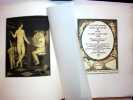
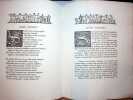
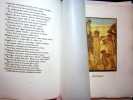
André Lambert (1884 1967) Peintre, aquarelliste, graveur, fit ses études à Munich où il suivit lenseignement du baron Hugo van Habermann, travaillant notamment pour le magazine satirique Allemand Simplicissimus, avant de sinscrire aux Beaux-Arts de Paris. Connu pour ses vastes connaissances dans les cultures latine et grecque, une érudition quil met au service de ses créations artistiques, ses créations témoignent dun style marqué par le classicisme antique et le mouvement Art Nouveau qu'il allie avec un bonheur rare. Mise à jour du Samedi 27 Juin 2026. Paiement PayPal immédiat, Mondial Relay pour : France, Allemagne, Autriche, Belgique, Espagne, Italie, Portugal, Luxembourg, Pays-Bas, Pologne (Communiquer votre point ou locker si connu). Une participation supplémentaire peut être demandée pour les colis lourds hors France où les envois compris entre 5 et 25 kg sont dégressifs : 2 à 4 kilogrammes - 7.99 / 5 à 10 kg - 15.99 / 15 -25 kg - 25.99. Certaines de nos collections ( Vian, Céline, Camus (...) peuvent être expédiées en Franco de port. Pour linternational hors Europe (Suisse, Canada, Japon, Etats-Unis, les frais dexpéditions peuvent varier selon le poids (mise à jour : 1 juin 2026).
Principes des moeurs chez toutes les nations ou Catéchisme universel.
Paris, Agasse, 1798.
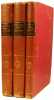
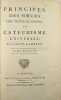
Première édition. Poète adulé en son temps Jean-François de Saint-Lambert (1716-1803), auteur de plusieurs articles dans l' Encyclopédie, se fit moraliste. Il expose dans ce "Catéchisme" que les vices sont encore des passions, mais des passions utiles à l'homme et à ses semblables. Les vices et les vertus ne sont que des conventions propres à chaque peuple. Un chapitre a pour titre : "Analyse de la femme". Saint-Lambert eut une liaison avec Emilie du Chatelet, qui se retrouva enceinte de ses oeuvres, et en mourut. Bel exemplaire. /// 3 volumes in-8 de (4), 348 / (4), 378 / (4), 213 pp. Cartonnage rouge, pièce de titre noire. (Reliure de l'époque.) //// First edition. Jean-François de Saint-Lambert (1716-1803), an acclaimed poet of his time and author of several articles for the Encyclopédie, became a moralist. In his Catechism, he explains that vices are still passions, but passions that are useful to man and his fellow man. Vices and virtues are merely conventions specific to each people. One chapter is entitled Analyse de la femme. Saint-Lambert had an affair with Emilie du Chatelet, who became pregnant with his work, and died as a result. A fine copy.
Florilège des Lyriques latins.
Paris L'ESTAMPE MODERNE 1920 1 Illustrations par André LAMBERT. Paris, l'Estampe Moderne, 1920, in-8, en feuilles sous chemise et étui marbré rouge, illustrations in et hors texte, 122 pp.
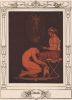
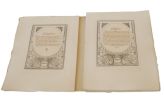
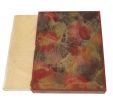
Un des 274 exemplaires numérotés sur papier Vergé teinté à la forme des Papeteries d'Arches du recueil de poèmes latins, choisis, traduits et illustrés par André Lambert. Infimes piqures.
Mémoire sur quelques Propriétés remarquable des Quantités transcendentes circulaires et logarithmiques. - [LAMBERT'S CONTINUED FRACTIONS AND IRRATIONALITY OF ""N""]
(Berlin, Haue et Spener, 1768). 4to. No wrappers as issued in ""Mémoires de l'Academie Royale des Sciences et Belles-Lettres"", tome XVII, pp. 265-322 and 1 folded engraved plate.
First edition, journal issue. ""One of Lambert's most famous results is the proof of the irrationality of ""N"" and e. It was based on the continued fractions, and two such fractions still bear his name.""(DSB).""Euler's work on continued fractions was used by Johann Heinrich Lambert.....to prove that if x is a rational number (not 0), then ex and tan x cannot be rational. He thereby proved not only that ex for positive integral x is irrational, but that all rational numbers have irrational natural (base e) logarithms.From the result of tan x, it follows tha, since tan (n/4)= 1, that neither n/4 nor n can be rational.Lambert actually proved the convergencee ofthe continued fraction expansion for tan x. (Morris Kline). - Struik, A Source Book, Chapter V, No 17).
DESSIN ORIGINAL : MAQUETTE POUR LA PREMIERE DE COUVERTURE D'UN LIVRE SCOLAIRE : "L'ARITHMÉTIQUE AU COURS MOYEN"(de Cluzel et Rougeaux chez Belin Editeur - 1951) PAR RAYLAMBERT
1951 Un Dessin Original, à la mine de plomb sur papier calque, Format : 21 x 29,7 cm, format du dessin lui-même : 11 x 17 cm sur papier calque, signé en bas à gauche au tampon encreur noir, sans date (1951)
Raylambert : peintre et illustrateur (1889-1967), Artiste d'origine normande, Raymond Gabriel Albert Lambert dit Raylambert fut un fameux illustrateur de manuels scolaires dont les dessins pleins de poésie charmèrent des générations d'écoliers...............DESSIN SUPERBE...........UNIQUE.......en trés bon état (very good condition). trés bon état
3 documents bancaires et judiciaires autographes concernant des dettes de M. Lambert, Banquier à Paris.
- Lettre de change (2 pages) datée du 28 Xbre 1785 de Caen, signée Delaveyne Déperiers avec au dos plusieurs ordres de paiement datés de 1785 et 1785 et signés par Delaveyne Déperiers, De Boisnormand, Vimart - Reconnaissance de dépôt de traite (1 pages) par M. de Laveyne Desperiers pour M. Lambert, datée du 28 Xbre 1785 à Caen, signée par De Boisnormand (avec note en bas d'une autre écriture). - Protet contre M. Lambert (1 page ) rédigé par Benoist Nicolas Mauroy, huissier, daté du 10 mars 1786, faisant mention de le lettre de change du 28 Xbre 1785 et signé au dos par différents intervenants. Les 3 documents en très bon état.
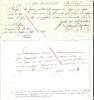
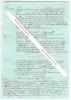
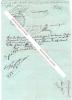
Le bandeau "BOUQUINERIE AURORE" visible sur le scan n'est bien-sûr pas présent sur le document original, il n'a été placé ici que pour garder le caractère unique du document.

