 Write to the booksellers
100 books for « guesde j »Edit
-
Type
Book (99)
Magazine (1)
-
Century
19th (5)
20th (64)
21st (1)
-
Countries
Belgium (2)
Canada (1)
Denmark (1)
France (96)
-
Syndicate
ALAC (1)
ILAB (68)
SLAM (66)
Topics
- Adam (1)
- Algeria (2)
- Autographs (2)
- Commune (3)
- Commune the (1)
- Communism (7)
- Communism (1)
- Economics (1)
- First edition (3)
- France anatole (1)
- Franche comte (1)
- French colonies (1)
- Germanic languages (1)
- History (9)
- Jaurès jean (3)
- Khmer art cambodia (1)
- Literature (2)
- Magazine (7)
- Maghreb (2)
- Maghreb pc (2)
- Marx karl (1)
- Masterpiece (1)
- Newspaper (1)
- Newspapers press (8)
- Paris (1)
- Philosophy (4)
- Policy (25)
- Reliure (1)
- Reviews (8)
- Social sciences (1)
- Socialism (35)
- Trade unionism (2)
- Travel (1)
- Trotsky léon (1)
- Various (1)
- War 70/71 (1)
SEMBAT (Marcel) / VAILLANT (Edward) / GUESDE (Jules) / LONGUET (Jean)
Reference : Auto77
Lettre autographe signée de SEMBAT (Marcel) / VAILLANT (Edward) / GUESDE (Jules) / LONGUET (Jean)
0 SEMBAT (Marcel) / VAILLANT (Edward) / GUESDE (Jules) / LONGUET (Jean) - Billet autographe signé à destination des "frères socialistes italiens" - 1 feuillet In8 à entête de la chambre des Députés à Paris, sd (1911) - Feuillet manuscrit de Marcel Sembat, signé par les 4 députés. "Nous prions les camarades et frères socialistes italiens d'accueillir fraternellement nos camarades Hubert-Rouger, Marcel Cachan et Laval députés et membres du groupe socialiste au parlement." Exceptionnel billet autographe destiné à favoriser la visite de ces 3 parlementaires en Italie. Marcel Sembat (1862/1922) fut un journaliste mordant, un parlementaire incisif et un orateur populaire au verbe puissant. Il fut élu député en 1893. Il était membre du Parti Socialiste Révolutionnaire, composante du P.O.F. de Jules Guesde. Ministre des Travaux Publics de 1914 à 1916, il vota contre l'adhésion à la 3e Internationale au congrès de Tours. Il resta membre de la SFIO jusqu'à sa mort. A noter qu'il fut le seul à cette époque à mettre dans son programme, l'émancipation civile et politique de la femme, et ce à chaque élection. On ne présent plus Jules Guesde , socialiste et adversaire résolu de Jaurès .Il fut l' un des plus importants théoriciens et militant du socialisme français entre 1875 et 1922, fut député du Nord de 1893 à 1898 et de 1906 à 1922. Il fut également Ministre de 1914 à fin 1916. Jean Longuet (1876/1938), petit fils de Karl Marx, sera proche de Jules Guesde jusqu'en 1900, puis de la tendance Jaurès à partir de 1905. C'est lui qui créera le nom Section Française de l'Internationale Ouvrière (SFIO). Il est à côté de Jaurès lors de son assassinat. Au cours du congrès de Tours en 1920, il ne voulait s'engager ni au côté des communistes, ni au côté des modérés, il ralliera toutefois la tendance modérée de Léon Blum. Edouard vaillant (1840/1915) était un médecin reconnu. Il fut à la fin de sa vie Député de Paris, affilié à la SFIO et un acteur majeur de la Commune de Paris; il en sera le délégué à l'Instruction Publique. Etonnant billet où sont réunis 7 noms de personnalités socialistes aux destins très divers ...
Bon
El Capital. Resumido y acompanado de un estudio sobre el socialismo científico por Gabriel Deville. Primera edición [Marx / Deville] (+) Socialismo Utopico y Socialismo Cientifico [Engels] (+) La Ley de Los Salarios y Sus Consecuencias [Guesde]. - [FIRST SPANISH EDITION OF THE MOST IMPORTANT ABRIDGED VERSION OF ""THE CAPITAL""]
Madrid, Ricardo Fé, 1887. 8vo. Contemporary brown half calf with gilt lettering and ornamentation to spine and red paper covered boards. Most leaves evenly browned (due to the quality of the paper) and some brownspotting to last few leaves. Overall a very good copy indeed of this otherwise fragile book. [Socialismo Utopico... :] pp. (1)-91, (1) + frontispiece of Engels" [La Ley de Los Salarios... :] pp. (1)-44 + frontiespiece of Guesde" [El Capital:] pp. (I)-LVI, 263 pp.
![El Capital. Resumido y acompanado de un estudio sobre el socialismo científico por Gabriel Deville. Primera edición [Marx / Deville] (+) Socialismo ...](https://static.livre-rare-book.com/pictures/LLX/58427_1_thumb.jpg)
![El Capital. Resumido y acompanado de un estudio sobre el socialismo científico por Gabriel Deville. Primera edición [Marx / Deville] (+) Socialismo ...](https://static.livre-rare-book.com/pictures/LLX/58427_2_thumb.jpg)
![El Capital. Resumido y acompanado de un estudio sobre el socialismo científico por Gabriel Deville. Primera edición [Marx / Deville] (+) Socialismo ...](https://static.livre-rare-book.com/pictures/LLX/58427_3_thumb.jpg)
The exceedingly scarce first Spanish edition of the most important abridged version of Marx's Capital ever to have appeared, published in the same year as what is generally accepted as the first Spanish edition of ""Das Kapital"" (Zafrilla's abridged version - defectively translated from Roy's French version - which was published in newspaper installments 1886-87).This Spanish translation was made from the French of Gabriel Deville (1854 -1940), the great French socialist theoretician, politician and diplomat, who did more than almost anyone else to raise awareness of Karl Marx's theories of the weaknesses of capitalism - most effectively through the present work, which came to have a profound influence upon the spreading of Marxist thought throughout the Spanish speaking part of the world. ""The epitome, here translated, was published in Paris, in 1883, by Gabriel Deville, possibly the most brilliant writer among the French Marxians. It is the most successful attempt yet made to popularize Marx's scientific economics. It is by no means free from difficulties, for the subject is essentially a complex and difficult subject, but there are no difficulties that reasonable attention and patience will not enable the average reader to overcome. There is no attempt at originality. The very words in most cases are Marx's own words, and Capital is followed so closely that the first twenty-five chapters correspond in subject and treatment with the first twenty-five chapters of Capital. Chapter XXVI corresponds in the main with Chapter XXVI of Capital, but also contains portions of chapter XXX. The last three chapters-XXVII, XXVIII, and XXIX-correspond to the last three chapters-XXXI, XXXII, and XXXIII-of Capital."" (ROBERT RIVES LA MONTE, Intruductory Note to the 1899 English translation).The Spanish translator of the work is Antonio Atienza, a typographer and translator at the press of Ricardo Fé, who in 1886 volunteered his work at the newly founded ""El Socialista"", the Spanish flagship publication of Marxist socialism. It was also in 1886 that Atienza translated the present work, with the publication following in 1887. This translation happened almost simultaneously with the ""translation"" by Zafrilla, which appeared in weekly installments in the rival newspaper ""La Républica"", and the two first versions of ""Das Kapital"" to appear in Spanish tell the story of more than just the desire to spread Marx's ideas in Spain. Both versions were part of an ongoing struggle between political parties vying for the loyalty of Spain's workers (see more below). THE WORK IS OF THE UTMOST SCARCITY, WITH MERELY THREE COPIES LISTED ON OCLC (two in Bristish Library and one in Bibliothèque Nationale) and none at auction over the last 40 years at least.Backgrund for the publication:Among the numerous nascent political organizations that sprouted in the last half of 19th century Spain, many of them as a result to the tumultuous years after the so-called ""Glorious Revolution"" of 1868, was the Partido Socialista Obrero Español (PSOE). The party was founded by Pablo Iglesias in 1879, and it was the second socialist party in Europe, preceded only by the Sozialdemokratische Partei Deutschlands (SPD). Notably, of the original twenty-five founding members sixteen were typographers. March of 1886 was a turning point for the PSOE, as they began to publish a weekly newspaper, ""El Socialista"", in order to reach a wider audience throughout Spain and thus advance the Marxist socialist agenda, of which the paper became the flagship. (To this day, it is the official paper of the PSOE, the present ruling party in Spain, although it was suppressed during the years of Franco's dictatorial regime and published sporadically in exile, in France, or clandestinely in Spain. It was again published regularly since 1978. The PSOE gave up Marxism in 1979 in favor of Democratic Socialism.)In 1886 the translator of the present work, Antonio Atienza, was a typographer and translator at the press of Ricardo Fé. At the same time, he volunteered his work at the newly founded El Socialista, as the PSOE funds were quite limited-he wouldn't have a paid position in the paper until 1913. He translated articles by Engels, Guesde, and Buechner, among others.""Das Kapital"" had been published twenty years earlier. That it took so long to reach Spain in book form reveals, among other things, that up to that moment most of Marx's thoughts had filtered through to the workers' unions and parties by way of the writings of his followers as they were interpreted and explained by the intellectuals in charge of these organizations. It is also evident that the complexity of the book wouldn't be of much use to the average worker, factory and otherwise. Enter Deville's abridged version, which was more accessible in that some of the most basic ideas of Marx were digested and re-explained. The point was not to publish a book that could only be only be understood by economists and philosophers, but one that could be given to the workers. A rival party leftist party, considered by the PSOE as bourgeois, was the Partido Republicano Federal. One of its members, Pablo Correa y Zafrilla, undertook the task of translating the first volume of Das ""Kapital"". Quite usual for Spain at the time, the translation was published in weekly instalments to subscribers of their newspaper, ""La República"", starting in 1886 and ending in 1887. The paper then sold the cloth binding to its subscribers and offered to collect the installments to have the book bound for its customers. According to the ad in ""La República"" (22/1/1886), the translation is purportedly from the German original, but it has been clearly demonstrated that it is a defective translation from the French translation of Roy (Ribas). It seems very plausible that when the PSOE found out that someone else in Spain was beginning to publish a translation of the first volume of ""Das Kapital"", El Socialista decided to publish Deville's translation. In fact, the publication of El Capital by ""La República"" was briefly mentioned once in ""El Socialista"", and not in flattering terms (7/10/1887). That a Marxist newspaper disparaged against the first Spanish publication of ""Das Kapital"" reveals, among other things, that they were not terribly excited about some other party's publication producing a defective rendering of their guiding principles. On the other hand, that ""La República"" had decided to publish the book was probably brought about by the foundation of ""El Socialista"", as they saw that the PSOE now had the means to spread their ideas throughout the country. It is in no small way possible that the haste to publish the book brought about the many defects in the translation from the French of Roy as Correa hurried to finish it.José Mesa y Leompart, a typographer, translator, and Marxist ideologue and activist, had experienced the upheavals of the Commune of Paris during his exile after the 1868 revolution. He developed a friendship with Marx's son in law, Paul Lafargue, and his wife, Laura Marx-who themselves had been in exile in Spain during 1871-72-, as well as with Engels, with whom he shared much correspondence, and many other figures of the Marxist movement. He also met both Marx and Engels during their exile in London. His friendship with Pablo Iglesias was a major driving force behind the formation of the PSOE, and he collaborated with El Socialista both as a writer and as a financial supporter. Mesa writes to Engels in April of 1887 lamenting that some Spanish thinkers were using Marx's theories and the policies of the German Socialist Party to deny the concept of class struggle, despite the fact that ""we have […] proven to them that you and Marx have always said the opposite, and having quoted to them the very clear statements of the German Socialist Party"" [but] they remain unmovable, and at some point they even wanted to publish the abridged Capital by Deville, without the preface, and with notes interpreting the meaning in their own way-which we have impeded-(the Resumen [abridgement] of Deville will soon be published, faithfully translated into Spanish.""Therefore, as early as April of 1887 the present translation was already in progress, and in fact, according to Mesa, soon to be published, so it was apparently very advanced. It is then quite possible that Antonio Atienza was commissioned to translate the Deville's abridgement a few months earlier, and not unlikely as far as 1886, when ""La República"" was still publishing installments of the Correa translation. The PSOE is obviously trying to obscure and minimize Correa's translation by publishing the Deville book, as the task of translating ""Das Kapital"" from the original would be lengthy and costly, and it would have come out too late to ascertain their political hold on Marx's ideas. This translation of Deville, then, sees the light is in the very midst of the bickering between leftist parties, and is in fact a product of the confrontations between leftist ideologies. It was finally published about nine months after Mesa's letter to Engels. The first announcement in ""El Socialista"" appears in their November 11th, 1887 issue. The price is four pesetas, or about the cost of an entire year's subscription to the paper, although subscribers could purchase it at half price. Still, given that many subscribers were workers of scarce means, less than three hundred copies were sent out to the main Spanish cities, and that the total edition was probably about a thousand copies at most.The scarcity of this book can be underlined if one considers the virulent war that was waged against all socialist and Marxist literature during and after the Spanish Civil War by the dictatorial regime of Francisco Franco. Book purges and burnings were considerable throughout Spain since the onset of the war, in 1936. It is not that books were burnt sporadically and occasionally, but rather they were destroyed in a systematic and terrifyingly efficient manner. As early as September of 1936 official orders were given to all civil governors, mayors, school inspectors in the nationalist areas to purge all ""harmful"" books, such as pornography and books of a communist or Marxist content. Teachers, librarians, and private citizens, often purged their own libraries, public or personal, of such works in order to comply with the official orders. Countless people were summarily executed for owning certain books that revealed their political tendencies. Obviously, owning actual edition of a book by Marx was reason enough to be deemed guilty and likely executed. As the war advanced, many other such official orders were issued, and unfathomable numbers of books were burnt. To this is added that many libraries were burnt down during the bombardments that took place throughout the country, and that all the libraries of the leftist parties were systematically destroyed. The end of the war, in 1939, only made it official throughout the entire country that communist and socialist literature was banned. So even the few copies that might have survived the fires and the purges were surely disposed of by their owners. It is no small wonder that this particular copy did manage to survive.Withbound in the present volume is the first Spanish translation of Engels' ""Socialism: Utopian and Scientific"" and Jules Guesde's work on the Law of Wages. See:Ribas, Pedro. ""La primera traducción castellana de El capital, 1886 - 1887"", in Cuadernos Hispanoamericanos, Madrid, junio de 1985, pp. 201-210.Castillo, Santiago. ""Marxismo y socialismo en el siglo XIX español"", in, Movimiento sociales y estado en la España contemporánea, Manuel Ortiz et al (coord.), Universidad de Castila-La Mancha, 2001Boza Puerta, Mariano, and Sánchez Herrador, Miguel Ángel. ""El martirio de los libros: una aproximación a la destrucción bibliográfica durante la Guerra Civil."" In Boletín de la Asociación Andaluza de Bibliotecarios. Año nº 22, Nº 86-87, 2007, págs. 79-96Tur, Francesc. https://serhistorico.net/2018/04/04/el-bibliocausto-en-la-espana-de-franco-1936-1939/
Petite bibliothèque socialiste à un franc. Essai de catéchisme socialiste.
Bruxelles, Librairie socialiste de Henri Kistemaeckers [Imprimerie A. Lefèvre], 1878 in-16, VIII pp., pp. 9-98, un f. n. ch. de table, demi-chagrin cerise, dos à nerfs orné de filets et caissons dorés, tranches mouchetées (reliure de l'époque).
Premier essai composé par le jeune Guesde après son retour en France de 1876 (il vivait auparavant à Milan, puis Bruxelles). La forme de catéchisme n'est pas usurpée : l'opuscule procède par questions et réponses, encore une preuve de l'extraordinaire longévité de cette forme d'inculcation religieuse née au XVIe siècle. Le contenu en est fort éloigné de l'orthodoxie marxiste de l'époque, en dépit des contacts de Guesde avec Malon.RELIÉS À LA SUITE, du même auteur : I. La République et les grèves. Paris, en vente chez tous les libraires [Imprimerie Adolphe Reiff], 1878, 30 pp. - II. Collectivisme et révolution. Paris, librairie des publications populaires [Imprimerie Adolphe Reiff], 1879, 33 pp. - III. Le Collectivisme devant a 10e chambre (Affaire du Congrès ouvrier international socialiste). Défense collective (...). Paris , Imprimerie Adolphe Reiff, 1878, 34 pp. C'est l'agitation socialiste de ces années qui conduisit Guesde devant la Xe chambre correctionnelle, en compagnie de Gabriel Deville, Marie Manière et Marie Bonnevial, pour association non autorisée dans l'organisation d'un congrès ouvrier international prévu le 5 septembre 1878 à Paris. Il fut envoyé à la prison parisienne de Sainte-Pélagie à Paris, titre de gloire s'il en fut pour tout agitateur qui se respectait. - - VENTE PAR CORRESPONDANCE UNIQUEMENT - LIEN DE PAIEMENT, NOUS CONSULTER.
Lettre Autographe Signée Du député Socialiste Jules Guesde à Carlos d'Avezac de Castéra au Sujet De Son Séjour Thermal à Dax, Datée Du 5 Avril 1918, Sous Enveloppe Timbrée De La Chambre Des Députés.
11,5 x 17,5 Paris 1918 En-tête de la Chambre des Députés. "Cher Monsieur, Votre aimable lettre dont je ne saurais trop vous remercier, me rassure. Et j'en avais besoin, étant donné mon état d'infirmité et " l'inconnu" que Dax représente pour moi.. Grâce à vous et à ce que vous me dites du docteur Lavielle, c'est en toute confiance que je prendrai le train mardi soir pour être mercredi matin à l'Hôtel des Baignots, où j'ai prié le docteur de me réserver une "bonne chambre"...Je serai heureux de vous y recevoir et de vous exprimer à nouveau toute ma reconnaissance pour le véritable service que vous m'avez rendu. Veuillez en attendant..." - Sous enveloppe (12 x 9,5) timbrée de 3 timbres (5ct), tampon sec de la Chambre au dos, à l'attention de "Monsieur Carlos d'Avezac de Castéra, château d'Angoumé, par Rivière (Landes)". Jules Guesde a été une des grandes figures du socialisme ouvrier français des années 1890 et jusqu'en 1914 un internationaliste inlassable. La création de la SFIO en 1905 marque le déclin du guesdisme et la victoire du socialisme réformiste jaurésien. Député de 1906 à 1922, il a rejoint dès août 1914 le gouvernement Viviani de défense nationale. En avril 1918, la guerre fait toujours rage. La lettre témoigne de la santé fragile récurrente de Jules Guesde. La ville de Dax et l'hôtel des Baignots, premier établissement thermal de France, sous l'impulsion du Docteur Charles Lavielle depuis les années 1890, attiraient de nombreuses personnalités parisiennes, Le peintre Carlos de Castéra (1868-1943) était le petit-fils par sa mère de Charles Corta, député et sénateur des Landes sous le Second Empire. Très bon état. PHOTOS NUMERIQUES DISPONIBLES PAR EMAIL SUR SIMPLE DEMANDE-DIGITAL PHOTOGRAPS MAY BE AVAILABLE ON REQUEST
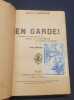
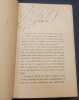
En garde ! Contre les contrefaçons , les mirages et la fausse-monnaie des réformes bourgeoises
Paris Rouff 1911 In12 - demi veau - dos orné - 477 pages - éraflures sur la tranche et la coiffe supérieure - Timbre ex libris d'Hubert-Rouger collé en pages de titre - Rare envoi autographe signé de Jules Guesde a Hubert-Rouger en première page de préface . Jules Guesde , l'un des plus importants théoricien et militant du socialisme Français entre 1875 et 1922 fut député du nord de 1893 à 1898 et de 1906 à 1922 . Il fut également ministre de fin 1914 à a 1916 . Hubert-Rouger ( 1875/1958) fut également un militant socialiste reconnu . Maire de Nîmes de 1925 à 1940 et député SFIO , il participa activement à l'Encyclopédie Socialiste parue chez Quillet .

Bon
Le programme du Parti Ouvrier - Ses considérants et ses articles - Sixième édition (1902)
Imprimerie Ouvrière de P. Lagrange à Lille - Imprimerie du Parti Ouvrier Malicorne sur Sarthe, 72, Pays de la Loire, France 1902 Book condition, Etat : Moyen broché, plat supérieur présent mais avec des manques In-8 1 vol. - 95 pages
Contents, Chapitres : Note des auteurs, texte du programme - Considérants - Partie politique (5 articles) - Partie économique (12 articles) - Le Parti ouvrier, plus tard renommé Parti ouvrier français (POF), est un parti politique français de la Troisième République, le premier parti marxiste en France, qui a existé de 1882 à 1902. Parti révolutionnaire, il avait pour but d'abolir le capitalisme et de fonder une société socialiste, puis communiste. - En 1878, le Congrès ouvrier de Lyon se constitue en parti, la Fédération du parti des travailleurs socialistes de France (FPTSF). Une première scission intervient dès 1881, lorsqu'Édouard Vaillant, d'inspiration blanquiste, fonde le Comité révolutionnaire central (CRC). Une seconde scission intervient en 1882 à la suite du Congrès ouvrier de Saint-Étienne. Elle oppose les « possibilistes », socialistes réformistes d'inspiration proudhonienne, qui forment la Fédération des travailleurs socialistes, et les guesdistes, d'inspiration marxiste, dont les 23 délégués se retirent du congrès. Ils se rassemblent à Roanne en septembre 1882 et créent le Parti ouvrier français (POF). - 1882, Jules Guesde fonde le Parti ouvrier avec Paul Lafargue. 1893, le Parti ouvrier devient le Parti ouvrier français. Le POF connaît des succès électoraux aux élections municipales de 1892 (victoire à Roubaix, Montluçon, Commentry, Narbonne, ..) et aux législatives de 1893 (Jules Guesde élu député). Certains membres du POF, oubliant momentanément l'objectif de la révolution, en viennent à penser que le socialisme est possible par la voie électorale (voir le banquet et le programme de Saint-Mandé le 30 mai 1896). 1899, la crise au sein du socialisme provoquée par la participation d'Alexandre Millerand au Gouvernement Waldeck-Rousseau pousse le POF à retourner à sa pureté doctrinale révolutionnaire (manifeste de l'été 1899). Selon certains, le parti aurait alors perdu de son influence. Ainsi en 1902 (12 députés pour le PSdF héritier du POF) il ne retrouve nationalement que les deux tiers de ses voix de 1898. 1902, fusion du parti avec le Parti socialiste révolutionnaire blanquiste et l'Alliance communiste révolutionnaire pour former le Parti socialiste de France, initié en 1901 sous le nom d'Unité socialiste révolutionnaire. 1905, le Parti socialiste de France fusionne avec le Parti socialiste français de Jean Jaurès pour former la Section française de l'Internationale ouvrière (SFIO). (source : Wikipedia) manque le plat inférieur de la couverture, plusieurs manques conséquents sur la droite du plat supérieur, exemplaire consolidé proprement avec d'en faire un exemplaire correct de lecture, une page consolidée dans la marge avec un collant, exemplaire correct de lecture, papier à peine jauni, texte complet
Guesde Jules, Deville Gabriel, Lafargue Paul, Vandervelde E., Vaillant Edouard
Reference : gm4228
Les Bonnes thèses du socialisme
Librairie du Parti Socialiste, Société coopérative Volksdrukkerij Relié "In-12 (11,5 x 17 cm), reliure pleine toile, dos lisse, recueil contenant 12 fascicules dont les 5 parties de ""L'Evolution du capital"" de Gabriel Deville, soit 8 titres publiés entre 1904 et 1909 : ""La Religion du capital"" par Paul Lafargue (48 pp.) // ""La Charité chrétienne"" par Paul Lafargue (39 pp.) // ""Suppression de l'armée permanente et des conseils de guerre"" par Edouard Vaillant (63 pp.) // ""La Loi des salaires et ses conséquences, suivi d'une réponse à la 'Réponse de M. Clémenceau'"" par Jules Guesde (31 pp.) // ""Collectivisme et révolution"" par Jules Guesde (32 pp.) // ""L'Evolution du capital : Genèse du capital"" par Gabriel Deville (31 pp.) // ""L'Evolution du capital : Formation du prolétariat"" par Gabriel Deville (27 pp.) // ""L'Evolution du capital : Coopération et manufacture"" par Gabriel Deville (28 pp.) // ""L'Evolution du capital : Machinisme et grande industrie"" par Gabriel Deville (40 pp.) // ""L'Evolution du capital : Fin du capital"" par Gabriel Deville (31 pp.) // ""La Grève générale"" par E. Vandervelde // ""Attaque et défense"" par Guillaume Liebknecht (55 pp.) ; toile frottée, petite déchirure au mors inférieur, par ailleurs assez bon état. Livraison a domicile (La Poste) ou en Mondial Relay sur simple demande."
"ESSAI DE CATECHISME SOCIALISTE / N°8 DE ""LES DOCUMENTS DU SOCIALISME."
MARCEL RIVIERE ET CIE. 1912. In-8. Broché. Bon état, Couv. convenable, Dos satisfaisant, Intérieur frais. 71 pages .. . . . Classification Dewey : 320-Science politique
"""LES DOCUMENTS DU SOCIALISME publiés sous la direction de Albert THOMAS, député de la Seine. / NOTA : Jules Bazile dit Jules Guesde, né le 11 novembre 1845 à Paris (Seine) et mort le 28 juillet 1922 à Saint-Mandé (Seine), est un homme politique français. / Le nom de Jules Guesde est indissolublement lié à un courant historique du socialisme français, le guesdisme, qui apparaît dans les années 1880 et qui a joué un rôle important dans la fondation de la Section française de l'Internationale ouvrière (S.F.I.O.) en 1905. « Le socialisme fait homme ». Classification Dewey : 320-Science politique"
La loi des salaires et ses conséquences - Suivie d'une réponse à la « Réponse de M. Clémenceau »-3e édition
1901 P.,JACQUES-1901 Agrafé, 11 cm x 17 cm, 32 pages - 3e édition - Texte de Jules Guesde - Bon état.
Remise de 20% pour toutes commandes supérieures à 200 €
A la mémoire de Charles Delescluze . Le Livre rouge de la justice rurale , documents pour servir à l'histoire d'une république sans républicains . 1ère partie . Paris
EDHIS . Editions dhistoire sociale . Paris 1968
Très bon état Ouvrage broché et numéroté 597 sur 1000. réimpression de lédition de 1871 à genève par limprimerie blanchard . histoire paris xixe politique . le livre rouge de la justice rurale de jules guesde est un livre journalistique, le témoignage des versaillais sur la commune de paris. il a été écrit à genève pendant son exil pour avoir soutenu dans son journal la commune. le livre regroupe des « documents pour servir à l'histoire d'une république sans république » (le sous-titre). il est dédié à la mémoire de charles delescluze. le texte est effectivement composé seulement et strictement de documents ou d'extraits d'origine monarchiste ou thiériste. « c'est en réalité le jugement de versailles par versailles, la majorité rurale peinte, raconté par elle-même ». une seconde partie aurait dû être écrite, mais cela ne s'est pas fait. - largeur/hauteur : 22x32 cm - poids : 330 g - nombre de pages : 82 p. - langue : Français
Collectivisme et Révolution. [Paperback] GUESDE Jules
BROCHE, BON ETAT. COUVERTURE DEFRAICHIE, BORD DES PAGES USE. CONTENU PROPRE, PAGES NON COUPEES. CAHIERS MENSUELS SPARTACUS, SERIE B NUMERO 13, JUIN 1949. 120 PAGES. PHOTOS SUR DEMANDE
Merci de nous contacter à l'avance si vous souhaitez consulter une référence dans notre boutique à Authon-du-Perche.
Double réponse à MM. de Mun et Paul Deschanel par Jules Guesde. Chambre des députés séances des 15 et 24 juin 1896. .......... On joint, du même auteur : Le collectivisme. Conférence à la Sté d'Etudes Economiques ert Politiques de Bruxelles le 7 mars 1894. 4e édition.
Paris, Librairie du Parti Socialiste (Bibliothèque du Parti Ouvrier Français), 2 plaquettes in 12 brochées, 64 et 23 pages ; la plat inférieur de couverture de la "Double réponse..." manque.
...................... Photos sur demande ..........................


Phone number : 04 77 32 63 69
Questions d'hier et d'aujourd'hui
Giard & Brière | Paris 1911 | 14.50 x 20.50 cm | broché
Edition originale dont il n'a pas été tiré de grands papiers. Avant-propos de Compère-Morel, couverture et dos légèrement insolés avec un petit manque marginal. Rare envoi autographe signé de Jules Guesde au regard de la page de titre. - Photographies et détails sur www.Edition-Originale.com -
Phone number : 01 56 08 08 85
Les documents du socialisme, VIII Essai de catéchisme socialiste
0 Paris, Marcel Rivière éditeur 19 x 13, 71 pp, bon état Livre sous papier cristal.
.
LE SOCIALISME AU JOUR LE JOUR
Paris V. Giard & E. Brière, Libraires-Editeurs 1899 in 12 (18x11,5) 1 volume reliure toilée noire ancienne, dos lisse titré en lettres dorées, avec en queue: Cercle de la Libératrice, VII et 488 pages. Jules Guesde pseudonyme de Jules Bazile, Paris 1845 - Saint-Mandé 1922, homme politique socialiste français. Première édition. Bel exemplaire ( Photographies sur demande / We can send pictures of this book on simple request )
Très bon Reliure
franche-comté BRUGMAN H. , NEE G. , BENOIST-GUESDE S. , CORNILLOT M.-L., BOURGEOIS A.
Reference : 8547
le Jura Français " de BELFORT au RHÔNE " AIN - JURA - DOUBS - HAUTE-SAÔNE - TERRITOIRE de BELFORTJeudi 10 mai : Deux films comtois - La Vie de notre Association - Recteur Henri Brugmans : L'actualité de Pierre-Joseph Proudhon - Gérard Née : Réflexions sur la crise d'une société villageoise : Nussey - Suzanne Benoîst-Guesde : Un couplet oublié de La Marseillaise - Marie-Luce Cornillot : L'exposition d'Art sacré dans le Jura - A. Bourgeois : Dans nos alpages jurassiens - Bibliographie - Nouvelles de l'Association et de la région.
broché - 18,5x27,5 - 24 pp - n° 138 - avril-juin 1973
ANTHROLOGIE HISTOIR PHILOSOPHIE LITTERATURE PARADES
GUESDE JULES - Textes choisis - 1867-1882
EDITIONS SOCIALES - Les classiques du peuple. 1970. In-12. Broché. Etat d'usage, Couv. légèrement passée, Dos satisfaisant, Quelques rousseurs. 158 pages. . . . Classification Dewey : 320-Science politique
Jules Bazile Classification Dewey : 320-Science politique
Cà et là. De la propriété. De la Commune. Le collectivisme devant la 10e Chambre. La question des loyers. Les grands magasins.
Paris Marcel Rivière 1914 1 vol. broché in-8, broché, 274 pp. Dos et couvertures un peu défraîchis, intérieur très frais.
Cambodge. Lithographies avec portraits de l'auteur par RAM RICHMAN
1933 Au Pigeonnier, 1933 imprimerie Darantiere a Dijon,lithographies Mourlot, , in4, couverture imprimée en noir et rouge et rempliée 59 pp en feuillets, ,4 portaits lithographiés, de l'auteure, franco - Camboggienne , exemplaire numéroté, numéro 22 sur 220 expl sur annam,
Makhali-Phâl (Makh li-Ph l1), nom de plume de Nelly-Pierrette Guesde, née en 19082 à Phnom Penh et morte le 15 novembre 1965 à Pau est une poétesse et romancière française. bon état , couverture un peu "brunie" par le temps
"Le problème et la solution"
"1931. Paris Libraire du parti Socialiste 1931 - Broché 12 cm x 18 cm 15 pages - 4e édition - Texte de Jules Guesde - Etat moyen"
"La loi des salaires et ses conséquences - Suivie d'une réponse à la « Réponse de M. Clémenceau »"
"1929. Lille Librairie du Parti socialiste (S.F.I.O.) 1929 - Agrafé 11 cm x 17 cm 32 pages - 7e édition - Texte de Jules Guesde - Bon état"
"Le collectivisme - conférence à la Société d'études économiques et politiques de Bruxelles le 17 mars 1894"
"1919. Paris Librairie du Parti Socialiste et de l'Humanité réunies 1919 4ème ed. - Agrafé 11 cm x 18 cm 23 pages - Texte de Jules Guesde - Bon état"
"Le Collectivisme au Collège de France"
"1905. Paris Société Nouvelle de Librairie & d'Edition 1905 - Broché 11 cm x 17 cm 27 pages - Texte de Jules Guesde - Quelques rousseurs sinon bon état"
LA FEMME ET LA SOCIETE BOURGEOISE - (PAGES CHOISIES).
LIBRAIRIE DE L'HUMANITE. 1923. In-16. Broché. Bon état, Couv. convenable, Dos satisfaisant, Intérieur frais. 44 pages - Quelques annotations au crayon de couleur en marge du texte , sans conséquence réelle sur la lecture.. . . . Classification Dewey : 305.4-La femme
NOTA : Jules Bazile dit Jules Guesde, né le 11 novembre 1845 à Paris (Seine) et mort le 28 juillet 1922 à Saint-Mandé (Seine), est un homme politique français. Classification Dewey : 305.4-La femme
L'ALSACE -LORRAINE DEVANT LA CHAMBRE - DISCOURS DE JULES GUESDE.
IMP. DESIRE A. 1897. In-16. Broché. Etat d'usage, Plats abîmés, Dos satisfaisant, Intérieur frais. 32 pages - Quelques annotations en marge du texte au crayon de couleur sans conséquence réelle sur la lecture. Papier encollé sur les plats et dos.. . . . Classification Dewey : 320-Science politique
discours a la µchabmre des d2putés le 20 fevrier 1897 - Classification Dewey : 320-Science politique

