 Write to the booksellers
397 books for « gibson c d »Edit
-
Type
Book (384)
Disk (1)
Music sheets (11)
New book (1)
-
Latest
Last 24h (1)
Last 3 days (1)
Last month (10)
-
Language
English (7)
French (389)
Spanish (1)
-
Century
18th (1)
19th (8)
20th (167)
21st (63)
-
Countries
Belgium (17)
Canada (2)
China (1)
Denmark (3)
France (332)
Greece (1)
Netherlands (2)
Switzerland (37)
United Kingdom (2)
-
Syndicate
ALAC (2)
CLAM (1)
ILAB (164)
SLAM (151)
Topics
- 1900 (3)
- Abraham (2)
- Aesthetics (3)
- Ancien régime (2)
- Archaeology (3)
- Arms (1)
- Army (3)
- Autographs (2)
- Aviation (3)
- Bartok bela (2)
- Biblical studies (2)
- Biography (4)
- Caricature (5)
- Ceramic (2)
- Children’s books (11)
- Christianity (2)
- Civilisation (1)
- Collections (5)
- Comedy (2)
- Comic strip (10)
- Conjuring (2)
- Conjuring (2)
- Cooking (1)
- Crime (2)
- Culinary art (1)
- Dadaism (2)
- Dance & ballet (2)
- Dancing (2)
- Detective novels (5)
- Dictionaries (2)
- Distel sacha (2)
- Drawings (2)
- Dunlop (3)
- England (2)
- English (15)
- Essays (2)
- Fantastic (3)
- Fine arts (7)
- First edition (2)
- Geography (3)
- Gibson hugh (2)
- Gibson william (9)
- Gold (4)
- Guittoneau ben (7)
- History (13)
- History of art (2)
- Honey (7)
- Illustrated books (5)
- Industrial arts & crafts - fine arts (8)
- Invertebrates (2)
- Judith (2)
- Langhorne gibson (1)
- Law (3)
- Literature (21)
- Locke (1)
- London (2)
- Lorca fédérico garcia (3)
- Mines & miners (2)
- Museums (5)
- Navy (4)
- Near-east (2)
- News (2)
- Painters (3)
- Painting (2)
- Painting (4)
- Periodicals (1)
- Philosophy (7)
- Photography (18)
- Policy (2)
- Posters (1)
- Psychology (1)
- Reading vocabulary (1)
- Redon (2)
- Religions (2)
- Review (3)
- Robin (4)
- Scandinavia (1)
- Scandinavian (3)
- Scores (7)
- Songs (7)
- Spying (2)
- Ss (2)
- Suspense (2)
- Symbolism (6)
- Tea (3)
- Theology (2)
- Thriller (3)
- Translation (9)
- Various (2)
- Wagner richard (11)
- War (5)
- Western (2)
MC GUIRE GIBSON, JUDITH A FRANKE, MIGUEL CIVIL and others
Reference : 566339
ISBN : 978091898622
EXCAVATIONS AT NIPPUR: Twelfth Season (Oriental Institute Communications No. 23)
The Oriental Insitute, The University of Chicago, 1992. In-4, publisher black soft cover, XI-189pp, 92 plates (fig. and phot. illustrations); (Oriental Institute Communications No. 23)
Very fine condition. - Frais de port : -France 8,4 € -U.E. 10 € -Monde (z B : 15 €) (z C : 33 €)


NEGEV (Abraham), GIBSON (Shimon) [ss. la dir.]
Reference : 600295
ISBN : 9782850259074
Dictionnaire archéologique de la Bible.
Paris, Fernand Hazan , 2006. Fort in-4, rel. éd. pleine-toile brune sous jaquette et étui ill. en coul. , 617 pp. sur 1, 2 ou 3 colonnes, très abondantes ill. photogr. en coul., dessins, 2 cartes en coul. à pleine pp., glossaire et chronologie in fine.
Très bonne condition. - Frais de port : -France 12,5 € -U.E. 12 € -Monde (z B : 19 €) (z C : 48 €)
Charles the Bald : court and kingdom.
BAR International series IOI, 1981. In-4, 400 pp., index.
Couv. froissée, réparation au scotch. Intérieur correct. - Frais de port : -France 8,4 € -U.E. 10 € -Monde (z B : 15 €) (z C : 33 €)
The Perception of the Visual World. - [PRESENTATION-COPY OF THE MODERN CLASSIC ON PERCEPTION]
Boston, etc., Houghton Mifflin, 1950. 4to. Original reddish-brown full cloth with black lettering to spine and front board. A bit of wear to extremities. Several pencil-underlinings in the text (presuambly Postman's). XII, (2), 235, (1), (6, -index) pp. Richly illustrated throughout. With presentation-insription to front free end-paper, as well as Leo Postman's ownership signature.
Excellent presentation-copy of the first edition of the most important work on perception since Helmholtz, Gibson's seminal classic, in which he rejected the theory of behaviorism and pioneered the idea that animals ""sampled"" information from the ""ambient"" outside world. Inscribed to Gibson's close friend, professor of psychology Leo Postman, one of the most dominant theoreticians of human memory: ""To Leo Postman/ You know all this already/ Jim Gibson"". American psychologist James Jerome Gibson (1904 -1979) is considered one of the most important 20th century psychologists in the field of visual perception. His classic work from 1950, ""The Perception of the Visual World"", Revolutionized the way of understanding visual perception and was responsible for the turn away from the otherwise dominating behaviorism. It is in this, his pioneering main work, that he presents his revolutionizing idea of animals ""sampling"" information from the outside world that surrounds them.Gibson is also famous for coining the term ""affordance"", which is the quality of an object or an environment that allows for an individual to perform an action (- a for the time unusually Aristotelian way of viewing objects, an example would be a tie which ""affords"" tying, or a knob that ""affords"" twisting). As Gibson's theories in psychology in general, the concept of ""affordance"" has been extremely influential in a large variety of fields: perceptual psychology, cognitive psychology, environmental psychology, industrial design, human-computer interaction (HCI), interaction design, instructional design and artificial intelligence.""The principal subject of this book is the visual perception of space. The essential question to be asked is this: How do we see the world around us? The question is at once a theoretical one, a factual one, and a practical one. The theories to be considered have to do with the history of philosophy and psychology. The applications extend to art, aviation, photography, and mountain-climbing. This book, however, is not a historical survey of the problem, nor a record of existing facts, nor a discussion of the applications. The intention is to formulate a consistent approach to the problem - a way of getting new facts and making new applications. [...] The writer has elected to study psychophysics rather than psychophysiologybecause he believes that it offers the more promising approach in the present state of our knowledge. [...] A psychophysics may sound to some readers like a contradiction in terms. This book undertakes, however, to justify and make possible such a science. "" (Gibson, in the Preface, pp. (vii)-viii). As is seen from Gibson's own preface, he himself viewed the work as revolutionary, which Hochberg also notes in is piece on Gibson: ""I believe [the] book was the most important work on perception since that of Helmholtz's volume three of Physiological Optics, approximately a century earlier. It was a comprehensive approach to the perception of surfaces, things, and movement through the environment, promarily the outcome of his observations and thoughts about the visual task involved in flying and landing aircraft. [...] The book was clearly intended to initiate a revolutionary moment. I believe that intention has, just as clearly, been successful. Some forty years after its publication, the book is still widely cited and controversial, the direct source of substantial current experimental research, and the starting point for more extreme departures from what had been the established way of thinking about perception."" (Julian Hochberg, ""James Jerome Gibson"", in: National Academy of Sciences Biographical memoirs 63, 1994, pp. 155-6). ""LEO JOSEPH POSTMAN, professor emeritus of psychology and a dominant figure in the study of human memory, died on April 22, 2004, of heart failure at his home in Marblehead, Massachusetts. He was 85.Postman was ""a major theoretician in the development of the theory of forgetting,"" said friend and colleague Donald Riley, professor emeritus of psychology. ""His contributions were monumental."" Postman was listed in a 2002 article in the Review of General Psychology as one of the 100 most eminent psychologists of the last century. ""Within the field of human memory, the range of his contributions has been vast,"" wrote one of his former students, Geoffrey Keppel, professor emeritus of psychology, in recommending Postman for the Berkeley Citation. Postman received the award, the highest honor given to University of California, Berkeley faculty and staff, upon his retirement in 1987.In 1961, Postman founded the Institute of Human Learning at Berkeley, which lives on today as the Institute for Cognitive and Brain Sciences, a center devoted to an interdisciplinary study of the mind and the brain.Postman primarily studied perception, learning, and memory. He participated in the beginnings of the ""new look"" school of perception that emphasized the role of cognitive factors such as emotions and expectations in determining what people perceive.His main interest, however, was forgetting. Based on studies he began in 1958, he became known as the principal spokesman for and architect of modern interference theory, the only comprehensive account of forgetting that exists today. The theory, Keppel wrote, holds that forgetting is the result of interference from a variety of sources, including past memories, various aspects of the current memory, and new memories acquired subsequently-that is, a dynamic interaction of the entire memory system, past and present. Postman was sensitive to the weaknesses of the theory, and spent the last part of his career investigating the mechanisms that conserve memory in the face of interference. Much of this research was conducted at the institute he founded and directed until 1977.Postman, who served as chair of the Department of Psychology for several years in the late 1950s, had a reputation for excellence in teaching, emphasizing clarity and organization.Born June 7, 1918, in St. Petersburg, Russia, Postman moved at an early age to New York City, obtaining his B.S. from the College of the City of New York in 1943 and his Ph.D. from Harvard University in 1946. He taught at Harvard from 1946 until 1950, interrupted by one year at Indiana University, and joined the Berkeley faculty in 1950.In his first years at Berkeley, Postman was recognized nationally as a major figure in the field of perception and the role of motivation in perception. His research shifted, however, and he embarked on a long series of studies on learning with and without the intent to learn (the latter being what is referred to as incidental learning). He later switched to the study of forgetting, which he pursued until his retirement.A member of the National Academy of Sciences and the American Psychological Association, he also served in 1968 as president of the Western Psychological Association, and in 1974 received the Warren Medal of the Society of Experimental Psychologists for outstanding achievement in experimental psychology."" (Robert Sanders, ""In Memoriam. Leo Postman"").
L'Oeil flottant
Paris Paris Audiovisuel - Paris Musées 1986 In-8 carré Broché, couvertrure illustrée Dédicacé par l'illustrateur
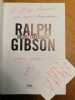
Catalogue publié pour l'exposition du Musée Carnavalet dans le cadre du mois de la photo, du 18 novembre 1986 au 4 janvier 1987. En exergue citation de Kertesz. Préface de Bernard de Montgolfier. Textes d'Henry Chapier et de Françoise Reynaud. 49 photographies en noir et blanc de Ralph Gibson suivie d'une interview du photographe par Patrick Roegiers. Note biographique in fine. 72 pp. >>Sur le titre ENVOI AUTOGRAPHE signé de Ralf Gibson. Très bon 0
Vu / Imprévu.
<p data-rte-preserve-empty="true">"<span>Vu, Imprévu", photographie, textes, partitions & musique de Ralph Gibson.</span><br>Comme un manifeste sur la musique avec la photographie.<br>D'après une idée originale de Thierry Bigaignon :</p><p class="font_8 wixui-rich-text__text" data-rte-preserve-empty="true"><span>" En 2017, après avoir passé plusieurs heures avec Ralph Gibson dans son studio new-yorkais, j'ai réalisé que la musique était tout aussi importante pour lui que la photographie, et ce depuis plus de 70 ans !</span><br>J'ai naturellement proposé un projet qui combinerait ses deux passions de toujours.<br>Le concept était simple : sélectionner À propos quinze images emblématiques et profondément personnelles pour Ralph, et composer une musique originale pour chacune d'entre elles.<br>Ralph Gibson a relevé le défi et, moins de deux ans plus tard, la série Vu, Imprévu était née.<br>Ce projet offre aux amateurs d'art et aux collectionneurs une occasion unique d'explorer une autre facette du génie du maître américain.<br>Célèbre pour son vocabulaire visuel révolutionnaire dans les années 1970 avec sa Black Trilogy - The Somnambulist (1970), Déjà-Vu (1973) et Days at Sea (1974) - Ralph Gibson est également un guitariste de talent. Il découvre la guitare à l'âge de 13 ans et prend un appareil photo quatre ans plus tard. Depuis, il est resté un éternel apprenti, persuadé qu'il y a toujours plus à apprendre des deux instruments.<br>"Vu, Imprévu" est une occasion rare de revoir certaines des photographies les plus emblématiques de Ralph Gibson sous un angle totalement nouveau.<br>Les photographies sélectionnées, prises entre 1968 et 1990, sont chacune accompagnées d'un morceau de musique, spécialement composé, interprété et enregistré par l'artiste dans son studio de New York.<br>Pour Ralph Gibson, "la musique est un langage universel, et toute œuvre d'art s'efforce de l'imiter". Fermez les yeux et une photographie n'est plus qu'un souvenir abstrait.<br>La musique, en revanche, ne peut être ignorée. Les oreilles n'ont pas de paupières". <br>Thierry Bigaignon</p><p class="font_8 wixui-rich-text__text" data-rte-preserve-empty="true">Iikki books, 2025<br>Édition limitée à 1000 exemplaires, numérotés à la main</p> Plouer-sur-Rance, 2025 IIKKI 108p., photographie, cartonnage éditeur 27,5 × 22
neuf
Everyday People.
New York, Charles Scribner's sons, London, John Lane, 1904, 1 vol. grand in-4 oblong (293 x 435), cartonnage biseauté éditeur crème illustré en bistre au plat supérieur, dos de toile blanche, de (80) pp. Coins légèrement émoussés, petit accroc à une planche, très bel exemplaire par ailleurs.
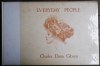
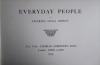
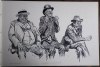
76 planches à pleines pages dessinées à l'encre noire dans le style très caractéristique de l'artiste. "Charles Dana Gibson, (1867-1944), est un artiste américain, célèbre pour avoir créé le premier prototype de la beauté américaine en dessinant ce que l'on a appelé la Gibson Girl. On a vu dans la Gibson Girl l'ancêtre de la pin-up. En réalité, la Gibson Girl véhicule une image bien différente, faite d'élégance, d'indépendance. Sûre d'elle-même, parfois moqueuse, la Gibson Girl a le sentiment d'appartenir à une élite, et affiche parfois une expression légèrement hautaine, bien loin de celle de la pin-up traditionnelle". (Sources Wikipédia).
Parcours.
Editions Au pont des arts, 2006. In-4 br. Préface de Ch. Zalber. Nombreuses photographies en couleurs et noir & blanc de R. Gibson. E.O. Envoi autographe de Ralph Gibson.
Homeopathy For Everyone Gibson, Sheila and Gibson, Robin
Broché Bon état, couverture Légèrement cornée intérieur très propre VO
Merci de nous contacter à l'avance si vous souhaitez consulter une référence dans notre boutique à Authon-du-Perche.
VICTOR KOULBAK. Punks. Catalogue de la Gaterie Etienne de Causans 1977 [Paperback] Michael Gibson [Paperback] Michael Gibson
In-quarto broché présentant 3 reproductions des oeuvres. Signé, daté par Victor Koulbak. Parfait état
Merci de nous contacter à l'avance si vous souhaitez consulter une référence dans notre boutique à Authon-du-Perche.
Partition de la chanson : I can't stop loving you Retirage
Opryland Music 1958
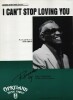
Bon état Format Coquille Piano
William Gibson Fragments de rose en hologramme
Librio 1998 1998. William Gibson - Fragments de rose en hologramme / Librio 1998
Très bon état
Vanity Fair. A two volume collection of "Statesmen" and "Men of the Day"
N/A 1875 Une collection de 90 lithographies pleine page tirées de Vanity Fair, des illustrations de SPY (Sir Leslie Ward) et APE (Carlo Pellegrini) ainsi qu'un grand nombre d'illustrations anonymes. En face de la plupart des lithographies se trouve la biographie, rédigée principalement par Gibson sous le nom de Jehu Junior, dans une écriture manuscrite soignée. (Une plaque portant le nom et la signature du propriétaire / compilateur est collée à l'intérieur de la première planche, mais nous n'avons pas pu les identifier). Quatre des biographies comportent un autographe du sujet collé sur la page. Il s'agit de Sir Francis Grant (portraitiste écossais et président de la Royal Academy). Il était passionné de chasse, et cette biographie comporte également une grande esquisse d'un chasseur réalisée par Grant et collée sur la page. Richard Boyle (9e comte de Cork et d'Orrery). Frederic Leighton (peintre, dessinateur et sculpteur. Il a également eu la distinction d'être le pair le plus court de l'histoire. Il est mort le lendemain de sa nomination comme Lord). Révérend Arthur Stanley (doyen de Westminster). Non paginé, mais environ 180 pages, avec 90 lithographies collées et environ 85 biographies. Les albums ont des planches noires et des dos en cuir noir. Les dos sont considérablement frottés et présentent quelques fissures. Les titres sont dorés sur les premières planches. A l'intérieur, les deux volumes sont en bon état, avec quelques marques, mais dans l'ensemble très propres. 380 x 270 mm
A collection of 90 full page lithographs from Vanity Fair, illustrations by SPY (Sir Leslie Ward) and APE (Carlo Pellegrini) as well as a large number that are anonymous. Lithographed by Vincent Brooks, Day & Son. Facing most of the lithographs, is the biography, mostly written by Gibson as Jehu Junior, written in a neat manuscript hand. (There is a tipped in plate bearing the owner / compiler's name and signature to the inside front board, but we have been unable to identify them). Four of the biographies have the subject's autograph tipped in to the page. These are Sir Francis Grant (Scottish portrait painter and President of the Royal Academy). He was a keen hunter, and this also has a large sketch of a huntsman by Grant tipped in. Richard Boyle (9th Earl of Cork and Orrery). Frederic Leighton (Painter, draughtsman and sculptor. He also had the distinction of the shortest peerage in history. He died the day after being made a Lord). Reverend Arthur Stanley (Dean of Westminster). Unpaginated, but approximately 180 pages. with 90 lithographs pasted in and approximately 85 biographies. The scrapbooks have black boards and black leather spines. The spines are significantly rubbed, and have some splitting. There are gilt titles to the front boards. Inside, the volumes are both in good condition, with a touch of marking, but overall very clean condition. 380 by 270mm (15 by 10Ÿ inches).
Gibson Mel Spence Bruce Miller George Gibson Mel Wells Vernon
Reference : 500316933
ISBN : 5051889552123
Mad max 2 [Blu-ray] [FR Import] (NEUF SOUS BLISTER)
Warner Home Video 13 6x17 2x1 2cm. Sans date. blu_ray.
![Mad max 2 [Blu-ray] [FR Import] (NEUF SOUS BLISTER). Gibson Mel Spence Bruce Miller George Gibson Mel Wells Vernon](https://static.livre-rare-book.com/pictures/IGE/500316933_thumb.jpg)
Neuf
Les Horizons du possible : Un dialogue des vivants et des morts qui traite de la création et de ses incertitudes
Éd. du Félin 1984 322 pages in8. 1984. Broché. 322 pages. Un essai sous forme de dialogue entre vivants et morts qui explore les thèmes de la création artistique et de ses incertitudes orchestré par le critique d'art américain Michael Gibson avec la participation des artistes belges Jacques Calonne et Christian Dotremont
Bon état
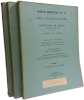
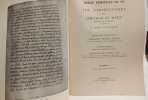
The Commentaries of Isho'dad of Merv - VOLUME II III & V. Part I (1911;1911;1916)
Cambridge at the University Press in4. Sans date. Broché. 3 volume(s). Édition critique et traduction anglaise des commentaires bibliques d'Isho'dad de Merv évêque assyrien influent du IXe siècle sur les quatre Évangiles. Publiée initialement en 1903 par Margaret Dunlop Gibson cette œuvre est considérée comme une contribution monumentale à l'étude des Pères de l'Église d'Orient
Bon état couvertures défraîchies intérieurs propres
Cantor Eddie - Gold Joe,Gibson Joe,Ribaud Joe - Gibson Joe,Ribaub Joe,Gold Joe
Reference : 108700
(1920)
Partition de la chanson : Grieving for you Edition originale américaine , partition piano et chant; en couverture photo de l'interprète Eddie Cantor Midnight Rounders
Leo Feist inc. 1920
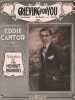
Bon état Format Américain Piano
Chiaroscuro.
Paris Marval 1990 1 vol. relié in-4, cartonnage illustré de l'éditeur, non paginé. Edition originale de cette étude photographique du contraste entre la lumière et l'obscurité sur des corps fragmentés, sculptures, motifs architecturaux, matières par le photographe américain Ralph Gibson. Très belles planches en noir et blanc. En bonne condition.
Jolson AL. - Gold Joe,Gibson Joe,Ribaud Joe - Gibson Joe,Ribaub Joe,Gold Joe
Reference : 108699
(1920)
Partition de la chanson : Grieving for you
Leo Feist inc. 1920
Bon état Format Américain Piano
( Littérature en Anglais - Sherlock Holmes - Sir Arthur Conan Doyle - Pastiches ) - Richard Lancelyn Green - John Michael Gibson - Graham Greene.
Reference : 31857
(2019)
A Bibliography of A. Conan Doyle by Richard Lancelyn Green and John Michael Gibson. New Revisited and Expanded Edition with a foreword by Graham Greene.
Hudson House / Boston - London - New York 2000. Enorme in-8 reliure éditeur de 726 pages au format 23,5 x 6,5 x 16 cm. Plats et intérieur frais. Dos rond. Complet de la jaquette.Photographie de Sir Arthur Conan Doyle en frontispice. Indispensable bibliographie exhaustive de Sir Arthur Conan Doyle, préfacée par Graham Greene et préparée par Richard Lancelyn Green et John Michael Gibson. Quelques documents en noir. Edition américaine revue et augmentée en grande partie originale. Superbe état général de fraicheur, proche du neuf.
Vente exclusivement par correspondance. Le libraire ne reçoit, exceptionnellement que sur rendez-vous. Il est préférable de téléphoner avant tout déplacement.Forfait de port pour un livre 10 € sauf si épaisseur supérieure à 3 cm ou valeur supérieure ou égale à 100 €, dans ce cas expédition obligatoire au tarif Colissimo en vigueur. A partir de 2 livres envoi en colissimo obligatoire. Port à la charge de l'acheteur pour le reste du monde.Les Chèques ne sont plus acceptés.Pour destinations extra-planétaire s'adresser à la NASA.Membre du Syndicat Lusitanien Amateurs Morues
Drawings by C. D. Gibson
R.H. Russell, New York 1894 In-4 oblong Reliure demi-toile écrue 29,5 cm sur 44,5. 84 pages. Dessins en n&b. Reliure en mauvais état, couverture poussiéreuse, manque en pied du dos, intérieur frais. Etat correct d’occasion
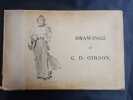
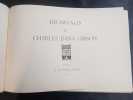
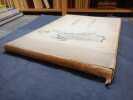
Etat correct d’occasion
( Sherlock Holmes - Littérature en Anglais - Arthur Conan Doyle - Baker Street Irregulars ) - Michael Dirda - John Michael Gibson - Christopher Roden - Steven T. Doyle - Michael F. Whelan - Joe B.Silver - Dr. Donald J.Gray - Roe E. Pilot - Clifford S. Goldfarb - Mark A. Gagen - Leslie S. Klinger - Susan Rice.
Reference : 31145
(2019)
The Undershaw Set - The Baker Street Irregulars : On Conan Doyle, or, The Whole Art of Storytelling et The Remarkable Characters of Arthur Conan Doyle. ( Tirage unique à 75 exemplaires numérotés et signés par Michael Dirda et John Michael Gibson - Christopher Roden - Steven T. Doyle - Michael F. Whelan - Joe B.Silver - Dr. Donald J.Gray - Roe E. Pilot - Clifford S. Goldfarb - Mark A. Gagen - Leslie S. Klinger - Susan Rice ).
Etats-Unis, Undershaw edition / The Baker Street Irregulars, published by the Princeton University Press, Lilly Library of Indiana University and The Illustrious Clients of Indianapolis 2013. Deux volumes, reliure pleine toile violette de 152 et 138 pages au format 22 x 14,5 cm. Couvertures illustrées. Dos rond avec titres. Signets. Livres glissés dans un coffret en pleine toile violette avec 1er plat illustré, au format 15 x 4,5 x 23 cm. Livres d'études sur les œuvres de Sir Arthur Conan Doyle et ses personnages les plus célébres. Bien sûr, il couvre les histoires de Sherlock Holmes, mais aussi les oeuvres de science-fiction dont Le Monde perdu et les livres historiques et fantastiques. Les ouvrages sont dirigés par le critique Michael Dirda, lauréat du prix Pulitzer, et par Joel B. Silver, avec la participation de nombreux auteurs et accompagnés d'illustrations, photographies et documents. Tirage de luxe uniquement imprimé à 75 exemplaires numérotés ( n° 54 ), signés par Michael Dirda, John Michael Gibson, Christopher Roden, Steven T. Doyle, Michael F. Whelan, Joe B.Silver, Dr. Donald J.Gray, Roe E. Pilot, Clifford S. Goldfarb, Mark A. Gagen, Leslie S. Klinger et Susan Rice. Rarissime édition originale, en état de neuf et totalement épuisée.
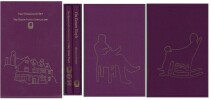
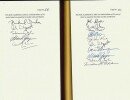
Vente exclusivement par correspondance. Le libraire ne reçoit, exceptionnellement que sur rendez-vous. Il est préférable de téléphoner avant tout déplacement.Forfait de port pour un livre 10 € sauf si épaisseur supérieure à 3 cm ou valeur supérieure ou égale à 100 €, dans ce cas expédition obligatoire au tarif Colissimo en vigueur. A partir de 2 livres envoi en colissimo obligatoire. Port à la charge de l'acheteur pour le reste du monde.Les Chèques ne sont plus acceptés.Pour destinations extra-planétaire s'adresser à la NASA.Membre du Syndicat Lusitanien Amateurs Morues
Deus Ex Machina.
Köln Taschen 1999 1 vol. broché fort vol. in-8, broché, couverture illustrée, 767 pp., très nombreuses photos en noir. Edition originale avec un envoi autographe signé du photographe "à Alain Resnais, avec mon admiration", et sa carte de visite au dos de laquelle il a noté "M. Resnais de la part de notre commun Fred Tutten, Ralph Gibson". Texte trilingue français-anglais-allemand. Petites rides de lecture au dos, sinon en très bonne condition. Exemplaire provenant de la bibliothèque d'Alain Resnais.
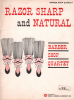
Barber Shop Quartet - de Rose Peter,Hilliard Bob,Sigman Carl,Spina Harold,Styne Jule,Wilhite Monte,Akst Harry,Ballard Pat,Delugg Milton,Van Alstyne Egbert,Lombardo Carmen,Coleman Cy,Curtis Loyal,Schmidt Erwin R.,Mc Phail Lindsay,Michels Walter,Massey Curt,Gibson Arbie - Sigman Carl,Hilliard Bob,Cahn Sammy,Elliot Jack,Tobias Charlie,Leigh Carolyn,Young Joe,Lewis Sam,Newman Charles,Gillespie Haven,Mc Phail Lindsay,Ballard Pat,Harrison Charlie,Massey Curt,Gibson Arbie
Reference : 85318
(1968)
Partition de la chanson : Razor Sharp and Natural Album de 14 titres <span class="">pour quatuor masculin arrangée pour voix à quatre voix avec paroles / _ </span>Hey, look me over - Dinah - Be My Life's Companion - Careless Hands - Drifting and Dreaming - San - Yesterday - You'll Be Mine In Apple Blossom Time - The Honey Song - Let's Take the long way home - Five minutes more - Sweethearts on parade - Waitin' at the station
Edwin H. Morris 1968
Bon état Format Américain

