 Write to the booksellers
38 books for « curtius rufus »Edit
-
Language
French (37)
Latin (1)
-
Century
16th (1)
17th (3)
18th (3)
19th (5)
20th (1)
-
Countries
Belgium (2)
Denmark (4)
France (9)
Netherlands (17)
Switzerland (6)
-
Syndicate
ILAB (12)
NVVA (2)
SLACES (2)
SLAM (4)
Hoogberoemde historie van 't leven ende de daden Alexandri de Groote. Inhoudende hoe hy Europa overheerd, Darius der Persen Coninck met gansch Asia ende India tot de Oceanische Zee t'ondergebraght heeft, ende eyntlijck tot Babilon gestorven is. Overgeset uyt Latijn door A. SNEL. Den vierden druck gecorrigeert.
Rotterdam, By Pieter van Waesbergen, 1648.
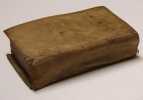
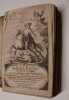
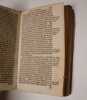
8vo. 513,(14) p. Vellum 16 cm (Ref: Geerebaert 105,c; OiN 154; Schweiger 2,328) (Details: Engraved title, depicting Alexander on horseback, at his feet a trampled Darius; printed in Gothic type, as is usual with translations into Dutch) (Condition: Shabby: vellum worn, back wrinkled; small tear at head of spine; book block loose in binding; front endpapers gone; rear endpapers loose; title soiled, loosening and with thumbed edges; small wormhole in the first 6 leaves near the left upper corner; first 2 gatherings dampstained at the lower margin; gatherings quite loose) (Note: This Dutch translation of Curtius Rufus was a great success. It was first published in 1613, and was reissued 15 times, for the last time ca. 1765. It was far more popular than the translation of Glazemaker that was reprinted only 2 times. Not much is known of the translator A. Snel. Van der Aa only records what we know already, that one A. Snel produced a translation of Curtius Rufus. The short preface of the second edition of 1627, signed by one Albrecht Snel, which is reprinted here in this 4th edition, learns us more. It is in fact a dedicatio to the 'Rulers' of the city of Delft and the 'Opper-Heeren', that is curators of the local Schola Latina. Albrecht Snel tells the reader that he is a teacher at the local Schola Latina, and that he wants to dedicate his translation as first-fruits to the excellent members of the City Council, just like the old Greeks did when they wanted to thank their benefactors. He calls his bosses 'Voedster-Heeren', i.e. sponsors, or patrons of Greek and Latin, and of those whom they charge to teach them at the local school. From the preface of the first edition of 1613 of this translation, and which was left out in later editions, we learn more about Snel. We learn something about his aim while translating Curtius Rufus. His aim is didactic. We must, Snel says, learn from the best examples available, what to do and what to avoid. We can do this best by reading the ancient historians, of whom Curtius Rufus is the best. Snel turns against those who proclaim that Dutch is inferior to Latin. We learn also which text Snel used for his translation, the 'Raphalyn'. This must be the edition of 'De rebus gestis Alexandri Magni' published 'ex officina Plantiniana Raphelengii' in Leiden in 1606. The translation is preceded by 'Byvoeghingh uit verschyden schrijvers tot vervullinghe van Quinti Curtii eerste' and 'tweede' boec.' This is a translation of a reconstruction of the lost first 2 books from other sources) (Collation: A-2K8) (Photographs on request)
Q. Curtii Rufi Historia Alexandri Magni. Cum notis selectiss. Variorum, Raderi, Freinshemii, Loccenii, Blancardi, &c. Editio accuratissima. Accurante C.S.M.D.
Amsterdam (Amstelodami), Ex officina Elzeviriana, 1664.
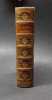
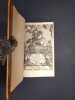
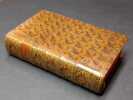
8vo. (IV),93,46,(1 blank);751,(1) p. folding map, and folding plate. Mottled 18th century calf 19.5 cm (Ref: STCN ppn 094956561; Schweiger 2,320; Willems 1325; Berghman 2054; Rahir 1369; Moss 548; Dibdin 375; Graesse 2,311; Ebert 5549) (Details: Beautiful binding. Back with 5 raised bands and panelled gilt with repeating floral motifs; in the center of the compartments gilt birds visit a bunch of flowers. Brown morocco letterpiece in the second compartment. All 3 edges of both boards gilt. Edges of the bookblock dyed red. Endpapers marbled. Engraved title, which depicts a world conquering Alexander on horseback, trampling his enemy Darius. He is accompanied by a flying Fama, who blows her horn. The plate depicts the 'fons solis', a fountain in the Egyptian oasis of the temple of Ammon, cool at midday and warm at the rising and setting of the sun. Alexander visited this famous oracle in order to obtain an answer concerning the divinity of his origin; the map shows the triumphal march of Alexander through Egypt and Asia) (Condition: Fine. Some rubbing on the upper board. Some light foxing) (Note: This is a typical Variorum edition. It offers a 'textus receptus' which is widely accepted, accompanied with the commentary and the annotations of various specialists, taken, or excerpted from earlier useful, normative or renewing editions. Editions like these, 'cum notis Variorum', were useful, but never broke new ground. The production of these sometimes overloaded 'dustbins' of knowledge was the specialty of Dutch scholars of the 17th and 18th century. The compilers seldom were great scholars, but often hard working schoolmasters. Their involvement in publishing a new edition was limited to the necessary, but ungrateful task of the beast of burden. In a 'Variorum' edition of Claudianus published by the same Elzevier a year later, we get a glimpse of such a division of labour. There the 'typographus', i.e. Louis and/or Daniel Elzevier, tells the reader that a 'vir diligentissimus' the schoolmaster Cornelius Schrevelius, excerpted from the best sources all that was necessary for a good understanding of the text. 'Quod ad praestantissimi poetae intellectum pertineret, ex optimis Doctissimorum Virorum', follows a number of names of Claudianus editors and commentators, 'aliorumque, qui antea in eo illustrando elaborarunt, notis & commentariis selectissima quaeque excerpsit'. Quintus Curtius Rufus, probably first cent. A.D., is the author of the only surviving monography on Alexander the Great in Latin. He was historian enough to use sources, which drew from different traditions, conscientiously. His aim was not to write great literature, but his 'Historia' certainly possesses great narrative qualities, acquired by a thorough knowledge of the epic and historiographic tradition, and a training in Roman rhetoric. (NP, s.v. Curtius) This work, consisting of 10 books, did not survive in its entirety, the first 2 books are lost. Now, the text of Curtius Rufus is preceded here by a rather strange philological accomplishment by the German scholar Johannes Casper Freinsheim, 1608-1660. He endeavoured to repair the loss of the 2 lost books by a composition of his own, a feat which was much admired by his contemporaries. He published this new text earlier in his edition of 1640. Moss declares that this supplemented text is 'scarcely descernible from that of Q. Curtius'. This 'Variorum' edition of Curtius Rufus was produced by the above mentioned Cornelis Schrevelius, 1608 - 1664, who took his doctoral degree in Paris as a Doctor of Medicine in 1627. Hence C.S.M.D. on the title, that is 'Cornelis Schrevelius Medicus Doctor'. He was Rector of the Schola Latina at Leiden) (Provenance: name in ballpoint on the front flyleaf of Lennart Håkanson, professor of Latin Literature at the Univ. of Uppsala, 1980-1987) (Collation: pi2, a-h8, i4, k2; A-3A8) (Photographs on request)
Q. Curtii Rufi Historia Alexandri Magni. Cum notis selectiss. Variorum, Raderi, Freinshemii, Loccenii, Blancardi, &c. Editio accuratissima, accurante C.S.M.D. (And:) J. Freinshemii Supplementorum in Q. Curtium liber I (& II).
Amsterdam, Ex Officina Elzeviriana, 1673.
8vo. 2 parts in 1: 751,(1); 93,(48),(1 blank) p., engraved title, 1 plate, 1 map. Overlapping vellum 19 cm (Ref: STCN ppn 095875646; Willems 1482; Berghman 2055; Rahir 1590; Schweiger 2,321; Moss 548; Dibdin 375: 'the edition of 1673 is the most correct and beautiful'; Graesse 2,311) (Details: 6 thongs laced through the joints. Engraved title, depicting a world conquering Alexander on horseback, trampling his enemy Darius; he is accompanied by a flying Fama, who blows her horn. A plate depicts the 'fons solis', a fountain in the Egyptian oasis of the temple of Ammon, cool at midday and warm at the rising and setting of the sun. Alexander visited this famous oracle in order to obtain an answer concerning the divinity of his origin. The map shows the triumphal march of Alexander through Egypt and Asia) (Condition: Good condition. Back soiled. A small unobjectionable wormhole in the gutter of the first half, not affecting text. Old & small paper label on the back) (Note: This is a typical Variorum edition. It offers a 'textus receptus' which is widely accepted, accompanied with the commentary and the annotations of various specialists, taken, or excerpted from earlier useful, normative or renewing editions. Editions like these, 'cum notis Variorum', were useful, but never broke new ground. The production of these sometimes overloaded 'dustbins' of knowledge was the specialty of Dutch scholars of the 17th and 18th century. The compilers seldom were great scholars, but often hard working schoolmasters. Their involvement in publishing a new edition was limited to the necessary. In a Variorum edition of Claudianus published by the same Elzevier in 1665, we get a glimpse of such labour. There the 'typographus', i.e. Louis and/or Daniel Elzevier, tells the reader that a 'vir diligentissimus' the schoolmaster Cornelius Schrevelius, excerpted from the best sources all that was necessary for a good understanding of the text. 'Quod ad praestantissimi poetae intellectum pertineret, ex optimis Doctissimorum Virorum', then follows a number of names of Claudianus editors and commentators, 'aliorumque, qui antea in eo illustrando elaborarunt, notis & commentariis selectissima quaeque excerpsit'. This 'Variorum' edition of Curtius Rufus of 1673 was, as it happens, produced by the above mentioned Cornelis Schrevelius, 1608 - 1664, who took his doctoral degree in Paris as a Doctor of Medicine in 1627. Hence C.S.M.D. on the title, that is 'Cornelis Schrevelius Medicus Doctor'. He was Rector of the Schola Latina at Leiden. The Roman historian Quintus Curtius Rufus, probably first century A.D., is the author of the only surviving monography on Alexander the Great in Latin. He was an historian enough to use sources, which drew from different traditions, conscientiously. His aim was not to write great literature, but his 'Historia' certainly possesses great narrative qualities, acquired by a thorough knowledge of the epic and historiographic tradition, and a training in Roman rhetoric. (NP, s.v. Curtius) This work, consisting of 10 books, did not survive in its entirety, the first 2 books are lost. The text of Curtius Rufus is followed in this edition by a rather strange philological accomplishment by the German scholar Johannes Casper Freinsheim, 1608-1660. He endeavoured to repair the loss of the 2 books that did not survive by a composition of his own, a feat which was much admired by his contemporaries. He published this new text earlier in his edition of 1640. Moss declares that this supplemented text is 'scarcely descernible from that of Q. Curtius') (Provenance: The label on the back reads: 'Litt Antiq. A.J. v. B.C.' This must be Aarnoud Jan van Beeck Calkoen, 1805-1874, born in Leiden. He went to Utrecht to study law. There he settled as a lawyer, and grew into politics. (NNBW 9,123) (Collation: pi2, A-3A8; (map after gathering A; folding plate after leaf M4); a-h8, i4, k2 (leaf k2 verso blank)) ( Photographs on request)
Quinti Curtii Rufi De rebus gestis Alexandri Magni, regis Macedonum, libri superstites. Cum omnibus supplementis, variantibus lectionibus, commentariis ac notis perpetuis, Fr. Modii, V. Acidalii, T. Popmae, Joh. Freinshemii, Joh. Schefferi, Christoph. Cellarii, Nic. Heinsii. Selectis & excerptis Ph. Rubenii, J. Rutgersii, C. Barthii, Joh. Loccenii, M. Raderi, Cl. Salmasii, J.F. Gronovii, M. Tellierii, Christoph. Aug. Heumanni, itemque Jac. Perizonii vindiciis, & aliorum observationibus, auctioribusque indicibus curavit & digessit Henricus Snakenburg.
Delft, Leiden (Delphis & Lugd. Bat.), Apud Adrianum Beman, Samuelem Luchtmans, 1724.
4to. (XXXVII),824,222,1 p. Frontispiece, folding map & 17 engraved plates. Vellum 25 cm (Ref: STCN ppn 141302143; Schweiger 2,323; Brunet 2,450: 'édition très estimée'; Moss 2,549: 'This is undoubtedly a very excellent and copious edition'; Ernesti 2,352/3; Dibdin 2,376/7: 'a very valuable performance, and deservedly held in high respect'; Ebert 5554: 'Eine der schätzbarst. Ausgg. dieser Art'; Graesse 2,311/12; Spoelder p. 580, 's-Gravenhage 5) (Details: Prize copy, without the prize. Back with 6 raised bands. Boards with gilt borders, and the gilt coat of arms of The Hague. Title in red & black. Woodcut printer's mark of Luchtmans on the title. Folding map of the expedition of Alexander, plates with archaeological object, mythological scenes and portraits. The catchword on the last leaf of the first gathering (leaf 1cross4 verso), containing the 'Dedicatio', does not connect to the heading of the next gathering 2cross4, which contains the preface (Benevolo Lectori). This preface was inserted, as often occured, in a later stage of the production) (Condition: Prize removed. Vellum slightly soiled) (Note: 'This is one of the most valuable Editions of the Latin Classics I have ever read. Snakenburg has approved himself in this work to be a very able and judicious critic. Few editors have illustrated their authors so well'. With this quotation begins the review of Moss of this quarto Variorum edition. Like other Variorum editions it offers a 'textus receptus' which is widely accepted, in this case the text published by the German scholar Johannes Casper Freinsheim, 1608-1660, which appeared in 1640. The text on the upper half of the pages is accompanied with the commentary and the annotations of various specialists on the lower half, These are taken, or excerpted from earlier useful, normative or renewing editions. Editions like this one, 'cum notis Variorum', were useful, but never broke new ground. The production of these sometimes overloaded vehicles of knowledge was the specialty of Dutch scholars of the 17th and 18th century. The compilers seldom were great scholars, but often hard working schoolmasters. Yet Snakenburg did also some research. In a long and well-wrought introduction Snakenburg elaborates on the books he used, and the scholars who helped him. He seems to have digested anything worth knowing about Curtius Rufus. He also asked permission from the University Library of Leiden to consult a 'codex antiquissimus'. He further inspected 2 other manuscripts, one 'minime negligendus', and the third of a more recent date, both 'codices Vossiani'. He collected readings, emendations, and collations from all normative sources, but also e.g. annotations which he found in the margins of a book once owned by the Dutch scholar Nicolaas Heinsius, 1620-1681. Quintus Curtius Rufus, probably first cent. A.D., is the author of the only surviving monography on Alexander the Great in Latin. This work, consisting of 10 books, did not survive in its entirety, the first 2 books are lost. The text of Curtius Rufus is preceded in this edition by a rather peculiar philological accomplishment by Freinsheim. He endeavoured to repair the loss of the 2 lost books by a composition of his own, a feat which was much admired by his contemporaries. He had published this addition earlier in his edition of 1640. The only thing Hendrik Snakenburg, 1674-1750, ever did for scholarship is this Variorum edition. The praise and success which he earned with this one edition, makes it likely that he was a good critic with a sound judgement. Snakenburg spent his life teaching classics at the 'Schola Latina' of Leiden. In 1740 he was appointed Rector. In Leiden he was befriended with the classical scholar J. Gronovius and one of the publishers of this book, Samuel Luchtmans. His portrait, painted by J. Houbraken in 1715, is in the possession of the 'Lakenhal' in Leiden. (For Snakenburg see Van der Aa 17-2,801 and NNBW 2,1333/4) (Provenance: In pencil on the front pastedown: 'Dr. Brinkgreve'. This is Dr. Marius Roelof Johan Brinkgreve, 1888-1966, a Dutch teacher of classics at the gymnasium of Utrecht, (1912-1919), later till 1937 the director of 'Koninklijke Begeer' a silver-factory in the small town of Voorschoten. He was an active fascist, ca. 1933 party offical of the 'Nationale Unie', and in 1934 leader of the 'Algemeene Nederlandsche Fascisten Bond'. During WW II he sided with the German oppressor. (See for Brinkgreve, 'Repertorium kleine politieke partijen, 1918-1967'; also G. Brinkgreve, 'Schrijvend in 't Aalsmeerder veerhuis, opstellen van Geurt Brinkgreve', 1982, p. 93/105, with a portrait) (Collation: pi1 (frontispiece), 1-cross4, 3cross1, *-7*4, A-6P4, 6Q4 (minus leaf 6Q4) 6R2 (leaf 6R2 blank) (Photographs on request) (Heavy book, may require extra shipping costs)
De herhalingsfiguren in de stijl van Quintus Curtius Rufus. Anaphora, paronomasia, alliteratio, homoioteleuton.
Assen, Van Gorcum, 1971.
(VII),144 p. Stiff wrappers. 24 cm (Dissertation, trade edition)
De herhalingsfiguren in de stijl van Quintus Curtius Rufus. Anaphora, paronomasia, alliteratio, homoioteleuton.
Assen, Van Gorcum, 1971.
(VII),144 p. Stiff wrappers. 24 cm (Dissertation, trade edition)
Quintus Curtius Rufus, index verborum, relevés lexicaux et grammaticaux.
Hildesheim, N.Y., Olms, 1976.
629 p. Cloth 22x20 cm (Alpha-Omega, A29)
De rebus gestis Alexandri Magni Macedonum Regis Macedonum opus, ita demum emendatum atque... Accesserunt enim antehac nunquam uisa, duorum in principio liborum...
Basel, Froben, 1545. 4°. (3) Bl., 171 S., (6) Bl. (Register und Druckermarke). Mit ganzs. Frontispiz und Wappenholzschnitt. Pergamentband der Zeit mit handschrftlichem Rückentitel.
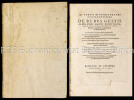
Adams C 3123. – VD16, C 6466. – Häufig aufgelegter Text der vollständigen Geschichte Alexander des Grossen, verfasst vom römischen Historiker Quintus Curtius Rufus. – Montierte Bibliotheksetikette auf dem festen Vorsatz. Trotz Gebrauchspuren gutes Exemplar. Vorder Vorsatz und das erste Blatt mit Eckausriss (ca. 8 cm). Pergamentbezug fleckig.

Phone number : 41 (0)44 261 57 50
Quinte-Curce. Histoires. Texte établi et traduit par H. BARDON.
Paris, Les Belles Lettres, 1947.
2 volumes. Wrappers. 20 cm (Budé)
De rebus gestis Alexandri Magni libri, cum supplementis I. FREINSHEMii. Praemittitur notitia literaria, accedit index. Studiis Soc. Bipontinae. Ed. accurata.
Biponti, ex Typographia Societatis, 1782.
154,264;36 p. H.calf. 21 cm (Back rubbed)
Historiarum Alexandri Magni Macedonis libri qui supersunt. (Besorgt von Konrad Müller)
N.pl., Heimeran Verlag, n.d.
317 p. Cloth. (Tusculum, Latin text only)
Oeuvres complètes de Quinte-Curce. Avec la traduction française de la collection Panckoucke par MM. A. & A. Trognon. Nouvelle édition revue avec le plus grand soin par M.E. PERSONNEAUX.
Paris, Garnier, n.d.
XII,451 p. Half cloth 18 cm (Rebound; head of spine slightly worn)
Von den Thaten Alexanders des Grossen. Verdeutscht von Johannes Siebelis.
Stuttgart, Krais & Hoffmann, 1865.
399 p. Half cloth. 17.5 cm (Cover worn at the extremes. Foxed. Gothic type)
Histoire d'Alexandre le Grand par Quint-Curce. Traduction nouvelle par MM. par MM. Aug. & Alph. Trognon.
Paris, C.L.F. Panckoucke, 1834.
3 volumes: XVI,394;374;445 p. Half black 19th century morocco 22.5 cm (Bibliothèque Latine-Française, publiée par C.L.F. Panckoucke) (Rebound; backs with 5 raised bands; short title, volume number and year gilt on the back; upper edge gilt. Endpapers marbled. Latin text with facing French translation. Some wear to the extremes; some foxing. Nice copy) (Heavy book, may require extra shipping costs) (Heavy book, may require extra shipping costs)
Historiarum Alexandri Magni Macedonis libri qui supersunt. Erklärt von Theodor Vogel. 1. Band: Buch III-V. Vierte Auflage besorgt von Alfred Weinhold.
Leipzig, B.G. Teubner, 1903.
227 p., folding map. Half cloth. 21 cm (TbGLS, Griechische und Lateinische Schriftsteller, Ausgaben mit Anmerkungen)
Historiarum Alexandri Magni Macedonis libri qui supersunt. Erklärt von Theodor Vogel. 1. Band: Buch III-V. Vierte Auflage besorgt von Alfred Weinhold.
Leipzig, B.G. Teubner, 1903.
227 p. Cloth 21 cm (TbGLS, Griechische und Lateinische Schriftsteller, Ausgaben mit Anmerkungen) (Some pencil)
Quinte-Curce. Histoires. Tome II: livres VII-X. Texte établi et traduit par H. Bardon.
Paris, Les Belles Lettres, 1948.
Wrappers 20 cm (Budé)(Cover slightly worn)
DE REBUS ALEXANDRI MAGNI HISTORIA SUPERSTES etiam Supplemetis, Commentariis, Indicibus & Tabulis Geographicis, hisque omnibus novis illustravit Christophorus Cellariu. Editio secunda
Lipsiae (Leipzig) Impensis Jo. Friederici Gleditschil 1691 in 8 (14 x 8,5) 1 volume reliure velin rigide ivoire, titre imprimé en rouge et noir, 17 faux-feuillets non chiffrés, 609 pages et 37 faux-feuillets non chiffrés d'index in fine, avec 3 cartes géographiques gravées dépliantes. Bon exemplaire ( Photographies sur demande / We can send pictures of this book on simple request )
Bon Couverture rigide
Alexander Magnus, et in illum commentarius Samuelis Pitisci, quo antiquitates Persarum, Macedonum, Phoenicum, Carthaginiensium, Romanorum, Babyloniourum, Indorum, Atheniensium ... explicantur. Huic accedunt index auctorum & rerum, Mottevayeri de Curtio dissertatio, Freinshemii supplementa ... Edition secunda priori ornatior et comptior.
Trajecti ad Rhenum (Utrecht), Franziscum Halmam, 1693, in-8vo, feuille de titre + 22 ff. + 785 p. + 81 ff. (Indices), + 1 carte dépl. (avec noms de lieux soulignées à la pume) + 12 planches (dont 6 dépl.), pages légèrement brunies quelques taches d’humidité peu importantes, reliure (XIXe) en plein-veau, dos à 4 faux-nerfs orné en noir et en or, pièce de titre noire, trances dorées. sans coiffe sup., sinon bel exemplaire.
Brunet II, 449: “... on prend de préférence celle de 1693 comme un peu plus complète”; Graesse II, 311; Preuss-Engelmann II, 236; Ebert I, 5552; Schweiger II, 321.
(SLACES, NVVA)
Phone number : 41 (0)26 3223808
Geschichte Alexanders des Grossen Band I, Band II. Lateinisch und deutsch. Eingeleitet, nach der Übersetzung von Johannes Siebelis überarbeitet und Kommentiert von Holger Koch. Edition Antike.
Darmstadt, Wissenschaftliche Buchgesellschaft 2007, 220x145mm, XX - 332 + 330Seiten, Verlegereinband mit Umschlag. Sehr schönes Exemplar.
Zweisprachige Ausgabe: Deutsch - Latein, Pour un paiement via PayPal, veuillez nous en faire la demande et nous vous enverrons une facture PayPal
CURTIUS RUFUS, Quintus (1er siècle ap. J.-C.) & LIVIUS, Titus & DESING, P.A.:
Reference : 54746aaf
De rebus gestis Alexandri Magni. Brevibus notis Germanicis illustratus. Accesserunt Excerpta electa ex Livio, Sallustio quoque, ac Caesare, in locos communes disgesta. Adhaec Institutiones styly historici, cum indici phrasium. In gratiam juventutis, editio secunda curata à P.A. DESING ... In qua accessit Paradigma variationis secundum praecepta ...3 Teile in 1 Band.
Pedeponti, vulgò Stadt am Hof, sumptibus Joanis Gastl Bibliopolae, 1747, kl. in-8vo, gestoch. Frontispiz (kl. Tintefl. am Rand) + 5 Bl., einschl. Titel in Rot und Schwarz + 526 S. + 3 gest. Falttafeln mit 5 Fig. + (lose beil.) 1 Faltkarte (Tabula Expeditionis Alexandri ...), gest. von Thomas Boeck; 344 S., mit sep. Titelbl. «Excerpta electora ex Livio, Sallustio, Caesare, ...»; 264 S., mit sep. Titelbl. « Institutiones styli historici. ...», durchgehend wasserfleckig teils nur leicht sichtbar, gebräunt, hs. ‘Ex Libris Joannis Chrysostomi Relling Veldkirchensis ... 1755’ ... ‘Servio Joanni Antonio de Ceterelly’. Lederband auf Bünden, rotes Titel-Schildchen auf dem Rücken, beriebenzwei Schliessen aus Leder und Kupferstück,
Lateinischer Text mit Notizen in deutscher Sprache.Fine full calf binding with 2 clasps. In 3 parts complete with engravings showing war engines and a map of the expeditions of Alexander th Great. Image disp.
(SLACES, NVVA)
Phone number : 41 (0)26 3223808
De la Vie et des Actions d'Alexandre le Grand. De la Traduction de Monsieur de Vaugelas. Derniere Edition divisée en deux Volumes, sur une nouvelle Copie de l'Autheur... Avec les Supplémens de Jean Freisenhemius sur Quinte-Curce. Traduit par ... Du ...
Paris, Michel Brunet, 1702. Small 8vo. 2 contemp. full calf. Raised bands. Richly gilt spines. Light wear to top of spines. Stamp on title-pages. (52),449,(3)(2),435 pp. Clean and fine.
De la Vie et des Actions d'Alexandre le Grand. De la Traduction de Monsieur de Vaugelas, avec le Latin en Cote. Derniere Edition Avec les Supplémens de Jean Freisenhemius. Traduit par ... Du Ryer.
Paris, Bilaine, 1716. Contemp. full calf. Raised bands. Richly gilt spine. Titlelabel with gilt lettering. Some neath repairs to joints and edges. Stamp on title-page. Engraved frontispiece (mounted). (14),913,(30) pp. Neath repairs to the first 3 leaves.
De la Vie et des Actions d'Alexandre le Grand. De la Traduction de Monsieur de Vaugelas, avec le Latin en Cote. Derniere Edition Avec les Supplémens de Jean Freisenhemius. Traduit par ... Du Ryer.
Paris, Bilaine, 1716. Contemp. full calf. Raised bands. Richly gilt spine. Titlelabel with gilt lettering. Some neath repairs to joints and edges. Stamp on title-page. Engraved frontispiece (mounted). (14),913,(30) pp. Neath repairs to the first 3 leaves.

