 Write to the booksellers
CURTIUS RUFUS.
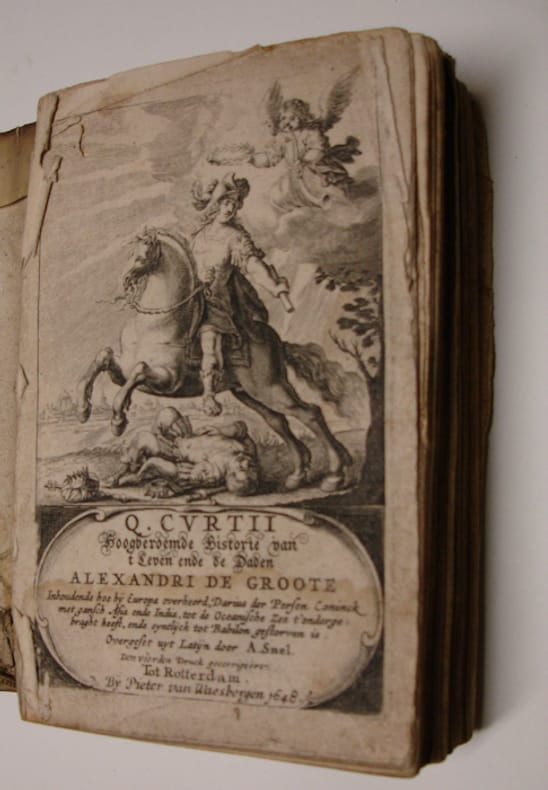
Hoogberoemde historie van 't leven ende de daden Alexandri de Groote. Inhoudende hoe hy Europa overheerd, Darius der Persen Coninck met gansch Asia ende India tot de Oceanische Zee t'ondergebraght heeft, ende eyntlijck tot Babilon gestorven is. Overgeset uyt Latijn door A. SNEL. Den vierden druck gecorrigeert.
Rotterdam, By Pieter van Waesbergen, 1648.
Reference : 120048
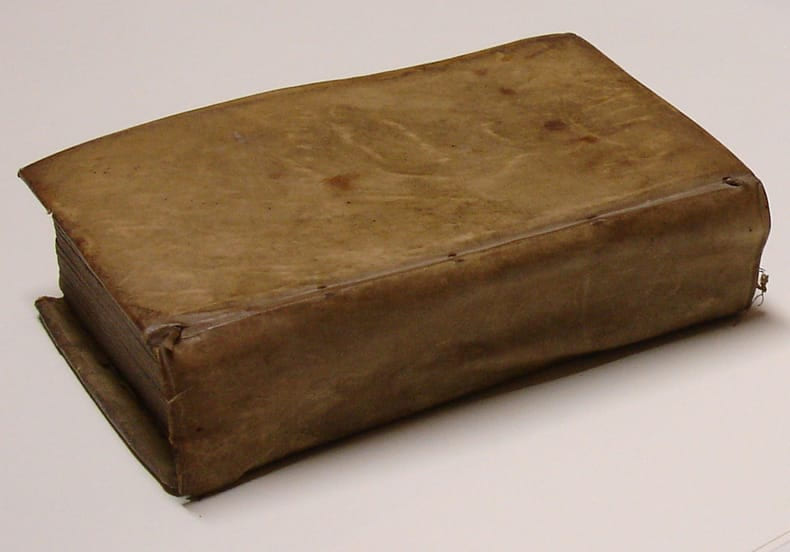
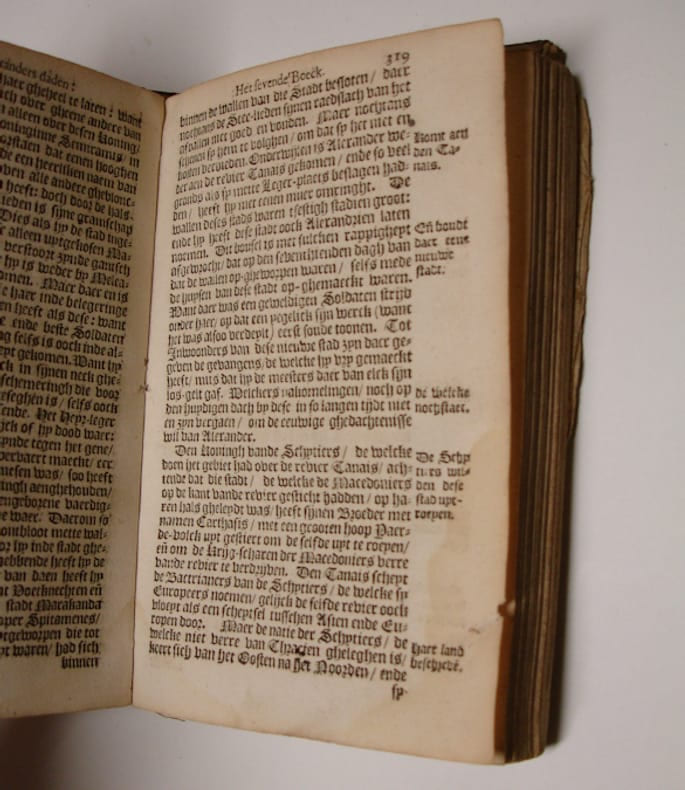
8vo. 513,(14) p. Vellum 16 cm (Ref: Geerebaert 105,c; OiN 154; Schweiger 2,328) (Details: Engraved title, depicting Alexander on horseback, at his feet a trampled Darius; printed in Gothic type, as is usual with translations into Dutch) (Condition: Shabby: vellum worn, back wrinkled; small tear at head of spine; book block loose in binding; front endpapers gone; rear endpapers loose; title soiled, loosening and with thumbed edges; small wormhole in the first 6 leaves near the left upper corner; first 2 gatherings dampstained at the lower margin; gatherings quite loose) (Note: This Dutch translation of Curtius Rufus was a great success. It was first published in 1613, and was reissued 15 times, for the last time ca. 1765. It was far more popular than the translation of Glazemaker that was reprinted only 2 times. Not much is known of the translator A. Snel. Van der Aa only records what we know already, that one A. Snel produced a translation of Curtius Rufus. The short preface of the second edition of 1627, signed by one Albrecht Snel, which is reprinted here in this 4th edition, learns us more. It is in fact a dedicatio to the 'Rulers' of the city of Delft and the 'Opper-Heeren', that is curators of the local Schola Latina. Albrecht Snel tells the reader that he is a teacher at the local Schola Latina, and that he wants to dedicate his translation as first-fruits to the excellent members of the City Council, just like the old Greeks did when they wanted to thank their benefactors. He calls his bosses 'Voedster-Heeren', i.e. sponsors, or patrons of Greek and Latin, and of those whom they charge to teach them at the local school. From the preface of the first edition of 1613 of this translation, and which was left out in later editions, we learn more about Snel. We learn something about his aim while translating Curtius Rufus. His aim is didactic. We must, Snel says, learn from the best examples available, what to do and what to avoid. We can do this best by reading the ancient historians, of whom Curtius Rufus is the best. Snel turns against those who proclaim that Dutch is inferior to Latin. We learn also which text Snel used for his translation, the 'Raphalyn'. This must be the edition of 'De rebus gestis Alexandri Magni' published 'ex officina Plantiniana Raphelengii' in Leiden in 1606. The translation is preceded by 'Byvoeghingh uit verschyden schrijvers tot vervullinghe van Quinti Curtii eerste' and 'tweede' boec.' This is a translation of a reconstruction of the lost first 2 books from other sources) (Collation: A-2K8) (Photographs on request)
Bookseller's contact details
Antiquariaat Fragmenta Selecta
+31 20 418 55 65
Payment mode

Sale conditions
Terms of Sale All items offered are subject to prior sale. Your order will be final after you have received our confirmation, with a specification of the availability of the items and the shipping costs. All books are complete and in good antiquarian condition, unless otherwise described. Prices are in EURO. Postage and insurance are not included. Postage will be calculated at cost (no extra charges). Returns Books may be returned within 14 days of receipt, if returned in the same condition as sent, and packed, shipped and insured as received (please always notify us). We will refund the shipping costs of a return shipment only if our descriptions were not correct. How to pay Pre-payment is necessary for new customers. Our order confirmation will provide detailed information and a specification of the shipping costs. Customers who are known to us and libraries will be invoiced as usual. We accept Visa and Mastercard. You can submit your card information through our SECURE PAYMENT FORM. PayPal: we will send you a personal link to the PayPal website. Banktransfers: payment can be made into our bank account in The Netherlands.

