 Write to the booksellers
52 books for « apollonius »Edit
-
Century
18th (2)
19th (11)
20th (7)
-
Countries
Belgium (2)
Denmark (1)
France (26)
Germany (1)
Greece (1)
Netherlands (15)
Switzerland (6)
-
Syndicate
ILAB (13)
NVVA (1)
SLACES (1)
SLAM (10)
Topics
- Anacreon (1)
- Apollonius of rhodes (19)
- Bibliophilism (2)
- Classical arts (1)
- Esotericism (2)
- Gallantry (1)
- Grammar (1)
- Greece (5)
- Greek (15)
- Helvética (1)
- History (1)
- Latin (14)
- Literature (11)
- Longus (1)
- Magnetism (1)
- Mythology (4)
- Poetry (1)
- Rhabdomancy (1)
- Rome (1)
- Shapes & colours (1)
- Switzerland (1)
- Theocritus (1)
- War (1)
Jason et Médée
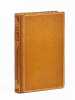
Paris, A.Quantin 1882 1 in 12 demi chagrin dos à caisson et ornés 124 [p.p] L'OR DE LA COLCHIDE : Somptueux exemplaire de Jason et Médée (1882) édité par le maître imprimeur A. Quantin. Sous une reliure souveraine en demi-chagrin au dos richement orné de caissons, l'épopée d'Apollonius de Rhodes s'émancipe pour offrir une expérience visuelle et tactile d'exception. Une pièce d'une fraîcheur absolue, témoin du luxe éditorial français à son apogée.
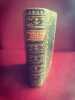
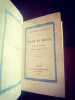
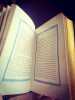
Bel ouvrage Disponibilité sous réserve de vente en boutique, prix valable, frais de port en plus, La Poste ou Mondial Relay
The Argonautica of Apollonius Rhodius, book III. Ed. with introduction & commentary by Marshall M. Gillies.
Cambrdige, CUP, 1928.
XLVIII,160 p. Cloth. 22.5 cm (Some foxing)
A commentary on Apollonius Rhodius Argonautica III 1-471.
Leiden etc., E.J. Brill, 1994.
XXI,424 p. Cloth. 24 cm (Mnemosyne Supplement 141) (Including dustjacket)
Echoes and imitations of early epic in Apollonius Rhodius.
Leiden, E.J. Brill, 1981.
(VIII),123 p. Wrappers. 24 cm (Mnemosyne Supplement 72) (Cover plasticized)
The best of the Argonauts. The redefinition of the epic hero in book 1 of Apollonius's Argonautica.
Berkeley etc., University of California Press, 1993.
XVIII,238 p. Cloth. 24 cm (Including dustjacket)
Apollonius' Argonautica. A Callimachean epic.
Leiden etc., E.J. Brill, 1994.
VIII,160 p. Cloth. 24 cm (Mnemosyne Supplement 142) (Including dustjacket)
The Argonautica of Apollonius. Literary studies.
Cambridge, CUP, 1993.
X,206 p. Hardbound 24 cm (Including dustjacket; pencil underlinings and marginalia in the first 3 chapters)
A companion to Apollonius Rhodius.
Leiden etc., Brill, 2001.
XIII,362 p. Hardback. 24 cm (Mnemosyne Supplement 217)
A sketch of the life of Apollonius of Tyana, or the first ten decades of our era.
Montana, Kessinger, n.d.
VI,354 p. Stiff wrs. 27 cm (Reprint)
APULéE ; LONGUS ; MUSéE ; OVIDE ; TATIUS ; LUCIEN ; VIRGILE ; ANACRéON et SAPHO ; APOLLONIUS DE RHODES ; HORACE ; THéOCRITE ; PROPERCE ; CATULLE
Reference : 141595
(1889)
Chefs d’oeuvre antiques [13 volumes]. Notices par A.-J. Pons
Paris, A. Quantin 1889 13 volumes. In-8 14,5 x 9,5 cm. Reliures demi-basane fauve marbrée, filets dorés, dos à nerfs, têtes dorées, couvertures conservées, 211-138-206-135-209-124-135-119-111-220-192-203-85 pp., notices bibliographiques, notices artistiques. Tous les textes sont dans des encadrements, Les tirages des vignettes d'illustrations parfois en chromolithographies sont splendides.Ex-libris Auguste Heriot.
![Chefs d’oeuvre antiques [13 volumes]. Notices par A.-J. Pons. APULéE ; LONGUS ; MUSéE ; OVIDE ; TATIUS ; LUCIEN ; VIRGILE ; ANACRéON et SAPHO ; ...](https://static.livre-rare-book.com/pictures/AVE/141595_1_thumb.jpg)
![Chefs d’oeuvre antiques [13 volumes]. Notices par A.-J. Pons. APULéE ; LONGUS ; MUSéE ; OVIDE ; TATIUS ; LUCIEN ; VIRGILE ; ANACRéON et SAPHO ; ...](https://static.livre-rare-book.com/pictures/AVE/141595_2_thumb.jpg)
![Chefs d’oeuvre antiques [13 volumes]. Notices par A.-J. Pons. APULéE ; LONGUS ; MUSéE ; OVIDE ; TATIUS ; LUCIEN ; VIRGILE ; ANACRéON et SAPHO ; ...](https://static.livre-rare-book.com/pictures/AVE/141595_3_thumb.jpg)
Comprend : 1. Longus, Daphnis et Chloé, avec une grecque pour encadrement et des en-têtes genre étrusque, par Scott, 1878 - 2. Apulée, L'Amour et Psyché, avec un encadrement XVIIIe siècle et des en-têtes d’après Natoire, 1878 - 3. Ovide, Les Amours, illustré de nombreux en-têtes en trois tons, gravures de Méaulle dessins de Meyer, 1879 - 4. Musée, Héro et Leandre, illustré avec en-têtes et cadres en grisaille, gravures de Méaulle, 1879 - 5. Tatius, Leucippe et Clitophon, illustré d’en-têtes tirés en camaïeu, gravures de Méaulle, 1880 - 6. Virgile, Les Bucoliques,illustré d’en-têtes et de cadres tirés en bistre, illustrations de Leloir, 1881 - 7. Lucien, Dialogues des courtisanes, illustré d’en-têtes en couleur et fond d’or, illustrations de Scott et Méaulle, 1881 - 8. Apollonius de Rhodes, Jason et Médée, illustré d’en-têtes genre biscuit de Sèvres, encadrement bleu faïence, gravures de Méaulle, 1882 - 9. Poésies de Anachréon et de Sapho, illustré d’en-têtes en plusieurs tons, illustrations de Avril, 1882 - 10. Horace, Odes et épodes, illustré d’en-têtes en couleur à cadre doré, gravures de Méaulle, 1883 - 11. Théocrite, Les Idylles, illustré d’en-têtes en couleur et or, gravures de Méaulle, 1884 - 12. Properce, Les élégies, illustré d’en-têtes genres bas-reliefs florentins, dessins de Besnier, gravures de Méaulle, 1885 - 13. Catulle, Ode à Lesbie et épithalame de Thétis et Pelée, illustrations de Poirson, 1889. Bon état d’occasion
L'expédition des Argonautes ou la conquête de la Toison d'Or
1799. Paris chez Moutardier Deroy et Lavaux an V de la République Française (1799) - Reliure cartonnée 13 cm x 21 cm 400 pages - Texte d'Apollonius de Rhodes traduit pour la première fois du grec en français par J. J. A. Caussin biographie de l'auteur notes - Dos usé sinon bon état intérieur
Apollonius de Tyane. Sa vie, ses voyages, ses prodiges par Philostrate et ses lettres. Ouvrages traduits du grecs avec introduction, notes et eclaircissements par A. Chassang. Deuxième édition.
Paris, Didier et Cie, 1862. In-12 de [4]-XVI-491-[2] pages, demi-basane brune très frottée.
Du 26 septembre au 5 octobre, le libraire est absent il prendra connaissance de vos commandes dès le 6 octobre au matin. Et durant cette période, l'horaire de fermeture sera 17h30 du lundi au vendredi. – From September 26 to October 5, the bookseller is absent; he will take note of your orders as early as the morning of October 6. And during this period, the closing time will be 5:30 p.m. from Monday to Friday.
Jason et Médée.
Paris, A. Quantin, 1882. In 12 (100 x 150) de 2 ff., 119 p. et 1 f. Demi maroquin brun de l’époque, dos lisse orné à petits fers, tête dorée. Bel exemplaire.
Traduction, intro. et notes de A. Pons. Episode extrait de la célèbre épopée les Argonautiques d’Apollonius et orné de 12 figures en couleurs par Méaulle. Avec une notice artistique et une notice bibliographique.
L'Expédition des Argonautes, ou La Conquête de la Toison d'Or. Poème en quatre Chants. Traduit pour la première fois du Grec en François par J. J. A. CAUSSIN, Professeur au Collège de France.
Paris, chez Moutardier, Deroy et J. Ch. Laveaux, L'An V de la République française [1797]. In-8, [56 pp]- (Vie d'Apollonius et Argument sur le premier, second, troisième et quatrième chant- Texte sur l'Expédition.)- 400 pp. Pleine basane racinée, dos lisse orné, tranches marbrées, belle reliure d'époque.
Bel exemplaire. Photos sur demande.
METHODE EXPRESS MAGNETISME PERSONNEL
SERVRANX
LIVRE A L’ETAT DE NEUF. EXPEDIE SOUS 3 JOURS OUVRES. NUMERO DE SUIVI COMMUNIQUE AVANT ENVOI, EMBALLAGE RENFORCE. EAN:9782872420193
Index verborum in Apollonium Rhodium. Edidit Malcolm Campbell.
Hildesheim etc., Olms, 1983.
VII,292 p. Cloth 21 cm (Alpha-Omega)
[A. Quantin] - APOLLONIUS DE RHODES ; (PONS, A. ; MEAULLE )
Reference : 71618
(1882)
Jason et Médée
Gravures de Méaulle, traduction et notices de A. Pons, 1 vol. in-12 reliure de l'époque plein chagrin maroquiné fauve, dos lisse orné, double filet doré d'encadrement en plats, chasses ornées, tête dorée, A. Quantin, Imprimeur-Éditeur, Paris, 1882, 119 pp.
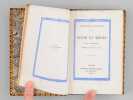
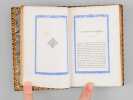
Etat très satisfaisant (2 frott. en coupes en tête, rouss.) pour cet extrait des "Argonautiques"
TRAITE DES CONJONCTIONS.
P., Librairie philosophique Vrin, 2001. In-8° br., 496pp., bibliogr., index (Histoire des doctrines de l’antiquité classique, XXII).
Très bonne condition. - Frais de port : -France 7,15 € -U.E. 9 € -Monde (z B : 14 €) (z C : 24 €)


Die Argonauten. Verdeutscht von Th. VON SCHEFFER.
Wiesbaden, Dieterich, (1947).
XVI,237 p. Cloth. 18 cm (Cover plasticized)
The Argonautica, book III. Edited with introduction & commentary by M.M. GILLIES.
Hildesheim, etc., Olms, 1989.
XLVIII,160 p. Wrappers. (Reprint Cambridge, CUP, 1928)
The Argonautica, book III. Ed. with intr. & commentary by M.M. GILLIES.
Hildesheim, etc., Olms, 1989.
XLVIII,160 p. Wrs. (Repr. Cambr., CUP, 1928)
Studi di poesia ellenistica. (Apollonio Rodio, Callimaco)
Napoli, Luigi Loffredo, 1940.
52 p. Cloth. 25.5 cm (Rebound) (Contains: 'Eracle e Teodamante (father of Hylas) in Callimaco e in Apollonio Rodio'. And: 'L'Eracle 'Semnós' nel poema di Apollonio')
Einleitung zur kritischen Ausgabe der Argonautika des Apollonios.
Göttingen, Vandenhoeck & Ruprecht, 1964.
VI,163 p. Boards. 24.5 cm (Rebound)
Noten zu den Argonautika des Apollonios.
Darmstadt, Wissenschaftliche Buchgesellschaft, 1968.
IX,665 p. Cloth. 23 cm
Jason et Médée. Traduction et notices d'A. Pons.
Paris, A. Quantin, 1882. In-12 de [6]-119-[3] pages, plein veau glacé moka, dos à nerfs orné de fleurons et filets dorés, pièce de titre rouge, triple filet doré encadrant les plats, fleurons doré aux angles, tête dorée.
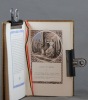
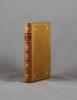
Illustré de douze jolies vignettes en couleurs par Méaulle. Charmante petite édition soignée. Du 26 septembre au 5 octobre, le libraire est absent il prendra connaissance de vos commandes dès le 6 octobre au matin. Et durant cette période, l'horaire de fermeture sera 17h30 du lundi au vendredi. – From September 26 to October 5, the bookseller is absent; he will take note of your orders as early as the morning of October 6. And during this period, the closing time will be 5:30 p.m. from Monday to Friday.

