 Write to the booksellers
APOLLONIUS RHODIUS.
Apollonii Rhodii Argonauticorum libri quatuor. Edidit, nova fere interpretatione illustravit, priorum editorum notas praecipuas selegit, Sanctamandi nunquam prius editis nonnullas suas adjecit, necnon indices tres addidit, Joannes Shaw, A.M. Coll. Beatae Mariae Magdalenae apud Oxonienses socius.
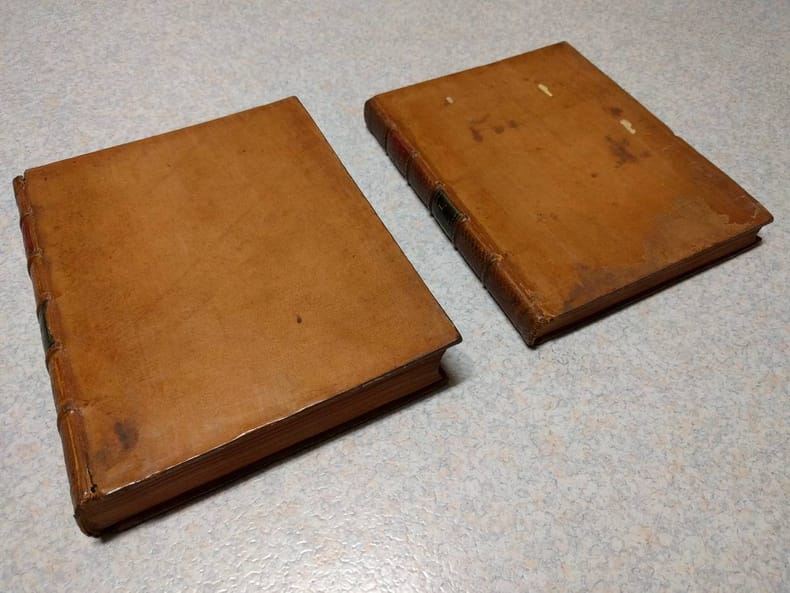
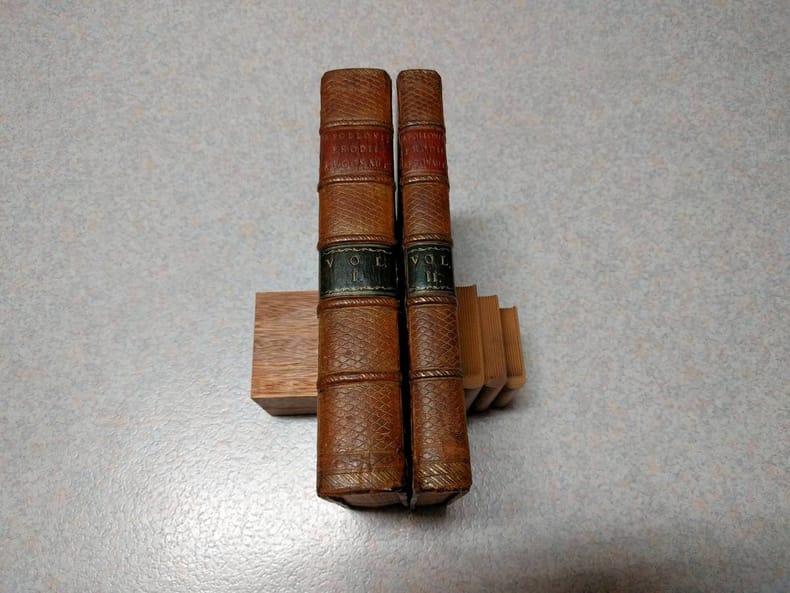
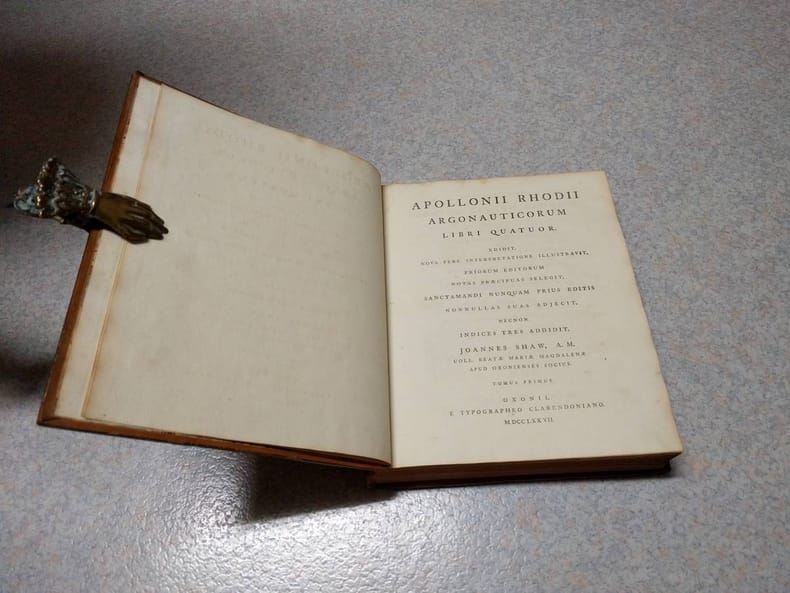
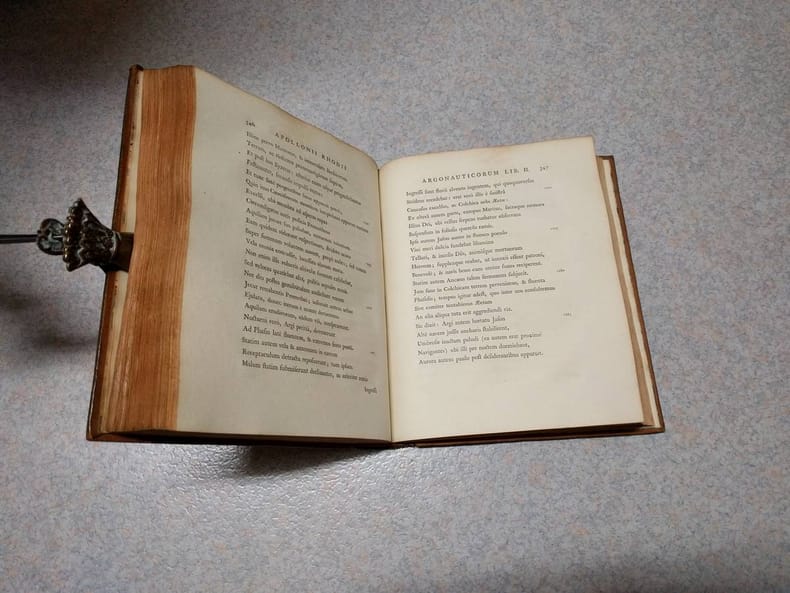
Oxford (Oxonii), E Typographeo Clarendoniano, 1777.
Reference : 152729
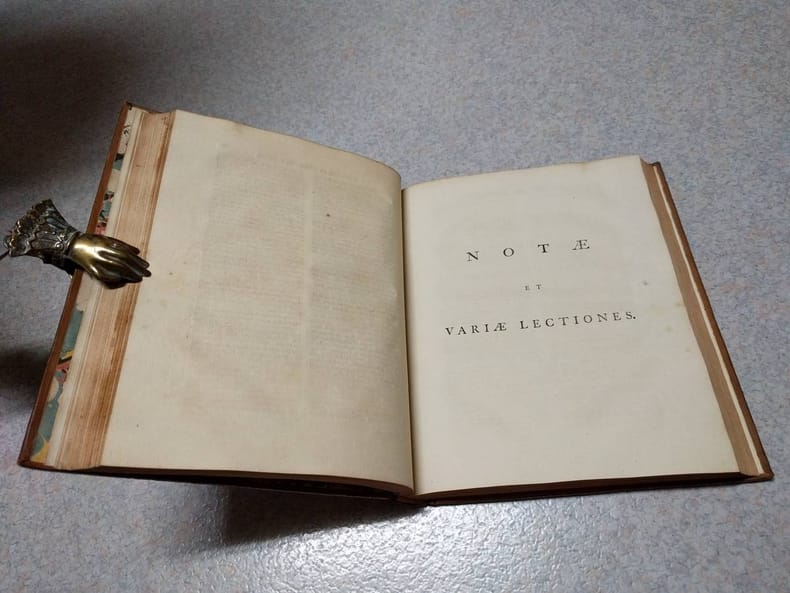
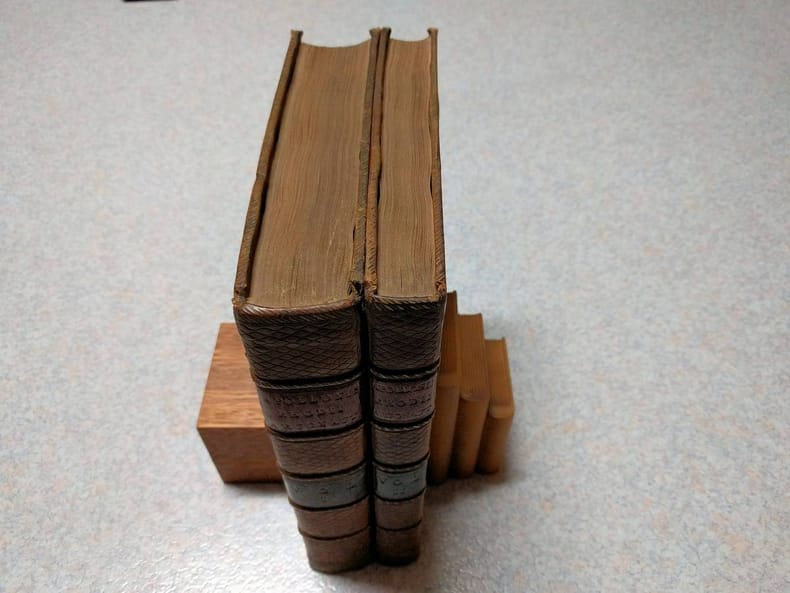
4to. 2 volumes. Volume 1: (XII),496,(1 errata),(1 blank) p.; Volume 2: (II),129,(1),(156 indices),(2 blank) p. Contemporary calf. 28 cm. (Ref: ESTC Citation No. T133192; Ebert 826; Graesse 1,164; Hoffmann 1,207/08; Dibdin 1,276/77; Moss 1,68) (Details: Backs gilt in a wave like pattern, and with 5 raised bands. A shield in the 2nd and 4th compartment. Marbled endpapers. Volume 1 contains the Greek text, followed by a Latin translation. Volume 2 contains the 'Scholia' (p. 1/99), 'Notae et Variae Lectiones', (p. 101/129), an index on the Scholia, and an 'index verborum') (Condition: Bindings worn. Boards scuffed, with some spots and scratches. Some leaves slightly yellowed, occasional light foxing, especially in the blank upper margins) (Note: The Greek poet Apollonius Rhodius was probably born on the island Rhodes ca. 295 B.C. At a young age he moved to Alexandria, attracted, as many others, by the court of the Ptolemaei, where he met the poet Callimachus. Biographic fiction has it that Apollonius' epic the 'Argonautica' was badly received in Alexandria at a recitation (epideixis), that he became an enemy of Callimachus, and then retired to Rhodes, where he revised the poem, which made him famous. The fictional quarrel between both poets is probably an invention of the first biographer of Apollonius the grammarian Theon. ('Apollonius Rhodius, Das Argonautenepos. Herausgegeben, übersetzt und erläutert von R. Glei & S. Natzel-Glei', Darmstadt, 1996, page XIII) The 'Argonautica' is the only surviving posthomeric epic of the Alexandrian period, and places Apollonius direct under the shadow of Homer. The poets modernity is his creation of a short epic of ca 5900 verses (half the Odyssey). He also created a new hero type, democratic, and group oriented. A further innovation is the role of women in this epic, which was traditionally men's business. He is the first to introduce a woman as a hero in an epic, Medea, and he 'erzählt die Ereignisse im wesentlichen aus ihrer Sicht, eine psychologische Meisterleistung'. (o.c. page XIV) In Alexandrian style he delights in displaying his ethnographic erudition, explaning names, cults, geography, relics and habits. The story of the Argonauts belongs to the oldest myths in Greek literature. It is supposed that Homer adopted elements of a prehomeric epic of the voyage of the Argonauts, who sailed with Jason on the Argo to Colchis to secure the Golden Fleece. 'The story has been reworked by modern writers such as Robert Graves (Hercules, my Shipmate, 1945) and John Gardner (Jason and Medeia, 1975) and there have been 2 films called Jason and the Argonauts (1963 and 2000)'. (The Classical tradition, Cambr. Mass., 2010, p. 67) This edition of 1777 was produced by the English scholar John Shaw, 1750-1824, Fellow of Magdalen College, Oxford, who based his Apollonius on the previous Apollonius edition of Hoelzlin, Leiden 1641. ('secutus sum Hoelzlinum', preface, leaf b1 recto) He proudly boasts that he has done more for the eludication of Apollonius than Hoelzlin. Shaw revised and updated also the literal, wooden Latin translation by Johannes Hartung, (ille fidus adeo interpres) of Basel 1550, often following him. (nec interdum ab Hartungo mutuum accipere dedignatus sum) The reader has, he adds, now a 'interpretationem fidam satis, nec tamen, ut spero, prorsus inelegantem'. (Idem, leaf b1 verso) Shaw also excerpted the earlier commentaries and notes, of Hartung, Henri Estienne (1574), Holstein and Hoelzlin. He also added the notes of one James St. Amand (Jacobus Sanctamandus or Sanctus Amandus) that he found in the Bodleian Library, and the notes and explanations of the recently deceased Oxford scholar John Upton, which he had jotted down in his copy of the 1574 edition of Henri Estienne. The notes of St. Amand are, according to Hoffmann, 'nicht wichtig'. St. Amand was born in 1687. He matriculated in 1703, and left Oxford without taking a degree. He died in 1754. John Upton, 1707-1760, of Merton and Exeter College, edited an Epictetus edition, 1739-1741) (Collation: Vol.1: a-c2, A-N2, P-5I2, 5L-6L2, X1; Vol. 2: pi1, A-2B2, X2, 2C2, 2E2-4C2 (leaf 4C2 blank)) (Photographs on request)
Bookseller's contact details
Antiquariaat Fragmenta Selecta
+31 20 418 55 65
Payment mode

Sale conditions
Terms of Sale All items offered are subject to prior sale. Your order will be final after you have received our confirmation, with a specification of the availability of the items and the shipping costs. All books are complete and in good antiquarian condition, unless otherwise described. Prices are in EURO. Postage and insurance are not included. Postage will be calculated at cost (no extra charges). Returns Books may be returned within 14 days of receipt, if returned in the same condition as sent, and packed, shipped and insured as received (please always notify us). We will refund the shipping costs of a return shipment only if our descriptions were not correct. How to pay Pre-payment is necessary for new customers. Our order confirmation will provide detailed information and a specification of the shipping costs. Customers who are known to us and libraries will be invoiced as usual. We accept Visa and Mastercard. You can submit your card information through our SECURE PAYMENT FORM. PayPal: we will send you a personal link to the PayPal website. Banktransfers: payment can be made into our bank account in The Netherlands.

