 Write to the booksellers
FLORUS - JOHANNE MIN-ELLIO
L. Annaei Flori Rerum romanarum Libri quatuor.
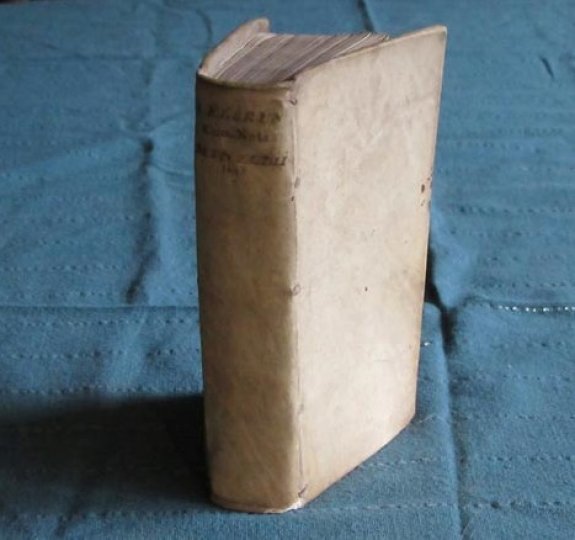
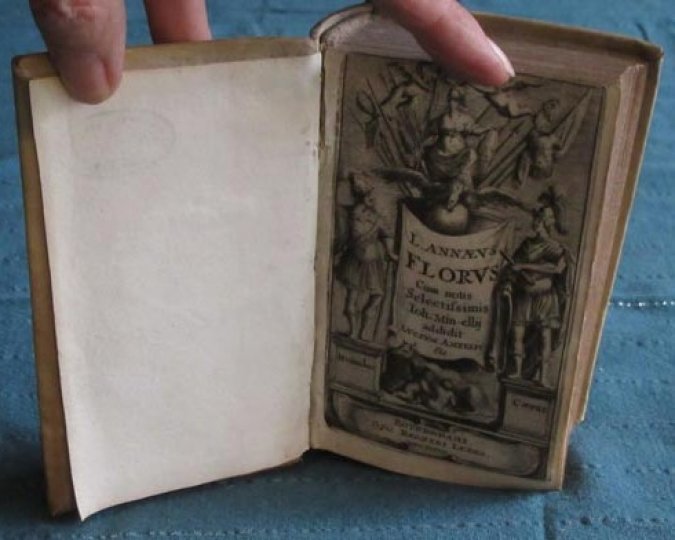
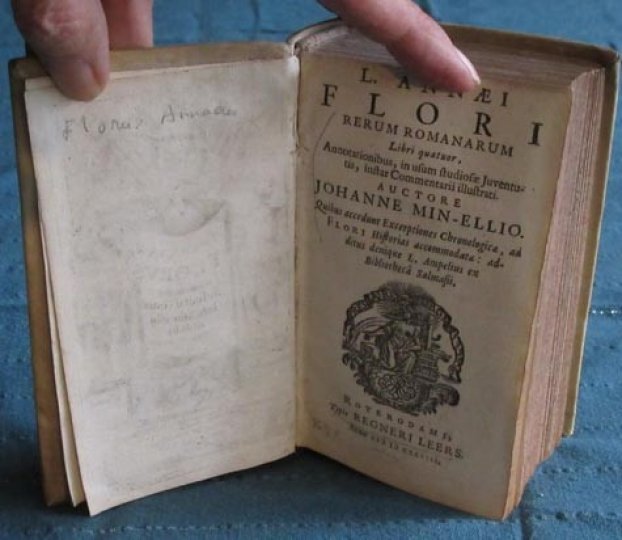
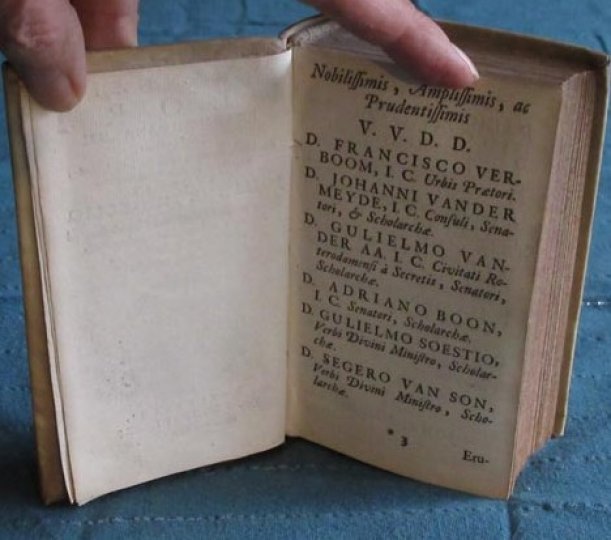
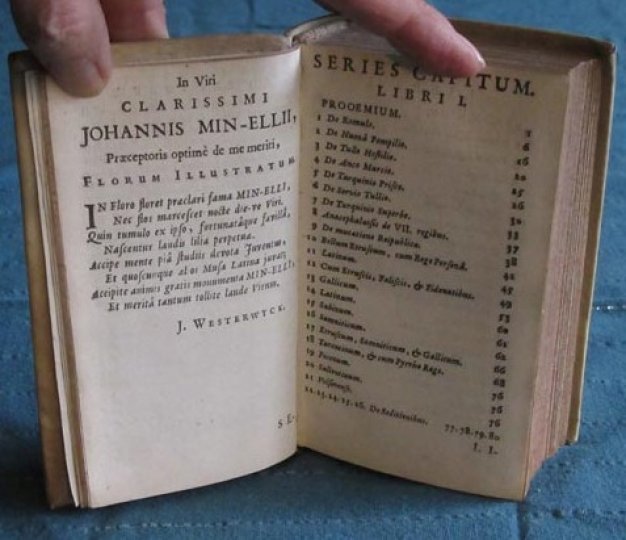
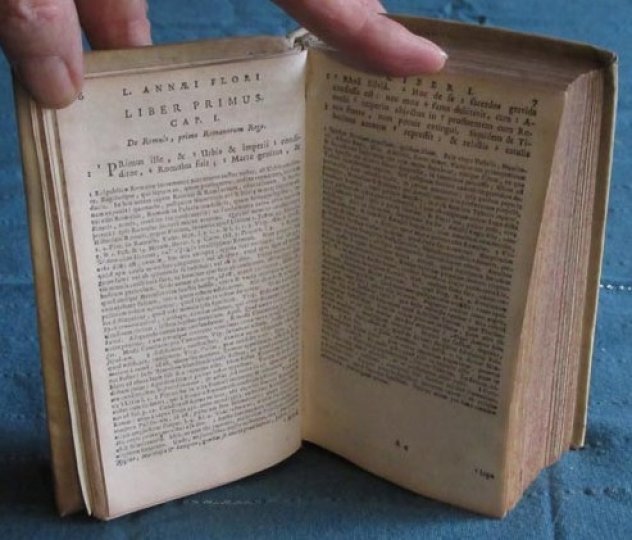
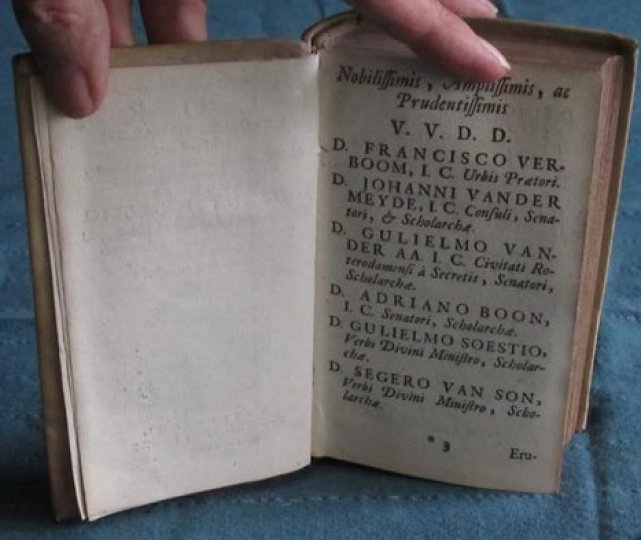
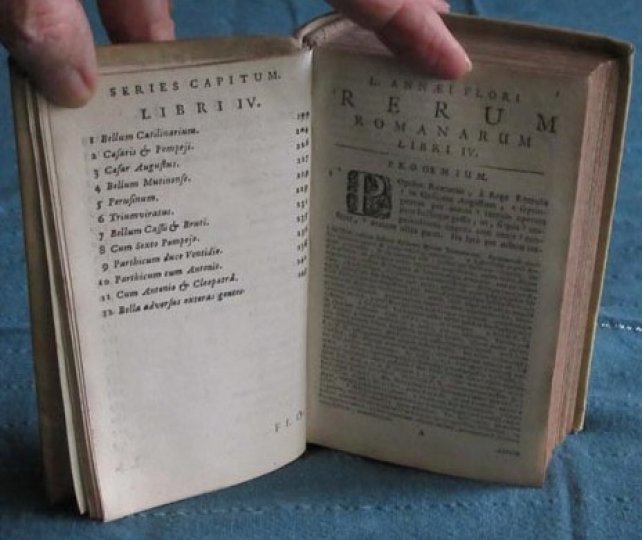
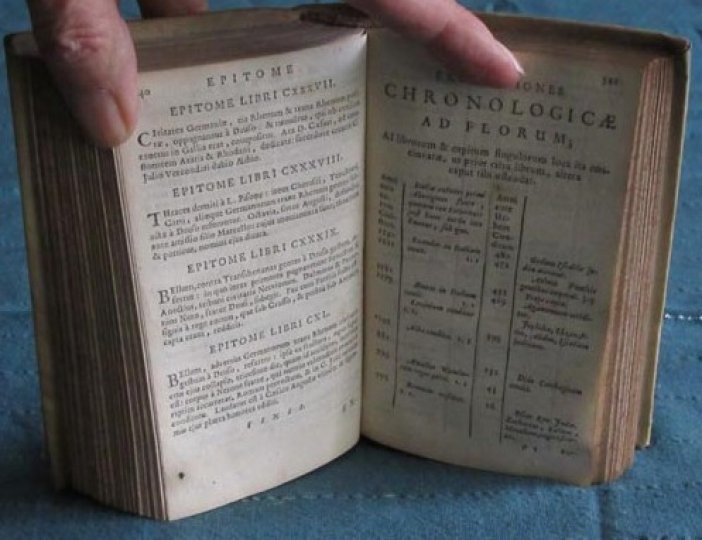
Annotationibus, in usum studiosae Juventutis, instar commentarii illustrati. Auctore Johanne Min-ellio. Quibus accedunt Exceptiones Chronologicae, ad Flori Historias accommodatae : additus denique L. Ampelius ex Bibliotheca Salmasii.Roterodami, Typis Regneri Leers - 1698 - 12 ff, 405 pages et Index. Titre gravé.Reliure plein vélin ivoire à couture hollandaise. Titre manuscrit au dos. Tranches jaspées rouge. Pas de rousseur. Très bon état. Format in-16°(14x8).
Reference : 18144
Bookseller's contact details
Livres et Collections P. Commerot
M. Philippe Commerot
8 allée des Acacias
92310 Sèvres
France
09 67 04 07 48
Payment mode


Sale conditions
Les livres sont expédiés le jour même de la réception du règlement. Vous pouvez passer vos commandes par mail, ou par téléphone. Règlements en euros, par carte bancaire, chèque français, virement bancaire, ou lien de paiement Stripe. Evitez paypal.
5 book(s) with the same title
L. Annaei Flori Rerum Romanarum Libri quatuor. Annotationibus in usum studiosae Juventu-tis, instar Commentarii illustrati. Auctore Johanne Min-Ellio.
Roterodami, Typis Regneri Leers 1698, 145x95mm, cartonnage muet de l’époque, tranches non rognées.
titre gravé, 10 ff. - 405 p. - 49 ff. (index), Pour un paiement via PayPal, veuillez nous en faire la demande et nous vous enverrons une facture PayPal
L. Annaei Flori Rerum Romanarum libri quatuor, annotationibus, in usum studiosae juventutis, instar commentarii illustrati, auctore Johanne Min-Ellio. Quibus accedunt exerptiones chronologicae, ad Flori Historias accommodatae; additus denique L. Ampelius ex Bibliotheca Salmasii.
Rotterdam (Roterodami), Ex officina Arnoldi Leers, 1680.
12mo. (XXIV, including frontispiece), 405; (99 index),(2 blank) p. Vellum 14 cm Favourite school-book in the 17th century (Ref: Schweiger 361) (Details: 5 thongs laced through the joints. Frontispiece, depicting a victorious Dea Roma on a pedastal, flanked by a statue of Romulus and of Caesar, who symbolize the beginning and the end of this historical work. At their feet the famous twins and the she-wolf. Woodcut printer's mark on the title, its motto reads: 'Labore et Vigilantia'. It depicts a woman, Vigilantia, holding an open book in her left hand, and a oil lamp in her right. At her feet a crane. The element 'labor' is represented by a ploughing farmer in the background. Leers used 8 different versions of this mark) (Condition: Vellum age-toned. Big inkstain on the lower board; a small shower of tiny inkstains on the back; two old and small paper library lables on the back. Name on the front flyleaf. Frontispiece printed with a worn plate. The outer edge of the frontispiece is thumbed. The paper is slightly yellowing) (Note: This is the chief work of the Roman historian Lucius Annaeus Florus, who lived at the beginning 2nd century AD. It is an abridgement of Roman history with special reference to the wars waged up to the age of Augustus. Florus 'shows a certain literary gift, marred, however,by a strong tendency to rhetoric. His brevity often entails obscurity, though he sometimes produces a felicitous epigram. (...) As an historian he is often inaccurate in both chronology and geography, but the work as a whole achieves a limited success as a rapid sketch of Roman military history. It was a favourite school-book in the 17th century'. (OCD, 2nd ed. p. 442) Schweiger records a host of Florus editions, among which 6 by the Dutch schoolmaster Johannes Min-Ellius, ca. 1625-1670. He produced one of the many school-editions of Florus. It was first published in Rotterdam in 1670, was a success, and was repeated there in 1680 and in 1698, in Copenhagen in 1700, in London in 1706, and in Leipzig in 1734. One seldom sees an edition of Min-Ellius in good condition. He was educated at the Erasmianum at Rotterdam, and was until his death a Praeceptor at the same school. Minellius, or Min-ellius, produced several school editions of classical authors, such as Vergil, Florus, Horace, Terentius and Ovid, with ample annotations in easy Latin. At the end of the 17th and in the 18th century his editions were widely used, not only on Dutch grammar schools, but also on German, English and Danish schools. After that they were barred from the schools because they were too unscientific, and offered too much help. They were esteemed to be 'pontes asinorum') (Provenance: 'Samuel Joannes de Hoest, 1817, 6m. 9d.' = 9 June 1817. Ds. Samuel Johannes de Hoest was a minister of the Dutch Protestant church in several small Dutch towns. He was born in Amsterdam in 1804. His father was there a pharmacist. Young Samuel visited the Athenaeum Illustre in his hometown. Thereafter he studied theology in Utrecht. He left quite a number of praeches. He died in Nijkerk in 1877, where he preached from 1831. (NNBW 8,782/84, more in J.P. de Bie & J. Loosjes, 'Biographisch woordenboek van protestantsche godgeleerden in Nederland. Deel 4', The Hague, 1931, p./ 92/93) So Samuel Joannes got this schoolbook a week before his 13th birthday, perhaps at the beginning or the end of his first year at the Athenaeum, and most likely from his parents. He certainly didnot receive it at the Athenaeum, where this kind of easy Latin books for dummies were banned) (Collation: *12, A-X12)(Photographs on request)
L. Annaei Flori Rerum romanarum libri quatuor, annotationibus... illustrati auctore Johanne Min-Ellio Quibus accedunt excerptiones chronologicae ad Flori historias accommodatae, additus denique L. Ampelius ex Bibliotheca Salmasii.
Roterodami Ex officina Arnoldi Leers 1680 1 vol. relié in-12, plein veau tabac, dos à nerfs orné de fleurons et motifs dorés (reliure de l'époque), 12 ff.n.ch. (dont 1 titre gravé), 405 + (1) pp. et 48 ff.n.ch. (index). Troisième édition de cet abrégé de l'Histoire romaine de Tite Live par Florus, publiée par Jan Minell chez Leers (après celles de 1664 et de 1670), incluant le Liber memorialis d'Ampelius. Reliure défraîchie, avec un travail de vers sur le plat supérieur (sans atteinte à l'intérieur du volume). Sinon volume solide, intérieur en très bonne condition.


L. Annaei Flori rerum romanarum. Libri quatuor, Annotationibus, in usum Studiosae Juventutis, instar Commentarii illustrati. Auctore Johanne Min-Ellio. Quibus accedunt excerptiones chronologicae, ad Flori historias accommodatae: additus denique L. Ampelius ex Bibliotheca Salmasii.
Roterdami, Ex Officina Arnoldi Leers, 1680. In-18 de [24- Dedicacio ad lectorem]-403-[90-Index] pages, plein veau brun, dos à 4 nerfs orné de de filets et roulettes à froid, étiquette de titre bordeaux avec titre doré, plats ornés de fleurons et filets à froid, roulette dorée sur les coupes, tranches rouges. Première garde déchirée, manque à la coiffe supérieure, coins et mors frottés.
HORAIRE ESTIVAL : DU LUNDI 27 JUILLET AU SAMEDI 21 AOUT NOUS SERONS OUVERTS UNIQUEMENT SUR RENDEZ-VOUS.
L. Annaei Flori rerum romanarum, Libri quatuor, Annotationibus, in usum Studiosae Juventutis, instar Commentarii illustrati. Auctore Johanne Minellio. [...]
Roterodami, ex officina Arnoldi Leers, 1670. In-12, [24]-405-[90]p. Reliure plein vélin, dos lisse avec titre manuscrit (partiellement éffacé).
Avec une page de titre gravée. Second plat de la reliure taché et abîmé, néanmoins bon exemplaire.

