 Write to the booksellers
Hbrard Frdrique
Divina
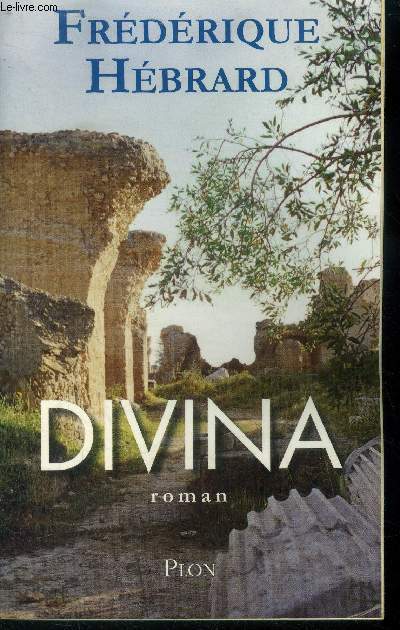
Plon. 2012. In-8. Broch. Bon tat, Couv. convenable, Dos satisfaisant, Intrieur frais. 246 pages.. . . . Classification Dewey : 840-Littratures des langues romanes. Littrature franaise
Reference : RO40013863
ISBN : 2259215157
Classification Dewey : 840-Littératures des langues romanes. Littérature française
Bookseller's contact details
Le-livre.fr / Le Village du Livre
ZI de Laubardemont
33910 Sablons
France
05 57 411 411
Payment mode


Sale conditions
Les ouvrages sont expédiés à réception du règlement, les cartes bleues, chèques , virements bancaires et mandats cash sont acceptés. Les frais de port pour la France métropolitaine sont forfaitaire : 6 euros pour le premier livre , 2 euros par livre supplémentaire , à partir de 49.50 euros les frais d'envoi sont de 8€ pour le premier livre et 2€ par livre supplémentaire . Pour le reste du monde, un forfait, selon le nombre d'ouvrages commandés sera appliqué. Tous nos envois sont effectués en courrier ou Colissimo suivi quotidiennement.
5 book(s) with the same title
Reference : alb31a55896dd2e0426
Hrytsko Boyko. Divo, Divo, Divina In Russian /Gritsko Boyko. Divo, divo, divina
Hrytsko Boyko. Divo, Divo, Divina In Russian /Gritsko Boyko. Divo, divo, divina K. Veselka 1979. 24 You are welcome to reach out to us for a detailed description of the copies currently available. Delivery of this book may take longer than usual including extended processing and pre-shipping time, no expedited shipping is available. Please advise us if you have a set date or a deadline to receive your order.SKUalb31a55896dd2e0426
Reference : alb265c34430bbd8484
Dante in the Centuries. La Divina Commedia in the Cultural Tradition of Europe
Dante in the Centuries. La Divina Commedia in the Cultural Tradition of Europe and Russia In Russian /Dante v vekakh. La Divina Commedia v kulturnoy traditsii Evropy i Rossii 2022. Dantes collection of texts in the centuries. La Divina Commedia in the cultural tradition of Europe and Russia includes the works of key Italian and Russian specialists in Dantes work. The book includes articles by the collections scientific consultant, Olga Sedakova, the exhibitions curator, Victoria Markova, leading Italian dentists Paolo Procacconi and Fernando Mazzocca, and many others. We have thousands of titles and often several copies of each title may be available. Please feel free to contact us for a detailed description of the copies available. SKUalb265c34430bbd8484.
Christus n° 187 - La lecture spirituelle, une aventure intérieure, L'acte de lire par Jean Louis Chrétien, La conversion par la lecture par François Marxer, Lectio divina et Talmud Thora par Dominique de La Maisonneuve, La lectio divina dans la vie
Assas éditions. Juillet 2000. In-8. Broché. Bon état, Couv. convenable, Dos satisfaisant, Intérieur frais. Paginé de 260 à 382.. . . . Classification Dewey : 200-RELIGION
Sommaire : La lecture spirituelle, une aventure intérieure, L'acte de lire par Jean Louis Chrétien, La conversion par la lecture par François Marxer, Lectio divina et Talmud Thora par Dominique de La Maisonneuve, La lectio divina dans la vie monastique par Renée Magaud Classification Dewey : 200-RELIGION


Christus n° 187 - La lecture spirituelle, une aventure intérieure, L'acte de lire par Jean Louis Chrétien, La conversion par la lecture par François Marxer, Lectio divina et Talmud Thora par Dominique de la Maisonneuve, La lectio divina dans la vie
Christus. Juillet 2000. In-12. Broché. Bon état, Couv. convenable, Dos satisfaisant, Intérieur frais. Paginé de 255 à 382.. . . . Classification Dewey : 248-Vie chrétienne et méditations
Sommaire : La lecture spirituelle, une aventure intérieure, L'acte de lire par Jean Louis Chrétien, La conversion par la lecture par François Marxer, Lectio divina et Talmud Thora par Dominique de la Maisonneuve, La lectio divina dans la vie monastique par Renée Magaud Classification Dewey : 248-Vie chrétienne et méditations
[The Divine Comedy]. The Divina Commedia of Dante Alighieri, Consisting of the Inferno - Purgatorio - and Paradiso
London A. Strahan for T. Cadell and W. Davies, 1802 Première édition. Première édition de la première traduction intégrale de la Divine Comédie de Dante en anglais. Reliure récente en plein cuir vert avec des étiquettes noires et des titres et détails dorés. Ces derniers sont impeccables. A l'intérieur, il s'agit d'une édition ex-bibliothèque de référence, avec quelques petits tampons de bibliothèque tout au long de l'ouvrage, mais assez discrets. Les pages sont un peu noircies, mais restent en très bon état. Une page (69/70) présente une déchirure fermée au coin de la page (n'affectant pas le texte). Portrait frontispice de Dante par R.H. Cromek d'après T. Stothard. Apparemment, une partie de la raison pour laquelle il n'y a pas eu de traduction anglaise antérieure, était que l'on pensait que les opinions catholiques de Dante seraient impopulaires ou non pertinentes dans l'Angleterre protestante. vi, [i], 408, 384, 420. Collation : Vol. 1 : [A]4 B-2C8 2D4 ; v.2 : A²( -A1) B-2B8 ; v.3 : [A]² B-2D48 2E²./ Errata : volume 3, pages 417-420.pages y compris l'index. 22cm x 14cm. Le tome 1 comprend "Une vue comparative de l'Inferno, avec quelques autres poèmes, relativement aux principes originaux de la nature humaine, sur lesquels ils sont fondés, ou auxquels ils font appel", "Essai historique de l'état des choses aux treizième et quatorzième siècles : en ce qui concerne l'histoire de Florence ; avec une vue de leur influence sur les âges suivants", "La vie de Dante d'après Leonardo Bruni", "Vue sommaire de la doctrine platonicienne, en ce qui concerne l'état futur. [La vie chrétienne de Scott, partie 1, chap. III, page 18-74, fol. edit."/ Inclut des références bibliographiques et un index. Conforme à WorldCat / OCLC : 11949837.
First edition thus. First edition of the first full translation of Dante's Divine Comedy into English. Recent full green leather binding with black labels and gilt titles and details. These are immaculate. Inside, this is an ex reference library edition, with a few small library stamps throughout, but quite unobtrusive. The pages are a little darkened, but still in very good condition. One page (69/70) has a closed tear to the corner of the page (not affecting text). Frontis portrait of Dante by R.H. Cromek after T. Stothard. Apparently part of the reason that there had not been a prior English translation, was because it was felt that Dante's Catholic views would be unpopular or irrelevant in Protestant England. vi, [i], 408., 384., 420. Collation: Vol. 1: [A]4 B-2C8 2D4; v.2: A²( -A1) B-2B8; v.3: [A]² B-2D48 2E²./ Errata: volume 3, pages 417-420.pages including index. 22cm x 14cm. Vol. 1 includes "A comparative view of the Inferno, with some other poems, relative to the original principles of human nature, on which they are founded, or to which they appeal," "Historical essay of the state of affairs in the thirteenth and fourteenth centuries: with respect to the history of Florence; with a view of their influence on the succeeding ages, " "The life of Dante from Leonardo Bruni, " "Summary view of the Platonic doctrine, with respect to a future state. [From] Scott's Christian life, part 1, chap. III, page 18-74, fol. edit."/ Includes bibliographical references and index./ Also issued online. Conforms to WorldCat / OCLC: 11949837. ,

