 Write to the booksellers
MANDEL (Tom) -
Erat -
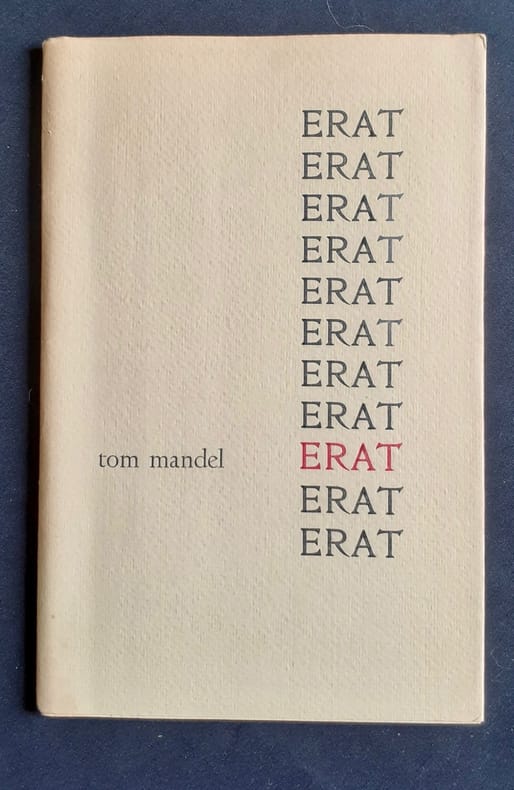
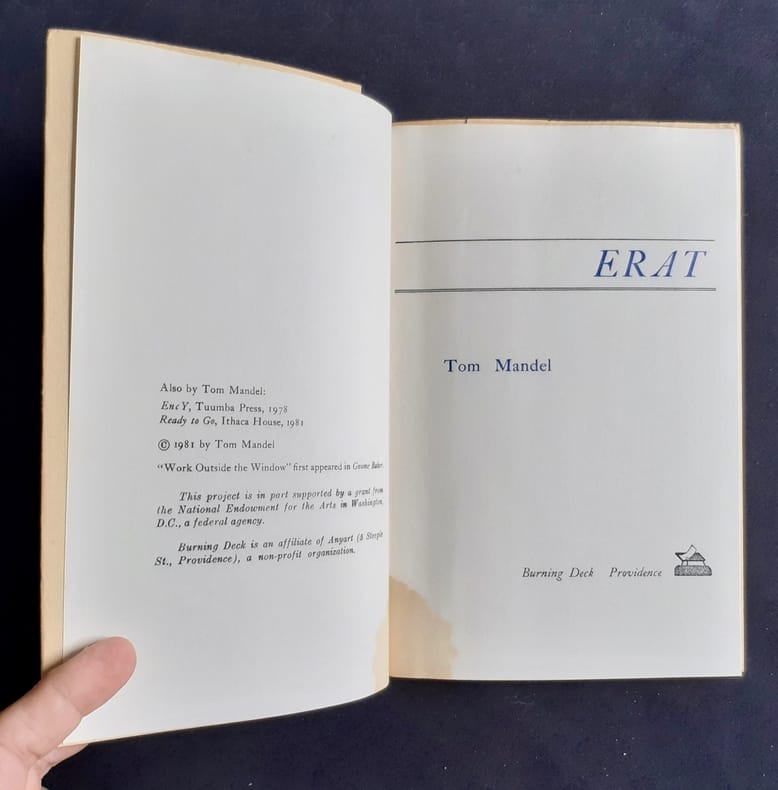
Providence : Burning Deck, 1981 - un volume 15,5x24cm agrafé de (32) pages - mouillure marginale sans atteinte au texte sinon bon état -
Reference : 41803
Tous nos livres sont visibles sur notre site : https://www.livrepoesie.com/
Bookseller's contact details
Le Livre à Venir
Mme et Mr. Florine et Richard Jaillet
41 Place de l'Oscambre
03140 Chantelle
France
06 44 78 76 58
Payment mode
Sale conditions
Règlement accepté : chèque, paypal, virement bancaire ou mandat. Nous garantissons l'état de nos livres conformes à la description donnée sur nos notices. Envoi de photographies sur demande. Les prix indiqués sont nets, port en sus à la charge de l'acquéreur. A réception de votre commande, vous recevrez une demande de règlement détaillée. Nous envoyons les ouvrages dans un délai de trois jours maximum, à réception de votre règlement par chèque,paypal, espèces ou virement bancaire. <br />
5 book(s) with the same title
Reference : alb2abf3c806030c0cc
Erat B., et al. The greenhouse in your house. In Russian /Erat B., i dr. Teplit
Erat B., et al. The greenhouse in your house. In Russian /Erat B., i dr. Teplitsa v vashem dome. Pen from Finnish, edition 2, reference M Stroyizdat 1994. You are welcome to reach out to us for a detailed description of the copies currently available. Delivery of this book may take longer than usual including extended processing and pre-shipping time, no expedited shipping is available. Please advise us if you have a set date or a deadline to receive your order.SKUalb2abf3c806030c0cc
Reference : alb2abf3c806030c0cc
Erat B., et al. The greenhouse in your house. In Russian /Erat B., i dr. Teplit
Erat B., et al. The greenhouse in your house. In Russian /Erat B., i dr. Teplitsa v vashem dome. Translated from Finnish, edition 2, reference M Stroyizdat 1992.Contact us for details or to request photos of available books. Delivery of this book could take longer than normal due to additional handling time before shipping, and no rush delivery options are available. Please let us know if you have a specific date by which you need to receive your order.SKUalb2abf3c806030c0cc
SCHELTE A BOLSWERT ( 1586 - 1659 ) - ( engraver ) - Gillis HENDRICX (? - 1677 ) ( editor ) - [ ] Engraving of Rubens' painting '' Et erat subditus iIllis'' ( The child Jezus walking between his parents Mary and
Reference : 53289
Original copper engraving of Rubens' painting '' Et erat subditus iIllis'' ( The child Jesus walking between his parents Mary and Joseph ). MODERN imprint.
Antwerpen, s.d. ( first half of 17th c.), original copper engraving, 450 x 330 mm. Modern imprint on strong '' Van Gelder & Zonen '' paper. Fine quality.
Geschiedkundige aanteekeningen rakende de Sint-Jans-Gilde bygenaemd de Peoene onder zinspreuk IN PRINCIPIO ERAT VERBUM
Mechelen 1862 H. Dierickx-beke zonen Soft cover
Langue: néerlandais. Notes historiques concernant la Confrérie de Saint-Jean surnommée le Peoene sous la devise IN PRINCIPIO ERAT VERBUM, 23 x 15 cm, couverture souple, 160 pages, en bon état.

Homo quidam erat diues, et induebatur purpura et bisso: et epulabatur quotidie splendidè. Et erat quidam mendicus nomine Lazarus, qui iacebat ad ianuam eius, ulceribus plenus: cupiens saturati de micis, quae cadebant de mensa diuitis, sed et canes veniebant, et lingebant ulcera eius. (Luc 16.19.). Gravure originale du XVIIe siècle
S. n. | s. l. [Hollande] (Circa 1600) | 32.50 x 27.50 cm | une feuille
Gravure originale réalisée au burin par Claes Jansz Visscher, dit le Piscator. Epreuve sur papier vergé filigrané, travail du début du XVIIe siècle. Il s'agit d'une illustration de l'Evangile selon Luc 16.19-21, "Il y avait un homme riche, qui était vêtu de pourpre et de fin lin, et qui chaque jour menait joyeuse et brillante vie. Un pauvre, nommé Lazare, était couché à sa porte, couvert d'ulcères, et désireux de se rassasier des miettes qui tombaient de la table du riche; et même les chiens venaient encore lécher ses ulcères."Légende en latin dans la partie inférieure de la gravure. Autre inscription en latin dans la partie supérieure droite de la planche: "Iesus apostolos docens de divite epulone parabolam dicit."Signature de l'artiste dans la planche.Mention "K" dans l'angle supérieur gauche dans la gravure, mention numérotée "1" dans l'angle inférieur droit dans la gravure, et mention manuscrite "80" en marge dans l'angle supérieur droit.Une annotation manuscrite ancienne en caractères grecs sous l'angle droit de la cuvette.Filigrane d'une couronne visible par transparence.Rares et infimes rousseurs marginales, petites taches angulaires sans atteinte à la gravure, sinon très bel état de conservation pour cette gravure extrêmement rare et d'une grande fraîcheur. - Photographies et détails sur www.Edition-Originale.com -


