 Write to the booksellers
HOBBES Thomas.
Elementa philosophica de cive.
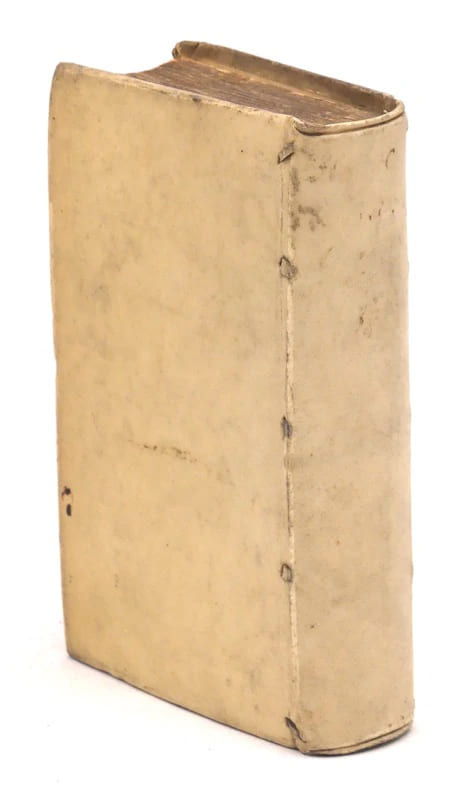
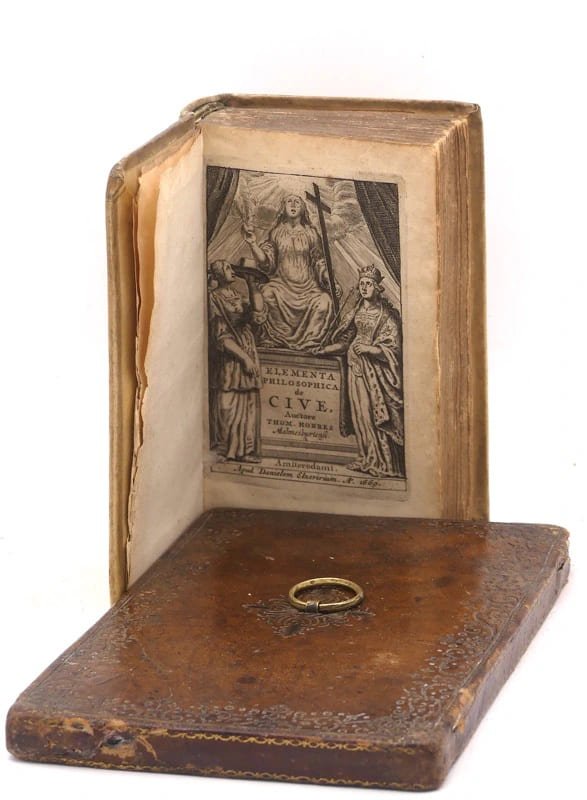
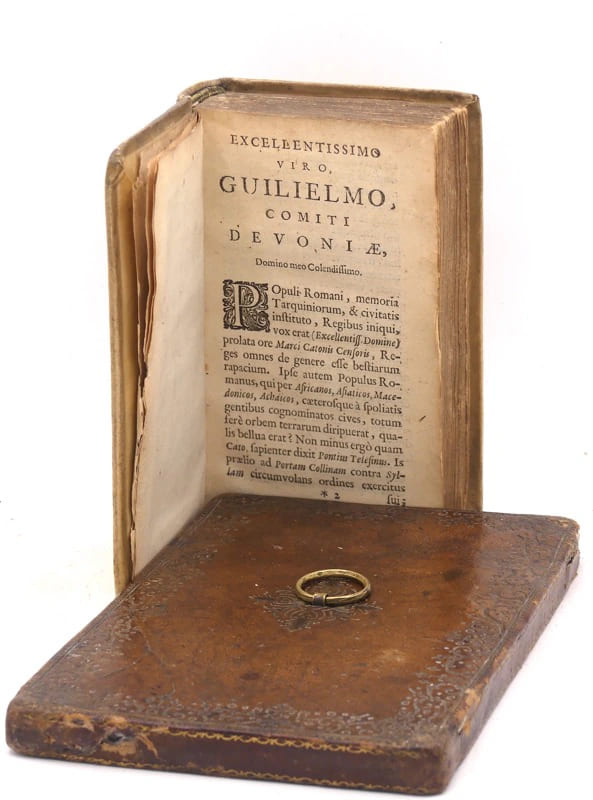
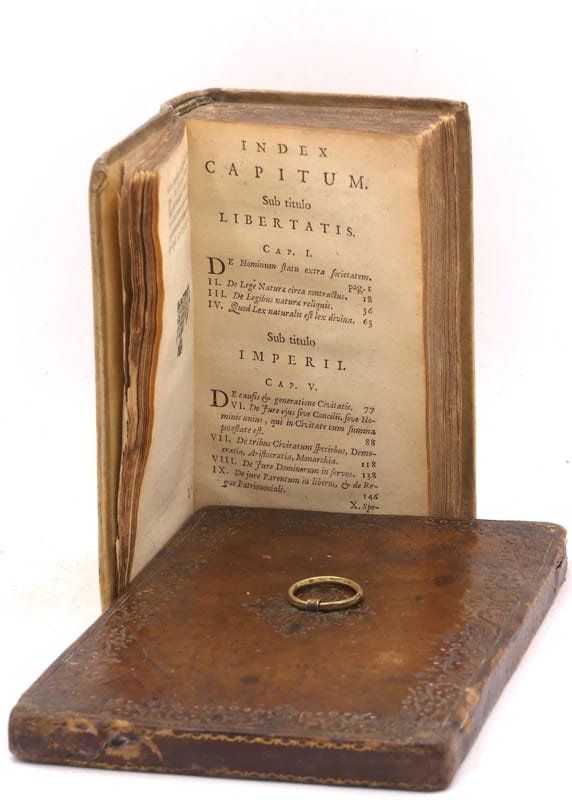
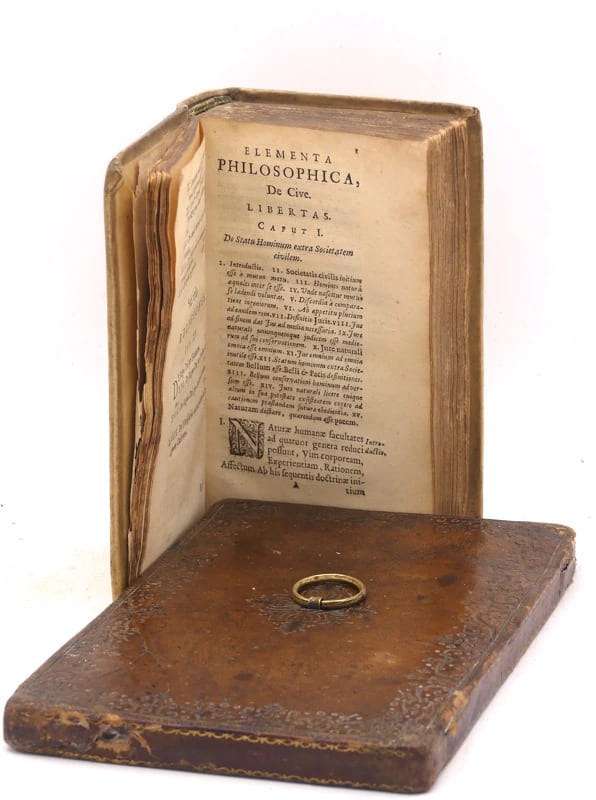
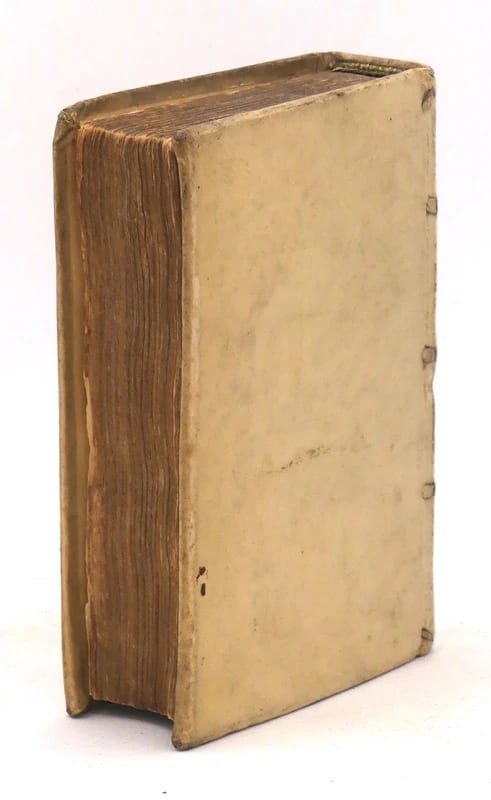
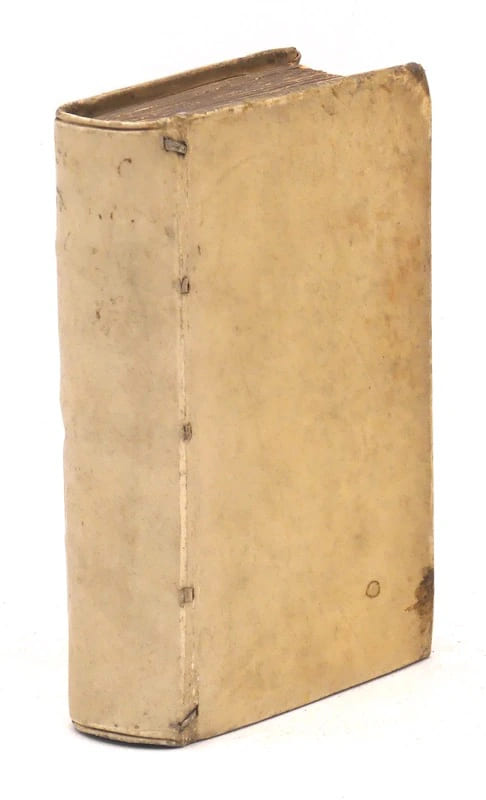
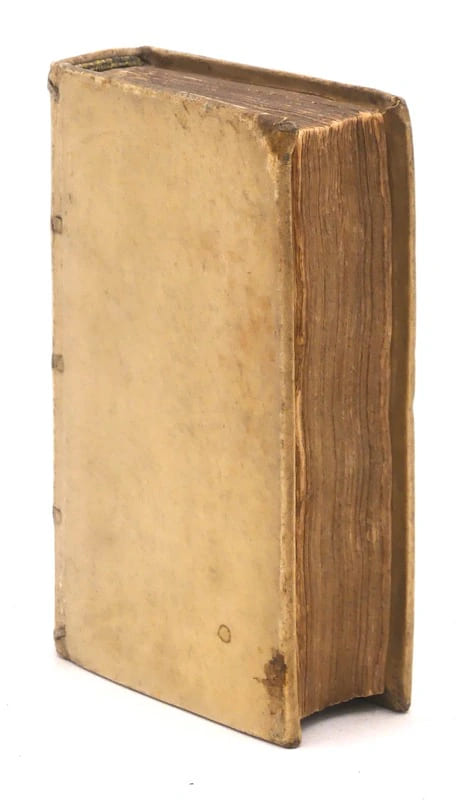
Amsterdam, Daniel Elzevier, 1669. In-12 (128 x 76 mm), 18 ff. n. ch., 403 pp., 2 ff. bl. Vélin, dos lisse (reliure de l'époque).
Reference : 10756
Une belle édition elzevirienne du "De Cive" de Hobbes. Cette quatrième édition elzevirienne reproduit textuellement les précédentes de 1647 et 1657. D'après Rahir, cette édition connut deux tirages la même année ; cet exemplaire appartient au tirage dont l'erreur de pagination a été corrigée (pages 215 et 229 chiffrées 125 et 129).Ce texte a été publié par Samuel Sorbière qui fut le secrétaire de Thomas Hobbes. Il est précédé d'une épître dédicatoire de l'auteur datée de 1646, d'une lettre-préface de Pierre Gassendi et de deux lettres de Sorbière à Gassendi et à Marin Mersenne. Cette édition comprend une table des chapitres et est illustré d'un frontispice gravé en taille-douce. Il représente trois figures allégoriques correspondant aux trois divisions de l'ouvrage : la liberté, l'empire et la religion. De Cive (Du Citoyen) est une des œuvres majeures du philosophe Thomas Hobbes. L'ouvrage comporte trois parties : Libertas (la liberté), Imperium (l'Empire), et Religio (la religion). Dans la première partie, il décrit l'état naturel de l'homme face aux lois naturelles ; dans la deuxième, il insiste sur la nécessité d'établir un gouvernement stable. Enfin, la troisième partie est consacrée à l'étude du rôle de la religion.Bel exemplaire en vélin de l'époque. Willems, Les Elzevier, n°1048, 1217 et 1406. Rahir, Catalogue de livres imprimés par les Elzevier, n°1477.
Bookseller's contact details
Librairie Pierre-Adrien Yvinec
M. Pierre-Adrien Yvinec
53, avenue de La Bourdonnais
75007 Paris
France
(0033) 143 674 644
Payment mode
Sale conditions
conformes à celles du Syndicat nationale de la Librairie Ancienne et Moderne
2 book(s) with the same title
Elementa Philosophica de Cive.
Amsterodami, Apud Ludovicum Elzevirium (Amsterdam, Elzevier), 1647. Engraved title. [48, including the engraved title], 403, [5] pp. 12mo. Eighteenth-century full red morocco, spine gilt in compartments, gilt lettering, gilt triple fillet on sides, all edges gilt, a bit rubbed. MacDonald & Hargreaves, 27; Willems 1048, stating that this particular edition was printed by Blaeu. One of three Elzevier editions from 1647, this being the one with a different engraved title, issued without the portrait of Hobbes present in the other two editions, but with the prefatory letters by Gassendi and Mersenne which are absent in the other two editions. The first edition was published in 1642 and is almost impossible to find, these 1647 editions being the first ones obtainable for a wider audiance. De Cive is the book were all the foundations for his later "Leviathan" are to be found: the observation "bellum omnium in omnes" (war of all against all) and the equally famous "homo homini lupus est" (man is a wolf to other man). It consists of three parts, the first treating the state of nature (entitled "libertas"); the second treats the necessity of the creation of a stable state or government (entitled "imperium"), and the final section, entitled "Religio" contains theological reflections and arguments in support of the first two sections.De Cive is one of Hobbes major works, the first edition, and this edition, were published in Latin, the first English edition appeared in 1651.Hobbes had planned to write a comprehensive philosophy in three sections: De Corpore, De Homine, and De Cive, in this order, but he wrote the last section first because the political situation in England seemed to him urgently to require it. De Cive was printed in such a limited number of copies that Gassendi declared they excited rather than satisfied thirst. The fact that the book was condamned in 1683 by the University of Oxford, and included in a Decretum of 16 June 1654 published at Rome testifies to the fact that the first edition was hardly known at the time. A second edition was published 5 years later in which edition he had inserted a number of notes in answer to objections and which included a weighty 'Preface to the Reader', giving the first distinct public intimation of the relation in which the treatise stood to a general philosophical scheme, and explaining the occasion of its appearance out of due order (MacDonald & Hargreaves). - Margins a bit short but not affecting text, the last blanks (R11-R12) preserved, a nice copy in red morocco.


(NVVA, )
Phone number : 31 20 698 13 75
Elementa philosophica de cive. Editio nova accuratior.
1647 In-12 (158 x 92 mm), plein veau marbré de l'époque, dos à nerfs orné de compartiments fleuronnés et cloisonnés, pièce de titre de maroquin bordeaux, tranche rouges, 490 p., (2) p. d'index et 16 p. de catalogue éditeur. Juxta exemplar Asterodami [Lausanne, François Grasset], 1760.
Bonne édition latine, bien complète de l'ensemble des pièces préliminaires et index, donnée par Samuel Sorbière. Publiée à Lausanne, chez François Grasset.

