 Write to the booksellers
Lydie Salvayre
La Déclaration
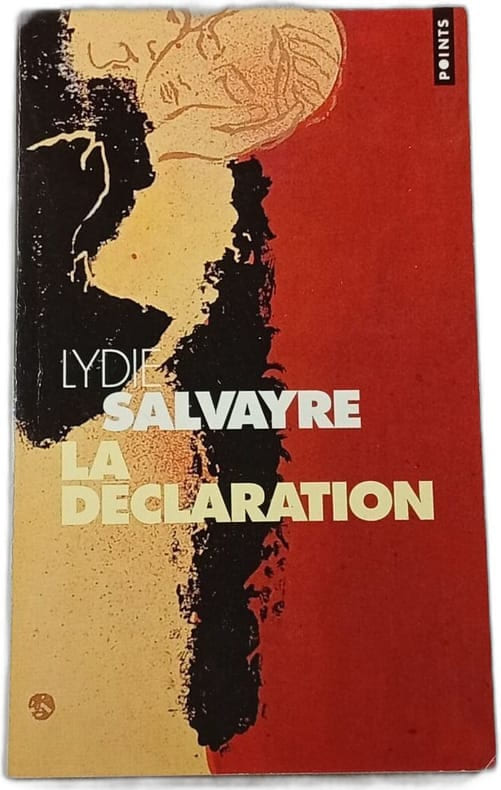
Points Sans date.
Reference : 500342749
ISBN : 9782020365185
Très bon état
Bookseller's contact details
Démons et Merveilles
M. Christophe Ravignot
contact@demons-et-merveilles.com
07 54 32 44 40
Payment mode

Sale conditions
Rapidité d'envoi Tous nos articles sont expédiés le jour même de la confirmation de la commande Soin de l'emballage Un soin particulier est apporté à l'emballage, vos objets voyagent en toute sécurité. A votre écoute Si toutefois un incident devait survenir lors de l'acheminement de votre paquet, n'hésitez pas à nous contacter, nous mettrons tout en oeuvre pour vous satisfaire, en vous proposant un retour, un remboursement ou toute autre soluton à votre convenance. Professionnalisme Les livres que nous vendons sont pour la plupart des livres anciens, nous tâchons d'être le plus objectif possible quant à leur état.
5 book(s) with the same title
[PARLEMENT D'AIX] ; [RIQUETTI MARQUIS DE MIRABEAU (Victor)] ; [PARLEMENT DE PARIS ; MAUPEOU (René-Nicolas de)] ; [GUÉRET (Louis-Gabriel)] ; [MENOUX (Joseph de)] ; [DUHAMEL (Jean)] ; [PARLEMENT DE PARIS] ; [GUÉNÉE (Antoine)]
Reference : 1558
Arrest de la cour du parlement de Provence du 30 octobre 1765 [SUIVI DE] Mémoire concernant l'utilité des états provinciaux, relativement à l'autorité royale, aux finances, au bonheur, & à l'avantage des peuples [SUIVI DE] Arrests, arrestés, et remontrances du Parlement au roi, au sujet des entreprises du Grand-Conseil. Du 27 novembre 1755 [SUIVI DE] Avis d'un docteur en Sorbonne au sujet de la déclaration du Roy, du 17 août 1750, et de la réponse du clergé de France [SUIVI DE] Notions philosophiques des vérités fondamentales de la religion. Ouvrage didactique d'un ordre nouveau dédié à sa Majesté le roi de Pologne, duc de Lorraine et de Bar. Nouvelle édition, revuë, corrigée et augmentée. [SUIVI DE] L'Art oratoire prétendu réformé, ou petit catéchisme à l'usage des disciples du vénérable Pejore [SUIVI DE] Objets de remontrances arrestés en parlement suffisamment garni de pairs, au sujet des vexations exercées contre plusieurs classes du parlement, notamment contre celle de Toulouse par le duc de Fitz-James [SUIVI DE] Lettre du rabin [sic] Aaron Mathathaï à Guillaume Vadé, traduite du hollandois par le lévite Joseph Ben-Jonathan, et accompagné des notes les plus utiles
Aix ; Rome [fausse adresse] ; s. l. ; Berlin [Paris] ; Nancy ; s. l. ; s. l. ; Amsterdam [Paris] : chez la veuve J. David, & E. David, imprimeurs ; apud Laurentem Carabioni, in via Sancta [fausse adresse] ; s. n. ; aux dépens de la compagnie ; chez les héritiers de N. Baltazard, imprimeur-librairie du Collège ; s. n. ; s. n. ; chez Abraham Root, 1765 ; 1750 ; 1755 ; 1751 ; s. d. ; 1716 ; s. d. (1764) ; 1765. TRÈS HUMBLES REMONTRANCES AU ROI ET À VOLTAIRE
In-12° (168 x 98 mm), 179 pp.; [1] f., 44 pp., [1] f. bl.; [1] f., 38 pp. (numérotées 1-40 avec saut dans la numérotation pp. 23-24), 128 pp.; 41 pp. numérotées 3-43 sans manque; 144 pp.; 63 pp.; 24 pp., demi-basane brune à coins, dos lisse orné, plats de papier marbré, tranches rouges. Recueil de 8 pièces du XVIIIe siècle réunies en un volume : droit, économie, religion, rhétorique. Trois des pièces sont des remontrances au roi Louis XV qui témoignent des conflits entre ce souverain et ses Parlements. L'ouvrage comprend également l'édition originale rare d'une pièce d'Antoine Guénée condamnant l'antisémitisme de Voltaire. 1) [PARLEMENT D'AIX] Arrest de la cour du parlement de Provence du 30 octobre 1765 Aix : chez la veuve J. David, & E. David, imprimeurs, 1765 179 pp. Édition originale. Réquisitoire de Le Blanc de Castillon, avocat général au Parlement de Provence, contre les Actes de l'Assemblée générale du clergé de France contre la religion : cette délibération condamnait plusieurs ouvrages anti-religieux des Lumières ainsi que le jansénisme, et revendiquait l'indépendance du ministère ecclésiastique quant aux « objets mixtes » (voeux de religions, sacrements...). Supprimés par le Parlement en septembre, les Actes sont toutefois défendus par Louis XV, qui demandait alors des subsides au clergé. Le virulent débat qu'ils suscitèrent, encore avivé par l'anti-jésuitisme, illustre les limites du gallicanisme et les tensions entre Parlement et gouvernement qui marquèrent le règne de Louis XV. Félix Rocquain, L'Esprit révolutionnaire avant la révolution, 1878. pp. 250-254. 2) [RIQUETTI MARQUIS DE MIRABEAU (Victor)] Mémoire concernant l'utilité des états provinciaux, relativement à l'autorité royale, aux finances, au bonheur, & à l'avantage des peuples Rome : apud Laurentem Carabioni, in via Sancta [fausse adresse, imprimé en France], 1750. [1] f., 44 pp., [1] f. bl. Édition originale, parue sans nom d'auteur, du premier traité du marquis de Mirabeau. Le futur physiocrate, encore nostalgique des valeurs nobiliaires féodales, y défend pourtant la décentralisation des pouvoirs : décrivant les états provinciaux comme un contrepoids à l'autorité royale, il encourage leur extension à l'ensemble du territoire. Retravaillé et augmenté pour les rééditions de 1757 et 1758, le Mémoire sur les états provinciaux est finalement intégré à la quatrième partie de l'Ami des hommes, « best-seller » qui fait la célébrité du marquis de Mirabeau. Deux éditions parues à la même adresse et à la même date diffèrent légèrement par le matériel et la composition typographique. 3) [PARLEMENT DE PARIS/ MAUPEOU (René-Nicolas de)] Arrests, arrestés, et remontrances du Parlement au roi, au sujet des entreprises du Grand-Conseil. Du 27 novembre 1755 s. l. n. n., 1755 [1] f., 38 pp. (numérotées 1-40 avec saut dans la numérotation pp. 23-24), 128 pp. Édition originale. Recueil de remontrances à Louis XV concernant la déclaration royale du 10 octobre 1755 indiquant que les actes du Grand Conseil seraient exécutoires sans l'autorisation des Parlements. La seconde partie du texte est signée par René-Nicolas de Maupeou qui, pour tenter d'apaiser les tensions entre le pouvoir royal et les Parlements, mena en 1771 une importante réforme judiciaire qui aboutit à la suppression du Grand Conseil et à la division du Parlement de Paris. 4) [GUÉRET (Louis-Gabriel)] Avis d'un docteur en Sorbonne au sujet de la déclaration du Roy, du 17 août 1750, et de la réponse du clergé de France Berlin [Paris] : aux dépens de la compagnie, 1751 41 pp. numérotées 3-43 sans manque. Édition originale de cet essai concernant la déclaration du roi (17 août 1750) exigeant la déclaration, dans un délai de six mois, des biens et revenus des bénéficiers du clergé de France. L'abbé Guéret s'y déclare favorable à l'imposition du clergé. Selon Stourm, l'ouvrage serait également paru, à la même date, sous le titre Mémoire sur l'exemption des subsides et impositions volontaire prétendue par le clergé de France. Barbier I, 364 ; Quérard (Supercheries) I, 970. 5) [MENOUX (Joseph de)] Notions philosophiques des vérités fondamentales de la religion. Ouvrage didactique d'un ordre nouveau dédié à sa Majesté le roi de Pologne, duc de Lorraine et de Bar. Nouvelle édition, revuë, corrigée et augmentée. Nancy : chez les héritiers de N. Baltazard, imprimeur-librairie du Collège, s. d. 144 pp. Cet ouvrage d'éducation religieuse avait paru pour la première fois sous le titre Défi général à l'incrédulité. Père jésuite nommé prédicateur du roi Stanislas de Pologne, Menoux entretint avec Voltaire, qui le qualifiait en privé de « faux frère », un amitié toute politique. Quérard (France Littéraire) VI, 45. 6) [DUHAMEL (Jean)] L'Art oratoire prétendu réformé, ou petit catéchisme à l'usage des disciples du vénérable Pejore s. l. n. n., 1716 63 pp. Édition originale. Critique, sous forme d'un dialogue socratique satirique, de l'oraison funèbre de Louis XIV prononcée par le père jésuite Porée (ici « Pejore »), maître et ami de Voltaire. Prononcée le 12 novembre 1715, cette oraison avait déjà fait l'objet d'une querelle entre Porée et Bénigne Grenan : ce-dernier avait lui aussi été chargé, au nom de l'université, de prononcer un éloge funèbre, et les deux orateurs s'étaient longuement et aigrement entre-critiqués. Jean Duhamel, professeur de rhétorique au collège de Gassins, composa plusieurs pièces contre Charles Porée. Feuillet de titre doublé. 7) [PARLEMENT DE PARIS] Objets de remontrances arrestés en parlement suffisamment garni de pairs, au sujet des vexations exercées contre plusieurs classes du parlement, notamment contre celle de Toulouse par le duc de Fitz-James s. l. n. n. n. d. (1764) 24 pp. Remontrances au roi Louis XV concernant l'intimidation du Parlement de Toulouse par le duc de Fitz-James. En 1763, le Parlement de Toulouse ayant refusé d'enregistrer de nouveaux impôts, le Roi envoya le duc de Fitz-James, lieutenant général commandant en chef pour le Languedoc, pour les contraindre à l'obéissance. Face à leur obstination, le duc fit renvoyer les magistrats chez eux et les mit aux arrêts. Le peuple comme les Parlements manifestèrent leur mécontentement, si bien que Louis XV retira les édits et leva la mise aux arrêts. Fitz-James, rappelé à Versailles, tomba quelque temps en disgrâce. « France. Parlement de Toulouse » Archives départementales de la Haute-Garonne, notice FRAD031_P_1267. 8) [GUÉNÉE (Antoine)] Lettre du rabin [sic] Aaron Mathathaï à Guillaume Vadé, traduite du hollandois par le lévite Joseph Ben-Jonathan, et accompagné des notes les plus utiles Amsterdam : chez Abraham Root [Paris : Laurent Prault], 1765 24 pp. Édition originale de cette lettre écrite sous pseudonyme par le prêtre et théologien Antoine Guénée, spécialiste de l'hébreu et du judaïsme. L'auteur y répond à une note de Voltaire sur le veau d'or (chapitre XII du Traité sur la tolérance). D'abord ignoré par Voltaire, ce texte reparut dans Lettres de quelques Juifs portugais, allemands et polonais, à M. de Voltaire (1769), ouvrage qui attira à la fois l'attention du public et celle du philosophe. Guénée n'eut de cesse de combattre l'antisémitisme de Voltaire et ce-dernier, piqué, finit par reconnaître avoir trouvé en Guénée un adversaire à sa mesure. « Le secrétaire juif, nommé Guénée, n'est pas sans esprit et sans connoissances, » écrivit-il à d'Alembert, « mais il est malin comme un singe, il mord jusqu'au sang en faisant semblant de baiser la main ». Ilana Zinguer, ?Sam Bloom. L'Antisémitisme Éclairé. Inclusion et Exclusion depuis l'Époque des Lumières jusqu'à l'Affaire Dreyfus. 2001. pp. 65-71. Coiffes manquantes, mors fendus. CCFR : L'Art oratoire prétendu réformé (Duhamel) : un seul exemplaire, La Rochelle. Lettre du rabin Aaron Mathathaï à Guillaume Vadé (Guénée) : 2 bibliothèques, BnF (Tolbiac et Arsenal). Petits manques aux mors et aux coins, coiffes absentes.


Déclaration du roi, qui accorde des délais pour compter à différents trésoriers & payeurs, & à l'adjudicataire des fermes générales.
Versailles, 1770. Feuillets in-4 imprimés, bandeaux et cul de lampe, 6 pages. Bon état
23 Arrêts, Lettres Patentes, Déclaration du Roi.
Rouen, Le Boullenger ou Oursel, 1777 à 1793. 23 imprimés in-4 de 4 à 28 pages cousues.
- Arrêt du Conseil du 21 juin 1777 cassant l'arrêt du Parlement de Rouen sur la perception des vingtièmes. - Déclaration du 14 décembre 1777 sur les Eaux et Forêts. - Lettres Patentes du 29 mai 1779 qui maintiennet Monsieur, Frère du Roi, dans la propriété et jouissance de la voierie ordinaire. - Déclaration du 30 septembre 1780 concernant les Gens de main-morte. - Letrres patentes du 18 juin 1790 sur les dégâts des terrains et marais déssechés de Paimboeuf (Basse-Loire). - Lettres patentes du 23 juin 1790 sur les noms des Villes, Bourgs et Villages qui peuvent quitter le nom du seigneur pour reprendre leur nom ancien. - Lettres patentes du 27 juin 1790 sur les crimes commis par les Députés à l'Assemblée Nationale. - Lettres patentes du 27 juin 1790 sur les délibérations des Corps administratifs. - Lettres patentes du 30 juin 1790 sur les prés soumis à vaine pâture. - Lettres patentes du 30 juin 1790 sur l'élection des Juges-Consuls. - Lettres patentes du22 juillet 1790 sur le recouvrement de l'Impot Patriotique. - Lettres patentes du 23 juillet 1790 sur les droits perçus sur les vente de poisson. - Lettres patentes du 25 juillet 1790 sur la vente des domaines nationaux. - Lettres patentes du 2 juillet 1790 sur l'activation des Corps administratifs. - Lettres patentes du 2 juillet 1790 sur les Foires franches. - Lettres patentes du 15 août 1790 sur les octrois de Noyon, Ham et Chauni. - Lettres patentes du18 août 1790 sur les droits à payer par les Bouchers, Cabaretiers, Aubergistes. - Lettres patentes du 18 août 1790 sur l'abolition du droit d'Aubaine et de Détraction. - Lettres patentes du 23 août 1790 sur la vente des Bois Nationaux. - Loi du 22 janvier 1792 sur la composition du second Bataillon des Gardes nationales volontaires de Seine inférieure. - Décret du 18 juin 1793 qui défend aux autorités de l'Eure d'exécuter aucuns Arrêtés.
Declaration of the Establishment of the State of Israel [in Hebrew]. In: Iton Rishmi [in Hebrew],Official Gazette of Israel. - [THE BIRTH OF ISRAEL]
Tel Aviv, 14 May 1948. Folio. (4) pp. Unbound as issued. In near perfect condition.
Scarce first printing of the Israeli Declaration of Independence, the seminal historical document that establishes the first Jewish state in 2.000 years. Contained in the first issue of the Official Gazette of the Israeli provisional government, this landmark publication was printed on the first day of the birth of Israel. A bound set of ""Iton Rishmi"" reprinting this historic publication was issued later the same year. Formally entitled the Declaration of the Establishment of the State of Israel, the Israeli Declaration of Independence was proclaimed on May 14 1948, by David Ben-Gurion, the executive head of the World Zionist Organization, chairman of the Jewish Agency for Palestine, and, shortly after, the first Prime minister of Israel. It declared the establishment of a Jewish state in Eretz-Israel, to be known as the State of Israel. ""The Land of Israel was the birthplace of the Jewish people. Here, their spiritual, religious, and national identity was formed. Here, they achieved independence and created a culture of national and universal significance. Here, they wrote and gave the Bible to the world.Exiled from Palestine, the Jewish people remained faithful to it in all the countries of their dispersion, never ceasing to pray and hope for their return and the restoration of their national freedom."" Thus begins the seminal historical document that constitutes one of the most important political ones of recent times. Immediately following the British army withdrawal earlier on May 14, war broke out between Jews and Arabs. Egypt launched an air assault against Israel that same evening. Despite a blackout in Tel Aviv-and the expected Arab invasion-Jews celebrated the birth of their new nation, especially after word was received that the United States had recognized the Jewish state. At midnight, the State of Israel officially came into being upon termination of the British mandate in Palestine. ""Using the American Declaration of Independence and the U.S. Constitution as philosophical frameworks, a small group of attorneys and politicians pieced together Israel's Declaration of Independence. Other important political decisions pertaining to Jewish statehood were left until the last minute: the location of the State's capital, its final name, and how to bring together several Jewish military organizations under one command. Military operations, particularly those around the Jewish settlement at Kfar Etzion, south of Jerusalem, diverted attention from final decisions about these matters. Also pressing on David Ben-Gurion, the head of the Jewish Agency and future first Prime Minister of Israel,was the request by President Truman's White House asking for a formal written request for recognition.On Friday, May 14, following some debate, the National Council, established to oversee the political needs of the Jewish community in Palestine, voted to accept the final text of the Declaration. That afternoon at 4 pm, David Ben-Gurion, head of the National Council, read the Declaration at the Tel Aviv Museum. Without electricity in Jerusalem, few there heard Ben-Gurion's words or the singing and playing of 'Hatikvah,' Israel's national anthem. That morning, Ben-Gurion, uncertain about the coming war with Arab states, had his secretary secure a safety deposit box at a local bank so that the Declaration could be immediately placed there for safekeeping. The Declaration was a synopsis of Jewish history to 1948 and a statement of Israel's intent toward its inhabitants, neighbors, and the international community. It was divided into four parts: 1) a biblical, historical, and international legal case for the existence of a Jewish state in the Land of Israel" 2) the self-evident right of the Jewish people to claim statehood 3) the actual declaration of statehood" and 4) statements about how the state would operate, including an enumeration of citizen rights. In keeping with the UN Resolution that provided international legitimacy for Jewish and Arab states in Palestine, the requirement to have a constitution was stated. Israel's objective to institute a constitution was postponed indefinitely in June 1950. Noteworthy similarities and differences exist between the American and Israeli Declarations of Independence. Both declarations assert independence and the right of their populations to control their own destinies, free from legislative impositions and despotic abuses. In the Israeli case, however, immediate past history was included, and it reflected earlier Jewish catastrophes and the prospects of potential physical annihilation. Both declarations sought self- determination, liberty, and freedom derived their claims based on human and natural rights, promised safeguards for the individual, and proclaimed an interest in commerce or economic growth. The Israeli Declaration of Independence contained a list of historical claims to the land of Israel. The Declaration cited benchmark historical events when the international community sanctioned the Jewish state's legitimacy, particularly the acknowledgement to build a national home given by the League of Nations (1922) and by the United Nations (1947) to establish a Jewish state. While there were skirmishes going on between Americans and the British when the American Declaration of Independence was signed in 1776, when Israel declared its independence it was in the midst of a full-fledged war for survival with the local Arab population and surrounding Arab states. The on-going war notwithstanding, the Israeli Declaration of Independence includes a declaratory statement offering ""peace and amity"" to its neighbors and the request ""to return to the ways of peace."" Both declarations made reference to a higher authority: the Israeli Declaration of Independence does not mention religion, but it closes with the phrase ""with trust in the Rock of Israel [Tzur Yisrael].""1 The choice of this phrase was Ben-Gurion's verbal compromise, made to balance strong secular and religious pressures. Any precise mention of religion might have required mention of religious practice, which could have created enormous social fragmentation in the early fragile years of the state. By contrast, the American Declaration of Independence appealed to the ""Supreme Judge, protection of the Divine."" (Ken Stein, 2008, from: israeled.org).
Déclaration des droits de l'Homme, et articles de Constitution présentés au roi, avec sa réponse du 5 Octobre soir. [Extrait des procês-verbaux de l'Assemblée Nationale, Des 20, 21, 22, 23, 24, 26 Aout & premier Octobre 1789. Déclaration des droit... - [""MEN ARE BORN AND REMAIN FREE AND EQUAL IN RIGHTS""]
Paris, Chez Baudouin, Imprimeur de l'Assamblée Nationale, 1789. 8vo. Bound in an exquisite later red half morocco with gilt spine. Top edge gilt. (1) f. (title-page), 8 pp. (""Déclaration des droits de l'Homme en société""), 6 pp. (""Articles de Constitution""), (1) f. (""Réponse du Roi""), (1) f. (blank). Woodcut head-pieces. Title-page slightly bowned, otherwise in excellent condition. A truly excellent copy.
The exceedingly scarce true first printing, in an incredibly rare form of off-print/separate printing, of one of the most important and influential documents in the history of mankind, namely the French Human Rights Declaration, containing also the articles for the first French Constitution. This groundbreaking publication constitutes a monumental change in the structure of the human world, providing all citizens with individual rights that we now take for granted. This monument of humanist thought appeared in the ""Procès verbal de l'Assemblée Nationale"", copies of which are also very difficult to obtain. There, however, the two parts appeared without a title-page and without the final blank, which together constitute a form of wrappers for this off-print/separate printing, of which only five or six other copies are known and which is present in merely one or two libraries world-wide. As far as we now, only one other copy has been on the private market, and that did not have the blank back wrapper. This exceedingly rare separate printing of the Human Rights Declaration, with the Constitution, was intended for the inner circle of those participating in its creation and was limited to a very restricted number of copies - all of which will have been owned by the creators of the Declaration. This epochal document is just as important today as it was when it was formulated during the French Revolution in 1789, and since 2003, the Declaration has been listed in the UNESCO Memory of World Register - ""This fundamental legacy of the French Revolution formed the basis of the United Nations Declaration of 1948 and is of universal value"". Few other documents in the history of mankind has done as much to determine the way we live and think, the way Western societies are structured and governed, and few other documents have had such a direct impact upon our constitutional rights and the way we view ourselves and others in society. It is here that we find the formulation of liberty and equality upon which so much of Western political and moral thought is based - that all ""men are born and remain free and equal in rights"" (Article 1), which were specified as the rights of liberty, private property, the inviolability of the person, and resistance to oppression (Article 2)" that all citizens were equal before the law and were to have the right to participate in legislation directly or indirectly (Article 6) no one was to be arrested without a judicial order (Article 7)" Freedom of religion (Article 10) and freedom of speech (Article 11) were safeguarded within the bounds of public ""order"" and ""law"", etc., etc.The content of the document that were to change the Western world for good emerged largely from the ideals of the Enlightenment. ""The sources of the Declaration included the major thinkers of the French Enlightenment, such as Montesquieu, who had urged the separation of powers, and Jean-Jacques Rousseau, who wrote of general will-the concept that the state represents the general will of the citizens. The idea that the individual must be safeguarded against arbitrary police or judicial action was anticipated by the 18th-century parlements, as well as by writers such as Voltaire. French jurists and economists such as the physiocrats had insisted on the inviolability of private property."" (Encycl. Britt.).The key drafts were prepared by Lafayette, working at times with Thomas Jefferson. In August 1789, Honoré Mirabeau played a central role in conceptualizing and drafting the Declaration. On August 26, 1789, in the midst of The French Revolution, the last article of the Declaration was adopted by the National Constituent Assembly, as the first step towards a constitution for France. ""In 1789 the people of France brought about the abolishment of the absolute monarchy and set the stage for the establishment of the first French Republic. Just six weeks after the storming of the Bastille, and barely three weeks after the abolition of feudalism, the Declaration of the Rights of Man and of the Citizen (French: La Déclaration des Droits de l'Homme et du Citoyen) was adopted by the National Constituent Assembly as the first step toward writing a constitution for the Republic of France.The Declaration proclaims that all citizens are to be guaranteed the rights of ""liberty, property, security, and resistance to oppression."" It argues that the need for law derives from the fact that ""...the exercise of the natural rights of each man has only those borders which assure other members of the society the enjoyment of these same rights."" Thus, the Declaration sees law as an ""expression of the general will,"" intended to promote this equality of rights and to forbid ""only actions harmful to the society."" (www.humanrights.com). This sensational document became the crowning achievement of the French Revolution"" it came to accelerate the overthrow of the ""Ancien Régime"" and sowed the seed of an extremely radical re-ordering of society. The Declaration interchanged the pre-revolutionary division of society -in the clergy, the aristocracy, and the common people- with a general equality - ""All the citizens, being equal in [the eyes of the law], are equally admissible to all public dignities, places, and employments, according to their capacity and without distinction other than that of their virtues and of their talents"" (From Article VI), upon which today's society is still based. It is hard to imagine a work that is more important to the foundation of the society that we live in today.

