 Write to the booksellers
Franzen Jonathan Lambrechts Rémy
Les Corrections
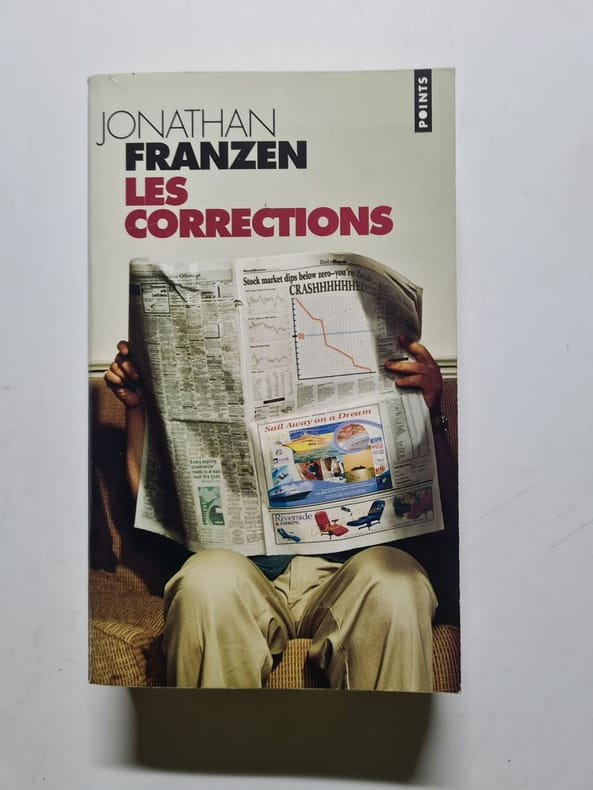
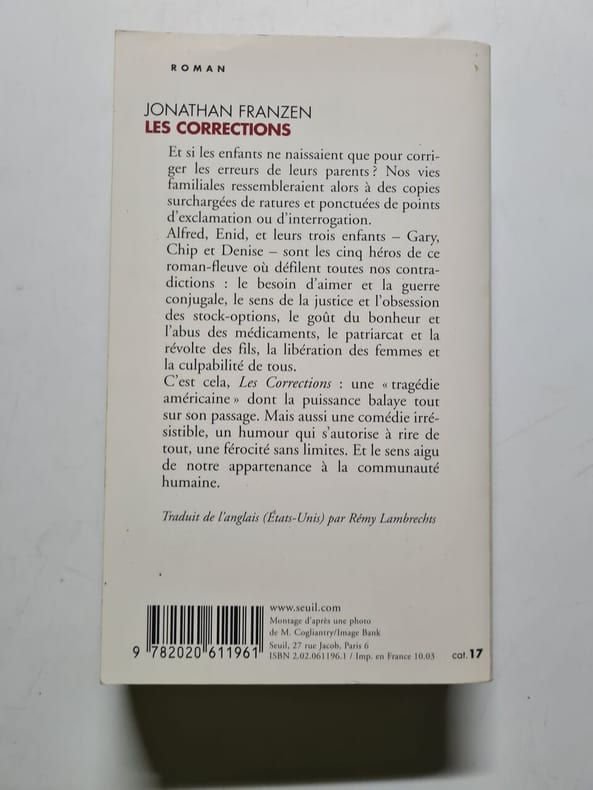
Le seuil / points 2003 693 pages poche. 2003. Broché. 693 pages.
Reference : 500252194
ISBN : 9782020611961
Bon état
Bookseller's contact details
Démons et Merveilles
M. Christophe Ravignot
contact@demons-et-merveilles.com
07 54 32 44 40
Payment mode

Sale conditions
Rapidité d'envoi Tous nos articles sont expédiés le jour même de la confirmation de la commande Soin de l'emballage Un soin particulier est apporté à l'emballage, vos objets voyagent en toute sécurité. A votre écoute Si toutefois un incident devait survenir lors de l'acheminement de votre paquet, n'hésitez pas à nous contacter, nous mettrons tout en oeuvre pour vous satisfaire, en vous proposant un retour, un remboursement ou toute autre soluton à votre convenance. Professionnalisme Les livres que nous vendons sont pour la plupart des livres anciens, nous tâchons d'être le plus objectif possible quant à leur état.
5 book(s) with the same title
Ayer y Hoy - exceptionnel exemplaire enrichi de corrections autographes, d'un envoi, de lettres autographes signées et documents divers.
Pio Baroja, Ayer y Hoy - exceptionnel exemplaire enrichi de corrections autographes, d'un envoi, de lettres autographes signées et documents divers. Santiago de Chile, Ediciones Ercilla, 1939. In-12, 245p. Edition originale de ce recueil d'articles et essais publiés depuis son exil en France. L'ouvrage est curieusement édité au Chili où réside toutefois une forte communauté espagnole et même basque espagnole. Pleine d'erreurs, une seconde édition est faite dès 1940, toujours par Ercilla, avec les corrections de Baroja. La famille possède toujours un exemplaire de l'édition de 1939 avec les corrections autographes de Baroja (conservé à la bibliothèque d'Itzea, maison natale de Pio Baroja). Notre exemplaire est enrichi d'un envoi autographe de Pio Baroja à Manoel Gahisto (1878-1948), un important traducteur des années 1910-1940 (du portugais et de l'espagnol vers le français principalement). « A mi querido amigo y colega Manoel Gahisto, Pio Baroja » [A mon cher ami et collègue]. Notre exemplaire est aussi enrichi de nombreuses corrections autographes de l'auteur. Nous en avons compté sur 47 pages : une ou plusieurs corrections par page, parfois purement typographiques, parfois intéressantes. Il serait probablement intéressant de comparer cet exemplaire avec celui conservé par la famille. Cette édition, en elle-même, est déjà rarissime. En dehors de l'exemplaire conservé par la famille, il ne nous a pas été permis d'identifier beaucoup d'exemplaires (un aux USA ?, Bibliothèque Nationale d'Espagne). Nous n'avons trouvé la trace d'aucun autre exemplaire passé sur le marché. Notre exemplaire est aussi enrichi de deux belles lettres autographes signées, une page A4 chacune, toujours à Manoel Gahisto. La première est datée du 6 juin 1939. Il le remercie pour un article d'Antonio Gellini, traduit par Gahisto, publié dans le Mercure de France du 1er juin 1939 (p.498-499). La seconde lettre, du 26 septembre 1939, mentionne notamment son voyage prochain en Argentine et son ami Antonio Gellini. Concernant Gellini : il avait publié dans la revue « Nosotros » de fevrier 1939 (seconde série, n°35) un article sur Pio Baroja. C'est cet article qui a été traduit (il était originellement en espagnol). On joint le manuscrit autographe de Gahisto de cette traduction, 12p A4. Le papier est ici très jauni, parfois affaibli. Gahisto avait récupéré les pages d'une revue pour écrire au dos. Ce qui est intéressant c'est que le Mercure de France ne l'a que très partiellement reproduit (moins de 2 pages dans la revue). Le manuscrit est signé Antonio Gellini mais il est bien de la main de Gahisto. On joint 4 brouillons de réponses de Gahisto. Un brouillon du 9 juin 1939, 2p A4 tapuscrites avec quelques lignes autographes à un ami (Roberto Giusti (1887-1978) ?), mentionnant la traduction de l'article de Gellini et la lettre de Pio Baroja du 6 juin. Un brouillon de la réponse à Pio Baroja, daté du 15 juin 1939, 1pœ A4, bords du papier jauni et affaibli. Deux brouillons différents de la réponse à Pio Baroja, datés du 13 octobre 1939 (2p A4) et du 14 octobre 1939 (3pœ in-8) autour de son livre « Ayer y Hoy ». Il a donc repris entièrement le premier texte. Ouvrage d'une grande rareté, truffé d'autographes de Baroja et autour de Baroja. Exceptionnel ensemble, UNIQUE.


Les Fleurs du mal Avec un exceptionnel envoi autographe à Paul Meurice et 20 corrections et ajouts autographes
Poulet Malassis & De Broise | Paris 1857 | 12 x 18.7 cm | relié sous étui
Édition originale, imprimée sur vélin dAngoulême, avec les coquilles habituelles et comportant les six poèmes condamnés, un des quelques exemplaires remis à lauteur et « destinés à des amis qui ne rendent pas de services littéraires ». Reliure en plein maroquin lie-de-vin, dos à cinq nerfs orné de multiples filets estampés à froid, couvertures dites de troisième état, plats encadrés de multiples filets estampés à froid, gardes et contreplats de papier marbré, dentelle intérieure dorée, toutes tranches dorées, étui de papier marbré bordé de maroquin, reliure signée Semet et Plumelle. Précieux exemplaire enrichi dun envoi autographe signé de lauteur à lencre sur la page de dédicace, adressé à Paul Meurice, dramaturge, journaliste et très proche collaborateur de Victor Hugo : « À Paul Meurice, témoignage damitié. Ch. Baudelaire » avec des corrections autographes de lauteur à la dédicace imprimée et à quatre poèmes : À la dédicace : deux corrections au crayon aux derniers mots de la première ligne. Baudelaire ajoute un pluriel à « ès langues françaises », « es » étant, en effet, la contraction de « en les ». Surprenante correction syntaxique au détriment de la cohérence que lauteur modifiera en 1861 par « Magicien es Lettres Françaises ». « La muse vénale », page 29 : une correction à lencre au dernier mot du dernier vers du premier tercet. « GuèreS » : une des premières coquilles corrigées par Baudelaire, qui lui avait pourtant échappé sur les épreuves, comme dailleurs la suivante. « Le chat », page 110 : une correction à lencre, au deuxième vers du sixième quatrain, « au » devient logiquement « un ». « Don Juan aux enfers », page 43 : trois corrections à lencre, au troisième vers du troisième tercet. La première, pourtant simple coquille, « errantS » avait déjà tourmenté Baudelaire sur les épreuves. Mais sa correction dalors navait pas été répercutée. Les deux autres, « les rivages », ne sont pas des corrections orthographiques mais constituent lune des deux premières variations poétiques, absente de la plupart des exemplaires offerts, annonçant la prochaine réécriture complète des Fleurs et la nouvelle édition originale de 1861. « Le reniement de Saint Pierre », page 217 : une correction au crayon au quatrième vers du deuxième quatrain. Le « D » qui remplace le « C » de « Cieux » est souligné trois fois. Pourtant, cest exactement linverse que nous dévoilent les épreuves, « Les Dieux » était alors corrigé par un « C » également énergiquement souligné ! Repentir anticlérical ou altérante allitération ? Cette correction, présente sur de rares exemplaires, attirera lattention du poète sur une autre coquille, restée intacte sur notre exemplaire, quil corrigera sur les envois tardifs : « au X doux bruit ». Baudelaire a également inscrit un large « C » au crayon, p. 52, 73, 91, 187, 191 et 206, en tête des six poèmes condamnés le 20 août 1857 à être expurgés des exemplaires en librairie. Il a reporté ce même « C. » sur la table des matières en regard des 6 titres incriminés : Les Bijoux, Le Léthé, À celle qui est trop gaie, Lesbos, Femmes damnées : À la pâle clarté et Les Métamorphoses du vampire. Soit en tout, 20 interventions autographes de Charles Baudelaire. * Lami prodigieux Cette exceptionnelle dédicace manuscrite de Charles Baudelaire à Paul Meurice, frère de substitution de Victor Hugo, porte le rare témoignage du premier échange entre les deux géants de la littérature française. Lhistoire ne retiendra en effet que quatre interactions majeures entre Charles Baudelaire et Victor Hugo : après une précoce mais médiocre entrevue en 1840 à la demande dun Baudelaire lycéen, le don des Fleurs du Mal, constituera la première rencontre réussie entre les deux poètes. Elle sera suivie, deux ans plus tard de la préface-controverse de Hugo sur Théophile Gautier. Enfin, en 1865, Baudelaire sollicitera une dernière fois Hugo afin de le faire intercéder auprès de Lacroix et Verboeckhoven, en vain. Quatre
Les Deux Masques. Les Antiques [ Texte du feuilleton avec importantes corrections autographes de l'auteur en vue de la publication en volumes ] (Tome I : Eschyle ; Tome II : Sophocle, Euripide, Aristophane, Calidasa)
2 vol. grand in-4 (format 38,5 x 23,5 cm en reliure) reliure demi-vélin blanc, Tome I : Eschyle : 189 ff. (avec les articles découpés, contrecollés sur feuillets et enrichis des corrections autographes) et 4 ff. (38e et 39e articles non contrecollés et repliés, sans annotations ; cette dernière partie correspond, dans la version en volume publiée en 1880, aux pages pp. 497 à 545) ; Tome II : Sophocle : 83 ff. ; Euripide : 49 ff. ; Aristophane : 67 ff. ; Calidasa. Le Théâtre indien : 16 ff. avec carton intercalaire annoté par Alidor Delzant avant chaque partie
Exceptionnelle réunion du texte, amendé des très nombreuses corrections autographes de Paul de Saint-Victor, de la version publiée en feuilleton des 2 premiers tomes de "Masques et Visages", en vue de la publication en librairie. Cet ensemble fournit ainsi l'intégralité des articles originaux, publiés en feuilleton plusieurs années durant dans le "Moniteur Universel", avec toutes les corrections et les enrichissements principaux (certains correction définitives, mineures, interviendront sur les épreuves finales). Les articles ont été soigneusement découpés et remontés par Paul de Saint-Victor sur de grands feuillets blancs lui laissant toute liberté pour amender et compléter son texte. On peut également lire le nom des différents secrétaires payés à la ligne pour la transcription du texte corrigé.Secrétaire et exécuteur testamentaire des frères Goncourt, Alidor Delzant (1848-1905) fut également l'exécuteur testamentaire du grand critique et écrivain Paul de Saint-Victor (1827-1881). Dans la monographie consacrée à ce dernier, Delzant nous fournit d'abondants détails éclairant les présents documents. Installé au 6 de la rue Furstemberg, Paul de Saint-Victor y avait entassé au second étage (d'où il pouvait observer l'atelier de Delacroix) ses livres, ses tableaux et objets d'art. "On peut dire de cette maison qu'elle a abrité jusqu'à la fin de leur vie, deux des artistes les plus vivement préoccupés de la lumière et de la couleur qui aient peint ou écrit dans notre temps". Paul de Saint-Victor "couvrait ses feuillets in-8 d'une écriture menue et tremblotante. Les lignes qu'il traçait avec hésitation grimpaient à l'ordinaire sur le papier". "La mort de Paul de Saint-Victor laissait inachevé le grand travail sur l'histoire du théâtre dont il avait publié le premier tome consacré à Eschyle. Le second, dans lequel il passait en revue les oeuvres de Sophocle, d'Euripide et d'Aristophane, était en cours de publication. Moitié de l'ouvrage, avec des corrections manuscrites avait été remise à l'imprimerie. Vingt feuilles étaient composées qui avaient été corrigées par l'auteur et qui avaient reçu de sa main le bon à tirer. Mais la suite du volume n'avait pas encore été livrée ; elle n'était même pas préparée [ ... ]". La famille confia alors la publication des oeuvres posthumes à trois personnes : Ernest Renan, le bibliophile Jacob (Paul Lacroix) et Alidor Delzant. "D'un amas de papiers, pâlis par l'humidité, rongés par les rats et que Paul de Saint-Victor avait accumulés pendant trente ans, dans une pièce obscure de son appartement, nous tirâmes, de notre mieux, une collection à peu près complète des articles qu'il avait publiés dans la presse. La fin du second volume des Deux Masques, dont les citations grecques furent soigneusement revisées sur les textes, fut donnée à l'éditeur, et le volume parut en 1882, une année environ après la mort de l'auteur".Ce magnifique ensemble provient de la propre bibliothèque d'Alidor Delzant (on découvre son bel et grand ex-libris en garde) qui a recueilli avec le plus grand soin tous ces articles très richement annotés. On y découvre en plein acte créateur l'un des plus beaux et des plus importants travaux de critique littéraire classique du XIXe siècle. Le dos du premier volume est fortement frotté en queue et en tête, et fendu partiellement sur un mors, un intercalaire inséré par Delzant est débroché, mais l'ensemble reste par ailleurs dans un très bon état).
Épreuves d'imprimerie avec corrections et additions autographes, Jérôme Cardan, Ma Vie, Pages magistrales...
86 pages in-8 numérotées à la main, dont 4 pages autographes, sous couverture cartonnée autographe. Épreuves de l'autobiographie de Girolamo Cardano (1501-1576) : Jérôme Cardan, Ma Vie, Pages Magistrales suivie de Préceptes pour mes fils, traduite du latin par Paul Le Gendre de l'Académie de Médecine, et Gilbert Lely. Ouvrage en réalité entièrement retravaillé et édité par Lely sur ce mathématicien, médecin, astrologue, physicien, inventeur, philosophe, etc., de la fin de la Renaissance italienne. En page 2, Lely a rédigé la Table autographe du livre ; en page 4, il a également rédigé un Avertissement autographe, qu'il signe de ses initiales : "Ces pages ont été publiées de janvier 1937 a janvier 1938 dans la revue Hippocrate dont j'étais le rédacteur en chef. La traduction de M. Paul Le Gendre, qui m'avait été remise par des héritiers, était très correcte [...] mais à l'état de brouillon". Il l'a retravaillée complètement et en a modifié la forme, mais il précise qu'il n'avait pas, à l'époque de la publication dans Hippocrate, fait figurer sa signature à côté de celle de Le Gendre: "On ne l'y rencontre qu'au bas des fragments de Jérôme Cardan parus dans le numéro des Cahiers G.L.M. consacré au Rêve et publié sous la direction d'André Breton en mars 1938". Les épreuves de sa Notice sur Jérôme Cardan comportent de nombreuses corrections, ajouts autographes et rajouts de paragraphes autographes. Le reste des épreuves comporte également quelques corrections et ajouts autographes, ainsi que des corrections typographiques. Bel ensemble montrant le critique-poète au travail... Photographies supplémentaires disponibles sur demande et envoyées par mail. Poids 200 g. Envoi Colissimo. Frais d'envoi 6,45 euros sur la France, 12,15 UE et Suisse, entre 16,20 et 23,70 euros pour le reste du monde, à spécifier selon zone. Possibilité de remise en mains propres sur Paris, n'hésitez pas à me contacter avant de passer commande.
Fascicule n° 1 des corrections apportées aux instructions nautiques D (IV) 1969
Service Hydrographique et Océanographique de la Marine 1972 22 pages in8. 1972. agrafé. 22 pages. Ce fascicule est une publication du Service Hydrographique et Océanographique de la Marine (SHOM) qui contient les corrections à apporter aux Instructions Nautiques documents essentiels pour la navigation maritime. Il s'agit d'un document technique officiel destiné à maintenir à jour les informations de sécurité en mer
Bon état

