‎‎
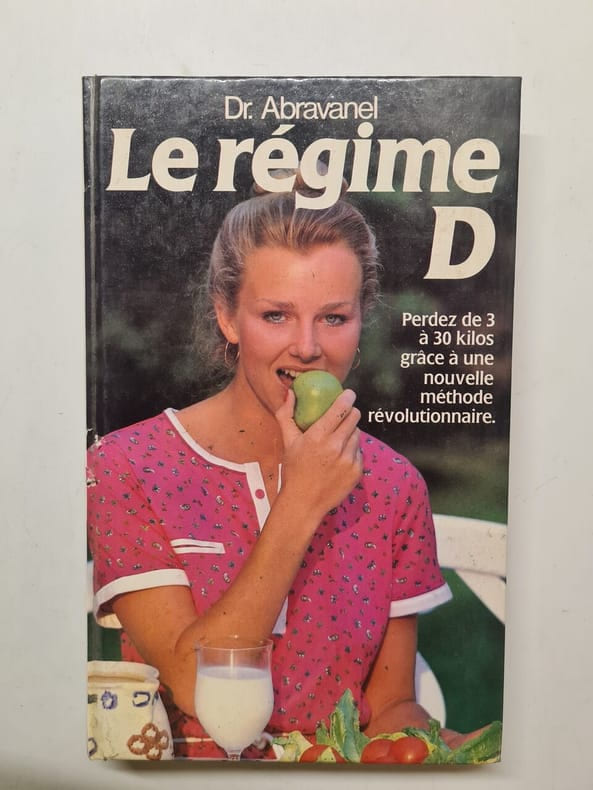
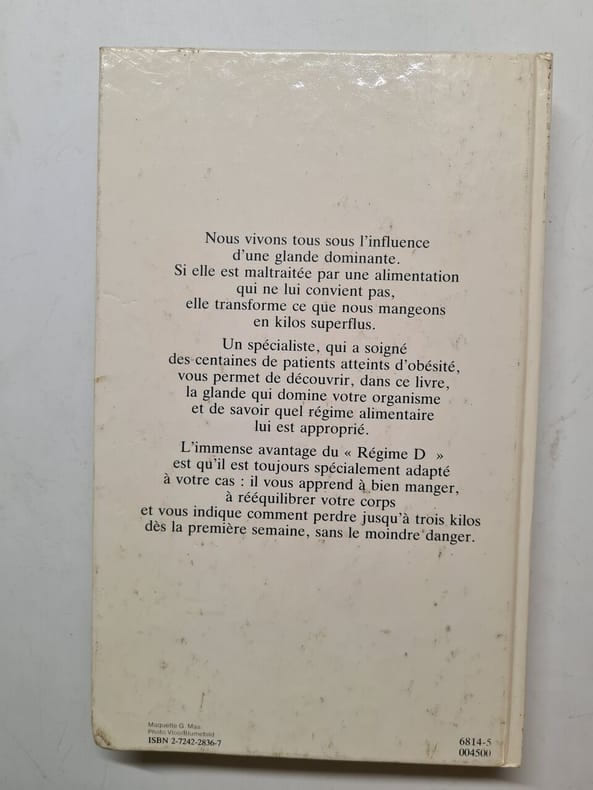
‎Le Régime D‎

‎ Sans date.‎

Reference : 500218911


‎Bon état‎

€4.00 (€4.00 )
Bookseller's contact details

Démons et Merveilles
M. Christophe Ravignot

contact@demons-et-merveilles.com

07 54 32 44 40

Contact bookseller

Payment mode
Cheque
Transfer
Others
Sale conditions

Rapidité d'envoi Tous nos articles sont expédiés le jour même de la confirmation de la commande Soin de l'emballage Un soin particulier est apporté à l'emballage, vos objets voyagent en toute sécurité. A votre écoute Si toutefois un incident devait survenir lors de l'acheminement de votre paquet, n'hésitez pas à nous contacter, nous mettrons tout en oeuvre pour vous satisfaire, en vous proposant un retour, un remboursement ou toute autre soluton à votre convenance. Professionnalisme Les livres que nous vendons sont pour la plupart des livres anciens, nous tâchons d'être le plus objectif possible quant à leur état.

Contact bookseller about this book

Enter these characters to validate your form.
*
Send

5 book(s) with the same title

‎J. McClellan III, F. Regourd;‎

Reference : 37992

‎Colonial Machine. French Science and Overseas Expansion in the Old Regime,‎

‎Turnhout, Brepols, 2012 Hardback, 696 p., 34 b/w ill. + 2 colour ill., 155 x 240 mm. ISBN 9782503532608.‎


‎The rise of modern science and European colonial and imperial expansion are indisputably two defining elements of modern world history. James E. McClellan III and Francois Regourd explore these two world-historical forces and their interactions in this comprehensive and in-depth history of the French case in the Old Regime presented here for the first time. The case is key because no other state matched Old-Regime France as a center for organized science and because contemporary France closely rivaled Britain as a colonial power, as well as leading all other nations in commodity production and participating in the slave trade. Based on extensive archival research and vast primary and secondary literatures and sharply reframing the historiography of the field, this landmark volume traces the development and significance for early-modern history of the Colonial Machine of Old-Regime France, an unparalleled agglomeration of institutions geared to the success of the French colonial enterprise, including the Royal Navy, the Academie Royale des Sciences, the Jardin du Roi, and a host of related specialist institutions working together at home and overseas. Mainly supported by the French state, the Colonial Machine reveals itself through its actions from the time of Colbert and Louis XIV as it grappled with fundamental problems facing contemporary European colonialism: cartography and navigation; medical care of sailors, colonists, and slaves; and applied botany and commodity production. Historians of globalization and European overseas expansion, of Old-Regime France, and of science in the seventeenth and eighteenth centuries will henceforth take this stimulating volume as a necessary starting point for further reflection and research. Languages : French, English.‎

ERIK TONEN BOOKS - Antwerpen

Phone number : 0032495253566

EUR77.00 (€77.00 )

‎Van Dievoet, Walter;‎

Reference : 7121

‎Edelsmeden in Vlaams-Brabant (Leuven, Aarschot, Diest en Tienen): tijdens het Ancien Regime en de negentiende eeuw,‎

‎, Leuven, van Dievoet, 2000, softcover originele ge llustreerde uitgeversomslag in kleur, 201 p., ill., merkt., biogr.‎


‎Leuvense edelsmeden tijdens het Ancien Regime - Aarschotse, Diestse en Tiense edelsmeden tijdens het Ancien Regime - Leuvense, Aarschotse, Diestse en Tiense edelsmeden in de negentiende eeuw. Boek is in nieuwstaat.‎

ERIK TONEN BOOKS - Antwerpen

Phone number : 0032495253566

EUR45.00 (€45.00 )

‎DIEVOET, W. VAN‎

Reference : 49620

‎Ieperse edelsmeden van het ancien regime.‎

‎, academie Brussel, 2016 Softcover,176 pagina's met talrijke afbeeldingen van keurmerken, NL tekst + resume Francaise.‎


‎Het naslagwerk der edelsmeden Ieper.Dit boek (176 blz., formaat 16 x 24 cm) is een studie van de edelsmeden van Ieper van het ancien regime. In de inleiding wordt een kort overzicht van de geschiedenis van de steden Ieper, Poperinge en Roeselare gegeven. Oorlogen hebben de stad Ieper meermaals verwoest. Hongersnood en epidemieen hebben de bevolking uitgedund. Voor zilverwerk was er nog weinig ruimte. Het werd door de overheid meer dan eens opgevorderd om de kosten van het leger en de versterkingen van de stad te dekken. Dit verklaart waarom het edelsmeedwerk van de oude periode zeldzaam geworden is. Het oudste bekende stuk stamt uit het midden van de zestiende eeuw. In deel II worden de stadsmerken besproken, waarbij de aandacht gaat naar de talrijke wijzigingen. Die waren het gevolg van de vele veranderingen van regime en bijgevolg ook van reglementering. Die was beurtelings Bourgondisch, Spaans, Frans, Oostenrijks, en telkens werden nieuwe stadsmerken gebruikt, aangepast aan het nieuwe bewind. Voor de jaarletter, die het jaar van de keuring van het zilverwerk aangeeft, werd ook telkens een nieuw alfabet begonnen bij elke verandering van regime. Na 1749 werd de jaarletter vervangen door de twee laatste cijfers van het jaartal. In de mate van het mogelijke geeft het boek voor elk jaar de foto van de stadsmerken met de jaarletter of laatste cijfers, in totaal 283 foto's. is nog bekend van 1525 tot 1750 dank zij de insculpatieplaten die bewaard worden in de Koninklijke Musea voor Kunst en Geschiedenis te Brussel. Het zijn koperen platen waarop de edelsmeden hun merk moesten slaan en hun naam graveren. Ze worden in de bijlage met foto's afgebeeld. Na 1750 zijn de bronnen eerder zeldzaam omdat het grootste deel van het archief aan parochieregisters, zeldzaam. Een aantal ervan konden nog gevonden worden dank zij de nota's van Arthur Merghelynck, die bewaard worden in de Koninklijke Bibliotheek van Brussel. De edelsmeden van Poperinge en Roeselare waren niet talrijk genoeg om de oprichting van een ambacht te rechtvaardigen. Ze moesten hun werken laten keuren te Ieper. Ze worden ook in het boek besproken. In bijlage wordt een alfabetische index van 122 meesters en een alfabetische index van hun 293 merken opgenomen, waardoor opzoekingen aanzienlijk vergemakkelijkt worden. Un resume et un index des marques en francais donne acces aux notices biographiques.‎

ERIK TONEN BOOKS - Antwerpen

Phone number : 0032495253566

EUR38.00 (€38.00 )

‎McLellan James E.‎

Reference : 65880

‎Old Regime France and its Jetons: Pointillist History and Numismatics‎

‎, Brepols, 2020 Hardback, xiii + 268 pages, Size:216 x 280 mm, Illustrations:73 b/w, 4 tables b/w., Language: English. ISBN 9780897223621.‎


‎Summary Non-monetary tokens known as jetons originated as counters used on medieval counting tables. In certain parts of France, the Low Countries, and German lands, they continued as such into the nineteenth century. The historical and numismatic interest in jetons stems more from what else they became, particularly though the end of the eighteenth century under the Bourbon monarchs, as perks of office for office holders in the burgeoning nation state of France, New Year's Day presents exchanged among certain segments of society, and lagniappe handed out for attendance at meetings in town halls, regional estates, and learned societies. Jetons figured in the rites and rituals of the guilds and faculties; they were swag for general meetings of the clergy, and they served as calling cards for noble families. Decoding hidden messages became a parlor game for cognoscenti, and as "petit monuments" some jetons are miniature works of high art produced by the world's most talented artists/engravers at the world's preeminent mint. In this book jetons serve as microdots in a pointillist, longue dur e account that paints a grand portrait of early modern and Old Regime France leading up to the French Revolution. Winner of the 2021 Numismatic Literary Guild Award for the best book on medals and tokens TABLE OF CONTENTS INTRODUCTION: HISTORIANS AND NUMISMATISTS 1. AN HISTORICAL OVERVIEW OF EARLY JETONS 2. OLD AND NEW IN THE OLD REGIME 3. GOVERNING BODIES 4. ASSIDUITY AND THE ACADEMIES 5. GUILDS AND YET OTHERS 6. AESTHETICS AND THE SPECIAL ROLE OF THE ACAD.MIE ROYALE DES INSCRIPTIONS ET BELLES-LETTRES 7. THE MONNAIE DES MEDAILLES CONCLUSIONS Glossary List of Figures and Tables Bibliography Index‎

ERIK TONEN BOOKS - Antwerpen

Phone number : 0032495253566

EUR102.00 (€102.00 )

‎DE MUNCK, Bert.‎

Reference : 20990

‎TECHNOLOGIES OF LEARNING. APPRENTICESHIP IN ANTWERP GUILDS FROM THE 15th CENTURY TO THE END OF THE ANCIEN REGIME.‎

‎Turnhout , Brepols, 2007 Pictorial softcover, illustrated cardboard, 175 x 250mm., 305pp., b/w illustration. ISBN 9782503522708.‎


‎The importance of training and education is on the increase. While the production of 'human capital' is seen as a motor for a competitive economy, skills and expertise proof to be necessary for social mobility. Remarkably, in conceiving modern forms of 'apprenticeship', several mechanisms from the acien regime, seem to return. The difference between public and private initiative is disappearing, education and training is being confused, and in order to acquire generic skills as flexibility, communicability, self-rule, creativity and so on, youngsters have to learn -in context-. Even for maths, scholars now talk of 'situated learning'. Before the advent of a formal schooling system, training took place on the shop floor, under the roof of a master. The apprentice not only worked but also lived in his master's house and was thus trained and educated at the same time. In cities, this system was formally complemented by an official apprenticeship system, prescribing a minimum term to serve and an obligatory masterpiece for those who wanted to become masters themselves. Traditionally, historians see this as an archaic and backward way of training, yet this book's aim is to show that is was instead a very flexible and dynamic system, perfectly in tune with the demands of an early modern economy. In order to understand it fully, however, we should differentiate the informal training system organised via a 'free market' of indentures on the one hand and the institutionalised system of craft guilds on the other. In Antwerp, early modern guilds had a project of 'emancipating' their members. They didn't simply produce certain skills, but through a system of quality marks defended the honour of craftsmen. This is the difference with current practices. By representing hands-on skills as superior, guilds supplied a sort of symbolic capital for workers. New book. ‎

ERIK TONEN BOOKS - Antwerpen

Phone number : 0032495253566

EUR65.00 (€65.00 )
Get it on Google Play Get it on AppStore
The item was added to your cart
You have just added :

-

There are/is 0 item(s) in your cart.
Total : €0.00
(without shipping fees)
What can I do with a user account ?

What can I do with a user account ?

  • All your searches are memorised in your history which allows you to find and redo anterior searches.
  • You may manage a list of your favourite, regular searches.
  • Your preferences (language, search parameters, etc.) are memorised.
  • You may send your search results on your e-mail address without having to fill in each time you need it.
  • Get in touch with booksellers, order books and see previous orders.
  • Publish Events related to books.

And much more that you will discover browsing Livre Rare Book !