 Write to the booksellers
Emmerling Leonhard
Pollock
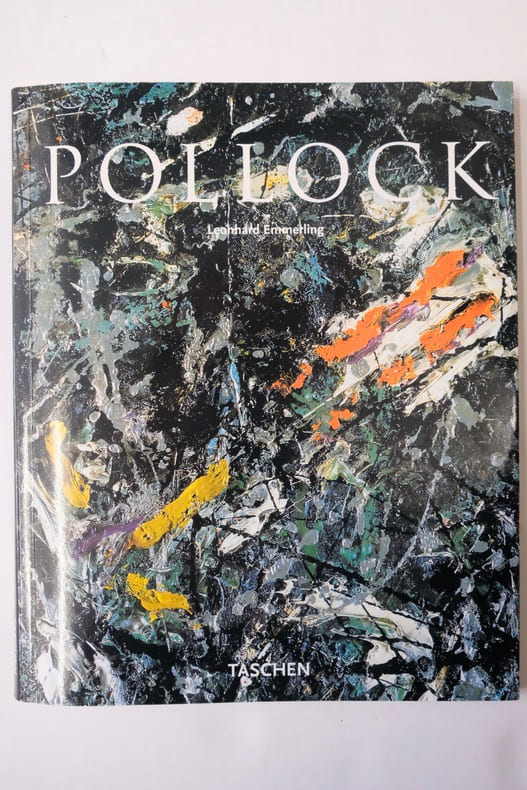
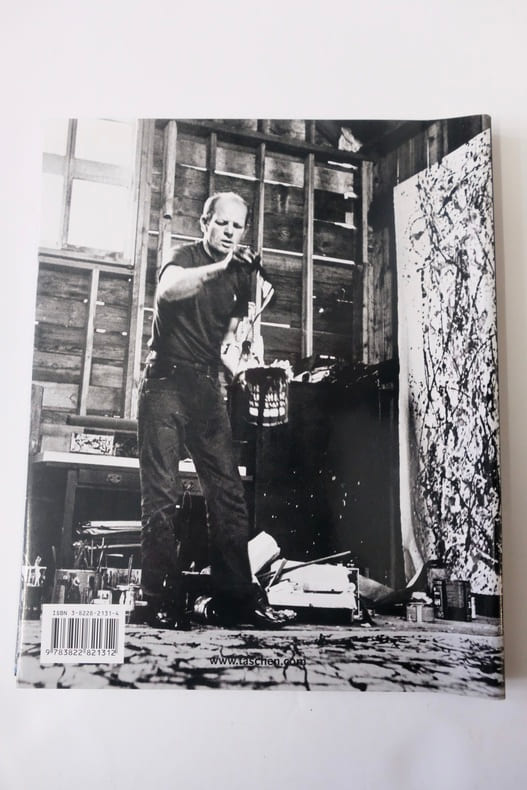
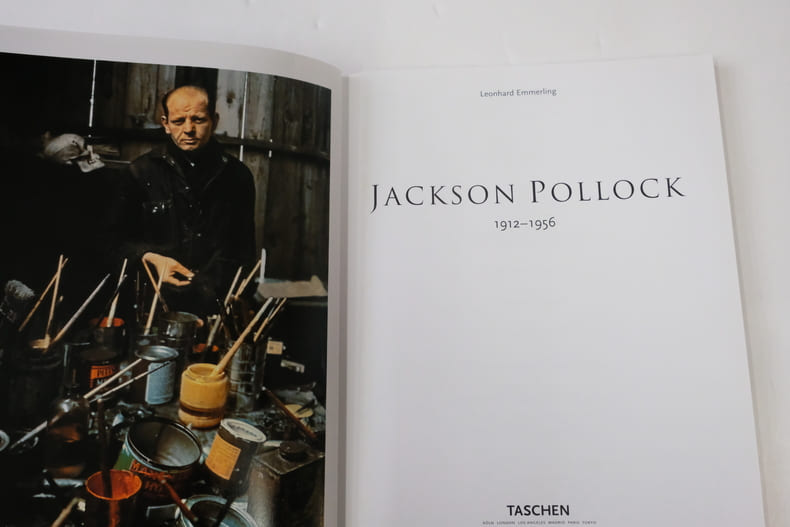
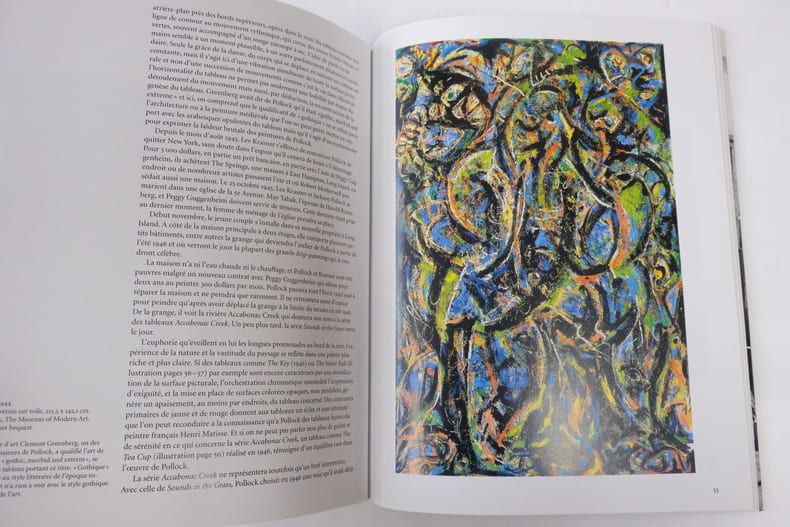
Éditions EVERGREEN. Broché, 96 pages, illustré en couleur, le livre est comme neuf.
Reference : art1441m
ISBN : 3822821314
Bookseller's contact details
Librairie du Levant
M. Yannick RENAUD
15 rue Marengo
64100 Bayonne
France
+33 5 59 03 69 40
Payment mode


Sale conditions
We accept payments in € by bank transfers, remote Credit Card, Paypal or checks. Checks made payable to and addressed to: Librairie du Levant 15 rue Marengo 64100 Bayonne France Bank transfers to: Banque Courtois, 1 pl du Réduit 64100 Bayonne / RIB / 10268 02696 62711600200 13 / IBAN / FR76 1026 8026 9662 7116 0020 013 / SWIFT BIC / COURFR2T PAYPAL via the address: librairiedulevant@orange.fr For any remote payment by Credit Card, informations communicated are automatically deleted as soon as payment is made and validated. Shipping upon receipt of payment. Member of the Syndicat des Libraires Anciens et Modernes (SLAM) and of the International League of Antiquarian Booksellers (ILAB), our sales are made according to the customs of the profession. All our books and objetcs are guaranteed to conform to the description which appears in each sheet; if, as a result of an error or an oversight, this was not the case, order will be taken back (within fifteen days) and reimbursed (including the costs of redirection), provided that it is returned in the same condition as the purchase. For obvious technical reasons (format, colors, cropping, viewing angle, etc.), the photographs presented on this site are not contractual. Our prices are in Euros, packaging included. Shipments, made under the responsibility of the buyers, are made by Colissimo Post, registered with insured value from € 50 and up to € 5,000 (delivery against signature, package tracking and insured value); for works less than 50 €, shipments are made by registered letter; works whose value exceeds € 5,000 must be sent by special carrier with insured value and delivery against signature. For any shipment outside mainland France, shipping and insurance costs remain the responsibility of the customer. Shipments are made under the same conditions set out above. Possibility to collect the orders on site. Do not hesitate to keep up to date with our news, finds, curiosities, catalogs and various thematic lists by leaving your contact details by email at librairiedulevant@orange.fr
5 book(s) with the same title
Jackson Pollock.
New York, Harry N. Abrams, (1989). Un fort vol. au format in-4 à l'italienne (267 x 307 mm) de 283 pp. Reliure d'édition de pleine percaline satinée olive, sous jaquette illustrée.
Textes en anglais. L'ouvrage s'agrémente d'une abondante iconographie. "Is Jackson Pollock the greatest living painter in the United States?" Life magazine startled its readers by asking in 1949. Seven years later, "Jack the Dripper," as Time magazine called him, was dead. Forty years later, Life's question no longer seems surprising, and Time's sarcastic phrase has lost its bite. But we may still wonder why the mass-circulation magazines singled Pollock out from his fellow Abstract Expressionists. How did he become a cult figure for the Beat Generation? And what caused his reputation to continue to soar? This compelling and original book locates the man and the artist in the continuum of his times, recreating the social and cultural milieu of New York in the 1940s and 1950s. Pollock's early years are chronicled, from his birth in the Wild West town of Cody, Wyoming, in 1912, through his prophetically troubled school years, marked by repeated expulsions, to his arrival in New York and periods of rewarding study with Thomas Hart Benton, David Alfaro Siqueiros, and Stanley William Hayter. Withdrawn, abrasive, often drunk, Pollock nevertheless attracted many other mentors: John Graham, the Russian-born artist whose theories were pivotal to the Abstract Expressionists; the French Surrealist émigrés who arrived during World War II; two highly supportive Jungian analysts; and, perhaps most important of all, Lee Krasner, a fellow artist (and later his wife), whose knowledge of art-world thinking and whose conviction of Pollock's genius were essential to his development. Key critics who recognized Pollock's achievement, such as Clement Greenberg and Harold Rosenberg, perceptive photographers, such as Hans Namuth and Arnold Newman, whose pictures of Pollock appeared in major publications, and other figures who made up Pollock's world are depicted here vividly and acutely.'' Coiffe supérieure de la jaquette légèrement plissée. Du reste, très belle condition.


Jackson Pollock.
(Paris), Centre Georges Pompidou / Musée national d'art moderne, (1982). Un fort vol. au format in-4 carré (278 x 281 mm) de 419 pp., broché.
L'ouvrage s'agrémente d'une abondante iconographie. ''Tous les points de vue rassemblés ici clarifient remarquablement les liens de Pollock avec la tradition moderne. Pour la première fois, des écrivains ont été soumis à la provocation de la peinture de Pollock : équivalents, affinités, démarquages, renoncements. Ces textes inédits situent le problème de l'Autonomie et des Correspondances. Celui aussi de l'indicible, des relations possibles ou impossibles que suscite pour chacun une oeuvre aussi difficile''. Dos très légèrement ridé. Du reste, très belle condition.
POLLOCK (Jackson) - DE KOONING (Willem) - MOTHERWELL (Robert) - GORKY (Arshile) - ROTHKO (Mark) - FRANCIS (Sam) - CASSOU (Jean) - McCRAY (Porter A.) - HUNTER (Sam) - KLINE (Franz) -
Reference : 45527
Jackson Pollock et la nouvelle peinture américaine -
Catalogue de l'exposition présentée au Musée national d'art moderne de Paris en janvier et février 1959. Un volume 20,5x24,8cm broché, de (84) pages illustrées de 24 planches hors texte en noir - Manques angulaires intérieurs (5x2cm) en quatrième de couverture sinon bon état. Exemplaire enrichi des cartons d'invitation au vernissage de l'exposition le 16 janvier 1959 et au cocktail donné à l'occasion de la présentation à la presse le 15 janvier. 4 coupures de presse concernant l'exposition.
Passionnantes coupures de presses exprimant la perplexité voire l'effroi des meilleurs critiques à l'égard de l'expressionnisme américain, dont 140 toiles et dessins furent présentés à l'occasion de cette première grande exposition européenne. Tous nos livres sont visibles sur notre site : https://www.livrepoesie.com/
Mon Pollock de père.
<meta charset="utf-8"><div class="chapo surlignable" data-mce-fragment="1"><p data-mce-fragment="1">Grand peintre américain, mais aussi professeur de calligraphie et de typographie, Charles Pollock, frère aîné de Jackson Pollock, n’aura laissé que peu de traces de l’existence de son œuvre avant de mourir à Paris. Sa fille, Francesca, et son épouse Sylvia, mettront alors vingt années à rassembler, archiver, faire connaître son travail et sa vie voilés par le silence et la discrétion. Pour quoi et pour qui s’être effacé? Quels sens donner aux toiles de Charles Pollock et à son silence? Aiguillonnée par ces questionnements, Francesca Pollock entreprend de (re)nouer un dialogue avec le père qu’elle a perdu à l’âge de 21 ans. La parole, qui fut si rare entre eux, est alors délivrée au moyen d’une écriture à plusieurs voix, celle de l’auteure, celle de Charles Pollock qui affleure des correspondances, de ses écrits et entretiens, mais aussi celle des œuvres du peintre et de ses contemplateurs qui «parlent» bien plus que tout autre chose.</p></div><div class="fichetech rub_1" data-mce-fragment="1"></div> Paris, 2022 L'Atelier contemporain 176 p., illustré, broché. 16 x 20
Neuf
[Jackson Pollock] - O'Connor, Francis Valentine ed
Reference : 053062
(1995)
ISBN : 0964463903
Supplement Number One. Jackson Pollock. A Catalogue Raisonnà of Paintings, Drawings, and Other Works.
O'Connor, Francis Valentine ed: Supplement Number One. Jackson Pollock. A Catalogue Raisonnà of Paintings, Drawings, and Other Works. Pollock-Krasner Foundation, 1995. Cloth.

