 Write to the booksellers
-
Type
Book (25717)
Magazine (105)
-
Latest
Last 24h (1)
Last 3 days (2)
Last month (72)
Last week (9)
-
Language
Dutch (1)
English (3)
French (25816)
German (1)
Italian (1)
-
Century
16th (17)
17th (31)
18th (135)
19th (1219)
20th (15280)
21st (2635)
-
Countries
Belgium (1308)
Canada (2)
Côte d'Ivoire (23)
Denmark (35)
France (23498)
Germany (1)
Greece (1)
Switzerland (954)
-
Syndicate
ALAC (2)
CLAM (3)
ILAB (17348)
NVVA (259)
SLACES (259)
SLAM (16741)
SNCAO (1)
Seeing the Invisible in Late Antiquity and the Early Middle Ages <br>Papers from "Verbal and Pictorial Imaging: Representing and Accessing Experience of the Invisible, 400-1000" (Utrecht, 11-13 December 2003)
, Brepols - Harvey Miller, 2005 Hardcover. XII 546 p., 99 b/w ill. 11 colour ill., 160 x 240 mm, Languages: English, Fine copy. Including an index. ISBN 9782503517599.
Limiting itself to the vital centuries when the late Roman West reshaped itself into a first "Europe," the conference explored the dominant conception of human nature in that era: that human existence was both body (in the visible world of material things) and soul (in the invisible world of spirit). This was a legacy of pre-Christian elements handed down from Greek philosophy and Hebrew Scriptures. Assimilating it to indigenous cultures in the Roman West, many alien to the ancient Mediterranean world, precipitated sea-changes in the understanding of human psychology. Ensuing frictions sparked extraordinary expressions of creativity in words and visual images. It also created dangerously subversive disequilibriums in the collective mentality within elites and between them and majority cultures. The papers in this volume investigate numerous configurations of a new culture taking shape in that volatile environment. They contribute to continuing debates about the cognitive co-ordination of words and pictorial images, and to cross-disciplinary dialogues in such disparate fields as art history, religious literature, mysticism, and cultural anthropology.
L'oeuvre mathématique de G.Desargues - Collection Bibliothèque de philosophie contemporaine.
Presses Universitaires de France. 1951. In-8. Broché. Etat d'usage, Couv. convenable, Dos satisfaisant, Papier jauni. 232 pages - quelques figures en noir et blanc dans le texte.. . . . Classification Dewey : 100-PHILOSOPHIE ET DISCIPLINES CONNEXES
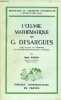
Collection Bibliothèque de philosophie contemporaine - textes publiés et commentés avec une introduction biographique et historique par René Taton. Classification Dewey : 100-PHILOSOPHIE ET DISCIPLINES CONNEXES


PSYCHOPATHOLOGIE GENERALE - DEUXIEME EDITION REVUE ET AUGMENTEE - LE PSYCHOLOGUE COLLECTION DIRIGEE PAR P. FRAISSE
PUF. 1967. In-8. Broché. Bon état, Couv. légèrement passée, Dos satisfaisant, Intérieur acceptable. 292 pages.. . . . Classification Dewey : 150-Psychologie
Classification Dewey : 150-Psychologie
FEMME ET MYTHE
FLAMMARION. 1982. In-8. Broché. Bon état, Couv. convenable, Dos satisfaisant, Intérieur frais. 341 pages, couverture rempliée.. . . . Classification Dewey : 150-Psychologie
Classification Dewey : 150-Psychologie
Aide-mémoire de psychiatrie
A. Maloine | Paris 1914 | 13.50 x 19.50 cm | broché
Edition originale. Petites éraflures sans gravité sur les plats qui sont marginalement insolés, quelques rares piqûres. Etiquette de remise en vente à la librairie J. Gibert. Rare. - Photographies et détails sur www.Edition-Originale.com -
TECHNIQUES DE L'EXPRESSION / COLLECTION AURORES.
AUX PRESSES D'ILE DE FRANCE. 1964. In-8. Broché. Bon état, Couv. convenable, Dos satisfaisant, Intérieur frais. 238 pages - quelques figures et illustrations en noir et blanc dans et hors texte - petite annotation au stylo bleu sur la page de garde.. . . . Classification Dewey : 150-Psychologie
COLLECTION AURORES - Avec la collaboration de J.Bouffort et L.Jean Baptiste. Classification Dewey : 150-Psychologie
Temps et désir du psychanalyste
InterEditions L'Analyse au singulier Broché 1986 In-8 (14,1 x 20,5 cm), broché, 288 pages ; quelques petites traces sur les plats, bon état. Livraison a domicile (La Poste) ou en Mondial Relay sur simple demande.
Temps et désir du psychanalyste - Collection l'analyse au singulier.
InterEditions. 1986. In-8. Broché. Bon état, Couv. convenable, Dos satisfaisant, Intérieur frais. 288 pages.. . . . Classification Dewey : 150-Psychologie
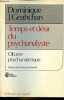
Collection l'analyse au singulier - Préface de Monique Schneider. Classification Dewey : 150-Psychologie
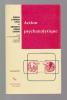
Action psychanalytique,
Minuit, Arguments, 1980, 335 pp., broché, bon état. Bibliothèque Guy Rosolato.
GEAR MARIA CARMEN ET LIENDO ERNESTO CESAR
Reference : RO20208611
(1974)
ISBN : 2707300381
SEMIOLOGIE PSYCHANALYTIQUE
LES EDITIONS DE MINUIT. 1974. In-8. Broché. Bon état, Couv. convenable, Dos satisfaisant, Intérieur frais. 386 pages augmentées de quelques illusrations en noir et blanc. . . . Classification Dewey : 100-PHILOSOPHIE ET DISCIPLINES CONNEXES
AVEC LA COLLABORATION DE LUIS J. PRIETO - TRADUIT PAR D. GLAUSER ET M. TULIEN Classification Dewey : 100-PHILOSOPHIE ET DISCIPLINES CONNEXES
Semiologie psychanalytique. Collection : Arguments.
Paris, les Editions de Minuit, 1975. 13 x 22, 389 pp., 52 figures, broché, bon état.
"Avec la collaboration de Luis J. Prieto; traduit de l'espagnol par Marie Tulien et Daniel Glauser."
GEAR (Maria Carmen) et LIENDO (Ernesto Cesar) avec la collaboration de PRIETO (Luis J.).
Reference : 59060
(1974)
ISBN : 2707300381
Sémiologie psychanalytique.
Paris Editions de Minuit, coll. "Arguments" 1974 1 vol. broché in-8, broché, 389 pp., figures in-texte. Petite ride au dos, sinon bon état. Traduit de l'espagnol par Marie Tulien et Daniel Glauser. Edition originale française.
Gear Maria Carmen & Liendo Ernesto Cesar
Reference : R100050037
(1974)
ISBN : 2707300381
Semiologie psychanalytique - Collection arguments.
Les éditions de minuit. 1974. In-8. Broché. Etat d'usage, Couv. légèrement passée, Dos satisfaisant, Papier jauni. 389 pages - quelques figures en noir et blanc dans le texte - mouillures sur les tranches, le dos et sur le 2ème plat - 1er plat frotté. . . . . Classification Dewey : 150-Psychologie
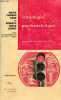
Collection arguments - avec la collaboration de Luis J.Prieto - traduit de l'espagnol par Marie Tulien et Daniel Glauser. Classification Dewey : 150-Psychologie
Gear Maria Carmen & Liendo Ernesto Cesar
Reference : R100054648
(1974)
ISBN : 2707300381
"Sémiologie psychanalytique - Collection ""arguments""."
Les éditions de minuit. 1974. In-8. Broché. Etat d'usage, Couv. légèrement passée, Dos satisfaisant, Intérieur frais. 389 pages - petite annotation sur la page de titre - nombreuses figures en noir et blanc dans le texte.. . . . Classification Dewey : 150-Psychologie
"Collection ""arguments"" - Avec la collaboration de Luis J.Prieto - traduit de l'espagnol par Marie Tulien et Daniel Glauser. Classification Dewey : 150-Psychologie"
L'Attitude qui en impose, et comment l'acquérir.
LIBRAIRIE DES NOUVEAUTES MEDICALES. Non daté. In-8. Broché. Bon état, Couv. défraîchie, Dos plié, Intérieur frais. 316 pages. Quelques illustrations en noir et blanc dans le texte.. . . . Classification Dewey : 155.2-Psychologie individuelle
Classification Dewey : 155.2-Psychologie individuelle
L'attitude qui en impose et comment l'acquérir
Paris-Leipzig, Librairie des Nouveautés Médicales s.d.[+/- fin 19e s.] [vi +] 316pp., reliure demi-toile (plats marbrés), 1e éd., peu de rousseurs, bel état
Moines et Papes. Essai de psychologie historique.
Librairie Hachett, 1928 ( 9e. édition ). In-8 couronne, broché, couverture unie titrée en noir, 306 pages(2ff), Très petites imperfections. Belle tenue. Très propre.
Mise à jour du Samedi 27 Juin 2026. Paiement PayPal immédiat, Mondial Relay pour : France, Allemagne, Autriche, Belgique, Espagne, Italie, Portugal, Luxembourg, Pays-Bas, Pologne (Communiquer votre point ou locker si connu). Une participation supplémentaire peut être demandée pour les colis lourds hors France où les envois compris entre 5 et 25 kg sont dégressifs : 2 à 4 kilogrammes - 7.99 / 5 à 10 kg - 15.99 / 15 -25 kg - 25.99. Certaines de nos collections ( Vian, Céline, Camus (...) peuvent être expédiées en Franco de port. Pour linternational hors Europe (Suisse, Canada, Japon, Etats-Unis, les frais dexpéditions peuvent varier selon le poids (mise à jour : 1 juin 2026).
Moines et papes. Essais de psychologie historique. Un moine de l'an 1000. Sainte Catherine de Sienne. Les Borgia. Le dernier pape-roi.
Paris, Hachette 1909 - in-12,broche, 306 pp.,bon état
5e edition, Remise de 20% pour toutes commandes supérieures à 200 €
Moines et papes : Essais de psychologie historique
Librairie Hachette et Cie Relié 1907 In-12 (12,8 x 19 cm), belle reliure demi-chagrin, dos à 5 nerfs, bel ex-libris au verso du premier plat, gardes couleurs, couverture conservée, 306 pages ; papier jauni, par ailleurs très bon état général. Livraison a domicile (La Poste) ou en Mondial Relay sur simple demande.
Moines et papes essais de psychologie historique
Hachette et Cie 1896 in12. 1896. Relié.
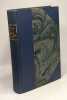
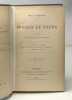
couverture défraîchie tranche ternie présence de qques annotations au stylo bleu
ACTES DU SEMINAIRE DE PSYCHANALYSE.
NICE. 1977-1982. In-8. Broché. Etat d'usage, Couv. convenable, Dos satisfaisant, Intérieur acceptable. 316 pages.. . . . Classification Dewey : 150-Psychologie
Classification Dewey : 150-Psychologie
Winnicott
Paris, Ed. universitaires, Jean Pierre Delarge, 1981 – in-8, 142 pp – broché, impression n. et b. sur la couv. (photographie)
Claude Geets dans cet ouvrage éclaire la démarche du grand psychanalyste d'enfants de l'Ecole anglaise: Winnicott et son rapport à la psychanalyse freudienne orthodoxe. À l'état de neuf.
TU VIVRAS CENT ANS
CEVIC. 1977. In-8. Broché. Bon état, Couv. convenable, Dos satisfaisant, Intérieur frais. 485 pages.. . . . Classification Dewey : 100-PHILOSOPHIE ET DISCIPLINES CONNEXES
Classification Dewey : 100-PHILOSOPHIE ET DISCIPLINES CONNEXES
LES METHODES DE RELAXATION - COLLECTION PSYCHOLOGIE ET SCIENCES HUMAINES N°21
DESSART. 1968. In-12. Broché. Etat d'usage, Couv. convenable, Coiffe en tête abîmée, Intérieur frais. 318 Pages - Couverture contre pliée - Coiffes abîmées. . . . Classification Dewey : 150-Psychologie
Copyright 1968 Classification Dewey : 150-Psychologie
L'Etre Subconscient. Essai de synthèse explicative des phénomènes obscurs de psychologie normale et anormale.,2e edition
Paris, Alcan, 1905, in-12, br., 176pp,manque au dos,derniers feuillets defraichis dans la marge superieure,dans l'état,
Remise de 20% pour toutes commandes supérieures à 200 €

