 Write to the booksellers
-
Language
French (803)
Latin (1)
-
Century
18th (3)
19th (153)
20th (528)
21st (60)
-
Countries
Belgium (8)
Côte d'Ivoire (1)
France (795)
-
Syndicate
ILAB (6)
SLAM (6)
Discours d'Ouverture (An VIII, An X, An XI et 1806).
1907 157, [1] p., 3 portraits, contemporary hcloth. Bulletin Scientifique de la France et de la Belgique, T. XI. Library stamps. Scarce.
Memoires sur les fossiles des environs de Paris.
1802-1809 (reprint 1978) ca. 250 p. (irregularly paginated), 28 plates, new green buckram with gilt author/title on the spine. Original printed wrappers bound in. Ex library of the American malacologist Richard Irwin Johnson (1925-2020) with his stamps on the top margin of the front free endpaper and on front cover.The scarce PRI-reprint. Reduced in size and with a new preface.
Mélanges Paul Pelseneer.
1936 1206 p., numerous figs & pls. Later brown cloth with gilt title on spine (original printed covers bound in).Paul Pelseneer was one of the leading Belgian malacologists before WWII. His "Festschrift" deals mainly with molluscan subjects, including papers by Lameere (Histoire de la classification des mollusques), Yonge (the evolution of the swimming habit in the Lamellibranchia), Lamy, Steenberg, Adam & Leloup (Les Crepidula de la cote occidentale de l'Afrique), Dollfus, de Selys Lonchamps, Odhner (Nudibranchia Dendronotacea. A revision of the system; this being a large paper with new genera and species) and many others. Title page and dedication page spotted, otherwise very good. Copies in original wrappers are often broken as the binding is too weak for such a big volume. This copy, however, has a tight, sound binding.
Spiny Oysters Shells of the World. Spondylus.
1987 82, [2] p., 36 colour plates, hardbound (dust jacket). Good copy.
The Upper Miocene Gastropods of Northwestern France, 4. Neogastropoda.
2019 81 p., 62 “plates” (i.e., groups of figures), 4to, paperboun. Published in: Cainozoic Research 19 (2). Very good copy.Deals with Neogastropoda, in particular Cysticidae, Volutidae, Cancellariidae, Columbellidae, Fasciolariidae, Pisaniidae, Nassariidae, Costellariidae, Mitridae. With many new species. The whole Cainozoic Research 19 (2), with 3 smaller papers (two on molluscs, including one on Eocene Columbariidae by Vermeij and Pacaud).
Cephalopods from Cretaceous/Tertiary Boundary Interval on the Atlantic Coastal Plain with a description of the Highest Ammonite Zones in North America. Part III: Manasquan River Basin Monmouth County New Jersey.
2007 122 p., 54 figs/pls, col. frontispiece, paperbound. Crisp new copy.
A Synopsis of the family Unionidae.
1870 (4th and final ed.) 190 p., roy. 4to, half cloth with original printed covers (upper end spine damaged). Perforation stamp and ex libris (bookplate) of the John Crerar Library (discarded).Copy with broad margins. Important study by this well-known conchologist who wrote the famous: Observations on the genus Unio in 13 volumes, incl. the large index on all species and bibliography.
New Unionidae I-II (= Observations on the genus Unio VI-XII).
1857-1860 12 papers in two. Numerous text pages, 157 fine lithographed plates, royal 4to, new half cloth over marbled boards. Printed paper label on spine. One page with lower (blank) margin chipped, otherwise a very good set with very clean plates.Isaac Lea (1792-1886) was by far the most prolific 19th century American writer on fresh water molluscs. His American and other fresh water molluscan papers are numerous, diverse, and notoriously difficult to collate. The number of new species is sheer endless. The papers mainly come in three versions. (A). The original very short Latin descriptions in many small papers in the Proceedings of the Academy of Natural Science of Philadelphia (ANSP) (8vo size, without illustrations). (B). The expanded illustrated descriptions in the Journal of the ANSP (4to); C. The offprints of (B), with additional title pages, etc., titled ''Observations on'' (4to). The latter were combined, usually in pairs, into Volumes. There are 13 such volumes in all. Priority in many cases has not been established. All papers are listed and separately numbered in Scudder, the bibliographer of Lea. (Scudder 150, 170, 215, 222, 245, and 259).
Die lebenden Schnecken und Muscheln der Umgegend Stettins und in Pommern mit besonderer Berücksichtigung ihres anatomischen Baues.
1873 328 p., 22 lithographed plates of which the first five are hand-coloured. Contemporary half cloth over grey marbled boards.Rather rare illustrated descriptive mollusc catalogue reporting on 106 species from around Stettin and Pommern, now in Poland. Preface by Eduard von Martens. The coloured plates of slugs are by Louise Von Martens. Uncoloured copies are more common. Joints weak, a few stamps to the title page, one on a few, scattered text pages and on the verso of the plates.
Contribution à la connaissance des Polyplacophores. I. Famille Mopaliidae Pilsbry, 1892.
1942 64 p., 27 figs, 6 pls, roy. 4to, paperbound. Good unopened copy. Published in: Mémoires du Musée royal d'Histoire Naturelle.
Contribution à la connaissance des Polyplacophores. I. Famille Mopaliidae Pilsbry, 1892.
1942 64 p., 27 figs, 6 pls, roy. 4to, paperbound (plain covers). Published in: Mémoires du Musée royal d'Histoire Naturelle. Ex library Dr. A.C. van Bruggen (with his signature).
Resultats Scientifiques du Voyages aux Indes Orientales Neerlandaise. Volume II, fascicule 13. Brachiopodes. Amphineures.
1933 33 p., 2 plates, royal 4to, paperbound. Unopened copy. Ex library M. Lecompte (with his stamp).First 4 pages are on Sipunculiden by J.M.A. ten Broeke, the Amphineura (= Polyplacophora) part is on pages 14-33 and the two plates depict chitons.
Résultats Scientifiques du Voyage aux Indes Orientales Néerlandaises. Brachiopodes, Amphineures. Sipunculiden.
1933 33 p., 2 folded pls (depicting chitons), roy. 4to, paperbound. Published in: Mémoires du Musée royal d'Histoire Naturelle. The Sipunculiden papers is only 4 pages long, the remainder is written by Leloup.
Résultats Scientifiques du Voyage aux Indes Orientales Néerlandaises. Brachiopodes, Amphineures. Sipunculiden.
1933 33 p., 2 folded pls (depicting chitons), roy. 4to, paperbound. Published in: Mémoires du Musée royal d'Histoire Naturelle. The Sipunculiden papers is only 4 pages long, the remainder is written by Leloup.
A New Deep-sea Mollusc of the Cambro-Devonian Class Monoplacophora.
1957 9 p., 4 figs, stapled. Published in: Nature.On May 6, 1952, ten living specimens of an extraordinary mollusc were discovered. While trawling off the Pacific coast of Costa Rica, the Danish deep-sea "Galathea" expedition hauled these specimens to the ocean surface from a depth of 3590 meters. They were given the name Neopilina galathea and their discovery has been described as "the most dramatic one in the history of malacology." Before that date these limpet like shells were only known as fossils and this was the first time a living representative of the class Monoplacophora was found. It's nearest fossil relative lived in the Silurian 400 million years ago. This is a reprint of the first original description of by Lemche in Nature. On the top right corner of the first page is a stamp reading: ''With the compliments of the author''. We added: Lemche, 1962. The primitive Mollusc that Emerged from Our Oceans (7 p., 2 figs, printed wrappers, published in: Scientia).Needless to say that this paper has great historical value.
The Anatomy of Neopilina galatheae Lemche, 1957.
1959 71 p., 56 pls (depicting 169 figs), large 4to, paperbound (outer ends of spine worn). Galathea Report Volume 3. Includes also W.J. Schmidt, Bemerkungen zur Schalenstruktur von Neopilina galatheae (pp. 73-78, 2 pls). Ex library Alan J. Kohn (with his signature).On May 6, 1952, ten living specimens of an extraordinary mollusc were discovered. While trawling off the Pacific coast of Costa Rica, the Danish deep-sea "Galathea" expedition hauled these specimens to the ocean surface from a depth of 3590 meters. They were given the name Neopilina galathea and their discovery has been described as "the most dramatic one in the history of malacology." Before that date these limpet like shells were only known as fossils and this was the first time a living representative of the class Monoplacophora was found. It's nearest fossil relative lived in the Silurian 400 million years ago. Needless to say that this anatomical study has great historical value.
Handbook of Gastropods in Kansas.
1959 224 p., 11 plates, 87 text figures, paperbound. Good copy.The text figures are mostly distribution maps, a few show genitals or shells. The plates show shells.
Mollusca I. De Hoofdgroepen.
1973 2 volumes (complete). [3], 238, 3 p., 130 figs, 4to, paperbound (unsewn). Ex library Dr. A.C. van Bruggen (with his signature). In Dutch. Very good set.
Terrestrial Mollusks of the Fauna of the U.S.S.R. (Nazemnye Mollyuski Fauny SSSR).
1952 (translated 1962) 574 p., 420 text figures, cloth with gilt author/title on the spine. A mint copy of this English translation from the Russian.
Morphologie und physiologie des genitalapparates der Nordseelittorinen.
1933 60 p., 8 plates, roy. 4to, paperbound. (original printed covers).The Littorinidae may be difficult to separate conchologically. This paper (published as a thesis and as in this copy, sonderabdruck aus Wissenschaftliche Meeresuntersuchingen) describes and discusses the genitalia, eggs, veligers, etc. of L. littorea, two other littorids and two species of Lacuna. With author’s dedication on the title page to Caesar Boettger. Also with Boettger's stamp on front wrapper and title page and that of Herbert Ant on title page. Good copy.
Conchyliologie Française. Les coquilles des eaux douces et saumatres de France. Description des familles, genres et espèces.
1893 327 p., 302 text figures, large 8vo (26.4 x 17.5 cm). Original printed wrappers.Containing the many species described by the "nouvelle école". Well-illustrated. Uncut. An excellent, complete, clean copy. Not often seen, especially not in such an exceptionally good state.
Conchyliologie française. Les coquilles marines des cotes de France. Description des familles, genres et espèces / Les coquilles des eaux douces et saumatres de France. Description des familles, genres et espèces / Les coquilles terrestres de France. Description des familles, genres et espèces / Les coquilles marines au large des côtes de France. Faune pélagique et faune abyssale. Description des familles, genres et espèces / Les coquilles marines des cotes de Corse (co-authored by É. Caziot).
1992-1900 1576 p. (384, 327, 370, 297, 198), 1165 text figures, large 8vo (25.5 x 16.7 cm, uniform dark blue cloth with gilt author/title on the spines. Speckled edges.A rare uniformly bound set of this important contribution to the malacofauna of France. Written by the French malacologist and 'Nouvelle École' adept, Étienne Alexandre Arnould Locard (1841-1904). Many new species are included. The first three volumes (1892, 1893, 1894) are richly illustrated. The last two volumes, published much later (1899, 1900), seem to be the rarest. The freshwater and deep-water volumes have the original printed wrappers bound in. From the library of the American malacologist Richard Irwin Johnson (1925-2020) with his stamp on the top margin of the front free endpapers, front wrappers and half-titles. A few spots only, a great set.
Les Coquilles Marines des Côtes de France. Description des familles, genres et espèces.
1891 380 p., 348 text figures, later half cloth with marbled boards, blind spine. With many annotations in two different (old) hands. Two repaired tears in the introduction part, otherwise a good copy of this classic work.Published in the Annales de la Société Linnéenne de Lyon, being the only paper in Vol. 37 of the new series; preceded by a member’s list.
Etudes sur les variations malacologiques d'après la faune vivante et fossile de la partie centrale du bassin du Rhône (Tome Premier et Second)
1880 Lyon, Librairie Henri Georg / Paris, Librairie J.-B. Baillière et Fils - 1880 - Complet en 2 volumes in-8; reliure demi-chagrin; plats percalines; dos à 4 nerfs portant titre, auteur, fleurons et tomaison en doré; toutes tranches mouchetées - 5 planches hors-texte en N&B in fine du tome premier
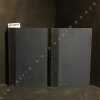
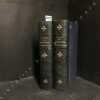
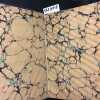
Bon état - Une signature sur la page de faux-titre des 2 vol. - Tampon en chinois (de l'ancien propriétaire?) sur la page de faux-titre et de titre des 2 vol. et sur la première page du tome second - Charnières du tome premier et du premier plat du tome second fendues sans désolidarisation - Rares rousseurs - Menus frottements au cuir et aux coins Bon

