 Write to the booksellers
-
Type
Autograph (1)
Book (2529)
Drawings (1)
Magazine (54)
Photographs (2)
-
Latest
Last month (77)
Last week (1)
-
Language
English (2)
French (2583)
Italian (2)
-
Century
17th (2)
18th (35)
19th (257)
20th (1003)
21st (74)
-
Countries
Belgium (352)
Brazil (1)
Canada (9)
Côte d'Ivoire (6)
Denmark (213)
France (1697)
Switzerland (309)
-
Syndicate
ALAC (9)
CLAM (1)
CLAQ (1)
ILAB (755)
NVVA (133)
SLACES (133)
SLAM (370)
Biologie des clupéidés (le harang excepté).
Office Scientifique et Technique des Pêches Maritimes, Mémoires de l'Office des Pêches Maritimes (série spéciale) N°14, juillet 1950, 125 p., broché, des accrocs sur le dos, des franges le long des plat, dos partiellement décollé, intérieur propre
Merci de nous contacter à l'avance si vous souhaitez consulter une référence au sein de notre librairie.
La vie dans les mers.
Couverture souple. Broché. 128 pages.
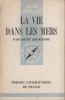
Livre. Editions P.U.F (Collection : Que sais-je? N° 72), 1948.
La vie dans les mers.
Couverture souple. Broché. 128 pages. Rousseurs.
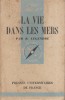
Livre. Editions P.U.F (Collection : Que sais-je? N° 72), 1942.
Croissance de racines de Pisum sativum dans les solutions colchiciniques
Bruxelles, Bulletin de la Société Royale de Botanique de Belgique, tome 77, 1945. 18 x 26, 9 pp. (59-67), 36 figures, broché, bon état.
"Les parentés chimiques des êtres vivants; Exposés de physiologie, VII. Collection : Actualités scientifiques et industrielles, N° 282."
Paris, Hermann, 1935. 16 x 25, 47 pp., broché, bon état (quelques rares soulignages).
Cytochromes
Academic Press Inc 1973 580 pages in8. 1973. Cartonné jaquette. 580 pages.
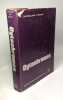
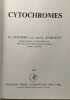
rousseurs sur la tranche intérieur propre jaquette abîmée bords frottés mouillure sur la tranche sur le 2e tiers du livre
Bactériologie médicale
Flammarion Médecine-Sciences 21x27x3cm. Sans date. Cartonné.
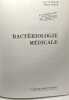
Très bon état de conservation intérieur propre bonne tenue
Le Monde illustré N° 4315. En couverture : Il y a soixante ans, Pasteur. La haute couture française (4 pages en couleurs). - Le problème constitutionnel. - Le Conservatoire…
Couverture souple. Revue. 28 x 37 cm. 24 pages.
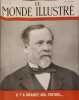
Périodique. Le Monde Illustré, 7 juillet 1945.
A propos d'un très jeune oeuf humain " in situ"... Traduit par le Dr A. Van Cauwenberghe de Gand. Accompagné de 16 planches lithographiques.
1907 Paris, Baillière et fils, Gand, Hoste, 1907 ; in-8, demi-basane rouge époque dos à nerfs orné de petits fleurons dorés, titre doré; (4), 74pp. et XVI planches hors texte lithographiées en couleurs.
Rares piqûres. ( CO1)
Le Corps humain. 5e édition illustrée de 46 vignettes par Leveillé.
P., Hachette, (Bibliothèque des Merveilles), 1883, in 12 relié demi-chagrin rouge, dos à faux nerfs orné, fer du Lycée de Saint-Etienne sur le plat supérieur, 320 pages ; bien complet du frontispice en couleurs ; infimes frottis. Bel exemplaire.
PHOTOS sur DEMANDE. ...................... Photos sur demande ...................


Phone number : 04 77 32 63 69
Le Corps Humain. Troisième édition illustrée de 46 vignettes par Léveillé. Collection Bibliothèque des Merveilles.
Paris, Hachette 1873, 180x110mm, 342pages, reliure d'éditeur. Percaline bleue, ornementations dorés sur les plats et le dos. Bel exemplaire.
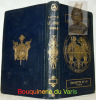
1 frontispice en couleur, Cachet de possesseur. Pour un paiement via PayPal, veuillez nous en faire la demande et nous vous enverrons une facture PayPal
Official method of analysis of the association of official agricultural chemists - seventh edition
Association of official agricultural chemists 1950 in8. 1950. Cartonné.
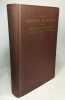
Bon Etat de conservation intérieur propre bonne tenue couverture un peu défraichie
Eléments d'immunologie.
Editions Biocosmos Centre, 1996. 22 x 28, 175 pp., 154 figures en couleurs, broché, très bon état.
Les Cahiers de Marottes et Violons d'Ingres - Revue réservée au corps médical
Reference : 120473
(1953)
Les Cahiers de Marottes et Violons d'Ingres : du N° 28 (de novembre / décembre 1953) au N° 35 (janvier / février 1955)
1953 du N° 28 au N° 35 - De novembre 1953 à février 1955 - Nouvelle série - A Paris, 46 rue Saint-Didier, XVIe - Petit in-8, reliure cartonné imitation demi basane rouge; pièce de titre au dos - Pagination non continue - Illustrations et reproductions photographiques en N&B - Relié avec les couvertures d'origines
Bon état - Menus frottements sur les plats et le dos
Les Cahiers de Marottes et Violons d'Ingres - Revue réservée au corps médical
Reference : 120474
(1957)
Les Cahiers de Marottes et Violons d'Ingres : du N° 44 (3e trimestre 1957) au N° 51 (2e trimestre 1960)
1957 du N° 44 au N° 51 - 3e trimestre 1957 au 2e trimestre 1960 - Nouvelle série - A Paris, 46 rue Saint-Didier, XVIe - Revue paraissant tous les trois mois - Petit in-8, reliure cartonné imitation demi basane rouge; pièce de titre au dos - Pagination non continue - Illustrations et reproductions photographiques en N&B - Relié avec les couvertures d'origines
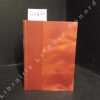
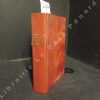
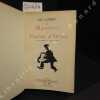
Bon état - Menus frottements sur les plats et le dos
Les Cahiers de Marottes et Violons d'Ingres - Revue réservée au corps médical
Reference : 123983
(1957)
Les Cahiers de Marottes et Violons d'Ingres N°7 : L'origine du timbre-poste (Dr E. Locard) - De la photographie (Dr Pierre Pizon) - Prestidigitation et médecine (Dr Jules Dhotel) - Considération sur le tatouage (Dr Y. Herber) - Le Docteur François Rabelais (Dr Comeferran) - Chronique discophile (Dr L. Gole) - La page du photographe - Le coin du poète
1957 N° 7 : Mai/ Juin 1950 - Nouvelle série - A Paris, 46 rue Saint-Didier, XVIe - Revue mensuelle - In-12, broché, couverture illustrée - 96 pages - Nombreuses reproductions photographiques de tatouages et illustrations en N&B in et hors-texte
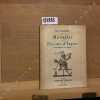
Bon état - Couverture légèrement insolés et frottées Bon
Les Cahiers de Marottes et Violons d'Ingres - Revue réservée au corps médical
Reference : 123984
(1969)
Les Cahiers de Marottes et Violons d'Ingres N°85 : Silhouettes et portraits de médecins : Hérophile, omnipraticien grec (J.P. Dumont) - Les noces de Capri ou la vie d'une moche à l'ère atomique (dr Donald A. Lindquist) - Les livres de colportage (Louis Ferrand) - Voyage en Mésopotamie, berceau et tombeau de tant de civilisations (Dr Jacques Meunier) - Hommage à La Varende (André Chardine) - Célébration du fromage (Marcel Rouff)
1969 N° 85 : 2e trimestre 1969 - A Paris, 46 rue Saint-Didier, XVIe - Revue trimestrielle - In-12, broché, couverture illustrée (Raoul Dufy) - 96 pages - Nombreuses reproductions photographiques de tatouages et illustrations en N&B in et hors-texte

Bon état - Couverture légèrement insolés et frottées - Rousseurs sur la couverture Bon
Pasteur, son oeuvre humanitaire.
Couverture souple. Broché. 24 pages.
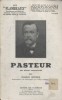
Livre. Editions des Flambeaux, 1945.
Pasteur, son oeuvre humanitaire.
Couverture souple. Broché. 24 pages.
Livre. Editions des Flambeaux, 1945.
Les Hommes du jour N° 126 : Professeur Metchnikoff. Portrait en couverture par Delannoy.
Couverture souple. Revue. 25 x 33 cm. 8 pages. Légèrement défraîchie.
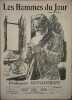
Périodique. Les Hommes du Jour, 18 juin 1910.
Les races humaines.
Couverture souple. Broché. 223 pages.
Livre. Editions Armand Colin (Collection : Armand Colin, section de biologie), 1939.
La biologie,origine et lois de la vie
Schleicher, Bibliothèques des Sciences Contemporaines (1910)113 figures dans le texte ,cartonné, toile ordinaire In-8 1 vol. - 506 pp. main chapters: matière organisée - phénomènes primordiaux de la vie - accroissement - génération - motilité - innervation - forces physiques en biologie
Remise de 20% pour toutes commandes supérieures à 200 €
La Biologie. [Origine et lois de la vie. Avec 113 figures dans le texte].
P., Librairie Schleicher Frères (Bibliothèque des Sciences Contemporaines), sans date, in 12 broché, XI-506 pages ; non coupé ; table analytique in-fine ; couverture fanée.
PHOTOS sur DEMANDE. ...................... Photos sur demande ...................
Phone number : 04 77 32 63 69
Les harmonies providentielles
Paris, Hachette 1873 ii + 304pp., illustré de 4 eaux-forts, 2e édition revue et augmentée, reliure cart. (plats marbrés, dos en cuir avec titre doré), 18cm., cachet sur la page de titre, rousseurs mais le texte est toujours bien lisible, dans la série "Bibliothèque des merveilles", bon état, W101085

