 Write to the booksellers
-
Type
Art print (2)
Autograph (4)
Book (33906)
Magazine (146)
Manuscript (3)
Maps (1)
Photographs (8)
-
Latest
Last 24h (7)
Last 3 days (14)
Last month (237)
Last week (107)
-
Language
Chinese (1)
Dutch (3)
English (108)
French (33818)
German (9)
Greek (1)
Italian (112)
Japanese (1)
Latin (5)
Polish (1)
Portuguese (4)
Russian (3)
Spanish (3)
Swedish (1)
-
Century
16th (32)
17th (77)
18th (571)
19th (4304)
20th (11268)
21st (1706)
-
Countries
Belgium (7839)
Brazil (14)
Canada (11)
Côte d'Ivoire (35)
Denmark (146)
France (24759)
Germany (9)
Greece (3)
Netherlands (1)
Switzerland (1253)
-
Syndicate
ALAC (11)
CLAM (15)
CLAQ (3)
CNE (19)
ILAB (13900)
NVVA (532)
SLACES (531)
SLAM (13117)
SNCAO (64)
Kati Heck. (Signed with original drawing)
, Hannibal, 2016 Gebonden, Hardcover. 29 x 24,7 cm,144 bladzijden, Quadrichromie,Tweetalige editie Nederlands-Frans. Met handtekening en tekeningetje van Kati Heck. . ISBN 9789492081544.
Kati Heck wordt beschouwd als een erfgename van het Duitse expressionisme. Haar werk doet denken aan de bars, dansers en acteurs van Otto Dix en George Grosz, net als aan de oude meesters. Ze synthetiseert stijlen en is net zo goed een abstracte expressionist als een realist. Delen van haar schilderijen zijn minutieus weergegeven op gestikte doeken, met een unieke virtuositeit en acute aandacht voor detail, terwijl andere delen abstracter weergegeven of zelfs gebeeldhouwd worden. De manier waarop ze niet-traditionele materialen en alledaagse objecten in innovatieve en eigenzinnige combinaties verwerkt, herinnert aan Robert Rauschenberg. Hecks portretten belichamen een diepe, overtuigende en sociale visie, en zijn tegelijk ondoorgrondelijk persoonlijk. De weergegeven onderwerpen zijn meer dan enkel acteurs, het zijn meestal zelfportretten en personen uit haar directe omgeving. Haar werk werd onlangs geexposeerd in CAC Malaga en Mary Boone Gallery New York, en wordt de komende maanden getoond in Expo Chicago en het Antwerpse M HKA. Met tekstbijdragen van onder meer Ann Demeester (Frans Hals Museum/De Hallen Haarlem) en wijlen Jan Hoet, een verhaal door Woody Allen en een gesprek met Luc Tuymans.
Kursaal and Promenade. L on Spilliaert (1881-1946) and Atmospheric Solitude by the Sea Anne Adriaens-Pannier
, Hannibal Books, 2023 softcover, 112 pages, 21 x 14.8 cm, Quadrichromy Illustrated., English edition. . ISBN 9789464666458.
A lone walker at dawn in Ostend, L on Spilliaert (1881-1946) is entranced by the bleak and ominous desolation of the promenade. A fascination with spatiality and the expression of infinity underlie the numerous dyke scenes Spilliaert created between 1907 and 1909, heralding a unique, formal innovation. Learn more about the compelling Kursaal and Promenade that is the centrepiece of this Phoebus Focus.
Kursaal en zeedijk L on Spilliaert (1881-1946) en atmosferische eenzaamheid bij de zee
, Hannibal Books, 2023 softcover, 112 pages, 21 x 14.8 cm, Quadrichromy Illustrated., Nederlandstalige editie . ISBN 9789464666441.
Als eenzame wandelaar in het ochtendgloren van Oostende laat L on Spilliaert (1881-1946) zich begeesteren door de desolate en onheilspellende verlatenheid van de zeedijk. De fascinatie voor ruimtewerking en de expressie van oneindigheid liggen aan de grondslag van de talrijke dijkzichten die Spilliaert tussen 1907 en 1909 cre ert en waarmee hij een unieke formele vernieuwing inluidt. Ontdek het beklijvende werk Kursaal en zeedijk dat in deze Phoebus Focus centraal staat.
Leon Spilliaert from the Depths of the Soul.
, ludion, 2026 Hardback, 290 x 250 mm, 336 pages, 400 illustrations. English edition. **Brandnew, updated edition. ISBN 9789464781274.
Rooted in the Symbolist tradition of the fin-de-siecle and drawn to the avant-garde, Leon Spilliaert (1881-1946), was a loner who never occupied a clear place in the art of his time. He shared not only his home port of Ostend with James Ensor, but also his sense of mockery and irony, non-conformity and an urge to view the world differently. Spilliaert, however, created a spiritual visual language of his own, experimenting with pastels and gouache, playing with purified expanses of colour and elegant lines. The moonlit sea, solitary, vacantly gazing figures, beaches stripped of all human presence, empty rooms and stylized, backlit silhouettes - Spilliaert invariably evoked an atmosphere of mystery, magic and alienation in line and colour. Anne Adriaens-Pannier, former curator at the Royal Museums of Fine Arts in Brussels, has been working on the catalogue raisonne of his oeuvre since 1995 at the Spilliaert family's request. She pays tribute to the artist with this beautifully illustrated book, in which she describes his drawings and paintings, as well as referring to his book illustrations and lithographs. The author presents Spilliaert as a link between the major art movements in the fascinating era in which he lived and worked. A unique book about an exceptional artist.
Leon Spilliaert. Le reve des autres, Illustrateur de Verhaeren, Maeterlinck, Hellens,
, Van de Wiele, 2018 Couverture reliee, HB, 300 x 220 mm, 240 p, throughout illustrations, Texte en Francais. ISBN 9789076297729.
Elles sont pratiquement inconnues de la plupart des amateurs d'art: les illustrations de Leon Spilliaert (1881-1946) dans des editions de l'oeuvre d'ecrivains belges comme Emile Verhaeren, Maurice Maeterlinck, Franz Hellens, Paul Neuhuys et bien d'autres. Spilliaert a illustre leurs recueils de poesie et pieces de theatre, et meme un livre pour enfants, de dessins a l'encre de Chine et a l'aquarelle, ou il a laisse libre cours a son inspiration dans sa visualisation de l'univers onirique des auteurs. Ce volet foisonnant de son art est enfin devoile au public par la specialiste de Spilliaert, Anne Adriaens-Pannier. L'ouvrage accompagne l'exposition Le reve des autres a La Maison Spilliaert a Ostende (du 19 novembre 2017 au 2 avril 2018), ou sont reunies les editions en question, rehaussees de dessins originaux ou d'illustrations imprimees, et des oeuvres autonomes de l'artiste en rapport avec son travail d'illustrateur. Les pieces exposees, issues de collections publiques et particulieres, presentent pour la premiere fois - et probablement la seule - un panorama complet des creations de Spilliaert inspirees de la litterature.
L ON SPILLIAERT. DE DROOM VAN ANDEREN
, Van de Wiele, hardcover, 290 x 215 mm, 240 pagina's, doorlopend illustraties NL editie. *nieuwstaat. ISBN 9789076297712.
Bij de meeste kunstliefhebbers zijn ze vrijwel onbekend: de illustraties van L on Spilliaert (1881-1946) in uitgaven van het werk van Belgische schrijvers als Emile Verhaeren, Maurice Maeterlinck, Franz Hellens, Paul Neuhuys en vele anderen. Spilliaert illustreerde hun dichtbundels en theaterstukken, en zelfs een kinderboek, met tekeningen in Oost-Indische inkt en aquarelverf, of liet zijn inspiratie de vrije loop bij het visualiseren van de droomwereld van de auteurs. Dit rijke deelgebied van zijn kunst wordt door Spilliaertspecialiste Anne Adriaens-Pannier eindelijk voor het publiek ontsloten. Dit boek begeleidt de tentoonstelling De droom van anderen in Het Spilliaert Huis in Oostende (van 19 november 2017 t.e.m. 2 april 2018), waar de uitgaven met originele tekeningen of gedrukte illustraties en aanverwante autonome werken samen te zien zijn. De stukken, uit openbare en particuliere collecties, bieden voor het eerst, en waarschijnlijk eenmalig, een volledig beeld van Spilliaerts literair ge nspireerde creaties.
Anne Adriaens-Pannier, Le la Jarbouai, Laurence Des Cars (Pr facier)
Reference : 57442
L on Spilliaert: Lumi re et solitude.
, R union des Mus es, , 2020 Hardcover- Couverture reliee 208 pages, 130 Illustrations, 29x23cm.Texte en Francais Exhibition catalogue. ISBN 9782711875276.
L on Spilliaert est consid r comme l'un des peintres belges les plus importants, c t de R. Magritte, J. Ensor, P. Delvaux.... Pourtant, il est moins connu... Homme des solitudes inqui tantes, des perspectives infinies, Spilliaert (1881-1946) surprend, d route par des ?uvres inclassables, inventant un symbolisme singulier de la nuit int rieure. Spilliaert est n Oostende. Ses promenades nocturnes dans la ville d serte seront une source d'inspiration pour son oeuvre. Il est presque enti rement autodidacte. Il est influenc par les courants artistiques de la fin de si cle : le symbolisme et l'expressionnisme. Spilliaert est un explorateur de l'inconscient et des angoisses existentielles au moment o les sciences humaines avancent dans la compr hension de la psych . Il est passionn par Nietzsche, Schopenhauer, Chateaubriand et Lautr amont. Le catalogue se concentre sur les ann es 1896 1919, les plus intenses dans la carri re de l'artiste, et pr sente ses oeuvres les plus radicales. Exposition du 13 octobre 2020 au 10 janvier 2021 au Mus e d'Orsay, Paris. L on Spilliaert: Lumi re et solitude (Mus e d'Orsay & Grand Palais) aantalIn winkelwagen L on Spilliaert is considered to be one of the most important Belgian painters, alongside R. Magritte, J. Ensor, P. Delvaux?. However, he is less well known? A man of disquieting solitudes and infinite perspectives, Spilliaert (1881-1946) surprised and disconcerted by unclassifiable works, inventing a singular symbolism of the inner night. Spilliaert was born in Oostende. His night walks in the deserted city were a source of inspiration for his work. He is almost entirely self-taught. It is influenced by the artistic currents of the end of the century: symbolism and expressionism. Spilliaert is an explorer of the unconscious and existential anxieties at a time when the human sciences are advancing in their understanding of the psyche. He is passionate about Nietzsche, Schopenhauer, Chateaubriand and Lautr amont. The catalogue focuses on the years 1896 to 1919, the most intense years in the artist?s career, and presents his most radical works. Exhibition from October 13, 2020 to January 10, 2021 at the Mus e d?Orsay. IN FRENCH!
L on Spilliaert: Interieurs & Interiors & Still Lifes (EN)
, Hannibal Books, 29-06-2026 Hardcover, 128 pages, 32.8 x 25.3 x 1.7cm, English. New. . ISBN 9789493531000.
Step into the silent, mysterious world of L on Spilliaert A modest but essential part of Spilliaert?s oeuvre consists of his interiors and still lifes. These intimate compositions reveal the depth of his vision, as well as his exceptional ability to transform everyday spaces into places of contemplation. Empty rooms, familiar corners and simple objects are rendered with austere clarity, yet carry an intense, almost tangible presence ? despite the absence of human figures. Silence reigns in these works. This richly illustrated publication brings together new essays by leading Spilliaert scholars, each casting fresh light ? from within their own field of research ? on the genesis of this exceptional body of work by the Ostend artist. With contributions by Anne Adriaens?Pannier (ed.), Edouard Derom (ed.), Stefan Huygebaert and Marie?No lle Grison. This book is published on the occasion of the exhibition L on Spilliaert: Through Half-Open Doors at the Patrick Derom Gallery, Brussels, from June 3 to August 14, 2026.
L on Spilliaert: Interieurs & natures mortes (FR)
, Hannibal Books, 29-06-2026 Couverture rigide, 128 pages, 32.8 x 25.3 x 1.7cm, Fran ais. Nouveau. . ISBN 9789493531000.
Les int rieurs et les natures mortes constituent un volet modeste, mais essentiel de l??uvre de L on Spilliaert. Dans ces compositions intimistes se d ploient la profondeur de son regard et sa capacit remarquable transformer des espaces quotidiens en lieux de contemplation. Bien que rendus avec une sobri t limpide, pi ces vides, recoins familiers et objets simples sont habit s par une pr sence intense, presque tangible, malgr l?absence de figures humaines. Dans ces ?uvres, le silence r gne en ma tre. Cette publication richement illustr e r unit des essais in dits r dig s par des sp cialistes de la vie et de l??uvre de Spilliaert. Chacun d?eux porte, depuis son propre domaine de recherche, un regard neuf sur la gen se de cet ensemble exceptionnel du peintre ostendais. Avec des contributions d?Anne Adriaens?Pannier ( d.), Edouard Derom ( d.), Stefan Huygebaert et Marie?No lle Grison.
L on Spilliaert: Interieurs & stillevens
, Hannibal Books, 29-06-2026 Hardcover, 128 pagina's, 32.8 (hoogte) x 25.3 (breedte) x 1.7 (dikte) cm, Nederlands. Nieuw. . ISBN 9789493531000.
Een verrassende kijk op de minst bekende, maar meest persoonlijke zijde van L on Spilliaert Dit rijk ge llustreerde boek verkent de intrigerende wereld van de interieurs en stillevens van L on Spilliaert. In negen thematische hoofdstukken ontrafelt Anne Adriaens-Pannier de ?geheime alchemie? van zijn verstilde ruimtes, waar interieurs fungeren als zelfportretten in absentia. Zijn sobere kamers, tafels en alledaagse voorwerpen onthullen een intens innerlijk leven. Met talloze paginagrote reproducties biedt deze publicatie een gelaagd perspectief op een van de meest introspectieve figuren van het Belgisch modernisme. Met tekstbijdragen van Anne Adriaens-Pannier, Edouard Derom, Stefan Huygebaert, Marie-No lle Grison en Franz Hellens.
UITBUNDIG VERLEDEN De Bourgondi rs door Romantische ogen
, Snoeck Publishers , 2021 PB+, 280 x 250 mm, 160 pages , 132 illustraties. NL edition. fine. ISBN 9789461616777.
Teruggrijpen naar het verleden, het is iets van alle tijden. Net als vandaag was geschiedenis ook in de negentiende eeuw populair. Het is de eeuw waarin verschillende nieuwe naties ontstaan en andere zich sterker gaan profileren op het internationale toneel. Tijdens de Romantiek groeit een hernieuwde belangstelling voor de Bourgondische hertogen, van Filips de Stoute tot de roemrijke keizer Karel. Zo treden de vijftiende- en zestiende-eeuwse Bourgondische vorsten in verschillende Europese landen opnieuw op de voorgrond. Als de aartsvaders van de Lage Landen verschijnen ze op schilderijen, in de literatuur en beeldhouwkunst. Maar het beeld van de vorsten verschilt sterk van land tot land: wat vertellen ze ons over de negentiende-eeuwse visie op het verleden? En over de manier waarop wij vandaag omgaan met onze geschiedenis? In Uitbundig Verleden. De Bourgondi rs door Romantische ogen kijk je vanuit een hedendaagse context, met een kritische blik en een veranderend perspectief naar het verleden. De ondergrondse exporuimte van Museum Hof van Busleyden doet aan als eennegentiende-eeuws monumentaal museum en toont met een veertigtal werken het verlangen naar de grootsheid van weleer. Museum Hof van Busleyden - 27.11.2021 - 27.02.2022. Uitbundig Verleden is een samenwerking tussen Museum Hof van Busleyden en het Monast re royal de Brou in Bourg-en-Bresse (Frankrijk).
Ic nes de l'Art moderne: La collection Morozov
, Co dition Gallimard/Fondation Louis Vuitton, 2021 cartonnage illustre de l'editeur, 524 pages Illustrated. 28.5 x 5.1 x 30.5, Texte en Francais Exhibition catalogue. ISBN 9782072904585.
Le second volet de la grande manifestation "Ic nes de l'art moderne" organis e par la Fondation Louis Vuitton r unit plus de 170 chefs-d'oeuvre inestimables de la collection d'art moderne fran ais et russe des fr res moscovites Mikha l et Ivan Morozov.Apr s celui de Sergue Chtchoukine, la Fondation Louis Vuitton poursuit son exploration de l'univers culturel et intellectuel des collectionneurs m c nes russes, pionniers de l'art moderne. Pr sent e pour la premi re fois hors de Russie, la Collection Morozov rassemble des oeuvres iconiques de Manet, Rodin, Monet, Pissarro, Toulouse-Lautrec, Renoir, Sisley, C zanne, Gauguin, Van Gogh, Bonnard, Denis, Maillol, Matisse, Marquet, Vlaminck, Derain et Picasso aux c t s d'artistes embl matiques de l'art russe au tournant du si cle tels que R pine, Vroubel, Korovine, Golovine, S rov, Larionov, Gontcharova, Mal vitch, Machkov, Kontchalovski, Outkine, Sarian ou Konenkov. La pr sentation in dite de ces artistes constitue une red couverte exceptionnelle.Philanthropes des arts, les fr res Mikha l Abramovitch Morozov (1870-1903) et Ivan Abramovitch Morozov (1871-1921) ont domin la vie culturelle moscovite entre la fin du XIX? et le d but du XX? si cle, au m me titre que les Tr tiakov, Mamontov, Riabouchinski et Chtchoukine. Leur soutien inconditionnel l'art contemporain europ en et russe contribuera largement la reconnaissance internationale des peintres modernes fran ais.
Philippon Lecoq - Designers Architectes d'int rieur 1955-1995
, Regard (Editions du), 2023 Hardcover, 250 pages, FR. edition, 315 x 250 x 30 mm, NOUVEAU, illustrations en couleur / n/b. ISBN 9782841054268.
Ce livre est la premi re monographie consacr e au duo d'architectes d'int rieur Philippon Lecoq. Le bureau d' tude d'Antoine Philippon et Jacqueline Lecoq s'impose de 1955 1995. Tout au long de la p riode des " Trente glorieuses ", ils imposent une pratique exigeante qui concerne l'architecture int rieure, la sc nographie d'exposition, le design industriel, l'enseignement. Le bureau d' tude d'Antoine Philippon et Jacqueline Lecoq s'impose de 1955 1995. Tout au long de la p riode des " Trente glorieuses ", ils imposent une pratique exigeante qui concerne l'architecture int rieure, la sc nographie d'exposition, le design industriel, l'enseignement. Ils participent aux salons nationaux et internationaux, se faisant reconnaitre pour leur militantisme professionnel et la d fense d'une profession en devenir. Ils exposent au Salon des artistes d corateurs, au Salon des arts m nagers, l'exposition internationale de Bruxelles en 1958, la Triennale de Milan et dans de nombreuses manifestations d'importance. Ce livre rend hommage aux industriels qui les ont soutenus dans l' laboration de leurs multiples projets produits en s rie, favorisant leur exploration de nouveaux usages et de nouvelles techniques : en France : d'Henry Mouraux Airborne, le Mobilier national, Formica et les Glaces de Boussois. A l' tranger, en Allemagne en particulier : Bofinger, Erwin Behr, Lauser, etc. Leurs r alisations se distinguent par un ancrage dans la dur e, un engagement sans concessions. Ce livre est la premi re monographie consacr e au duo d'architectes d'int rieur Philippon Lecoq.
Ponce Pilate. La construction d?une figure dans la litt rature patristique et apocryphe
, Brepols - Institut d'Etudes Augustiniennes, 2023 Paperback, 878 pages, Size:165 x 245 mm, Language(s):French, Greek, Latin. ISBN 9782851213075.
Summary This monograph is the first study to highlight the plasticity of the figure of Pilate across Christian literature of the first millennium, as transmitted in Greek, Latin, Coptic, Syriac, Ge'ez, Armenian, Georgian, Slavic and Arabic. The name of the person Pilate is present in the memoirs and in the confessions of faith for the role of this Roman praefectus of Judea in the central event of Christianity which is the death sentence of Jesus of Nazareth. However, we only know his character as it was constructed by the authors of the first century - the Jewish writers, the authors of the Gospels which have become canonical or of the texts called apocrypha. It is from these sources that the authors of the patristic period elaborate figures of Pilate based on their analysis of his role in the Passion. Like the emperor depicted in the apocryphal texts, they in turn put Pilate on trial: how could the human judge judge the Judge of the universe? Who is responsible for the death of Jesus? Even though it is very largely sullied in the medieval West, the triune figure of Pilate as governor, judge and Roman is enriched with the features of the informant, of the evangelizer of the emperor, and even of the martyr and the saint. Cette monographie est la premi re tude mettant en vidence la plasticit de la figure de Pilate travers la litt rature chr tienne du premier mill naire, transmise en grec, latin, copte, syriaque, gu ze, arm nien, g orgien, slave et arabe. Le nom de la personne Pilate est pr sent dans les m moires et dans les confessions de foi pour le r le de ce pr fet romain de Jud e dans l' v nement central du christianisme qu'est la condamnation mort de J sus de Nazareth. On ne conna t pourtant de lui que le personnage construit par les auteurs du Ier si cle - les crivains juifs, les auteurs des vangiles devenus canoniques ou des textes appel s apocryphes. C'est partir de ces sources que les auteurs de la p riode patristique laborent des figures de Pilate fond es sur leur analyse de son r le dans la Passion. Tels l'empereur mis en sc ne dans les textes apocryphes, ils font leur tour le proc s de Pilate : comment le juge humain a-t-il pu juger le Juge de l'univers ? Qui est responsable de la mort de J sus ? Alors m me qu'elle est tr s largement noircie dans l'Occident m di val, la figure trine de Pilate comme gouverneur, juge et Romain s'enrichit des traits de l'informateur, voire de l' vang lisateur de l'empereur, et m me du martyr et du saint. TABLE OF CONTENTS Introduction Premi re partie. Ponce Pilate, de la Jud e l'Empire Chapitre 1. Procurante Pontio Pilato Iudaeam (Lc 3, 1) Chapitre 2. L'apparition de la formule sous Ponce Pilate Deuxi me partie. Gouverneur, juge et Romain : Figures de Pilate dans l'ex g se ancienne Chapitre 3. L' laboration discr te, mais r elle, d'une figure de Pilate chez Orig ne et son utilisation ex g tique Chapitre 4. Justicier et proph te issu des Nations : une figure originale de Pilate chez phrem de Nisibe Chapitre 5. Pilate iudex gentium chez Hilaire de Poitiers Chapitre 6. Une double figure de Pilate chez Ambroise de Milan Chapitre 7. J r me de Stridon : des figures de Pilate diff rentes selon les ?uvres Chapitre 8. Augustin ou toute la v rit sur Pilate Chapitre 9. Un Romain faible et compromis : Pilate dans l'?uvre de Jean Chrysostome Chapitre 10. Pilate entre crainte et moquerie face la royaut de J sus chez Th odore de Mopsueste Chapitre 11. Le Pilate johannique de Cyrille d'Alexandrie Chapitre 12. L' laboration de la figure de Pilate chez les auteurs latins de la p riode patristique, de Cyprien de Carthage Isidore de S ville Chapitre 13. L' laboration de la figure de Pilate chez les auteurs grecs de la p riode patristique, d'Athanase d'Alexandrie Th odoret de Cyr Troisi me partie. Pilate apocryphe Chapitre 14. Pilate dans les r critures de la Passion Chapitre 15. Pilate apr s la Passion : la vall e du Rh ne et la vall e du Nil Quatri me partie. Pilate acteur et auteur Chapitre 16. Trois gestes extra-canoniques de Pilate dans la tradition patristique et apocryphe Chapitre 17. Pilatusschriften Chapitre 18. Lectures de Lc 13, 1 : le massacre des Galil ens par Pilate Chapitre 19. Lectures de Mt 27, 19 : le songe de la femme de Pilate Chapitre 20. Lectures de Mt 27, 24 : le lavement des mains Chapitre 21. Lectures de Jn 19, 19-22 : la r daction du titulus par Pilate Cinqui me partie. Pilate dans la vie des glises Chapitre 22. Pilate dans la liturgie des glises chr tiennes Synth se et conclusion Indices Bibliographie Index biblique Index locorum Index dierum Index nominum
Brussels creative city : architectuur, urbanisme, design, mode, kunst, cultuur
, Snoeck, 2013 softcover , ill, text in Nederlands. 244pp, Afmetingen: 16,5 x 19,5 cm . ISBN 9789461611215.
Brussel is niet alleen de politieke hoofdstad van Europa maar ontpopt zich zeer nadrukkelijk als creatieve hotspot en trendsetter in design. Ontwerpers, shops, galerijen, architecten vinden na Milaan, Londen en Berlijn nu ook de weg naar Brussel. Het event Design September (5-30/9) is, met niet minder dan 100 culturele en commerciele events, een must geworden voor iedereen die van design houdt. Dit boek geeft een overzicht van de places-to-be voor ?design in Brussels? : van leuke shoppingadressen tot galerijen en gebouwen waar je echt moet geweest zijn.
Ritual, Gender, and Narrative in Late Medieval Italy. Fina Buzzacarini and the Baptistery of Padua
, Brepols, 2020 Hardback, 384 pages, Size:225 x 280 mm, Illustrations:188 col., Language: English. ISBN 9782503579689.
Summary Ritual, Gender, and Narrative in Late Medieval Italy is the first English-language study of the baptistery of Padua and its extraordinarily rich fresco program, which opens with Genesis and closes with the Apocalypse. Remarkably, when the building was refashioned and frescoed by Giusto de' Menabuoi in the 1370s, it was a woman, Fina Buzzacarini, who funded the enterprise. In late medieval Italy, baptisteries were potent symbols of civic identity, solidarity, and pride, and towns spent lavishly on them - but no other baptistery was so radically reworked at the behest of a woman. Remarkably, too, though the building continued to function as Padua's baptismal church, the renovations transformed it into the mausoleum of Fina Buzzacarini and her family. This volume takes an interdisciplinary approach, using close visual analysis to argue that to a surprising degree, Fina exerted control over the images. The author argues too that ritual is equally important in understanding the frescoes: that in multiple ways that have rarely been considered, the images respond to and participate in the ritual enacted in this sacred space. The prayers intoned at the font, the actions of the officiant, the hymns chanted in procession and inside the baptistery, and even details of the rite all find visual echoes on the baptistery's walls. Ultimately, gender and ritual intersect in the multilayered frescoes of the Padua baptistery. TABLE OF CONTENTS Introduction Chapter 1 Fina Buzzacarini in Carrara Padua Local chroniclers say little about Fina, but recount one salient aspect of her life: after marrying Francesco I Carrara in 1345, she failed for over a decade to produce the requisite son and heir. After crises at court over succession, in 1359 she gave birth to a son. Though the couple's marriage was strained by her husband's blatant philandering, previously overlooked records show that Fina, a very wealthy woman, gradually emerged as a powerful presence at court. While some have minimized the degree of Fina's responsibility for the baptistery's program, I cite a number of documents from the later trecento that attest to a woman's ability to shape the subject matter of a work that she funded. I next discuss Fina's tomb monument, which emulates those of earlier Carrara lords but outshines them, and her votive portrait, which places her on the dexter side, as sole donor, and excludes her husband. Finally, I consider the extraordinary small portraits of Fina inserted into several of the narratives and interpret them as assertions of her authority, overt claims of agency, injected through the program. Chapter 2 Baptistery as Mausoleum: Ambitions and Motivations Why would Fina have sought the baptistery as a burial site, and why did Francesco and the local bishop, whose approval would have been required, agree? The sacred space of a baptistery had long been understood as a desirable funerary site. For Francesco, the project meant the embellishment of one of the most important buildings in the city, burnishing the stature of the regime; co-opting the preeminent symbol of civic harmony; and creating a prestigious-and presumably spiritually advantageous-setting for his own tomb. For the bishop, given the brief tenures of his predecessors who dared to cross Francesco, attempting to thwart the project was not a viable option. Fina likely had reasons of her own, which I consider further in Chapter 6, for choosing the baptistery as her burial place. Here I note that baptisteries were uncommonly welcoming to women. The rite offered them a rare opportunity to participate in the liturgy: women took their place at the font next to men. Finally, in electing her burial in the baptistery, Fina insured that her tomb would be seen, and her memory preserved, by future generations. Chapter 3 Narrative, Ritual, Exegesis: The Genesis Cycle This chapter opens with an account of the baptismal ritual as performed in late medieval Italy- the choreography of prayers, chants, readings, ritual actions, and attendant customs for both the solemn rite and the individual rite. The rest of chapter 3, and chapters 4 and 5, analyze the frescoes in the narrative cycles, arguing that they are as carefully choreographed as the rite, and work in concert with it. They respond as well to baptismal theology, depicting themes that offer pictorial glosses on the rite, echoing typological parallels drawn by medieval exegetes. The Genesis cycle in the drum of the dome includes narratives both familiar and more obscure (the Death of Adam; Lamech Slaying Cain; Jacob's Prayer after his Dream; Jacob's Rods; the Reunion of Jacob and Esau). The obscure episodes are distinctly baptismal, and even the familiar ones are rendered in unusual ways that heighten their baptismal resonance. Chapter 4: Narrative, Ritual, Exegesis: The New Testament Cycle The baptismal themes introduced in the drum continue below, in the New Testament cycle, where the frescoes are often strategically sited to respond to others, each accruing meaning from those nearby. Because of these pictorial and thematic correspondences, it is most productive to analyze the frescoes spatially, wall by wall, rather than purely chronologically. While most of the New Testament episodes depicted here are commonly seen in trecento visual narrative, almost all have been adapted in ways that make them singularly appropriate to the site. For instance, in the Massacre of the Innocents, the slain babies, normally shown nude in trecento painting, wear white tunics that evoke the white garments given to infants after baptism; the jugs in the Marriage of Cana are enlarged versions of the ewer used in the baptismal rite. Chapter 5: Narrative, Ritual, Exegesis: The Apocalypse Cycle In the baptistery's apse is a remarkably detailed depiction of the book of Revelation, a subject seldom seen in trecento painting and never on this scale. The choice was well considered: from late antiquity into late medieval Italy, exegetes found in the text repeated allusions to the sacrament. Again, uncommon narrative inclusions, such as the opening of the fifth seal, with the giving of white garments to the souls under the altar, or idiosyncratic features, like the setting of scenes in dramatic seascapes that attest to the salvific potency of water, highlight the relationship between the images and the rite enacted here. Chapter 6: Gender Matters: Maternity, Sexuality, and Visual Rhetoric If the Padua baptistery is a site for the celebration of the liturgy, it is also a site for the celebration, and commemoration, of its patron. Chapter 6 returns to the visual evidence to examine Fina's role in the baptistery more closely. The gender symmetry of the dome, where women and men appear in equal numbers in the largest circle of Paradise, is suggestive. So is the Genesis cycle's insertion of women into the narrative, at times almost rewriting sacred history to insist on their active participation at critical junctures. Moreover, many of the women featured in the dome and the drum are, unlike most women in the Christian pantheon, mothers - significantly, mothers of sons. Several (Sarah, Rebecca, Rachel, Elizabeth) conceived and delivered sons only after a long delay. Important, too, is the Apocalyptic Woman of Rev. 12, prominently depicted in the apse, who gave birth to a son born to rule. All of these women serve as Fina's exemplars - and as reminders of her success in delivering her own long-awaited son. Finally, the frescoes also feature malevolent, and specifically sexually transgressive, women: Herodias, the wife of Lot, and the Whore of Babylon; all are visually juxtaposed with virtuous mothers, and Herodias, who had an adulterous relationship with a ruler, with Fina herself.
Anne-France Morand, Eric Cr gheur, Karine Laporte, Ga lle Rioual (eds)
Reference : 63428
Regards crois s sur la pseud pigraphie dans l'Antiquit / Perspectives on Pseudepigraphy in Antiquity
, Brepols, 2024 Paperback, 304 pages, Size:156 x 234 mm, Illustrations:2 b/w, Language(s):French, English. ISBN 9782503602608.
Summary Qu'il s'agisse d' crire sous le nom de Pythagore, d'Orph e, de la Pythie, ou encore de Paul de Tarse ou d' noch, les Anciens usaient de noms d'emprunt c l bres pour s'exprimer. Ph nom ne fondamental de l'Antiquit , la pseud pigraphie n'a cependant fait l'objet d'aucune monographie avant les ann es 1970, avec le livre de Wolfgang Speyer, Die literarische F lschung im heidnischen und christlichen Altertum (1971), et les Entretiens de la Fondation Hardt, Pseudepigrapha I. Pseudopythagorica - Lettres de Platon - Litt rature pseud pigraphique juive (1972). Le sujet a alors suscit les critiques de plusieurs savants. Plus r cemment, la somme que Bart Ehrman a consacr e la question, Forgery and Counterforgery (2013), par les vives r actions qu'elle a provoqu es - parfois critiques, parfois logieuses - a contribu relancer le d bat. Le pr sent volume se propose de revenir sur ces importantes synth ses, en les abordant sous l'angle de figures pr cises, ainsi que d' poques, de langues et de r gions diverses. Il vise aussi largir la recherche en mettant l' preuve les diff rentes th ories nonc es dans la litt rature savante. Il est d sormais devenu essentiel d' tendre et de remodeler cette notion de pseud pigraphie qui touche galement celles d' auctorialit , d'inspiration po tique, d'intention des auteurs antiques et de genres litt raires. TABLE OF CONTENTS Introduction (Anne-France Morand) Literary Deceit in Greek, Roman, Jewish, and Christian Antiquity (Bart D. Ehrman) Authenticit auctoriale ou fid lit au message ? Le cas des textes pseud pigraphiques bibliques juifs et chr tiens (Pierluigi Piovanelli) Entre authenticit et relectures : l'autorit du Patriarche H noch, destinataire des r v lations sur le destin des anges, des justes/ lus et des p cheurs (Matteo Silvestrini) What are the Old Testament Pseudepigrapha? (Gavin McDowell) R le et fonction de la pseud pigraphie dans les Oracula Sibyllina (Jean-Michel Roessli) Les fonctions des notices personnelles dans les p tres pastorales (1 Timoth e, 2 Timoth e, Tite) (Priscille Marschall) Qui est le C b s du Tableau de C b s ? (Ga lle Rioual) Celui qui ne s'est pas s par de Babylone : les Samaritains dans les Paralipom nes de J r mie (Jonathan Bourgel) Les Hymnes orphiques l'aune de la pseud pigraphie (Anne-France Morand) Orph e chez les pa ens tardifs : un marqueur de la comp tition religieuse (fin IVe-d but Ve si cle) (Francesco Massa) Bal masqu aux temps apostoliques : la pseud pigraphie dans les Hom lies pseudo-cl mentines (Philippe Therrien) La pseud pigraphie dans la litt rature arm nienne ancienne et m di vale (Valentina Calzolari) Bibliographie s lective (Karine Laporte & Anne-France Morand) Index
Leidse fijnschilders uit Dresden
, Zwolle, Waanders 2001, 2001 Hardcover, 132 pagina's, NL, 275 x 245 mm, als nieuw !, veel info en illustraties in kleur, . ISBN 9789040095481.
De Leidse fijnschilders van de Gouden Eeuw genoten al in hun tijd als geen andere schilder een ongekende faam. De minutieus geschilderde kabinetstukjes van Gerrit Dou, Frans van Mieris de Oude en Godfried Schalcken vonden hun weg naar toonaangevende verzamelingen door heel Europa. August de Sterke, keurvorst van Saksen, had een buitengewone voorkeur voor de fijnschilders en bracht een verzameling van meer dan tachtig meesterwerken bijeen. De Gem ldegalerie Alte Meister in Dresden bezit hiervan meer dan vijftig werken, verreweg de grootste en belangrijkste verzameling fijnschilders ter wereld. Het Stedelijk Museum De Lakenhal heeft de eer deze collectie voor het eerst in zijn geheel te tonen. Ter gelegenheid van de tentoonstelling verschijnt een publicatie van Annegret Laabs, waarin de collectie volledig wordt beschreven. Alle werken zijn in kleur te bewonderen en Christoph Sch lzel beschrijft in een apart essay de materiaal-technische aspecten van het werk. Leidse fijnschilders is voor alles een perfecte introductie in het onderwerp. De succesvolle en reeds lang uitverkochte voorganger uit 1988 heeft eindelijk een opvolger.
Bekranst De krans als symbool in de zeventiende eeuwse schilderkunst
, Waanders, 2024 gebonden, 180 pag. rijkelijk geillustreerd, 24x17cm.*nieuw ISBN 9789462625549.
Binnen de zeventiende eeuwse schilderkunst speelt de krans een bescheiden, maar interessante rol. Het is vaak een detail dat niet direct opvalt, maar dat bij nadere beschouwing toch een specifieke betekenis aan het schilderij blijkt te geven. Het is fascinerend om te zien op hoeveel verschillende manieren de krans als symbool opduikt in de 17e-eeuwse schilderkunst. Veel van zulke opmerkelijke en betekenisvolle kransen komen in deze publicatie aan bod. Enerzijds heb je de bloemenkrans als teken van verer
Copenhagen collection Dansk M belkunst,
, Dansk M belkunst, , 2015 softcover, 87 pages, 25x25cm, Illustrated. ISBN 9788798889847.
The Copenhagen collection Dansk M belkunst,
BIBLIOTHEQUES ET EVALUATION.
EDITIONS DU CERCLE DE LA LIBRAIRIE / COLLECTION BIBLIOTHEQUES. 1994. In-8. Broché. Etat d'usage, Couv. convenable, Dos fané, Intérieur frais. 197 pages.. . . . Classification Dewey : 20-Bibliothéconomie et sciences de l'information
Classification Dewey : 20-Bibliothéconomie et sciences de l'information


Anne Legeay - Fabrice Besse (Photographies)
Reference : 46339
(2003)
ISBN : 2047200733
Calligraphies médiévales d'Anne Legeay
2003 PARIS, Dessain & Tolra - 2003 - In-4, 29,9 x 21,1 x 0,7 cm - Illustrations en texte - 80 pages - Comme neuf
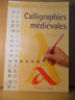
Une initiation méthodique à l'écriture des lettres médiévales. Sept styles d'écriture vous sont présentés par ordre de difficulté croissante : onciale, caroline, gothique primitive, textura, fraktur, rustica et gothique. Pour vous exercer, écrivez à même le cahier : les tracés en gris, les lignes de conduite et le papier ont été spécialement conçus pour vous permettre de vous entraîner directement dans le livre, jour après jour. Pour chaque style d'écriture, retrouvez : une brève introduction historique et esthétique ; une présentation des lettres avec le tracé de chacune d'elles ; de nombreux exercices d'entraînement ; des idées de mise en pratique Cnformément à nos conditions générales de vente :Les frais de port sont affichés à titre indicatif. Il se peut que nous devions vous contacter pour vous informer du coût de laffranchissement supplémentaire en fonction du poids et du nombre de livres, surtout pour les envois internationaux Cependant vu l'augmentation des tarifs postaux à l'internationale, nous pouvons expédier les ouvrages en point relais MONDIAL RELAY pour les pays suivants : Allemagne, Autriche, Belgique, Espagne, Italie, Luxembourg, Pays-Bas, Pologne, et Portugal. Merci de nous indiquer en retour le point relais choisi ainsi que votre numéro de téléphone mobile & adresse Courriel pour assurer le suivi du colis.N'hésitez pas à nous interroger.In accordance with our general terms and conditions of sale:Shipping costs are displayed for informational purposes only. We may need to contact you to inform you of the additional postage costs depending on the weight and number of books, especially for international shipments.However, given the increase in international postal rates, we can ship books via Mondial Relay to the following countries: Germany, Austria, Belgium, Spain, Italy, Luxembourg, Netherlands, Poland, and Portugal. Please provide us with your chosen Mondial Relay point, as well as your mobile phone number and email address to ensure package tracking.Please feel free to contact us with any questions
Closer to Vermeer
, , 2025 hardcover, 432 pages, 26,5 x 21,5 cm, Quadrichromie, Illustrated, text English, ISBN . ISBN 9789464941999.
The successor to the international bestseller Vermeer, featuring groundbreaking research on the Dutch master Closer to Vermeer explores the world of Johannes Vermeer, a painter whose work continues to fascinate more than 350 years after his death. Taking the landmark 2023 Rijksmuseum exhibition as a point of departure, this volume brings together new art-historical and technical research by leading international experts. How did Vermeer translate his creative ideas into paint? Did the seventeenth-century Dutch master truly rely on optical devices? What do the carefully rendered objects in his interiors reveal about the artist himself? And how has the perception of his small but extraordinary oeuvre evolved over time? Using the latest imaging techniques, researchers scrutinize Vermeer?s masterpieces, yielding compelling new insights into his artistic process, material choices, and technical virtuosity. These investigations contribute to a deeper understanding of Vermeer?s painting technique throughout his career. Other specialists revisit seventeenth-century sources, uncover new archival documents, and explore Vermeer?s patrons and the material world he portrayed. The objects depicted in his interiors ? maps, pearls, porcelain, kitchenware ? are examined not merely as visual motifs, but as clues to his worldview and working methods. At once scholarly and accessible, Closer to Vermeer offers a fresh, intimate perspective on one of the most enigmatic and beloved painters ? a vital resource and enduring reference for specialists and art lovers alike. With contributions by Christina L. An, Dina Anchin, Piet Bakker, Rachel Billinge, Quentin Buvelot, Frederico Car , Silvia A. Centeno, Gareth R. Davies, John K. Delaney, Alexandra van Dongen, Kathryn A. Dooley, Esther van Duijn, Francesca Gabrieli, E. Melanie Gifford, Lisha D. Glinsman, Catherine Higgit, Helen Howard, Paolo D'Imporzano, Jonathan Janson, Koen Janssens, Anna Krekeler, Paul van Laar, Rozemarijn J.W. Landsman, Alexandra Libby, Annelies van Loon, Dorothy Mahon, Daphne Martens, Marta Melchiorre Di Crescenzo, Sabrina Meloni, Steven De Meyer, Aimee Ng, Judith Noorman, Elke Oberthaler, David Peggie, Carol Pottasch, Justine Rinnooy Kan, Pieter Roelofs, Marika Spring, Maartje Stols-Witlox, David G. Stork, Ariane van Suchtelen, Paul Taylor, Katharina Uhlir, Abbie Vandivere, Frederik Vanmeert, Evelyne Verheggen, Ige Verslype, Marjorie E. Wieseman
Cambridge II
, Brepols - Harvey Miller, 2022 Paperback, 328 pages, Size:210 x 270 mm, Illustrations:47 b/w, Language: English. ISBN 9781912554270.
Summary This is the ninth volume in a continuing series of publications listing and identifying all illustrations contained in English manuscripts from the time of Chaucer to Henry VIII. Because representations of all types are included?from miniatures to marginalia? the series provides unparalleled reference to imagery in the long fifteenth century. The present fascicle, the second of two devoted to the collections in Cambridge, catalogues 553 manuscripts for eleven colleges and can be used as a search tool for manuscripts available on line. The manuscript entries in the catalogue note the subject of every illustration, all of which are fully indexed in the index of pictorial subjects. Entries for alchemy and medicine are particularly rich in this fascicle; the largest entry is for costume. The broad range of pictorial information makes the Cambridge fascicles useful supplements to the fifth volume of A Catalogue of Western Illumination in the Fitzwilliam Museum and Cambridge Colleges. Like the other fascicles in the series, Cambridge II includes a manual for users, an extensive glossary of subjects and terms, indexes of authors, texts and incipits, as well as a list of manuscripts with coats of arms. There are forty-seven black and white illustrations.
Noble Magnificence. Culture of the Performing Arts in Rome 1644-1740
, Brepols, 2024 Paperback, 619 pages, Size:230 x 280 mm, Illustrations:16 b/w, 154 col., 6 maps color, 5 musical examples, Language: English. ISBN 9782503613123.
Summary The thirty chapters in this book are based on the work of an international, multidisciplinary team of researchers and archivists brought together for the PerformArt project, funded by the European Research Council from 2016 to 2022. This project investigated the artistic patronage of the great Roman aristocratic families of the seventeenth and eighteenth centuries through research in the extant archives. After the accession to the papal throne of Innocent X in 1644, and more so after the Peace of the Pyrenees in 1659 - which led to a greater loss of power for the pope in his relations with other European states - the Roman families stepped up their efforts to assert their social preeminence not only through architecture and the fine arts, but also through the ephemeral performing arts: music, theatre, and dance, which were omnipresent throughout the year and especially during the intense period of artistic production that was the Roman Carnival. The search for traces of these spectacles in the archives of these families reveals that their desire to display their magnificence - an ideal well documented in the literature of the period - gave rise to lavish expenditure on a scale that could only be justified by the benefits (if not tangible, then at least symbolic) they hoped to gain. The essays in this book, which draw on social economic history, the history of ideas, and the evolving artistic practices of the time, make a major contribution to our knowledge of courtly societies in Ancien R gime Europe by integrating the performing arts into their analyses in innovative ways. TABLE OF CONTENTS Overture Anne-Madeleine GOULET, Introduction - Prologue: The Roman Context Isabella CECCHINI and Anne-Madeleine GOULET, Some Thoughts about the Roman Context Irene FOSI, Magnificence and the Roman Nobility between the Papacy and Europe I. The Economy of Magnificence Beno t MAR CHAUX, Patrons, Aristocratic Patrimonies and Finance: Reconsidering the Economic Foundations of Private Magnificence in Rome (c. 1650-1700) Isabella CECCHINI, Instruments of Magnificence. Finance and Credit in Early Modern Rome Maurizio PEGRARI, The Costs of Magnificence, the Magnificence of Costs: Nobility, Economics, and Status in Seventeenth and Eighteenth-Century Rome Isabella CECCHINI and Anne-Madeleine GOULET, Celebrating a Wedding in the Lante della Rovere Family: An Exercise in Magnificence (1682-83) Cristina FERNANDES, Portuguese Patronage in Rome and the Economics of Magnificence: La Virt negl'amori by Alessandro Scarlatti at the Teatro Capranica (1721) - Intermezzo I. Into the Family Archives Marco CAVIETTI, Portraying the Family in Household Archives in the Seventeenth and Eighteenth Centuries Orsetta BARONCELLI, The Computista and the Archivista: Two Key Figures in the Management of Roman Family Archives in the Seventeenth and Eighteenth Centuries Letizia LELI, Reordering a Family Archive in the Seventeenth Century: The Case of the Lante della Rovere Archive II. Social Values and Moral Principles Aldo ROMA, Education to Magnificence: Aristocratic Schooling and College Academies in Seventeenth- and Eighteenth-Century Rome Sarah MALFATTI, Patronage and Pastoral Simplicity in Arcadia: Patronus nullus esto - the Case of Francesco Maria Ruspoli (1707-21) Diana BLICHMANN, Sumptuousness versus Sobriety: Magnificence in the Musical Productions at Cardinal Pietro Ottoboni's Teatro della Cancelleria (1710-12) Valeria DE LUCCA, Ars moriendi in Seventeenth-Century Rome: Staging Lorenzo Onofrio Colonna's Death - Intermezzo II. Some Thoughts on Method Manuela GRILLO and Michela BERTI, Magnificenza as a Paradigm in the Development of a Thesaurus: From Scientific Research to a Difficult Definition, and Back Again III. Conquering and Asserting Magnificence Sara Elisa STANGALINO, Lorenzo Onofrio Colonna 'L'Africano': Military and Artistic 'Campaigns' in Rome and Spain Barbara NESTOLA, 'Donna regale in auree scene t'apre il mondo in teatro': Maria Camilla Pallavicini Rospigliosi and Opera in Rome at the End of the Seventeenth Century Michela BERTI, The Conquest of Magnificence: The Performing Arts and the Social Ascent of the Vaini Family Huub VAN DER LINDEN, Boxes at the Teatro Capranica in 1732: Occupants, Financial Dealings, and Social Visibility - Intermezzo III. Brokers of Magnificence in the Noble Household Natalia GOZZANO, Maestri di casa: Masters of Roman Magnificence in the Old Regime Alexandra NIGITO, The Christmas Cantata in Rome: Papal Munificence and Self-promotion by the Majordomo (1676-1740) milie CORSWAREM, The Art of Appropriation: Girolamo Colonna and the Festivities Held at Rome for the Coronation of Ferdinand IV as King of the Romans (1653) IV. Magnificence on Stage Gloria GIORDANO, 'Si fatto di nuovo ma impiegandovi molte cose del vecchio': The Artifice of Magnificence in the Choreographic Episodes at the Seminario Romano Valentina PANZANARO, Monumentality and Magnificence: Dance and Dramaturgy in Seventeenth century Roman Visual and Musical Sources Jos Mar a DOM NGUEZ, Gloria GIORDANO, Chiara PELLICCIA, Beyond Magnificence: The Caduta and its Imagery in the Performing Arts in Seventeenth-Century Rome Teresa CHIRICO, Magnificence in Miniature: The Puppet Theatre of Cardinal Pietro Ottoboni in the Palazzo della Cancelleria (1694-c. 1712) - Intermezzo IV. The City as a Stage. The Roman Scene in the Early Eighteenth Century Antonella FABRIANI ROJAS, Nobility, Spectacle, and Competition: Reflections on Francesco Valesio's Diario (1700-42) V. The Glories of Fame: Reputation, Circulation, Market Chiara PELLICCIA, The Colonna Family and the Performing Arts in Villeggiatura at Marino lodie ORIOL, From the Reputation of the Artist to the Magnificence of the Prince: The Borghese Family and its Musicians in the Eighteenth Century Giulia VENEZIANO and Margaret MURATA, Rome, Naples, Opera and the 1720s in Rome Glossary Maps General Bibliography Sources and Archival Documents Names of Individuals and Communities Titles of Works Place Names

