Write to the booksellers
-
Type
Art print (2)
Autograph (4)
Book (34081)
Engraving (1)
Magazine (146)
Manuscript (3)
Maps (1)
Photographs (8)
-
Latest
Last 24h (6)
Last 3 days (118)
Last month (299)
Last week (27)
-
Language
Chinese (1)
Dutch (3)
English (108)
French (33994)
German (10)
Greek (1)
Italian (112)
Japanese (1)
Latin (4)
Polish (1)
Portuguese (4)
Russian (3)
Spanish (3)
Swedish (1)
-
Century
16th (34)
17th (74)
18th (568)
19th (4294)
20th (11743)
21st (1753)
-
Countries
Belgium (7830)
Brazil (14)
Canada (11)
Côte d'Ivoire (35)
Denmark (146)
France (24980)
Germany (9)
Greece (3)
Netherlands (1)
Switzerland (1217)
-
Syndicate
ALAC (11)
CLAM (15)
CLAQ (3)
CNE (18)
ILAB (13876)
NVVA (537)
SLACES (536)
SLAM (13088)
SNCAO (64)
Jan van Mieris (1660-1690) : His Life and Work / catalogue raisonne.
, Casae, 2021 Hardcover, 182 pages; ENG.edition; 305 x 215 x 16 mm, NEW, illustrated in color / b/w. ISBN 9789083103112.
Jan van Mieris was trained by his famous father Frans, and worked in the tradition of the Leiden 'fijnschilders'. Art historian and former owner M.J. Ripps about his Self-Portrait: "The theme of the artist with the tools of his trade to hand has a robust tradition on both sides of the Alps. In the middle sixteenth-century artists such as Catherina Sanders van Hemessen (c. 1500 - 1566) and Sofonisba Anguissola (c. 1532 - 1625) memorably depicted themselves with brushes, palette, and Mahlstick, as did leading artists of the subsequent generations. Jan van Mieris' self-portrait is in dialogue with that of his father Frans, and engages a tradition that ultimately reaches back to Rogier van der Weyden (1399/1400 - 1464) and forward to Rembrandt van Rijn (1606 - 1669) - critical reference points with which the elder and younger Mieris would have been well acquainted. And by placing themselves at a ledge, father and son invoked a pictorial tradition with roots in Raphael's iconic portrait of Castiglione. In this little self-portrait, thus, grand traditions are encapsulated in miniature."
BOERHAAVE BOTANICUS : Zijn tuinen, zaaiboeken en botanische vrienden
Leiden, Primavera Pers, 2018 Paperback, 220 blz, Nederlands, Illustraties. ISBN 9789059972742.
Dit boek gaat over een onbekende kant van de beroemde Leidse arts Herman Boerhaave: zijn leven als plantkundige. In 1709 werd Boerhaave hoogleraar geneeskunde en kruidkunde, en prefect van de Leidse Hortus Botanicus. Binnen een jaar had h ij een catalogus van alle planten in de Hortus samengesteld. Gedurende v ijftien jaar noteerde h ij ? in zogenoemde zaaiboeken ? alles wat h ij zaaide of plantte in de Hortus en later op Oud-Poelgeest, het landgoed dat h ij kocht omdat de Hortus te klein was voor zijn verzameldrift. Bioloog Margreet Wesseling ontdekte in deze zaaiboeken een schat aan nieuwe informatie die zij combineerde met gegevens uit de vele brieven die Boerhaave schreef. In Boerhaave Botanicus presenteert de auteur een aanvulling op het beeld dat wij van de arts Boerhaave hebben. U leest over Boerhaave?s botanische vrienden, zoals de Brit William Sherard en Jean Baptiste Bassand, hofarts te Wenen; over Fransen, Italianen, een Spanjaard en een jonge Zweed. Overal vandaan stuurde dit internationale gezelschap zaden naar Boerhaave. Bomen hadden Boerhaave?s bijzondere belangstelling. Op Oud-Poelgeest stichtte hij een arboretum met exotische soorten uit Noord-Amerika en Oost-Indi , maar ook alle soorten essen en wilgen die hij maar kon bemachtigen. Carolus Linnaeus, de later beroemd geworden grondlegger van o.a. botanische nomenclatuur, kwam er op bezoek en noemde het een waar paradijs. Boerhaave Botanicus is een eerbetoon aan een man met een onverwoestbare werklust, een arts die zich in korte t ijd een nieuw vakgebied eigen maakte en zoveel botanische kennis vergaarde dat h ij van zijn vakgenoten internationaal veel waardering kreeg.
David Teniers der J ngere : 1610-1690 : Alltag und Vergn gen in Flandern
, Heidelberg, Kehrer, 2005 Paperback, 388 seiten, Deutsch, 305 x 250 x 30 mm, in Gute Kondition, illustrationen in Farbe / s/w, ISBN 9783925212635.
David Teniers (getauft 15. Dezember 1610 in Antwerpen; ? 25. April 1690 in Br ssel) war ein fl mischer Maler, Zeichner und Kurator. Er war ein u erst vielseitiger K nstler, der f r seine umfangreiche Produktion bekannt ist. Er war ein Erneuerer in einer Vielzahl von Genres wie Historienmalerei, Genremalerei, Landschaft, Portr t und Stillleben. Er ist heute am meisten erinnert als der f hrende fl mische Genremaler seiner Zeit. Teniers ist besonders bekannt f r die Entwicklung des Bauerngenres, der Schenkstubenszene, Bilder von Kunstsammlungen und Szenen mit Alchimisten und rzten. Er begr ndete 1664 die Antwerpener Akademie.
Urban Hierarchy. The Interaction between Towns and Cities in Europe in Late Medieval and Early Modern Times
, Brepols, 2021 Hardback, 228 pages, Size:178 x 254 mm, Language(s):English, French. ISBN 9782503577272.
Summary Urban hierarchy means a new study approach that focuses on the reciprocal concurrence of relationships between urban centers, their complementarity, opposition, support and ongoing collaboration. The goal is to go beyond the single analysis of a city and focus on the interaction between towns and cities and to distinguish their dynamics and the degree of specialization within a political framework. The final objective is to provide a comprehensive historical analysis as urban history requires, open to the advantages of interdisciplinarity and the contributions of the international researchers that will take part in the book. The processes of urban hierarchisation are not only vital for observing the dynamics of cities, but also for studying in depth the response capabilities of the urban systems in the face of new challenges and stimuli. These aspects of the historical analysis of cities are still quite unexplored and, therefore, they will receive a great deal of attention in the book. The initial regional frameworks will not exclude small towns and rural centers since, even though they may look less potentially relevant, they might display greater specific development. Thanks to a renewed methodology and special attention to the empirical basis, it is possible to improve our knowledge of the urban systems of European regions at the end of the Middle Ages and the beginning of the Early Modern Era, shedding light on some aspects of the medieval past that will also influence other scientific areas of humanities. TABLE OF CONTENTS Introduction Urban Hierarchies in Pre-Modern Europe Maria Asenjo-Gonz lez Part I - Urban Networks and Central Place Rouen : p le urbain et centre de consommation Anne Kucab Le r seau erfurtois la fin du Moyen ge. Une construction politique en marge du seigneur Morwenna Coquelin Urban Hierarchies in the Heart of the Po Valley (12th-15th century). Persistence and Change Andrea Gamberini Part II - Capital Cities and Political Actions Rethinking Madrid during the Sixteenth Century. An Approach from Urban Hierarchies David Alonso Garc a About the Urbanization in the Kingdom of Naples. The Campanian Area in 15th-16th Centuries Francesco Senatore Urban Networks 'in Defence of the Realm'. Castilian Cities in Valladolid's Orbit of Influence (1504-1520) Mar a ngeles Mart n Romera Part III - Dynamics of Government. Cooperation, Rivalry and Conflict between Cities The Town of Kol n and its Communication Horizons in the Late Middle Ages Jan Vojt ?ek Urban Hierarchies and the Institutional Fabric of Late Medieval European Towns Arie van Steensel Resistance to Jurisdictional Predominance and Hierarchical Ambitions. Cadahalso versus Escalona (1232-1480) scar L pez G mez The Interaction between the Bohemian Royal Towns and their Relation to the Cities of Central Europe in 1526-1620 Jana Vojt ?kov
Jan Massys : Renaissance Painter of Flemish Female Beauty.
, Brepols - Harvey Miller, 2024 Hardback, 239 pages, ENG. edition; 305 x 220 x 20 mm; llustrations: 82 b/w, 223 col., 2 tables b/w., 1 tables col. .*new ISBN 9782503607207.
This book rediscovers the Antwerp painter Jan Massys (c.1510-1573) and his artistic milieu. / The painter Jan Massys (c. 1510-1573) trained under his father Quinten, succeeding him after his death (1530) at the head of Antwerp's most famous workshop. However, his career, destined for certain success, was abruptly cut short in 1544. Condemned for joining the Loysts sect, he had to flee Antwerp, finding refuge perhaps initially in France and at one point in Italy. Only in 1555 was he able to return to his homeland, regaining his artistic leadership within a few years. His oeuvre consists exclusively of works for private use and is characterized, in particular, by the depiction of elegant and seductive nude or half-naked female figures, protagonists of biblical or mythological subjects. The identification of the patron of the 1561 Venus with the view of Genoa (Stockholm, Nationalmuseum) in the person of the noble Genoese banker Ambrogio di Negro, offered the possibility of reconstructing the social context of the artist's clientele and his relations with those intellectuals ? both Genoese and Flemish-who gave life to the lively humanist academies of Antwerp. The figure emerges of a cultivated and particularly refined painter, who shared with his patrons the ideals of neo-Petrarchan poetry and executed paintings of great preciousness, characterized by a meticulous and skillful painting technique. TABLE OF CONTENTS Chapter 1 Johannes Massiis alias Quintens Chapter 2 A career of ups and downs Chapter 3 Jan Massys and female beauty Chapter 4 A varied painting technique for depicting beauty, lechery, and luxury Chapter 5 Inside Jan Massys? Workshop: good and not-so-good workshop practices Chapter 6 Inside Jan Massys Workshop: known and unknown assistants Chapter 7 ConclusionBIO Maria Clelia Galassi graduated in art history at the University of Genoa and obtained her PhD from the University of Milan. Since 2000 she is professor at the University of Genoa, where she teaches History of collecting and Technical Art History. She focused her researches on Flemish and Italian painting technique during the Early Modern Age, and in the artistic relationship between Genoa and the Netherlands in the 15th and 16th centuries.
Maria Consiglia Alvino, Matteo Di Franco, Federica Rossetti, Gabriella Rubulotta (eds)
Reference : 65050
voyage d'Europe au fil des si cles - Europa's Journey through the Ages. Histoire et r ception d'un mythe antique
, Brepols, 2022 Hardback, 160 pages, Size:156 x 234 mm, Illustrations:9 b/w, 1 tables b/w., Language(s):French, English. ISBN 9782503591537.
Summary Le mythe d'Europe dont les premi res attestations remontent au VIIIe si cle av. J.-C., dans les Po mes Hom riques et la Th ogonie d'H siode, fa onne de nouvelles visions, figures et images dans les productions litt raires europ ennes tout comme dans les milieux artistiques, d s l'Antiquit gr co-romaine nos jours. Il s'agit d'un voyage nigmatique dont il est impossible de d terminer les v ritables pr mices et dont la fin est probablement encore lointaine. Le centre d'attention du pr sent volume est Europe, princesse ph nicienne, et non l'Europe, id e g opolitique. Avec un regard multidisciplinaire et diachronique, cet ouvrage explore de diff rentes facettes de la r ception du mythe. Les contributeurs proposent des r flexions autour de la caract risation du personnage mythique d'Europe, pour les p riodes archa que et classique, et autour de la r laboration du mythe l' poque hell nistique et humaniste. L'enqu te s' tend jusqu' l' tude de la persistance du mythe d'Europe dans l'art et dans la litt rature des poques moderne et contemporaine. TABLE OF CONTENTS Luigi Spina, la recherche des grands yeux d'Europe Christy Cones, Embracing the Other: the Asteas Krater of Europa Valeria Pace, Aetiology in Moschus' Europa Serena Cannavale, Not only Moschus. Aetiology in the Hellenistic versions of the myth of Europa and the bull Johanna A. Michels, Migration and Foundation in the Wanderings of Europa and Cadmus Isabella Walser-B rgler, Draco volans: A Political Replacement of the Myth of Europe in Seventeenth-Century Latin Cosmographies Caterina Sansoni, Europa, une h ro ne moderne La princesse ph nicienne dans le r cit de Massimo Bontempelli, Viaggio d'Europa Pascal Dethurens, Quand le voyage prend fin. Sur quelques avatars du mythe d'Europe au XXe si cle Bibliographie Index
Giorgio Morandi : Een retrospectieve.
, [IT] Silvana , 2013 Hardcover, 216 pag. NL., 295 x 250 x 25 mm, in Prima conditie !, illustraties in kleur / z/w. ISBN 9788836625956.
BOZAR brengt hulde aan Giorgio Morandi, Italiaans grootmeester van de moderne kunst. Hij werd be nvloed door Italiaanse schilders als Giotto en Paolo Uccello en Franse als Chardin, Seurat en C zanne. Deze uitzonderlijke overzichtstentoonstelling omvat een honderdtal werken (olieverfschilderijen, tekeningen, etsen en aquarellen), uitgekozen door curator Maria Cristina Bandera voor een tocht langs de centrale thema's van zijn oeuvre. Neem een duik in de wereld van Morandi via zijn rustgevende stillevens en mooie landschappen (ge nspireerd door het natuurschoon van Emilia-Romagna), en ontdek de bloemenruikers die hij af en toe aan zijn vrienden en kennissen schonk. Die beelden blijven kunstenaars inspireren, o.a. Luc Tuymans die op uitnodiging van de curator een reeks werken toont in dialoog met het werk van de Italiaanse schilder. Om je bezoek nog boeiender te maken bevat de bezoekersgids ook de teksten van zes schrijvers die hun visie op Morandi met je delen.
Exit Morandi, Giorgio Morandi
, Forma Edizioni, 2019 hardcover, 112 pages Illustrated. 31x25cm, English, *New. ISBN 9788855210027.
This book takes as a starting point four important paintings in the collection of the Museo Novecento, which belonged to collector Alberto Della Ragione, including a rare watercolour of a female figure that reveals Morandi's extraordinary artistic abilities. It illustrates paintings, drawings, and prints that have been kept in various private collections. Exit Morandi also celebrates Morandi's relationship with art critics such as Roberto Longhi, Carlo Ludovico Ragghianti, Cesare Brandi and Francesco Arcangeli. An informative accompaniment to an exhibition of Giorgio Morandi's work at the Museo Novecento, Florence that focuses on the artist's relationships with some of the greatest contemporaneous art critics.
Hauts et bas.
Paris, Flammarion, 1946. In-12, broché, couverture bleu ciel illustrée, 192 pp.
Sur la vie et le travail de l'aviation de renseignements en 1939 et 1940. Bon ex, léger manque de papier à un angle de la couverture et sur la coiffe inférieure.
Inventory of King Henry VIII: Arms, Armour and Ordnance. The Military World
, Brepols - Harvey Miller, 2026 Hardback, xx + 528 pages, Size:215 x 280 mm, Illustrations:30 b/w, 171 col., 13 tables b/w., 13 maps b/w, Language: English. ISBN 9781905375431.
Summary On 25 January 1547 Henry VIII died at the palace of Whitehall and in the months that followed, all his possessions, including his arms, armour and ordnance, were inventoried. The resulting manuscript provides a unique insight into the military world during a period when a monarch was expected to take an active part in defence of his or her realm. The aim of the Inventory Project, established in 1991 by David Starkey and supported by the Society of Antiquaries of London, is to publish the text of that 1547 Inventory, together with specialist essays on each of the principal categories of art and artefacts that it lists. The first phase of the project was completed in 1998 with the publication of the complete transcript of the Inventory, comprising MS 129, held by the Society of Antiquaries, and Harley MS 1419, in the British Library. The first of the three volumes of commentary was published in 2012 and awarded the British Art Book Prize 2014 by the Historians of British Art. Volume III: Arms, Armour and Ordnance is the second of the three volumes of commentary to be published. This volume focuses on the military world of Henry VIII and his European counterparts. Its essays cover Henry's maps and history paintings, which were valuable sources of intelligence, non-naval ordnance within the Inventory, Henry's personal arms and armour, his stables, key aspects of heraldry and the role of heralds in relation to ceremonies of the late medieval and early Tudor court, and naval ordnance, including a register of ships and munitions. Richly illustrated with colour plates, the essays offer revealing detail about military capacity, equipment, and techniques of the time. TABLE OF CONTENTS Introduction: The Military World of Henry VIII by Maria Hayward Chapter 1: Cartography, Topography and History Paintings by Peter Barber Chapter 2: Non-Naval Ordnance in the 1547 Inventory by Sarah Barter-Bailey Chapter 3: Arms and Armour of the 1547 Inventory by Claude Blair Chapter 4: Henry VIII's Stables by Peter Edwards Chapter 5: Some Aspects of Heraldry and the Role of Heralds in Relation to the Ceremonies of the Late Medieval and Early Tudor Court by John Goodall with Thomas Woodcock Chapter 6: The 'posie if the kinge': Heraldry in Henry VIII's England and in the 1547 Inventory by Maria Hayward Chapter 7: Naval Ordnance, Munitions and Ships by Alexzandra Hildred Glossary Bibliography Index
Mexique ancien : Histoire et culture des Mayas, Azt ques et autres peuples pr colombiens
, Grund , 1998 Hardcover, 292 pages, Texte en Francais, 365 x 265 x 30 mm, jaquette illustre , Tres belle exemplaire !!!.Grand Format !!, illustrations pleine page !! ISBN 9782700021387.
Entre le deuxi me mill naire avant notre re et le XVIe si cle apr s J.-C., une mosa que d'ethnies diverses a donn lieu aux civilisations du Mexique ancien. Avant d' tre an antis par les conquistadores, les Zapot ques, les Mayas, les Azt ques et d'autres cultures moins connues avaient d velopp une production architecturale et artistique extr mement originale, et accumul de vastes connaissances clans des domaines comme les math matiques et l'astronomie. Avec des textes passionnants qui rendent compte des derni res d couvertes, de nombreuses photographies et reconstitutions des sites arch ologiques, cet ouvrage entra ne le lecteur l'exploration d'un monde perdu et encore, certains gards, m connu et myst rieux,
Cult, Devotion, and Aesthetics in Later Byzantine Poetry
, Brepols, 2024 Paperback, 249 pages, Size:156 x 234 mm, Illustrations:6 col., 2 tables b/w., Language(s):English, Greek. ISBN 9782503611723.
Summary Public religious ritual and private devotional practice together occasioned much of the production of Byzantine poetry. This includes not only hymns, an integral part of the liturgy since Late Antiquity, but also versified texts with a specific liturgical function (synaxaria, calendars, metrical prefaces), metrical hagiography, epigrams (inscribed on church buildings, icons, religious objects, books), or poems with a more personal character, such as versified prayers, catanyctic poems (i.e., poems of contrition) and self-addressed poems (eis heauton). These texts often have much in common, well beyond their metrical form: from their contexts of performance and reception to the themes, literary motifs, and rhetorical devices they contain. It was not uncommon for a single author to write in a variety of the aforementioned genres; and yet these texts are rarely studied together (not least due to the specialized nature of the expertise of individual scholars). Later Byzantium offers us a particularly rich spectrum of sacred poetry, which has only recently started to arouse significant interest. While most of its poetic genres have a long history in Byzantine literature, their metamorphoses in this period - connected to changes in socio-political, cultural and religious conditions - deserve closer study. It is the purpose of this volume to propose a broader scholarly approach to the aesthetics of Byzantine poetry, taking into consideration the contexts of religious practice and devotion from c. the 11th to the 15th centuries. TABLE OF CONTENTS Maria-Lucia Goiana & Krystina Kubina, Introduction Stratis Papaioannou, The History of the Kontakion Revisited: And a Plea for the Study of the Byzantine Sacred Song after the Year 1000 Maria-Lucia Goiana & Krystina Kubina, Worshipping Verse: Liturgy as Occasion in Nikephoros Kallistou Xanthopoulos's Poetry Silvia Tessari, 'New Music' in MS Milan, Biblioteca Ambrosiana L 36 sup. (Martini-Bassi 476): With a New Critical Edition of the Set of Megalynaria Ascribed to Patriarch Germanos Maria Tomadaki, A Forgotten Liturgical Poem on the Passion of Christ (BHG 413m) Paraskevi Toma, George Eugenikos's Kanon on Saint Spyridon Dimitrios Skrekas, Neophytos, Bishop of Grevenou, a Lesser-Known Fifteenth-Century Hymnographer and his Hymnographic Activity Ioanna Skoura, Teaching Easter Computus with Verse: A Didactic Poem in Laur. Plut. 87.16
Use of Pragmatic Documents in Medieval Wallachia and Moldavia (Fourteenth to Sixteenth Centuries)
, Brepols, 2020 Hardback, xvii + 329 pages, Size:156 x 234 mm, Illustrations:26 b/w, 2 tables b/w., 1 maps b/w, Language: English. ISBN 9782503587974.
Summary In the region that was to become Moldavia and Wallachia, there are almost no traces of the use of writing for the millennium after the Roman Empire withdrew from Dacia. Written culture surfaces only by the second half of the fourteenth century, after the foundation of state institutions. This book surveys the earliest extant documents, their issuers, and the motives that triggered the development of documentary culture in Moldavia and Wallachia. By the fifteenth century, Moldavians were already accustomed to the use of charters. In Wallachia, noblemen also appealed to written records, but at that stage mainly in extraordinary circumstances. Women could not inherit land, and noblemen requested princely charters confirming a legal fiction that turned their daughters into sons. After the mid-sixteenth century, Wallachia experiences a steep growth in the number of charters issued. In this period of economic and social upheaval, charters proved an extraordinary means for the protection of landed property. Yet neither principality held secular archives - the storage of documents for later use in private hands suggests an early stage in the development of documentary culture. By covering the 'birth' and spread of pragmatic literacy in medieval Moldavia and Wallachia, this book thus fills an important lacuna in what is known about the development of literacy in the later Middle Ages. TABLE OF CONTENTS Preface, List of Illustrations, Abbreviations, Abbreviations, Map Introduction 1. Historical Background PART 1. A SURVEY OF THE SOURCES 2. The Evidence: Archives and (Indirect) Sources 3. Documents Issued by the Office of the Prince 4. Diversification of Document Producers 5. Moldavian and Wallachian Chancery Scribes PART II. USE AND DISSEMINATION OF PRAGMATIC DOCUMENTS 6. Records and their Uses 7. Falsification of Charters 8. The Use of Written Evidence in Wallachian and Moldavian Dispute Settlements 9. The Use and Function of Land Charters beyond the Courts 10. The Perception of Land Charters 11. Uses and Functions of Letters and the Status of their Users 12. Uses of Written Documents in the Process of Government 13. The Documentary Culture of the Merchant Milieu Conclusions Appendix: Reigns of the Wallachian and Moldavian Princes (Fourteenth to Sixteenth Centuries) Bibliography Index
Dan Graham : Werke 1965-2000
, Richter Verlag , 2002 Hardcover, 428 seiten, D, 280 x 215 x 35 mm, mit illustrazionen in farbe und s/w. dustjacket ISBN 9783933807717.
Werke 1965 - 2000 ; [anl lich der Ausstellung Dan Graham Werke 1965 - 2000 ; Museu de Arte Contempor nea de Serralves, Porto, 13. Januar bis 25. M rz 2001, Mus e d'Art Moderne de la Ville de Paris, Paris, 21. Juni bis 30. September 2001, Kr ller-M ller-Museum, Otterlo, 25. November bis 10. Februar 2002, Kiasma. Museum of Contemporary Art, Helsinki, 18. Mai bis 18. August 2002, Kunsthalle D sseldorf, 13. Oktober 2002 bis 5. Januar 2003]
Political Ritual and Practice in Capetian France. Studies in Honour of Elizabeth A. R. Brown
, Brepols, 2021 Hardback, 457 pages, Size:156 x 234 mm, Illustrations:27 b/w, 9 col., 2 tables b/w., 3 maps b/w, Language: English. ISBN 9782503593029.
Summary In this volume, thirteen of the world's leading scholars of medieval France explore some of the most important ideas, events, personalities, and artistic creations of the Capetian world (987-1328). From some of the earliest medieval attempts to make narrative treatments of French history, through the invention of the schools, the creation of Gothic architecture, the practices of chivalry, the practice of statecraft, and the promulgation of law codes, the volume offers a panoramic view of the kingdom and the era that has come to define the medieval world in both the scholarly and popular imaginations. The scholars brought together in this volume share as well a common sense of gratitude and an intellectual debt to Elizabeth A. R. Brown, whose own rigour and brilliance has inspired their work and shaped their sense of the past. Political Ritual and Practice in Capetian France is both a tribute to a scholar of real accomplishment and a collection of original scholarship raised upon on the foundations that Elizabeth A. R. Brown herself set down. TABLE OF CONTENTS List of Illustrations, List of Contributors Introduction Jay Rubenstein and M. Cecilia Gaposchkin Suger: An Abbot's Fame Rolf Grosse Suger, Orderic Vitalis, and the Vexin: Some Observations on Biblioth que Mazarine MS 2013 Elisabeth van Houts Countess Blanche, Philip Augustus, and the War of Succession in Champagne, 1201-22 Theodore Evergates 'Those Who Act More Strictly': Monks, Jews, and Capetian Religious Politics in the Bibles moralis es Sara Lipton Eudes of Ch teauroux and the Holy Blood of Neuvy-Saint-S pulchre Nicholas Vincent Philippe of Cahors: Or, What's in a Name? William Chester Jordan Jean d'Acre, Butler of France, Diplomat and High Servant of the Capetian Crown (d. January 8, 1296) Xavier H lary Louis IX, Heraclius, and the True Cross at the Sainte Chapelle M. Cecilia Gaposchkin Writing and Illustrating History in Thirteenth Century France: The Chronique de l'anonyme de B thune and Vincent of Beauvais's Speculum historiale Alison Stones Jacob of Santa Sabina Warns Philip the Fair that Boniface VIII is Antichrist by Means of Scripture and the Oraculum Cyrilli Robert E. Lerner The Templar Confessions in Bigorre, December 1307 and March 1308 Sean L. Field The Capetians and the River Seine (Thirteenth-Fourteenth Century) Elisabeth Lalou The Judicial Duel in Later Medieval France: Procedure, Ceremony, and Status Justine Firnhaber-Baker Index
TEMPLES OF BOOKS Magnificent Librairies Around the World
, Gestalten Verlag, 2022 HB, 260 x 209 mm, 288 p, throughout illustrations color.ENG edition. ISBN 9783967040241.
In 2016, the world's oldest existing library reopened in Fes, Morocco. It opened for the first time in the 9th Century. These shrines to the written word date back even further, and continue to be built today. They're a place where some of the oldest written texts are preserved and some of the newest technology connects visitors with vast amounts of knowledge. Libraries are changing, but, as places that are fundamentally free and open to all, they're also staying the same. Libraries of the World explores the most stunning examples, but it also explores how varied the idea of a library can be. It can be a grand Baroque hall with leather-bound tomes or a mid-century masterpiece, but it can just as easily be a few shelves in a repurposed phone booth.
Found in Translation: Itinerant French Epics in Medieval Scandinavia
, Brepols, 2024 Paperback, x + 256 pages, Size:152 x 229 mm, Language: English. ISBN 9780888443144.
Summary This volume contains English translations of three Old Norse?Icelandic renderings of French chansons de geste (Elis saga ok R samundu, Bevers saga, and Flovents saga), and of one Icelandic chivalric romance (B rings saga). The French epics translated into Old Norse-Icelandic were composed under the influence of courtly romance and were anonymous narratives subject to revision and recreation. These translations resulted in a new Icelandic genre, the riddarasaga or chivalric saga, of which B rings saga is the first. TABLE OF CONTENTS Preface Abbreviations and Conventions Introduction Heroic Epic and Courtly Romance in the Germanic Realm Translating French Epics and Romances The Creation of a New Literary Genre in Iceland Four Old Norse-Icelandic Epics Rendering Old Norse-Icelandic Sagas into English he Romance Epic of Elis and Rosamunda The Romance Epic of Flovent The Romance Epic of Bevers The Romance Epic of Baering Bibliography Index
Belgian cinema. Le cin ma belge. De Belgische film.
, Belgian Royal Film Archive/ Ludion Editions NV, 1999 Hardcover, 992 pagina's, 30.5 x 24 cm, English/French/Dutch text. *Fine condition. ISBN 978905544234801.
Complete referencework for the Belgian cinema.
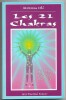
Les 21 chakras - Autant de clés subtilespour dynamiser vos énergies
Guy Trédaniel Editeur 1994 Broché - Couverture glacée illustrée éditeur - 161 pages Bon état 176 g


Koppig Begeesterd Geniaal, Kunstenaars met een eigen museum in Walloni
Borgerhout, Marianne Vanderauwera, 2024 Softcover, 275 pagina's, 21 x 14.5 cm. Nederlandstalige tekst. *Nieuw. ISBN 9789090393384.
Donas, Ianchelevici, Redout , Gr try, Folon, Gaspar, Martin, Rops, Herg , Sax
Einstein dans l'intimité.
Genève, Jeheber, 1951. In-8°, 304p. Broché.
Traduit de l'anglais par Claude Orlanes.
Missing Interaction. Science and Diplomacy in the Early Cold War
, Brepols, 2025 Hardback, Pages: 288, Size:178 x 254 mm, Illustrations:17 b/w, 5 col., 2 maps b/w, Language: English. ISBN 9782503613789.
Summary This book enriches our understanding of the circumstances and conditions that have made the relation between science and diplomacy a primary concern of the political landscape in the twenty first century. As western liberal democracy and its effects on the environment but also on global war politics are under question, authors in this collective volume rethink the effects that an ahistorical definition of science diplomacy has had on world politics. They document the historicity of the entanglement between, on the one hand, epistemic practices and knowledge production and, on the other, foreign policy strategies and negotiation tactics. The book is the first in a series of what Rentetzi calls 'Diplomatic Studies of Science', a highly inter- and trans- disciplinary field that analyzes science and diplomacy as historically co-produced. It primarily focuses on the entanglements of science and diplomacy after the Second World War, bridging history of science, diplomatic history and international relations TABLE OF CONTENTS Introduction. The Missing Interaction Part 1. Diplomatic epistemology at large Emily Baum (University of California, Irvine) Needle Diplomacy. Acupuncture and Scientific Exchange in Cold War China and the United States Aya Homei (University of Manchester) From 'Integration Project' to 'Three-in-One Project'. Family Planning and Health Diplomacy between Japan and the People's Republic of China, 1970s-1980s Maria Rentetzi (Friedrich-Alexander-Universit t Erlangen-N rnberg) The Global Experiment. How the International Atomic Energy Agency Proved Dosimetry to Be a Techno-Diplomatic Issue. Grigoris Panoutsopoulos (Universitat Autonoma de Barcelona) Investigating CERN's Science Diplomacy in the Midst of the Cold War. The Case of the CERN-Serpukhov Collaboration Part 2. International organizations in focus Gordon Barrett (University of Manchester) A Disunited Front? The World Federation of Scientific Workers and the 1952 Korean Bacteriological Warfare Allegations Loukas Freris (Friedrich-Alexander-Universit t Erlangen-N rnberg) "Through Diplomatic Channels". Science, Diplomacy, and Greece's Efforts for Election to the IAEA Board of Governors, 1957-1961 Barbara Kirsi Silva (Universidad Alberto Hurtado, Chile) Reaching for the Stars during the Cold War. Science and Diplomacy in the Rise of Astronomy in Chile Gloria Maritza G mez Revuelta (El Colegio de M xico) Cosmic Diplomacy and Vertical Sovereignty. The Equator's Claims over the Geostationary Orbit, 1975-1982 Part 3. Actors at the crossroad of science and diplomacy Fintan Hoey (Franklin University Switzerland) Imai Ry?kichi. Japan's Nuclear Diplomat Maria Rentetzi, Kapil Patil, and Irina Fedorova (Friedrich-Alexander-Universit t Erlangen-N rnberg) Cooperation or Control? Scientist-Diplomats, the IAEA, and the Global Nuclear Order
Women Composers in New Perspectives, 1800-1950. Genres, Contexts and Repertoire
, Brepols, 2023 Hardback, 362 pages, Size:210 x 270 mm, Illustrations:6 b/w, 34 musical examples, Languages: English, French, Italian. ISBN 9782503606309.
Summary This volume offers new scholarship on women composers of the past two centuries, covering a wide range of repertoire, institutions and locations, with chapters focusing on such varied topics as women writing opera in early nineteenth-century Paris; the intertextual relationship between works by Fanny Hensel and Felix Mendelssohn; women composers writing for instruments not usually associated with them in their time - specifically horn, and organ; and the subversive musical activity of female prisoners in Spain under the Franco regime. In two introductory chapters the editors present their broad perspective on women composers both in history and in modern scholarship, with particular reference to socio-historical and pedagogical aspects, and arguing the case for continued efforts to promote women's music. The 14 chapters that follow are arranged in two parts, divided between nineteenth- and twentieth-century topics. Their authors draw on a variety of sources, including archival documents, letters, diaries, and memoirs, to illuminate the musical works produced by women during the period and the contexts in which they were written, performed, and disseminated. Collectively the chapters demonstrate the richness inherent in this area of study; in reflecting some of the directions being explored in current scholarship, they provide impetus for further research. TABLE OF CONTENTS Mariateresa Storino - Susan Wollenberg Preface Susan Wollenberg (Why) Do We Need 'Women Composers'? Mariateresa Storino She is not a woman composer - yet a composer, and also a woman : La creativit femminile 'oltre' il genere Part I: Nineteenth-Century Music Chapter One: Florence Launay She is the first, she is the only one of her sex who has vanquished on the operatic stage : The Career of Sophie Gail at the Th tre de l'Op ra-Comique, 1813-1818 Chapter Two: Maria Stratigou Louise Farrenc's Piano tudes: Dates, Purpose, Reception, and Function Chapter Three: Siegwart Reichwald Hensel the Progressive: Narrative Strategies in Fanny Hensel's Piano Trio, Op. 11 and Felix Mendelssohn's String Quartet, Op. 80 Chapter Four: Anja Bunzel Countess Elise von Schlik (Eli?ka ?likov ): Salonni re, Patroness, Composer Chapter Five: Christine Fischer A Swiss Woman in Italy: Fanny H nerwadel on Her Study Trip 1853-1854 Chapter Six: Fauve Bougard L'ascension des femmes vers les classes de composition: le cas du Conservatoire royal de Bruxelles au xixe si cle Chapter Seven: Steven Young Les Organistes oubli es: Forgotten Female Organist-Composers of France Part II: Twentieth-Century Music Chapter Eight: Orietta Caianiello The Emancipation of Female Musical Writing in Post-Victorian England. From Song-Cycles to Phantasies: The Society of Women Musicians Chapter Nine: Rhiannon Mathias Grace Williams and Welsh Music: Triads, Orchestral Music and New Beginnings Chapter Ten: Amy E. Zigler Perhaps what men call a sin? : An Examination of Ethel Smyth's The Prison Chapter Eleven: Elisabeth Kappel The Compositional oeuvre of Two Viennese 'Higher Daughters': Else R thi and Vilma Webenau (c. 1900-1950) Chapter Twelve: Peter Asimov Yvonne Loriod, Ultramodernist: Preliminary Glimpses at a Compositional Legacy Chapter Thirteen: Daniel Lienhard Chamber Music and Concertos for Horn/s by Women Composers - A Survey Chapter Fourteen: Elsa Calero-Carramolino You lack men's creativity : Music and Women in Prisons under Franco (1938-1948) Abstracts and Biographies Index of Names
RUBENS 1577-1640
, Confidential Concepts Int. 2012, 2012 Hardcover, 255 seiten, Deutsche sprache, 170 x 155 mm, im neue zustand. ISBN 9781780423685.
F r seine wohlgeformten, lasziven nackten Frauen ber hmt, war Peter Paul Rubens erstes Anliegen die Darstellung der Sinnenfreuden in all ihren Formen. Ein Barockmaler, der in seinem gesamten k nstlerischen Schaffen die Freuden und Wunder des K rperlichen feierte, die strikten sozialen Vorschriften zugunsten einer emotionalen und sinnlichen Portr tierung der Nacktheit aufgebend, um die Sch nheit des menschlichen K rpers zu zelebrieren, die f r den K nstler ebenso nat rlich war wie die Landschaften seiner Jugend. In einem ppig illustrierten Bildband entdecken Maria Varshavskaya und Xenia Egorova diesen fl mischen K nstler und setzen einen einzigartigen Fokus auf sein Werk.