 Write to the booksellers
-
Type
Art print (2)
Autograph (4)
Book (33658)
Magazine (146)
Manuscript (3)
Maps (1)
Photographs (8)
-
Latest
Last 24h (1)
Last 3 days (14)
Last month (190)
Last week (111)
-
Language
Chinese (1)
Dutch (3)
English (108)
French (33570)
German (9)
Greek (1)
Italian (112)
Japanese (1)
Latin (5)
Polish (1)
Portuguese (4)
Russian (3)
Spanish (3)
Swedish (1)
-
Century
16th (32)
17th (77)
18th (570)
19th (4301)
20th (11262)
21st (1705)
-
Countries
Belgium (7839)
Brazil (14)
Canada (11)
Côte d'Ivoire (35)
Denmark (146)
France (24511)
Germany (9)
Greece (3)
Netherlands (1)
Switzerland (1253)
-
Syndicate
ALAC (11)
CLAM (15)
CLAQ (3)
CNE (19)
ILAB (13900)
NVVA (532)
SLACES (531)
SLAM (13117)
SNCAO (64)
Alma-Tadema - Sir Lawrence Alma-Tadema 1836-1912.
, van Gogh museum / Waanders , 1996 softcover, 287 pagina's, met prachtige illustraties in kleur, lit. index.noten. ISBN 9789040099045.
Lawrence Alma-Tadema (1836-1912). Geboren in Friesland en vanaf 1870 werkzaam in Londen, was ongelooflijk succesvol in het Victoriaanse Engeland en behoorde tot de meest gevierde en best betaalde kunstenaars. Hij specialiseerde zich in het weergeven van antieke zeden en gewoonten. Zijn voorstellingen waren gebaseerd op de nieuwste archeologische ontdekkingen en geschilderd met verbazingwekkende details. Met koel marmer, diepblauwe zeeen, kostbare stoffen en elegante personages, dit alles gestileerd volgens de Victoriaanse smaak, riep hij een poetisch beeld op van de antieke wereld. Naast de bijna obsessieve aandacht voor het detail worden Alma-Tadema's schilderijen gekenmerkt door bijzondere lichteffecten, composities met duizelingwekkende perspectieven en fraaie doorkijkjes. Deze illusionistische trucs, waardoor de toeschouwer als het ware in het beeld getrokken wordt, zouden later worden opgepakt door de filmindustrie van Hollywood. Deze bijzondere publicatie geeft een representatief
Catalogue de l'exposition itinérante. A la découverte de l'âge d'or des sciences arabes
2019 Bruxelles, Luc Pire, 2019, in 4° broché, 127 pages ; très nombreuses illustrations in et hors-texte ; couverture illustrée.
Exposition organisée par la Communauté Universitaire de Bruxelles. ...................... Photos sur demande ...................


Phone number : 04 77 32 63 69
Les aborigènes australiens
1967, nrf Gallimard, collection Bibliothèque des sciences humaines, in-8 broché de 448 pages + 32 pages d'illustrations en noir et blanc, couverture blanche, titrage rouge et vert, traduit de l'anglais par A. et S. Devyver | Etat : Bon état, couverture légèrement défraîchie, coins et coiffes un peu usés, pliure sur le 1er plat (Ref.: ref82190)
nrf Gallimard
Un sale type
Henri Veyrier, coll. « off » 1977 In-12 broché 27,5 cm. Très bon état d’occasion.
Très bon état d’occasion
Typical Venice? The Art of Commodities 13th-16th Centuries. ,
, Brepols - Harvey Miller 2020, 2020 Hardcover, . iv + 268 p., 70 col. ills , 220 x 280 mm, English, FINE ISBN 9781912554300.
What is the art of commodities, and how does it contribute to shaping a city? The case of Venice, which perhaps more than any other late medieval or early modern city depended on trade, offers some widely applicable considerations in response to these questions. Commodities exist as such only when they can be bought and sold. Select materials, techniques and tools, motifs, and working processes are entailed in the conception and realization of commodities, with the aim of producing and selling in numbers. The art of commodities is an art of anticipation and organization, as complex as the material, social, and symbolic situations it results from, deals with, and contributes to shaping. In turn, an analysis of commodities allows for profound insights in these situations. The art of commodities ultimately presents specific challenges, solutions, and styles; it is an art of objects, as well as an art of cities and societies. In Venice, commodities did much more than circulate throughout the Lagoon: the city was made of them. The studies in this book consider the Serenissima?s diverse commodities, merchants, and routes from multiple perspectives. Ella Beaucamp is a doctoral candidate at Ludwig-Maximilians-Universit t M nchen, where she developed her dissertation topic within the research group ?Premodern Objects. An Archaeology of Experience?, led by Philippe Cordez. She studies the high medieval stone reliefs of Venetian house facades, relating them to the larger context of Mediterranean trade and artistic production. The Centro Tedesco di Studi Veneziani, the Gerda Henkel Stiftung, and the Max Weber Foundation ? German Humanities Institutes Abroad have supported her work. For her master?s thesis she was the recipient of the Heinrich W lfflin Prize from Ludwig-Maximilians-Universit t M nchen. Philippe Cordez is Deputy Director of the German Center for Art History in Paris. His research and teaching deal with medieval art history and more generally with object studies in art history. This work has been supported by the cole des Hautes tudes en Sciences Sociales in Paris, the Universit t Hamburg, the Kunsthistorisches Institut in Florenz ? Max-Planck-Institut, Ludwig-Maximilians-Universit t M nchen, the Universit de Montr al, and the Sterling and Francine Clark Art Institute, Williamstown. His book Treasure, Memory, Nature: Church Objects in the Middle Ages, translated from French and awarded the Prize of the German Medievalists? Society (Medi vistenverband e.V.), is available at Harvey Miller Publishers.
LUX AETERNA Ellen Marie.
, Stichting Kunstboek, 2022 HB, 290 x 240 mm, 144 pages, 80 Kleurenillustraties, EN-NL edition. ISBN 9789058566812.
Kunstenares Ellen Marie grijpt terug naar de ambachtelijkheid van oude meesters. Dat leerde ze niet aan de Willem De Kooning Academie waar ze eerst studeerde, maar aan de Barcelona Academy of Art, waar ze traditionele teken- en schildertechnieken kreeg onderwezen. Nu heeft ze een eigen studio in Barcelona en geeft ze er les aan de Academy. Lux Aeterna, 'Eeuwig Licht' is een reeks van 57 schilderijen waarin ze het proces volgt van een dansende man op weg naar zelfverwezenlijking, de hoogste der menselijke behoeften. In het eerste deel treffen we hem aan kronkelend van zielenpijn, getormenteerd doordat een blinddoek hem belet het licht dat hem omringt, waar te nemen. In deel twee valt de blinddoek af en komt er geleidelijk een dans op gang. Er ontstaat een dialoog tussen het licht dat op zijn lichaam valt en het onzichtbare licht, de levenskracht die van binnenuit opwelt, eerst ingetogen daarna steeds woester. In het derde deel spatten de klodders verf van het doek. De vorm valt meer en meer uit elkaar en transmuteert tot een onherkenbare massa waarin nog slechts de suggestie van een figuur zit. In het vierde deel ten slotte, vindt de man na een lange eenzame tocht verwantschap bij gelijkgestemde zielen die baden in het goddelijke licht. Dit verhaal verbeeldt de innerlijke zoektocht van de kunstenares naar Waarheid, Licht en Vrijheid. Kunstrecensent Koen Van Damme (The Art Couch) schreef vijf gedichten bij dit bijzondere werk.
Johannes Kahrs: Tropical Nights
, Kunsthalle Nurnberg, Verlag Fur Moderne Kunst, 2014 Hardcover, 80 pages, English, . ISBN 9783869840864.
Berlin-based artist Johannes Kahrs (born 1965) presents Tropical Nights, a collection of 26 recently completed figurative paintings. Kahrs is often inspired by film and photography, and many of his subjects come directly from movies or the artist's own street photography.
De la connoissance et du traitement des maladies, principalement des aiguës.
A Paris, chez Valade, 1774. In/12 reliure plein veau du temps tacheté, dos à nerfs à caissons doré et pièce de titre rouge, tranches rouges, xlviij de préliminaire table et approbation, 492 pages. Reliure défraîchie (usures ; coiffes avec manques). Les premiers feuillets sont sur papier bleuté. Pages de garde manuscrites, page de titre avec un tampon.

Mystère Magazine n°135
Opta 1959 127 pages in8. 1959. broché. 127 pages. Mystère Magazine est une revue mensuelle française de littérature policière éditée par OPTA de 1948 à 1976. Il s'agit de la version française de l'Ellery Queen's Mystery Magazine américain publiant chaque mois un choix de nouvelles policières d'auteurs renommés du genre
Etat correct couverture usagée
Détermination du nombre des intégrales abéliennes de première espèce
P., Gauthier-Villars, 1876, un volume in 4, broché, couverture imprimée, 48pp.
---- EDITION ORIGINALE de la thèse de doctorat ès sciences mathématiques soutenue le 29 Juillet 1876 par M. Elliot devant la Faculté des Sciences de Paris**1965/L7AR(dossier)
ETUDES DE PSYCHOLOGIE SEXUELLE .
Préface et notes établies par le professeur HESNARD 1966 . Cercle du Livre précieux ,Tchou Quinze volumes in 8° carré reliés toile rouge de l'éditeur illustré d'un médaillon ovale sur le premier plat .Série complète en excellent état .
Bon exemplaire .
Essai sur l'Histoire naturelle des Corallines, et d'autres productions marines du même genre qu'on trouve communément sur les côtes de la Grande-Bretagne et d'Irlande; auquel on a joint une description d'un grand polype de mer. Traduit de l'anglois.
La Haye, Pierre de Hondt, 1756. In-4 de XVI-125-(3) pp., 1 frontispice et 39 planches numérotées en couleurs, veau porphyre, dos orné à nerfs, pièce de titre en maroquin brun, fleurons aux angles et triple filet doré d'encadrement sur les plats, gardes de papier dominoté doré, tranches dorées (reliure de l'époque).

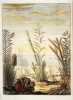
Première et seule édition française, l'un des rares exemplaires avec les planches coloriées à l'époque, traduite et annotée par Jean-Nicolas-Sébastien Allamand (1713-1787), professeur de philosophie et de mathématiques à Leyde, collaborateur des éditions néerlandaises de Buffon. L'édition originale anglaise avait paru à Londres en 1755 ; une édition hollandaise parut la même année que la présente traduction (1756) et une édition allemande piratée en 1767.John Ellis (Irlande, ca 1710 – Londres, 15 octobre 1776), marchand de lin à Londres, fut l'un des premiers zoologistes marins européens. Linné, qui le désigna comme « une étoile de l'histoire naturelle » et « le principal soutien de l'histoire naturelle en Angleterre », lui dédia en 1763 le genre Ellisia (Hydrophyllacées). Membre de la Royal Society depuis 1754, lauréat de la médaille Copley en 1767, Ellis correspondit abondamment avec Linné, Solander et les naturalistes les plus éminents de son temps. « Ellis's zoophyte descriptions and professionally drawn engravings, and his scientific approach, were outstanding » (Stafleu & Cowan, Taxonomic Literature, 1661). Avec le Suédois Daniel Solander (1733-1782), il démontra la nature animale des éponges, jusqu'alors classées parmi les plantes marines. Ses études sur les micro-organismes le conduisirent à conclure qu'ils causaient la putréfaction, quelque quatre-vingts ans avant Pasteur. Le présent ouvrage, premier travail scientifique à établir la nature animale des coraux, fut immédiatement reconnu comme un travail fondateur.Les 39 planches furent gravées par James Kirk, J. Mynde et H. Roberts d'après les dessins de Georg Dionysius Ehret (1708-1770), le plus grand illustrateur botanique et zoologique du XVIIIe siècle.Provenance : bibliothèque du marquis de Vichy (ex-libris armorié) ; étiquette gravée Catalogue des Frères Périsse, Imprimeurs-libraires à Lyon ; ex-libris manuscrit à l'encre du temps n° 57 Bourneville.Brunet, II, 963 ; Nissen, BBI 590 ; Stafleu & Cowan, Taxonomic Literature, 1661 ; Stafleu, Linnaeus and the Linnaeans, pp. 151 et 236, 1971 ; Blanche Henrey, British Botanical and Horticultural Literature, II, p. 28.
Les animaux préhistoriques, L'extraordinaire histoire de la vie avant l'homme.
GRUND. 1975. In-4. Relié. Bon état, Couv. convenable, Dos satisfaisant, Intérieur frais. 96 pages. Nombreuses illustrations couleurs hors texte. Reliure éditeur. Couverture toilée.. . . . Classification Dewey : 570-Sciences de la vie
Dinosaures, poissons, mammifères. Classification Dewey : 570-Sciences de la vie
Le gaz dans la vie moderne . Avec 33 figures dans le texte. Deuxième édition revue
,Paris, Félix Alcan 1933, 231 pp., 1 vol. in 12 br. défraîchi. La fabrication du gaz, la distribution, les installations intérieures, les applications du gaz, les sous-produits de la distillation, les concessions gazières, l'industrie du gaz et l'économie nationale.
ETUDES SUR LA BONTE .
Etude philosophique et graphologique . 1905 . Paris ,Aux Bureaux de la Graphologie , Plaquette grand in 8° br. 40 pp.(Qq. Rouss.)
Non coupé .
Materiality of Sound in Chant Manuscripts in the East
, Brepols, 2025 Paperback, Pages: 280, Size:216 x 280 mm, Illustrations:142 b/w, 11 col., 24 tables b/w., 7 tables col., Languages: English, French, Italian. ISBN 9782503610092.
Summary The two books of Scriptor, Cantor & Notator present an innovative multi-author project dealing with the complex interconnections between learning, writing and performing chant in the Middle Ages. A number of different methodological approaches have been employed, with the aim of beginning to understand the phenomenon of chant transmission over a large geographical area, linking and contrasting modern definitions of East and West. Thus, in spite of this wide geographical spread, and the consequent variety of rites, languages and musical styles involved, the common thread of parallels and similarities between various chant repertoires arising from the need to fix oral repertories in a written form, and the challenges involved in so doing, are what bring this wide variety of repertoires and approaches together. This multi-centric multi-disciplinary approach will encourage scholars working in these areas to consider their work as part of a much larger geographical and historical picture, and thus reveal to reader and listener more, and far richer, patterns of connections and developments than might otherwise have been suspected.? The Materiality of Sound in Chant Manuscripts in the East brings together articles on ancient Greek, Byzantine, Coptic and Armenian music scripts in the East. Together with the collection of essays published in The Materiality of Sound in Chant Manuscripts in the West, these books discuss local scribal peculiarities and idiosyncrasies beyond the cultural and geographical contexts of production and uses of their manuscript sources.? TABLE OF CONTENTS Introduction The Early History of Notation Writing music on Greek texts during the first Christian millennium (Alexandru, Maria) La notation musicale grecque, une affaire d'artistes ou d'artisans ? (Perrot, Sylvain) Prescriptive Notations Les tableaux de signes ekphon tiques : nouvelles consid rations partir des signes prosodiques (Zographos, Anastasios) La notazione ecfonetica bizantina: chaos e kosmos nel cosiddetto sistema degenerato (Tessari, Silvia) Exegete and Cantor A Kalophonic Verse from the Second Psalm composed by John Koukouzeles: From Manuscript to Performance (Chaldaeakes, Achilleas G.) Le chantre dans les communaut s juives m di vales (Cerveux, Alexandre) Regional Scripts and Repertories The Asmatikon Notation. New Evidence (Kritikou, Flora) Scriptor, Cantor, Notator. The Case of the Armenian Neumes (Utidjian, Haig) No Notation, No Problem. Modern Mnemonic Movement in Ancient 'Pharaonic' Singing (Hanna, Mena Mark) The last 'scriptor cantilenae'. Composing and anthologizing on the eve of music typography in the Balkans (1820) (Plemmenos, John) List of Manuscripts List of Relevant Names List of Places
Materiality of Sound in Chant Manuscripts in the West. Scriptor, Cantor & Notator (Volume I)
, Brepols, 2023 Paperback, 328 pages, Size:216 x 280 mm, Illustrations:107 b/w, 33 tables b/w., 2 maps b/w, Language(s):English, Italian, French. ISBN 9782503606149.
Summary Scriptor, Cantor & Notator is an innovative multi-author project dealing with the complex interconnections between learning, writing and performing chant in the Middle Ages. A number of different methodological approaches have been employed, with the aim of beginning to understand the phenomenon of chant transmission over a large geographical area, linking and contrasting modern definitions of East and West. Thus, in spite of this wide geographical spread, and the consequent variety of rites, languages and musical styles involved, the common thread of parallels and similarities between various chant repertoires arising from the need to fix oral repertories in a written form, and the challenges involved in so doing, are what bring this wide variety of repertoires and approaches together. This multi-centric multi-disciplinary approach will encourage scholars working in these areas to consider their work as part of a much larger geographical and historical picture, and thus reveal to reader and listener more, and far richer, patterns of connections and developments than might otherwise have been suspected. Scriptor, Cantor & Notator is published in two books. The first, The Materiality of Sound in Chant Manuscripts in the West, brings together articles on several different families of early music scripts in the Latin West and provides a vividly diverse picture of some of the best current scholarship on the various types of ancient and medieval musical notation. TABLE OF CONTENTS Methodology Concepts and Taxonomies of Music Scripts (Rankin, Susan) Design, and the Historiography of Early Music Scripts (Varelli, Giovanni) Appunti metodologici sullo studio del canto liturgico (Albiero, Laura) Indeterminacy. New Aspect of Meaning in Gregorian Chant (Mascare as Garza, scar) Guiding Silence. The Function of Melodic Interruptions in Medieval Chant (Lousberg, Leo) Et gloriosus in saecula . Pal ographie des notations franques nord-occidentales (970-1120) (Goudesenne, Jean-Fran ois) Manuscripts and Manuscript Fragments Reuniting Fragments and Reconsidering the Scribal History of the Beneventan Zone (Nardini, Luisa) Frammenti di un antifonario in notazione nonantolana (Roncroffi, Stefania) Notation in Transition? A Palaeographical Study of the Insular Missal EXcl 3515 (Mannion, Anne) Regional Scripts and Repertories Notazioni neumatiche dei secoli XI-XII nella Biblioteca Capitolare di Verona. Riflessioni e spunti di ricerca (Cunego, Giovanni) La notation musicale dans la Catalogne m di vale. Autour des origines et son volution (Garrigosa i Massana, Joaquim) The Scribe and the Notator as the Bearer of Identity. Bohemian Notation in Late Mediaeval Manuscripts of Central Europe (Veselovska, Eva)
Tweede Wereldoorlog in Stabroek, Hoevenen, Putte
, Heemkring Molengalm, 2020 softcover, 464 pagina's met talrijke afbeeldingen.
Wat is er van de nacht?
, Uitgeverij P, 2021 Hardcover, 69 pagina's, 29 x 21.5 cm, illustraties van Els Vos. NL. *Nieuw. ISBN 9789493138629.
Wat is er van de nacht? is een versregel die dichter Richard Foqu ontleende aan het oudtestamentische boek Jesaja, waarin het volk aan de profeet Jesaja vraagt hoelang de wereld nog in duisternis gehuld zal blijven. In wezen gaat het om de fundamenteel-existenti le vraag, waarin ? zoals in Shakespeare?s Hamlet ? de opkomende wachter die vraag stelt aan de dienstdoende en als antwoord krijgt: ?Sta en zeg het zelf.? Dit episch gelaagd en contrapuntisch gedicht dat het individu confronteert met zijn bestaansverantwoordelijkheid, werd in 21 unieke kleuretsen ge llumineerd door kunstenares Els Vos. Tekst en beeld versterken elkaar zo in een sublieme multimediale ervaring die de lezer zonder twijfel lang zal bijblijven.
Les grandes heures de la cuisine Française
Le club français du livre ,1964, in-8 de 281 pages ,illustrations hors-texte ,relié pleine toile éditeur ,Très bon état , .(4 photos du livre sur mon site https://www.vieuxlivre.fr) .Les frais de port pour la France sont offerts à partir de 25 euros d'achat (Mondial relay ). (colissimo suivi +6,90 ).
Elwin Hofman (Redacteur), Magaly Rodr guez Garc a (Redacteur), Pieter Vanhees
Reference : 65554
Business of Pleasure A History of Paid Sex in the Heart of Europe.
, UPL - KU Leuven, 2024 Paperback, 182 pages, 23.4 x15.6cm. 16 illustrations, black & white. ISBN 9789462704107.
In 2022, the Belgian parliament made a landmark decision by approving the decriminalisation of sex work. This move positioned the small nation as the first country in Europe ? and the second globally ? to abandon the hypocrisy of tolerance. But this was not the first time paid sex in Belgium gained international notoriety. The medieval bathhouses and ?frows of Flanders? were well-known throughout Europe. In the nineteenth century, Belgium faced international outrage as the alleged epicentre of white slavery. Yet while Belgians were accused of forcing white women into prostitution, they were left alone when it came to the inclusion of any suspect woman in the prostitution registers of colonial Congo. Throughout the First and Second World Wars, both allied and German soldiers sought relief in Belgian brothels. The Business of Pleasure presents the compelling life stories of sex workers and their interactions with authorities, clients and pimps. Transcending stereotypes, this history of commercial sex offers a nuanced understanding of the difficulties and opportunities associated with paid sex for women, men and trans persons past and present. Elwin Hofman is a cultural historian and writer. He teaches at Utrecht University and has (co)authored several books on cultural history, including a history of homosexuality in Belgium. Magaly Rodr guez Garc a is an authority on the history of international labour organisations and subaltern history. She is a professor at KU Leuven and collaborates with Belgian and foreign colleagues on projects regarding, inter alia, sex work and prostitution policy at the local, national and supranational levels. In the context of oral history projects, she became closely involved with advocacy groups for vulnerable persons such as sex workers and homeless people. Pieter Vanhees is a social historian and has researched the history of prostitution in the nineteenth and twentieth centuries at KU Leuven.
New French Couture: Icons of Paris Fashion
, Harper, 2016 Hardcover, 280 pages, 10.63 x 1.18 x 12.6 inches, English text. New . ISBN 9780062215994.
With more than 175 color high-fashion photographs, this stunning, comprehensive, and authoritative handbook on modern French couture, covering the finest Parisian houses of couture?including Chanel, Dior, Balenciaga, Yves Saint Laurent, Lanvin, and more?and the creative directors who are redefining their legacies for the twenty-first century. While trends emerge from New York, London, and Tokyo, the fashion capital of the world remains the City of Light. From Coco Chanel to Karl Lagerfeld, Christian Dior to Raf Simons, Hubert de Givenchy to Riccardo Tisci, the evolutionary arc of French fashion and its most revered houses grows richer with each season and with a continuous infusion of imaginative new talent. The New French Couture identifies the fashion leaders whose longstanding ateliers have endured, and the creative pioneers who continue to reinvent and reinterpret their signature iconography, including Karl Lagerfeld at Chanel, Raf Simons at Christian Dior, Riccardo Tisci at Givenchy, Alber Elbaz at Lanvin, Alexander Wang at Balenciaga, and Hedi Slimane at Saint Laurent. Though haute couture remains the exclusive domain of a few houses, the Parisian fashion panorama is rife with gifted luxury establishments who specialize in hand-craftsmanship, exquisite design, precious materials, impeccable production, and a celebrity clientele. The New French Couture provides a dazzling tour through the advertising, editorial, runway, and behind-the-scenes lives of these exclusive ateliers, revealing the evolution of each brand, their definitive looks, and fashion ?moments.? Here, too, are profiles of those who have made Paris their home, reimagining contemporary French luxury more independently of the fashion conglomerates, such as Hussein Chalayan, Jean Paul Gaultier, Azzedine Ala a, and Phoebe Philo for C line. Breathtaking in scope and vision, beautiful, sophisticated, and informative, The New French Couture provides a comprehensive glimpse at the breadth of the Paris?s impressive and abiding fashion authority.
John Dunstaple Reading Boethius. John Dunstaple's Annotations to Boethius's De institutione musica in the Manuscript Oxford, Corpus Christi College Library, MS 118
, Brepols, 2026 Paperback, Pages: 240, Size:178 x 254 mm, Illustrations:2 b/w, 50 col., 10 tables b/w., 2 tables col., 17 examples in colour, Language: English. ISBN 9782503624884.
Summary European theory of music up to ca.1550, in many respects, presents a history of the reception of Boethius's treatise De institutione musica (before 510). The annotations introduced to this treatise by John Dunstaple (d. 1453), eminent composer of the late Middle Ages, add to our knowledge of the English chapter of this history. The volume is composed of two parts. The first part includes the edition of Dunstaple's annotations paralleled with relevant parts of Boethius text and provided with the introduction comprising a detailed information on manuscript Oxford, Corpus Christi College 118 and the study of Dunstaple's hand. In the second part of the book, the selected glosses which have the strongest interpretive potential are translated and examined in a large context of music theory of Middle Ages. They present Dunstaple as a careful and competent reader of Boethius's arguments and a composer well-read in music theory current in his time. TABLE OF CONTENTS List of Figures List of Tables Preface and Acknowledgements Introduction (1) Dating, origin, and contents of the first part of Occ. 118 (2) Dunstaple's hand (3) Typology of Dunstaple's annotations and editorial policy Edition of Dunstaple's annotations to Boethius's De institutione musica in Occ.118 Liber I Liber II Liber III Liber IV Liber V Commentary on the Selected Glosses, Additions and Diagrams Chapter One. De musica, Book I 1) General remarks 2) 'republica, liber quidam Platonis' Republic, a certain book by Plato'. Mus. I, 1. 3) 'Musica bene morata' Music of good character. Mus. I, 1. 4) Decretum Lacedaemoniorum Spartan Decree. Mus. I, 1. 5) Diagram of the fundamental consonances. Mus. I, 10. 6) Descriptions of the consonances. Mus. I, 15; Mus. I, 16. 7) The division of the diatessaron and the proportion of the minor semitone. Mus. I, 17. 8) The tone as the difference between the diatessaron and the diapente. Mus. I, 18. 9) The diapason consists of five tones and two semitones. Mus. I, 19. 10) 'Those who make art should be named artifices'. Mus. I, 34. Chapter Two. De musica, Books II and III 1) General remarks 2) The order and positions of the consonances. Mus. II, 19-20. 3) The division of the tone. Mus. III, 1. 4) Calculating the difference between five tones and the bis-diatessaron, and six tones and the diapason. Adding and subtracting musical intervals. Mus. III, 3-4; Mus. III, 9. 5) Dividing the tone according to Philolaos. Mus. III, 5. 6) 'Unitas non est numerus' Unity is not a number. Mus. III, 11. Chapter Three. De musica, Books IV and V 1) General remarks 2) Calculating continuous sesquioctave ratios. Mus. IV, 2. 3) 'Extenta, id est relaxata' Extended means relaxed. Mus. IV, 3. 4) 'Dicciones, id est nomina cordarum' Words, that is, the names of strings. Mus. IV, 3. 5) Diagrams of the eight modes. Mus. IV, 15-17. 6) The division of the monochord. Mus. IV, 18. 7) The divisions of the genus diatonicum according to Martianus Capella. Mus. V, 18. Conclusions Bibliography General Index Permissions to reproduce
ATLAS DE MICROBIOLOGIE .
J.B.BAILLIERE ET FILS. 1898. In-8. Broché. Etat d'usage, Couv. défraîchie, Dos satisfaisant, Intérieur acceptable. XII + 60 planches imprimées en couleurs d'après les dessins de M.Christ Doctoroff ou d'après des photos avec texte explicatif en regard - coins frottés - plats tâchés - adhésif transparent sur le dos allant légèrement sur les plats - déchirures sur la page table des matière et errata ayant des conséquence sur la lecture - petite annotation sur la page de titre - 2 photos disponibles.. . . . Classification Dewey : 500-SCIENCES DE LA NATURE ET MATHEMATIQUES
Classification Dewey : 500-SCIENCES DE LA NATURE ET MATHEMATIQUES

