 Write to the booksellers
-
Type
Art print (2)
Autograph (4)
Book (33639)
Magazine (146)
Manuscript (3)
Maps (1)
Photographs (8)
-
Latest
Last 24h (10)
Last 3 days (97)
Last month (292)
Last week (11)
-
Language
Chinese (1)
Dutch (3)
English (108)
French (33551)
German (9)
Greek (1)
Italian (112)
Japanese (1)
Latin (5)
Polish (1)
Portuguese (4)
Russian (3)
Spanish (3)
Swedish (1)
-
Century
16th (32)
17th (77)
18th (572)
19th (4311)
20th (11272)
21st (1726)
-
Countries
Belgium (7839)
Brazil (14)
Canada (11)
Côte d'Ivoire (35)
Denmark (145)
France (24493)
Germany (9)
Greece (3)
Netherlands (1)
Switzerland (1253)
-
Syndicate
ALAC (11)
CLAM (15)
CLAQ (3)
CNE (19)
ILAB (13937)
NVVA (532)
SLACES (531)
SLAM (13155)
SNCAO (64)
Tables relatives au tracé des courbes de raccordement.
Angers, Cornilleau et Maige, 1846, in 8° relié demi chagrin cerise, dos à faux nerfs orné, XXIII-479 pages.
...................... Photos sur demande ...................


Phone number : 04 77 32 63 69
[Paul Dupont] - PRUVOST, E. [ PRUVOST, Jules Paulin Emile (1833-1913) ]
Reference : 53077
(1887)
Leçons de géométrie analytique à l'usage des élèves de la classe de mathématiques spéciales et des candidats à l'Ecole Normale Supérieure et à l'Ecole Polytechnique ( 2 tomes, complet ) : Tome premier ; tome second géométrie dans l'espace, 2e éd.
2 vol. in-8 rel. demi-percaline verte, société d'imprimerie & librairies administratives & classiques Paul Dupont, éditeur, Paris, 1886 et 1887, 703 pp. et 437 pp.
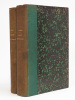
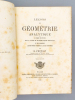
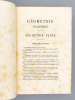
Etat très satisfaisant (couv. lég. frottées, rouss. d'usage, bon état par ailleurs). Natif d'Amiens, Emile Pruvost fut reçu premier au concours d'entrée à l'École normale supérieure en 1853, puis de nouveau premier à l'agrégation de mathématiques en 1859. De 1864 à 1870, il fut professeur de mathématiques spéciales au lycée de Strasbourg, mais perdit son poste suite à l'annexion de l'Alsace. En 1878, il devint professeur de mathématiques spéciales au Lycée Louis-le-Grand, puis Inspecteur général de l'instruction publique (1883).Prix pour l'ensemble
Inter-Ethnic Relations and the Functioning of Multi-Ethnic Societies. Cohesion in Multi-Ethnic Societies in Europe from c. 1000 to the Present, II
, Brepols, 2023 Hardback, 366 pages, Size:156 x 234 mm, Illustrations:8 b/w, 1 tables b/w., 12 maps b/w, 1 maps color, Language: English. ISBN 9782503602288.
Summary The three-volume project Cohesion in Multi-Ethnic Societies in Europe from c.1000 to the Present explores and seeks to find solutions to a crucial problem facing contemporary Europe: in what circumstances can different ethnic groups co-operate for the common good? They apparently did so in the past, combining to form political societies, medieval and early modern duchies, kingdoms, and empires. But did they maintain their ethnic traditions in this process? Did they pass on elements of their cultural memory when they were not in a dominant position in a given polity? The first volume of the project explored written sources about the past to show how communities shaped their collective memories in order to ensure the smooth functioning of multi-ethnic political communities. This second volume looks beyond texts and focuses on activities and events that were designed to build a sense of community within a political community made up of different ethnic groups. The coexistence of different ethnic groups is considered not through the prism of theoretical analyses by intellectual elites, but by following community members' responses to current events as recorded in the sources. TABLE OF CONTENTS Introduction: Inter-Ethnic Relations within Multi-Ethnic Societies ? PRZEMYS?AW WISZEWSKI Organizing Violence: Peace and War in Twelfth-Century Catalonia ? MARIA BONET DONATO The Andalusian Urban Elites and the Almoravids in the Upper Border of al-Andalus during the Twelfth Century. An Example of Multi-Ethnic Convenience ? JES S BRUFAL-SUCARRAT Shaping Identities in a Common Cultural Background: Muslims and Jews in the Medieval Portuguese Kingdom ? FILOMENA BARROS Ethnic and Religious Minorities and the Portuguese Military Orders as Recorded in the Pontificia Corpora (Twelfth to Sixteenth Centuries)? PAULA PINTO COSTA, JOANA LENCART Social and Economic Relations between Sardinians and Aragonese in Twelfth to Fifteenth Centuries ? LUCIANO GALLINARI How to Live Together? Germans and Poles in Silesia in Thirteenth to Fifteenth Centuries ? PRZEMYS?AW WISZEWSKI Between Coexistence and Persecution. Economic Activity and the Cohesion of Multiethnic Societies in Cities of the Polish Territories (between the Thirteenth and the first Part of the Sixteenth Century)? GRZEGORZ MY?LIWSKI Ethnic-Economic Relations within the Cities of Lublin, Zamo??, and Lviv in the Sixteenth and Nineteenth Centuries ? ANDRZEJ PLESZCZY?SKI Economic and Social Aspects of Multiethnic Transylvania during the Thirteenth and Fourteenth Centuries ? COSMIN POPA-GORJANU The Dracula and the Others: The Multi-ethnic Character of the Hungarian Political Elite until the Fifteenth Century ? DANIEL BAGI The Medical Marketplace as a Way of Communicating beyond Religion: non-Christian Medical Practitioners in the Society of the Grand Duchy of Lithuania ? MONIKA RAMONAITE Towns as Areas of Ethnic Communication and Competition: The Case of Karaites in Trakai/Troki/ and Vilnius/Wilno/Vilna in the Seventeenth to Twentieth Centuries ? DOVIL? TROSKOVAIT? A Gift or 'Poklon dla Pana' as One of the Ways of Building Social Cohesion: The Case of the Vilnius Jewish Community in the Second Half of the Eighteenth Century ? JURGITA ?IAU?I?NAIT? -VERBICKIEN? Facades of a Multi-Ethnic Empire: Presenting and Publicizing the Coronation of the 'All-Russian Emperor', Alexander III (1883)? ENDRE SASHALMI Polish American Parishes of the Nineteenth to Twenty First Centuries and their Role in Shaping Polish American Identity and Status ? JOANNA WOJDON Concluding Remarks: Inter-Ethnic Co-operation - Fluid Networks of Everyday Practices ? PRZEMYS?AW WISZEWSKI Index
Oeuvres choisies Campagne philosophique, ou mémoires de M. de Montcal, contenant la guerre d'Irlande, tome 12
1810, Leblanc. in-12 demi-cuir de 582 pages, dorures sur dos. Avec figures. | Etat : Etat moyen, haut du dos abîmé, coins légèrement émoussés. (Ref.: ref12772)
Leblanc
Restauration et prothèse Maxillo-faciales - TOME VIII - la pratique stomatologique
Masson et cie 1935 in8. 1935. Cartonné. illustrations en noir et blanc
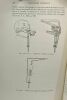
couverture ternie tachée de rousseurs intérieur propre
Epistula consolatoria olim De consolatione in aduersis (CPL 999)
, Brepols, 2023 Hardback, cccxlvi + 52 pages, Size:155 x 245 mm, Illustrations:2 col., Language(s):Latin, Spanish. ISBN 9782503600970.
Summary La Epistula consolatoria o De consolatione in aduersis (CPL 999) es un texto tradicionalmente impreso entre las obras latinas del Padre de la Iglesia Griega Basilio Magno. Se trata de una adaptaci n cristiana de la consolatio antigua que adopta la forma de una carta dirigida a un gen rico frater para ofrecerle consuelo ante la adversidad ?en particular, ante la enfermedad y, espec ficamente, la lepra? y concienciarlo de que la adversidad es el castigo divino del pecador y un est mulo para el justo. El inter s de una nueva edici n es triple. Por un lado, en el aspecto textual, se ha empleado por primera vez el c dice 275 de la Biblioteca municipal de Angers, que constituye el mejor testimonio de la tradici n manuscrita. Su lectura permite, en segundo lugar, un examen detallado de la lengua de la obra, que presenta las particularidades propias del lat n merovingio. Por ltimo, las abundantes citas b blicas pertenecen todav a en su mayor a a la Vetus Latina e incluyen versiones y pasajes de gran valor. El estudio de fuentes, lengua y tradici n manuscrita permite deducir que no se trata de una traducci n del griego, sino de una obra genuinamente latina, compuesta en poca tardoantigua (s. V-VI) probablemente en la Galia.
Pseudo-Cyprianea III: De singularitate clericorum; Tractatus de centesima, de sexagesima, de tricesima
, Brepols, 2026 Hardback, Pages: iv + 460, Size:155 x 245 mm, Illustrations:1 b/w, 33 tables b/w., Language(s):Latin, Greek, Italian. ISBN 9782503589282.
Summary Testo enigmatico quanto ad autore e luogo di provenienza, il De singularitate clericorum sembra rivelare qualcosa del suo mistero grazie all'analisi della superstite tradizione manoscritta e delle attribuzioni del testo ad un autore anonimo, a Origene, Agostino e a quella gi ben nota a Cipriano. Nel De centesima, de sexagesima, de tricesima pseudociprianeo, il 100, il 60 e il 30, cio il triplice frutto della parabola del seminatore (Matth. 13, 8), sono interpretati allegoricamente come le ricompense ultraterrene destinate a tre diversi gruppi di cristiani, a seconda della vita condotta in terra. TABLE OF CONTENTS De singularitate clericorum (CPL 62) - ed. Sincero Mantelli Introduzione 1. Autore e cronologia 2. Il caso delle uirgines subintroductae 3. L'argomentazione del De singularitate clericorum 4. Il De singularitate clericorum fra anonimato e illustri pseudoepigrafi: la traditio textus 5. Ancora sull'origine dell'opera: l'esegesi biblica di Gen. 3, 7 e le sue fonti in Singul. cler. 6. Traduzioni latine di opere greche tra IV e V secolo 7. Libellus hic eruditi facundique hominis esse negari nec debet nec potest : Giuliano d'Eclano traduttore di Teodoro di Mopsuestia 8. Le edizioni di Singul. cler. nei corpora di Agostino e Cipriano 9. Stemma codicum Bibliografia De singularitate clericorum Tractatus de centesima, de sexagesima, de tricesima (CPL 67) - ed. Ilaria Ricciardi Introduzione 1. Aspetti introduttivi allo studio dell'opera 2. Collocazione geografica e datazione 3. Alcune tematiche dottrinali e il contesto culturale dell'autore di Cent. 4. L'esegesi biblica di Cent. 5. La tradizione manoscritta 6. La critica testuale di Cent. e la presente edizione critica Bibliografia Tractatus de centesima, de sexagesima, de tricesima Indices
Pseudo-Eusebius of Alexandria, R mi Gounelle, Aidan Conti, Zbigniew Izydorczyk
Reference : 70484
Late Antique Harrowing of Hell and Its Medieval Reception. Eusebius of Alexandria's Sermons 15 and 17 (CPG 5524 and 5526) and their Latin Rewritings
, Brepols, 2026 Hardback, Pages: 551, Size:156 x 234 mm, Illustrations:4 tables b/w., Languages: English, Latin, Greek. ISBN 9782503614465.
Summary In 1904, Edward Kennard Rand published a Latin sermon by an unknown author from a single manuscript of the ninth century that recounts the amazement of the devil at the crucifixion of Jesus and the devil's defeat at the coming of Christ into the underworld, or the Harrowing of Hell. This Sermo de confusione diaboli et inferni added a new dimension to the already complex body of research on the sermons attributed to pseudo-Eusebius of Alexandria and the Gospel of Nicodemus. A century later, new witnesses of the text edited by Rand and an unedited Latin translation of pseudo-Eusebius' Sermo 17 have begun to shed new light on the interconnectedness of all these materials. The present book critically edits the newly identified Latin documents and discusses them in relation to their Greek source(s) and to one another. It retraces the paths from the protean forms of pseudo-Eusebius' Greek sermons 15 and 17 to their Latin translations, to the Sermo de confusione diaboli et inferni, and to the Gospel of Nicodemus. In the process, it highlights the creativity of the copyists and translators of Late Antiquity and the Middle Ages, and demonstrates their profound interest and investment in the story of Christ's Descent into Hell. TABLE OF CONTENTS Sigla To the Reader Introduction (R. Gounelle) Chapter 1. State of research and new perspectives on Eusebius of Alexandria and the corpus of homilies ascribed to him 1.Did Eusebius of Alexandria really exist? (D. Niquin) 2. The collection of homilies by Pseudo-Eusebius of Alexandria (R. Gounelle) 3. History of research on the Greek manuscript tradition of Sermons 15 and 17 (R. Gounelle) 4. The Greek tradition of the Sermones 15 & 17 (R. Gounelle) Appendix to chapter 1. Edition of Greek texts of sermons 15 and 17 of Pseudo-Eusebius of Alexandria (R. Gounelle) Chapter 2. The Latin witnesses 1. The De passione (A. Conti) 2. The Sermo de confusione diaboli (Z. Izydorczyk) Appendix to chapter 2. Synoptic presentation of the Latin texts of sermo 17 Chapter 3. Relations of the De passione and the Sermo de confusione diaboli with their presumed Greek sources 1. A single translation of Sermo 17 (A. Conti - R. Gounelle - Z. Izydorczyk) 2. The Latin translation of Sermo 15 A. Conti - R. Gounelle - Z. Izydorczyk) 3. The origins of the Latin De confusione text (Z. Izydorczyk - R. Gounelle) Chapter 4 Relationship between De Passione / De Confusione and the Gospel of Nicodemus (R. Gounelle - Z. Izydorczyk) 1. Parallel yet different narratives 2. The relationship between the two versions General conclusion (R. Gounelle - A. Conti - Z. Izydorczyk) General stemma Bibliography Index of biblical citations Index of the Latin words discussed in the notes or in the philological commentary
Opera omnia. Exhortatio poenitendi, Lamentum poenitentiae, Oratio pro correptione uitae
, Brepols, 2021 Hardback, 512 pages, Size:155 x 245 mm, Language: Latin. ISBN 9782503592473.
Summary La Exhortatio poenitendi (CPL 1227), el Lamentum poenitentiae (CPL 1533) y la Oratio pro correptione uitae (CPL 1228) constituyen un corpus altomedieval de tem tica penitencial, tradicionalmente impreso entre las obras espurias de Isidoro de Sevilla. Los dos primeros son textos po ticos: la Exhortatio est compuesta en un tipo particular de hex metros r tmicos, mientras que el Lamentum es un himno alfab tico en septenarios trocaicos r tmicos. La Oratio, por su parte, es una obra en prosa puesta en boca del pecador arrepentido. Sirvi ndose de los Synonyma de Isidoro de Sevilla, entre otras fuentes, el autor desarrolla una exhortaci n a la penitencia compuesta en el estilo sinon mico popularizado por la obra isidoriana. La atribuci n moderna al obispo Sisberto de Toledo, depuesto en el a o 693, fue propuesta por Justo P rez de rbel en 1926. Su xito inicial divulg la denominaci n, que fue progresivamente puesta en duda y es hoy rechazada; su nombre se conserva como mera designaci n. Los indicios disponibles, de hecho, no apuntan hacia un origen hisp nico, sino hacia un autor italiano o galo del s. VIII d. C. La presente edici n, basada en un nuevo estudio directo de toda la tradici n conocida, ofrece el primer texto cr tico completo del corpus.
BACTERIOLOGIE.
MASSON. 1984. In-8. Broché. Bon état, Couv. convenable, Dos satisfaisant, Intérieur frais. 158 pages - quelques figures en noir et blanc dans le texte.. . . . Classification Dewey : 500-SCIENCES DE LA NATURE ET MATHEMATIQUES
Collection abrégés - Traduit de l'anglais par G.Hamoir. Classification Dewey : 500-SCIENCES DE LA NATURE ET MATHEMATIQUES
Lettre de Macaire sur la gloire des saints
, Brepols, 2025 Paperback, Pages: 254, Size:180 x 265 mm, Languages: French, Greek, Arabic. ISBN 9782503617725.
Summary La Lettre de Macaire sur la gloire des saints (CPG II/1 2415.6) se pr sente comme un appel la saintet adress par saint Macaire ses disciples. Cette pi ce importante de la litt rature macarienne est centr e sur l'amour de Dieu qui implique n cessairement celui des fr res, et est riche d'observations sur la vie en communaut . Elle est pr serv e en deux recensions, la premi re conserv e en grec, en g orgien et en arabe, trois versions qui se correspondent et se compl tent mutuellement, la seconde dans deux t moins uniques, l'un arabe et l'autre thiopien, qui ne pr sentent entre eux que des diff rences mineures. Cette Lettre est publi e, avec introductions, textes grec, arabes et thiopien, et leurs traductions, en deux fascicules, dont le second est sous presse. Des index linguistiques d velopp s pour le grec et l'arabe figurent dans PO 258 (59.3), et on trouvera dans le second fascicule une synopse de toutes les recensions en traduction fran aise (y compris celle du g orgien, paru Tbilissi en 1982), ce qui en fait un instrument de travail pr cieux pour les tudes de spiritualit monastique byzantine et orientale en g n ral. TABLE OF CONTENTS Introductions Partie grecque, par Paul G hin Introduction g n rale Partie arabe, par Ugo Zanetti Introduction aux versions arabes Introduction philologique aux versions arabes Bibliographie ditions et traductions Texte grec (G) et version arabe (S), dition en parall le, apparat critique, traduction Apophtegme J: texte arabe, apparat critique, traduction Recension br ve H, traduction seule Annexes
Lettre de Macaire sur la gloire des saints
, Brepols, 2026 Paperback, Pages: 169, Size:180 x 265 mm, Languages:Arabic, Ethiopic, French. ISBN 9782503623467.
Summary Apr s le volume PO 258 (59.3), voici le second et dernier fascicule de la Lettre de Macaire sur la gloire des saints (CPG II/1 2415.6), avec la recension macariote , conserv e en arabe et en thiopien, ainsi que trois annexes destin es la comparaison du texte des diverses versions. De celles-ci (grec, g orgien et arabe pour la recension sina tique, publi e dans PO 258, ainsi qu'arabe et thiopien pour la recension macariote, imprim e ici), les deux premi res annexes donnent la comparaison chiffr e, d'apr s le num ro des versets, et mettent en vidence les regroupements. La troisi me annexe, elle, fournit en quatre colonnes et en traduction fran aise, une synopse entre toutes ces versions, verset par verset et en faisant ressortir le parall le la fois par la disposition typographique et par des couleurs. On esp re avoir ainsi fourni au lecteur int ress un instrument de travail commode pour l' tude de la spiritualit monastique, en particulier celle de la litt rature spirituelle macarienne . TABLE OF CONTENTS Introduction I. La recension macariote (M) 1. Les manuscrits 2. dition du texte de M : observations philologiques II. La recension thiopienne (E) 1. Le manuscrit 2. dition du texte : observations philologiques Bibliographie ditions et traductions Texte arabe macariote (M) et recension thiopienne (E), dition en parall le, apparat critique, traduction Annexes
SCHEMAS ET TRAVAUX PRATIQUES DE SCIENCES NATURELLES - BACCALAUREAT 2E PARTIE - INCOMPLET - Graine et plantule de haricot - étude morphologique d'une tige , d'une fleur - semences - microscope interprétation de coupes - cellules végétales -etc...
HACHETTE. 1953. In-8. En feuillets. Etat d'usage, Livré sans Couverture, Dos satisfaisant, Intérieur acceptable. 44 pages en feuillets + 40 planches - livré sans couverture.. . . . Classification Dewey : 500-SCIENCES DE LA NATURE ET MATHEMATIQUES
Graine et plantule de haricot - étude morphologique d'une tige , d'une fleur - semences - microscope interprétation de coupes - cellules végétales - coupe tranversale d'une organe végétal etc - planches : la cellule - structure de l'os - la moelle épinière - l'oeil - de l'ovule à la graine etc ... Classification Dewey : 500-SCIENCES DE LA NATURE ET MATHEMATIQUES
Baselitz, Die Afrika-Sammlung
, Prestel 2003, 2003 Paperback, 192 seiten, mit 92 illus.in duotone , 41 in b/w, wie neu, mit staubmantel, . ISBN 9783926154620.
Der Ruf der Afrika-Sammlung von Baselitz reicht weit ber den Kreis der Kenner hinaus. Ihr besonderer Charakter r hrt daher, dass sie von einem K nstler ohne R cksicht auf g ngige Vorlieben oder ethnologische Systematik zusammengetragen wurde. Wie in seinem eigenen Oeuvre scheut Baselitz weder das Risiko der neuen, ungewohnten Form noch den sthetischen Bruch. Er konzentriert sich vielmehr als K nstler und Sammler auf die Intensit t des jeweiligen Werkes. Die Stoffpuppen, K pfe und gro en Holzfiguren der Bwende/Bembe (Republik Kongo) bilden neben der gewaltigen Werkgruppe der Teke das Herzst ck der Sammlung. Dar ber hinaus ist Baselitz ein Pionier auf dem Gebiet des Sammelns ostafrikanischer Skulptur. In ihrer Gesamtheit zeigen diese Arbeiten ein berraschend anderes Afrika: Zu sehen sind etwa kniehohe, bunt bemalte Stoffpuppen, die Reliquien eines Verstorbenen enthielten und an die sich die Angeh rigen mit ihren Gebeten wenden konnten. Beeindruckend sind auch die Wahrsagegef e: K rbe, gef llt mit kleinen Holzfiguren, Spiegeln, Federn, Tierh rnern und anderen symbolischen Gegenst nden, aus denen der Wahrsager L sungen f r Ratsuchende liest.
LA PLACE DE L'HOMME DANS LA NATURE. STRUCTURE ET DIRECTIONS EVOLUTIVES
ALBIN MICHEL / SCIENCES D'AUJOURD'HUI. 1981. In-12. Broché. Bon état, Couv. convenable, Dos satisfaisant, Intérieur frais. 171 pages. Quelques illustrations en noir et blanc, dans le texte.. . . . Classification Dewey : 500-SCIENCES DE LA NATURE ET MATHEMATIQUES

Préface de Jean Piveteau. Classification Dewey : 500-SCIENCES DE LA NATURE ET MATHEMATIQUES
Le groupe zoologique humain - Structure et directions évolutives.
Editions Albin Michel 1956, in/8 broché, 163 pages. Préface de Jean Piveteau
Vida de Sant Honorat,
Turnhout, Brepols, 2008 Paperback, VI+772 p., 15,6 x 23,4. ISBN 9782503524047.
Visitors to the Isle de Lerins, just off Cannes, can see not only the island but also what today is a Cistercian abbey founded about 410 A.D. by St. Honoratus (350-429), hermit, monk and bishop of Arles. Scarcely nothing has changed physically, and the wild unforgiving landscape of the place explains the nature of many of the events described in this verse text, especially the terrifying massacre of the community after the death of Honoratus, which contains horrifying details very rare in mediaeval narratives. Given the importance of this story, based on nine manuscripts, it is astonishing that a complete edition has not appeared before this date. The late Ingegard Suwe Ericsson, a Swedish scholar, had undertaken an edition of the first two books, approximately the first half of the work, for her doctorate, published in 1943, in a volume which is naturally difficult to find in libraries. Thereafter, she had hoped to create a complete edition, but, sadly, her profession as a teacher, the care she gave her husband and, in later years, her own ill-health prevented her from continuing the work. In 1988, she contacted Regina af Geijerstam, emeritus professor of Spanish, University of Stockholm, to ask if she would find an editor who would finish the work, for which Suwe Ericsson had a text of the last three books. In 1989, Peter Ricketts made the journey to Ostersund, where Suwe Ericsson was living, and he decided to undertake the work himself. She died in 1991. In 2000, Cyril Hershon offered his support to bring the whole project to fruition, and the edition will shortly be ready to go to press. Not only have Association Internationale d?Etudes Occitanes and Brepols given their approval for the publication of the second half of the work, dealing with the miracles performed by Honoratus after his death, but also for the addition of the work of Ingegard Suwe Ericsson, to give the mediaeval Occitan work in its entirety in one volume. Ingegard Suwe Ericsson?s 1943 edition has been respected, apart from the occasional correction to the text. Her introduction considers the manuscript tradition, the language of the scribe in a full linguistic analysis, with examples taken from the first 4127 lines, and only minor elements, such as a resume in French of this part and a list of errors found in the venerable edition by Sardou have been omitted. Thereafter, there is a complete integration of the first and second parts: the text, accompanied by footnotes, followed by notes to the text, a selective glossary, a table of proper names, and an updated bibliography. The whole is a text which repays reading and will fill a gap in the repertoire of important mediaeval texts. Languages : French, Occitan.
Breviari d'amor de Matfre Ermengaud vol. IV,
Turnhout, Brepols, 2004 Paperback, XII+592 p., 15,6 x 23,4. ISBN 9782503515229.
The Breviari d'Amor dates from 1288 (and was probably completed around 1292), is about 34,500 lines long and written in octosyllabic rhyming couplets. It exists in twelve full or almost full manuscripts and twelve fragments. It is written in Medieval Occitan and is the product in part of a long theological tradition and in part of the courtly tradition. This is the first edition to be published since the two-volume work of Gabriel Azais (1862-1881), which was of great merit for its time, but used only four of the manuscripts. The numbering of the present edition follows that of Azais, given the many works which allude to the Breviari. This didactic text has necessarily been labeled as "encyclopaedic" and this is certainly not a matter of dispute, although, in terms of the subject matter, it is very unusual since the emphasis is not only theological but also courtly. It conforms to the general perspective adopted by summae but the particular integration of the theological aspects with the debate on the nature of fin'amor makes it unique. Three volumes of text have been published, each with a selective glossary and bibliography, volume V (1976), which gives the final 7,000 odd lines with identification of the troubadour quotations (and a few others from the Old French trouvere tradition and from the non-lyric Occitan genres) and adds, in an Appendix, the letter of Matfre to his sister. This volume is now out of print, but a new edition, which adds a French translation, will be published very soon. The succeeding volumes respect the linear tradition of the Breviari, vol. II (1989), the first 8,800 lines, vol. III (1998), the next 8,000 approximately, published in the Publications de l'A.I.E.O. The present volume, vol. IV, completes the text and ends at line 27252, taking the reader up to the beginning of volume V, which itself ends at line 34597. It deals with the nature of sin and its manifestation according to the classes and professions of society, and then examines the fundamental Christian virtue of love of one's neighbour. The concept of the tree of life is treated along with the three theological virtues, the four cardinal virtues and the seven gifts of the Holy Spirit. The matter of faith is discussed and six of the articles of the Credo. The volume ends with a treatise on the lives of the apostles, Andrew, John the Baptist and Thomas. It is hoped that publication of volume VI, an exhaustive glossary (probably with a CD ROM of the text) will appear in the next three years, and, shortly after, volume I, the Introduction, to complete this huge enterprise. Languages : Occitan, French.
Principe universel du mouvement et de la vie
A. QUENET Editeur 1898 320 pages in2. 1898. demi chagrin dos a nerf. 320 pages.
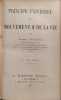
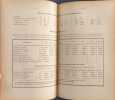
Bon état couverture marquée extrémitées frottées intérieur bon
THE MEDICI - GLORY OF THE WORLD
, CASA EDITRICE BONECHI, 1980 Softcover, 188 pages, 26 x 20 cm, English text. *good condition. ISBN 8870091163.
THE MEDICI - GLORY OF THE WORLD
La léproserie de Nimes (1163-1663). D'après des documents inédits avec l'analyse de deux livres de raisonset la liste des lépreuxau XVIe siècle.
Nimes, Gervais-Bedot, 1888. In-8 broché. 86 pp.
Surveying for field scientists.
London, Methuen, 1975, grand in 8° broché, XXI-230 pages ; traces d'adhésif sur les gardes.
PHOTOS sur DEMANDE. ...................... Photos sur demande ...................
Phone number : 04 77 32 63 69
La forêt tropicale humide.
Paris, Belin 2001, 285x185mm, 447pages, reliure demi-toile orange de l’éditeur. Exemplaire à l'état de neuf.
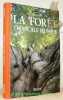
illustrations et photos couleurs in et hors texte, Pour un paiement via PayPal, veuillez nous en faire la demande et nous vous enverrons une facture PayPal
(D'Amiens). Cours complet d'arpentage élémentaire,
théorique et pratique à l'usage des divers établissements d'instruction publique. P. Fouraut, 1856. Petit in-8, 328 pages. Demi basane prune, dos lisse,. Reliure d'époque.
158 figures dans le texte et 2 grandes planches dépliantes in fine en couleurs.
Notice sur La Place
Caen, B. de Laporte, 1847. In-12; 36 pp., broché, couverture originale illustré (manques à la couverture, petites rousseurs).
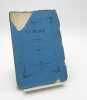
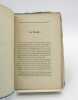
Édition originale et unique de cette courte biographie du mathématicien et astronome Pierre-Simon de Laplace. Voir photographie(s) / See picture(s) * Membre du SLAM et de la LILA / ILAB Member. La librairie est ouverte du lundi au vendredi de 14h à 19h. Merci de nous prévenir avant de passer,certains de nos livres étant entreposés dans une réserve.

