Write to the booksellers
-
Type
Art print (2)
Autograph (4)
Book (33639)
Magazine (146)
Manuscript (3)
Maps (1)
Photographs (8)
-
Latest
Last 24h (10)
Last 3 days (97)
Last month (292)
Last week (11)
-
Language
Chinese (1)
Dutch (3)
English (108)
French (33551)
German (9)
Greek (1)
Italian (112)
Japanese (1)
Latin (5)
Polish (1)
Portuguese (4)
Russian (3)
Spanish (3)
Swedish (1)
-
Century
16th (32)
17th (77)
18th (572)
19th (4311)
20th (11272)
21st (1726)
-
Countries
Belgium (7839)
Brazil (14)
Canada (11)
Côte d'Ivoire (35)
Denmark (145)
France (24493)
Germany (9)
Greece (3)
Netherlands (1)
Switzerland (1253)
-
Syndicate
ALAC (11)
CLAM (15)
CLAQ (3)
CNE (19)
ILAB (13937)
NVVA (532)
SLACES (531)
SLAM (13155)
SNCAO (64)
Edited by Sabine Haag and Jasper Sharp; With an introduction by Christopher Rothko, and essays by Thomas E. Crow and Jasper Sharp
Reference : 52698
Mark Rothko, Toward Clarity.
, Kunsthistorisches Museum Vienna, 2019 Hardcover, 184 pages, 100 color + b/w illus., including 2 gatefolds, *new book. ISBN 9780300243758.
A pioneering exploration of Rothko's deep and sustained engagement with the history of art While Mark Rothko (1903?1970) has long been considered a preeminent figure in 20th-century art, few publications have examined his work within the broader context of Western art, even though Rothko himself continuously sought it out as inspiration. Rothko had a profound interest in history and art history?including Greek and Roman mythology, Egyptian fables, Byzantine and early Italian gold-ground paintings, and masterworks of the Renaissance and Dutch Golden Age. He first traveled to Europe in 1950, starting in Paris and winding through Venice, Arezzo, Siena, Florence, and Rome; along the way, he admired frescoes by Fra Angelico and architecture by Michelangelo. This beautiful book examines the influence of the artist?s travels on his oeuvre. It presents Rothko?s engagement with important classical and Old Master works, highlighting older techniques and ideas that the artist may have sought to emulate. Works representative of Rothko?s entire corpus are beautifully illustrated with full-page color plates. The book also contains writings by the artist?selected for publication by his son?that document his appreciation of art history in his own words. Sabine Haag is general director, and Jasper Sharp is curator of modern and contemporary art, both at the Kunsthistorisches Museum Vienna. Thomas E. Crow is Rosalie Solow Professor of Modern Art at New York University?s Institute of Fine Arts. Christopher Rothko, a writer and psychologist, chairs the Board of Directors of the Rothko Chapel, Houston.
DAVID HOCKNEY The Arrival of Spring in Normandy, 2020
, Bozar, Brussels / Royal Academy, 2021 HB, 250 x 175 mm, 160 p, 140 illustraties, Exhibition catalogue English edition. ISBN 9781912520640.
At the beginning of 2020, just as global Covid-19 restrictions were coming into force, the artist David Hockney was at his house, studio and garden in Normandy. From there, he witnessed the arrival of spring, and recorded the blossoming of the surrounding landscape on his iPad, a method of drawing he has been using for over a decade. Drawing outdoors was an antidote to the anxiety of the moment for Hockney - 'We need art, and I do think it can relieve stress,' he says. This uplifting publication - produced to accompany a major exhibition at the Royal Academy of Arts - includes 116 of the new iPad drawings and shows to full effect Hockney's singular skill in capturing the exuberance of nature. The book begins with an interview with the show's curator, Edith Devaney, in which Hockney discusses his heralding of the spring.
LES PRIMITIFS FRANCAIS
PARIS/CORVINA, IMPRIMERIE DES ARTS ET MANUFACTURES, 1987 Reliure pleine toile blanche, d cor cercle noir et titre noir au dos, avec jaquette, 24 x 21 cm, 27 pages suivies de 48 planches couleurs, Fran ais. EN bon tat.
LES PRIMITIFS FRANCAIS
Ed.: Lisa De Visscher, Iwan Strauven. Text: Helen Thomas, Christophe Van Gerrewey, Lisa De Visscher, Iwan Strauven, Eline Dehullu, Francelle Cane, Francis Carpe
Reference : 54543
URA YVES MALYSSE KIKI VERBEECK, Expo: 20/11/2020 - 10/01/2021, Center for Fine Arts, Bozar, Brussels
, Walter Koenig Verlag, 2021 hardcover HB, 270 x 210 mm, 232 p, 221 colour illustrations, 87 b/w illustrations. English text. . ISBN 9783960988342.
This first monographic publication of the work of URA Yves Malysse Kiki Verbeeck gives a unique look at the oeuvre and the architectural language of this Brussels based architectural practice. The book gives a richly illustrated overview of the most important projects that the office has realized in the past 15 years.The publication situates URA's oeuvre in a larger historical and geographical context. In an interview, the architects explain their working method, vision on architecture and frame of reference. The images by Filip Dujardin illustrate the subtle architectural quality of the buildings with a sensitive attention to space and materiality. Op 30 april 2020 opent de eerste monografische tentoonstelling van het Brusselse architectenbureau URA in het Paleis voor Schone Kunsten in Brussel. In de tentoonstelling krijg je in een opeenvolging van zeer verschillende zalen een inkijk in hun werk dat de grens houdt tussen het rationele en het emotionele, het pragmatische en het intu tieve, het functionele en het buikgevoel. Aan de hand van sculpturale maquettes, kortfilms en foto's ontdek je de gerealiseerde en nog lopende projecten van het bureau. De expo schenkt je ook een blik op de manier van werken van URA, enerzijds hoe ze intu tief onderzoeken hoe een gebouw zich kan nestelen in de context, en anderzijds hoe ze op een zeer pragmatische en analytische manier werken met het programma. Solid Senses gaat gepaard met een publicatie die een aanvullende kijk biedt op hun praktijk. Deze co-productie door A+ Architecture in Belgium, Bozar Books en Koenig Books bevat een twintigtal projecten, waaronder de meest gekende en bekroonde. The architecture practice URA Yves Malysse Kiki Verbeeck was founded in 2010 by Yves Malysse (* 1973) and Kiki Verbeeck (*1974). They live and work in Brussels.
Mes secrets de Pêche
Bazoilles sur Meuse ,sd (1948), in-12 de 24 pages ,illustrations in-texte ,broché ,Etat correct ,trace d'usure sur le dos, papier jauni .(2 photos du livre sur mon site https://www.vieuxlivre.fr) .Les frais de port pour la France sont offerts à partir de 25 euros d'achat (Mondial relay ). (colissimo suivi +6,90 ).
Nouvelles récréations physiques et mathématiques
Chez Gueffier | à Paris 1769 - 1770 | 12 x 20.30 cm | 4 volumes reliés
Paris, Gueffier, 1769-1770. Quatre volumes in-8. Édition originale de ce grand classique des récréations scientifiques du XVIIIe siècle, illustrée de 72 planches dépliantes, dont 68 finement coloriées à l'époque, ainsi que d'un tableau dépliant. Quatre planches donnant le tarif des pièces de récréation vendues par Guyot complètent les trois premiers volumes. Les deux premiers tomes parurent en 1769, les deux suivants en 1770. Reliures de l'époque en plein veau lavallière glacé, dos lisses élégamment ornés de fleurons et de filets dorés, pièces de titre de maroquin rouge, pièces de tomaison de maroquin vert, triple filet doré encadrant les plats. Mors supérieur du premier volume épidermé, troué et fendu en queue ; mors inférieur du deuxième volume étroitement fendu en queue ; coiffe supérieure du quatrième volume élimée, coiffe inférieure partiellement élimée ; pointe d'un coin dénudée ; quelques frottements. Trois petits trous au faux-titre du deuxième volume. Légère trace de mouillure pâle dans l'angle de la page 241 du premier volume. Malgré ces défauts d'usage, agréable exemplaire, demeuré frais et imprimé sur beau papier blanc, dans une reliure de qualité. Les planches, avec leur fine coloration ancienne, donnent à l'ouvrage l'apparence d'un cabinet de physique déployé sur le papier. Aimants, miroirs, lanternes, dispositifs hydrauliques, jeux de cartes, mécanismes dissimulés et appareils électriques y sont démontés pièce par pièce. La couleur ne répond pas seulement à une recherche d'agrément : elle distingue les éléments des machines, clarifie leur construction et guide le lecteur dans la reproduction des expériences. Les feuillets de tarifs prolongent cette vocation pratique. Guyot ne se contente pas d'expliquer les instruments nécessaires aux récréations : il les propose à la vente. Le livre devient ainsi à la fois traité, manuel de construction et catalogue commercial, invitant son lecteur à faire passer l'expérience de la page au salon, puis du salon au spectacle. * Commis à la grande poste de Paris et membre de la Société littéraire et militaire de Besançon, Edme-Gilles Guyot publia les Nouvelles récréations physiques et mathématiques dans le prolongement revendiqué des ouvrages de Jacques Ozanam. Il conserva leur goût pour les énigmes, les nombres et les tours d'adresse, mais leur adjoignit les découvertes récentes sur le magnétisme, l'électricité, l'air, l'optique et la chimie. Cette extension donne au recueil son caractère singulier : la science n'y apparaît jamais séparée du plaisir de l'étonnement. Chaque expérience repose sur un même mouvement. Guyot commence par produire un effet qui semble contredire l'ordre naturel : un objet se déplace sans contact apparent, une figure surgit dans la lumière, une carte obéit à une volonté invisible. Il en dévoile ensuite le ressort, décrit l'appareil, fournit ses dimensions et rend reproductible ce qui, quelques pages plus tôt, relevait encore du prodige. Le merveilleux n'est pas détruit par l'explication ; il est déplacé vers l'ingéniosité du mécanisme. Cette méthode place l'ouvrage au croisement de la physique expérimentale et de la prestidigitation. En publiant les procédés des physiciens amusants, Guyot fait entrer dans le livre des effets que desdémonstrateurs tels que Nicolas-Philippe Ledru, dit Comus, ou François Pelletier réservaient volontiers à leurs séances publiques et privées. La révélation du secret menace l'autorité du montreur, mais offre simultanément aux amateurs les moyens de devenir eux-mêmes expérimentateurs. Parmi les dispositifs optiques figurent des procédés permettant de faire apparaître des figures dans la fumée. Ces images flottantes, privées de support visible, annoncent certains effets que les fantasmagores de la fin du siècle porteront à une puissance théâtrale nouvelle. Guyot n'invente pas à lui seul la fantasmagorie, mais son ouvrage transmet plusieurs des moyens techniques par lesquels la lanterne magique allait bientôt faire surg

Touaregs : Un peuple du D sert
, Robert Laffont, 1999 Reliure lin blue sous jaquette illustr , dans cassette, 331 pages, 34 x 29 cm. Richement illustr . *Comme neuf. ISBN 9782221080245.
ISBN 10: 2221080246 / ISBN 13: 9782221080245 Touaregs : Un peuple du D sert
LES ATOMES ET BIEN DES CHOSES ENCORE. CAUSETTE SCIENTIFIQUES.
CH. DELAGRAVE / BIBLIOTHEQUE EDUCATIVE ILLUSTREE. 1882. In-8. Broché. Etat d'usage, Couv. défraîchie, Dos abîmé, Rousseurs. 61 pages. Premier plat illustré en couleurs. Frontispice et nombreuses illustrations en noir et blanc hors texte. Manques au dos. Ouvrage débroché.. . . . Classification Dewey : 500-SCIENCES DE LA NATURE ET MATHEMATIQUES
Classification Dewey : 500-SCIENCES DE LA NATURE ET MATHEMATIQUES
Ontwerp voor een nieuw Gents idiotikon
Gent, Kriss, 1994 Softcover, 80 pagina's, 21 x 15 cm, NL. *Goede staat .
Een zottekespel, thupetoare, ne gliskehiere,... Deze typische Gentse woorden en uitdrukkingen vormen tesamen met de zowat 3000 andere in dit boekje het 'Ontwerp voor een nieuw Gents idiotikon' (dialektwoordenboek).
"Who is Sitting on Which Beast?" Interpretative Issues in the Book of Revelation. Proceedings of the International Conference held at Loyola University, Chicago, March 30-31, 2017
, Brepols, 2024 Paperback, 336 pages, Size:156 x 234 mm, Illustrations:2 tables b/w., Language(s):English, French. ISBN 9782503602585.
Summary The Revelation of Jesus Christ, better known as the Apocalypse of John, or simply the Book of Revelation, has always fascinated its readers, both religious and non-religious. Its transmission and reception in a Christian context have given rise to a wide variety of interpretations and controversies. At the heart of this revelation are the enigmatic figures of a pregnant woman appearing in heaven and then fleeing into the desert, a prostitute appearing in the desert and riding a beast, and then the bride of the Lamb, as well as a great city called Babylon, Sodom, and Egypt. Cities, beast, and prostitute are usually interpreted as thinly veiled references to Rome and its empire, and in particular to the emperor Nero. However, this reading raises a number of interpretative problems concerning the relationship between these different female figures and their relation to the beast, which duplicates into a beast from the sea and a beast from the land, and concerning the city that lies beneath Babylon. Although they do not all share the exact same point of view on the Apocalypse of John and on the solutions to these interpretative problems, the contributions gathered in this volume all question the received ideas in one way or another. What they have in common is a regard for the Apocalypse of John as a text strongly rooted in the Judaism of its time, and they place great emphasis on interpreting the text through attention to its author's use of the Jewish Scriptures. TABLE OF CONTENTS Avant-propos (Edmondo Lupieri & Louis Painchaud) First Part: Context Of Beasts and Women: Progressive History, Tales, or What Else? The Revelation of John between Hegemony and Religious Cohabitation(s) (Luca Arcari) Second Part: The Women and the Cities Intertextuality in the Apocalypse: The Desert and the Woman (St phanie Audet) ?I Will Tell You the Mystery of the Woman? (Rev 17:7) (Edmondo Lupieri) Samaria, Jerusalem, and the Other Prostitutes: A Fictive History for the Etiology of a Disaster (Robert A. Di Vito) Jerusalem, Babylon, and Rome: A Tale of Three Cities (and More) (Iain Provan) Ierusalem (olim) regina: Jerusalem's ?Queenship' in Some Hellenistic Jewish Writers (Daniele Tripaldi) Third Part: The Dragon and the Beasts Dragon's Atonement: Eschatological Yom Kippur in the Book of Revelation (Andrei A. Orlov) The Dragon, the Beasts, and the Gold: The Number of the Beast in the Apocalypse of John. Part One: ?And It Stood on the Sand of the Sea? (Louis Painchaud) The Dragon, the Beasts, and the Gold: The Number of the Beast in the Apocalypse of John. Part Two: ?Its Number is Six Hundred and Sixty-Six? (Louis Painchaud) Fourth Part: The Reception, from Irenaeus of Lyon to William Blake The Reception of Babylon the Great Prostitute in Late Antiquity (Scott K. Brevard) Blake's Revelation: From Jezebel to the New Jerusalem? (Megan Wines) Indexes
Edmund de Waal, Tanya Harrod, Helen Ritchie, Eliza Spindel, Kimberley Chandler and Nigel Wood
Reference : 61717
LUCIE RIE The Adventure of Pottery
, ACC Art Books, 2023 PB, 290 x 225 mm, 222 pages, 160 throughout colour illustrations. ENG. ISBN 9781904561767.
Lucie Rie (1902-1995) is one of the finest modern potters of the 20th century. Born and trained in Vienna, her successful early career came to a halt in 1938 when forced to leave Austria to escape the persecution of Jewish people. In exile in London, Rie established a new workshop and over five decades created highly individual bowls, vases and tableware which continue to amaze and inspire today. With over 150 photographs and five new essays, Lucie Rie: The Adventure of Pottery celebrates an exceptional life of creative invention and experiment. With texts by Edmund de Waal, Tanya Harrod, Helen Ritchie, Eliza Spindel, Kimberley Chandler and Nigel Wood.
Ed: Olivier Kaeppelin. Authors: Fran ois Barr , Anne Pont gnie et Sophie Lauwers
Reference : 54456
YVES ZURSTRASSEN Free. 2009-2019
, mercaterfonds - fondsmercator, 2019 HB, 300 x 240 mm, 240 pages, 160 illustrations, Texte en Francais. ISBN 9789462300279.
L'oeuvre r cente de l'artiste belge abstrait Yves Zurstrassen est explor e en profondeur dans ce bel ouvrage, con u en troite collaboration avec l'artiste lui-m me. Cet ouvrage l gant et magnifiquement illustr retrace la derni re d cennie de l'oeuvre du peintre belge abstrait Yves Zurstrassen (n en 1956), de 2010 2019. Apr s une formation de base en arts graphiques, Zurstrassen a puis la vocation de la peinture dans son admiration pour des expressionnistes abstraits comme Jackson Pollock et Willem de Kooning. Les essais repris dans ce livre approfondissent le processus cr ateur de l'artiste et proposent une analyse critique de son oeuvre. L'ouvrage contient aussi une biographie d taill e et des entretiens informels r v lateurs avec l'artiste. Rehauss par des illustrations en pleine page d'oeuvres r centes de Zurstrassen, il situe simultan ment l'artiste dans le monde de l'art abstrait et le contexte plus large de la peinture contemporaine, tout en voquant sa passion du jazz, galement indissociable de son oeuvre. Cet ouvrage abondamment illustr documente et analyse l'oeuvre r cente de l'artiste belge contemporain Yves Zurstrassen. crivain et critique, Olivier Kaeppelin est aussi l'ancien directeur des arts visuels au Minist re fran ais de la Culture et l'ancien directeur de la Fondation Maeght. Fran ois Barr est un crivain et critique qui a dirig plusieurs institutions culturelles fran aises, dont le Centre Pompidou et l'Institut fran ais d'architecture. Anne Pont gnie est critique d'art et commissaire ind pendante. Sophie Lauwers est directrice des expositions au Palais des Beaux-Arts de Bruxelles (BOZAR)
LA RELATIVITE D'EINSTEIN
MEEWISSEN. 1924. In-8. Broché. Bon état, Couv. défraîchie, Dos satisfaisant, Intérieur frais. 29 pages. Nombreuses illustrations dans et hors texte.. . . . Classification Dewey : 500-SCIENCES DE LA NATURE ET MATHEMATIQUES
Classification Dewey : 500-SCIENCES DE LA NATURE ET MATHEMATIQUES
Vers Une Technologie De La Conscience ?
Broché bon état .Contenu propre . Coin corné 1er plat . 2013. 115 pages . PHOTOS SUR DEMANDE
Merci de nous contacter à l'avance si vous souhaitez consulter une référence dans notre boutique à Authon-du-Perche.
Vers Une Technologie De La Conscience ?
BROCHE EN EXCELLENT ETAT QUASI COMME NEUF. PHOTOS SUR DEMANDE
Merci de nous contacter à l'avance si vous souhaitez consulter une référence dans notre boutique à Authon-du-Perche.
Vers Une Technologie De La Conscience ?
Broché très bon état .Contenu propre .2013. 115 pages . PHOTOS SUR DEMANDE
Merci de nous contacter à l'avance si vous souhaitez consulter une référence dans notre boutique à Authon-du-Perche.
Eduardo Carrero Santamar a, Tess Knighton, Francesc Orts-Ruiz (eds)
Reference : 70526
Sound and Space in Early Modern Valencia c.1400-c.1700. Sonido y espacio en la ciudad de Valencia
, Brepols, 2026 Paperback, Pages: 388, Size:178 x 254 mm, Illustrations:5 b/w, 55 col., 2 tables col., 9 music examples, Languages: English, Spanish. ISBN 9782503624297.
Summary By the later Middle Ages Valencia had become a major urban centre close to the Mediterranean and surrounded by fertile plains. From Jaume I's conquest of the city in 1238, ecclesiastical and civic institutions were founded in rapid succession and built elegant churches and palaces to reflect their permanence and prestige. From at least the time of Francesc Eiximenis (d. 1409), the city's authorities became increasingly aware of the importance of opening new public spaces within the web of narrow streets characteristic of Muslim conurbations in the interest of developing the representation of a Christian civic religion. These spaces, notably those in front of the royal palace, cathedral and Dominican and Franciscan monasteries, quickly established themselves as focal points for urban ritual, especially for the processional activity that marked the liturgical calendar and the devotional practices of confraternities and guilds. Sounds of all kinds shaped and were shaped by the urban complex and were generated by both the festive and non-festive events that, whether recurrent or exceptional, held deep significance for the inhabitants of the city. This interdisciplinary collection of fifteen essays explores the relationship between the sounds and spaces of late medieval and early modern Valencia to gain greater insight into how the city's inhabitants interpreted the soundspace in which they moved and which influenced their daily lives, creating a sense of community - albeit one full of rivalry and conflict - and resulting in a coherent Valencian identity. A finales de la Edad Media, Valencia se hab a convertido en un importante centro urbano, abierto al Mediterr neo y rodeado de una f rtil huerta. A la conquista de la ciudad por Jaume I en 1238 sigui la r pida fundaci n de instituciones eclesi sticas y c vicas y la construcci n de elegantes templos y palacios que reflejaban su presencia y prestigio. Desde la poca de Francesc Eiximenis (m. 1409), las autoridades de la ciudad fueron tomando cada vez m s consciencia de la importancia de abrir nuevos espacios p blicos dentro de la red de calles estrechas caracter stica del urbanismo musulm n, con el fin de desarrollar la representaci n de una religiosidad c vica cristiana. Estos espacios, en particular los situados frente al palacio real, la catedral y los monasterios dominico y franciscano, se convirtieron r pidamente en puntos focales para los rituales urbanos, especialmente para las procesiones que marcaban el calendario lit rgico y las pr cticas devocionales de cofrad as y gremios. Sonidos de todo tipo, generados tanto por eventos festivos como no-festivos, recurrentes o excepcionales, ten an un profundo significado para los habitantes de la ciudad y fueron moldeados a la vez que contribuyeron a configurar el espacio urbano. Esta colecci n interdisciplinar de quince ensayos explora la relaci n entre los sonidos y los espacios en la Valencia tardomedieval y moderna para comprender mejor c mo los habitantes de la ciudad interpretaban el espacio sonoro en el que se mov an y que influ a en su vida cotidiana, creando un sentido de comunidad -aunque lleno de rivalidades y conflictos- y dando lugar a una identidad valenciana coherente.
Boekhandel in de Oudheid
, N.V. Leiter-Nypels, Hardcover met stofomslag, 65 pagina's, 18.5 x 12.5 cm, NL. *mooie staat.
De Boekhandel in de Oudheid
TRAITE DE MICROBIOLOGIE tome 1
MASSON & CIE EDITEUR. 1898. In-8. Relié demi-cuir. Etat d'usage, Coins frottés, Dos abîmé, Intérieur acceptable. 632 pages. Nombreuses illustrations en noir et blanc, dans le texte. Ouvrage débroché. Mors fendus, coiffes en tête et en pied abîmée. Quelques pages détachée.. . . . Classification Dewey : 500-SCIENCES DE LA NATURE ET MATHEMATIQUES
. Classification Dewey : 500-SCIENCES DE LA NATURE ET MATHEMATIQUES
Traité de Microbiologie.Tome 3 Fermentation alcoolique
E. Derrien 1900 760 pages in8. 1900. reliure éditeur demi chagrin dos à nerfs. 760 pages.
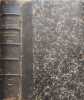
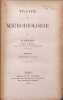
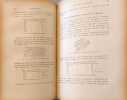
État correct intérieur propre
Herfsttij en ondergang van het Romeinse rijk
, Bruna, 1988 Gekartonneerd met stofomslag, 256 pagina's, 31 x 24 cm, NL. *Goede staat. ISBN 9781197400804.
Edward Gibbon (Londen, 1737) studeerde in Oxford en raakte daar gefascineerd door godsdienstgeschiedenis. Verval en ondergang van het Romeinse Rijk is zijn meesterwerk. De meest gerenommeerde verkort editie, van D.M. Low is de basis voor de Nederlandse vertaling. Op bol.com vind je alle boeken van Edward Gibbon, waaronder het nieuwste boek van Edward Gibbon.
Marcus Gheeraerts the elder of Bruges, London, and Antwerp
Utrecht, Haentjens Dekker & Gumbert,, 1971 Linen binding, 86 pages + plates, 26 x 17 cm, EN. *Fine condition.
Marcus Gheeraerts the elder of Bruges, London, and Antwerp
Collecting, Collectors, and the Book Trade. Essays in Honour of Richard A. Linenthal
, Harvey Miller, 2026 Hardback, Pages: xii + 518, Size:200 x 280 mm, Illustrations:10 b/w, 159 col., Language: English. ISBN 9781915487605.
Summary Presented on the occasion of Richard A. Linenthal's seventieth birthday in June 2026, this book is a tribute to his learning, his passion, his friendship, and his capacity to enthuse and inspire others. In a 50-year career as an antiquarian bookseller, first with Bernard Quaritch Ltd., then latterly under his own name, Richard has found a home for many of the most important books to have passed through the trade. Equally happy working with institutions and private collectors, Richard's enthusiasm and friendship have been central to building collections around the world. His influence and impact can be seen in libraries across the UK and the US, but also in Japan, where he was central to the development of both academic and private libraries. Among the contributors are collectors, friends, family, colleagues, librarians, curators, and scholars and the contributions are as varied as Richard's own interests, encompassing book history, the book trade, antiquities, manuscript studies, provenance research and library history. An important and exciting collection of 45 essays which contribute much to our understanding of the collecting of the written and printed word. TABLE OF CONTENTS For Richard A. Linenthal Edward Potten & Satoko Tokunaga Introduction Nicholas Poole-Wilson 1 ILLUMINATED MANUSCRIPTS Images of the Destruction, Salvage, and Restoration of Books in the Bible moralis e Lucy Freeman Sandler Greater than the Sum of its Parts: A Previously Unstudied Sequence of Miniatures Illustrating Jean Mielot's Romul on Scot McKendrick The Powis Hours and the Daughters of Henry Percy, 4th Earl of Northumberland Michelle P. Brown The Fitton Hours at Keio University Library Takami Matsuda Iconographic Disjunction in the Ruskin Psalter/Collect-Hours: A Flemish Illuminated Manuscript of c. 1470?1480 James H. Marrow 2 MANUSCRIPTS, TEXTS, AND SCRIBES A Man of Sound Mind: The Last Will and Testament of Julius Pompeianus Gifford Combs Tracing Modifications in a Script: The Maurdramnus Script of Corbie David Ganz An Illustrated Riddle and the Teaching of Vergil in Twelfth-Century Gembloux Robert Babcock A Poet-Prince's Payment to a Scribe Henri Schiller The Benedictional of Robert de Clercq, Abbot of Les Dunes (Cambridge University Library, MS Nn.4.1) Patrick Zutshi A Newly Discovered Work by Mellin de Saint-Gelais: 'Espitre de la vertue d'amitie et de paix Au Roy mon souverain seigneur' Eugenio Maria Donadoni Philip Absalom: A Nineteenth-Century Scribe and Artist A. S. G. Edwards 3 FRAGMENTS AND BINDINGS Fragments of Virgil Christopher de Hamel An Early Eleventh-Century Musical Fragment from Christ Church, Canterbury Susan Rankin Fragments and Waste Leaves of Incunabula in Eton College Library John Goldfinch Stationery Bindings: A Law Story Paul Halliday Printed Fragments in Sixteenth- and Seventeenth-Century Cambridge Bookbindings David Pearson Thomas Hearne's Manuscript and Printed Fragments H. R. Woudhuysen 4 XYLOGRAPHY AND EARLY PRINTING Dating Single Leaf Prints: The Mount of Olives of the Mazarine Bible Edward Potten Spending Fragments of Time with Early Proof Corrections Lotte Hellinga Exemplaires disparu: In Search of Maffeo Pinelli's Mainz Bible of 1462 Eric Marshall White On Profit and Gatherings: Reading a Colophon of Nicolaus Wola and Badius Ascensius Kristian Jensen Escape from San Zanipolo Martin Davies English Xylographic Folded Almanacs Kathleen Doyle Gutenberg Portraiture in Pre-War Monuments Margaret Lane Ford 5 COLLECTING AND COLLECTORS To Found an Academic Library in the Isle of Man: The Catalogue of Lord Fairfax's Shipment of Printed Books in 1659 Nicholas Poole-Wilson The Right Honourable Thomas Grenville and the 'Perfect Book' Karen Limper-Herz The Gift of Books after the Great Kanto Earthquake Satoko Tokunaga The Acquisition and Deaccession of Two and a Half Tons of Sir Thomas Phillipps' Manuscripts Martin Schoyen Medieval, Renaissance, and Modern Manuscripts: A Handlist of the Collection of C. H. St John Hornby William P. Stoneman 6 THE BOOK TRADE An Unrecorded English Frankfurt Fair Catalogue, 1617 Giles Mandelbrote Dear Mr Harper, Dear Mr Goldschmidt Felix de Marez Oyens Bindings under the Hammer Mirjam Foot William H. Scheide's Purchase of a Forged Columbus Letter Paul Needham 7 ADVERSARIA A Medieval Seal Matrix Nicolas Barker On Origins, Memories, and Marbles Amy Linenthal Halliday Where Did it Come from? Larry Wallace Recollections of an Only Child Justin G. Schiller A Tokyo Memoir: A First Folio, but No American Football Toshiyuki Takamiya Memories of Life at Bernard Quaritch Celia Cammarota & Dinah Swayne Noel MS1: The Dring-Linenthal-Noel Staunton Land Deed of 1378 Lynn Ransom with Edward Potten The Oracle of Hastings Speaks Michael Zinman List of Contributors Indices
Portraits of Men of Eminence in Literature, Science, and Art, with Biographical Memoirs. The Photographs from Life. Complete in 6 volumes with 144 tipped-in original photographs.
London, Reeve & Co., (John Edward Taylor, Printer), 1863 - 1867, lg. in-8vo, 6 volumes with each 24 tipped-in original photogr. mounted on stiff white leaves with yellow frame (albumin prints), overall a fine original, complete set, original contemporary clothbound, spine with gilt title & publisher, covers with gilt central piece and blindpressing (binder’s ticket in vol. V: Bound by Westleys & Co. London).
Volume 1: 158 p. / 2) 140 p. / 3) 109 p. / 4) 127 p. / 5) 134 p. / 6) 106 p. In all illustrated with 144 original photographs, some pages & plates loosening or loose. A.o. portraits of Faraday - Lyell - Owen - Thackery - Tyndall - Gould - Dickens - Darwin - de Candolle etc. etc.According to Lorraine Portch of the Natural History Museum, who has done some research into the subject, the ‘men of eminence’ were invited to submit their own biographies ! Charles Darwin recognised the value of having photographs in his later books, and some of Edward’s images were published in “The expression of emotions in man and animals” (1872)’. Image disp.

(SLACES, NVVA)
Phone number : 41 (0)26 3223808
De l'Influence de la température sur la germination
Brochure in-8, tiré à part du Journal des connaissances usuelles et pratiques, 1834, 12 pp. Un peu frottée et roussie, bon état général. Peu courant. Poids 12 g. Frais d'envoi 1,25 euros sur la France, 1,50 euros UE et Suisse, 2,10 euros pour le reste du monde (tarifs de base hors envois suivis).