Previous 1 ... 19 20 21 22 ... 74 126 178 230 ... 233 Next Exact page number ? OK

‎BERZELIUS, J.J.‎

Reference : 2747

(1833)

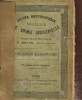
‎Lehrbuch der Chemie. Aus der schwedischen handschrift des Verfassers übers. von F. Woehler. Dritte (u. Vierte) Umgearb. Original-Auflage (Binde 1-7:3 Aufl., 8-10:4 AUfl.). 10 Bde.‎

‎Lpz., 1833-41. 10,cont.hcalf. Backs rubbed,and back loose on 4 vols. With 12 fold.engr.plts.,showing chemical apparatus.‎


Logo ILAB

Phone number : +45 33 155 335

DKK5,500.00 (€736.53 )

‎BERZELIUS (J.J.)‎

Reference : 53400

‎Rapport annuel sur LES PROGRES DES SCIENCES PHYSIQUES ET CHIMIQUES présenté le 31 Mars 1840 à l'Académie Royale des Sciences de Stockholm. Traduit du suédois par M. Plantamour. P., Fortin, 1841 - Rapport annuel sur LES PROGRES DE LA CHIMIE. Traduit du suédois par Ph. Plantamour, (présenté à l'Académie Royale des Sciences de Stockholm de 1841 à 1847) -- 8 VOLUMES (complete set)‎

‎P., Fortin, 1841/1848, 8 VOLUMES in 8 reliés en demi-toile verte (reliure de l'époque), (quelques rousseurs, cachets de bibliothèque), T.1 : (2), 16pp., 346pp., 8pp., T.2 : (3), 280pp., 8pp., T.3 : (2), 15pp., 336pp., T.4 : 16pp., 399pp., T.5 : 12pp., 402pp., T.6 : 19pp., 532pp., T.7 : 19pp., 532pp., T.8 : 16pp., 414pp., 1 tableau dépliant‎


‎---- PREMIERE EDITION FRANCAISE ---- BON EXEMPLAIRE BIEN COMPLET DE TOUS SES VOLUMES ---- "BERZELIUS presented an annual report on physics, chemistry and mineralogy which was published in swedish... The french translation contains some polemics against Liebig omitted from the German by Wöhler who also toned down some wording in earlier volumes...". (Partington IV p. 146) ---- "BERZELIUS' most active and productive years were those in which chemistry was beginning to show the full effects of LAVOISIER's revolution. The fundamental tools which he created were extremely influential in determining the direction in which the science developed. His achievements were many and varied, and at first glance they seem rather unrelated to each other. Upon closer examination we find an underlying unity of thought and a logical interconnection and development of this thought in most of his work... The tremendous influence which BERZELIUS exerted on the chemist of his time came not only from his experimental discoveries and his theoretical interpretations. His voluminous writings were circulated everywhere in the chemical world. He reported his own discoveries in the various editions of his textbook and he surveyed the whole progress of chemistry in his Annual reports which were read everywhere... By the force of his personality, by the skill of his laboratory techniques, and by his power to collect, synthesize and publicize the chemistry of his day, he exerted an influence on his own time which is still reflected in chemistry more than a century after his death...". (DSB II pp. 90/96) ---- Partington IV pp. 142/152**53400(534)O6AR‎

Phone number : 01 43 25 51 73

EUR650.00 (€650.00 )

‎BERZELIUS (J.J.)‎

Reference : 53300

‎Traité de chimie minérale, végétale et animale -- PREMIERE EDITION FRANCAISE -- 8 VOLUMES (complete set)‎

‎P., Firmin Didot, 1829/1833, 8 VOLUMES in 8 reliés en demi-basane noire, dos ornés de filets dorés (reliures de l'époque), (quelques coiffes émoussées, rousseurs, petites taches d'encre dans la marge de quelques feuillets à la fin du tome 3, feuillets de la table synoptique du tome 5 légèrement détachés, mouillures pâles aux planches du tome 8, cachets de bibliothèque), T.1 : (2), 2pp., 480pp., 3 PLANCHES dépliantes (n° 1 à 3), T.2 : (2), (1-table des matières), 544pp., T.3 : (2), 495pp., 8pp., T.4 : (2), 708pp., (1), T.5 : (2), 599pp., 1 TABLEAU DEPLIANT (p. 172), 1 PLANCHE DEPLIANTE non numérotée (p. 576), 18 ffnc (table synoptique des poids et mesures), T.6 : (2), 747pp., (1), 2 PLANCHES DEPLIANTES (n° 4 & 5), T.7 : (2), 758pp., T.8 : (2), 355pp., 66pp., PLANCHES DEPLIANTES (n° 1 à 5 et 8) ; soit 12 PLANCHES DEPLIANTES, 1 TABLEAU DEPLIANT ET 18 FEUILLETS NON CHIFFRES (TABLE synoptique des poids et mesures)‎


‎---- PREMIERE EDITION FRANCAISE EN PARTIE ORIGINALE traduite par A.J.L. Jourdan sur les manuscrits de l'auteur : "M. BERZELIUS AYANT BIEN VOULU COMMUNIQUER EN MANUSCRIT TOUTES LES ADDITIONS ET CORRECTIONS QUE LES PROGRES DE LA SCIENCE ONT RENDUES NECESSAIRES, LA TRADUCTION QUE NOUS PUBLIONS DOIT ÊTRE REGARDEE COMME UNE VERITABLE EDITION NOUVELLE DANS LAQUELLE ON TROUVERA LES DERNIERS OPINIONS DE L'AUTEUR". (Avertissement de l'éditeur) ---- "This is the first french edition from the second edition of the authors'text book. A.J.L. Jourdan translated vol I and M. Esslinger translated the remaining volumes. Much new material was contributed by the author making this a "new edition". (Cole N° 149) ---- "THE MOST AUTHORITATIVE CHEMICAL TEXT OF ITS DAYS" (DSB) ---- "BERZELIUS' most active and productive years were those in which chemistry was beginning to show the full effects of Lavoisier's revolution. The fundamental tools which he created were extremely influential in determining the direction in which the science developed. His achievements were many and varied, and at first glance they seem rather unrelated to each other. Upon closer examination we find an underlying unity of thought and a logical interconnection and development of this thought in most of his work... The tremendous influence which BERZELIUS exerted on the chemist of his time came not only from his experimental discoveries and his theoretical interpretations. His voluminous writings were circulated everywhere in the chemical world. He reported his own discoveries in the various editions of his textbook and he surveyed the whole progress of chemistry in his annual reports which were read everywhere... By the force of his personality, by the skill of his laboratory techniques, and by his power to collect, synthesize and publicize the chemistry of his day, he exerted an influence on his own time which is still reflected in chemistry more than a century after his death...". (DSB II pp. 90/96) ---- Partington IV pp. 142/176**53300(533)/O4+527/CAV.E1-F1‎

Phone number : 01 43 25 51 73

EUR430.00 (€430.00 )

‎BERZELIUS, J.J.‎

Reference : 25174

(1829)

‎Traité de Chimie. Traduit par A. Jourdan, sur des Manuscrites inédits de L'Auteur et sur la derniere Édition Allemande. Tome 1-3 and 5-8 (of 8).‎

‎Paris, Didot Freres, 1829-33. 8vo. Bound in 7 cont. hcalf. Richly gilt backs. Light rubbing to backs. Occasionnaly light browning. With 14 folded engraved plates.‎


‎First French edition.‎

Logo ILAB

Phone number : +45 33 155 335

DKK3,000.00 (€401.75 )

‎"BERZELIUS, J. (JACOB).‎

Reference : 38728

(1820)

‎Des Recherches sur la Composition des prussiates ou des hydro-cyanates ferrugineux. III-VII.‎

‎(Paris, Crochard, 1820). Without wrappers as issued in ""Annales de Chimie et de Physique"", tome XV, pp. 225-264. A small tear to one leaf.‎


‎First edition.‎

Logo ILAB

Phone number : +45 33 155 335

DKK1,000.00 (€133.92 )

‎"BERZELIUS, J. JACOB.‎

Reference : 16744

(1825)

‎Lehrbuch der Chemie. Nach des Verfassers schwedischer Bearbeitung der Blöde-Palmstedt'schen Auflage übersetzt von F. Wöhler. 4 Bde. (8 Abtheilungen). ‎

‎Dresden, Arnoldischen Buchhandlung, 1825-31. Uncut in 8 orig. blue boards. Printed on good paper. A wormtrack on cover of volume IV:2, only effecting cover and halftitle. With all 13 folded engraved plates, showing chemical apparatus. Titles with rubber-stamps.‎


‎This German translation of Berzelius main work contains many additions by the author not found in the swedish original. ""Berzelius's work on the science of Chemistry in general is universally known. He mastered the whole of Chemistry as no one else has ever done since his time, and he created something new in all the spheres in which he worked.""‎

Logo ILAB

Phone number : +45 33 155 335

DKK10,000.00 (€1,339.15 )

‎"BERZELIUS, J. JACOB.‎

Reference : 23430

(1825)

‎Lehrbuch der Chemie. Nach des Verfassers Schwedischer Bearbeitung der Blöde-Palmstedt'schen Auflage übersetzt von F. Wöhler. 1. Band, Erste Abth.‎

‎Dresden, Arnoldischen Buchhandlung, 1825. Cont. hcalf. Gilt back. Back slightly rubbed. Stamp on title. XVIII,442 pp. and 3 folded engraved plates. Internally fine and clean, printed on goos paper.‎


‎First German edition. The first part of Berzelius' famous ""Lehrbuch"".‎

Logo ILAB

Phone number : +45 33 155 335

DKK950.00 (€127.22 )

‎"BERZELIUS, J. JACOB.‎

Reference : 23431

(1826)

‎Lehrbuch der Chemie. Nach des Verfassers schwedischer Bearbeitung der Blöde-Palmstedt'schen Auflage übersetzt. 2. Bd., erste-zweite Abth. (in 2 Bde).‎

‎Dresden, Arnoldischen Buchhandlung, 1826. 2 cont. hcalf. Gilt backs. Backs slightly rubbed. Stamp on titles. VI,XIII,995,(4) pp. Internally fine and clean, printed on good paper.‎


‎First German edition of the second volume (in 2 parts) of Berzelius' famous ""Lehrbuch"".‎

Logo ILAB

Phone number : +45 33 155 335

DKK1,500.00 (€200.87 )

‎(BERZELIUS, J. JACOB).‎

Reference : 29279

(1828)

‎(Von der Anwendung des Löthrohrs in der Chemie und Mineralogie. 2. Auflage.).‎

‎(Nürnberg, Schrag, 1828). Cont. marbled boards. Gilt back. Gilt titlelabel. Lightly rubbed. XVI,282 pp. and 4 folded engraved plates. Titlepage lacks and with a hole in pp. 1-2 loosing some words on p.2. A few leaves with marginal browning, otherwise clean and printed on good paper.‎


‎Second German edition, the first published 1821 translated from the Swedish original from 1820. The classic work on the blowpipe and its history.‎

Logo ILAB

Phone number : +45 33 155 335

DKK1,250.00 (€167.39 )

‎"[BERZELIUS, J. J.], HAUSMANN.‎

Reference : 50979

(1814)

‎Versuch, ein rein-wissenschaftliches System der Mineralogie auf die electro-chemische Theorie und die chemische Proportionslehre zu gründen.‎

‎Leipzig, Ambrosius Barth, 1814. 8vo. Bound in a bit later half calf with five raised bands and gilt lettering to spine. In ""Annalen der Physik"", Hrsg. Ludwig Wilhelm Gilbert, 1814. Entire volume offered. Library stamps to verso of title page. Fine and clean. Pp. 105-134. [Entire volume: 478 pp + 3 plates].‎


‎First German (abbreviated) translation/review of Berzelius landmark work published the same year as the original: the first system based on chemical formulae. The first complete German translation was not published untill 1815. The system was based, not on the crystallographic appearance of the minerals, but on knowledge of their chemical composition. Hausmann review [the present] was highly critical of the Berzelius work. This provoked Berzelius to publish the ""Försök till ett rent kemiskt Mineralsystem"" in 1815. ""With the addition of this supplemenentary monograph Berzelius' mineralogy no longer looked like an ""attempt"" but a fully developed mineralogy"". (Curtis Schuh).He was honoured in London by the Royal Society in 1836 for his new system by awarding him the Copley Medal in gold.""In accord with the interest that Swedish chemists had long shown in mineralogical studies, Berzelius had from time to time analyzed minerals that came into his hands. As was noted above, the discovery of cerium was the result of such an analysis. However, when he began his systematic studies to establish the law of constant proportions, he worked largely with simple salts. In 1812 he received a gift of a large number of minerals which he later decided to classify. The methods of mineral classification existing at that time were based on appearance and physical properties. These seemed highly unsystematic to Berzelius. He concluded from his analytical experience that a logical classification could be based only on chemical composition. In his original system, first published in 1814, he arranged the minerals in terms of their basic constituents, although he later revised this and placed chief emphasis on the acid component. Like many of Berzelius' innovations, his system of mineral classification was at first received with some hostility, but this was gradually overcome. During his visit to Paris in 1818 he won the approval of Haüy, the leading mineralogist of the day whose own system was based on physical properties.""(DSB).‎

Logo ILAB

Phone number : +45 33 155 335

DKK3,200.00 (€428.53 )

‎"BERZELIUS, J. (JÖNS JACOB).‎

Reference : 52908

(1841)

‎Rapport Annuel sur les Progrès des Sciences Physiques et Chimiques. Présenté... a l'Academie Royale des Sciences de Stockholm. Traduit du Suédois, sous les Yeux de l'Autheur. Par (Philippe) Plantamour. 1.-7. Année.‎

‎Paris, Fortin, Masson et Cie, 1841-47. Bound in 5 uniform contemp. hcalf. Richly gilt spines and with gilt lettering. printed on good paper. Clean and fine.‎


‎First French edition (all published) of Berzelius's ""Arsberättelser...."" - Partington IV, p. 146.‎

Logo ILAB

Phone number : +45 33 155 335

DKK5,000.00 (€669.58 )

‎"BERZELIUS, J. (JÖNS JACOB). - INTRODUCING CATALYSIS AND CATALYTIC FORCE, A NEW CHEMICAL POWER.‎

Reference : 44894

(1836)

‎Quelques Idées sur une nouvelle Force agissant dans les Combinaisons des Corps Organiques.‎

‎Paris, Crochard, 1836. No wrappers. In: ""Annales de Chimie et de Physique, Par MM. Gay-Lussac et Arago."", 2e Series, tome 61, Cahier 2. Pp. 113-224. (entire issue offered). Berzelius's paper: pp. 146-151. With titlepage to Tome 61.‎


‎First French edition of this importent paper in the history of chemistry in which Berzelius advanced the concept of 'Catalysis', and described inorganic reactions by way of metals and the biological reactions by enzymes. The paper on Catalysis was first published in his ""Årsberättelse"" (Annual Survey) in 1835. - Axel Holmberg 1836:14. - Partington IV, pp. 263-64""This is a new force in inorganic and organic nature, bringing into being chemical activity, and more widely distributed than has hitherto been thought, the naure of which is completely concealed. If I all it a new force it is not my meaning that it is independent of the electrochemical relations of matter, but on the contrary I can only assume that it is a special kind of manifestation of these. So long as its nature and relations are unknown it will be convenient to considerit a new force, and to give it a name.""(Berzelius).Parkinson ""Breakthroughs"", 1836 C.The issue contains furthermore two importent papers by the founder of modern organic cemeistry, Auguste Laurent ""Sur l'Acide Naphtalique et ses Combinaisons"", pp. 113-125 and ""Théorie des Combinaisons Organiques"", pp. 125-151.Laurent: A founder of modern organic chemistry, Laurent was one of the most important chemists of the nineteenth century.‎

Logo ILAB

Phone number : +45 33 155 335

DKK2,000.00 (€267.83 )

‎"BERZELIUS, J. (JÖNS JACOB). - INTRODUCING CATALYSIS AND CATALYTIC FORCE, A NEW CHEMICAL POWER.‎

Reference : 49288

(1836)

‎Quelques Idées sur une nouvelle Force agissant dans les Combinaisons des Corps Organiques.‎

‎Paris, Crochard, 1836. Berzelius's paper: pp. 146-151. Some browning to the first and last leaves. Some scattered brownspots.‎


‎First French edition of this importent paper in the history of chemistry in which Berzelius advanced the concept of 'Catalysis', and described inorganic reactions by way of metals and the biological reactions by enzymes. The paper on Catalysis was first published in his ""Årsberättelse"" (Annual Survey) in 1835. - Axel Holmberg 1836:14. - Partington IV, pp. 263-64""This is a new force in inorganic and organic nature, bringing into being chemical activity, and more widely distributed than has hitherto been thought, the naure of which is completely concealed. If I all it a new force it is not my meaning that it is independent of the electrochemical relations of matter, but on the contrary I can only assume that it is a special kind of manifestation of these. So long as its nature and relations are unknown it will be convenient to considerit a new force, and to give it a name.""(Berzelius).Parkinson ""Breakthroughs"", 1836 C.The issue contains furthermore two importent papers by the founder of modern organic cemeistry, Auguste Laurent ""Sur l'Acide Naphtalique et ses Combinaisons"", pp. 113-125 and ""Théorie des Combinaisons Organiques"", pp. 125-151. And Avogadr: ""Nouvelles recherches sur le Pouvoir Neutralisant de quelques Corps Simples. (Extrait). Pp. 419-432.Laurent: A founder of modern organic chemistry, Laurent was one of the most important chemists of the nineteenth century.‎

Logo ILAB

Phone number : +45 33 155 335

DKK2,500.00 (€334.79 )

‎"BERZELIUS, J. (JÖNS JACOB). - TABLE OF ATOMIC WEIGHTS‎

Reference : 44084

(1826)

‎Des Changemens dans la système de Minéralogie chimique, qui doivent nécessairement résulter de la proprieté qur possèdent les corps isomorphes, de se remplacer mutuellement en proportions indéfinies.‎

‎(Paris, Crochard, 1826). No wrappers. In: ""Annales de Chimie et de Physique, Par MM. Gay-Lussac et Arago."", tome 31, Cahier 1. Halftitle to vol. 31.Pp.5-112 a. 1 folded engraved plate. (The entire issue offered). Berzeliu's paper: pp. 5-36.‎


‎First appearance of a milestone paper in chemistry. In this paper Berzelius drew up the table of atomic weights of the elements, which, with only a few exceptions are similar to those used today. He symbolizes the elements by the first or two letters of the Latin name of the element, and he symbolizes compounds by stting the element symbols together together with the number of atoms involved when grater that one. This is the importent revison of his system announced in 1818.""In 1819 Mitscherlich showed that similarity in chemical structure is accompanied by identity of crystalline form (Mitscherlich's law of isomorphism). berzelius realized at once that Mitscherlich's findins called for importent changes in his own system. he accordingly published a new table of atomic weights in 1826 (the paper offered).""(Taton ""Science in the 19th Century"", p. 279). - Holmberg, Bibliografi öfver Berzelius, nr. 29.‎

Logo ILAB

Phone number : +45 33 155 335

DKK4,000.00 (€535.66 )

‎"BERZELIUS, J. (JÖNS JACOB). - TABLE OF ATOMIC WEIGHTS‎

Reference : 59822

(1826)

‎Des Changemens dans la système de Minéralogie chimique, qui doivent nécessairement résulter de la proprieté qur possèdent les corps isomorphes, de se remplacer mutuellement en proportions indéfinies. - [ATOMIC WEIGHT OF ELEMENTS]‎

‎Paris, Crochard, 1826. 8vo. In later full buckram with gilt lettering to spine. In: ""Annales de Chimie et de Physique, Par MM. Gay-Lussac et Arago."", tome 31. Entire volume offered. Stamp to verso of half title. Light occassional brownspotting. [Berzelius' paper:] Pp.5-37. [The entire issue:] 448 pp. + 3 plates. ‎


‎First appearance of a milestone paper in chemistry. In this paper Berzelius drew up the table of atomic weights of the elements, which, with only a few exceptions are similar to those used today. He symbolizes the elements by the first or two letters of the Latin name of the element, and he symbolizes compounds by stting the element symbols together together with the number of atoms involved when grater that one. This is the importent revison of his system announced in 1818. ""In 1819 Mitscherlich showed that similarity in chemical structure is accompanied by identity of crystalline form (Mitscherlich's law of isomorphism). berzelius realized at once that Mitscherlich's findings called for importent changes in his own system. he accordingly published a new table of atomic weights in 1826 (the paper offered).""(Taton ""Science in the 19th Century"", p. 279). - Holmberg, Bibliografi öfver Berzelius, nr. 29. The present volume also contain the following important papers: Sur les Minéraux cristallisés qui se trouvent dans les aerolithes (Gustave Rose) Mémoire sur les Combinaisons du Phosphore, et particulièrement sur celles de ce corps avec l'hydrogène (Dumas) Seconde Lettre sur les Cavernes à ossemens de Lunel-Vieil, de Saint-Antoine et de Saint-Julien, près de Montpellier (Hérault) adressés à M. Gay-Lussac par M. Marcel de Serres " Nouveau Catalogue des cgutes de pierres ou de fer de poussières ou de substances molles, sèches ou humides, suivant l'ordre chronologique (E. F. F. Chladni) Note sur la Communication des mouvements vibratoires (Félix Savart) Recherches sur les Effets électriques de contact produits dans les changemens de temp ‎

Logo ILAB

Phone number : +45 33 155 335

DKK4,800.00 (€642.79 )

‎"BERZELIUS, J. (JÖNS JACOB). - TABLE OF ATOMIC WEIGHTS‎

Reference : 60067

(1826)

‎Des Changemens dans la système de Minéralogie chimique, qui doivent nécessairement résulter de la proprieté qur possèdent les corps isomorphes, de se remplacer mutuellement en proportions indéfinies. - [ATOMIC WEIGHT OF ELEMENTS]‎

‎Paris, Crochard, 1826. 8vo. In a bit later half cloth with gilt lettering to spine. In: ""Annales de Chimie et de Physique, Par MM. Gay-Lussac et Arago."", tome 31. Entire volume offered. No institutional stamps. [Berzelius' paper:] Pp.5-37. [The entire issue:] 448 pp. + 3 plates. ‎


‎First appearance of a milestone paper in chemistry. In this paper Berzelius drew up the table of atomic weights of the elements, which, with only a few exceptions are similar to those used today. He symbolizes the elements by the first or two letters of the Latin name of the element, and he symbolizes compounds by stting the element symbols together together with the number of atoms involved when grater that one. This is the importent revison of his system announced in 1818. ""In 1819 Mitscherlich showed that similarity in chemical structure is accompanied by identity of crystalline form (Mitscherlich's law of isomorphism). berzelius realized at once that Mitscherlich's findings called for importent changes in his own system. he accordingly published a new table of atomic weights in 1826 (the paper offered).""(Taton ""Science in the 19th Century"", p. 279). - Holmberg, Bibliografi öfver Berzelius, nr. 29. The present volume also contain the following important papers: Sur les Minéraux cristallisés qui se trouvent dans les aerolithes (Gustave Rose)Mémoire sur les Combinaisons du Phosphore, et particulièrement sur celles de ce corps avec l'hydrogène (Dumas)Seconde Lettre sur les Cavernes à ossemens de Lunel-Vieil, de Saint-Antoine et de Saint-Julien, près de Montpellier (Hérault)adressés à M. Gay-Lussac par M. Marcel de Serres " Nouveau Catalogue des cgutes de pierres ou de fer de poussières ou de substances molles, sèches ou humides, suivant l'ordre chronologique (E. F. F. Chladni) Note sur la Communication des mouvements vibratoires (Félix Savart)Recherches sur les Effets électriques de contact produits dans les changemens de temp‎

Logo ILAB

Phone number : +45 33 155 335

DKK4,800.00 (€642.79 )

‎"BERZELIUS, J. (JÖNS JACOB). - THE SYSTEM OF NOMENCLATURE.‎

Reference : 44085

(1812)

‎Versuch einer lateinischen Nomenclatur für die Chemie, nach electrisch-chemischen Ansichten. (Im Auszuge, frei bearbeitet, und mit Vorschlägen für die deutsche Nomenclatur begleitet, von Gilbert).‎

‎Leipzig, Johann Ambrosius Barth, 1812. Without wrappers. In: ""Annalen der Physik und der Physikalischen Chemie. Hrsg. Ludwig Wilhelm Gilbert"", Bd. 12 (= Bd. 42 der Reihe), Neuntes Stück. Titlepage to vol. 12. Pp. 1-116 a. 1 engraved plate. (The entire issue offered). Berzelius' paper: pp. 37-89.‎


‎First German edition of this classic paper in chemistry in which Berzelius presented his system of nomenclature to the scientific world. The paper was first preseted in French ""Essay sur la nomenclature chimique"" in Journal de Physique the year before (1811).""Of his contributions, moreover, to the development of the atomic theory and the advancement of chemical science, not the least valuable was the introduction of a chemical symbolism which, with slight modifivcations, is in use at the present day. By giving his symbols a quantitative meaning - the symbol of an element representing one atomic proportion by weight - it was possible ""to show briefly and clearly the number of elementary atoms in each compound and, after the determination of their relative weights, present the results of each analysis in a si8mple and easely retained manner."". This symbolism was speedily adopted on the Continent but, en England, only after some considerable time.""(Findley ""A Hundred Year of Chemistry"", p. 14). - Holmberg, Bibliografi öfver Berzelius, 1812:7).‎

Logo ILAB

Phone number : +45 33 155 335

DKK3,500.00 (€468.70 )

‎Berzelius (Jons-Jacob)‎

Reference : 101452

(1835)

‎Théorie des proportions chimiques et table synoptique des poids atomiques des corps simples, et de leurs combinaisons les plus importantes (2eme édition, revue, corrigée et augmentée, 1835)‎

‎Firmin Didot Frères, Libraires-Editeurs et J.-B. Baillière à Paris, M.DCC.XXXV Malicorne sur Sarthe, 72, Pays de la Loire, France 1835 Book condition, Etat : Bon relié, demi-basane vert à 4 faux-nerfs, dos entièrement ornés dont les caissons, titre doré, tome 9 In-8 1 vol. - 477 pages‎


‎1 planche dépliante en fin d'ouvrage, table synoptique des corps simples (18 planches doubles en fin d'ouvrage) 2eme édition, revue et augmentée, 1835 Contents, Chapitres : Texte, 122 pages suivi de Table synoptique des poids atomiques des corps simples et de quelques-unes de leurs combinaisons les plus importantes, pages 123 à 477 suivi de 18 planches double-page de table synoptique des poids atomiques, 1 planche hors-texte avec des instruments de chimie - 1. Théorie des proportions chimiques et de l'influence chimique de l'électricité dans la nature inorganique : Exposé historique du développement de la théorie des proportions chimiques - Coup d'il sur la théorie des proportions chimiques et de leurs causes (Proportions dans lesquelles se combinent les atomes des corps simples - Proportions dans lesquelles se combinent les atomes composés - Combinaison des gaz, théorie des volumes) - Exposé de la théorie électro-chimique, telle qu'elle parait résulter de l'expérience acquise jusqu'à présent - Sur la manière de déterminer le nombre relatif des atomes simples dans les combinaisons chimiques - Sur la manière de déterminer les poids relatifs des atomes simples et de les mettre en rapport les uns avec les autres - Sur la manière de déterminer par des formules, la composition des corps, tant sous le rapport de leurs éléments que sous celui des nombres de leurs atomes - Sur le poids des atomes des corps simples - Table synoptique des poids atomiques des corps simples - Jöns Jacob Berzelius (Berzélius dans les anciens ouvrages français), né le 20 août 1779 à Väversunda Sörgård et mort le 7 août 1848 à Stockholm, est un savant suédois, considéré, avec Antoine Lavoisier, John Dalton et Robert Boyle, comme le fondateur de la chimie moderne. - Il apporta la connaissance des combinaisons du soufre avec le phosphore, fit l'étude du fluor et des fluorures et la détermination d'un grand nombre d'équivalents chimiques. Il fut presque le créateur de la chimie organique. Il introduisit en chimie les notions et les mots d'allotropie, de catalyse, d'isomérie et de protéine. Philosophe aussi bien qu'expérimentateur, il consolida la théorie atomistique ainsi que celle des proportions chimiques. Enfin, il adopta, pour expliquer les phénomènes, la célèbre théorie du dualisme électrochimique, et fit au moyen de cette théorie de nombreuses réformes dans la nomenclature et la classification. Il fut à lorigine d'une théorie électrochimique et d'une théorie sur les radicaux et en commença le développement. Berzelius fut lun des premiers à publier une table des masses moléculaires et atomiques dune exactitude satisfaisante. (source : Wikipedia) très belle reliure en très bon état, avec une tomaison 9 au dos, coins supérieurs à peine frottés sans aucune gravité, le dos en basane vert emeraude est magnifique, entièrement orné dans le style de l'époque, intérieur sinon frais et propre, papier à peine jauni avec quelques rares rousseurs, le texte ne représente que 122 pages sur les 477 , le reste est composé de tables, bien complet de la planche hors-texte, cela reste un bel exemplaire de ce texte fondamental sur les combinaisons chimiques dans sa seconde édition augmentée‎

Librairie Internet Philoscience - Malicorne-sur-Sarthe
EUR100.00 (€100.00 )

‎BERZELIUS Jons Jakob‎

Reference : 5829

‎Elémens de minéralogie appliquée aux sciences chimiques ouvrage basé sur la méthode de M. Berzélius contenant l'Histoire naturelle et métallurgique des substances minérales, leurs applications à la pharmacie, à la médecine et à l'économie domestique.‎

‎Paris, Thomine, 1837 13 x 20, 1058 pp., 7 planches en couleurs, demi-relire dos/cuir, état moyen (rousseurs, 1 étiquette papier sur le 1er plat, cachets de la bibliothèque du collège jésuite Saint Stanislas à Mons)‎


‎un précis élémentaire de géognosie par J. GIRARDIN et H. LECOQ est annoncé sur la page de titre mais ne figure pas dans ce volume.‎

Librairie Ausone - Bruxelles

Phone number : 32 (0)2 410 33 27

EUR150.00 (€150.00 )

‎BERZELIUS, J. und F. WÖHLER.‎

Reference : 52856

(1901)

‎Briefwechsel zwischen J. Berzelius und F. Wöhler. Im Auftrage der Königl. Gesellschaft der Wissenschaften zu Göttingen. Mit einem Kommentar von J. von Braun. Herausgegeben von O. Wallach. 2 Bde.‎

‎Leipzig, Wilhelm Engelmann, 1901. Lex8vo. 2 contemp. hcalf. Spines gilt with gilt lettering. 2 engraved portraits as frontispieces (Berzelius a. Wöhler). XXII,718(2),744 pp. Textillustrations. Internally clean and fine.‎


Logo ILAB

Phone number : +45 33 155 335

DKK1,250.00 (€167.39 )

‎Berzelius, Jöns Jacob:‎

Reference : 30452AB

(1835)

‎Lehrbuch der Chemie. Aus der schwedischen Handschrift des Verfassers übersetzt von F. Woehler.‎

‎4. verbesserte Orig.-Aufl. (Band 3 in 3. Aufl. von 1834). 10 Bände. Dresden u. Leipzig, Arnold, 1835–1841. 8°. Mit 12 gef. Kupfertafeln und einigen Textillustr. Pappbände aus der Zeit mit roten Rückenschildchen (3. Band Halbleinenband nicht uniform).‎


‎Vgl. Duveen S. 75 u. Hirsch-H. I, 510 (für die Originalausgabe u. die erste deutsche Ausgabe von 1833–1841). Selten so komplett. Jöns Jakob Berzelius (1779–1848), schwedischer Chemiker, leistete einen bahnbrechenden Beitrag für die moderne Chemie. Er bezeichnete die chemischen Elemente erstmals mit Buchstaben und entdeckte Selen, Cer und Thorium. – Ausgeschiedenes Bibliotheksexemplar mit entsprechenden Stempeln und handschr. Rückennummerierungen. Alte handschr. Besitzereinträge auf den Vorsätzen. Papier durchgehend unterschiedlich stark stockfleckig und gebräunt. Einbände berieben.‎

EOS Buchantiquariat Benz - CH-8001 Zürich
Logo ILAB

Phone number : 41 (0)44 261 57 50

CHF500.00 (€546.03 )

‎"BERZELIUS, JÖNS JACOB. - ONE OF THE MOST IMPORTENT WORKS IN THE HISTORY OF CHEMISTRY - THE FRENCH VERSION.‎

Reference : 46030

(1811)

‎Essais sur les proportions déterminées dans lesquelles se trouvent réunis les élémens de la nature inorganiques. (+) Suite des experiences sur les proportions déterminées, d'après lesquelles les élémens de la nature inorganique s'unissent... (In all...‎

‎Paris, Chez J. Klostermann fils, 1811-12. Bound in 6 contemp. hcalf. Gilt spines, slightly rubbed. Wear to top of spines. In: ""Annales de Chimie, ou Recueil de Mémoires concernant la Chemie"" Tome 78, 79, 80, 81, 82 and 83. (Entire volumes offered). The 14 parts: (Tome 78:) pp. 5-37, 105-132, 217-242. - (Tome 79:) pp. 113-142, 233-264. - (Tome 80:) pp. 5-37, 225-258. - (Tome 81:) pp. 5-36, 278-303. - (Tome 82:) pp. 5-33, 113-125, 225-72. (Tome 83:) pp. 5-35 a. pp. 117-127. With in all 3 engraved plates. Some scattered brownspots.‎


‎The papers represents one of the first announcements of Berzelius' discovery of the fixed chemical proportions, determining the weights and valencies of the various constituent elements in inorganic compounds. The papers were published at the same time in Swedish, German (both here in Annalen and in Schweiger's Journal), and in French. By running many hundreds of analysis of chemical compounds he gave so many examples of the law of definite proportions that the world of chemistry could no longer doubt its validity, and in so doing he gave experimental evidence to the atomic theory. He hereby laid a solid fundation for the further development of chemistry. A reprint is found in Ostwald's Klassiker der exakten Wissenschaften, No. 35.According to Söderbaum (Jac. Berzelius, 2, p.12) ""It was a giant work, one of the most importent in the history of chemistry, which was here presented. One is even more impressed when one remembers that it was a pioneer undertaking in every sense of the term. Analytic and synthetic methods existed before Berzelius' time, to be sure, but there were no precise methods of the sort which he required. They all had to be elaborated at the cost of time and labour.""(J. Erik Jorpes ""Jac. Berzelius"", p.45).""In general Berzelius's efforts were directed toward the consolidation and extension of the atomic theory. He improved chemical analysis and determined the composition of a large number of compounds, thus verifying the laws of constant and multiple proportions and furnishing the most accurate equivalent weights then available. By ingenious methods he arrived at the correct atomic composition of most common substances, and thus was enabled to draw up (in 1826) a table of atomic weights very nearly identical with the modern one.""(Leicester & Klicktein ""A Source Book in Chemistry"", p. 258).Parkinson ""Breakthroughs"", 1810-20 C.‎

Logo ILAB

Phone number : +45 33 155 335

DKK12,500.00 (€1,673.94 )

‎"BERZELIUS, JÖNS JACOB. - ONE OF THE MOST IMPORTENT WORKS IN THE HISTORY OF CHEMISTRY- GERMAN VERSION.‎

Reference : 43628

(1811)

‎Versuch, die bestimmten und einfachen Verhältnisse anzufinden, nach welchen die Bestandtheile der unorganischen Natur mit einander verbunden sind. Erste Hälfte. (+) Zweite Hälfte. (+) Erste Fortsetzung des Versuchs, die bestimmten...(+) Zweite Fortse...‎

‎Halle, Rengerschen Buchhandlung, 1811, 1811, 1812. Without wrappers as published in ""Annalen der Physik. Herausgegeben von Ludwig Wilhelm Gilbert"", Bd. 37, Drittes u. Viertes Stück + Bd. 38, Sechtes Stück + Bd. 40, Zweites u. Drittes Stück. The entire issues offered (5 issues). With titlepage to vol. 37, 38 a. 40. Pp. 233-480 a. 3 engraved plates., pp. 121-236 a. 2 engraved plates., pp. 117-348 a. 1 engraved plate. Berzelius's papers: pp. 249-337 a. 415-472.- Pp. 161-226. - Pp. 162-208 a. 235-330..‎


‎The papers represents one of the first announcements of Berzelius' discovery of the fixed chemical proportions, determining the weights and valencies of the various constituent elements in inorganic compounds. The papers were published at the same time in German (both here in Annalen and in Schweiger's Journal), and in French. By running many hundreds of analysis of chemical compounds he gave so many examples of the law of definite proportions that the world of chemistry could no longer doubt its validity, and in so doing he gave experimental evidence to the atomic theory. He hereby laid a solid fundation for the further development of chemistry.According to Söderbaum (Jac. Berzelius, 2, p.12) ""It was a giant work, one of the most importent in the history of chemistry, which was here presented. One is even more impressed when one remembers that it was a pioneer undertaking in every sense of the term. Analytic and synthetic methods existed before Berzelius' time, to be sure, but there were no precise methods of the sort which he required. They all had to be elaborated at the cost of time and labour.""(J. Erik Jorpes ""Jac. Berzelius"", p.45).""In general Berzelius's efforts were directed toward the consolidation and extension of the atomic theory. He improved chemical analysis and determined the composition of a large number of compounds, thus verifying the laws of constant and multiple proportions and furnishing the most accurate equivalent weights then available. By ingenious methods he arrived at the correct atomic composition of most common substances, and thus was enabled to draw up (in 1826) a table of atomic weights very nearly identical with the modern one.""(Leicester & Klicktein ""A Source Book in Chemistry"", p. 258).Parkinson ""Breakthroughs"", 1810-20 C.‎

Logo ILAB

Phone number : +45 33 155 335

DKK8,500.00 (€1,138.28 )

‎"BERZELIUS, JÖNS JACOB. - THE INTERNATIONAL LANGUAGE OF CHEMISTRY INTRODUCED.‎

Reference : 46988

(1813)

‎Experiments on the Nature of Azote, of Hydrogen, and of Ammonia, and upon the Degrees of Oxidation of which Azote is susceptible. (+) Essay on the Cause of Chemical Proportions, and on some Circumstances relating to them: together with a short and eas...‎

‎London, Robert Baldwin, 1813 a. 1814. 8vo. 2 contemp. hcalf. Marbled boards. Spines lacks and boards detached. In: ""Annals of Philosophy"" or Magazine of Chemistry, Mineralogy, Mechanics... By Thomas Thomson"". Vol. II and Vol. III. Entire volumes offered. Berzelius' papers: pp. 276-284, 357-368 (the first paper in vol. II), pp. 443-454 (vol. II) a. pp. 51-62, 93-106, 244-257 a. 353-364. (vol. III). Internally fine and clean. ‎


‎ First printing of these milestone papers in the history of chemistry, where Berzelius introduced his famous chemical symbolism whereby an element is generally represented by the first letter of its Latin name, or, in the event of elements having the same first letter, by the first two letters. Even though his atomic symbols were introduced in 1813 (see the note on p. 359 in the first paper), it was quite a few years before Berzelius's symbols were adopted by the chemistry community. But once accepted, they became the new international language of chemistry.Berzelius ""contributed more to the development of the atomic theory and to the setting up of accurate values of the atomic weights than did any other worker of the time. Of his contributions, moreover, to the development of the atomic theory and the advancement of chemical science, not the least valuable was the introduction of a chemical symbolism which, with slight modification, is in use at the present day. By giving his symbols a quantitative meaning - the symbol of an element representing one atomic proportion by weight - it was possible ""to show briefly and clearly the number of elementary atoms in each compound and, after the determination of their relative weights, present the results of each analysis in a simple and easely retained manner"". This symbolism was speedily adopted on the Continent but, in England, only after some considerable time.""(Findlay ""A Hundred Years of Chemistry"", p. 14.).Parkinson ""Breakthroughs"", 1813 C. - Leicester & Klickstein ""A Source Book in Chemistry"", p. 258 ff. - Holmberg 1813:28 a. The volume contains other notable papers THOMAS THOMSON ""On the Discovery of the Atomic Theory"", pp. 329-338. and JOHN DALTON ""Remarks on the Essay of Dr. Berzelius on the Cause of Chemical Proportions"", pp. 174-180 (Vol. III). ‎

Logo ILAB

Phone number : +45 33 155 335

DKK12,000.00 (€1,606.99 )

‎"BERZELIUS, JÖNS JACOB. - THE INTERNATIONAL LANGUAGE OF CHEMISTRY INTRODUCED.‎

Reference : 49243

(1813)

‎Experiments on the Nature of Azote, of Hydrogen, and of Ammonia, and upon the Degrees of Oxidation of which Azote is susceptible.‎

‎London, Robert Baldwin, 1813. 8vo. Contemp. hcalf. Marbled boards. Spine lacks and boards loose. In: ""Annals of Philosophy"" or Magazine of Chemistry, Mineralogy, Mechanics... By Thomas Thomson"". Vol. II. - VIII,480 pp. a. 7 plates. (Entire volume offered). Berzelius' paper: pp. 276-284, 357-368. Some browning and brownspots to plates.‎


‎First printing of this milestone papers in the history of chemistry, where Berzelius introduced his famous chemical symbolism (the offered paper is the first on the subject - Leicester & Klickstein calls it the ""Preliminary note) whereby an element is generally represented by the first letter of its Latin name, or, in the event of elements having the same first letter, by the first two letters. Even though his atomic symbols were introduced in 1813 (see the note on p. 359), it was quite a few years before Berzelius's symbols were adopted by the chemistry community. But once accepted, they became the new international language of chemistry. Berzelius ""contributed more to the development of the atomic theory and to the setting up of accurate values of the atomic weights than did any other worker of the time. Of his contributions, moreover, to the development of the atomic theory and the advancement of chemical science, not the least valuable was the introduction of a chemical symbolism which, with slight modification, is in use at the present day. By giving his symbols a quantitative meaning - the symbol of an element representing one atomic proportion by weight - it was possible ""to show briefly and clearly the number of elementary atoms in each compound and, after the determination of their relative weights, present the results of each analysis in a simple and easely retained manner"". This symbolism was speedily adopted on the Continent but, in England, only after some considerable time.""(Findlay ""A Hundred Years of Chemistry"", p. 14.).Parkinson ""Breakthroughs"", 1813 C. - Leicester & Klickstein ""A Source Book in Chemistry"", p. 258 ff. - Holmberg 1813:28 a. ‎

Logo ILAB

Phone number : +45 33 155 335

DKK5,000.00 (€669.58 )
Previous 1 ... 19 20 21 22 ... 74 126 178 230 ... 233 Next Exact page number ? OK
Get it on Google Play Get it on AppStore
Chemistry
The item was added to your cart
You have just added :

-

There are/is 0 item(s) in your cart.
Total : €0.00
(without shipping fees)
What can I do with a user account ?

What can I do with a user account ?

  • All your searches are memorised in your history which allows you to find and redo anterior searches.
  • You may manage a list of your favourite, regular searches.
  • Your preferences (language, search parameters, etc.) are memorised.
  • You may send your search results on your e-mail address without having to fill in each time you need it.
  • Get in touch with booksellers, order books and see previous orders.
  • Publish Events related to books.

And much more that you will discover browsing Livre Rare Book !